Facebook
 X
X
 Pinterest
 Copy Link
Are Home Prices Dropping? What the Latest Data Show

You’ve probably seen headlines or social posts claiming that home prices are falling. It’s an attention-grabbing message, and it naturally leads to two big questions:
- Is this the start of a crash?
- What does it mean for my home’s value?
Here’s the reality: a few markets are seeing small, normal pullbacks, but this is not a nationwide crash. In most areas, prices are still rising or holding steady, just not at the breakneck pace we saw a few years ago.
Home Prices Are Still Rising Nationally
A lot of online chatter focuses on isolated price drops without mentioning the broader data. Nationally, prices have continued to trend upward, but at a slower rate than usual.
According to a new report from the National Association of Realtors (NAR):
“Home prices continued to rise in the fourth quarter of 2025. National median prices rose 1.2% year over year to $414,900.”
That’s modest growth compared to the peak “boom” years, but it’s still growth. And regionally, the story varies.
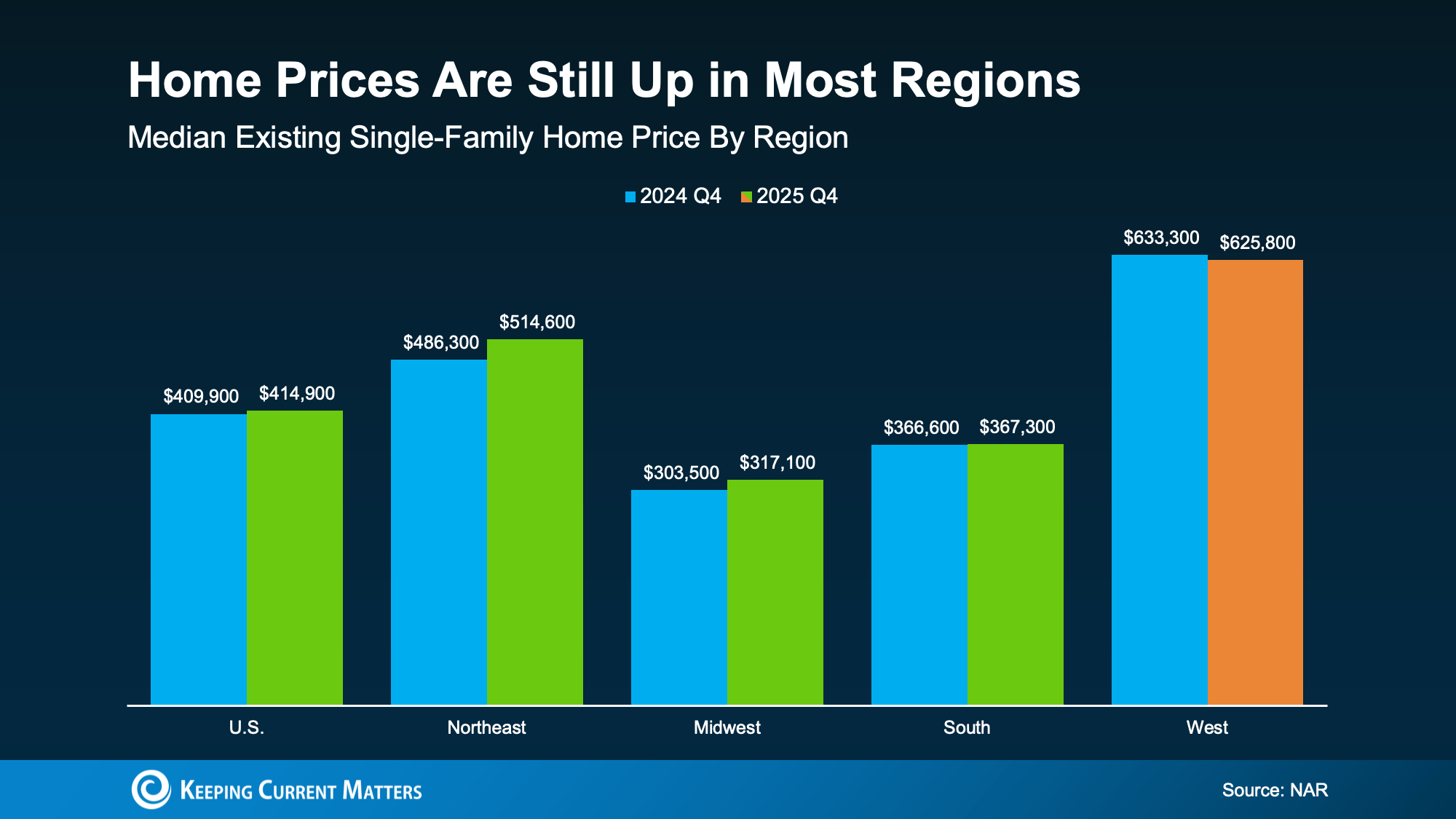
At a glance, the numbers show:
- Northeast, Midwest, and South: prices generally up or steady.
- West: more mixed, with some markets seeing mild price declines.
In other words, the market is cooling and normalizing, not crashing.
Why You’re Hearing So Much About Price Drops
Price declines make for clickable headlines. But a few factors can make a local shift look like a national trend:
- High-profile metros go viral. A dip in one major market can dominate the conversation.
- Seasonality is real. Some months are softer than others, even in healthy markets.
- Affordability has cooled demand. Higher payments can reduce competition and push prices to level off.
Those are signs of a market adjusting, not collapsing.
Some Markets Have Softened, But Context Matters
In the places where prices have dipped, it helps to look at the big picture. Many of those markets saw especially strong appreciation over the last several years. When you compare today’s values to where they were five years ago, homeowners in many “down” markets are still up significantly overall.
According to data from ResiClub and Zillow, price dips in the short-term aren’t always the cause for concern they seem to be. The long-term trends tell a clearer story, and they remain strong for many homeowners.
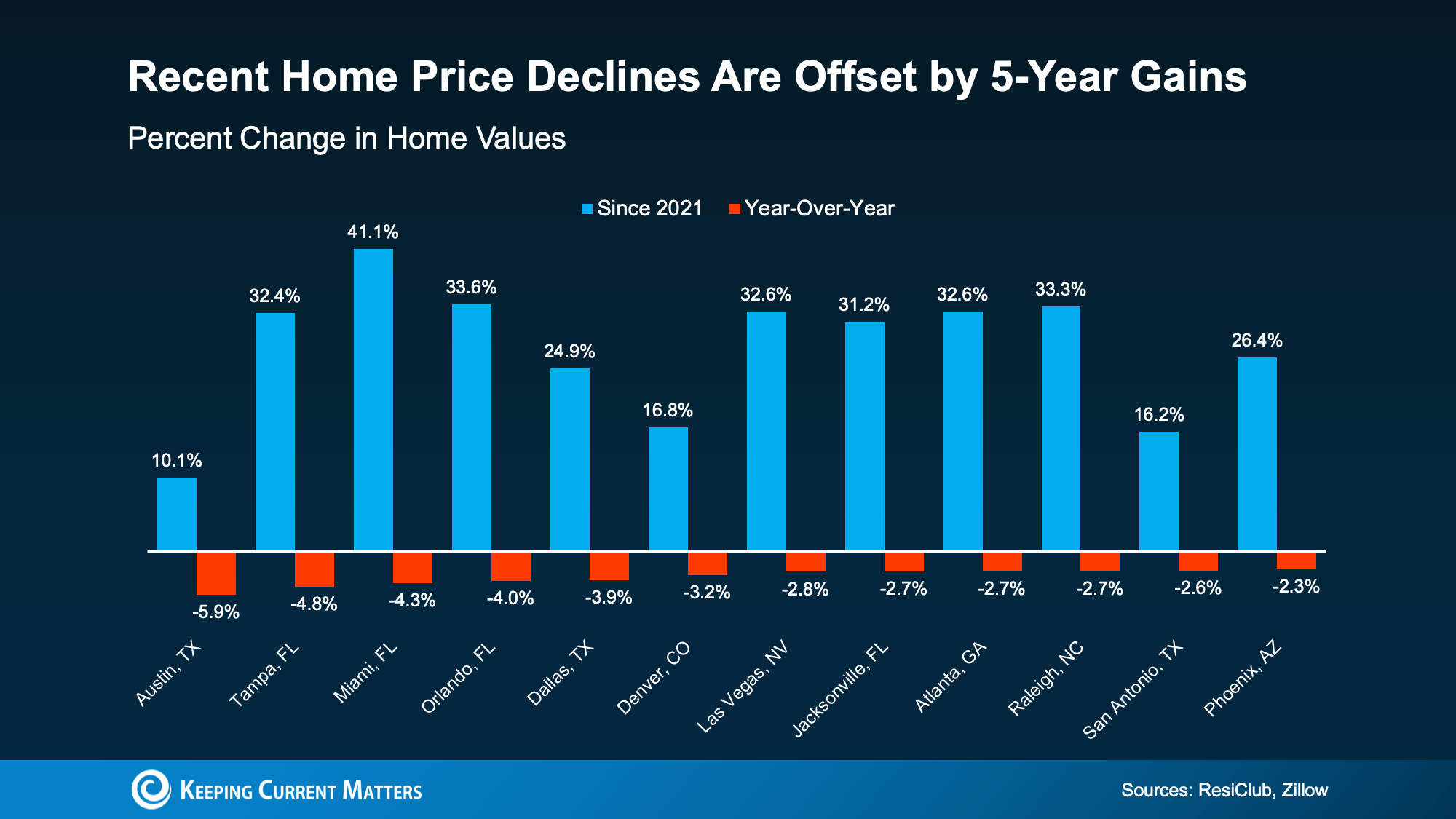
The key point: a pullback after rapid growth is not the same thing as a crash. It’s often a correction toward something more sustainable.
What This Means for Homeowners and Buyers
If you’re a homeowner:
In most markets, you’re not watching value evaporate overnight. Instead:
- You likely still have meaningful equity compared to pre-2020 values.
- Pricing strategy matters more now that buyers aren’t automatically overbidding.
- The best indicator is recent comparable sales in your neighborhood.
If you’re a buyer:
A cooler market can create more breathing room:
- You may see more negotiability in certain areas.
- You may have more time to decide than during the peak frenzy.
- But waiting for a big “crash” could mean missing the right home if your local market is stable.
Real estate is local. The best move depends on your budget, timeline, and the neighborhood you want.
How to Know What’s Happening Where You Live
National headlines can’t tell you what’s happening on your street. To get a clear picture, look at:
- Recent sold prices (comps) for similar homes.
- Days on market and list-to-sale price ratios.
- Inventory levels and new listings.
- Price reductions on comparable listings.
A local real estate agent can help make sense of your market’s unique trends. That way, you know you’re relying on sound information for any decision you make.
Conclusion
Home prices are rising or holding steady in most parts of the country, and a handful of small declines does not equal a nationwide downturn. If you want to know what your home is worth today, review your local numbers with a trusted real estate professional.
Renting vs. Buying: What The Numbers Say

Renting often feels like the simpler move these days. There’s no down payment to save up for, no surprise repair bills, and no long-term commitment if life changes.
But then your lease renews and the rent jumps. Then it happens again. Eventually, what felt flexible suddenly starts to feel expensive, especially when you realize every monthly payment is going to your landlord, not building wealth for you.
A big reason this stings is because there’s been so much talk about how homeownership is “out of reach.” And in some markets, it absolutely can be. But here’s the part that doesn’t get said enough: when you compare the numbers side by side, buying can cost less per month than renting in more places than most people expect.
Buying Can Be More Affordable Than Renting in Many Areas
In a lot of markets today, owning a home may actually have a lower monthly cost than renting a 3-bedroom home. New data from ATTOM suggest this is true in nearly 58% of counties across the United States.
And this comparison isn’t just a mortgage payment versus rent. It also takes into account common ownership costs like insurance and regular maintenance.
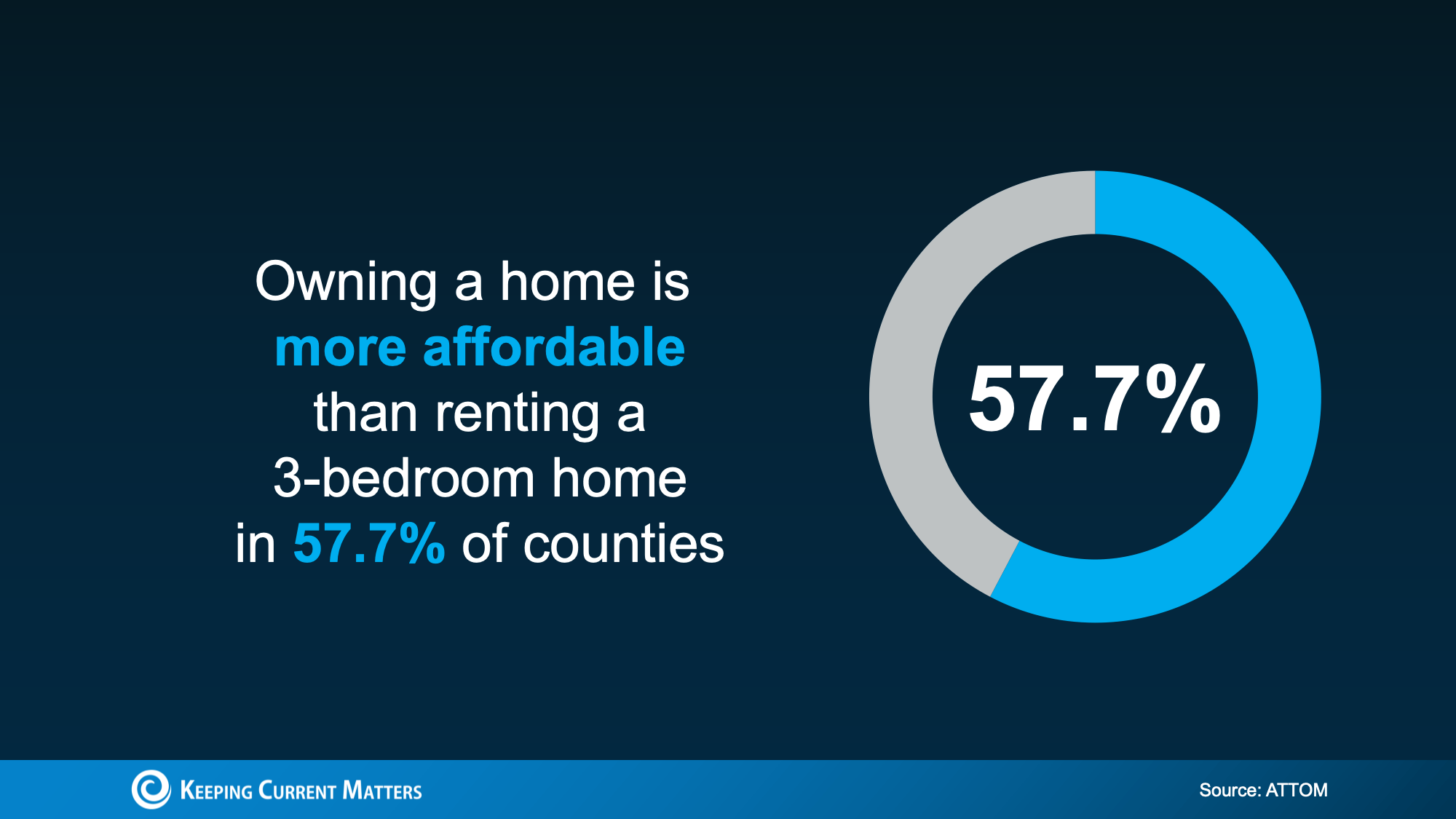
So if you’ve assumed buying automatically means a higher monthly bill, it may be worth a second look. Recent changes in home price growth, housing inventory, and mortgage rates have been shaking certain markets. Depending on where you live, buying might be finally in your favor.
Affordability Depends on Where You Live
Even though the national picture has shifted, it doesn’t mean buying is cheaper everywhere, or that every renter will have the same experience.
That “nearly 58%” figure looks very different depending on the region. The biggest improvement is happening in the Midwest and South, while the West can still feel tight for many households.
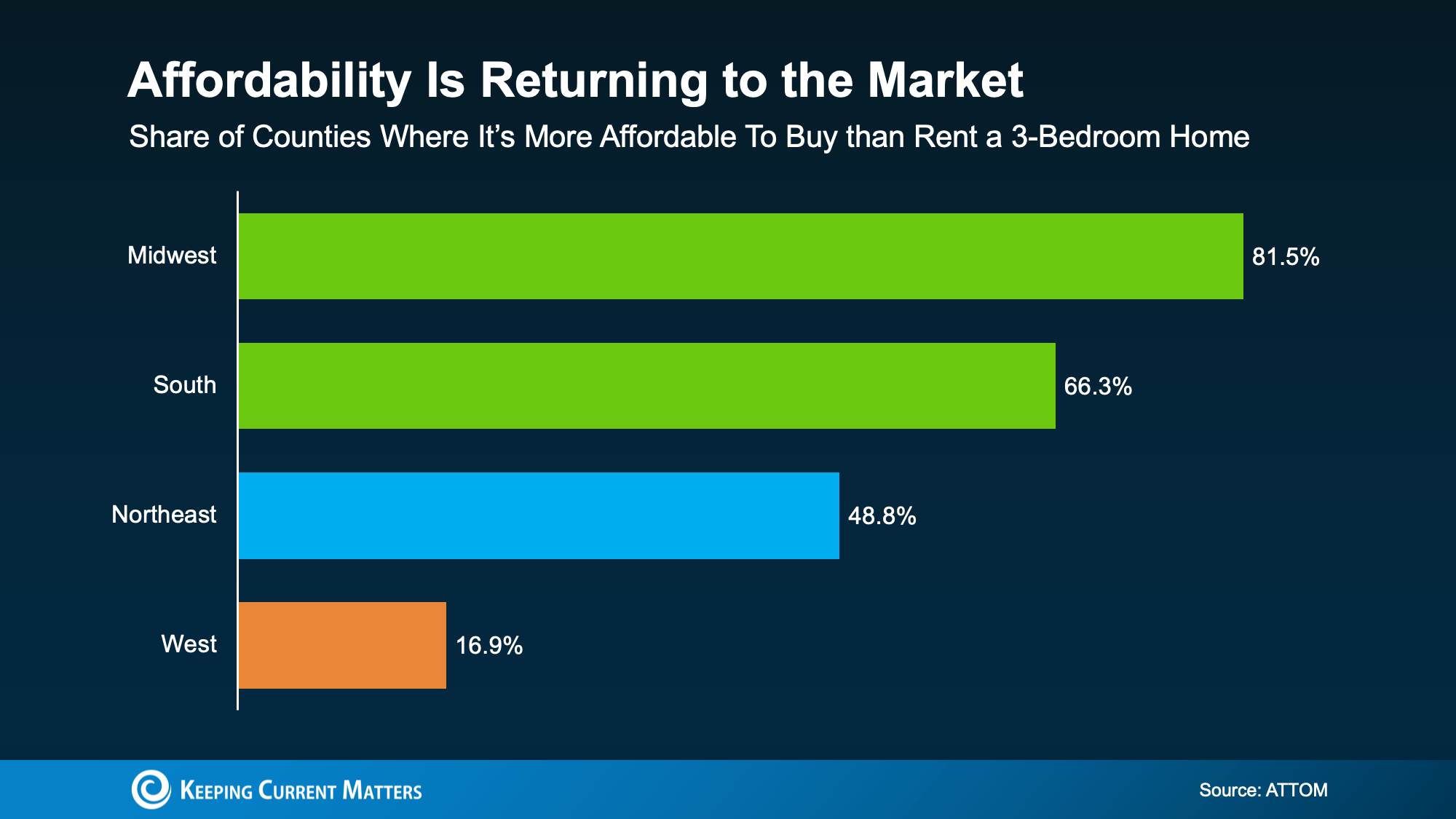
The key takeaway is simple: real estate is local. A national headline can’t tell you what the rent-versus-buy equation looks like in your zip code. The only way to know is to run the numbers based on your local prices, rents, taxes, and insurance.
What’s Still Holding Buyers Back?
If you’re thinking, “Even if the monthly payment works, I can’t afford the upfront costs,” you’re not alone.
For many renters, the biggest hurdle isn’t the monthly payment. It’s the down payment (and often closing costs) that feels like a wall.
Here’s the good news: there are thousands of down payment assistance programs across the country, and many buyers qualify without realizing it. The average benefit is around $18,000, which can help cover part of your down payment or closing costs.
Support like this can make buying feel a lot more realistic, because it reduces how much cash you need to get in the door.
How to Figure Out What’s Right for You
If you want clarity instead of guesswork, focus on a simple comparison:
- Your current rent (and how often it’s rising).
- An estimated monthly ownership cost (mortgage, taxes, insurance, HOA if applicable).
- A realistic maintenance cushion.
- Upfront costs (and any down payment assistance you may qualify for).
When you combine potential assistance with monthly costs that may be closer than expected, the gap between renting and buying can shrink quickly, or even flip in favor of buying.
Conclusion
The bottom line isn’t that everyone should buy a home as soon as possible.
The idea is that renting isn’t always the cheaper option people assume it is, and buying may be more realistic than it feels once you look at the full picture.
If you’re renting and feel stuck saying “someday”, consider a quick conversation with a local real estate agent or lender. Not a commitment, just a way to see what’s possible and whether it makes sense for you.
Why Did Home Sales Fall in January?

If you saw headlines saying home sales fell sharply in January, it’s understandable to feel uneasy, especially if you’re thinking about selling. But one month of data rarely tells the whole story.
Yes, January home sales declined. In most years, that’s normal. And this particular drop has a lot more to do with seasonality and winter weather than a sudden collapse in buyer demand.
What’s Really Behind the “Home Sales Fell” Headlines
Recent reports from the National Association of Realtors (NAR) show existing home sales dropped about 8.4% month over month. That’s the number making the rounds, and it’s an accurate one.
The key is understanding why it happened:
- January is historically slow for real estate in general
- Fewer people list and tour during the coldest weeks of the year
- Holidays, travel, and weather disruptions often push closings into the next month
So while the percentage sounds dramatic, it doesn’t necessarily signal a weakening market.
Why January Is Often a Slower Month for Home Sales
Seasonality is a consistent pattern in U.S. real estate. In many markets:
- Winter brings fewer new listings
- Buyers move more cautiously due to schedules and weather
- Fewer transactions close, even when demand is still there
Over the past several years, sales have commonly dipped in January and then picked up again in February as the market begins ramping up for spring. In other words, a January slowdown is often a pause, not a trend. You can see this in the graph below, particularly in the green bars showing February sales rebounds:
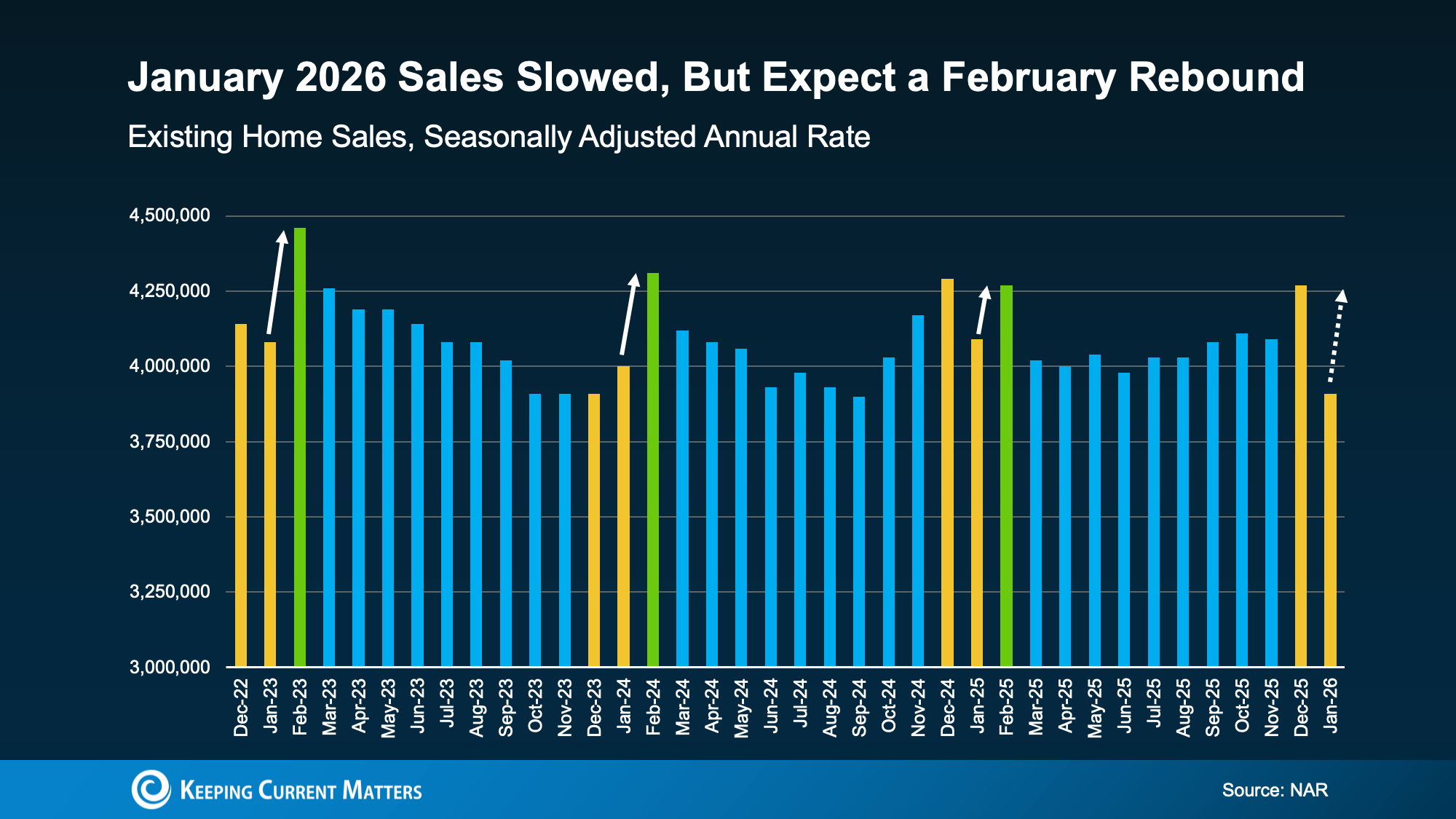
Home sales often slow in January and rebound quickly in February.
The Bigger Drop This Year: Weather, Not Demand
This year’s decline was steeper than the usual January dip, even with lower mortgage rates. But the likely explanation is simple: disruptive winter weather.
As Realtor.com explains:
“Winter storm Fern, which dumped snow and ice across large swaths of the country, likely disrupted some closings, weighing on the data and making it difficult to pick out the housing market momentum trend from the weather noise.”
According to the original post, 40 states experienced widespread winter weather. In real estate, that matters because bad weather can delay the final steps needed to close, including:
- Inspections
- Appraisals
- Final walk-throughs
- Lender or title timelines
Why “Fewer Sales” Can Really Mean “Later Closings”
One important detail most headlines skip: existing home sales track closings, not contracts.
That means a storm doesn’t have to “kill” a deal to show up in the data. If weather slows the process, many transactions simply move from January into February (or later).
So January’s missing sales are more likely postponed, not lost.
Will Home Sales Pick Back Up?
Despite a slower January, the data still point toward the market gaining traction as spring approaches.
Here are two encouraging points to consider:
- Affordability has improved for seven straight months (according to NAR)
- Buyers in many areas are regaining some negotiating power
That combo can support more activity as the weather improves and the traditional spring season begins.
What If You’re Thinking About Selling?
If you’re a homeowner watching the market, here’s the practical takeaway:
- Don’t overreact to one weather-impacted month
- Expect activity to improve as schedules normalize and temperatures rise
- Focus on what’s happening locally, because conditions vary by city and even neighborhood
A strong strategy right now is to talk with a local agent about:
- Pricing based on current comps
- Likely spring demand in your area
- How quickly homes are moving in your price range
Conclusion
Don’t confuse a winter slowdown with a market wide red flag. January’s decline appears tied to seasonality and storm-related delays, not disappearing demand. As affordability improves and spring approaches, activity can thaw quickly.
Housing Inventory Is Improving in 2026: What That Means for Buyers
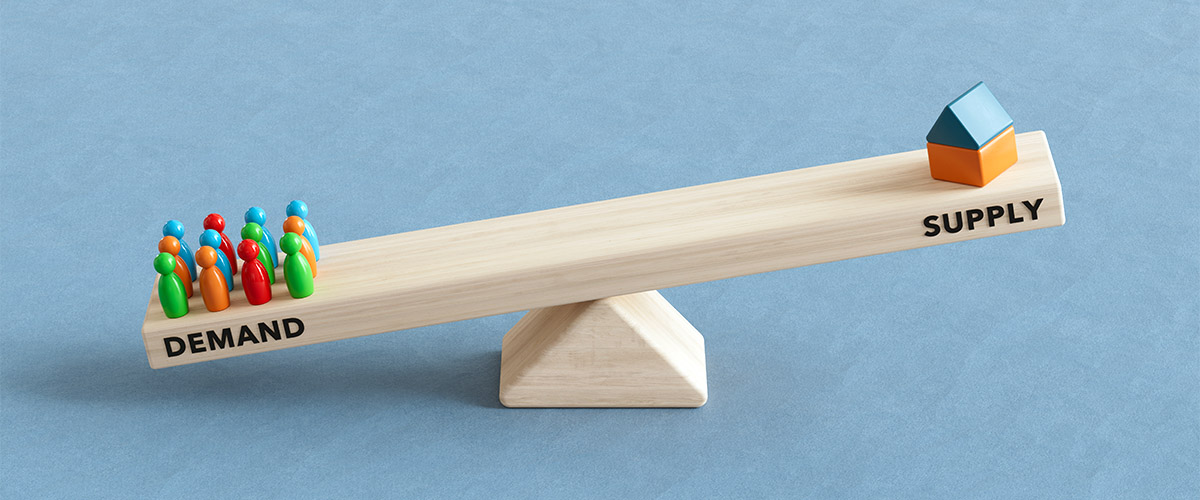
After a long stretch of buyers competing for too few homes, housing inventory is finally improving. Over the past year, more listings have come to market, and depending on where you live, that shift can open up your options in a meaningful way.
According to Realtor.com, the number of homes available for sale in January 2026 was the highest it’s been since 2020. That matters because getting closer to pre-pandemic levels signals a gradual return to a more typical market, where buyers aren’t forced to make rushed decisions with limited choices.
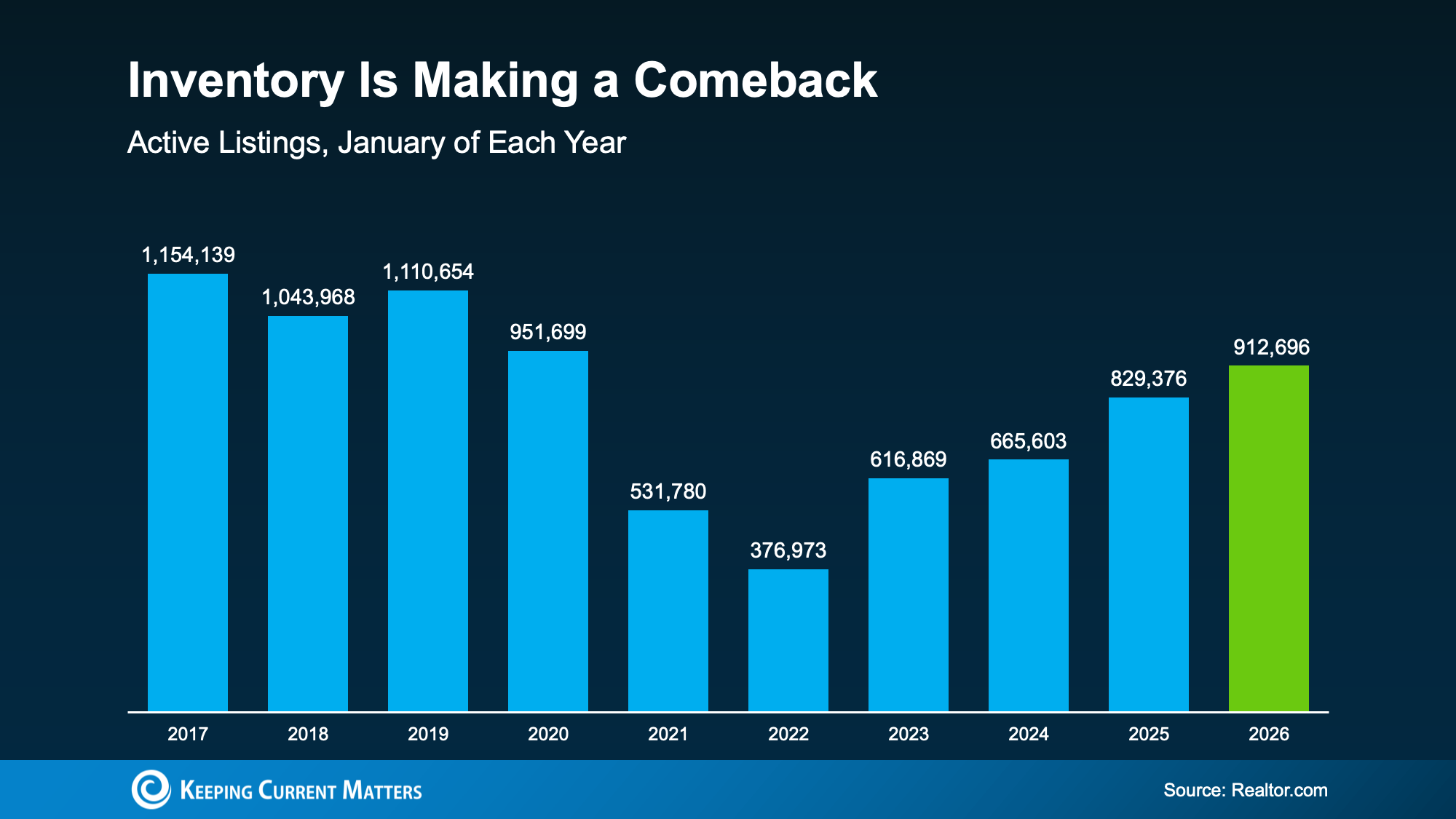
That said, inventory is not back to normal everywhere. And even with growth, more listings alone won’t “fix” affordability or fully rebalance the market overnight. But the changes we’ve seen recently can still have a real impact on how competitive it feels to buy.
When Supply Rises, Buyers Gain Breathing Room
In a low-inventory market, the pressure ramps up fast. Buyers often feel like they have to move immediately, waive protections, or offer well above asking just to stay in the running.
More inventory can reduce that intensity. When there are more homes for sale, buyers typically gain:
- More time to tour homes and think through a decision
- More options across neighborhoods, home styles, and price points
- More leverage to negotiate on price, repairs, closing costs, or timelines
In other words, more listings can shift the experience from stressful to manageable, even if the market still leans competitive in certain areas.
A Growing Share of the Country Is Getting Back to Typical Inventory
Inventory growth is not uniform nationwide. Some markets are seeing a stronger rebound, while others are still tight.
According to Lance Lambert, Co-Founder of ResiClub, in January 2025, just a little over one year ago, only 41 of the 200 largest metros were back to normal inventory-wise.
By around the end of the year, almost half (90) of the largest 200 metro areas were back at or above typical levels. That is a big improvement in roughly a year, and the trend is still moving forward.
Why This Matters for Your Local Home Search
If your area is one of the metros where inventory has returned to typical levels, you may notice:
- More new listings each week
- Fewer “must-bid-now” situations
- More realistic negotiations, especially on homes that sit longer
If your market is still below normal, you may still see multiple offers on well-priced homes. The difference is that, nationally, the direction is improving, and more markets are joining that list over time.
Inventory Is Expected to Keep Growing in 2026
Looking ahead, forecasts suggest the number of homes for sale could rise another 10% this year. If that happens, even more markets should move closer to balanced conditions.
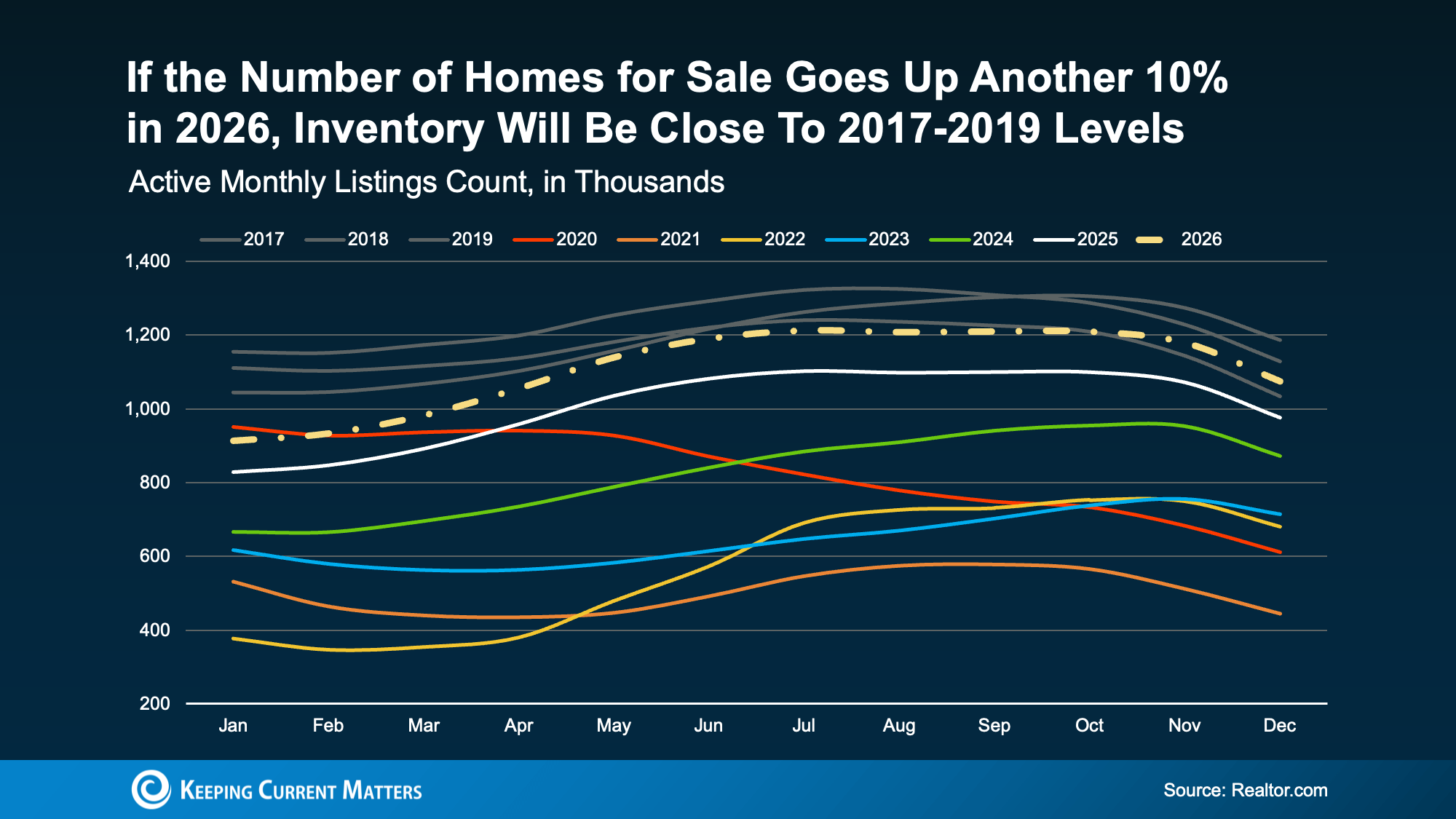
That potential growth could push inventory closer to the levels we saw in 2017–2019 by roughly this fall, which would be a huge milestone for buyers. Of course, reaching something closer to “normal” nationally wouldn’t mean every market feels the same. But, it would increase the odds that more buyers in more markets can find a home without feeling boxed in by a lack of choices.
As Hannah Jones, Senior Economic Research Analyst at Realtor.com, says:
“. . . housing market conditions are gradually rebalancing after several years of extreme seller advantage. Buyers are beginning to see more options and modest negotiating power as inventory improves . . .”
That is the key takeaway: the market is starting to work with buyers again, not against them.
Conclusion
Inventory may not be fully back to normal everywhere, but it’s moving in the right direction. And some markets, it’s already there.
If you have been waiting for a moment when you have more options and a little breathing room, 2026 is shaping up to be the strongest setup buyers have seen in years.
If you want the latest on inventory in your local market, talk to an agent who can break down inventory trends, pricing, and what that means for your next move. And if you’re not sure where to start, you can always reach out to us at CENTURY 21 Affiliated.
Good News for Buyers: Home Affordability Improving in 2026

If you’ve felt priced out of the market or stuck waiting on the sidelines, there’s finally some encouraging news:
Buying a home is finally becoming more affordable.
Monthly payments have started to come down thanks lower interest rates, and buyers are starting to feel pricing pressures ease. That doesn’t mean homeownership is suddenly easy for everyone, but after a tough stretch, small improvements are meaningful.
Home Affordability Is Finally Improving
One of the clearest ways to track this change is to look at how much of a household’s income goes toward owning a home.
According to Zillow, housing is typically considered affordable when total housing costs take 30% or less of your monthly income. That includes your mortgage payment, property taxes, insurance, and basic maintenance.
For the past few years, many buyers were well above that mark, which pushed homeownership out of reach for a lot of households. But that’s starting to shift. Zillow research shows it’s taking less of a typical household’s income to buy a home than it did just a few years ago (see graph below):
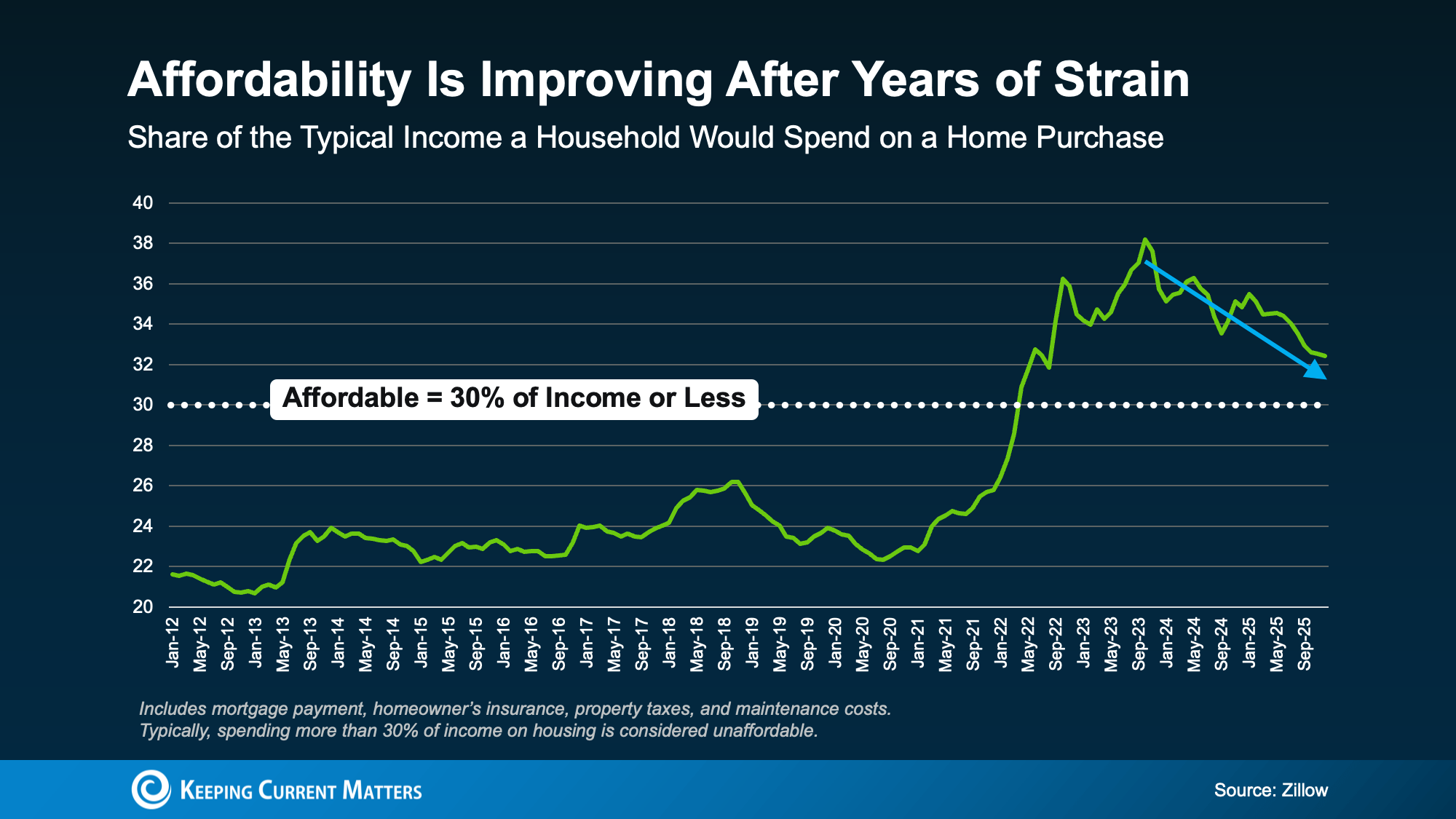
We’re not all the way back to Zillow’s 30% threshold yet, so affordability is still tight in many markets. But the trend is improving, and that’s a big change from what buyers have been up against.
Why Homebuying Is Becoming More Affordable
Mortgage rates get most of the attention, and yes, rate movement plays a major role in monthly payment size. But it’s not the only reason affordability is improving. Three key trends are working in buyers’ favor right now:
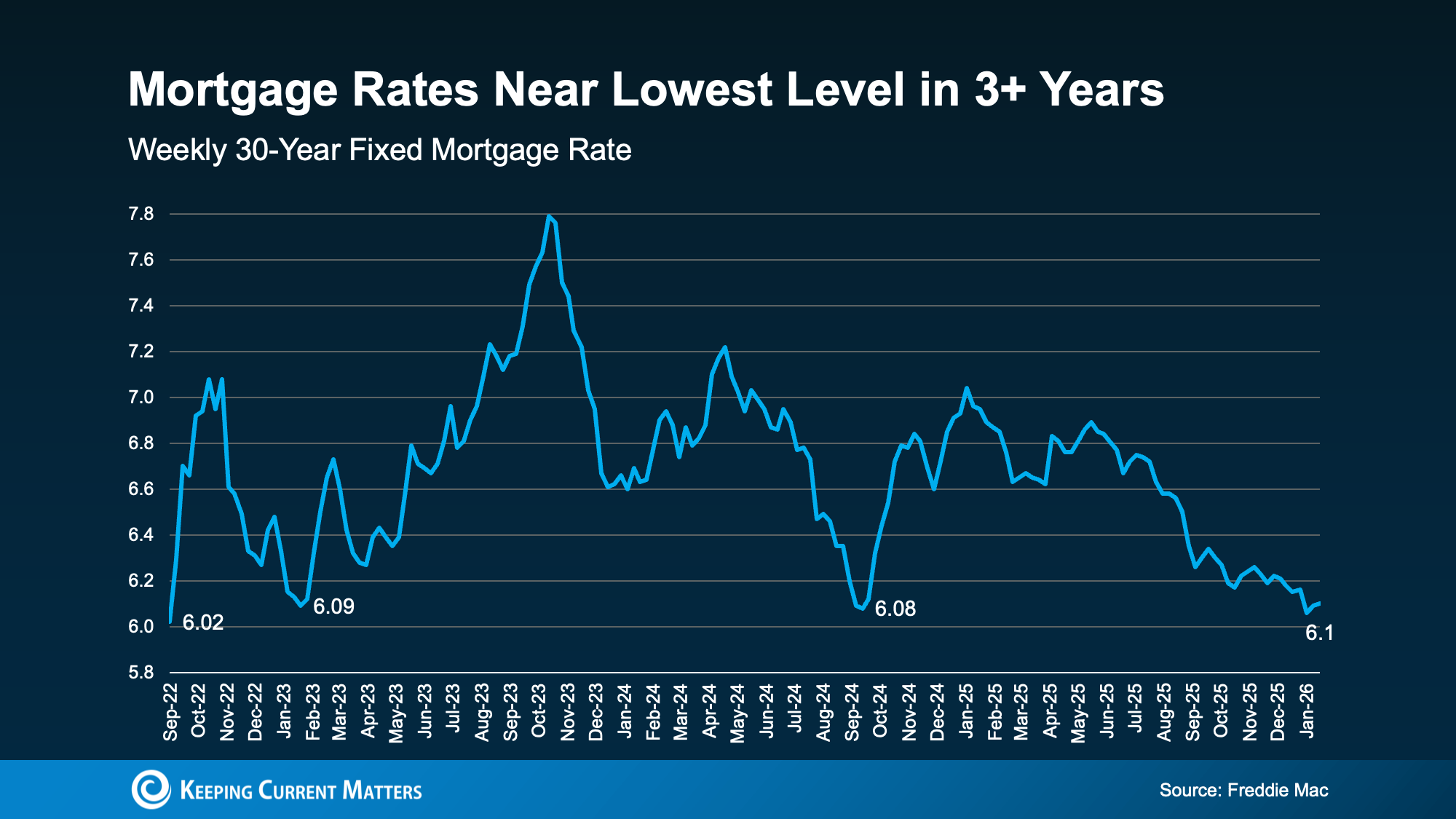
1) Mortgage rates have eased
Rates are near their lowest level in more than three years, which can reduce monthly payments and expand buying power (see graph below):
2) Home price growth has cooled
Home prices aren’t falling nationally, but they’re rising more slowly than they were a few years ago. That matters because slower price growth helps keep purchase prices from jumping as sharply, which can make payments feel more manageable and the overall buying process more predictable.
3) Wages are growing faster than home prices
This is a major factor that often gets overlooked. When incomes rise faster than home prices, buyers can start catching up. Mark Fleming, Chief Economist at First American, explains:
“When income growth exceeds house price growth, house-buying power improves—even if mortgage rates don’t decline meaningfully.”
None of this makes homes “cheap,” but it does help explain why the math is starting to work a bit better than it did even a year ago. In short, some of the forces that curbed affordability are finally easing. As Fleming again explains:
“Affordability remains challenging, but for the first time in several years, the underlying forces are finally aligned toward gradual improvement. Mortgage rates may drift down only slowly, but income growth exceeding house price appreciation will provide a boost to house-buying power — even in a higher-rate world. Affordability won’t snap back overnight, but like a ship finally catching a steady tailwind, it’s now sailing in the right direction.”
Because of these combined shifts, many economists expect affordability to continue improving in 2026.
Where Are Homes Becoming Affordable First?
So how much will affordability improve, and where will it show up first? In some places, the difference could be noticeable. Zillow says some markets are expected to fall back under their affordability threshold (30% of income or less) by the end of the year (see graph below):
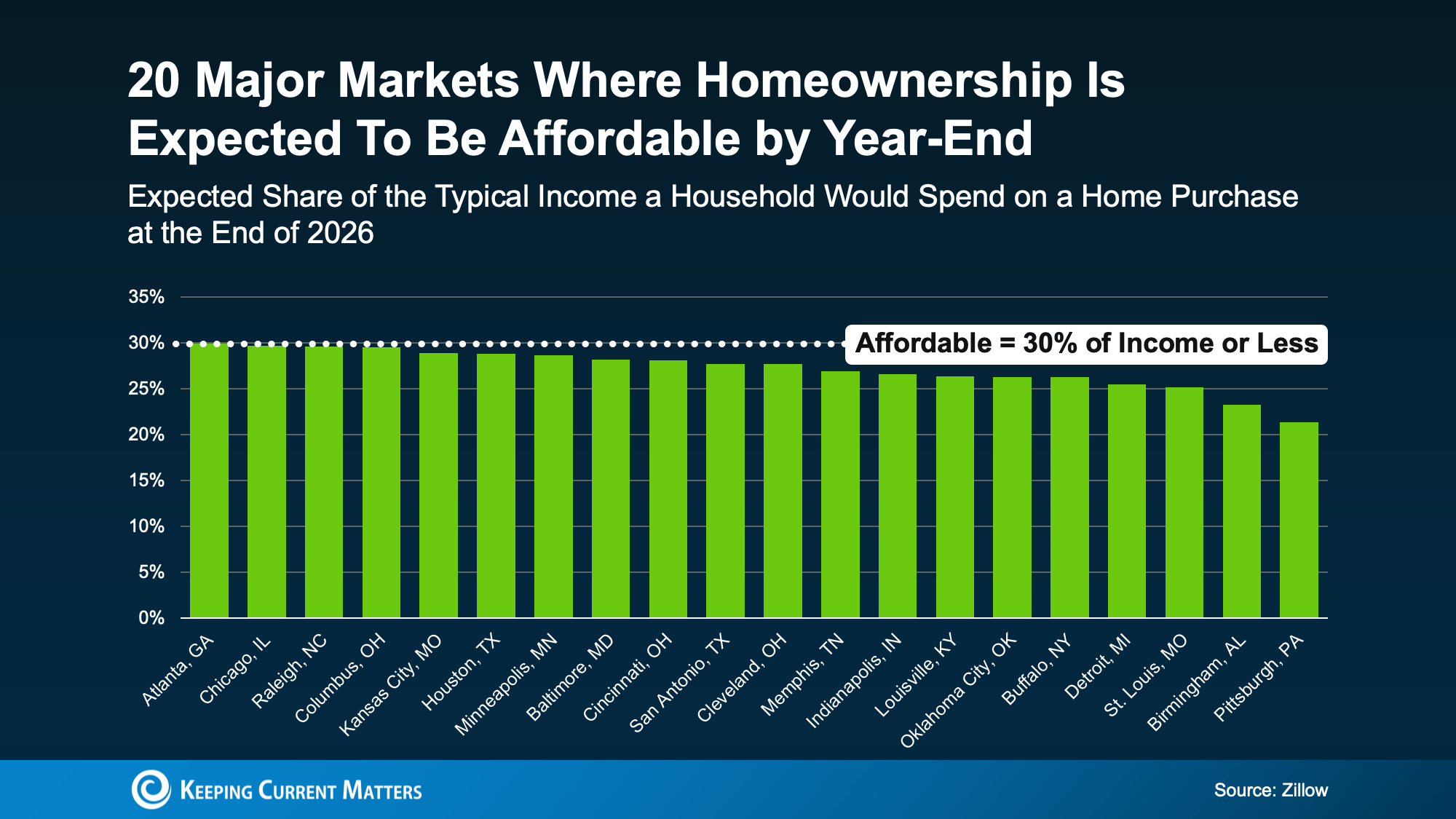
But you don’t have to live in one of those specific markets, and you may not have to wait until year-end to see improvement. Many areas are already trending in a better direction.
That’s why your next best step is local: talk to a real estate agent who understands what’s happening in your market. The national headlines don’t always reflect what’s going on neighborhood by neighborhood, and you might be closer to buying than you think.
Conclusion
For the first time in a while, home affordability is easing, and that’s an important shift for buyers.
And because the pace of improvement varies by location, understanding what’s changing locally can make all the difference. If you want to see how these trends are playing out where you live, connect with a local real estate agent to talk through your options.
Renting vs. Buying: Which Home Option Is Right for You?

Between stubborn mortgage rates and rising home prices, you’ve probably mulled over renting vs. buying a home. In market conditions like these, renting and waiting to buy can feel like your only realistic option. This can be the truth in many cases, and buying before you’re ready can be a costly mistake.
But the short-term savings of renting can sometimes trap you in a cycle, preventing you from making wealth-building investments. Over time, this can actually end up costing you more than buying a home early and slowly building equity. Unsurprisingly, a recent survey from Bank of America found that 70% of prospective homebuyers feel renting could hinder their financial future.
Ultimately, the pros and cons of renting and buying come down to your own short-term and long-term financial goals. If you’re feeling torn over whether you should nest or invest, take these major differences into account to decide.
Homeownership Builds Your Wealth Over Time
Apart from giving you your own place to live, homeownership grants the important bonus of building your wealth over time. This is because home prices usually rise as time goes on, meaning waiting longer to buy costs you more. This isn’t always true of every housing market, but the general national trend tends to speak for itself.

The average home sale price has more than tripled in the past 30 years.
Even better, your home equity also grows over time when you’re a homeowner. Equity is the difference between what your home is worth and what you still owe on your mortgage. Your equity grows with each mortgage payment you make, and this builds your net worth over time.
According to the Federal Reserve, the average homeowner’s net worth is nearly 40 times greater than that of a renter. That’s a life-changing difference, and seeing it represented visually really drives the point home.
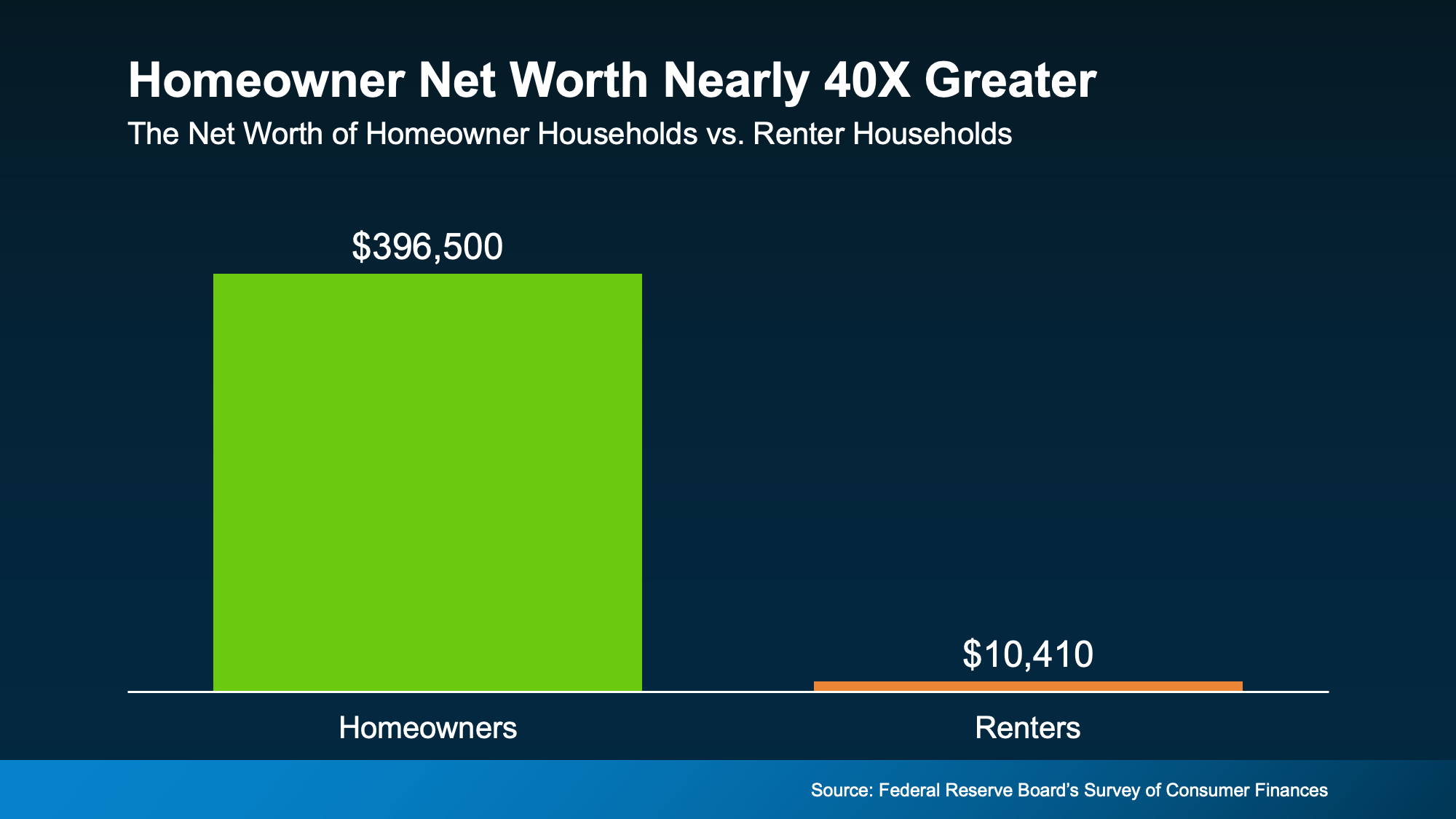
The average net worth of a homeowner household is almost 40X greater than that of a renter household.
This massive difference in personal wealth is just one of the reasons that Forbes says:
“While renting might seem like [the] less stressful option . . . owning a home is still a cornerstone of the American dream and a proven strategy for building long-term wealth.”
Renting Helps You Save in the Short Term
Compared to homeownership, renting offers lower monthly payments and the freedoms of relatively negligible commitment and responsibility. This often makes renting feel like the safer option, and it usually is, at least in the short term. But in the long term, renting can land you in a trap that prevents you from building real wealth.
Rent tends to rise along with home prices, and this has been true for decades. Rental costs have been somewhat stable recently, but they almost never trend downward. This trap of paying increasing rent without building wealth can make buying a home feel impossible.
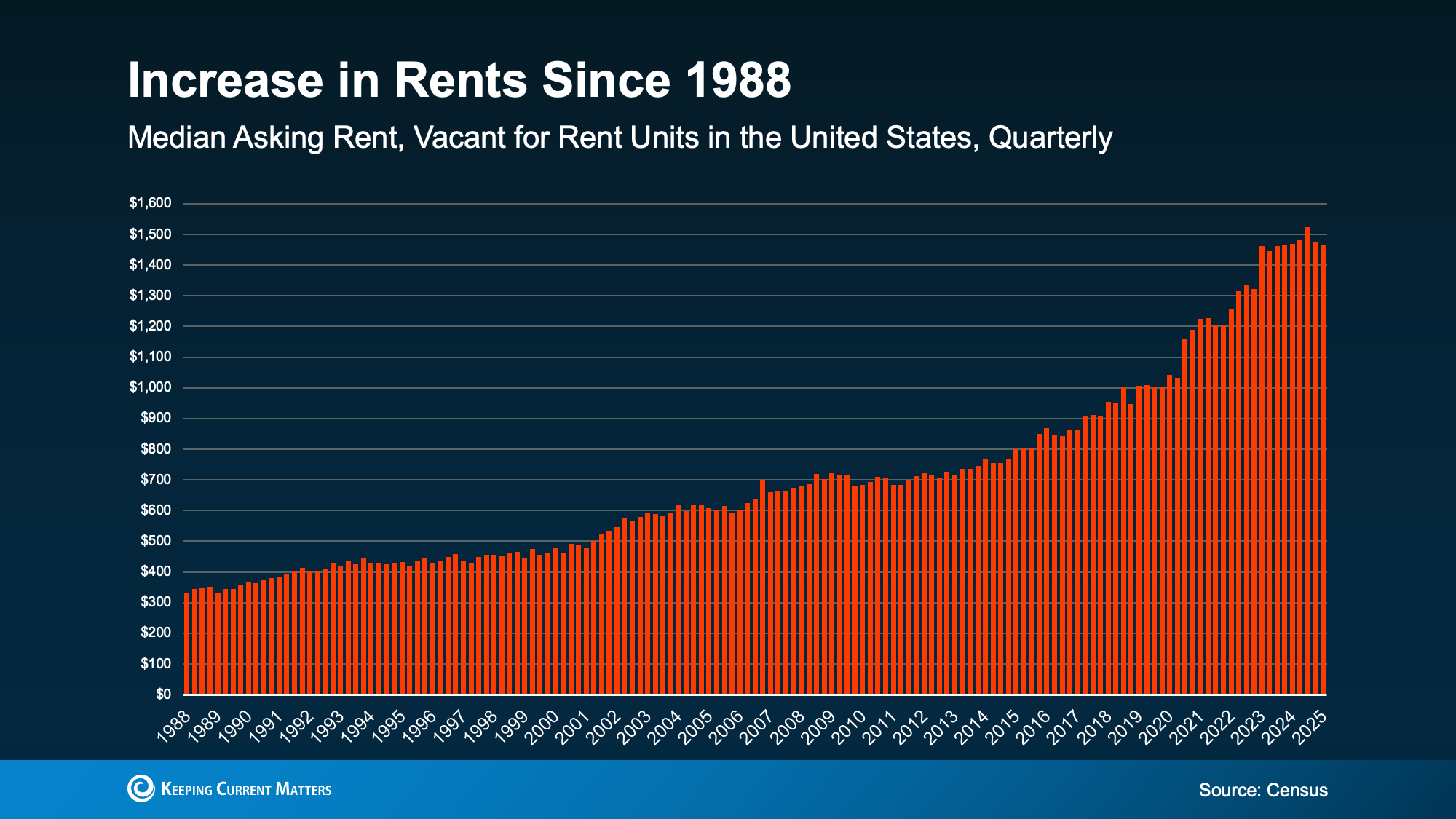
Like home prices, rental costs have risen dramatically in the past several years.
Financial uncertainty like this can have a real, lasting impact on any of your financial decisions. In the same Bank of America survey, 72% of potential buyers said they worry rising rent could affect their current and long-term finances.
Rent money doesn’t come back to you, and that means it doesn’t grow your wealth. The only mortgage it’s paying is your landlord’s.
So, whether you’re renting or owning, you’re paying off a mortgage. The question is: whose mortgage do you want to pay?
Renting vs. Buying: What Really Matters
Here’s another way to look at renting vs. buying. Rent money is gone once you pay it. Payments toward your own house build equity, like a savings account you can live in. Obviously, buying comes with higher upfront costs and more long-term responsibility. But the reward is a stable investment that grows over time. And while buying a home often feels out of reach, a solid plan can get you there.
As Realtor.com Senior Economist Joel Berner explains:
“Households working on their budget will find it much easier to continue to rent than to go through the expenses of homeownership. However, they need to consider the equity and generational wealth they can build up by owning a home that they can’t by renting it. In the long run, buying a home may be a better investment even if the short-run costs seem prohibitive.”
Conclusion
Renting may be cheaper in the short term, but it can cost you more over time without building your wealth. If you’re weighing the pros and cons of renting vs. buying, consider your long-term financial goals. Short-term saving can trap you in an endless cycle of renting, but buying without planning can be financially overwhelming.
If you’re ready to make the leap from renting into buying a home, contact us today. We’d be happy to connect you with a local agent who can make your dreams a reality.
Are You Waiting To Buy? This Spring May Be Your Time To Move

Between low inventory, high home prices, and unpredictable mortgage rates, 2024 was a rocky year for real estate. It should come as no surprise then that 70% of buyers stopped their home search last year. If you were one of them and are still waiting to buy in 2025, this spring could be your time.
The Drive of Housing Inventory
Many homeowners who put their move on pause last year are reentering the market this year. This means higher, stronger listing inventory, and with builders finishing more homes, new construction inventory is growing as well. Together, this creates more options for buyers like you, and better chances of finding the home you’ve waited for.
But that’s only part of the story. When you’re selling, you want to feel confident that you’ll find a home you’ll be thrilled to move into. At the same time, you don’t want housing inventory so high that your current house sits on the market. Fortunately, the spring 2025 market is striking a balance between supply and demand that many have waited for.
According to research from Realtor.com, housing inventory has jumped 28.5% year-over-year, making March the 17th straight month of inventory growth. This is still below pre-pandemic levels in most markets, but it’s a sweet spot for anyone waiting to buy.
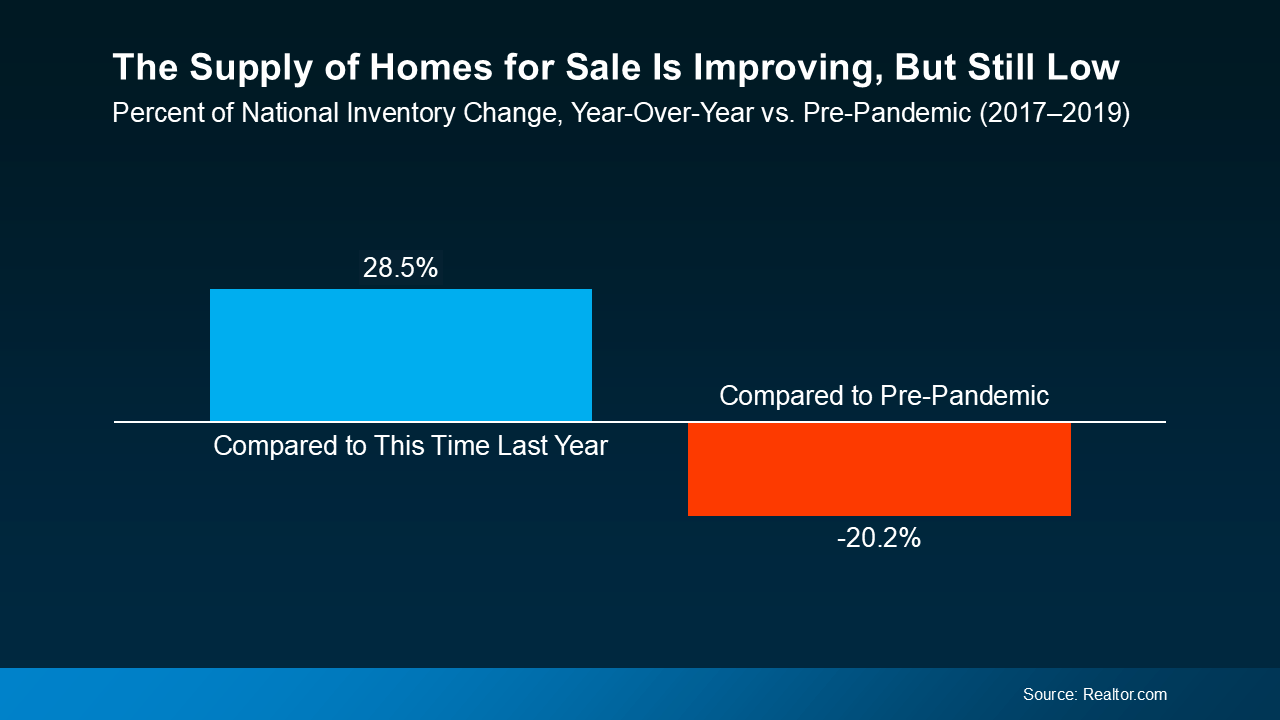
For patient buyers, this means you’ll have more options when moving, but not so many that your current house won’t sell. As long as there’s a healthy demand for homes in your area, your house should still sell relatively quickly. Especially if you work with a local agent to make sure it’s priced right and fixed up to maximize value.
The Sweet Spot: More Options and Steady Demand
Here’s another promising point to think about. As we said, Realtor.com‘s March 2025 data shows that housing inventory has been rising for 17 consecutive months. What’s better, industry experts agree that listing inventory is likely to continue climbing through 2025. According to Lance Lambert, the Co-Founder of ResiClub:
“The fact that inventory is rising year-over-year . . . strongly suggests that national active housing inventory for sale is likely to end the year higher.”
If this prediction proves correct, this spring may be a better time to sell than you think. Listing now could help your house may stand out more than it would later in the year as inventory grows. With more homeowners reentering the market, waiting too long could make it all the more difficult to stand out.
Conclusion
If you’re one of the many who have been waiting to buy a house this past year, here’s your chance. Housing supply is growing but hasn’t caught up to demand yet, meaning new listings are still getting extra buyer attention. Meanwhile, increasing inventory is giving current homeowners more opportunities to scale up, further driving supply and activating buyers.
For both first time buyers and homeowners waiting to sell, this spring’s market is trending toward an ideal sweet spot. If you have questions keeping you from making your move, reach out to us for answers today. We can get you the info you need, or connect you with an agent to navigate your unique local market.
Should You Buy a Home This Spring or Wait for Lower Prices?

You’re probably familiar with the saying “The best time to plant a tree was yesterday, but the next best time is today.” It’s a valuable lesson about future planning and investment that, surprisingly, applies to the decision to buy a home too.
Even though buying a home is a major financial expense, it’s also a major investment that grows over time. As the price of your home increases over time, the value of the equity you’ve built grows with it. And while waiting for prices to drop may be an attractive option, trying to time the market rarely works.
But here’s something to consider: the longer you wait to buy a home, the more your patience could cost you. Let’s explain why.
Home Prices Are Expected To Continue Climbing
Each quarter, over 100 housing market experts respond to Fannie Mae‘s Home Price Expectations Survey (HPES). Consistently, the survey results show experts agreeing that home prices will continue to rise through 2029 or even longer.
Sharp price increases may be behind us, but experts predict steadier, healthier increases of 3-4% per year moving forward. This rate of increase will vary by market from year to year, but it’s much closer to normal. Reliable growth is a promising sign for hopeful buyers, and the housing market at large, as the graph below demonstrates.
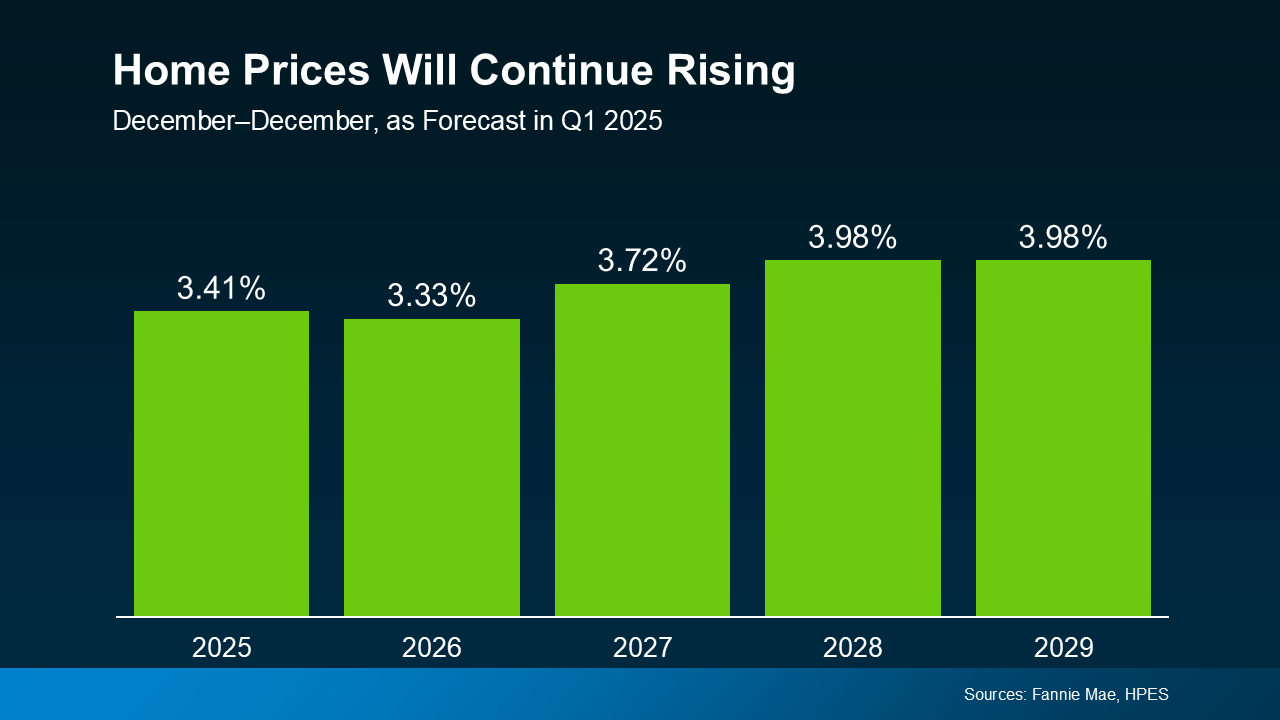
Even in markets experiencing slower price growth or short-term decreases, the steady gains of homeownership eventually win in time. After all, a growing, long-term financial investment will always beat a one-time discount.
Here are the main points to remember:
- Home prices will be higher next year. Experts don’t expect home prices to fall any time soon, at least at the national level.
- Waiting for a perfect mortgage rate or price drops is a gamble. With only slight dips in mortgage rates expected in the near future, price increase could outpace any potential mortgage savings. Unless home price growth is slow or mortgage rates are low in your area, waiting will likely be more expensive.
- Buying early means building more equity. When you invest in homeownership early, your equity and appreciating home value reward you in the long run.
The Costs of Waiting To Buy
To demonstrate how these theories play out in real-world numbers, here’s a typical example. If you were to buy a $400,000 house in 2025, it could gain almost $80,000 in value by 2030. The graph below demonstrates how this value appreciates year by year based on the expert data we mentioned earlier.
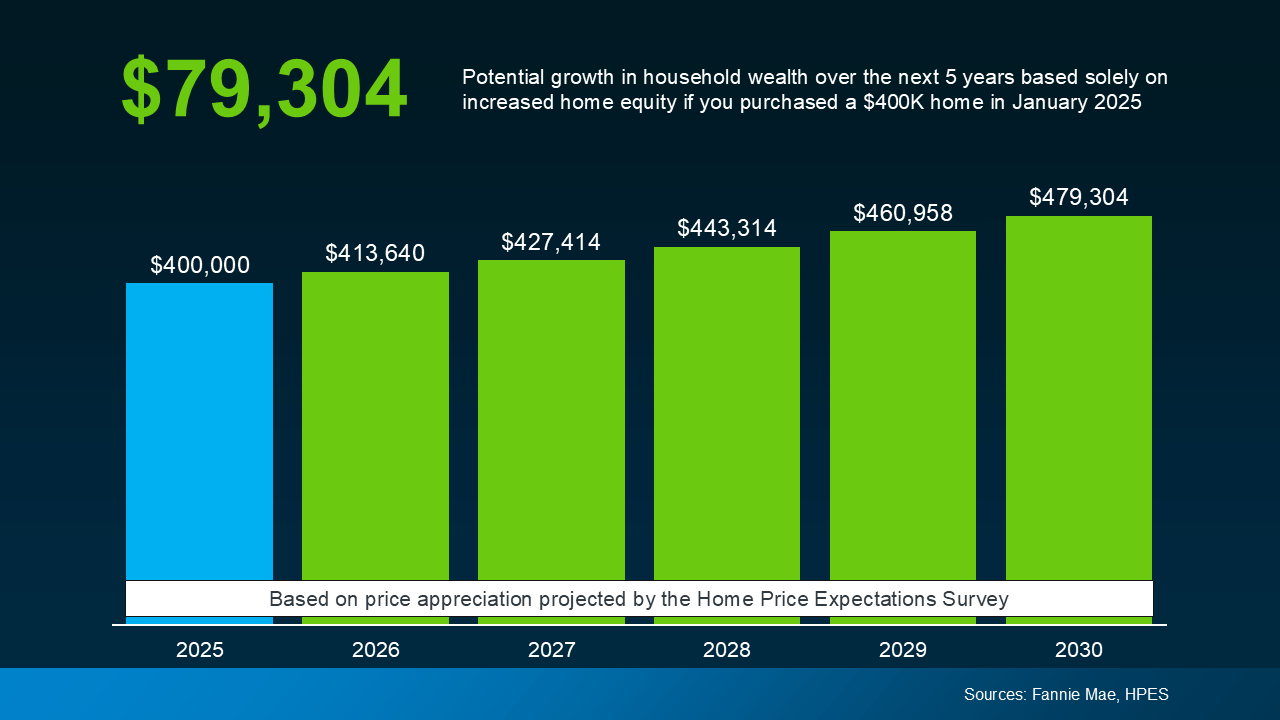
This can be a considerable difference in your future wealth and why buyers who invest early are often glad they did. When it comes to building wealth through long-term investment, time in the market matters.
The question to consider isn’t “Should I wait to buy?” It’s really “Can I afford to buy now?” Just like planting a tree, making short-term sacrifices to buy a home will eventually pay off in the long-term.
Between rising prices and stubborn mortgage rates, today’s housing market is challenging, but achieving homeownership is far from impossible. Exploring different neighborhoods, seeking alternative financing options, or applying for down payment assistance programs can all make a critical difference.
What’s most important is acting decisively when you’re able to, instead of waiting for a perfect opportunity that never comes.
Conclusion
If you’re interested in buying but still undecided, take the time you need to make the right choice. But, remember that realizing an investment takes time, and the sooner you make one, the sooner you’ll be rewarded.
If you’re curious about what’s happening with prices in our local area, then reach out to us. Even if you’re not ready to buy, an expert local agent can fill you in with the info you need.
It’s Tax Day – Here’s How a Refund Can Help You Save For a Home

If you’ve been planning to buy a house, you know how hard it can be to save for a home. What you might not know is that your tax return can be a helpful boost to your savings and budget. According to a recent post by Freddie Mac:
“ . . . your tax refund from the IRS can be a useful supplement to your homebuying budget.”
So if you’re planning to get a tax refund this year, consider the difference that extra funding can make. A refund can help you pay for the upfront costs of homebuying, like a down payment or closing costs. And, according to the IRS, your tax refund may even help you out this year more than ever.
How a Tax Return Can Help You Buy a Home in 2025
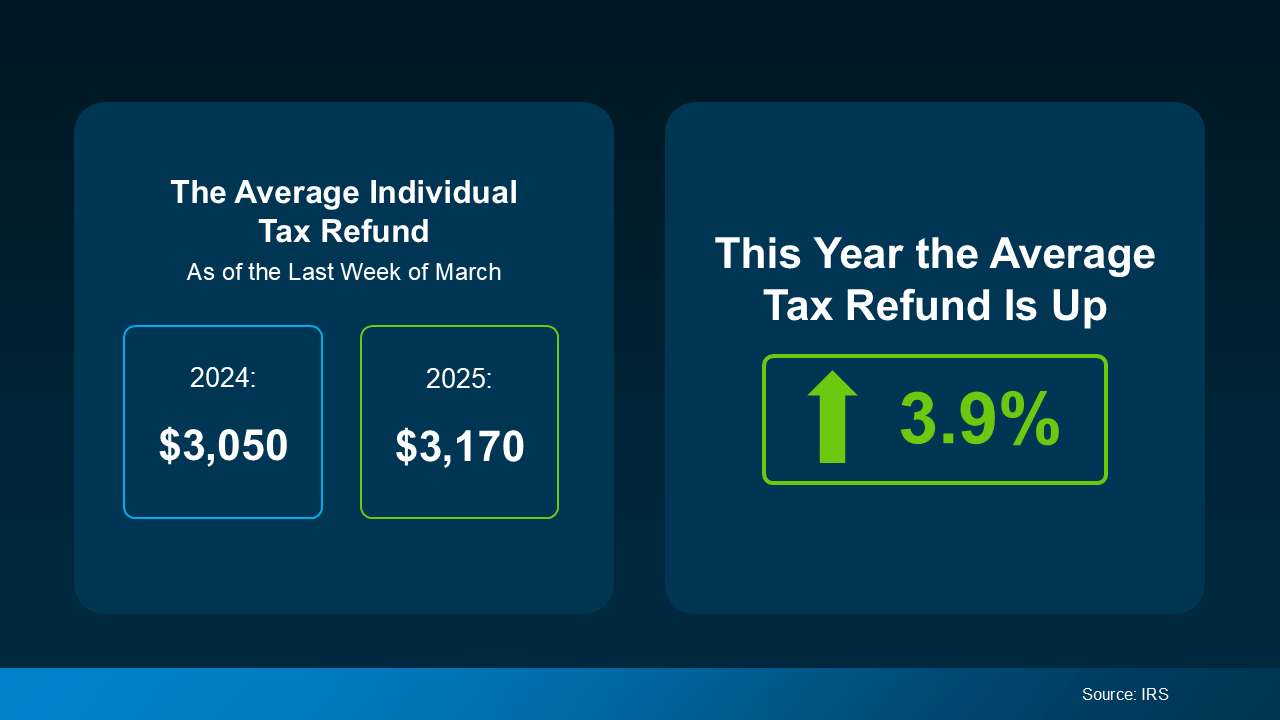
Recent data from the Internal Revenue Service (IRS) has found that the average individual’s refund is 3.9% higher this year. And while that’s not a huge increase, it can make a big difference if you’ve been struggling to save. The graphic below visualizes the new IRS data, comparing the average tax return in March 2024 to March 2025.
Your own personal tax refund will likely vary, but any financial boost helps when you’re saving for a home. According to Freddie Mac, the following are several ways you can put your tax return to good use when homebuying:
- Saving for a down payment – A down payment on a home is often one of the biggest obstacles to homeownership that buyers face. Saving your tax refund for a down payment can be a smart way to make this major step easier. Keep in mind while a 20% down payment may be common, it’s not typically a hard requirement to buy.
- Paying for closing costs – Usually due at closing, closing costs include fees for services like the appraisal, title insurance, and underwriting of your loan. While these vary by state, they’re often between 2% and 6% of your home’s total final purchase price. As a much lower percentage of your home’s price, closing costs can be a great use of your yearly refund..
- Lowering your mortgage rate – Lenders sometimes give buyers the option to buy down their mortgage rate if they qualify. This allows buyers to pay an upfront fee to lower their initial mortgage rate, reducing monthly payments in the short-term. This option can be particularly helpful if interest rates and mortgage payments are a major homebuying hurdle you’re facing..
Financially speaking, this may be more complicated in practice, but there’s no need to do it all on your own. Working with an experienced, trustworthy real estate professional can simplify your financial planning, helping you reach the best decision possible. An agent who understands the homebuying process, your unique financial needs, and your personal goals can make all the difference.
Conclusion
If you’ve been saving for a home, you already know well that every penny counts. Your tax return probably won’t be the final financial boost you need, but there are ways to use it effectively. Planning and identifying how to best spend that money can give you a real, meaningful step toward buying your home.
Are you eager to buy a home but having trouble making things work? Contact us today. We can connect you with local lenders and agents to help make your dream of homeownership a reality.
Get Ready: The Best Time to List Your House This Year Is Coming Soon
If you’re waiting for the best time to list your house this year, then wait no longer. Experts have looked at the data, and the best week to list your house in 2025 is almost here.
A recent study from Realtor.com analyzed years of housing market trends and found that April 13–19 is expected to be the best week this year to list your house:
“. . . we’ve identified April 13-19 as the best week to list for sellers . . . a seller listing a well-priced, move-in ready home is likely to find success. Because spring is generally the high season for real estate activity and buyers are more plentiful earlier rather than later in the year, listing earlier in the spring raises a seller’s odds of a successful sale.”
Why Is This the Best Time?
Spring is typically a strong season for sellers and when the housing starts to really take off every year. But according to Realtor.com, this window could be particularly advantageous in 2025 thanks to a few key factors. Here are the biggest influences that make April 13-19 the ideal week for new listings:
- More potential buyers are looking at your home since demand is usually highest in the spring and summer every year.
- A faster, easier sale since many serious, committed buyers are eager to move before summer.
- Higher chances of getting the best offer. According to Realtor.com, you could get $4,800 more on average this week, and $27,000 more than earlier in the year.
Want Your House Listed at the Best Time? Start Now
Only a couple weeks are left before the year’s prime listing week, but you can still make the deadline. If you’ve been planning to list for a while, a smart plan and quick action can make it happen. This is where working with a great local real estate agent can make all the difference between selling and not. An expert agent can help you:
- Figure out exactly what you need to do to get your home ready to list and, eventually, sold.
- Prioritize the tasks to make the biggest impact on your listing and chances of selling in the shortest time.
- Identify any quick fixes or easy upgrades to help you attract as many potential buyers as possible.
If your house is already in good repair and condition, your focus should be on quick, value-adding updates. The idea is to eliminate any potential dealbreakers for interested buyers, as Investopedia says:
“You won’t have time for any major renovations, so focus on quick repairs to address things that could deter potential buyers.”
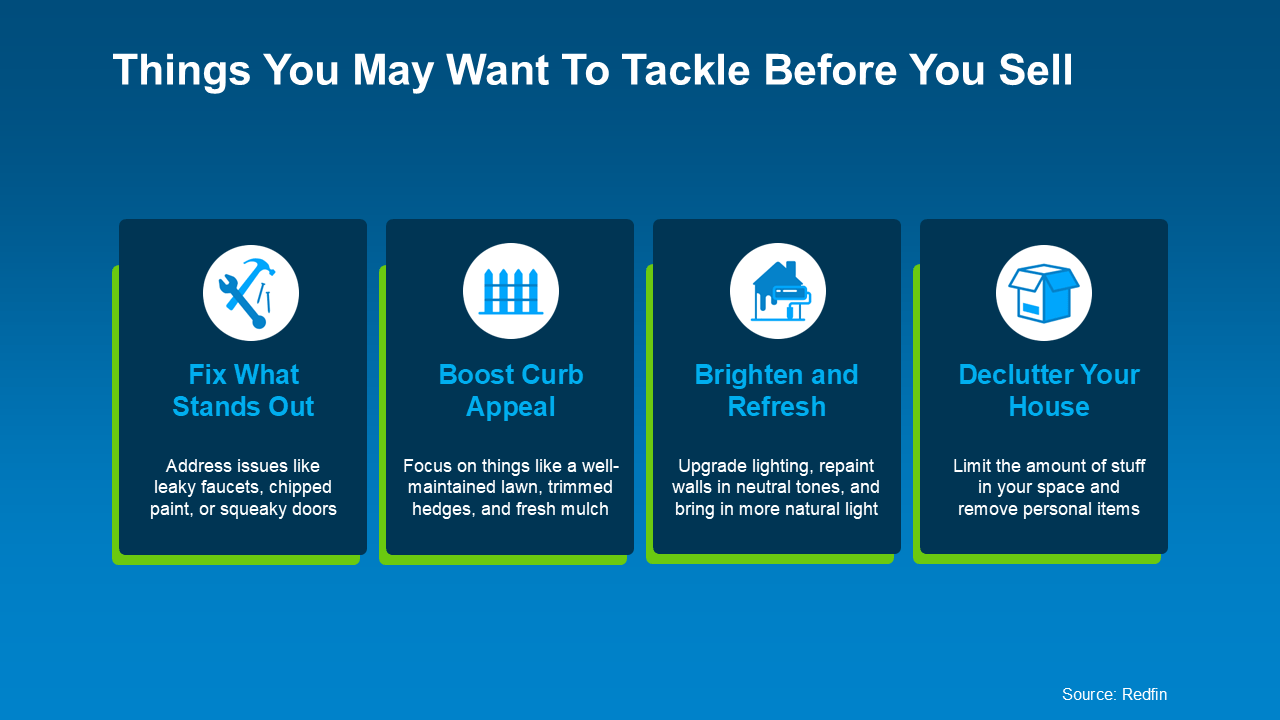
With the April 13-19 window fast approaching, the quicker you can finish these projects, the better. Here are some small projects recommended by Redfin you can do that can make a big difference to interested buyers:
What if You’re Not Ready to List?
If you don’t think you’ll be ready to list before this windows passes, then don’t worry. Even though Realtor.com expects April 13–19 to be the best time to list, it’s not the only good time to sell. What’s most important is getting your home ready to maximize its attractiveness to buyers when you do decide to list. Even if you list a bit late, there’s still plenty of opportunity before prime homebuying season is over.
Conclusion
If you’ve been waiting for just the right moment to sell, April 13-19 could be the perfect time. Realtor.com projects this as the best time to list your house this year, but there’s a bit more to consider. Making sure your home is fully prepped and priced competitively for your local market can make the difference.
Ready to list but need a real estate agent’s advice and expertise first? Reach out today and we’ll connect you with a local expert who can help you list and sell your home fast.