Facebook
 X
X
 Pinterest
 Copy Link
Will Home Prices Crash Soon? What Expert Forecasts Say

A lot of homebuyers are still sitting on the sidelines, waiting for home prices to drop.
Some are waiting for a crash so they can get a better deal. Others are worried they’ll watch their home’s value drop if they buy now.
Nobody wants to feel like they overpaid or bought too early. But there’s an important question to ask:
What if the crash you’re waiting for never happens?
Based on the latest data from experts, a nationwide housing crash isn’t on the horizon.
Experts Are Not Predicting a Housing Market Crash
You’ve probably seen headlines or social media posts lately saying home prices are about to come crashing down.
It’s true that some markets are seeing small price declines. But a local price shifts are not the same as a nationwide housing crash.
According to Realtor.com data, home prices are still rising in 71% of housing markets across the country.
Unfortunately, negative news tends to get more attention. Stories about price declines in a handful of markets can make it seem like prices are falling everywhere, even when most markets show the opposite.
So, how can buyers get a clearer picture of where home prices may be headed?
One trustworthy source is the Home Price Expectations Survey (HPES) from Fannie Mae.
The 5-Year Home Price Forecast
Each quarter, the HPES asks more than 100 economists, housing experts, and market analysts where they believe home prices are headed based on the most current data.
Even amid today’s ongoing market uncertainty, these experts agreed on one key point:
They do not think a housing crash is coming.
Instead, the average of their forecasts shows home prices rising every year for at least the next five years.
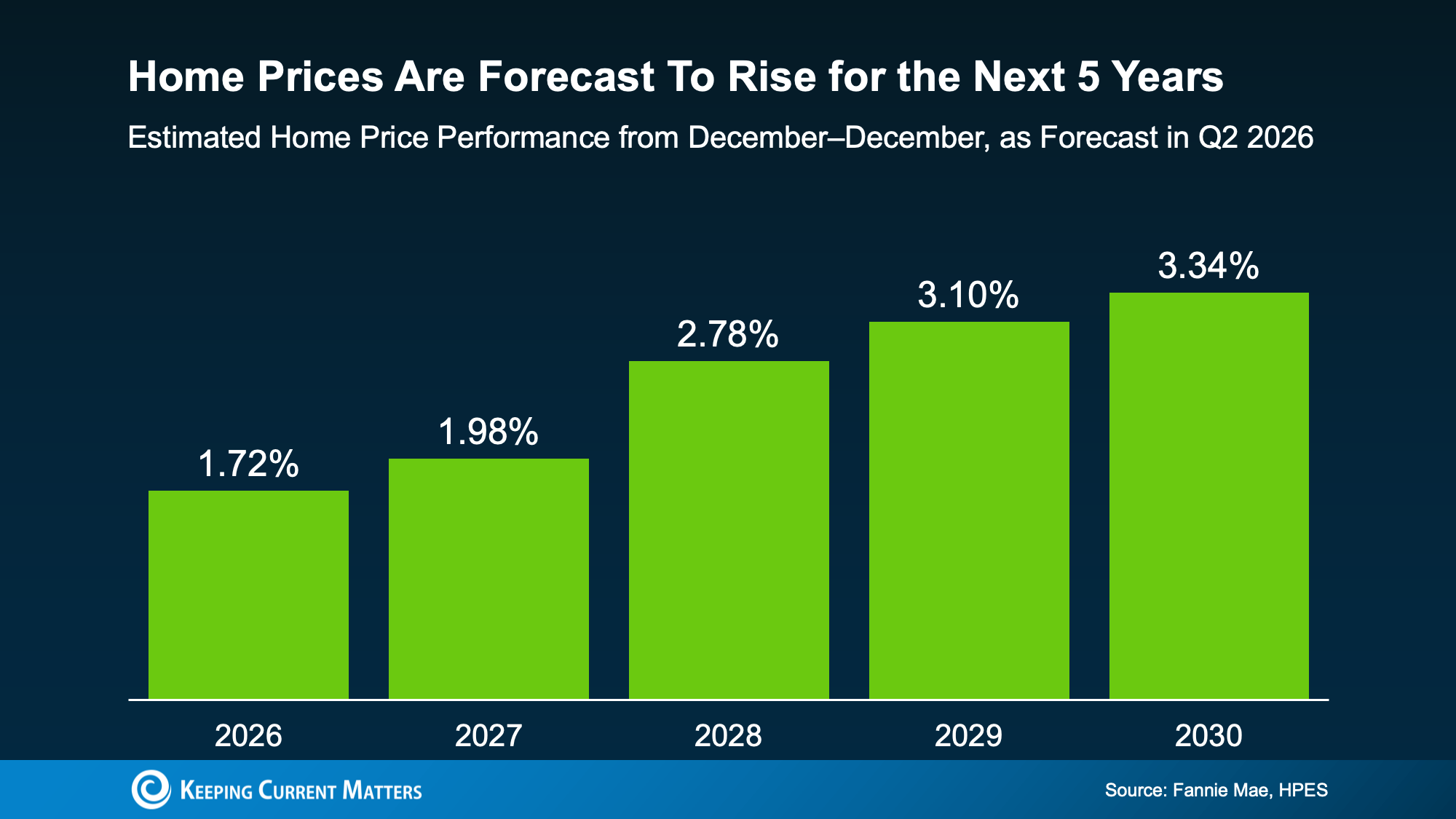
The expectation is for home prices to grow at a more normal pace, unlike the spikes we saw five years ago.
Even the Pessimists Expect Growth
One reason the HPES is useful is that it doesn’t only include optimistic forecasts.
Researchers divided the panel into groups based on how bullish or bearish they were regarding the housing market. Even the most pessimistic group still forecasted that home prices would climb over the next five years.
- The Optimists: Forecast roughly 4.0% annual growth.
- The Pessimists: Forecast roughly 1.0% annual growth.
- The Average: Expects 2.6% annual growth.
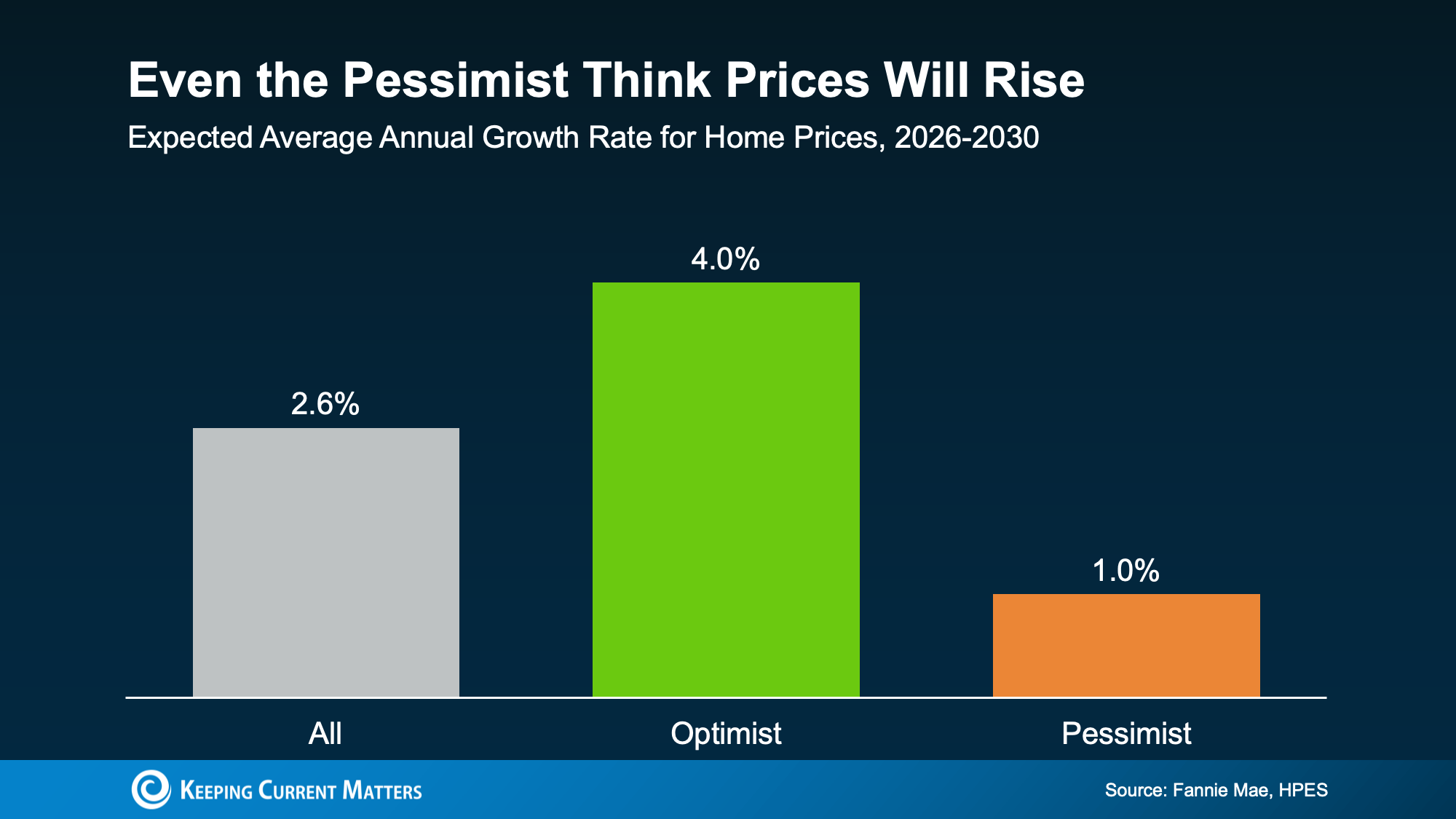
The current debate among housing experts isn’t about whether prices will crash, but rather how much they’ll rise.
That is very different from what many buyers may be seeing on social media.
Waiting for Prices To Fall Could Cost You
If you’re waiting to buy until prices come down, you may be disappointed.
Based on the HPES forecast, a buyer who purchased a $400,000 home this January could gain nearly $40,000 in equity over the next five years from appreciation alone.
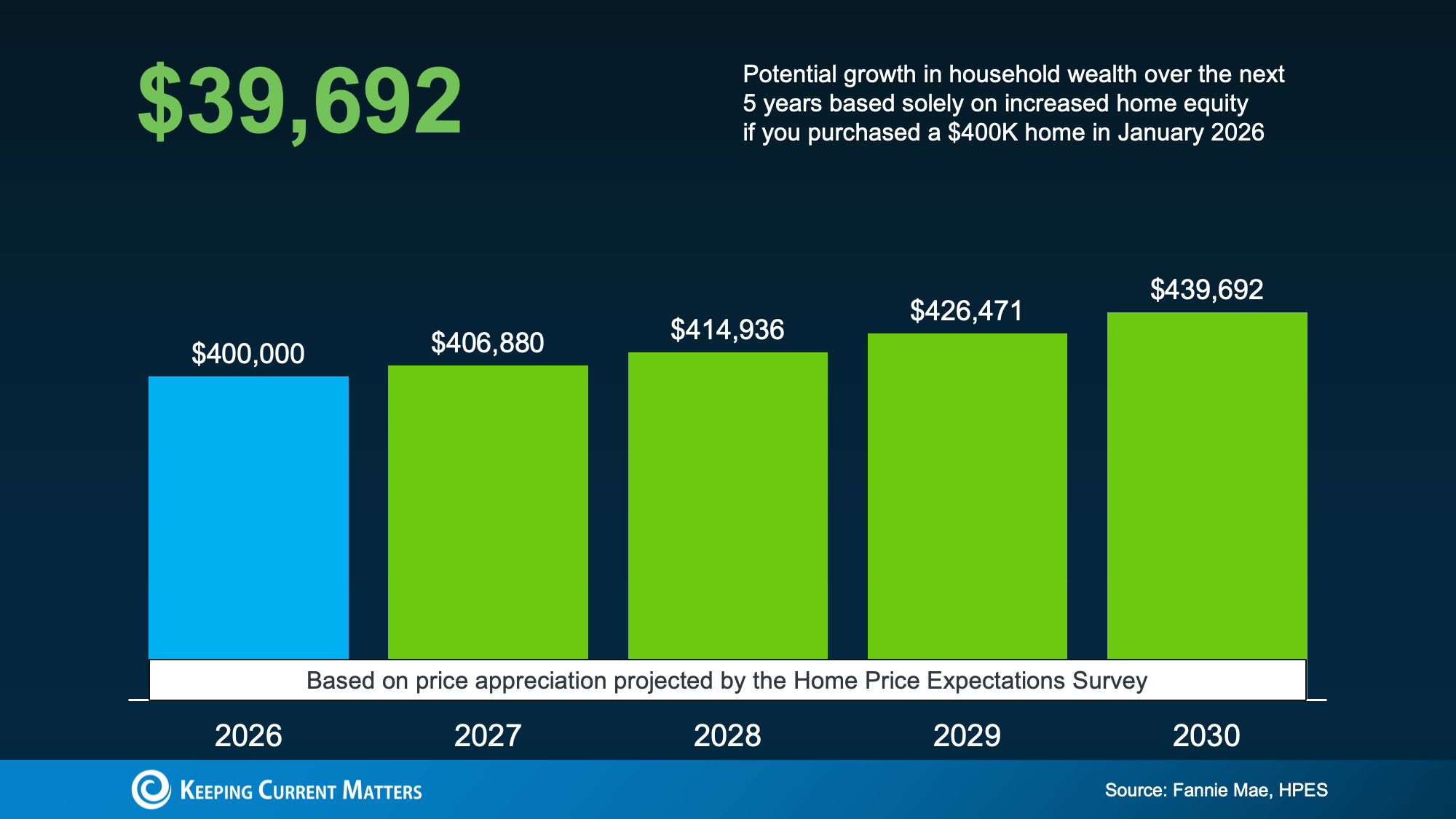
Of course, that is based on a national forecast. Real estate is local, and every market behaves differently.
But broadly speaking, the risk for buyers may not be buying before a crash. It may be waiting for a crash that never happens.
Depending on your specific market, holding off could mean missing out on considerable equity or having to pay tens of thousands of dollars more for the same house five years from now.
Bottom Line
Many buyers are waiting because they believe home prices will fall, but that’s not what experts are predicting.
Home prices are expected to rise more moderately over the next several years, and even the more cautious experts don’t expect a major drop.
Before you put your plans on hold, talk with a local real estate agent who can walk you through what’s happening in your market and help you decide what makes sense for your next move.
Two Big Reasons This Summer May Be the Right Time To Move

A lot of hopeful buyers and sellers are asking the same question right now: “Should I move this summer, or wait until later this year?”
Waiting can feel like the safer choice, especially if you’re hoping mortgage rates will drop or market conditions will feel more predictable. But there’s something important to keep in mind: rates aren’t expected to change much, so waiting may not create the advantage you’re hoping for.
Summer has historically been one of the strongest seasons of the year for both buyers and sellers. And if you delay your move until fall or winter, some of the best seasonal opportunities may start to fade.
Here are two big reasons a summer move may be worth considering.
1. Buyers May See More Fresh Inventory in Summer
One of the biggest challenges buyers have faced in recent years is a lack of affordable options.
Maybe this sounds familiar:
- You find a home you like, but it’s outside your budget.
- You find something in your price range, but it doesn’t fit your needs.
- Or nothing new and interesting hits the market for weeks.
The Summer real estate market often helps with this.
Looking at data from the Realtor.com, summer months consistently bring more sellers into the market than later in the year. This gives buyers a real window of opportunity to see fresh listings.
According to the data, any given summer month typically sees about 32% more fresh options than the average month from September through December.
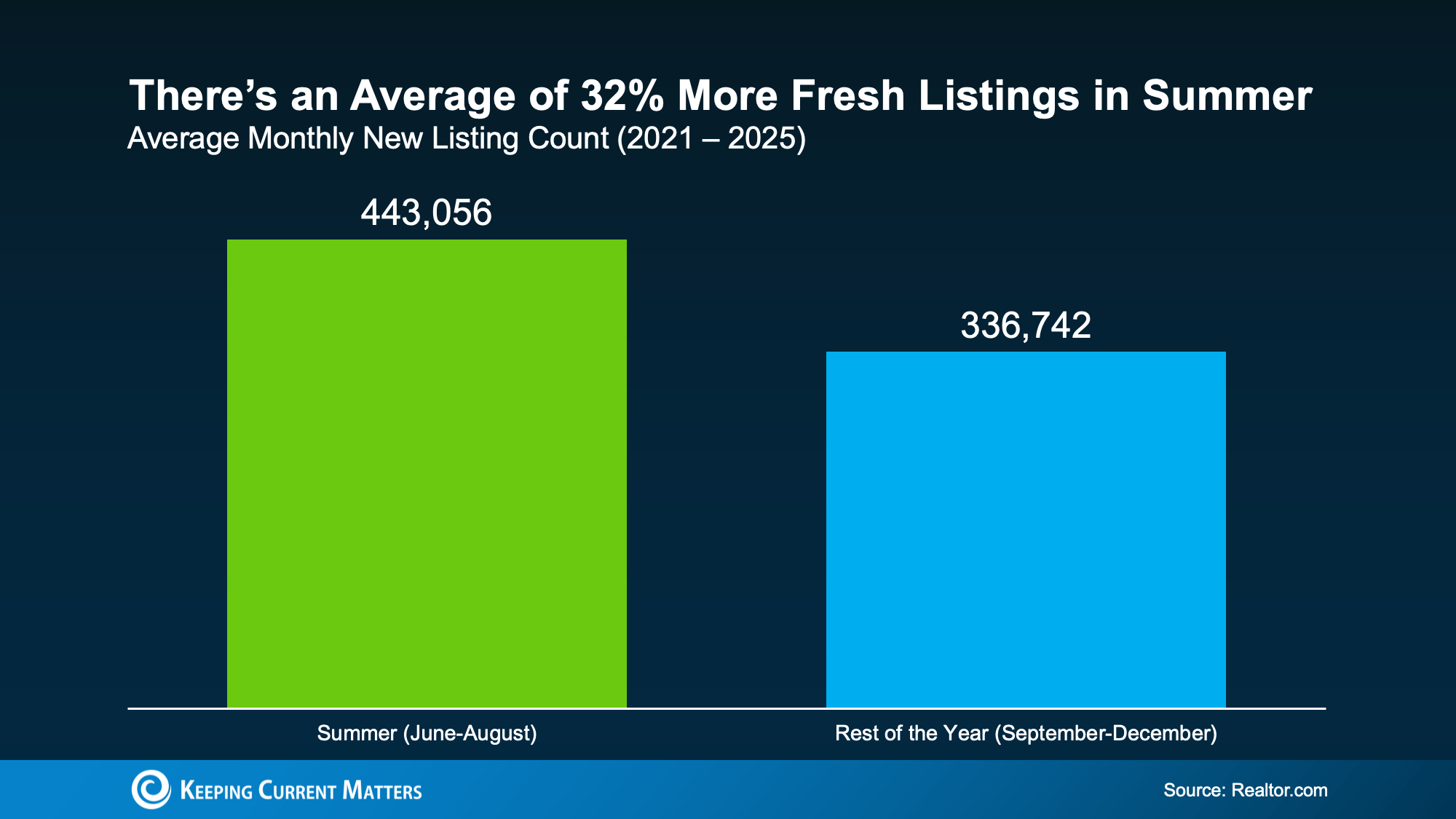
As a buyer, more newly listed homes can increase your chances of finding one that fits both your wish list and your budget. After all, it takes is the one right home hitting the market to change your whole search.
Why Waiting May Limit Your Choices
The summer listing window doesn’t stick around: new inventory tends to slow once summer ends.
By fall, many homeowners who planned to sell have already listed. Some buyers and sellers who were aiming to move before school-year schedules resume may have already made their move or started the process. As a result, new listing activity usually cools heading into fall and winter.
Every year is different, and every local market has its own patterns. But if finding the right home at the right price has been your biggest challenge, waiting until later in the year may not necessarily give you more options.
2. Sellers Often Benefit From Summer Seasonality
If you’re thinking about selling, you may be wondering whether now is the right time. Headlines about lower asking prices, price reductions, and softer market conditions in some areas can make it feel like the moment has passed.
But those headlines don’t tell the full story.
The market is becoming more balanced, and some areas may be experiencing price declines. Still, that does not mean sellers have missed their chance. Seasonality can still work in your favor, depending on your local market and your pricing strategy.
According to the National Association of Realtors (NAR), homes sold during a summer month usually sell for about 4% more than homes sold during the typical month from September through December.
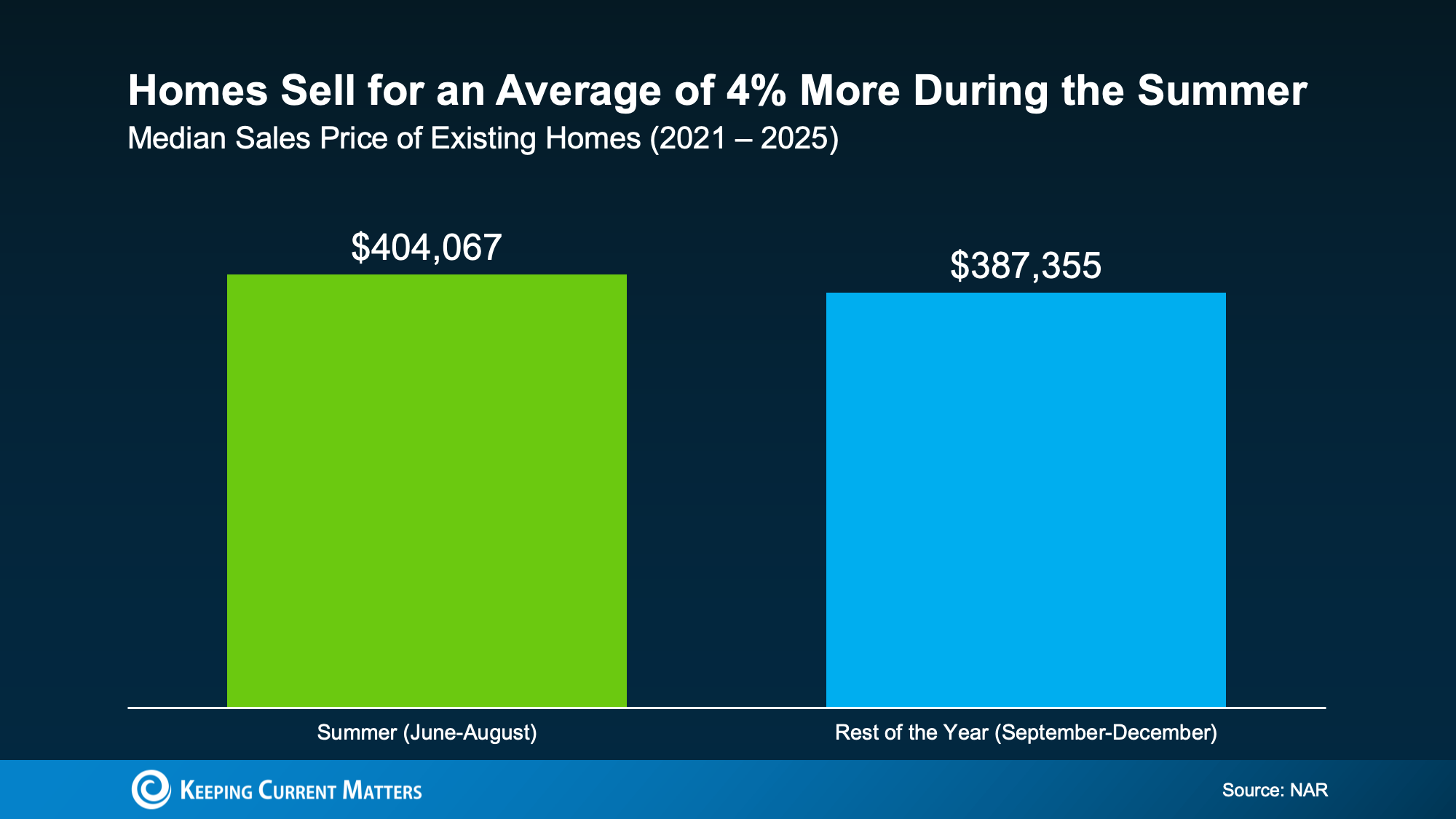
With that said, this doesn’t mean you should price your home 4% higher. In today’s market, overpricing can turn buyers away and cause your home to sit longer than expected.
Instead, consider the timing of your listing. If your goal is to sell for as much as you reasonably can, listing during summer may be a stronger move than waiting until later in the year, when there are typically fewer active buyers.
Why Summer Buyers May Be Motivated
Summer buyers often have a timeline in mind. They may want to move before the next school year, take advantage of warmer weather, or use available time off to tour homes and coordinate a move.
That sense of timing can lead to stronger activity and, in some cases, better offers.
Again, this depends on your local market, your home’s condition, and how well it is priced. But if you were already considering a move in 2026, summer timing deserves a closer look.
Bottom Line
Can you still buy or sell later this year? Of course. But understanding the strengths of the summer market could make a big difference.
For buyers, summer can bring more fresh listings and better odds of finding a home you like. For sellers, summer seasonality may support stronger buyer activity and better pricing opportunities than later in the year.
If you’re planning a move in 2026, connect with a local real estate professional to talk through your goals, timeline, and market conditions. Depending on what matters most to you, summer could be the right time to make your move.
Navigating the Housing Market: What Rising Inflation Means for Your Move

Inflation is moving in the wrong direction again, and that can feel frustrating if you’re thinking about buying or selling a home.
But before the headlines send you into panic mode, it helps to understand what’s actually happening, how it connects to the housing market, and what it may mean for your next move. Simply put: inflation matters, and mortgage rates may stay elevated longer than many people hoped, but that does not mean your plans are off the table.
Inflation Went Up. Here’s What That Means
To understand where the economy is headed, we have to look at how the government tracks inflation. One measure that gets a lot of attention is the Personal Consumption Expenditures Price Index, often called PCE.
PCE measures how much more, or less, people are paying for goods and services compared to a year ago. And based on everyday expenses like groceries, gas, utilities, and household costs, you can probably guess why people are paying close attention.
The overall PCE number has moved higher since February. One major reason is the ongoing conflict in the Middle East, which has pushed gas and energy prices significantly higher.
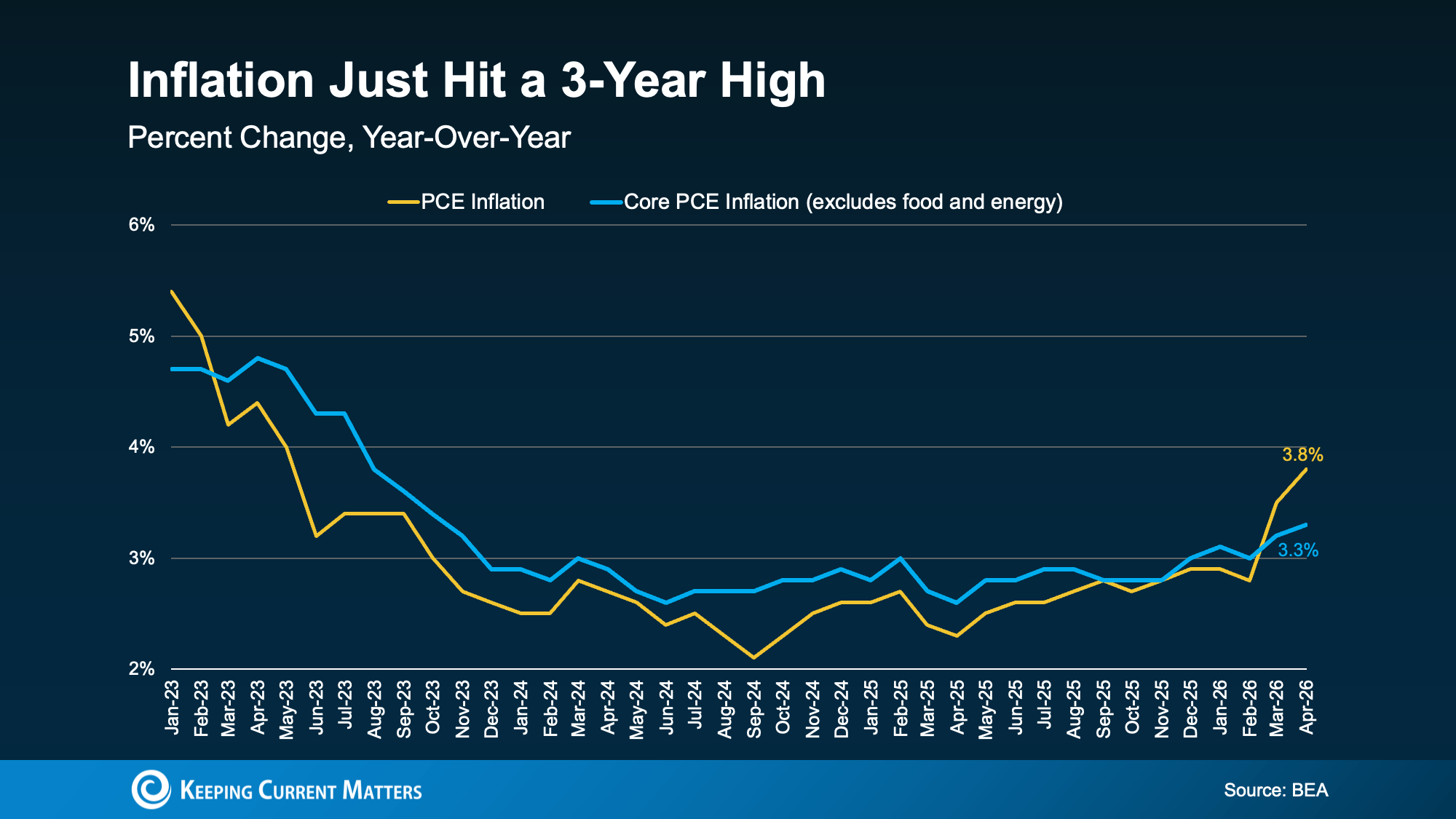
There’s also another version of this measurement called core PCE. Core PCE strips out gas and energy prices because those costs can swing quickly and sometimes make inflation look more volatile than it really is. The Federal Reserve, often called the Fed, watches this number closely.
Here’s the somewhat encouraging part: core PCE is rising, but not as quickly as the overall inflation number. That suggests part of the recent inflation spike may be tied to overseas events and energy prices. If those pressures ease, inflation could settle down somewhat, too.
Why Inflation Matters for Mortgage Rates
Inflation and mortgage rates are connected because inflation influences how the Fed thinks about interest rates.
When inflation is high, the Fed may keep the Federal Funds Rate elevated, or even raise it, to help slow spending and bring inflation back down. Mortgage rates do not move in perfect lockstep with the Federal Funds Rate, but the Fed’s decisions can still influence the broader rate environment buyers face.
According to recent data from CME FedWatch, there’s roughly a 50/50 chance that the Fed raises the Federal Funds Rate before the end of 2026.
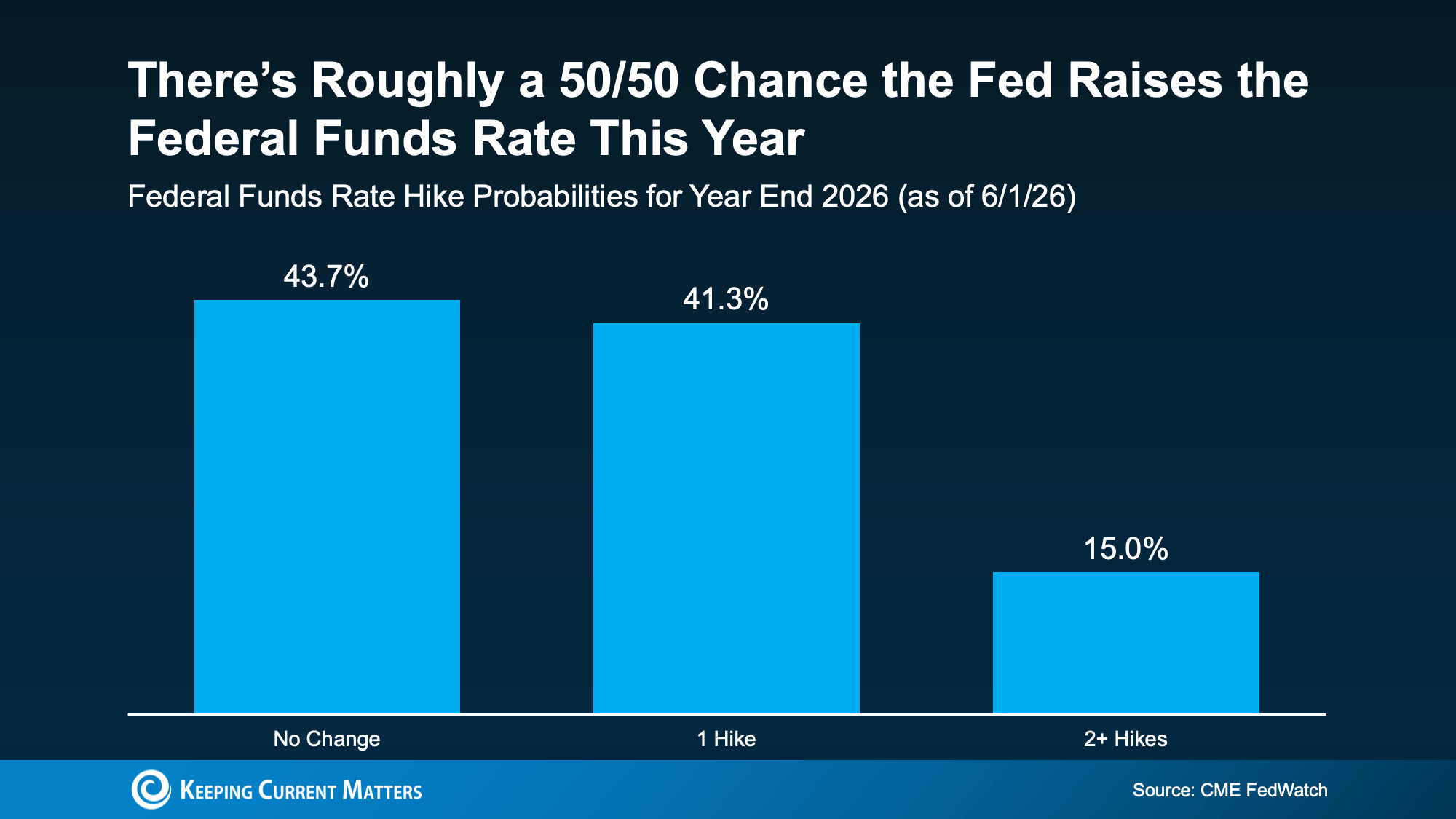
This “higher for longer” reality means mortgage rates are probably not coming down as soon as most people were hoping.
As Bankrate explains:
“Oil prices and bond yields have dropped a bit . . . but they’re still way up compared to the start of spring. Until there’s a resolution to the war, look for both inflation and mortgage rates to stay high.”
This is a disappointing shift for buyers waiting for lower rates, and it means buying strategy matters more than ever.
Why This is Not 2008
A tougher economy does not automatically mean a housing crash.
Today’s housing market is very different from the conditions that led to the 2008 collapse. Here are a few key reasons why:
-
Inventory is still relatively low. Meaning there’s no major flood of homes hitting the market.
-
Many homeowners have strong equity. That gives sellers more options than homeowners had during the 2008 crisis.
-
Lending standards are stricter. Mortgage qualification rules are much tighter than they were before the last housing crash.
- The main challenge is affordability. Today’s pressure is not being driven by a wave of distressed, underwater sellers.
The market may feel uncomfortable right now, but uncomfortable and unhealthy are not the same thing. A challenging market is very different from a crashing one.
What Buyers Can Do Right Now
Higher mortgage rates don’t mean homeownership is out of reach; it just means the path looks a little different.
Here are a few options worth discussing with a trusted lender:
-
Explore Alternative Loans: Ask your lender about Adjustable-rate mortgages (ARMs) or rate buydowns to help lower your monthly payment in the short term.
-
Seek Financial Assistance: Explore first-time buyer programs, down payment assistance, or seller concessions that could help offset costs.
-
Stay Prepared: Keep in close touch with a trusted agent and lender so you are ready to move fast when rates eventually shift.
A lender can explain which options apply to your situation. Mortgage terms, assistance programs, and qualification requirements vary, so it’s worth getting personalized guidance before making decisions.
The Bottom Line
Inflation is still above where the Fed wants it to be, and that means mortgage rates may stay elevated for a while. But if you need to move, strategy matters more than trying to perfectly time the market.
The right agent and lender can help you understand your options, compare scenarios, and make a move that fits your goals.
Wondering what rising inflation and mortgage rates mean for your next move? Connect with a local real estate professional or lender to talk through your options.
Mid-Year Housing Market Update 2026

If you’re feeling confused by the housing market right now, you’re not alone.
Mortgage rates have risen. Home sales haven’t picked up as quickly as many experts expected. And buyers and sellers are still waiting for affordability to improve and market activity to turn up.
The short answer? A lot changed during the first half of 2026.
At the end of 2025, economists were forecasting a stronger housing market for the year ahead. Many expected mortgage rates to come down, affordability to improve more noticeably, and home sales to rebound.
But lingering inflation, economic uncertainty, and growing geopolitical tensions overseas pushed mortgage rates higher than expected. With rates staying elevated for longer, many buyers have continued to wait on the sidelines.
Unexpected factors like these have forced experts to revise their housing forecasts for the rest of the year.
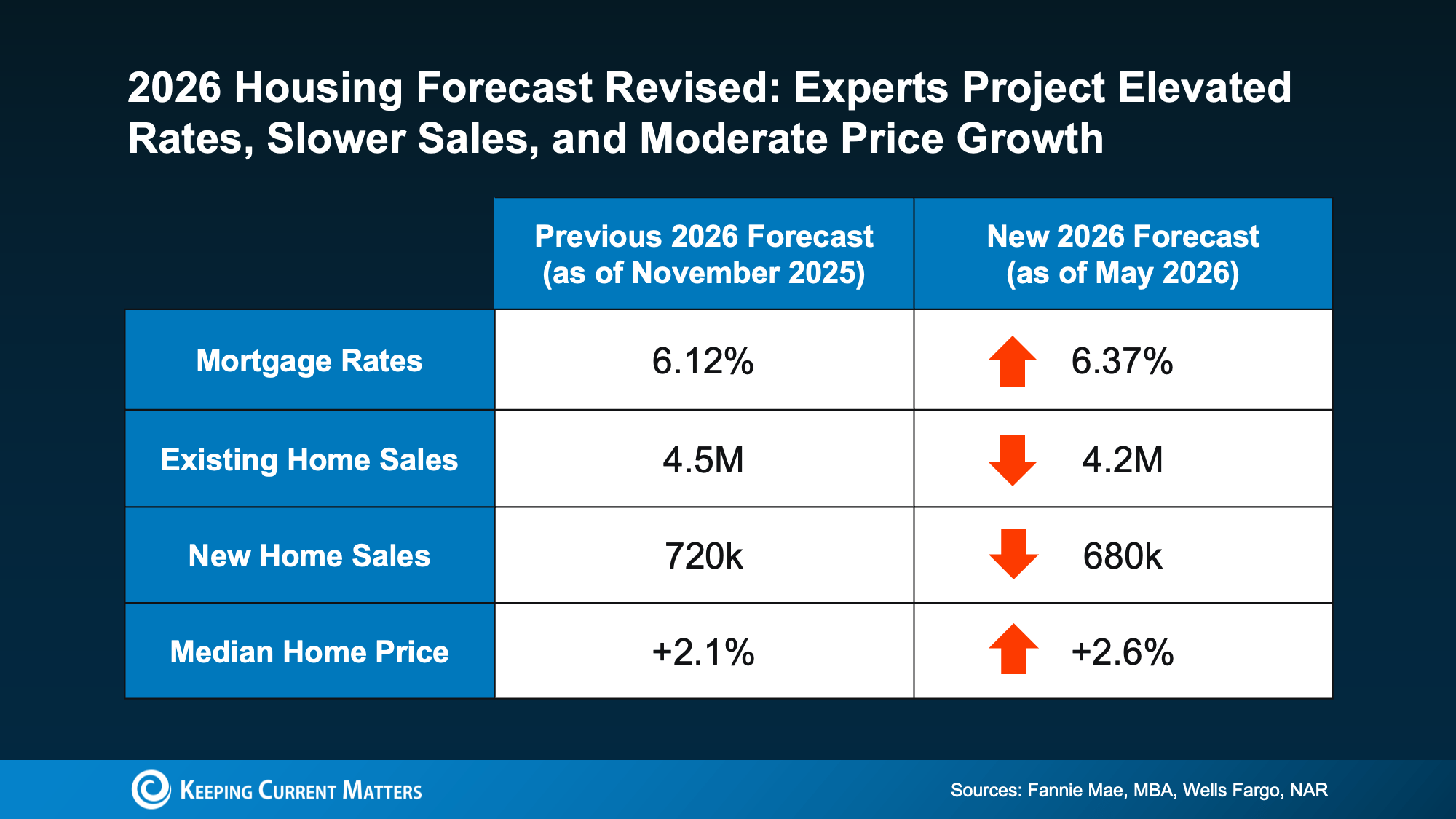
Experts are now projecting elevated mortgage rates (6.37%) and a dip in total home sales. However, home values remain resilient with a projected 2.6% growth in median prices.
So, what does this mid-year housing market update actually mean for you? Let’s break it down.
Mortgage Rates May Stay Elevated Longer Than Expected
Just about everyone would like to see mortgage rates return to the upper 5s or low 6s we saw earlier in the year. But based on current forecasts, experts don’t expect that to happen this year.
Instead, many industry organizations now expect mortgage rates to stay closer to the mid-6% range in 2026. The good news is that this is still lower than rates were a year ago.
Of course, forecasts can change. If inflation cools or overseas conflicts ease, mortgage rates could shift again. But for buyers waiting for a major rate drop, the payoff may not be as big or as immediate as hoped.
For many buyers, the better question may be: Can you comfortably afford a home at today’s rate? If the answer is yes, waiting may not automatically put you in a stronger position.
Existing Home Sales Were Revised Lower
At the end of 2025, experts expected existing home sales to average around 4.5 million in 2026. That forecast has now been revised down to about 4.2 million.
That change tells us something important: affordability is still a challenge, and many buyers remain hesitant.
Higher mortgage rates have made monthly payments harder to manage, especially for first-time buyers. As a result, the market has moved more slowly than originally expected.
But there is still some positive news. Even with the revised forecast, experts still expect more homes to sell this year than last year.
There’s also a pool of buyers who may re-enter the market once rates settle and uncertainty eases. As Lawrence Yun, Chief Economist at NAR, explains:
“There is sizable pent-up demand that could be released into the market.”
Recent improvements in pending home sales also suggest some buyers are starting to move forward again, even with rates still elevated.
For today’s buyers, that’s a big deal. If you can afford a home now, buying before more buyers return could mean less competition than you might face later.
New Home Sales Also Slowed
Builders also expected a stronger year.
Earlier forecasts projected new home sales would top 700,000 in 2026. Now, economists expect new home sales to come in just under that number.
Once again, mortgage rates are a major reason why.
But for buyers, there may be an upside. When new home sales slow, builders may become more motivated to sell available inventory. Depending on the market, that could create opportunities for:
- Builder incentives
- Closing cost assistance
- Price flexibility
- Negotiation on upgrades or finishes
This doesn’t mean every builder will negotiate, and incentives vary by location. But in areas with more new construction, buyers may have more leverage than they would in a a more active market.
Home Prices Are Still Expected To Rise
Here’s one of the biggest takeaways from this mid-year housing market update: even though sales activity has slowed, experts did not revise national home price forecasts downward.
They still expect home prices to rise nationally this year.
Why? Because buyer demand has softened, but the overall number of homes for sale remains relatively limited. That imbalance continues to support prices, even in a slower market.
Local conditions can vary; some markets are cooling more than others, and pricing trends depend heavily on inventory, buyer demand, property condition, and location.
Still, experts are projecting steady price growth rather than a major decline, at least at the national level.
That can be reassuring whether you’re buying or selling. Sellers generally don’t want to see a sharp drop in values. And buyers may feel more confident about a major purchase when prices aren’t expected to fall significantly right away.
What This Means for Buyers
For buyers, the updated 2026 housing market forecast is a reminder to focus on what you can control.
Mortgage rates may not fall as quickly as hoped, but that doesn’t mean buying is off the table. A local real estate agent can help you understand what’s happening in your specific market, including inventory levels, price trends, and negotiation opportunities.
Before making a move, think about reviewing:
- Your current budget
- Estimated monthly payment at today’s rates
- Available homes in your preferred price range
- Local competition from other buyers
- New construction options and possible builder incentives
You should also speak with a trusted mortgage professional to understand loan options, rate scenarios, and affordability based on your situation.
What This Means for Sellers
For sellers, slower sales activity doesn’t point to a stalled market.
Buyers are still active, but many are more selective thanks to tighter affordability. That makes pricing, preparation, and marketing even more important.
A strong selling strategy should include:
- A realistic pricing plan based on current local data
- Thoughtful preparation before listing
- Professional marketing that highlights the home clearly
- Flexibility around buyer questions, timelines, and negotiations
With home prices still expected to rise nationally, many sellers may still be in a strong position. A successful sale will depend on understanding your local market, not relying on broader national headlines.
Bottom Line
The housing market hasn’t rebounded as quickly as experts originally hoped. Still, the market hasn’t totally stalled.
Higher inflation, economic uncertainty, and global tensions caused economists to revise their 2026 housing market forecasts. Mortgage rates are expected to remain higher than originally projected, and home sales forecasts have been adjusted lower.
Even so, more homes are still expected to sell this year than last year, and national home prices are still projected to rise.
The key is to make decisions based on your own local market, budget, and goals.
If you want to understand what this mid-year housing market update means for your next move, connect with our team. We can help you review local trends, explore your options, and decide what makes sense for the rest of 2026.
Smaller Homes, Bigger Value for Today’s Buyers
You might have started your home search with a simple picture in mind: a certain number of bedrooms, a spacious layout, maybe even a home office or dedicated workout room.
Then reality sets in. The homes that fit your budget may be smaller than what you originally imagined.
That’s a common experience for many buyers right now. Affordability is tight, and buyers are taking a closer look at what they truly need in a home. But going smaller doesn’t need to feel like a compromise.
In fact, smaller homes for buyers can offer real advantages in today’s market, especially when considering newer construction, condos, and communities designed with shared amenities.
Why Smaller Homes Are Getting More Attention
Smaller homes are not just a backup plan. They have become a more practical path for many buyers who want to balance comfort, location, and budget.
In fact, newly built homes have been getting smaller for years, and the median square footage of new single-family homes has generally declined since 2014, based on US Census data.
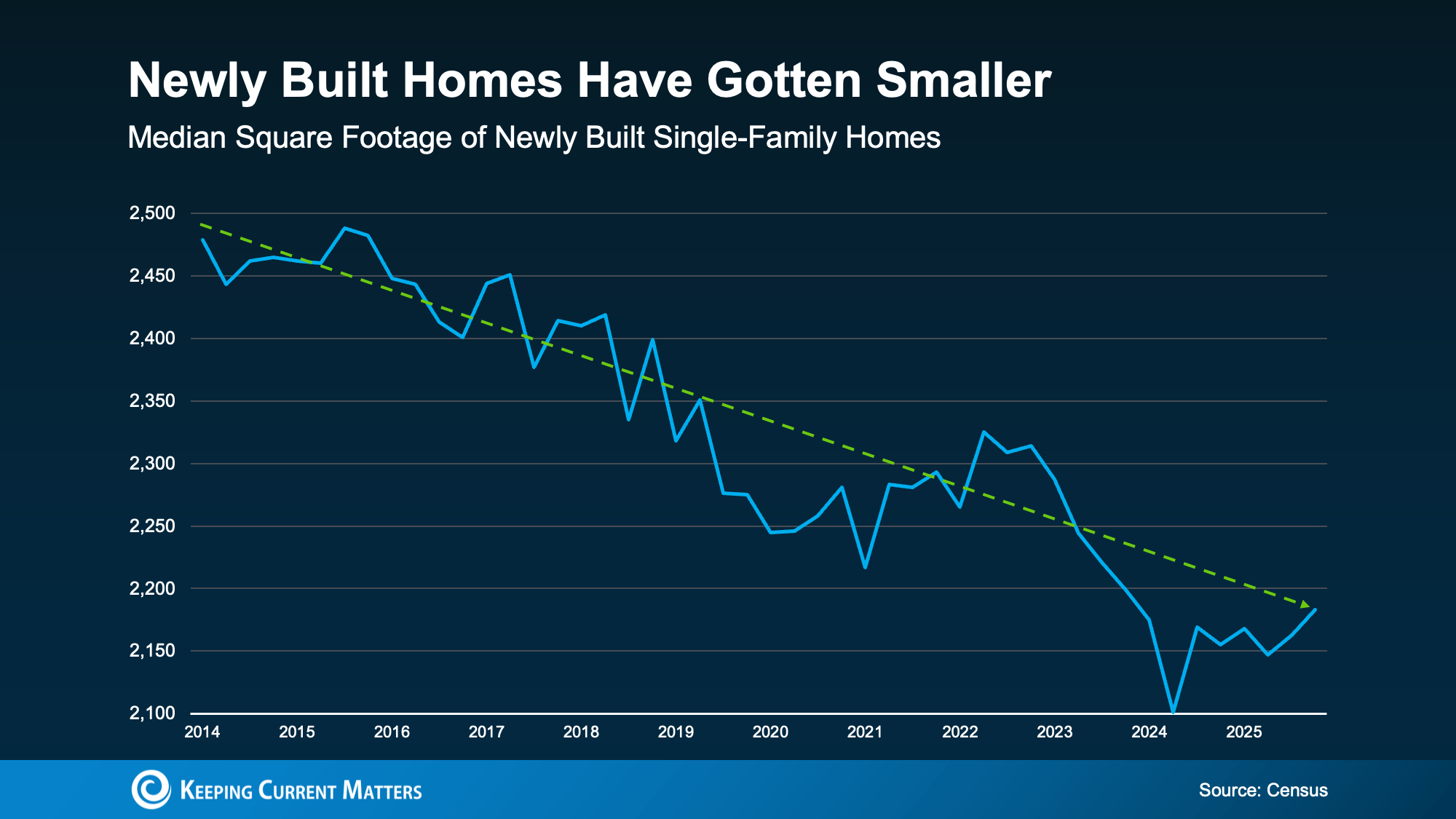
This shift makes sense. Builders pay close attention to what buyers are not only willing, but able to purchase. When affordability becomes a bigger concern, smaller floor plans can help bring new homes within reach for more shoppers.
Smaller New Construction Homes May Be Worth a Look
If the existing homes in your price range aren’t checking enough boxes, it may be time to explore new construction.
Many builders are focusing on smaller homes with modern layouts, updated finishes, and move-in-ready features. Smarter designs can make a smaller footprint feel more functional than an older home with a less efficient floor plan.
A smaller, newer home may offer:
- Modern appliances and finishes
- Open, practical layouts
- Less unused space
- Move-in-ready convenience
- A price point that may better fit your budget
Shifting buyer preferences are a big reason that new home prices have hit a five-year low. If you’ve ruled out new construction in the past, you want to take another look at what builders are offering in your area.
Condos Can Open Another Path to Homeownership
New construction isn’t available everywhere, and in some markets, it may still be outside your budget. That is where condos can be worth considering.
Condos are often smaller than single-family homes, which can help reduce the overall purchase price. According to data from the National Association of Realtors (NAR), the median condo price is lower than the median single-family home price in every region.
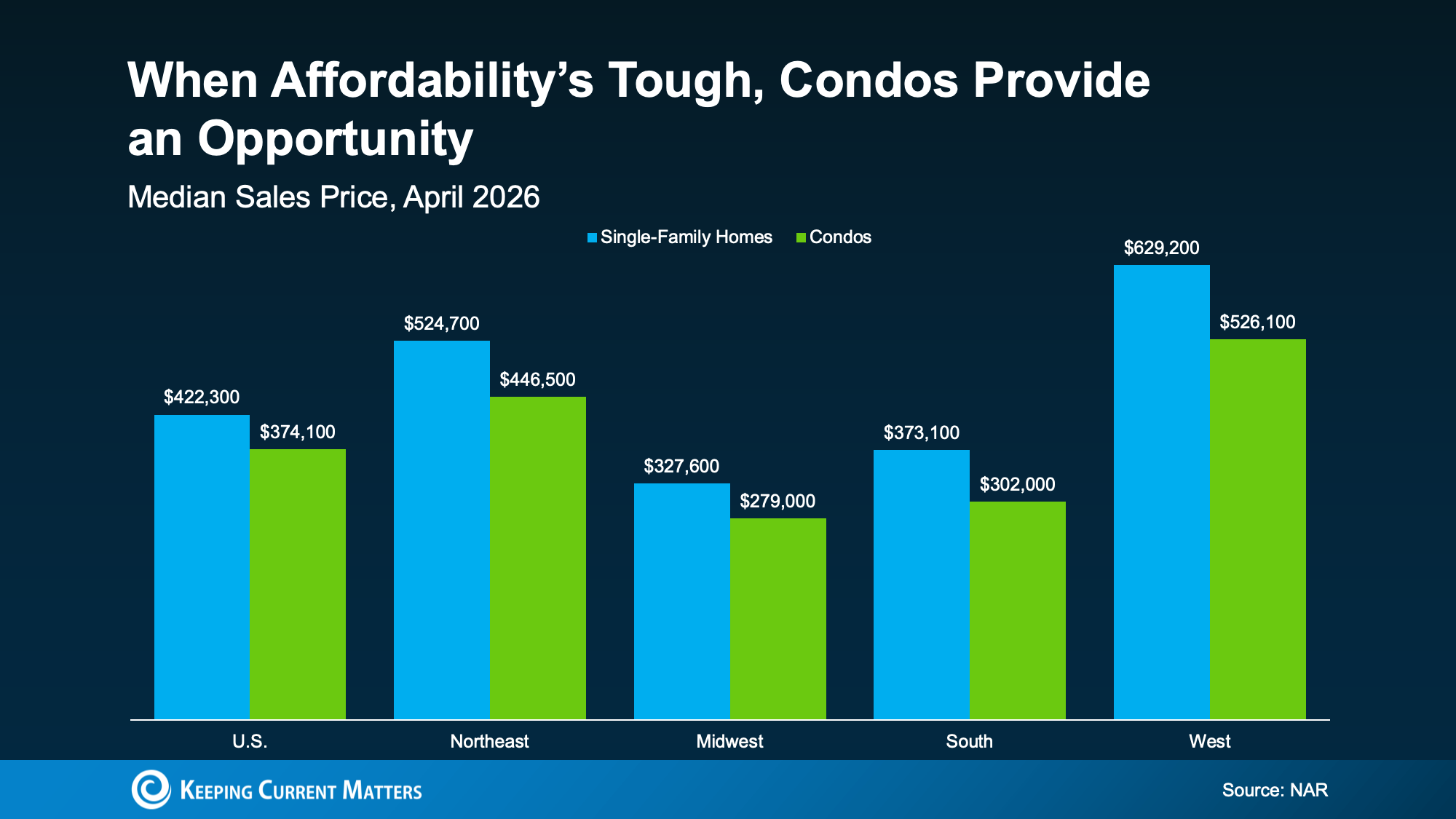
For buyers trying to make the numbers work, this is a considerable difference.
According to NAR, condo sales rose 2.7% last month, and were up year over year. And value is a driving factor. Ali Wolf, Chief Economist for New Home Source, explains:
“In addition to favoring smaller floor plans, more consumers are showing a willingness to live in an attached home. This shift is not driven by a preference for shared walls, but by a pursuit of value.”
For buyers focused on affordability, condos can offer a way to stay active in the market without stretching too far for a detached single-family home.
The Right Community Can Make a Smaller Home Feel Bigger
Square footage is important, but it’s only one part of a home’s blueprint.
A smaller home may still work well if the surrounding community gives you access to amenities that extend how you live day to day. In some condo communities, neighborhoods, and master-planned developments, shared spaces help fill in the gaps.
Depending on the community, amenities may include:
- Walking trails
- Pools
- Fitness centers
- Co-working spaces
- Outdoor gathering areas
Features like these can make a smaller home feel more livable, and functional. For example, if there’s no room for a home office, a nearby co-working space can help. If you don’t have space for a dedicated workout room, a shared fitness center can fill the gap.
Buying a Smaller Home Does Not Mean Giving Up Comfort
A smaller home can still support the way you want to live. Focusing less on total square footage and more on how the space works can offer a different perspective.
As you compare options, consider:
- Layout: Does the floor plan make daily routines easier?
- Storage: Are closets, cabinets, and garage space used efficiently?
- Natural light: Does the home feel open and comfortable?
- Shared amenities: Does the community offer spaces you would actually use?
- Location: Does the home keep you close to the places that matter to you?
A smaller home with the right layout, features, and setting may be a better fit than a larger home that stresses your budget or needs more work.
Bottom Line: Smaller Homes Can Offer Bigger Opportunities
Today’s smaller single-family homes and condos have more to offer than their square footage might suggest. They can give buyers more budget flexibility, access to newer features, and opportunities to live in communities designed with useful amenities.
If your current search feels limited, consider widening your options. A smaller home, new build, or condo may offer opportunities you never knew existed.
Curious about smaller homes, condos, or new construction options in your area? Contact our brokerage to explore what’s available and compare homes that fit your budget and goals.
Housing Affordability Today: What Buyers Should Know

Let’s talk honestly about housing affordability today.
If you’ve been thinking about buying a home, selling your current home, or making a move, you’ve probably seen plenty of headlines about mortgage rates, home prices, inflation, and affordability. Some of those headlines are helpful. Others leave out critical information.
The truth is, affordability is not shaped by one factor alone. Mortgage rates matter, but they’re not the only piece of the puzzle. Wages, home prices, inventory, buyer competition, and your personal financial situation all play a role.
Here’s a clearer look at what’s happening right now: the good, the challenging, and what it could mean for your next move.
Mortgage Rates Have Been Rising
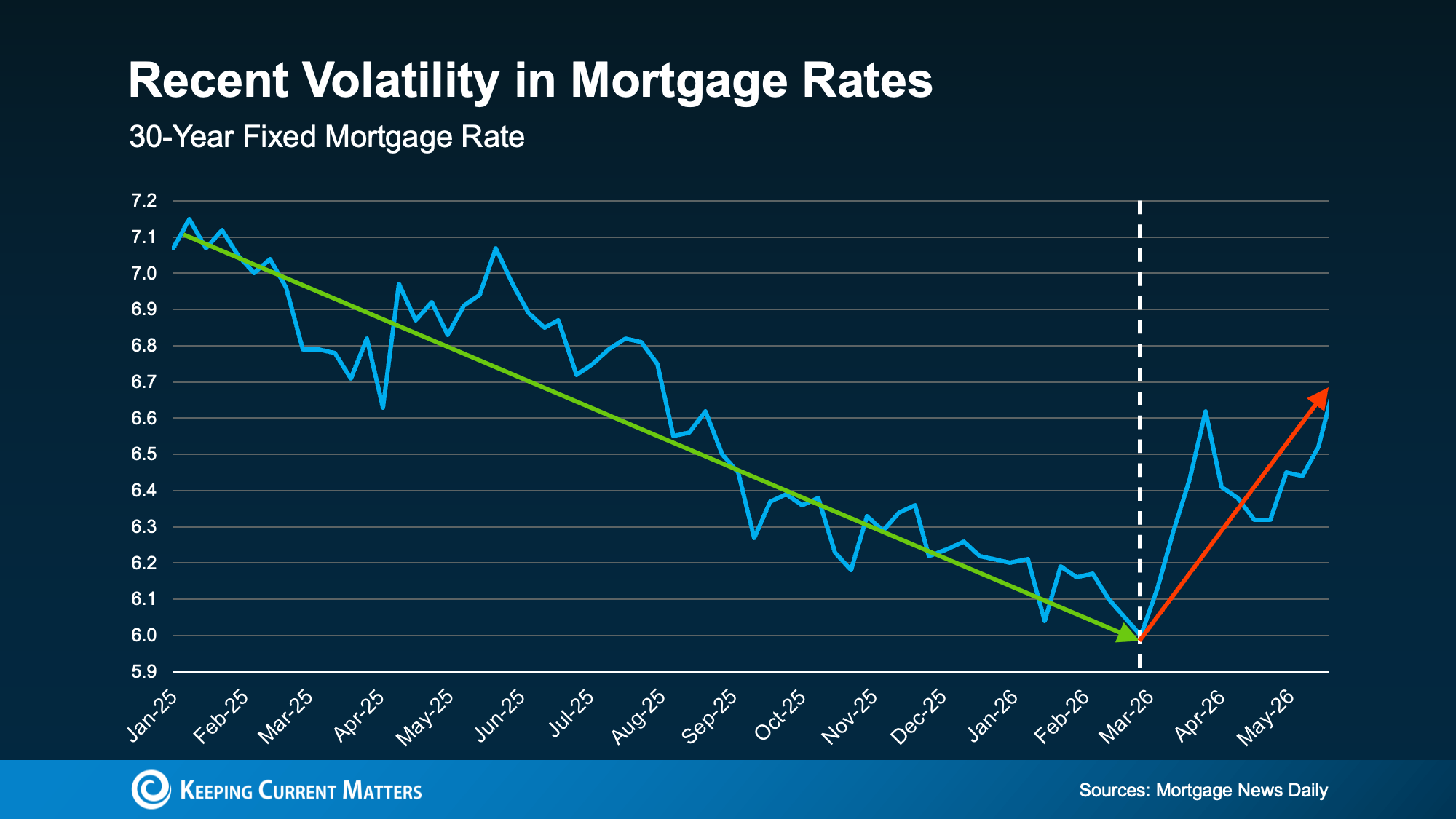
After a year or more of mortgage rates trending down, they’ve started climbing again. And for buyers, that’s incredibly frustrating.
So, why are rates moving higher?
A big reason is uncertainty. Mortgage rates are heavily influenced by broader economic conditions, and uncertainty often puts upward pressure on rates.
Ongoing global uncertainty, continued tensions in the Middle East, and inflation that has not fully cooled off are all having an impact. Colin Robertson, Founder of The Truth About Mortgage, explained it this way:
“You can’t have $100 a barrel oil and not expect inflation to rise, which translates to higher bond yields and mortgage rates.”
That matters because higher bond yields often lead to higher mortgage rates. And when mortgage rates rise, monthly payments can become more difficult for buyers to manage. Recent data from Mortgage News Daily illustrates the effect this has:
Should Buyers Wait for Mortgage Rates To Fall?
With unpredictable rates, it’s natural to wonder if waiting is the safer move.
If rates are higher now, will they come back down once uncertainty eases? Possibly. But there’s no guaranteed timeline.
Rates aren’t likely to drop until inflation cools further and global uncertainty improves. Even then, many experts believe rates may not drop dramatically. They may return to somewhere in the low- to mid-6% range we were seeing earlier this year.
That means waiting for a major rate drop could keep buyers on the sidelines longer than expected.
For many buyers, the question isn’t, “Will rates fall?”, but:
Can I afford the home and monthly payment based on today’s numbers?
If the answer is yes, and you find a home that fits your needs and budget, buying may still be worth considering. No one can predict exactly when rates will fall, how far they’ll fall, or what home prices and competition will look like when they do.
Wages Are Outpacing Home Prices
On the bright side, there’s also some encouraging news that doesn’t always make the headlines.
While inflation has made many parts of everyday life more expensive, recent data from the Federal Reserve Bank of Atlanta and Redfin show wages have been growing faster than home prices.
According to the data:
- Wages have recently been increasing around 4% year-over-year.
- Home price growth has been closer to 2% year-over-year.
That difference matters for home affordability.
When wages rise faster than home prices, buyers may slowly regain some purchasing power. It doesn’t solve the affordability challenge overnight, but it can help make a home purchase more manageable over time.
For buyers, every little bit of financial breathing room helps.
Existing Home Prices Have Held Steady
Another important part of the affordability picture is home prices.
National Association of Realtors data from the past four years show existing home prices have remained relatively steady. There hasn’t been a dramatic runup, but there hasn’t been a crash either. Instead, the market has seen more stability and slower growth.
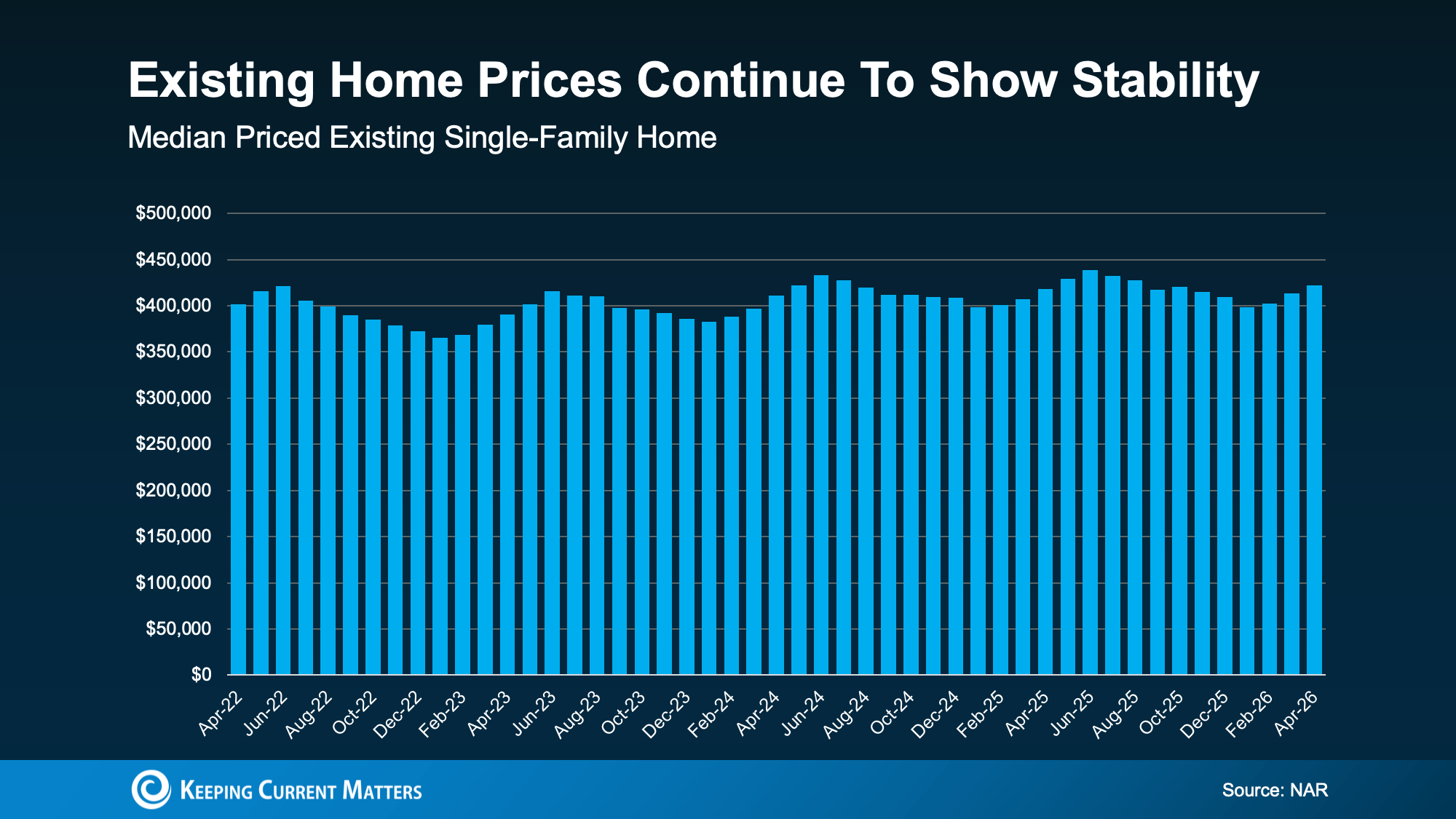
Price stability like this can give buyers a real helping hand.
Part of what’s keeping prices steadier is that buyers now have more choices than they did in the most competitive parts of the market. More inventory can create:
- Less intense competition
- More time to make decisions
- Better opportunities to compare homes
- More room for negotiation in some situations
Of course, this doesn’t mean every market is a buyer’s paradise. Local conditions always matter. But, having more options can help buyers find a home that better fits their lifestyle and budget.
What Housing Affordability Means for Your Move
Today’s housing market is not simple. Mortgage rates are higher than many buyers hoped they would be, and global uncertainty is keeping rates from settling down quickly.
But the full affordability picture is more balanced than the headlines may suggest.
Rates are still a challenge, but wages are growing faster than home prices, and existing home prices have stayed relatively steady. Buyers today might have more options to make stronger decisions than they did when the market was tighter and more competitive.
As always, the right move depends on your budget, goals, timeline, and local market.
Before deciding whether to buy now or wait, it’s worth running the numbers with today’s information. Not with guesses from last year, last month, or national headlines.
Bottom Line
Housing affordability today is about more than just mortgage rates.
Rates are still a major factor, but wages, home prices, inventory, and local market conditions all matter too. If you can afford the monthly payment and find a home that fit your needs, you may not have to wait for the “perfect” option.
Want to figure out the best move for your situation? Connect with a local real estate professional to review current homes, pricing, and your area’s unique market conditions.
VA Home Loan Benefits All Veterans Should Know

Almost half of Veterans (49%) feel homeownership is beyond their reach, according to a recent NewDay USA survey.
But many Veterans could be closer to buying a home than they think.
VA home loan benefits have been available for more than 80 years, but a lot of confusion remains about what’s actually covered. Some buyers assume they’ll need an impossibly large down payment. Others believe they’ll have high closing costs or monthly private mortgage insurance (PMI).
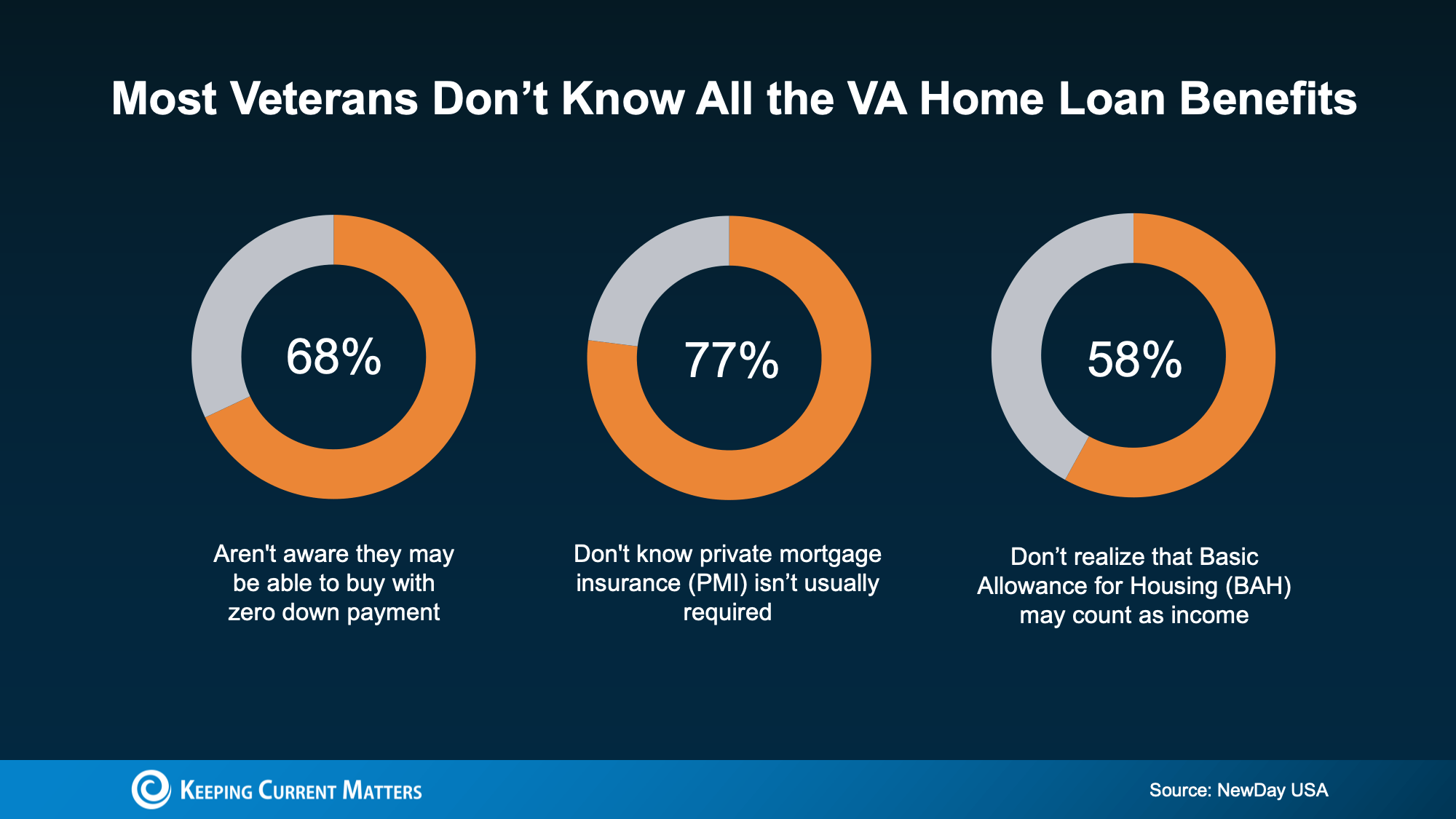
Misunderstandings like these can make homeownership feel farther away than it may really be.
VA Home Loan Benefits Many Veterans Overlook
A VA loan can offer several advantages for eligible buyers. While every buyer’s situation is different, these benefits may help reduce some of the upfront and monthly costs that often make buying a home feel financially overwhelming.
Let’s walk through a few of the biggest misconceptions.
You May Not Need a Down Payment
One of the most valuable VA home loan benefits is the potential to buy with zero money down.
That surprises many buyers. According to the NewDay USA survey, many respondents thought they would need to save between $10,000 and $19,900 before purchasing a home.
For some buyers, that kind of savings goal can take years. But with a VA loan, a large down payment isn’t always necessary. That can make the path to homeownership feel much more realistic for eligible Veterans and service members.
You May Have Lower Closing Costs
Closing costs are another area where VA loans can make a big difference.
According to the Department of Veterans Affairs, VA loans can include limits on the types of closing costs buyers are required to pay. That may help eligible buyers keep more money in their pocket on closing day.
When combined with the potential for no down payment, this benefit can lower the amount you need to save up before buying a home.
Your Monthly PMI Cost Could Be $0
Many loan programs require private mortgage insurance, commonly called PMI, when a buyer puts less than 20% down.
VA loans typically do not require monthly PMI, even when buyers use low or no money down.
That can make a meaningful difference in your monthly housing costs. If you use a conventional loan instead, you could pay $100 to $300 per month in PMI until you reach 20% equity, according to NewDay USA.
Over time, avoiding that monthly cost could add up to thousands of dollars.
Your BAH and BAS May Help You Qualify
For active-duty service members and qualifying reservists, Basic Allowance for Housing (BAH) and Basic Allowance for Subsistence (BAS) may count toward income qualification on a VA loan.
Since both BAH and BAS are non-taxable, they can help increase the amount you can qualify for. A trusted lender can help review your full financial picture and explain how these allowances might apply to your situation.
Why This Matters for Veterans and Service Members
If you have been assuming homeownership is out of reach, it may be worth taking a closer look at your VA home loan benefit.
A VA loan may help eligible buyers by offering:
- The potential for no down payment
- Limits on certain closing costs
- No monthly PMI in many cases
- The ability to include qualifying BAH and BAS income
These benefits don’t guarantee approval, and every buyer’s situation is different. But they may help remove some of the common barriers that keep Veterans and service members from exploring homeownership.
Bottom Line
VA home loan benefits can be a powerful tool for eligible Veterans, active-duty service members, and qualifying reservists.
If you’ve served, are currently serving, or know someone who has, connect with a trusted lender who understands VA loans. They can help you review your options, understand what you may qualify for, and decide whether buying a home makes sense for your goals.
New Home Prices Hit a 5-Year Low

If you’ve assumed a newly built home is out of reach, it may be time to take another look.
The median sale price of a newly built home has dropped to its lowest level since 2021, according to the latest United States Census Bureau data. At the same time, many builders are still offering incentives to help attract buyers.
New Home Prices Have Come Down
After climbing sharply during the pandemic years, new home prices have eased. The median sale price of a newly built home is now around $390,000, which is the lowest level in nearly five years.
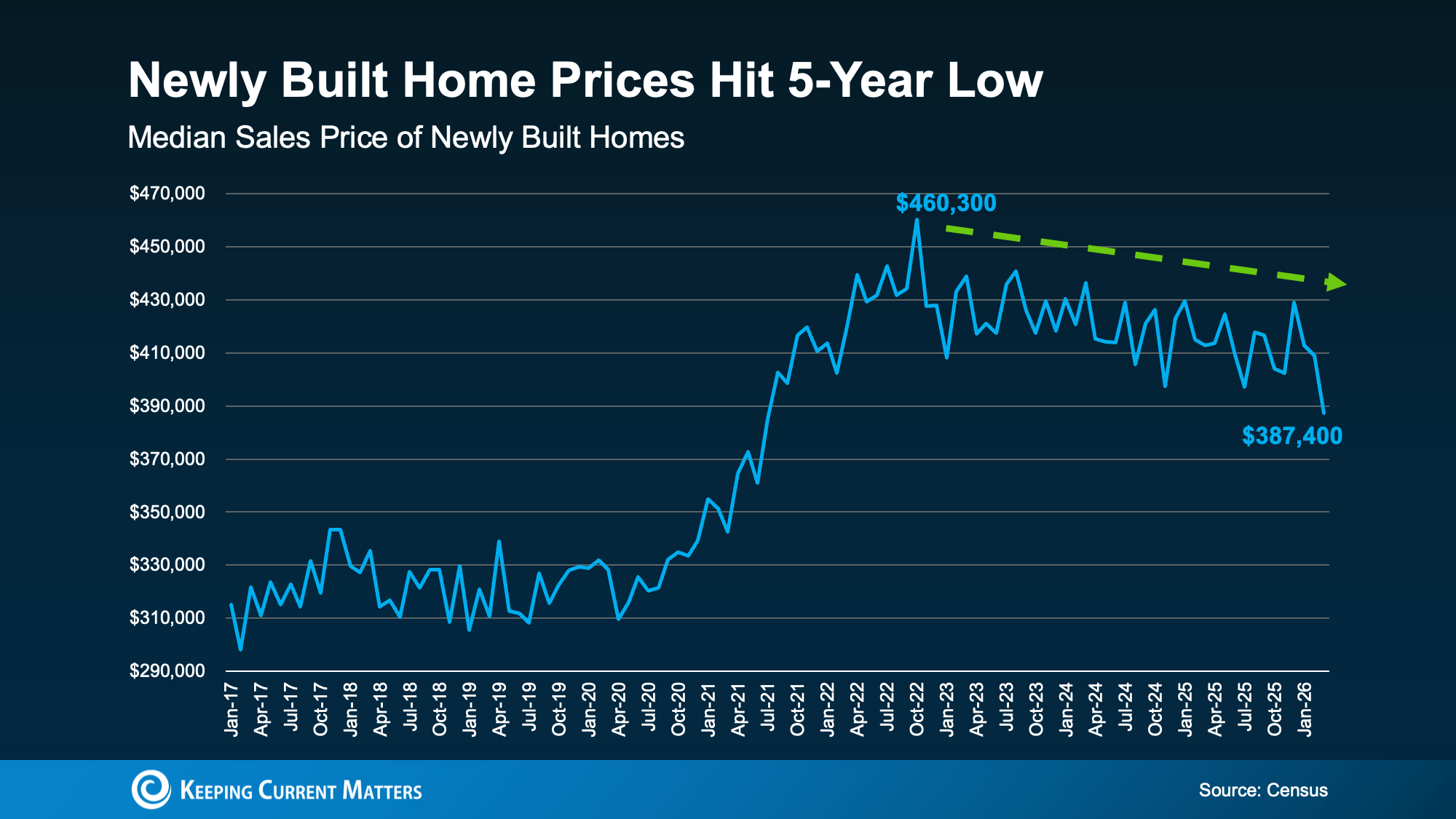
Local markets can vary, but the national trend may work in buyers’ favor, especially in the entry-level price range. According to Zonda, prices in the entry-level new construction segment have dropped about 2.7% over the past 12 months, which is more than any other price tier.
This doesn’t mean every newly built home is suddenly affordable now. But, it does mean that buyers may be seeing some of the best new construction pricing since 2021.
Why Lower New Home Prices Do Not Mean a 2008 Repeat
Lower prices can make some buyers wonder whether the new home market is in trouble. But today’s conditions are very different from 2008.
Builders are being more intentional about how much inventory they bring to market. Instead of letting homes pile up, many are using pricing adjustments and incentives to keep inventory moving.
It’s also important to keep perspective. Even with recent price improvements, new home prices are still higher than pre-pandemic norms. This isn’t a market crash. It’s a builder strategy designed to match today’s buyer demand.
Builders Are Still Offering Buyer Incentives
Lower prices aren’t the only potential advantage for buyers. According to the National Association of Home Builders (NAHB), 60% of builders are currently offering some form of incentive to attract buyers.
Common builder incentives include:
- Closing cost assistance: Some builders may help cover upfront costs, which can reduce the cash buyers need at closing.
- Upgrade packages: Builders might include premium finishes, appliance packages, or design features at no additional cost.
- Mortgage rate buydowns: Some builders might pay to reduce a buyer’s mortgage rate, which can lower the monthly payment.
- Price cuts: More than one in three builders, or 36%, are cutting prices right now, with reductions averaging around 5% off list price.
Why Builders May Be More Flexible Than Sellers
Many buyers assume builders won’t negotiate on price. But builders often have different motivations than individual homeowners.
A homeowner may decide to take a listing off the market rather than accept a lower price. Meanwhile, builders usually need to sell the homes they’ve already built so they can keep projects moving.
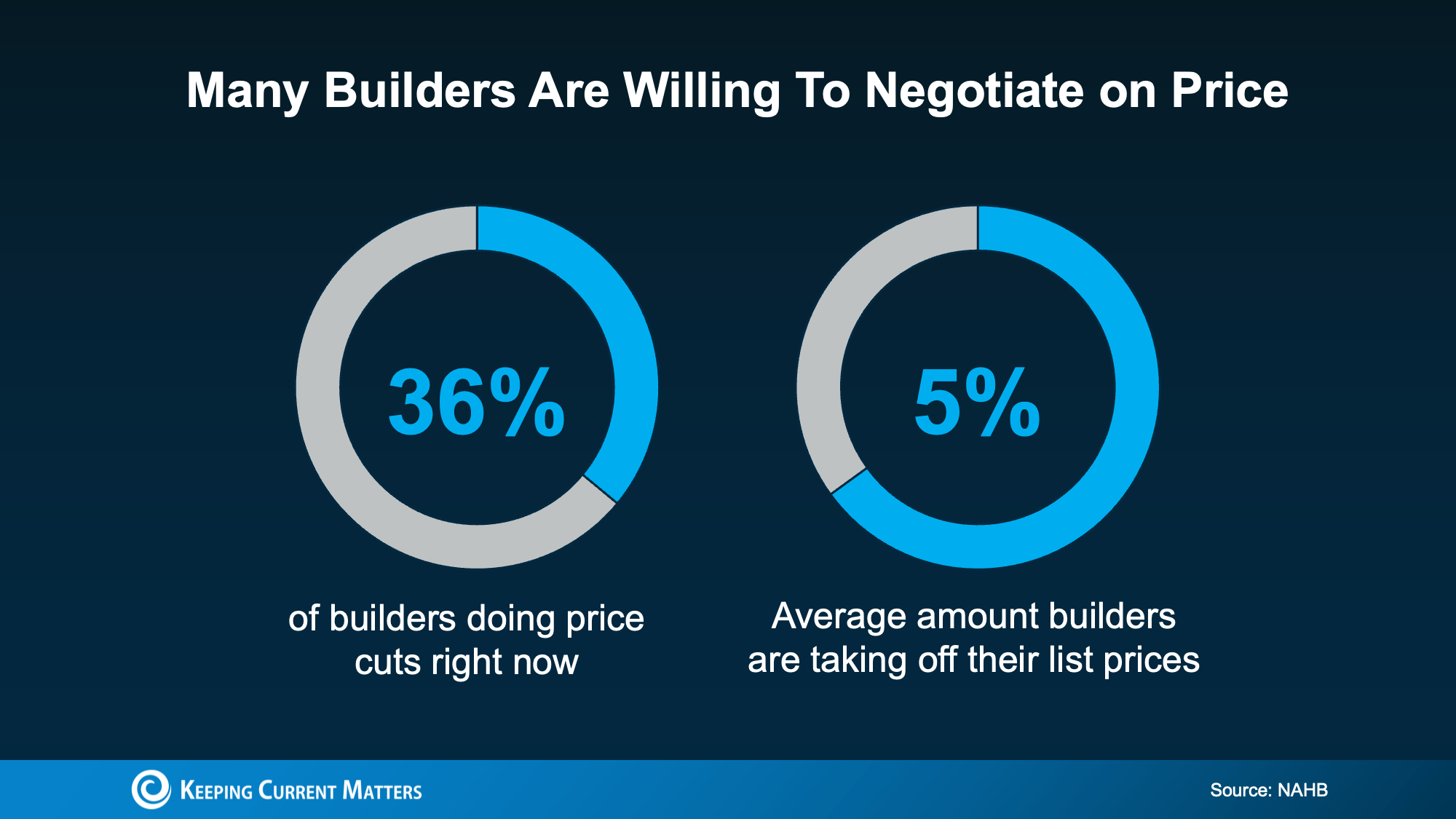
As Joel Berner, Senior Economist at Realtor.com, explains:
“. . . many existing-home sellers resort to taking down their listing instead of taking less than their desired price, but builders are more motivated to sell their inventory than owner-occupants . . .”
That doesn’t mean every builder will negotiate the same way. But it does mean buyers should ask about current pricing, incentives, rate buydowns, and available inventory before assuming a new build is outside their budget.
What This Means for Home Buyers
If you’re shopping for a home, newly built homes may deserve a closer look. Between lower new home prices and ongoing builder incentives, some buyers may find opportunities they did not expect.
Before you make a decision, look at the whole picture:
- The purchase price
- Builder incentives
- Closing cost assistance
- Mortgage rate buydown options
- Included upgrades
- Monthly payment estimates
- Location, commute, and long-term housing needs
A local real estate agent can help you compare new construction homes with existing homes in your market, review builder incentives, and understand what questions to ask before you make a move.
Bottom Line
New home prices have eased, and many builders are still offering incentives to attract buyers. That could give today’s home shoppers more room to explore newly built homes than they’ve had in recent years.
If you’re curious about new construction homes in your area, connect with a local real estate professional to see what’s available and what builder incentives might be offered in your market.
Are Home Prices Going To Fall? Here’s What Buyers Should Know
One of the biggest questions buyers are asking right now is: Will home prices fall after I buy?
It’s a common concern. Buying a home is a major financial decision, and no one wants to feel like they bought too early, or too late. With headlines pointing to changing prices in some markets, it’s easy to want to play it safe by waiting.
But the short-term noise isn’t the whole story. While some local markets may see temporary dips, the bigger, long-term picture is much different: home prices historically rise over time.
What Housing Market Data Shows
When you look at long-term housing data, one trend becomes clear. Home values have generally moved upward for decades.
Yes, there have been exceptions. The housing crash of 2008 is the most dramatic example. And in some years, certain markets have seen slight declines. But outside of major disruptions, home prices have typically either held steady or increased, and data from Case-Shiller and Biello shows this.
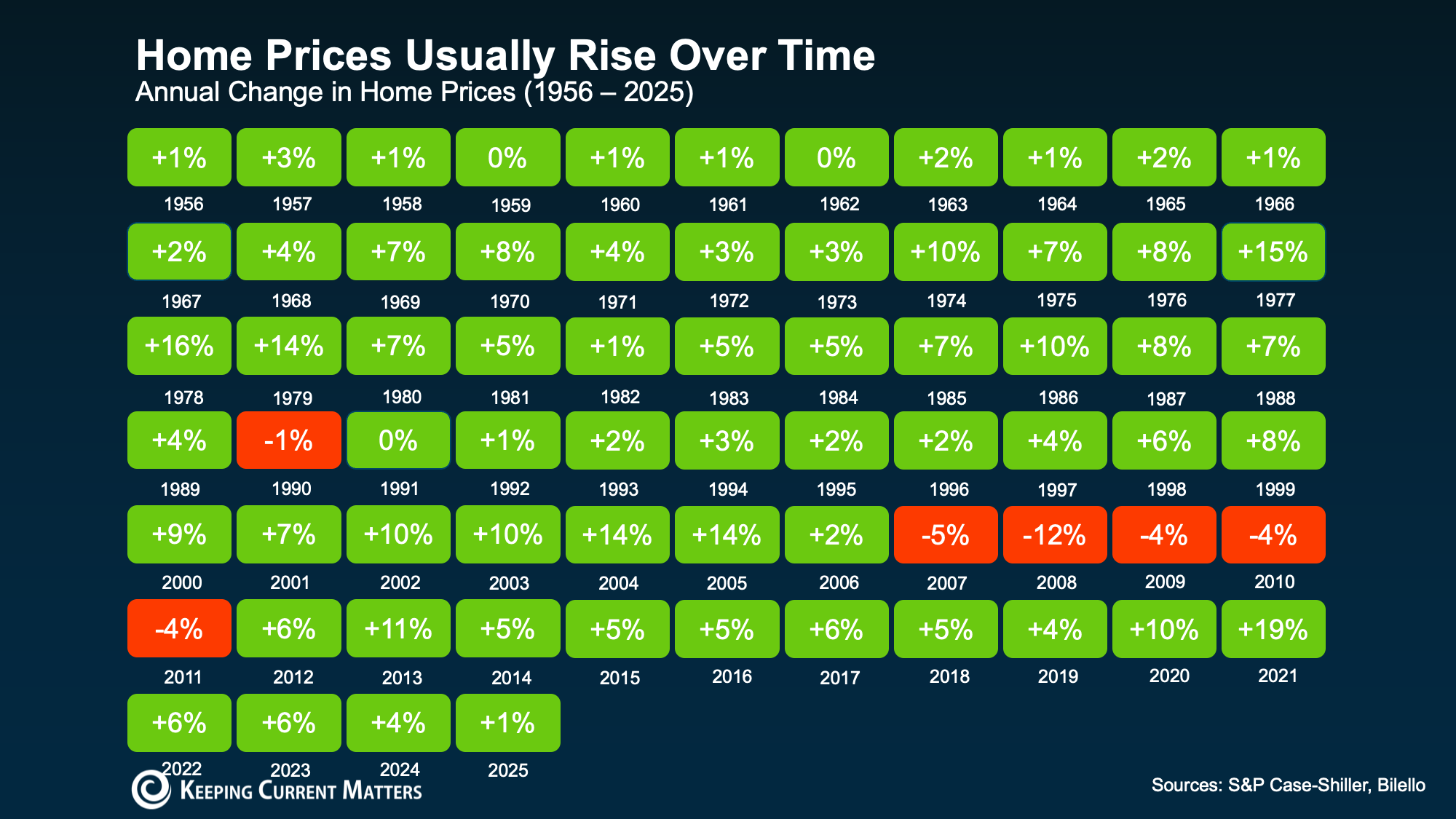
That long-term track record is important for buyers to understand. Real estate is not usually about what happens over the next few weeks or months. It’s about what happens over several years.
Short-term price drops can happen, especially in markets where inventory is rising or buyer demand has cooled. But historically, those dips have proven to be temporary.
Why Home Prices Tend To Rise Over Time
There are several consistent reasons home prices tend to increase in the long run.
People Always Need Homes
Life changes keep the housing market moving. People get married, have children, change jobs, retire, downsize, or relocate to be closer to family. No matter what the market is doing, people always need places to live.
Steady demand like this helps support home values over time.
Housing Supply Is Still Limited
Even though more homes may be available for sale than there were during the tightest years of the market, many areas are still dealing with housing shortages.
When there aren’t enough homes to meet buyer demand, prices tend to stay elevated. Even when demand slows, limited inventory helps prevent dramatic price drops in most markets.
Inflation Plays a Role
Over time, the cost of goods and services tends to rise, and housing is no exception. Land, labor, materials, and construction costs all influence home values.
As the everyday cost of living inflates, home prices naturally move higher too.
What This Means If You’re Thinking About Buying
It’s natural to worry about whether home prices will drop after you buy a home. That concern is especially common among first-time buyers trying to make a smart financial decision.
But what matters most is your own expected timeline.
If you’re planning to buy a home and stay there for several years, short-term market movements matter less. That’s because time gives your home more opportunity to appreciate in value, helping you ride out the kind of ups and downs we’re seeing in some markets.
That’s why many real estate professionals recommend buying only when you expect to stay in the home for at least five years. While there’s no guaranteed timeline, a longer-term approach often gives homeowners a better chance to benefit from rising values.
Real Estate Is Local
Another critical point to remember is that not all housing markets are the same.
Some areas may see home prices soften. Others may continue to rise because demand is strong and inventory remains low. National headlines can give you a general idea of what’s happening, but they don’t always reflect conditions in your specific city, neighborhood, or price range.
That’s why local market insight matters. A trusted real estate agent can help you understand whether prices are rising, flattening, or adjusting in your area.
Don’t Try To Time the Market Perfectly
Trying to buy at the exact bottom of the market is extremely difficult. By the time it’s clear prices have bottomed out, competition may already be increasing again.
Instead of focusing only on timing, focus on whether buying makes sense for your life, your finances, and your long-term goals.
Ask yourself:
- Can I comfortably afford the monthly mortgage payment?
- Do I plan to stay in the home for several years?
- Does buying now support my lifestyle and financial goals?
- Am I prepared for the responsibilities of homeownership?
If the answer is yes, buying may still make sense, even if prices fluctuate in the short term.
Bottom Line: Most Price Drops Are Temporary
So, are home prices going to fall? In some markets, small short-term declines are possible. Historically though, data shows home prices strongly tend to rise over time.
That’s why buying a home is often considered a long-term investment, not a short-term gamble.
You don’t have to buy before you’re ready. But if homeownership fits your goals and you plan to stay put for a while, today’s market headlines shouldn’t scare you away.
For the most reliable picture, talk with a local real estate agent who can explain what home prices are doing in your area and help you decide whether now is the right time to make a move.
4 Ways To Make Your Home Offer Stand Out This Spring

If you’re planning to buy a home this spring, you may have more options than buyers have had in recent years. Home inventory has improved in many markets, and some sellers are more willing to negotiate than they were during the peak of the market.
But that doesn’t mean every homebuyer has an easy path forward.
In popular neighborhoods or areas where there still aren’t enough homes for sale, competition can pick up quickly. And spring is traditionally one of the busiest seasons for real estate, as many buyers hope to move before summer or get settled before the next school year begins.
That’s why making a strong, thoughtful offer still matters. Even in a more balanced market, the right strategy can help your offer stand out when you find a home you love.
Why Strong Offers Still Matter This Spring
Spring often brings more buyers into the market. Experts at Zillow and Realtor.com often say it’s one of the busiest times of year to purchase a home.
More activity can mean more competition, especially for homes that are priced well, located in desirable areas, or move-in ready. So while buyers may have more leverage than they did a few years ago, local market conditions still play a major role.
Here are four ways to give your offer an edge this spring.
1. Start with a Strong and Realistic Offer
It’s always tempting to make a low offer and hope the seller negotiates. In some markets, that approach may work. But if a home is getting a lot of attention, starting too low could cause the seller to move on to another buyer.
Instead, focus on making an offer that is competitive, realistic, and aligned with your local market.
As Bankrate explains:
“There is no magic formula for an optimal home offer. Any offer will be heavily dependent on asking price and local market conditions . . . Your real estate agent will know the local market well and can advise what a competitive — but fair — offer will look like in your area.”
A strong offer doesn’t always mean offering far above asking price. Most times, it means understanding the home’s value, the seller’s position, and how quickly similar homes are selling nearby.
2. Strategize for Multiple Competing Offers
If you find a home that checks all the boxes, another buyer likely feels the same way. That’s why it helps to talk with your agent ahead of time about what you’re willing to do if multiple offers come in.
One option your agent may discuss is an escalation clause. Investopedia defines it this way:
“An escalation clause is a way to automatically escalate your bid by a certain dollar amount, up to a certain ceiling, to compete with other bids.”
This strategy can help you stay competitive without going beyond your comfort zone. The key is setting a clear maximum price before emotions take over.
Still, there are potential risks to understand and keep in mind. If the home appraises for less than your offer price, you may need to cover the difference out of pocket. Your agent can help you decide whether an escalation clause makes sense for your budget and your market.
3. Keep Your Offer as Clean as Possible
Price is important, but it isn’t the only thing sellers consider. The terms of your offer can also make a big difference.
A clean offer is one that feels simple, straightforward, and easy for the seller to accept. That may mean limiting unnecessary requests, being thoughtful about contingencies, or avoiding terms that could make the transaction feel complicated.
As Redfin says:
“Sellers tend to want clean, straightforward offers with minimal strings attached. Keep your requests simple and focus on the essentials.”
This means working with your agent to decide which terms matter most and where you may have flexibility. The trick is to strike a balance, making an attractive offer without giving up important protections.
4. Be Flexible When It Helps the Seller
Sometimes the strongest offer is about more than price. In some cases, there are things that matter to the seller beyond simple dollar amount.
As NerdWallet explains:
“As you prepare an offer, you tend to focus on what the seller has (a house) and what you want (their house). But you’ll gain a competitive edge by viewing the transaction from the seller’s eyes: What does the seller want?”
For example, does the seller need extra time to move? Are they hoping for a quick closing? Would a flexible possession date make the offer more appealing?
Your agent can communicate with the seller’s agent to better understand what matters most. When you can align your offer with the seller’s priorities, you may have a big advantage over buyers who only focus on price.
Bottom Line: The Right Offer Strategy Can Help You Win
Today’s housing market may offer buyers more breathing room, but strong offers still matter, especially during the busy spring season.
If you’re getting ready to buy, work with a trusted local real estate agent who understands your market. The right strategy can help you move quickly, make a competitive offer, and feel confident when the right home comes along.