Facebook
 X
X
 Pinterest
 Copy Link

After a long stretch of buyers competing for too few homes, housing inventory is finally improving. Over the past year, more listings have come to market, and depending on where you live, that shift can open up your options in a meaningful way.
According to Realtor.com, the number of homes available for sale in January 2026 was the highest it’s been since 2020. That matters because getting closer to pre-pandemic levels signals a gradual return to a more typical market, where buyers aren’t forced to make rushed decisions with limited choices.
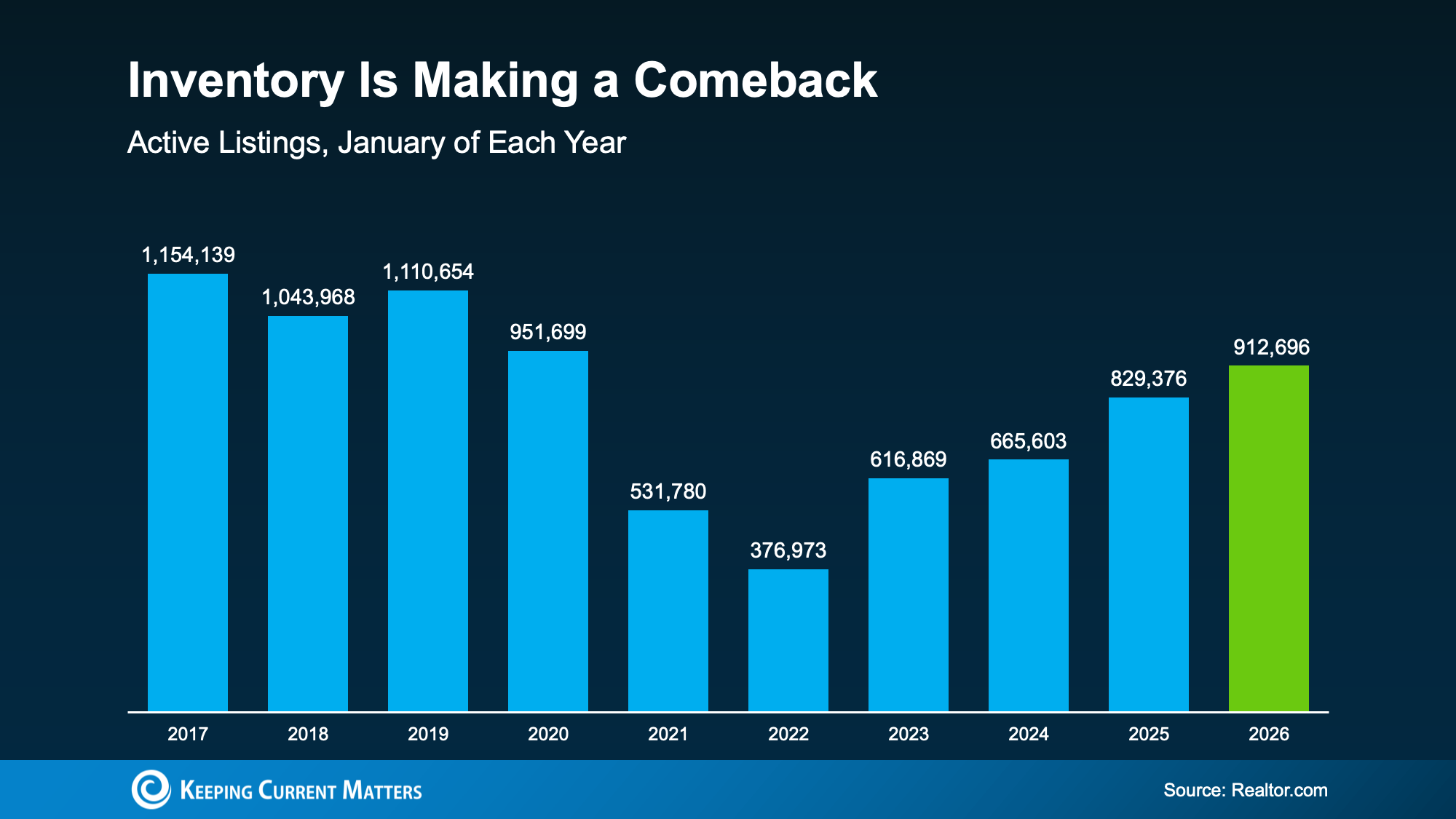
That said, inventory is not back to normal everywhere. And even with growth, more listings alone won’t “fix” affordability or fully rebalance the market overnight. But the changes we’ve seen recently can still have a real impact on how competitive it feels to buy.
When Supply Rises, Buyers Gain Breathing Room
In a low-inventory market, the pressure ramps up fast. Buyers often feel like they have to move immediately, waive protections, or offer well above asking just to stay in the running.
More inventory can reduce that intensity. When there are more homes for sale, buyers typically gain:
- More time to tour homes and think through a decision
- More options across neighborhoods, home styles, and price points
- More leverage to negotiate on price, repairs, closing costs, or timelines
In other words, more listings can shift the experience from stressful to manageable, even if the market still leans competitive in certain areas.
A Growing Share of the Country Is Getting Back to Typical Inventory
Inventory growth is not uniform nationwide. Some markets are seeing a stronger rebound, while others are still tight.
According to Lance Lambert, Co-Founder of ResiClub, in January 2025, just a little over one year ago, only 41 of the 200 largest metros were back to normal inventory-wise.
By around the end of the year, almost half (90) of the largest 200 metro areas were back at or above typical levels. That is a big improvement in roughly a year, and the trend is still moving forward.
Why This Matters for Your Local Home Search
If your area is one of the metros where inventory has returned to typical levels, you may notice:
- More new listings each week
- Fewer “must-bid-now” situations
- More realistic negotiations, especially on homes that sit longer
If your market is still below normal, you may still see multiple offers on well-priced homes. The difference is that, nationally, the direction is improving, and more markets are joining that list over time.
Inventory Is Expected to Keep Growing in 2026
Looking ahead, forecasts suggest the number of homes for sale could rise another 10% this year. If that happens, even more markets should move closer to balanced conditions.
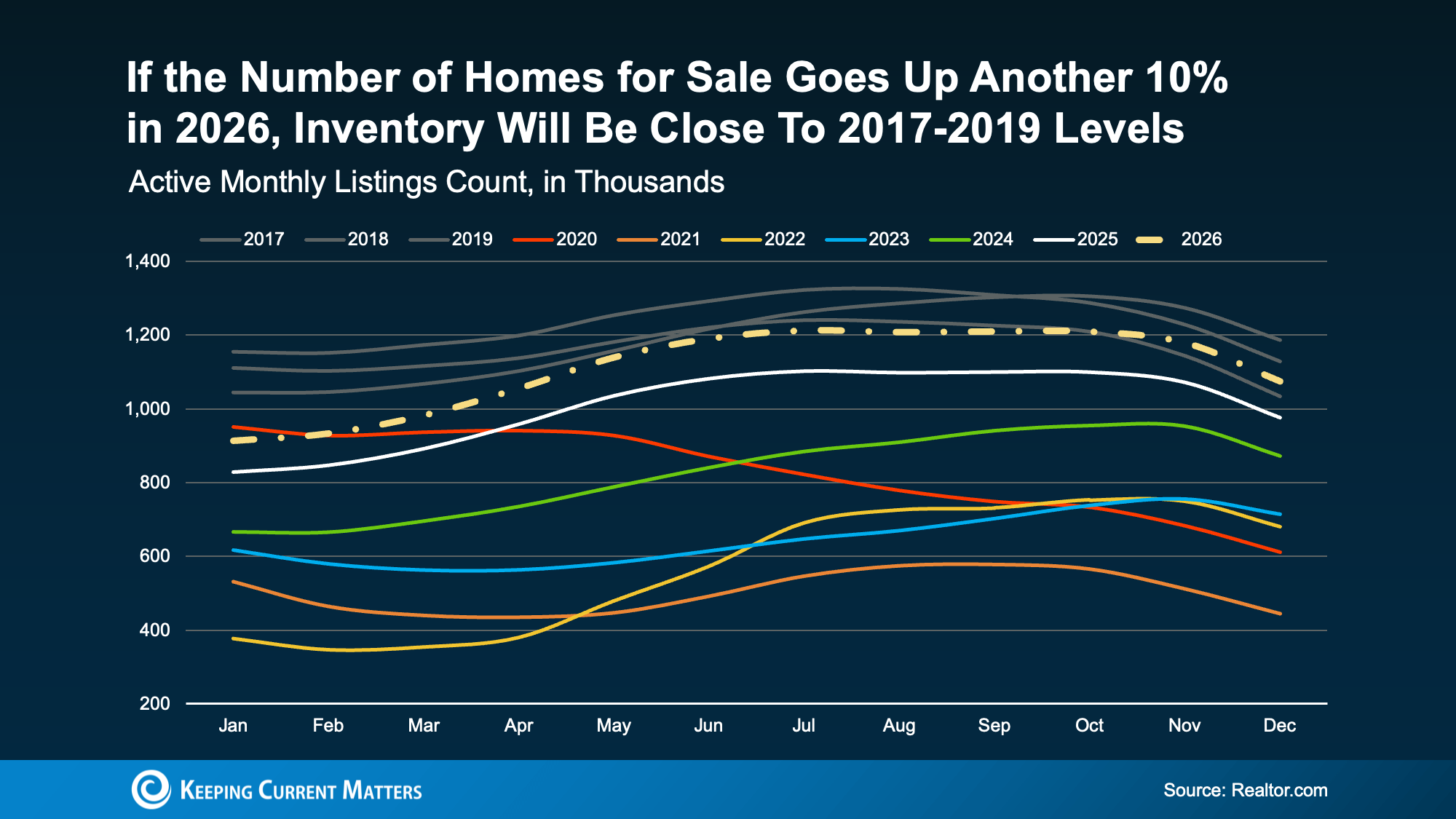
That potential growth could push inventory closer to the levels we saw in 2017–2019 by roughly this fall, which would be a huge milestone for buyers. Of course, reaching something closer to “normal” nationally wouldn’t mean every market feels the same. But, it would increase the odds that more buyers in more markets can find a home without feeling boxed in by a lack of choices.
As Hannah Jones, Senior Economic Research Analyst at Realtor.com, says:
“. . . housing market conditions are gradually rebalancing after several years of extreme seller advantage. Buyers are beginning to see more options and modest negotiating power as inventory improves . . .”
That is the key takeaway: the market is starting to work with buyers again, not against them.
Conclusion
Inventory may not be fully back to normal everywhere, but it’s moving in the right direction. And some markets, it’s already there.
If you have been waiting for a moment when you have more options and a little breathing room, 2026 is shaping up to be the strongest setup buyers have seen in years.
If you want the latest on inventory in your local market, talk to an agent who can break down inventory trends, pricing, and what that means for your next move. And if you’re not sure where to start, you can always reach out to us at CENTURY 21 Affiliated.