Facebook
 X
X
 Pinterest
 Copy Link

You’ve probably seen headlines or social posts claiming that home prices are falling. It’s an attention-grabbing message, and it naturally leads to two big questions:
- Is this the start of a crash?
- What does it mean for my home’s value?
Here’s the reality: a few markets are seeing small, normal pullbacks, but this is not a nationwide crash. In most areas, prices are still rising or holding steady, just not at the breakneck pace we saw a few years ago.
Home Prices Are Still Rising Nationally
A lot of online chatter focuses on isolated price drops without mentioning the broader data. Nationally, prices have continued to trend upward, but at a slower rate than usual.
According to a new report from the National Association of Realtors (NAR):
“Home prices continued to rise in the fourth quarter of 2025. National median prices rose 1.2% year over year to $414,900.”
That’s modest growth compared to the peak “boom” years, but it’s still growth. And regionally, the story varies.
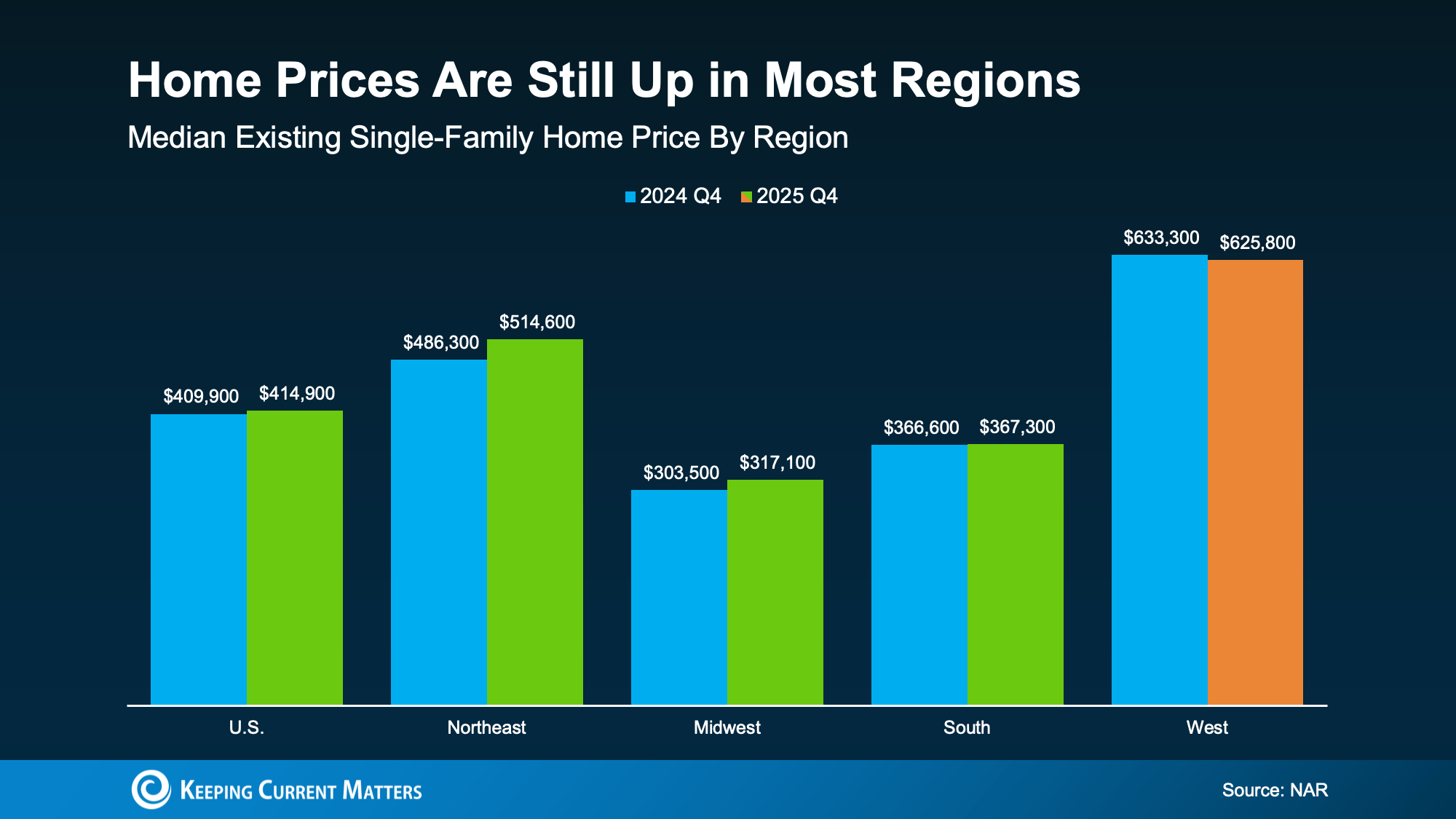
At a glance, the numbers show:
- Northeast, Midwest, and South: prices generally up or steady.
- West: more mixed, with some markets seeing mild price declines.
In other words, the market is cooling and normalizing, not crashing.
Why You’re Hearing So Much About Price Drops
Price declines make for clickable headlines. But a few factors can make a local shift look like a national trend:
- High-profile metros go viral. A dip in one major market can dominate the conversation.
- Seasonality is real. Some months are softer than others, even in healthy markets.
- Affordability has cooled demand. Higher payments can reduce competition and push prices to level off.
Those are signs of a market adjusting, not collapsing.
Some Markets Have Softened, But Context Matters
In the places where prices have dipped, it helps to look at the big picture. Many of those markets saw especially strong appreciation over the last several years. When you compare today’s values to where they were five years ago, homeowners in many “down” markets are still up significantly overall.
According to data from ResiClub and Zillow, price dips in the short-term aren’t always the cause for concern they seem to be. The long-term trends tell a clearer story, and they remain strong for many homeowners.
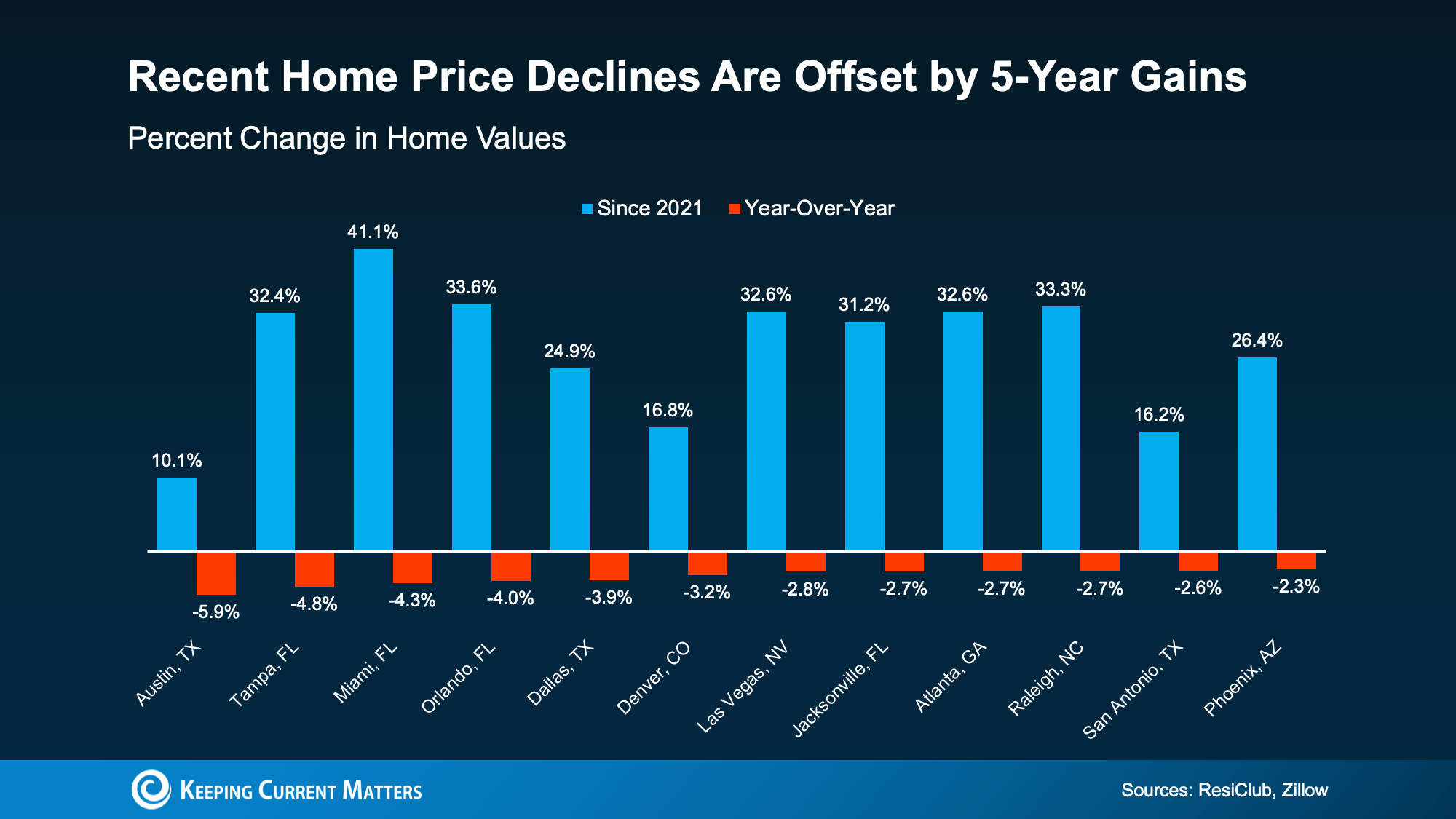
The key point: a pullback after rapid growth is not the same thing as a crash. It’s often a correction toward something more sustainable.
What This Means for Homeowners and Buyers
If you’re a homeowner:
In most markets, you’re not watching value evaporate overnight. Instead:
- You likely still have meaningful equity compared to pre-2020 values.
- Pricing strategy matters more now that buyers aren’t automatically overbidding.
- The best indicator is recent comparable sales in your neighborhood.
If you’re a buyer:
A cooler market can create more breathing room:
- You may see more negotiability in certain areas.
- You may have more time to decide than during the peak frenzy.
- But waiting for a big “crash” could mean missing the right home if your local market is stable.
Real estate is local. The best move depends on your budget, timeline, and the neighborhood you want.
How to Know What’s Happening Where You Live
National headlines can’t tell you what’s happening on your street. To get a clear picture, look at:
- Recent sold prices (comps) for similar homes.
- Days on market and list-to-sale price ratios.
- Inventory levels and new listings.
- Price reductions on comparable listings.
A local real estate agent can help make sense of your market’s unique trends. That way, you know you’re relying on sound information for any decision you make.
Conclusion
Home prices are rising or holding steady in most parts of the country, and a handful of small declines does not equal a nationwide downturn. If you want to know what your home is worth today, review your local numbers with a trusted real estate professional.