Facebook
 X
X
 Pinterest
 Copy Link
3 Things That Aren’t Going To Happen in Today’s Housing Market

There’s no shortage of uncertainty in today’s housing market, and that’s naturally fueling a lot of dramatic headlines. And if you’re trying to buy a home, that kind of noise can make your decision feel a lot more complicated.
In fact, a recent CNBC study asked homebuyers what they’re most concerned about, and the same three topics kept rising to the top:
- Mortgage rates
- The number of homes for sale
- Home prices
The challenge is that much of what people are hearing about these topics is driven by misconceptions, not facts. Let’s separate the headlines from what the data is really showing.
Misconception #1: “I Should Wait Because Mortgage Rates Are Going To Fall Dramatically”
One of the most common ideas circulating on social media is that mortgage rates are about to drop sharply, so waiting to buy is the smarter move.
But is that what experts are expecting?
While mortgage rates have eased a little in recent weeks, forecasts still aren’t predicting any major declines. It’s more likely that rates will stay in the low 6% range this year.
And that’s not a remarkable shift from the rates we’re seeing today:
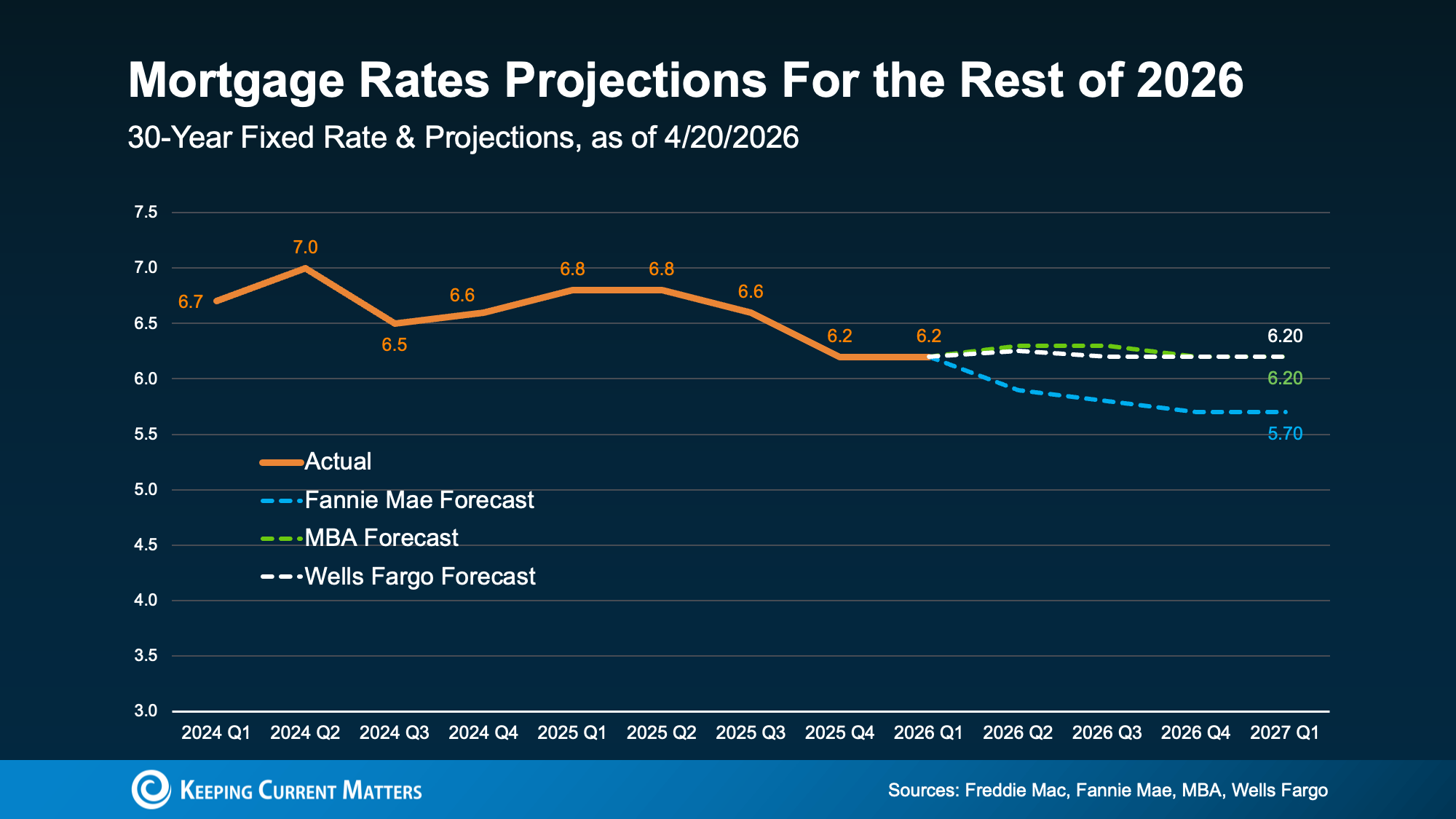
Obviously, a lot depends on inflation and the broader economy. But based on what we know right now, waiting for a big drop in mortgage rates may not play out the way many buyers hope. As U.S. News explains:
“Mortgage rates aren’t expected to change much over the next several quarters . . .”
And even with rates where they are today, buying a home is already more affordable than it was a year ago. Even if rates don’t drop in the near future, home affordability is better now than a year ago.
Misconception #2: “There Are Too Many Homes for Sale”
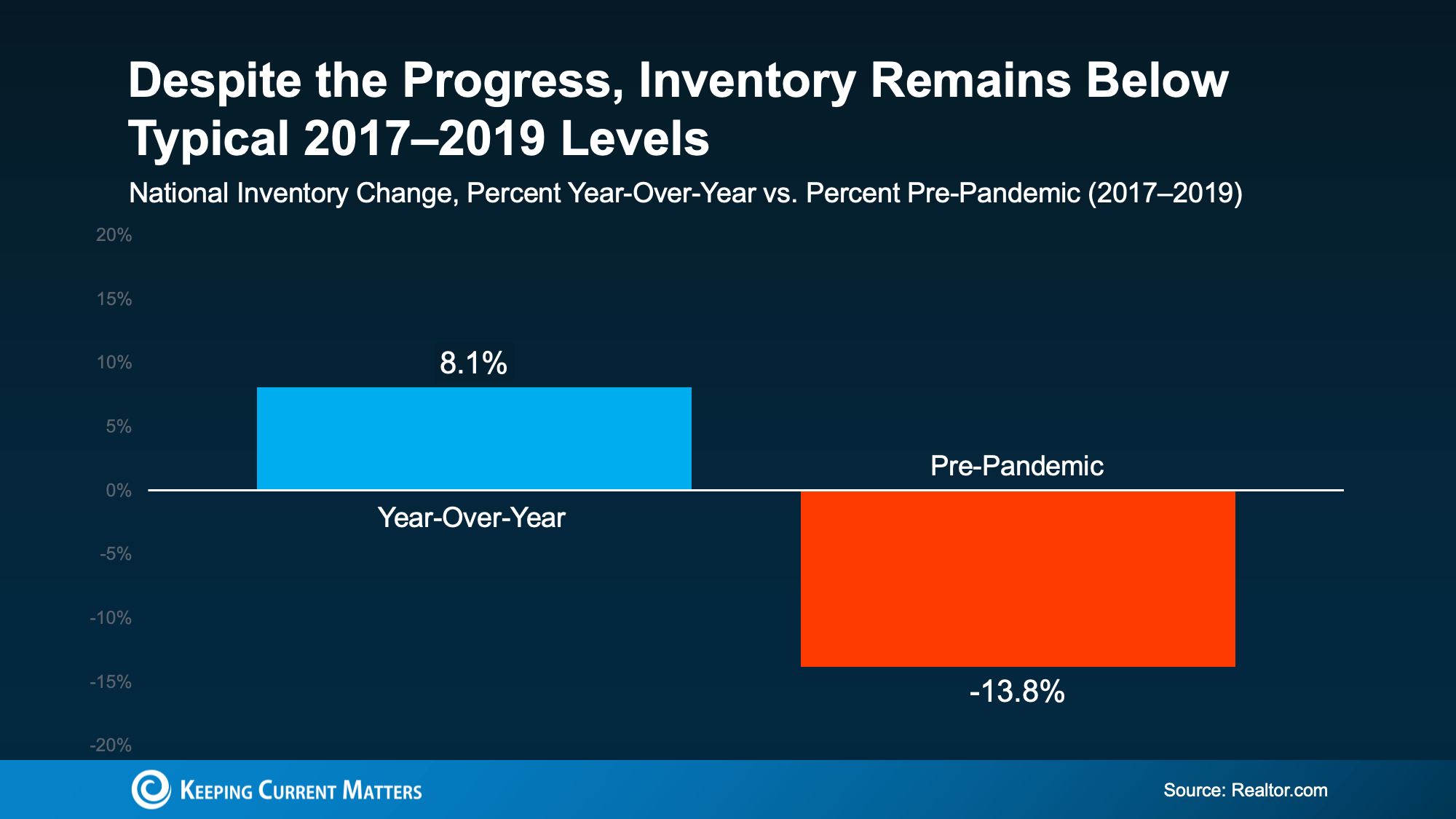
You may have heard that housing inventory is rising. Nationally, that’s true: the number of homes for sale is 8% higher than it was at this time last year. But that’s not bad news. In lots of markets, it’s easing the pressure on buyers.
The problem is that some headlines make good news sound like bad news. They focus on the fact that inventory is at its highest level since 2019 or highlight how many new homes builders are adding. That can make it sound like supply is growing too much, too fast.
But the bigger picture tells a different story.
According to new Realtor.com data, even though inventory is up over last year, it’s still nearly 14% lower than it was in the last normal housing market from 2017 to 2019:
And while local conditions vary, only 9 states have more inventory now than they did before the pandemic. That’s a major reason there aren’t enough homes for sale to trigger anything like the 2008 housing crash.
Misconception #3: “Home Prices Are About To Crash”
This is another common headline you’ve probably seen. This misconception comes from the fact that a few metros are actually seeing small price declines. Influencers are pointing to this to claim home prices are crashing. But this is absolutely not true nationally.
In most markets, home prices are still rising, not falling. Here’s why:
- Many homeowners are choosing not to sell to avoid giving up the low mortgage rate they locked in a few years ago. That continues to limit how much inventory can grow.
- Inventory remains below pre-pandemic norms. There still aren’t enough homes for sale to cause a widespread price crash.
- Even in markets with more listings, some sellers are pulling their homes off the market instead of making major price cuts.
Those are three big reasons home prices are not on track for a crash.
And even in the areas seeing small price declines, those drops are nowhere near enough to erase the huge gains most homeowners have built over the past five years:
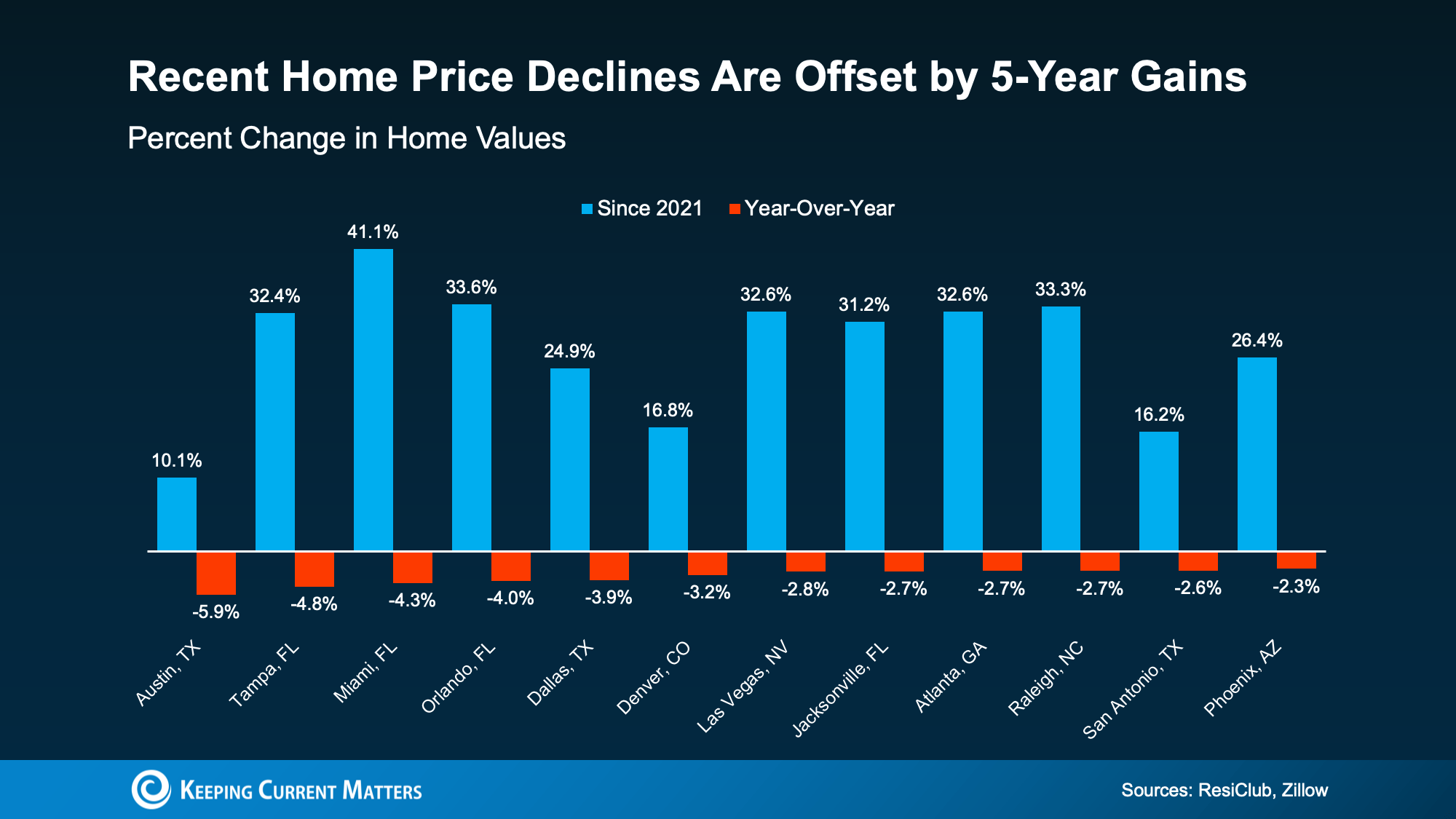
These drops don’t signal a crash. They show the market settling after a few years of record-breaking spikes in prices.
Bottom Line: Get the Facts on Your Market
The discussions we see online can often exaggerate the negative and ignore the positive, especially in housing. If you want a clearer, truer idea of what’s happening with mortgage rates, housing inventory, and home prices in your market, talk to a trusted real estate professional.
Connect with a local real estate agent so you have an expert who can give you the real story on your local housing market.
Top 10 Best Housing Markets for First-Time Home Buyers This Spring

For many hopeful buyers, purchasing a first home has lately felt less like a goal and more like a long shot.
Not because you weren’t financially responsible. Not because you weren’t ready to make a move. But because, every time you checked the numbers, homeownership still didn’t feel realistic.
That’s why so many first-time buyers have put their plans on hold.
Now, after years of watching from the sidelines, this spring may finally bring new opportunities. Especially in certain housing markets where affordability and inventory are starting to improve.
The 10 Best Markets for First-Time Buyers
Zillow recently released its list of the top 50 metro areas for first-time home buyers this spring, and the top 10 housing markets stand out for good reason.
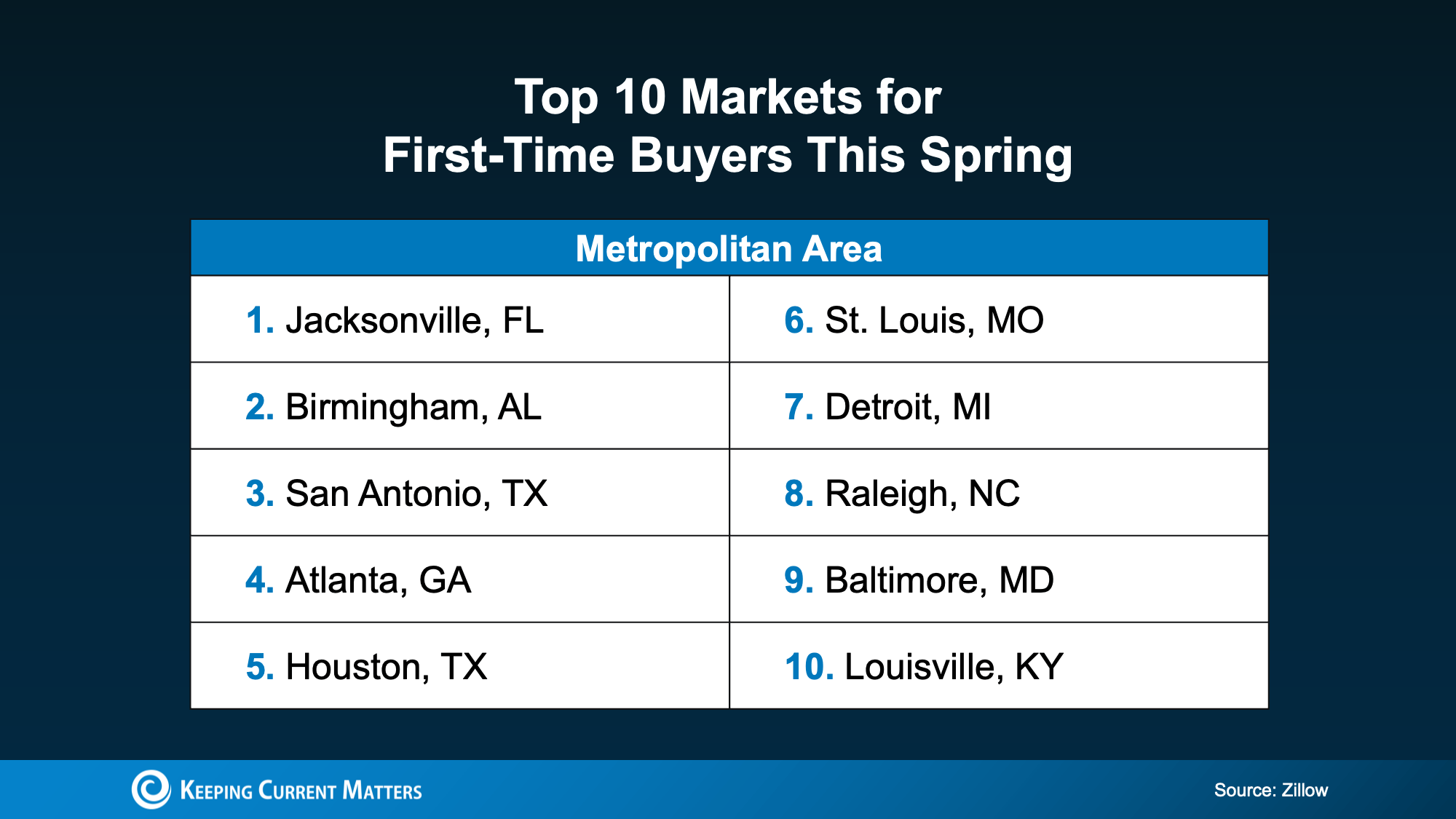
Here are Zillow’s top 10 best markets for new buyers in 2026:
- Jacksonville, FL
- Birmingham, AL
- San Antonio, TX
- Atlanta, GA
- Houston, TX
- St. Louis, MO
- Detroit, MI
- Raleigh, NC
- Baltimore, MD
- Louisville, KY
In these higher-ranked metros, Zillow says median-income households can afford 68% of all homes currently for sale.
This is a major shift, and one that could give buyers real options in some areas.
Not long ago, many buyers felt lucky to find even a few homes within reach. Today, in some markets, there are finally more realistic options for first-time buyers trying to break into the market.
What Makes These Housing Markets Stand Out?
These markets aren’t becoming more favorable for any single reason. Rather, several smaller trends are beginning to work together.
As Orphe Divounguy, Senior Economist at Zillow, explains:
“First-time buyers are finally seeing some light at the end of the tunnel. Affordability is still a challenge, but rising incomes, stabilizing prices and improving inventory are creating real opportunities in parts of the country. In the strongest markets for first-time buyers, they’ll find more choices, less competition and a clearer path to homeownership than they’ve had in years.”
That shift comes down to three key factors:
1. More Homes Are Coming to Market
According to Realtor.com, housing inventory is up 8.1% compared to last year.
More homes for sale means buyers have more choices. It can also reduce the pressure that comes with low-inventory markets, where bidding wars and quick decisions often make it harder for new buyers to compete.
2. Home Price Growth Is Slowing
While affordability is still a challenge in many areas, home prices aren’t rising as quickly as they were in recent years.
Slower price growth can help keep more homes within reach, and in some markets, prices may even be easing enough to bring new neighborhoods back into play.
3. Incomes Are Rising
Wage growth is also helping improve the picture for buyers.
When household income increases, it can offset part of the affordability challenge, even when mortgage rates remain elevated. As Mark Fleming, Chief Economist at First American, explains:
“Income growth has outpaced house price growth for 19 straight months, boosting house-buying power even as mortgage rates remain elevated.”
Taken together, these trends are creating better conditions for new buyers in select markets across the country.
What If Your Market Didn’t Make the List?
If your city did not make Zillow’s top 10, or even the top 50, there’s no reason to worry. You’re not out of options.
Opportunities exist in any market. The key is knowing where to look and having the right guidance along the way.
Even within the same metro area, one buyer’s experience can be very different from another’s. A lot depends on local knowledge and strategy. The right real estate agent can help you identify overlooked opportunities, such as:
- Neighborhoods where prices have not climbed as fast.
- Areas with more available inventory.
- New construction communities offering builder incentives.
These kinds of opportunities may not make national headlines, but they can make a meaningful difference when trying to buy your first home.
Bottom Line: More Options for First-Time Home Buyers
For a long time, first-time home buyers have felt stuck, waiting for the market to shift in their favor.
This spring, that may finally be happening in certain markets.
With more inventory, slower price growth, and rising incomes, buying a first home may feel more realistic than it has in years. And even if your market isn’t on Zillow’s list, there may still be neighborhoods or communities nearby offering a better chance to get started.
If you want to find out where those opportunities exist in your local market, connect with a trusted real estate agent who knows where to look.
Housing Inventory Is Improving in 2026: What That Means for Buyers

After a long stretch of buyers competing for too few homes, housing inventory is finally improving. Over the past year, more listings have come to market, and depending on where you live, that shift can open up your options in a meaningful way.
According to Realtor.com, the number of homes available for sale in January 2026 was the highest it’s been since 2020. That matters because getting closer to pre-pandemic levels signals a gradual return to a more typical market, where buyers aren’t forced to make rushed decisions with limited choices.
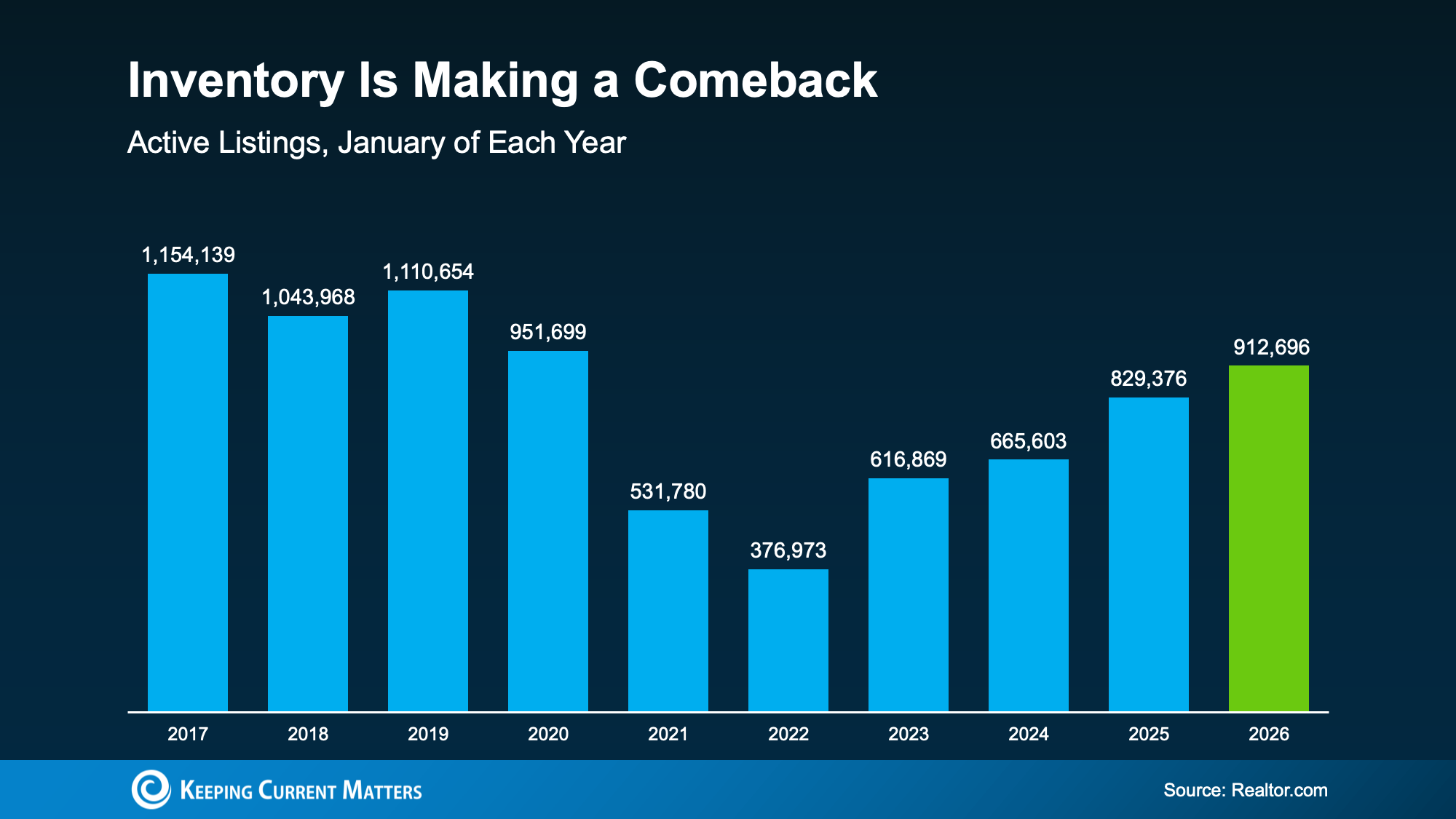
That said, inventory is not back to normal everywhere. And even with growth, more listings alone won’t “fix” affordability or fully rebalance the market overnight. But the changes we’ve seen recently can still have a real impact on how competitive it feels to buy.
When Supply Rises, Buyers Gain Breathing Room
In a low-inventory market, the pressure ramps up fast. Buyers often feel like they have to move immediately, waive protections, or offer well above asking just to stay in the running.
More inventory can reduce that intensity. When there are more homes for sale, buyers typically gain:
- More time to tour homes and think through a decision
- More options across neighborhoods, home styles, and price points
- More leverage to negotiate on price, repairs, closing costs, or timelines
In other words, more listings can shift the experience from stressful to manageable, even if the market still leans competitive in certain areas.
A Growing Share of the Country Is Getting Back to Typical Inventory
Inventory growth is not uniform nationwide. Some markets are seeing a stronger rebound, while others are still tight.
According to Lance Lambert, Co-Founder of ResiClub, in January 2025, just a little over one year ago, only 41 of the 200 largest metros were back to normal inventory-wise.
By around the end of the year, almost half (90) of the largest 200 metro areas were back at or above typical levels. That is a big improvement in roughly a year, and the trend is still moving forward.
Why This Matters for Your Local Home Search
If your area is one of the metros where inventory has returned to typical levels, you may notice:
- More new listings each week
- Fewer “must-bid-now” situations
- More realistic negotiations, especially on homes that sit longer
If your market is still below normal, you may still see multiple offers on well-priced homes. The difference is that, nationally, the direction is improving, and more markets are joining that list over time.
Inventory Is Expected to Keep Growing in 2026
Looking ahead, forecasts suggest the number of homes for sale could rise another 10% this year. If that happens, even more markets should move closer to balanced conditions.
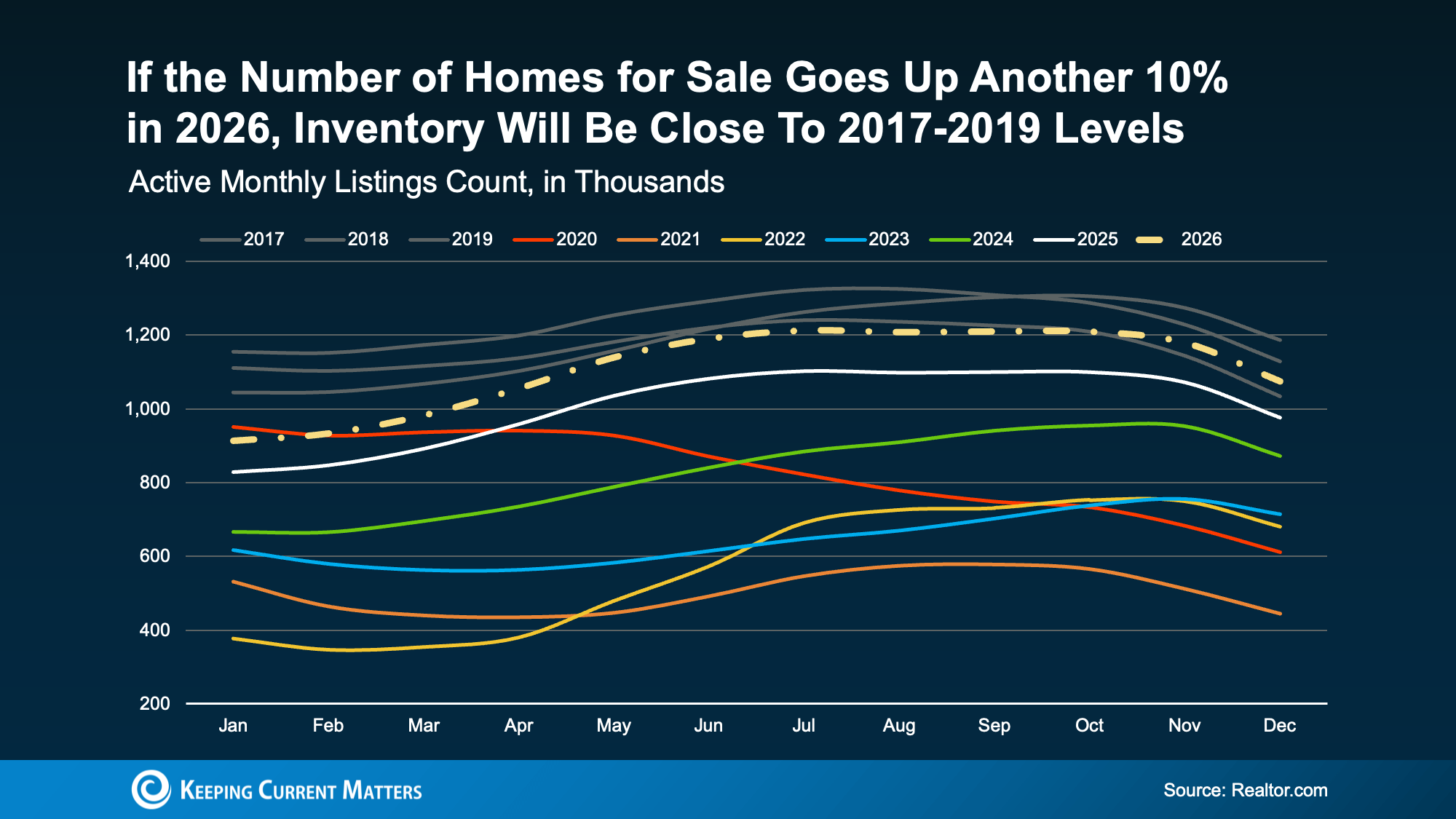
That potential growth could push inventory closer to the levels we saw in 2017–2019 by roughly this fall, which would be a huge milestone for buyers. Of course, reaching something closer to “normal” nationally wouldn’t mean every market feels the same. But, it would increase the odds that more buyers in more markets can find a home without feeling boxed in by a lack of choices.
As Hannah Jones, Senior Economic Research Analyst at Realtor.com, says:
“. . . housing market conditions are gradually rebalancing after several years of extreme seller advantage. Buyers are beginning to see more options and modest negotiating power as inventory improves . . .”
That is the key takeaway: the market is starting to work with buyers again, not against them.
Conclusion
Inventory may not be fully back to normal everywhere, but it’s moving in the right direction. And some markets, it’s already there.
If you have been waiting for a moment when you have more options and a little breathing room, 2026 is shaping up to be the strongest setup buyers have seen in years.
If you want the latest on inventory in your local market, talk to an agent who can break down inventory trends, pricing, and what that means for your next move. And if you’re not sure where to start, you can always reach out to us at CENTURY 21 Affiliated.
From Dan’s Desk: June 3, 2025

As spring winds down and June approaches, we typically anticipate a familiar surge in housing market activity across the United States. This seasonal trend is especially pronounced in regions like the Midwest, where warmer weather traditionally brings buyers and sellers out in force. But this year, something feels different. The energy we expect to accompany spring’s closing weeks has been muted. The 2025 spring market, it seems, is stalling.
So, What’s Different This Time Around?
There are a number of likely culprits behind this pause. Mortgage interest rates, while slightly lower than last year, are still hovering in the high 6% range—making monthly payments a challenge for many would-be buyers. Combined with lingering concerns over global trade tensions and general market conditions, both buyers and sellers appear to be proceeding with caution.
Let’s Talk Stats:
This caution is reflected in national data. According to the National Association of REALTORS® (NAR), existing-home sales dropped by 0.5% in April, totaling a seasonally adjusted annual rate of 4 million homes—a 2.0% decline compared to April 2024. While these figures aren’t catastrophic, they do suggest a cooling from the more aggressive pace we saw last spring.
Regionally, the story is mixed. In the Midwest, sales actually rose slightly by 2.1% month-over-month, though they’re still down 1.0% compared to last year. The median home price in this region climbed to $313,300—a 3.6% increase, suggesting that demand hasn’t vanished, but is perhaps more measured. In contrast, sales in the West declined 3.9% from March.
Yet, within this slowdown, there are glimmers of opportunity. Inventory is growing—a crucial signal for future momentum. The number of unsold existing homes jumped 9.0% from March to April, now sitting at 1.45 million units. More listings mean more choices, and more choices may nudge hesitant buyers off the fence.
Consumer attitudes are also evolving. We’re seeing increased willingness among sellers to embrace strategic price reductions. Buyers, in turn, are responding to those reductions and showing renewed interest in properties they might have previously dismissed. First-time homebuyers are stepping back into the market as well, accounting for 34% of April’s purchases—an encouraging uptick from earlier this year.
Optimism is bubbling in some corners of the industry. There’s talk that the second half of 2025 could bring a notable rebound, especially if mortgage rates stabilize or even soften. NAR projects total existing-home sales to reach 4.5 million by year’s end, with the national median price expected to hover around $410,700.
Of course, time will tell. But whether that optimism materializes into a midyear boom or not, one thing remains clear: preparation matters. In today’s uncertain environment, the professionals who stay engaged—those who nurture their networks, prospect consistently, and understand the shifting behaviors of both buyers and sellers—will be best positioned for success.

So, while this spring may not be delivering the surge we expected, it’s far from a lost season. It’s a moment of reset—a chance to watch the signals, adjust strategies, and get ready for what’s next.
That’s all for now,
Dan

How Could a Recession in 2025 Affect the Housing Market?

As talk about economic slowdowns runs wild, worries about a potential recession in 2025 are on the rise. Naturally, many homeowners are wondering what a recession could do to the value of their home, and their buying power.
Using historical data from recessions of decades past, let’s see how a recession might affect the housing market in 2025.
A Recession Won’t Lower Home Prices
It’s a common misconception that a recession will cause home prices to crash, like they did in 2008. In reality, 2008 was the only time the housing market saw such an extreme, dramatic drop in prices. Overflowing home inventory caused that price crash, and conversely, low inventory has prevented a similar crash in the years since.
Even in markets where housing inventory is up, it’s still far below the listing oversupply that caused the 2008 crash. Indeed, according to data from Cotality, home prices actually increased during four of the last six major recessions.
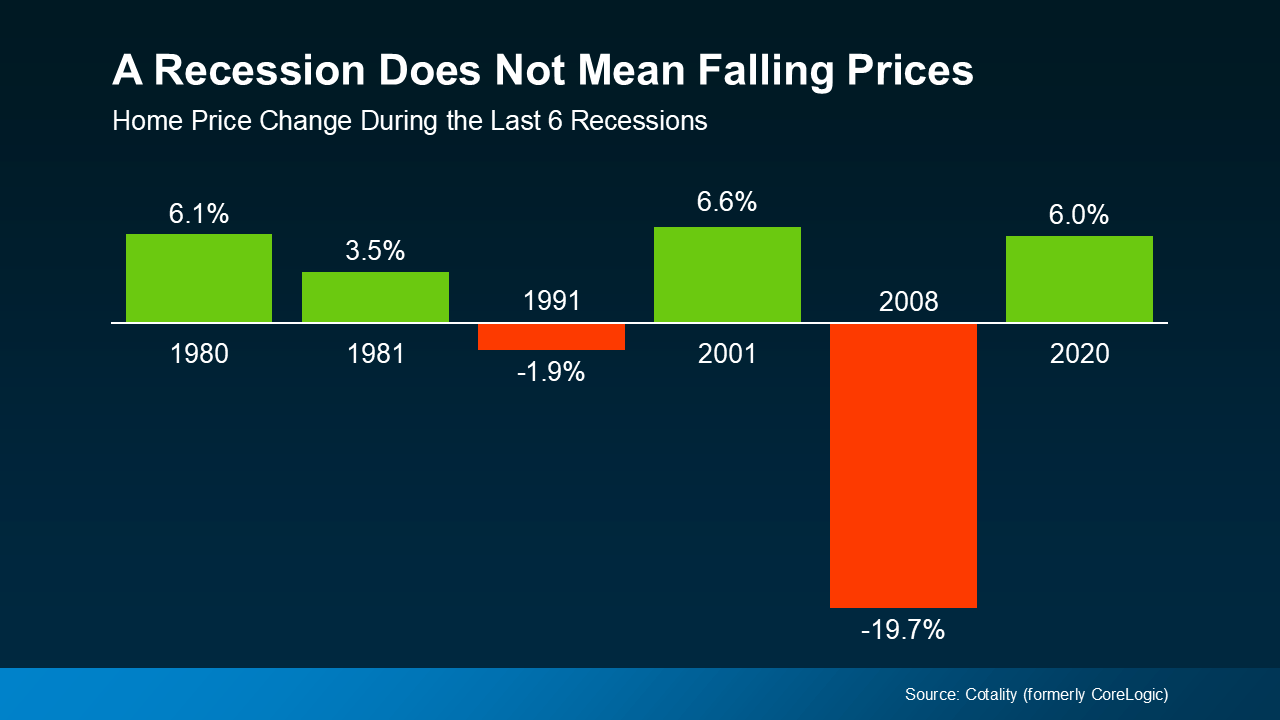
As the graph shows, a recession doesn’t necessarily mean that home prices will crash, or even drop. In reality, historical data shows that home prices usually continue along their current trajectory when a recession hits. And at the moment, home prices are still rising nationally, but at a more normalized rate. So, as the market stands now, a recession in 2025 would most likely drive prices even higher.
Mortgage Rates Typically Decline During Recessions
Home prices may stay their path during economic slowdowns, but mortgage rates actually tend to drop. Looking again at historical data from the last six recessions, this time from Freddie Mac, mortgage rates fell each time.
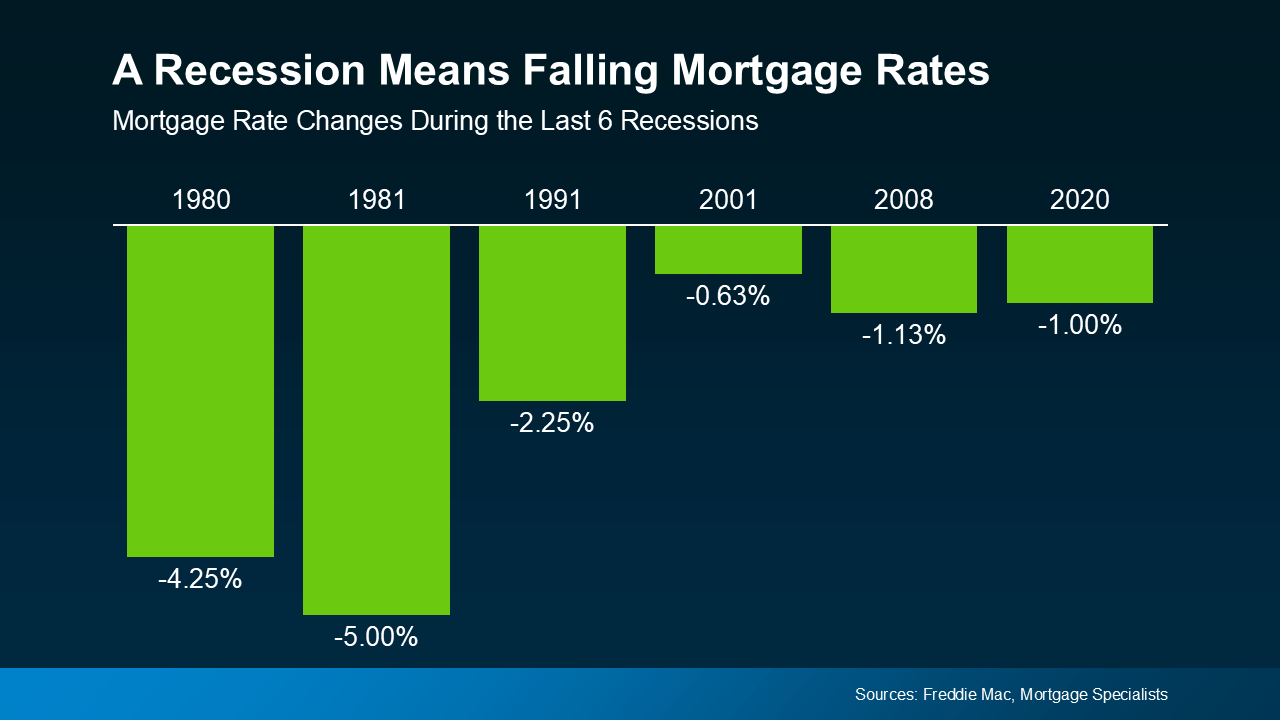
Historically speaking, a recession could mean that mortgage rates may even decline this year. However, the last time a recession dramatically lowered mortgage rates was over three decades ago in 1991. So with that said, even if a recession does happen, don’t expect a game-changing drop in mortgage rates.
Conclusion
Nobody ever truly knows what the economy will do, but the odds of a recession in 2025 have increased. Still, a recession doesn’t mean you need to worry about the housing market or the value of your home. The historical data tells us that a recession may even drive home prices higher and mortgage rates lower.
Wondering how an economic slowdown could impact your local market? Connect with us to get the info you need to plan ahead.
From Dan’s Desk: May 5, 2025
As we continue navigating a rapidly evolving real estate landscape, I wanted to take a moment each quarter to connect directly with you—our agents, staff, and leadership team—to share what I’m seeing in the market, what it means for our business, and how we can continue moving forward together.
This new quarterly message is meant to offer perspective, spark conversation, and keep us aligned on the bigger picture. Whether you’re helping clients buy and sell every day, or supporting our operations behind the scenes, we’re all part of what makes this company strong, and what makes this company continue to succeed.
Let’s take a look at where things stand today and where I believe we’re headed next.
Where Is the Residential Real Estate Market Going?
This is the major question everyone in the industry is asking. With January and February sales numbers coming in weaker than expected—per the latest NAR data—and no significant movement in interest rates, many are beginning to second-guess 2025’s ability to rebound after two consecutive years of significantly low home sales in the U.S.
While I don’t have a crystal ball, we are beginning to see encouraging signs in many local markets. Our internal data shows March’s open business was up year-over-year, and listing inventory is starting to grow. As a company, we remain bullish that the summer of 2025 could be one of the stronger selling seasons we’ve experienced in recent years.

That being said, it may be a long time before we return to the 6 million-plus annual home sales we saw during the boom years of 2020 and 2021. Companies need to continue reinventing themselves in markets like this. The real challenge lies in this: how do we provide outstanding service to consumers and best-in-class support to our agents, all while maintaining an expense structure that allows organizations to thrive?
This is the question we all need to be asking to stay ahead of market trends. Personally, I don’t believe these types of markets are to be feared—but rather embraced. They push us to innovate, to adopt new technologies, and to develop new services that will make our businesses more resilient and better equipped to serve our clients in the long run.
That’s all for now,
Dan
Are You Waiting To Buy? This Spring May Be Your Time To Move

Between low inventory, high home prices, and unpredictable mortgage rates, 2024 was a rocky year for real estate. It should come as no surprise then that 70% of buyers stopped their home search last year. If you were one of them and are still waiting to buy in 2025, this spring could be your time.
The Drive of Housing Inventory
Many homeowners who put their move on pause last year are reentering the market this year. This means higher, stronger listing inventory, and with builders finishing more homes, new construction inventory is growing as well. Together, this creates more options for buyers like you, and better chances of finding the home you’ve waited for.
But that’s only part of the story. When you’re selling, you want to feel confident that you’ll find a home you’ll be thrilled to move into. At the same time, you don’t want housing inventory so high that your current house sits on the market. Fortunately, the spring 2025 market is striking a balance between supply and demand that many have waited for.
According to research from Realtor.com, housing inventory has jumped 28.5% year-over-year, making March the 17th straight month of inventory growth. This is still below pre-pandemic levels in most markets, but it’s a sweet spot for anyone waiting to buy.
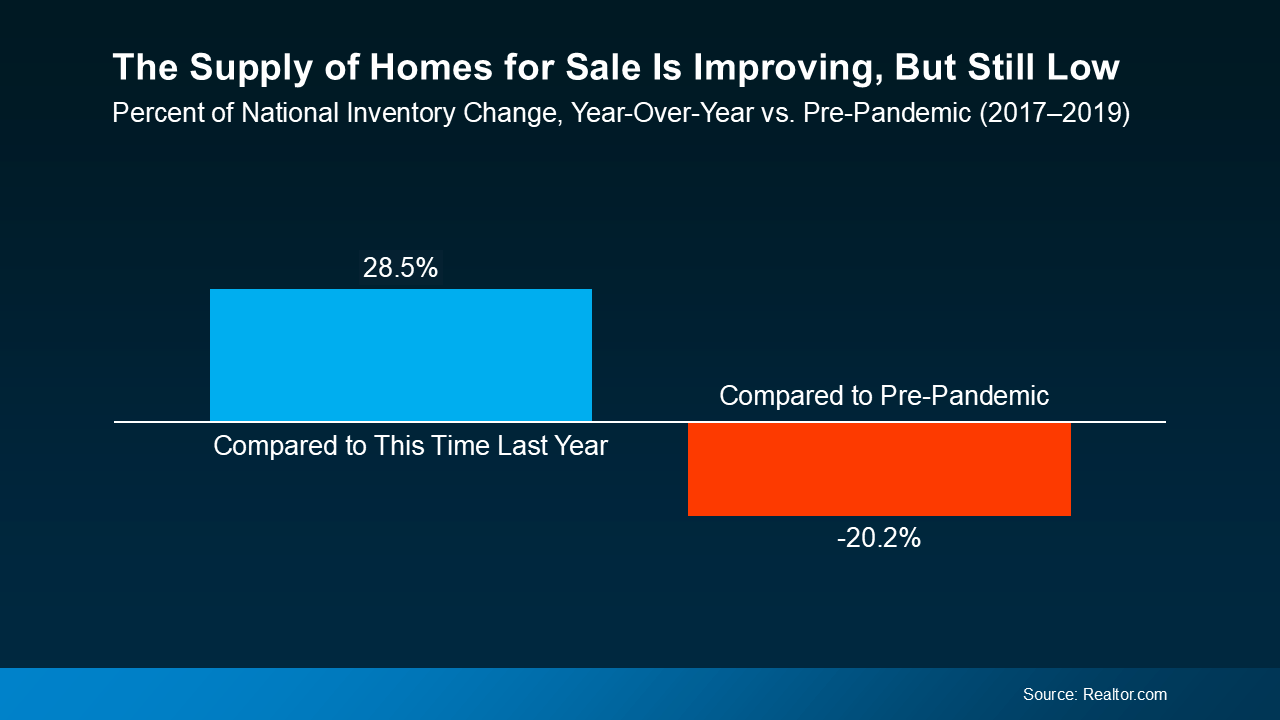
For patient buyers, this means you’ll have more options when moving, but not so many that your current house won’t sell. As long as there’s a healthy demand for homes in your area, your house should still sell relatively quickly. Especially if you work with a local agent to make sure it’s priced right and fixed up to maximize value.
The Sweet Spot: More Options and Steady Demand
Here’s another promising point to think about. As we said, Realtor.com‘s March 2025 data shows that housing inventory has been rising for 17 consecutive months. What’s better, industry experts agree that listing inventory is likely to continue climbing through 2025. According to Lance Lambert, the Co-Founder of ResiClub:
“The fact that inventory is rising year-over-year . . . strongly suggests that national active housing inventory for sale is likely to end the year higher.”
If this prediction proves correct, this spring may be a better time to sell than you think. Listing now could help your house may stand out more than it would later in the year as inventory grows. With more homeowners reentering the market, waiting too long could make it all the more difficult to stand out.
Conclusion
If you’re one of the many who have been waiting to buy a house this past year, here’s your chance. Housing supply is growing but hasn’t caught up to demand yet, meaning new listings are still getting extra buyer attention. Meanwhile, increasing inventory is giving current homeowners more opportunities to scale up, further driving supply and activating buyers.
For both first time buyers and homeowners waiting to sell, this spring’s market is trending toward an ideal sweet spot. If you have questions keeping you from making your move, reach out to us for answers today. We can get you the info you need, or connect you with an agent to navigate your unique local market.