Facebook
 X
 Pinterest
 Copy Link
Adjustable-Rate Mortgages and Planning for the Reset

When you’re trying to make a home purchase fit your budget, a lower starting payment can be appealing. Adjustable-rate mortgages, or ARMs, may offer that flexibility, but you’ll also need a plan for payments that could rise later.
Why Buyers Are Considering Adjustable-Rate Mortgages
An ARM typically starts with an interest rate that stays fixed for several years, then adjusts periodically. That starting rate is often lower than a comparable fixed-rate mortgage, giving buyers some breathing room early on.
Recent Bankrate data found that ARM rates in September were more than a percentage point below fixed rates, with estimated monthly savings of $150–$300 on a median-priced home. Those savings can make a huge difference depending on your budget. Still, you should always ask your lender for a comparison using your loan amount, term, rates, points, and fees.
The Mortgage Bankers Association reported that ARMs represented 10.5% of total mortgage applications for the week ending October 16, 2026. That’s roughly one in ten applications across purchase and refinance activity.
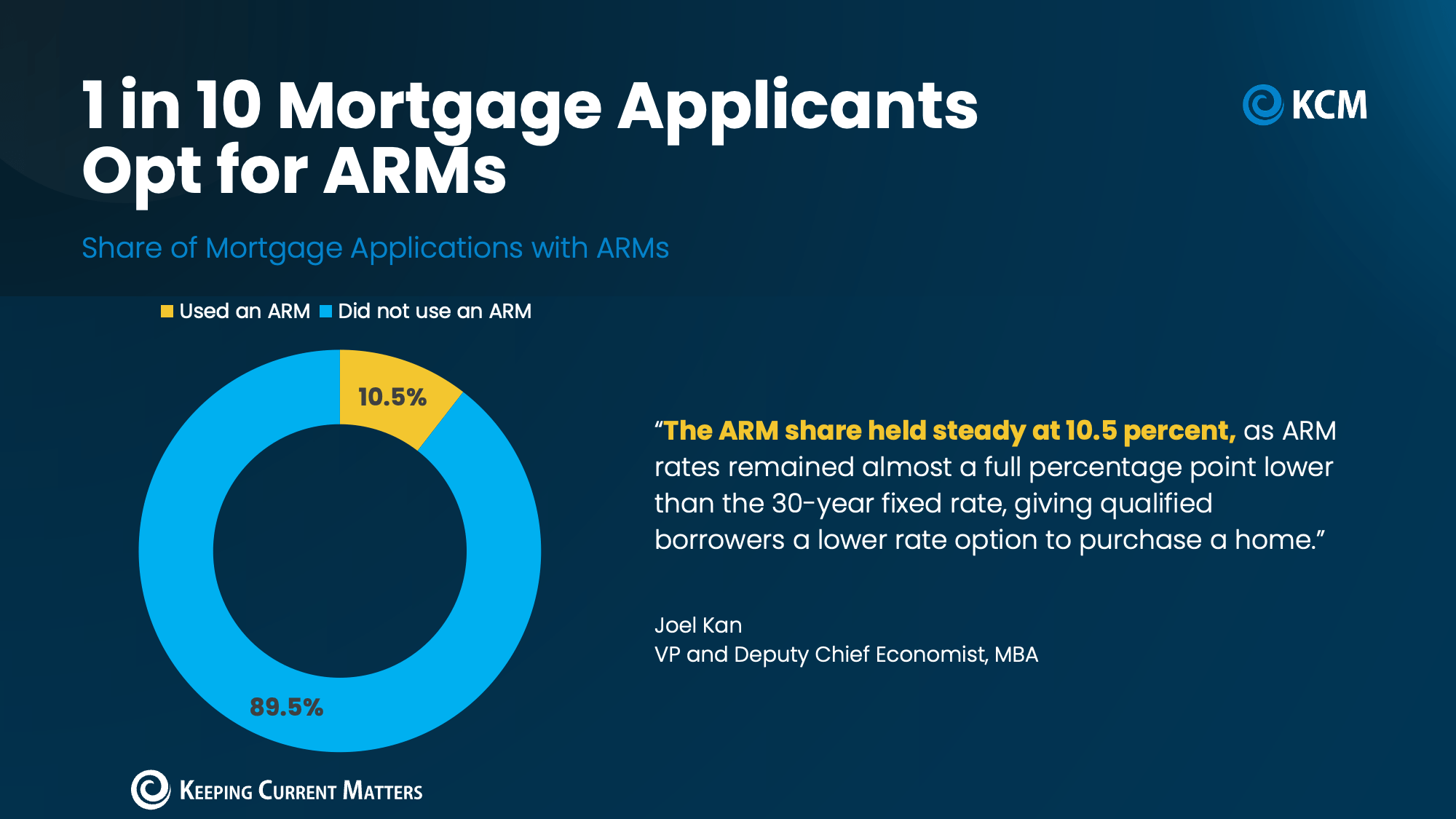
ARMs accounted for 10.5% of total mortgage applications in the week ending October 16, 2026. Source: MBA’s October 21 release.
How a 5/1 ARM Works
With a 5/1 ARM, the introductory interest rate stays fixed for five years. After that, it can adjust once a year. The first adjustment is often called the reset.
Your new rate generally reflects a market index plus a lender-set margin, subject to the loan’s limits. Payments can rise or fall, although a minimum rate may limit decreases. Most ARMs also cap increases at the first adjustment, later adjustments, and over the loan’s life. Those limits can differ, so make sure to review each one.
A fixed-rate mortgage keeps its interest rate and scheduled principal-and-interest payment steady. With either loan type, property taxes and insurance can still change your total housing payment.
Weigh the Initial Savings Against Future Payments
An ARM may be worth considering if you expect to move before the first reset and could still afford higher payments if your plans change. Lower early payments can help, but the loan’s rules and fees deserve as much attention as its starting rate.
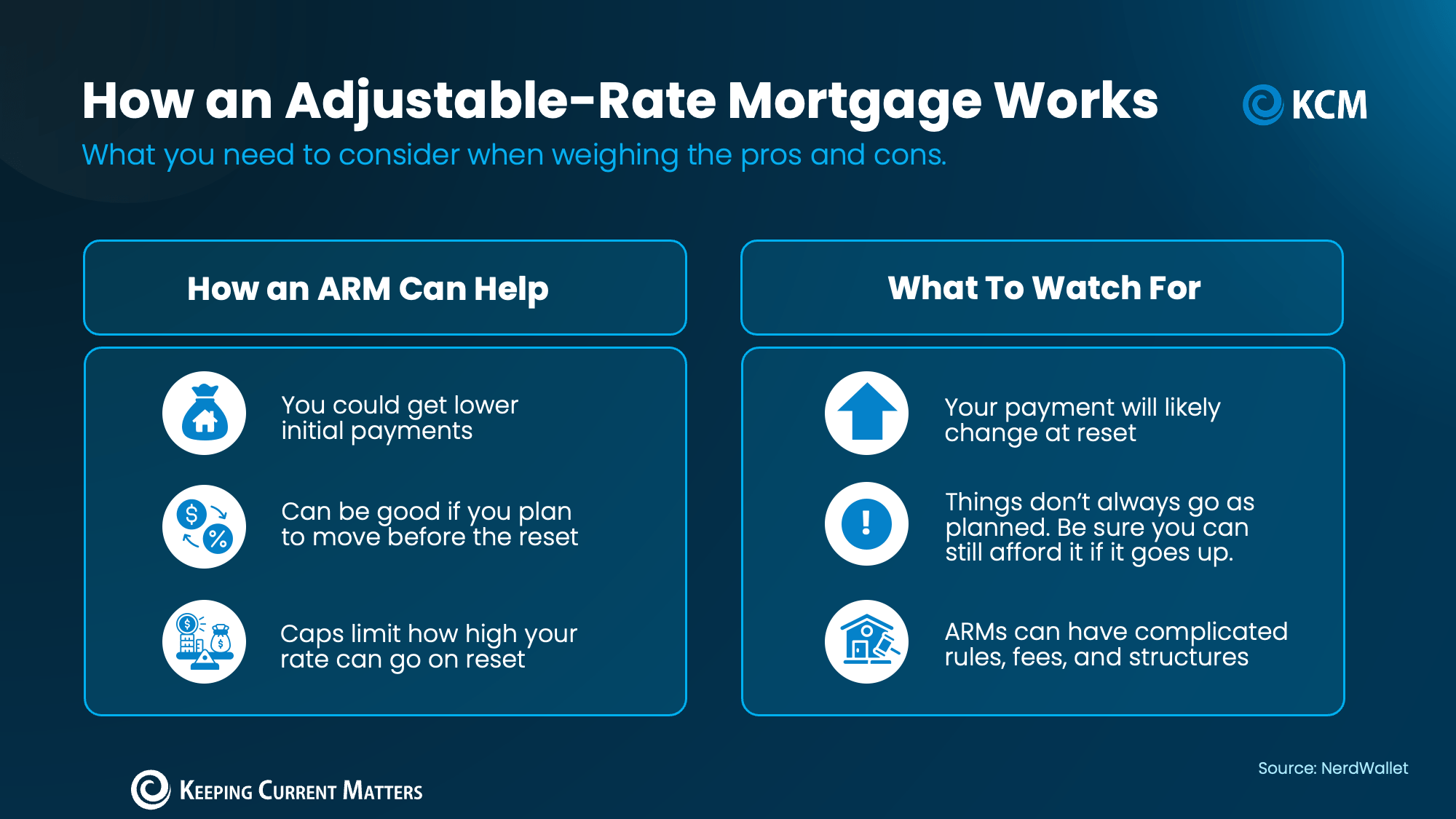
Lower initial payments come with possible future increases and loan-specific limits. Source: NerdWallet.
Ask your loan officer to compare ARM and fixed-rate loan estimates, including closing costs. Have them show the first possible increase, later adjustments, and the maximum payment allowed by the contract. Build your budget around those scenarios, including taxes and insurance, rather than assuming rates will fall.
Prepare for the Reset Before You Choose the Loan
Depending on your finances and loan terms, you may be able to:
- Keep the ARM if the adjusted payment remains affordable.
- Refinance into a fixed-rate loan or another ARM if you qualify and the terms make sense.
- Sell the home if that fits your plans and market conditions.
- Ask your servicer about assistance or modification if payments become difficult; eligibility varies.
Refinancing requires a new approval and usually involves closing costs. Another ARM won’t necessarily offer a lower rate. Credit, income, debts, and property value can affect your options, and selling may take longer than expected.
Keep track of your finances and discuss job changes or major purchases with your loan officer. As the CFPB cautions, don’t rely on selling or refinancing to make an otherwise unaffordable reset work.
What’s Changed Since the Housing Crisis
Before the 2008 crisis, some risky mortgages combined low initial payments with weak income verification. Today, the Ability-to-Repay Rule generally requires lenders to document and assess repayment capacity, including relevant income or assets, debts, and loan payments. The records required may include pay stubs, W-2s, or tax returns.
The rule officially took effect in 2014. Its payment calculations depend on the loan and applicable requirements; approval doesn’t guarantee that every future payment will fit your budget. These protections matter, but an ARM still carries interest-rate risk.
Choose a Loan That Fits Your Homebuying Plans
Have a qualified lender walk you through the numbers, then connect with a local CENTURY 21 Affiliated agent to align your home search, budget, and moving timeline. The right choice should support both the purchase you’re planning and the payments you may face later.
Buying Your First Home Sooner With Two Practical Moves

You may be setting money aside every month and still wondering when you’ll have enough to buy a home. Between rent and everyday expenses, building a savings account takes time. If buying your first home feels years away, two choices are worth a closer look: the price of the home you’re considering and the down payment you’re saving toward.
A starter home and a loan that allows less than 20% down could bring your savings goal within reach sooner. The key is finding a combination that also leaves you comfortable with the monthly costs.
Consider a Starter Home at a Lower Price
A home with less space or fewer upgrades may still check all your boxes at a lower price point. Depending on your market, that could mean a condo, townhome, or smaller or older single-family home. Zillow describes a starter home as one in the lowest third of local home values.
A lower purchase price reduces the dollars needed for the same down payment percentage. It can also change how long it takes for buying to make financial sense compared to renting.
Zillow’s August 2026 analysis illustrates the difference. Using July market conditions, it modeled a household saving 10% of the area’s median income toward a 20% down payment:
- Typical single-family home: 8.5 years to save, plus 6.2 years after buying to break even against renting, for a combined 14.7 years.
- Starter home: 4.6 years to save, plus 2.6 years to break even, for a combined 7.2 years, roughly half as long.
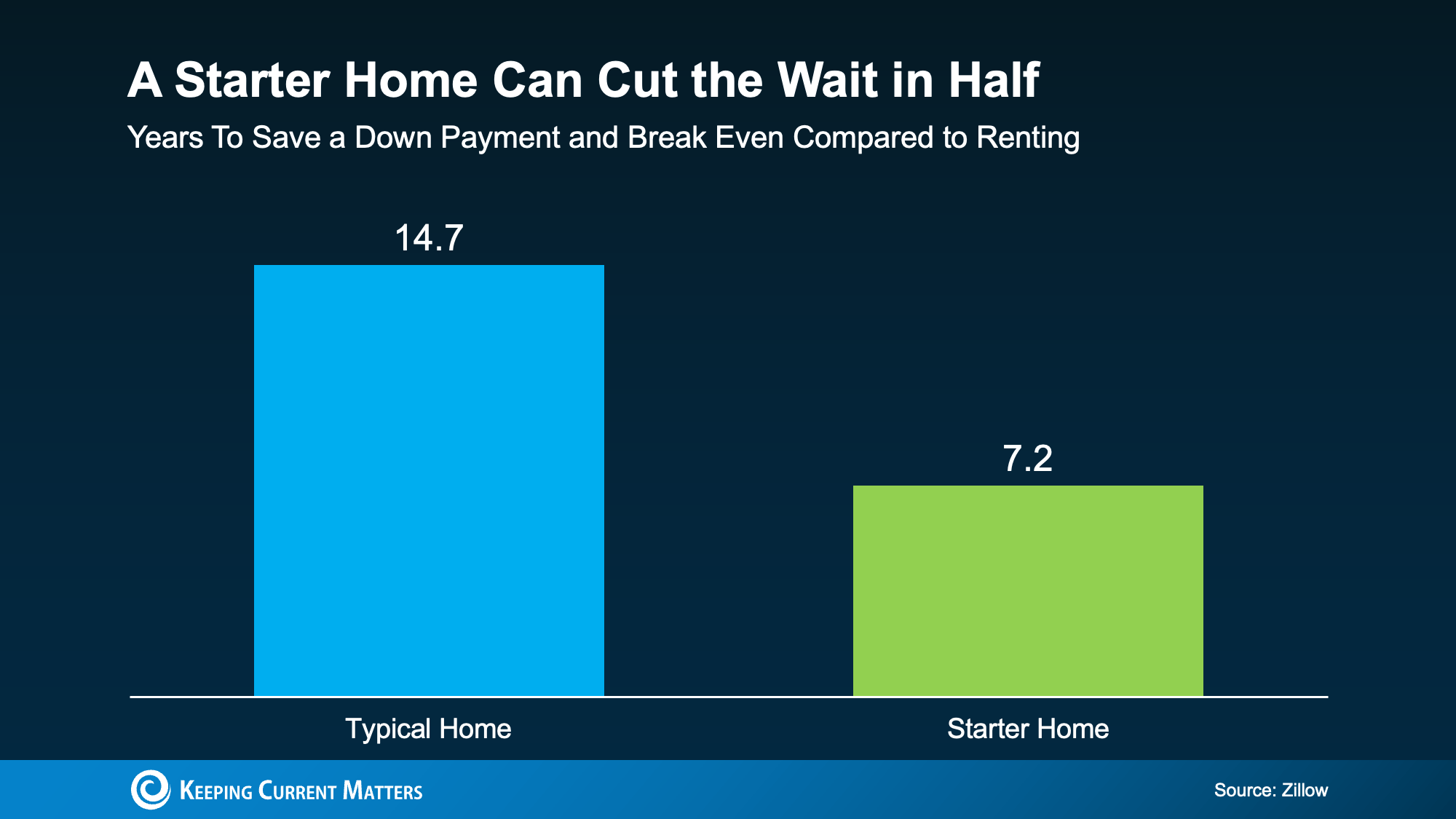
Zillow’s July 2026 model combines saving for a 20% down payment with the time after purchase to break even against renting. Source: Zillow.
Breaking even is the estimated point when the overall financial results of owning and renting are about equal. Beyond it, owning can come out ahead under the model’s assumptions.
The comparisons also use different rentals: a typical single-family rental for the typical home and a multifamily rental for the starter home. Remember that local prices, rents, and your existing savings can change the timeline considerably.
As Zillow senior economist Kara Ng explains:
“Buyers should think about not just when they can afford to buy, but how long they’d need to stay before owning makes more financial sense than renting.”
Explore a Smaller Down Payment
If you’ve been treating 20% down as a requirement, a conversation with a lender may change your savings target. NAR’s 2025 Profile of Home Buyers and Sellers reports a median down payment of 10% among first-time buyers, compared with 19% among all buyers.
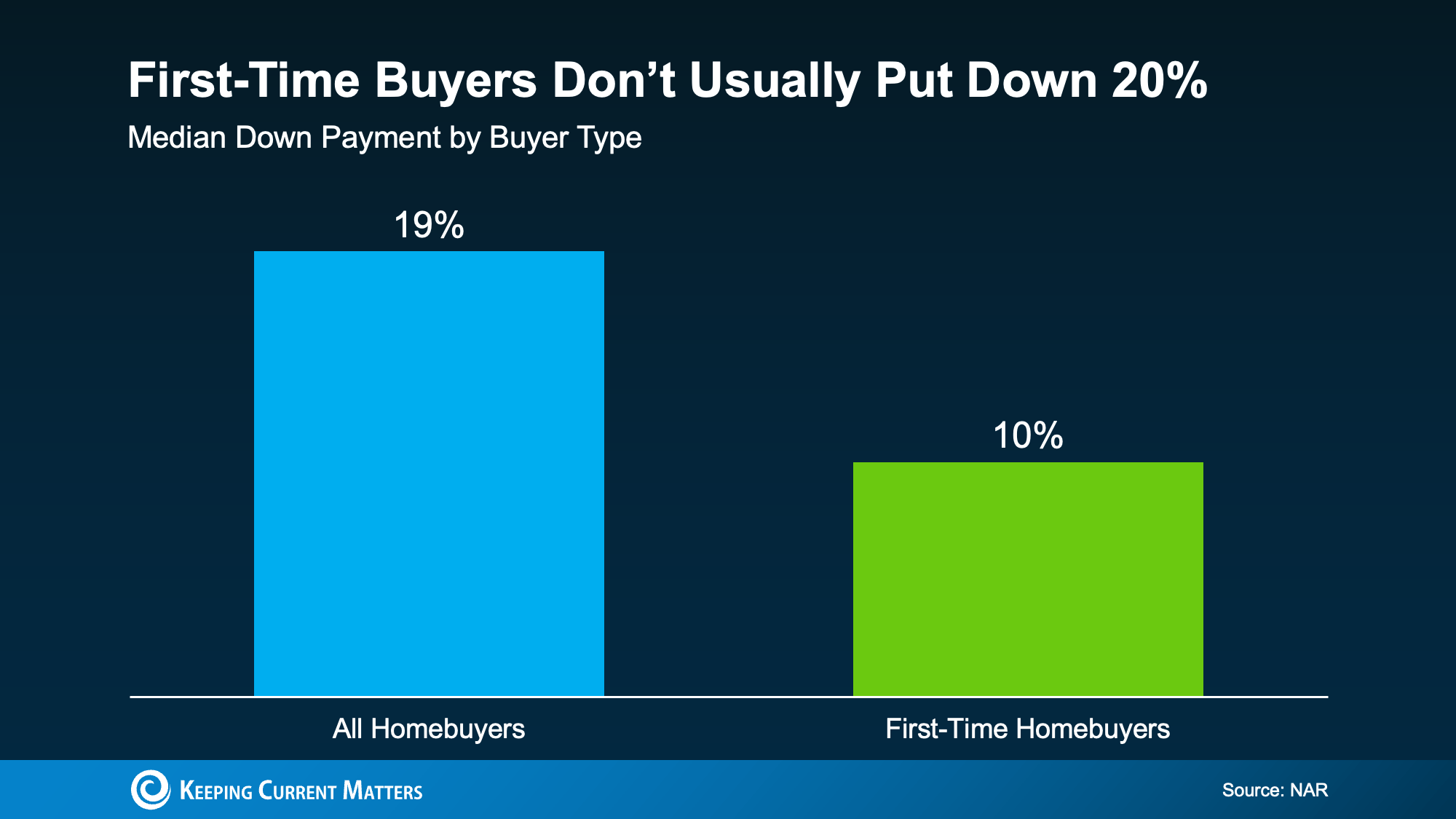
Median down payments were 19% for all buyers and 10% for first-time buyers in NAR’s 2025 Profile of Home Buyers and Sellers, covering transactions from July 2024 through June 2025. Source: NAR.
Some loan options allow less for qualified borrowers:
- Conventional loans may allow as little as 3% down.
- FHA loans may allow as little as 3.5% down.
- VA loans for eligible military borrowers and USDA loans for eligible rural properties may offer no down payment, subject to borrower, property, and lender requirements.
A smaller down payment can shorten the savings stage, but borrowing more can raise your payment and total loan costs. Mortgage insurance or program fees can also apply, driving your total cost further.
Ask About Down Payment Assistance
Assistance may help with the upfront costs, too. Down Payment Resource counted 2,746 homeownership programs available nationwide in its Q2 2026 report. Funding and eligibility vary, and some programs can be combined. As the organization explains:
“Some homebuyers can layer multiple sources of assistance to reduce their upfront costs. Layering means combining more than one eligible source of funding as part of your home purchase.”
Ask a mortgage professional which programs fit your situation, whether they can be combined, and when repayment might be required. Include closing costs and emergency savings in your plan.
Make a Plan for Buying Your First Home
Start with a price range and monthly budget you can can realistically handle. Compare the full cost of each property, including taxes, insurance, association fees, maintenance, and possible repairs. Then ask a qualified lender to show how different down payments would affect your cash needed at closing and ongoing ownership costs.
A local CENTURY 21 Affiliated agent can help you explore starter homes that fit your budget. With a clearer picture of the homes and financing available, you can decide whether buying sooner makes sense for you.
Housing Crash Outlook and Expert Forecasts Through 2030

If you’re thinking about buying or selling, talk of a housing crash can make it harder to plan your next move. You may be hoping lower prices will put a home within reach or wondering how a downturn could affect the equity you’ve built. Housing experts offer some perspective: the average forecast in Fannie Mae’s Q3 2026 Home Price Expectations Survey calls for national home prices to rise each year through 2030. That outlook can help inform your plans, even if local markets follow a different path.
Affordability concerns help explain why some people hope a crash does happen. In Clever Real Estate’s June 2026 survey, 58% of respondents wanted a housing market crash to make ownership more affordable. The survey covered 1,000 U.S. Gen Z adults who were college students or recent graduates, rather than a sample limited to active homebuyers.
What the Housing Crash Forecast Actually Shows
Fannie Mae’s quarterly survey, produced with Pulsenomics LLC, gathers forecasts from more than 100 housing experts. The Q3 2026 survey was conducted August 5-14.
The survey workbook puts average cumulative national price growth at about 14.6% across 2026-2030. The most pessimistic quarter of the panel averages about 6.6% growth over that period, while the most optimistic quarter averages 22.7%.
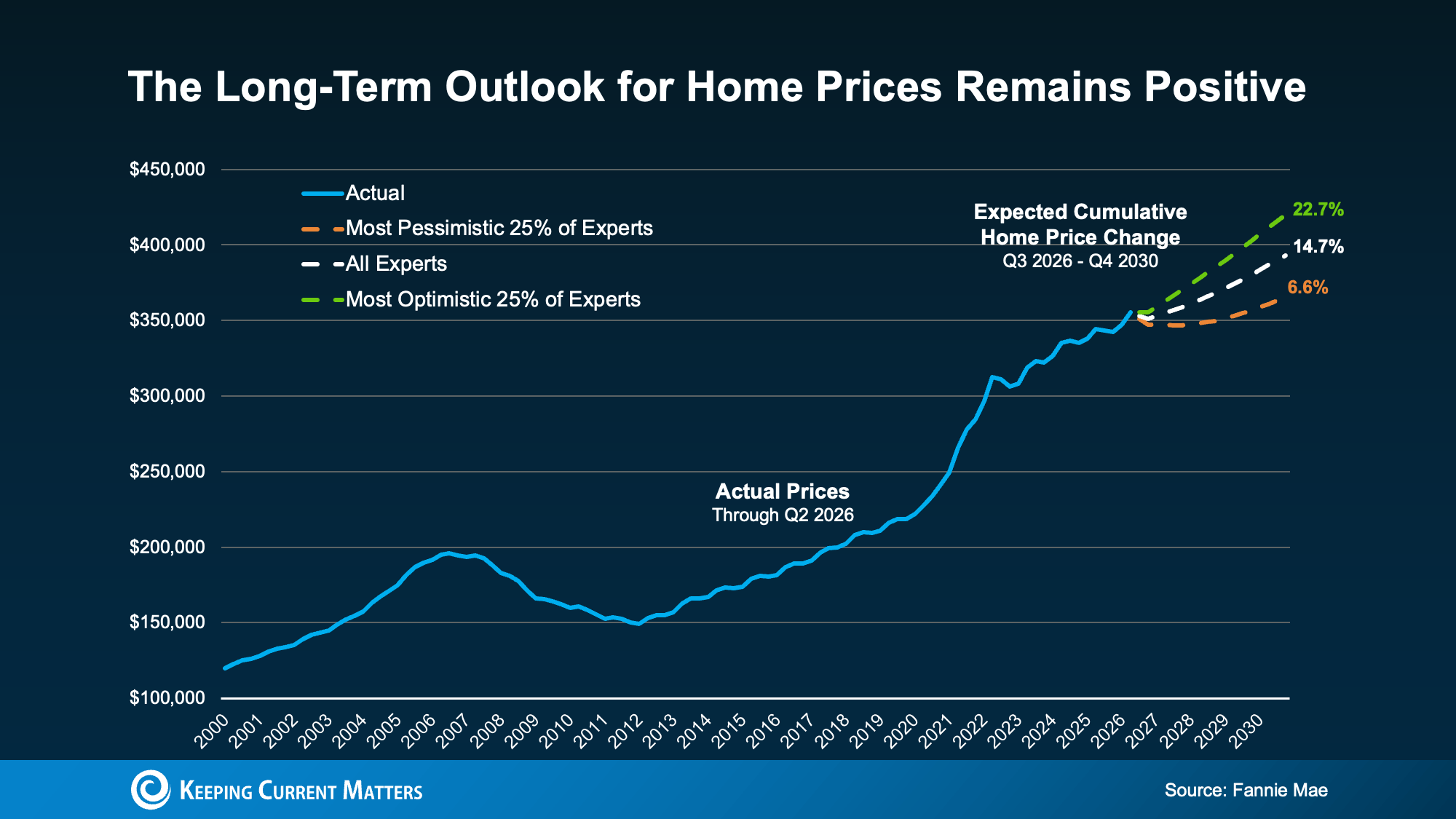
Projected cumulative national home price growth from year-end 2025 through year-end 2030. The all-panel mean is 14.7%. Source: Fannie Mae.
Remember that these are group averages. Some individual panelists forecast declines, so a positive average doesn’t mean everyone expects prices to rise. These projections are also national, and aren’t adjusted for inflation.
Your own area could see stronger growth, flat prices, or even losses depending on the market. National home prices generally rise over time with downturns along the way, but local conditions and the price you pay still matter.
How the Forecast Changed Since Last Year
The Home Price Expectations Survey runs four times a year, making it possible to compare expectations for the same future years. In Q3 2025, the panel expected 2026 prices to increase about 2.1%. In Q3 2026, that forecast rose to 2.5%.
Expectations for 2027, 2028, and 2029 moved lower. The earlier forecasts were 2.9%, 3.5%, and 3.6%; the latest were 2.2%, 2.7%, and 3.1%, respectively. Each average still represents annual growth, despite the differing rates.
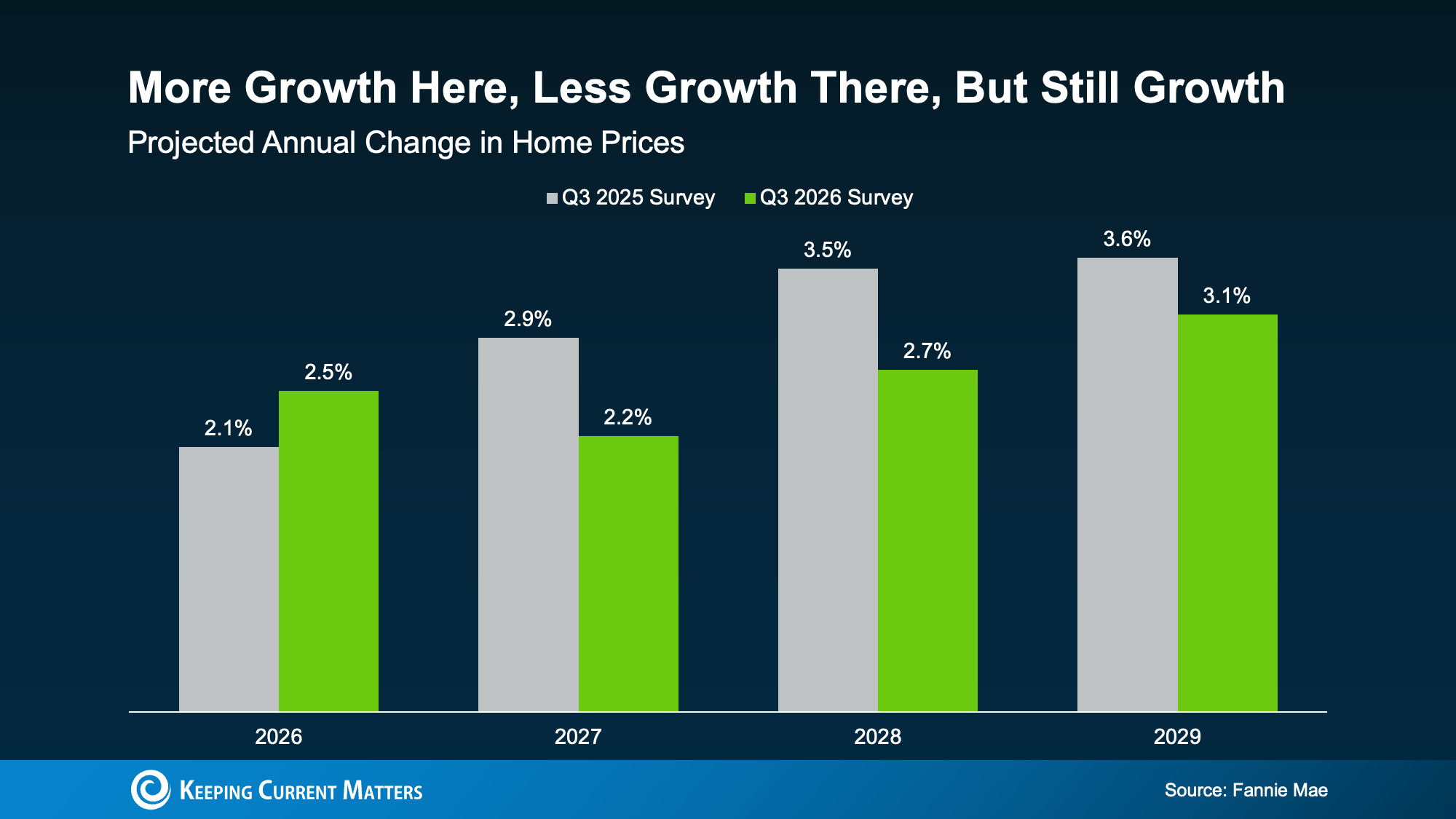
Annual forecasts compare each year-end with the preceding year-end. Averages are positive, while expectations for 2027-2029 are lower than a year earlier. Sources: Pulsenomics LLC and Fannie Mae.
A higher full-year forecast doesn’t mean prices will certainly rise every month. Pulsenomics notes that prices had already risen 3.7% through the first half of 2026. The panel’s precise 2.52% full-year forecast therefore implies roughly a 1.1% decline during the second half.
The outlook is for a slower pace of appreciation than the rapid gains of the pandemic period. Remember that no forecast is final; a single survey can inform your future planning, but it shouldn’t be the only factor.
How Projected Price Growth Could Affect Equity
Consider a hypothetical $400,000 home purchased in January 2026. Applying the survey’s annual growth forecasts, rounded to two decimal places, produces an estimated value of $458,314 by January 2031. That’s about $58,000 in hypothetical appreciation over five full calendar years.
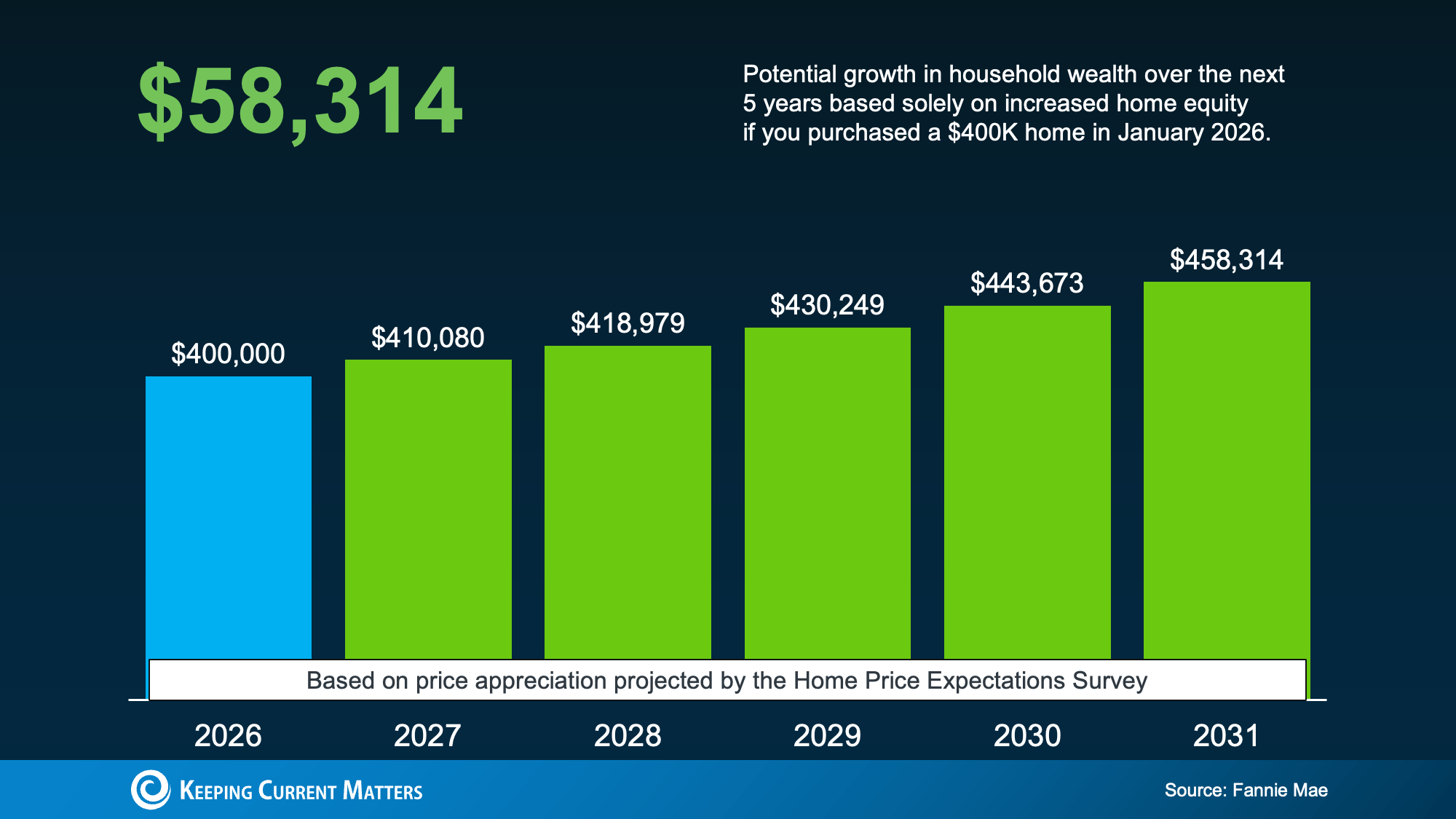
A January 2026 starting value compounds the 2026-2030 annual forecasts. January 2031 represents the end of 2030. Values exclude loan repayment, ownership and selling costs, and inflation. Sources: Pulsenomics LLC and Fannie Mae.
Appreciation can contribute to equity, which is your home’s value minus the debt secured by it. This example measures only the potential value increase. It excludes principal repayment, interest, taxes, insurance, maintenance, selling costs, and inflation, so it doesn’t represent cash profit or a guaranteed return.
The starting date matters too. This is a January 2026 scenario, not a fresh five-year projection for someone buying today. An individual property could perform differently, or even see its value slip.
Planning Your Next Move With Local Information
If prices follow the national forecast, waiting could mean paying more for a similar home. But projections and forecasts alone aren’t a reason to stretch your budget. Compare today’s total housing costs with your savings, plans, and ability to handle unexpected expenses.
Buyers should ask their agent about recent comparable sales and available inventory. Sellers can use those same local details to discuss a realistic asking price. Both can benefit from understanding their market with a local expert’s help.
Connect with a local CENTURY 21 Affiliated agent to review what these forecasts mean in your market. Consult a qualified lender or financial professional about financing and affordability before deciding when to move.
Should You Wait for Mortgage Rates To Drop?

Waiting for mortgage rates to drop can feel like the safest way to maximize affordability. But you could postpone your home search for a year only to find rates have barely changed. That’s why forecasts should inform your plan rather than wishful thinking.
A 2026 Clever Real Estate and Best Interest Financial survey cited by National Mortgage Professional found that 42% of respondents expected average mortgage rates below 5% this year. Unfortunately, the latest expert forecasts aren’t so optimistic. That doesn’t mean you have to buy right away, but it does mean weighing your options based on your budget and timeline.
What Do Mortgage Rate Forecasts Predict?
The forecast chart below combines Freddie Mac data with projections from Fannie Mae, the Mortgage Bankers Association, and Wells Fargo. Those projections keep average 30-year fixed rates around 6.2% to 6.5% through the second quarter of 2027. Altogether, the current numbers aren’t pointing to a dramatic short-term drop.
Mortgage rates respond to inflation, economic growth, Treasury yields, and Federal Reserve policy. Because those inputs often shift, no forecast can identify the exact rate you’ll receive or when the market will move.
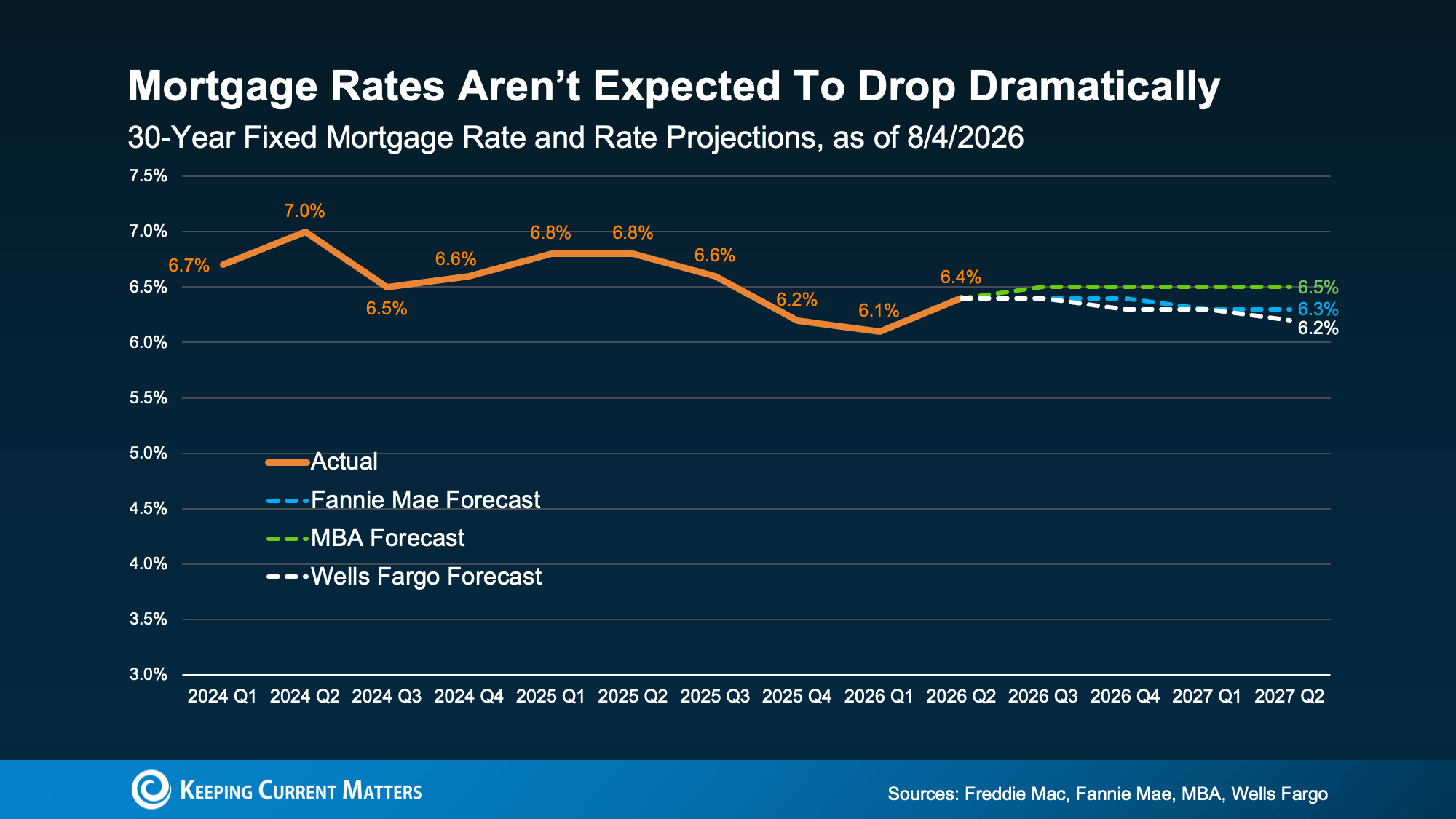
Forecasts from Fannie Mae, MBA, and Wells Fargo cluster in the low-to-mid 6% range through Q2 2027. Sources: Freddie Mac, Fannie Mae, MBA, and Wells Fargo.
Why Lower Mortgage Rates May Take Time
Inflation Remains a Headwind
Inflation is one reason a major rate decline is hard to predict reliably. The core PCE chart shows inflation rising from recent lows through May 2026, while the U.S. Bureau of Economic Analysis reported 3.3% year-over-year core inflation in June. A single month doesn’t establish a trend, but inflation remains important to the bond market and mortgage pricing.
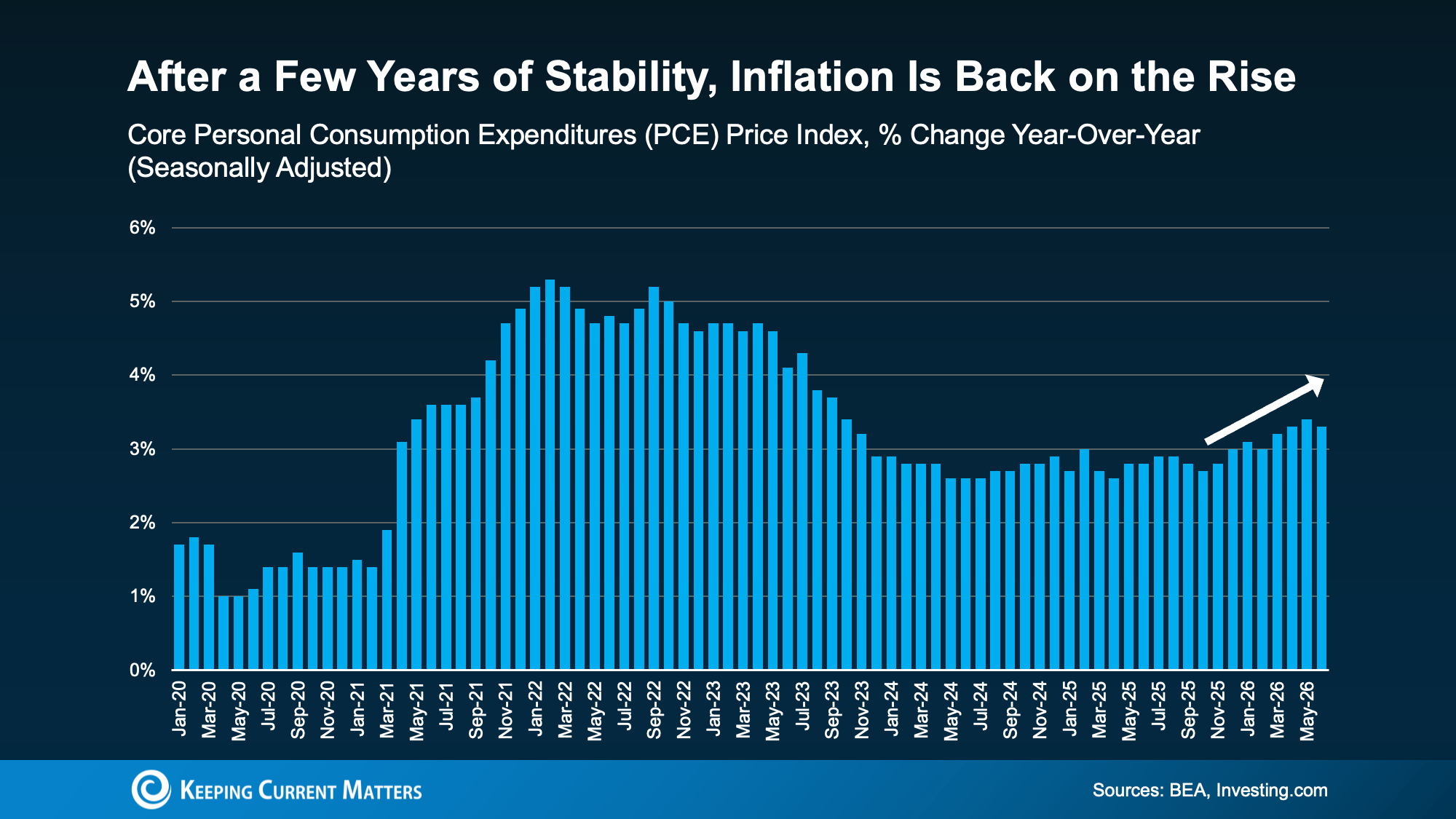
Core PCE inflation rose from recent lows before reaching about 3.3% in May 2026. Sources: U.S. Bureau of Economic Analysis and Investing.com.
Today’s Rates Are Within a Common Historical Range
Today’s rates feel high compared to pandemic-era lows. But Freddie Mac’s data shows 30-year rates have spent much of the time since 1971 between about 5% and 10%. That doesn’t make a 6% mortgage inexpensive, but it does highlight how unusual pandemic-era rates were historically, and why waiting for rates that low again could be risky.
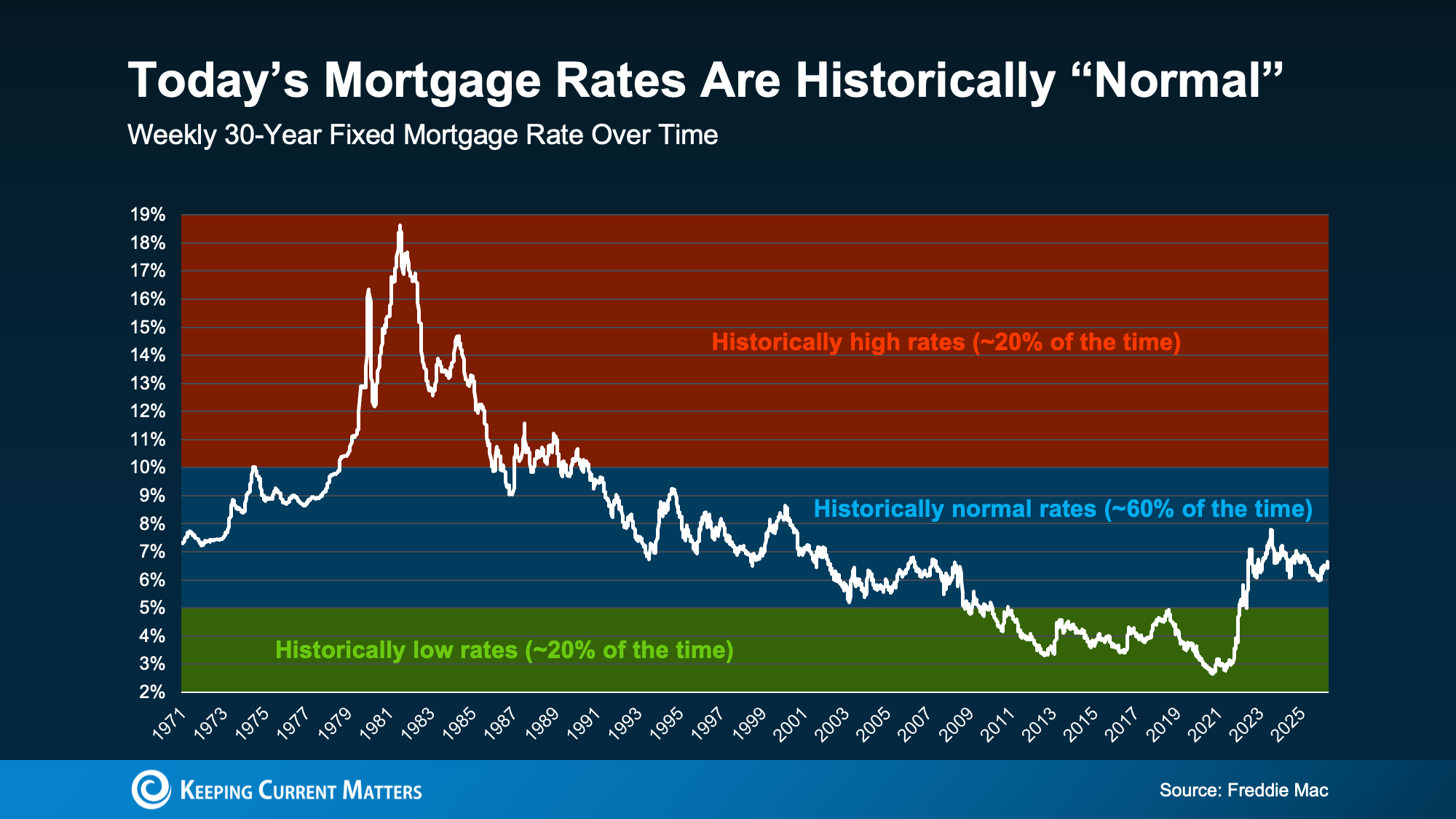
Freddie Mac data shows the 5% to 10% range has been common since 1971. Source: Freddie Mac.
Four Alternatives to Waiting for Mortgage Rates To Drop
Waiting isn’t your only way to address the problem of affordability. Ask a qualified lender to compare the following options using the same purchase price, down payment, fees, and time horizon.
- Check new-construction incentives. Some builders offer incentives that may include price reductions, closing-cost assistance, mortgage rate buydowns, or upgrades. Offers vary by home and builder, so compare the full purchase price, monthly payment, fees, and long-term costs.
- Ask about an adjustable-rate mortgage. An ARM may begin with a lower rate than a fixed-rate mortgage, but the rate and payment can rise after the initial period. Review the adjustment schedule, index, margin, caps, and highest possible payment. Do not assume you can sell or refinance before the first adjustment.
- Compare buydowns and discount points. Paying discount points can lower your rate for more cash at closing. A temporary buydown may reduce the payment only at first. Ask the lender to show the break-even point, total cost over several timeframes, who funds it, and the payment when the temporary period ends.
- Explore an assumable mortgage. Some FHA- or VA-backed loans may allow a qualified buyer to take over the seller’s existing interest rate, subject to approval. The buyer may also need cash or separate financing for the difference between the loan balance and purchase price. Availability and processing times vary.
Should You Buy Now or Wait?
Waiting can be reasonable if a down payment today would strain your budget, your plans are likely to change, or available homes in your market aren’t what you’re looking for. Buying sooner can fit if you need to move and can comfortably afford the payment without depending on a future refinancing of your mortgage.
Ask a real estate agent to review local inventory and negotiation opportunities, and ask a qualified lender to price several loan structures. Compare the monthly payment, cash to close, break-even time, and potential future payment – not only the headline interest rate.
For more preparation guidance, explore CENTURY 21 Affiliated’s home buying advice, search current listings, or connect with a local agent when you are ready to compare your timing and options.
Bottom Line
No forecast can identify the perfect day to buy. If a move matters to you, compare what you can comfortably afford now with the cost and tradeoffs of waiting. A local agent can explain your local housing market, and a qualified lender can model your financing options.
Connect with a local CENTURY 21 Affiliated real estate agent to review current inventory, local negotiating conditions, and a home search that fits your budget and timeline.