Facebook
 X
 Pinterest
 Copy Link

When you’re trying to make a home purchase fit your budget, a lower starting payment can be appealing. Adjustable-rate mortgages, or ARMs, may offer that flexibility, but you’ll also need a plan for payments that could rise later.
Why Buyers Are Considering Adjustable-Rate Mortgages
An ARM typically starts with an interest rate that stays fixed for several years, then adjusts periodically. That starting rate is often lower than a comparable fixed-rate mortgage, giving buyers some breathing room early on.
Recent Bankrate data found that ARM rates in September were more than a percentage point below fixed rates, with estimated monthly savings of $150–$300 on a median-priced home. Those savings can make a huge difference depending on your budget. Still, you should always ask your lender for a comparison using your loan amount, term, rates, points, and fees.
The Mortgage Bankers Association reported that ARMs represented 10.5% of total mortgage applications for the week ending October 16, 2026. That’s roughly one in ten applications across purchase and refinance activity.
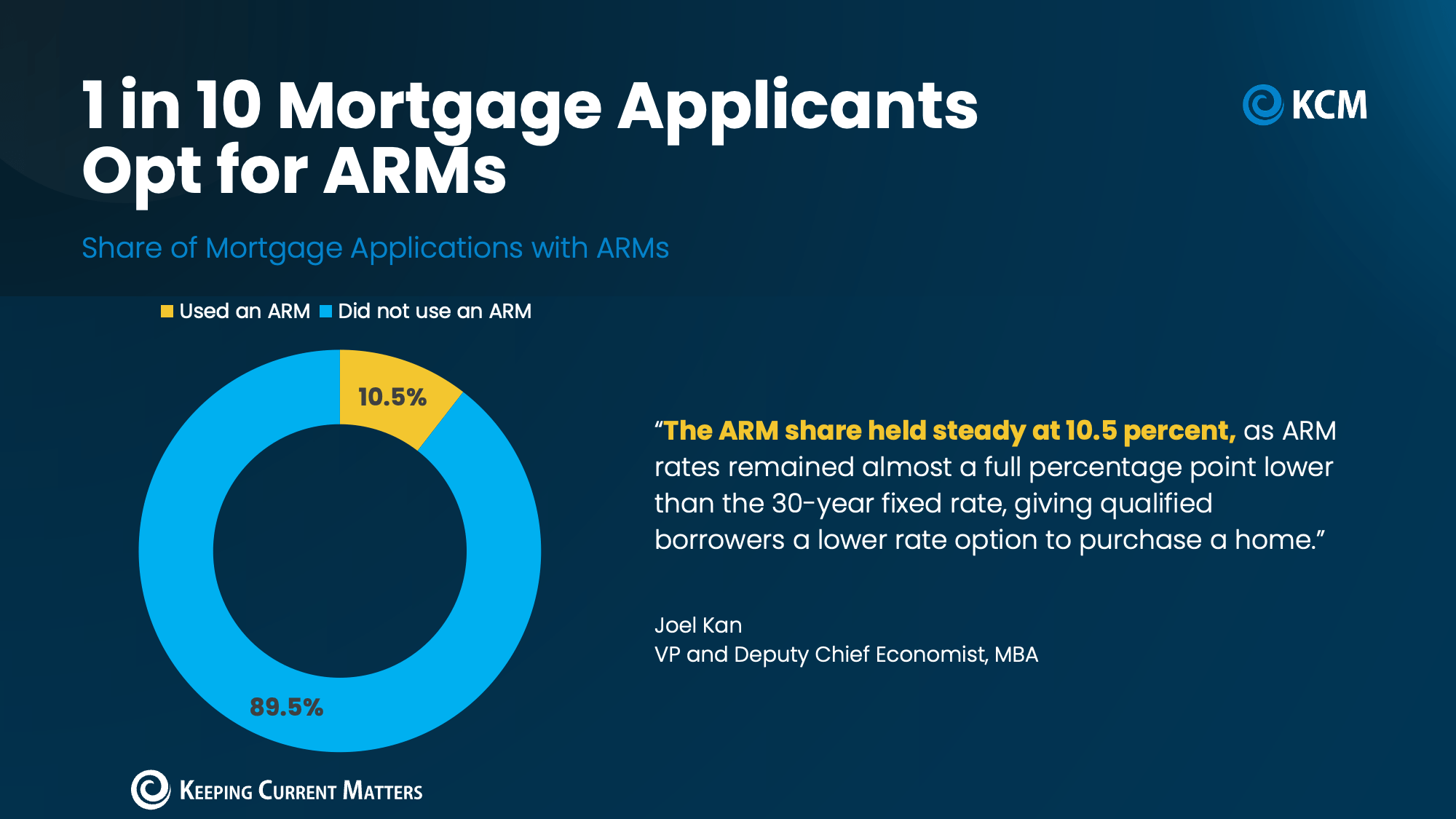
ARMs accounted for 10.5% of total mortgage applications in the week ending October 16, 2026. Source: MBA’s October 21 release.
How a 5/1 ARM Works
With a 5/1 ARM, the introductory interest rate stays fixed for five years. After that, it can adjust once a year. The first adjustment is often called the reset.
Your new rate generally reflects a market index plus a lender-set margin, subject to the loan’s limits. Payments can rise or fall, although a minimum rate may limit decreases. Most ARMs also cap increases at the first adjustment, later adjustments, and over the loan’s life. Those limits can differ, so make sure to review each one.
A fixed-rate mortgage keeps its interest rate and scheduled principal-and-interest payment steady. With either loan type, property taxes and insurance can still change your total housing payment.
Weigh the Initial Savings Against Future Payments
An ARM may be worth considering if you expect to move before the first reset and could still afford higher payments if your plans change. Lower early payments can help, but the loan’s rules and fees deserve as much attention as its starting rate.
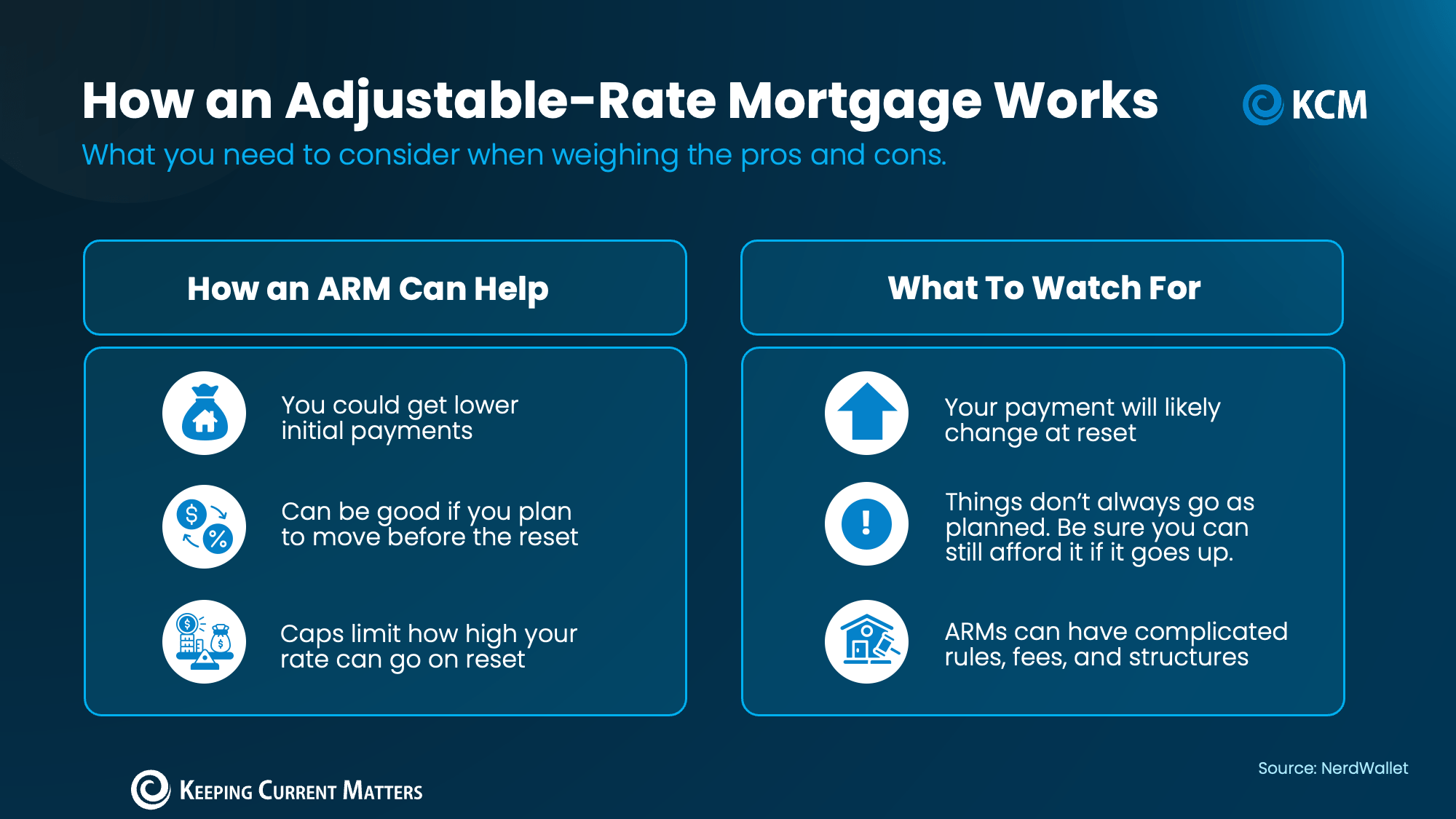
Lower initial payments come with possible future increases and loan-specific limits. Source: NerdWallet.
Ask your loan officer to compare ARM and fixed-rate loan estimates, including closing costs. Have them show the first possible increase, later adjustments, and the maximum payment allowed by the contract. Build your budget around those scenarios, including taxes and insurance, rather than assuming rates will fall.
Prepare for the Reset Before You Choose the Loan
Depending on your finances and loan terms, you may be able to:
- Keep the ARM if the adjusted payment remains affordable.
- Refinance into a fixed-rate loan or another ARM if you qualify and the terms make sense.
- Sell the home if that fits your plans and market conditions.
- Ask your servicer about assistance or modification if payments become difficult; eligibility varies.
Refinancing requires a new approval and usually involves closing costs. Another ARM won’t necessarily offer a lower rate. Credit, income, debts, and property value can affect your options, and selling may take longer than expected.
Keep track of your finances and discuss job changes or major purchases with your loan officer. As the CFPB cautions, don’t rely on selling or refinancing to make an otherwise unaffordable reset work.
What’s Changed Since the Housing Crisis
Before the 2008 crisis, some risky mortgages combined low initial payments with weak income verification. Today, the Ability-to-Repay Rule generally requires lenders to document and assess repayment capacity, including relevant income or assets, debts, and loan payments. The records required may include pay stubs, W-2s, or tax returns.
The rule officially took effect in 2014. Its payment calculations depend on the loan and applicable requirements; approval doesn’t guarantee that every future payment will fit your budget. These protections matter, but an ARM still carries interest-rate risk.
Choose a Loan That Fits Your Homebuying Plans
Have a qualified lender walk you through the numbers, then connect with a local CENTURY 21 Affiliated agent to align your home search, budget, and moving timeline. The right choice should support both the purchase you’re planning and the payments you may face later.