Facebook
 X
 Pinterest
 Copy Link

Seeing a home go to a cash buyer can make your own plans feel less steady, especially if you need a mortgage. Cash home buyers bring different resources to the table, like proceeds from a previous sale. Understanding where that money comes from can help you assess the competition and consider what your own equity could make possible.
In the National Association of Realtors’ September 2026 survey, 27% of reported home sales were all-cash purchases. That’s more than one in four, but it leaves nearly three-quarters of purchases still involving financing.
Who’s Buying Homes with Cash?
NAR identifies several groups of cash buyers: homeowners using money from a previous sale, second-home buyers, and investors. The figures include people moving from one home to another, so they shouldn’t necessarily be read as a measure of large investor activity.
SERHANT’s Ryan Serhant describes four groups shaping the current market: cash buyers, mortgage borrowers, homeowners with low mortgage rates, and builders. Those groups can overlap. Someone reluctant to give up a low-rate mortgage may discover that selling would provide enough money to buy their next home outright.
How Home Equity Can Help Fund a Cash Purchase
Cotality reported that homeowners with a mortgage had about $310,000 in equity on average in the second quarter of 2026. Your own equity depends on your home’s value and outstanding secured debts, so the national average isn’t a hard estimate of what you could spend.
To estimate available sale proceeds, subtract mortgage and other lien payoffs and selling costs from your expected sale price. Then allow for moving expenses, purchase closing costs, and reserves before setting a budget.
Buying outright with your own funds means no mortgage payment on the new home and no need to borrow at current mortgage rates. Removing mortgage approval can also shorten the transaction, although inspections, title work, and other contract requirements still affect final timing.
Property taxes, insurance, maintenance, and any association fees continue past the intial sale. If equity covers only part of the purchase, a larger down payment reduces borrowing for the same home price. Remember that your final monthly payment still depends on your new loan’s rate and terms.
Cash Buying Varies by State and Price
Location matters, too. Realtor.com found that 31.4% of purchases nationwide were cash sales from January through April 2026. Mississippi’s share was 47.2%, while Montana’s was 45.9%. These figures cover a different period and dataset from NAR’s September survey; they aren’t a direct measure of change between the two reports.
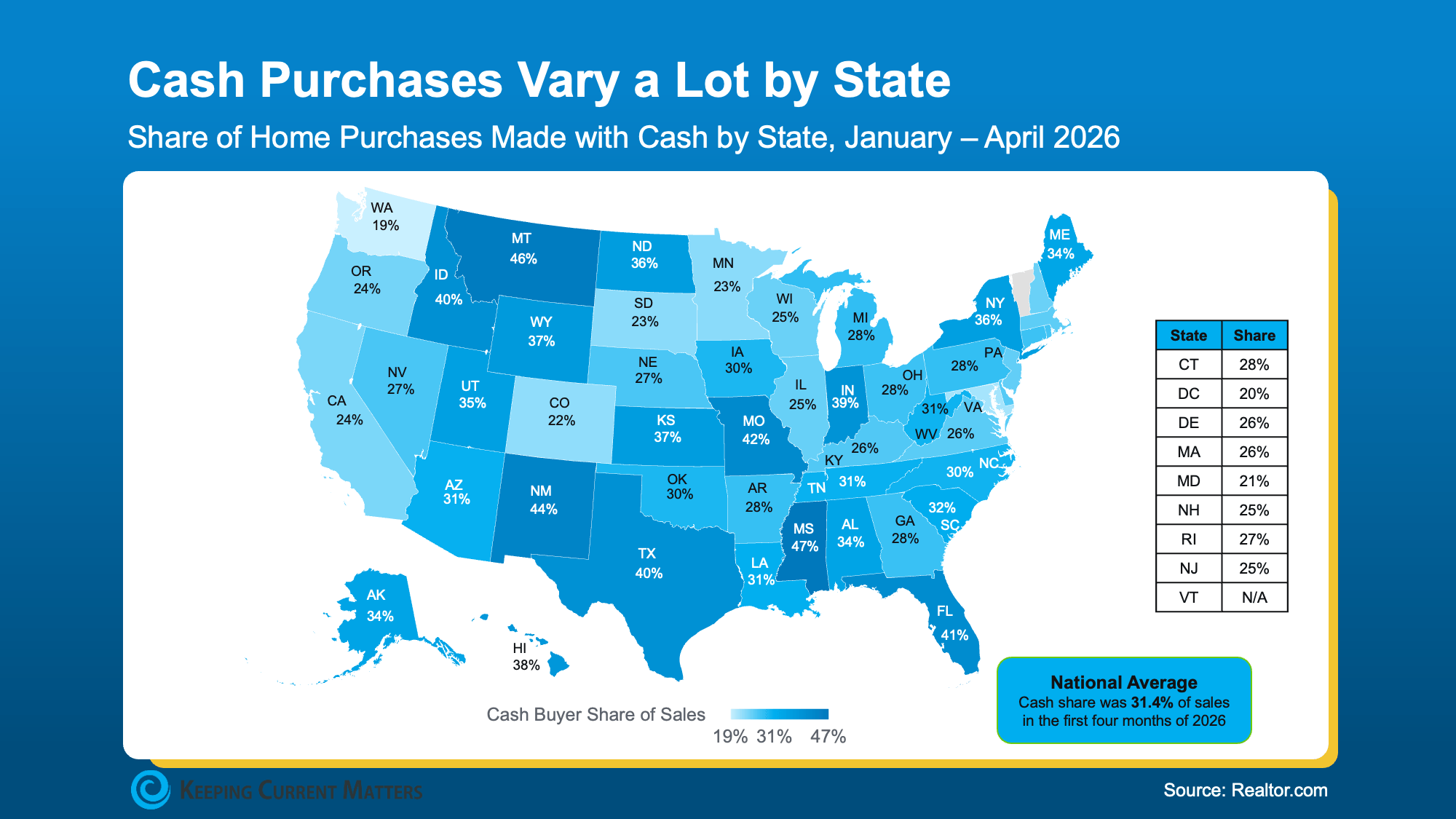
Cash purchases by state, January-April 2026. Map labels are rounded; the national share is 31.4%. Vermont data is unavailable. Source: Realtor.com.
Realtor.com describes the highest-cash markets as reflecting “a mix of affordability, wealth and buyer demographics.” Lower prices, retirement moves, and second-home purchases can contribute to local patterns. A local agent can help you understand how those statewide figures compare with your target market.
Price matters as well. In Realtor.com’s January-April data, cash purchases represented roughly one in five sales in each of the price bands spanning $200,000 to $750,000. The chart shows shares of 20.9%, 19.1%, and 21.4% across those three bands.
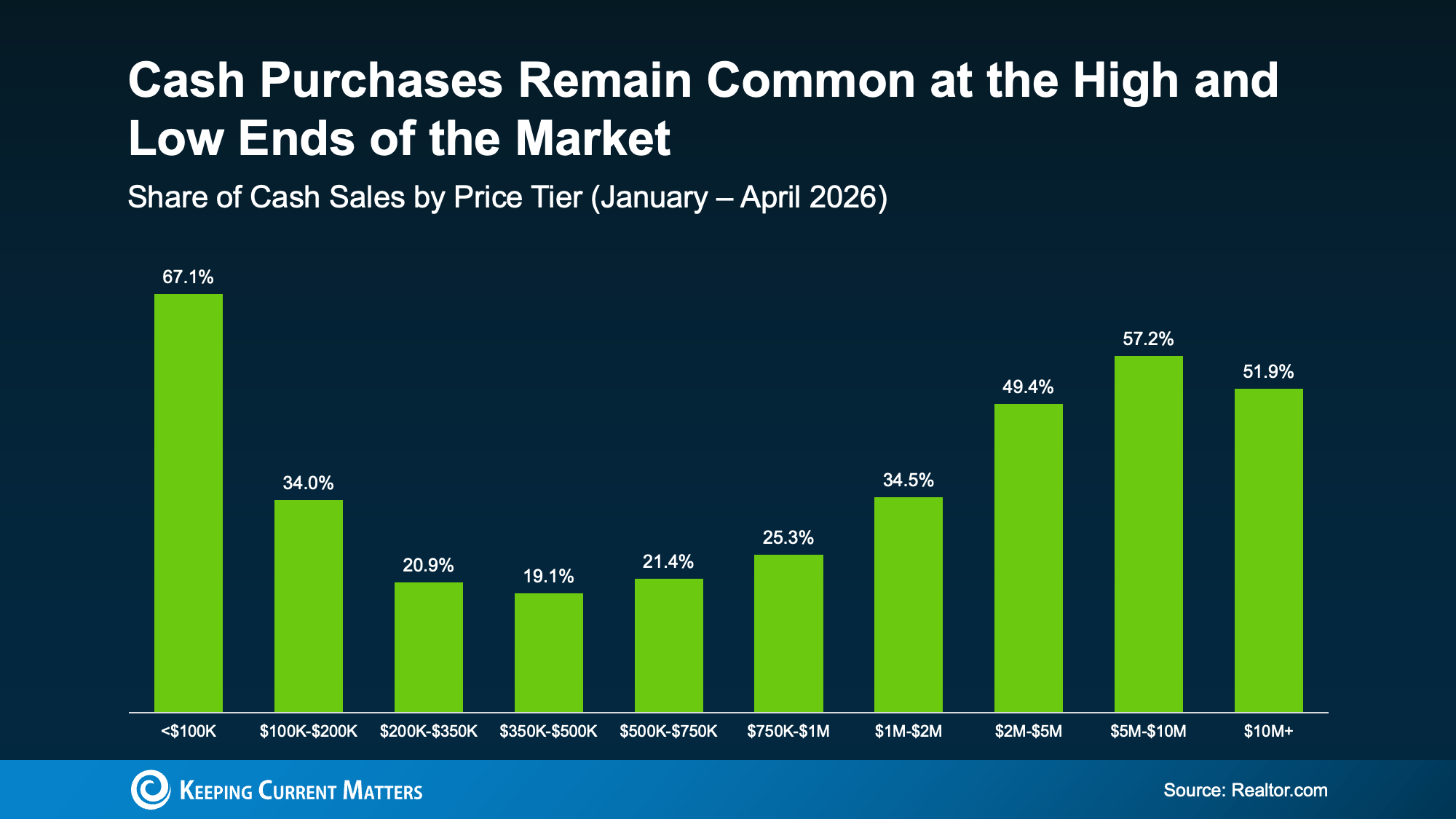
Share of cash sales within each price range, January-April 2026. Source: Realtor.com.
Buying with a Mortgage Is Still Common
If you need financing, you’re still in the majority. A cash offer may appeal to a seller because it removes the mortgage-approval step, but a financed offer can still compete. Ask your lender about preapproval, then work with your agent on an offer that fits your budget and the seller’s timing. Keep appropriate protections in place and remember that preapproval doesn’t guarantee final loan approval.
Plan Your Move Around Your Own Numbers
Start with your expected sale proceeds, the cost of your next home, and the savings you want to keep available. If you’re choosing between cash and financing, a qualified financial professional can help you weigh the effect on your overall finances.
Connect with a local CENTURY 21 Affiliated agent to estimate your home’s value and selling costs, understand nearby buying activity, and plan your next move.