Facebook
 X
X
 Pinterest
 Copy Link
Condos vs. Townhomes: Affordable Buying Options in 2026

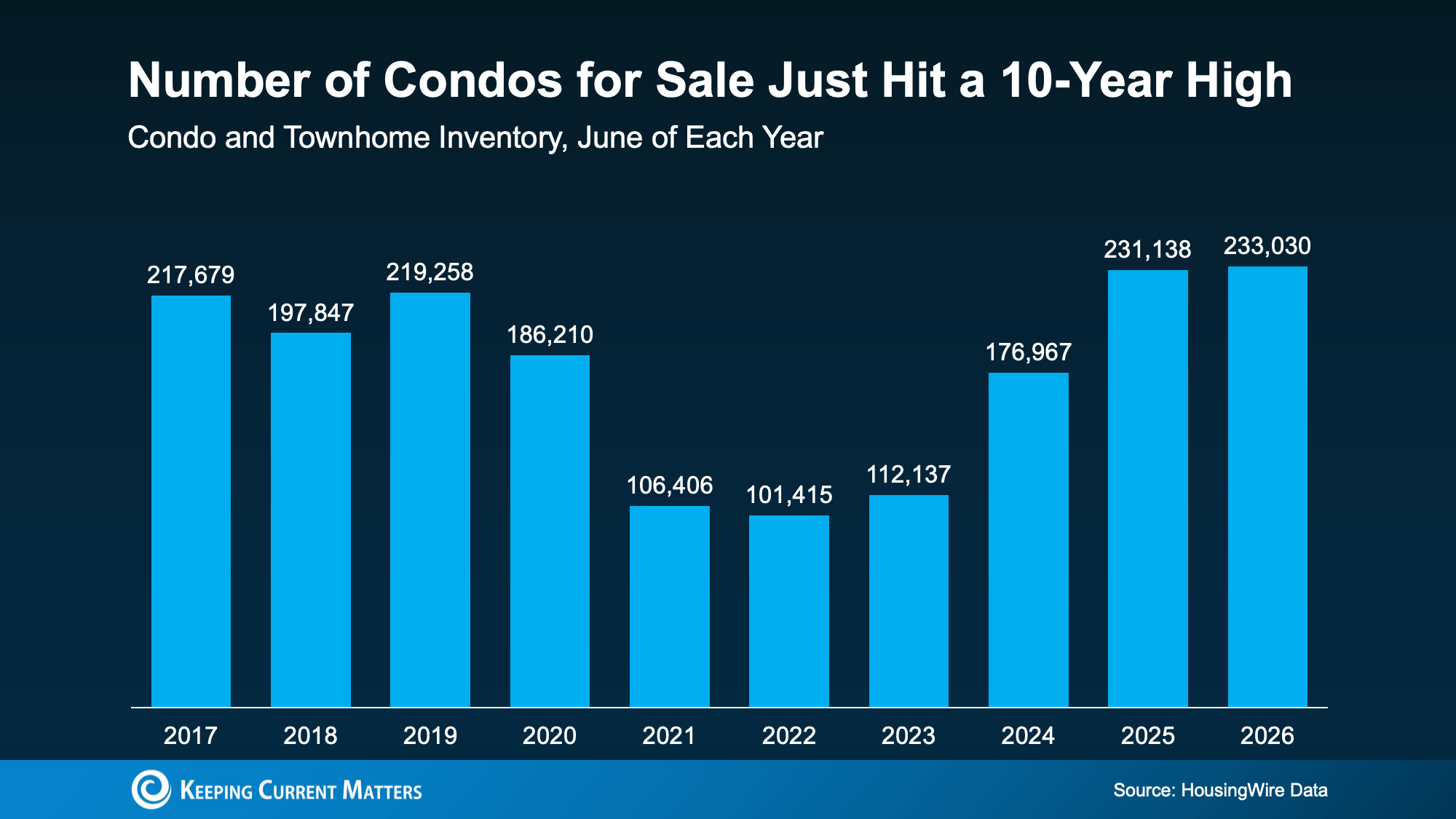
The number of condos and townhomes for sale reached 233,030 in June 2026, giving buyers the most inventory shown in a decade. Source: HousingWire.
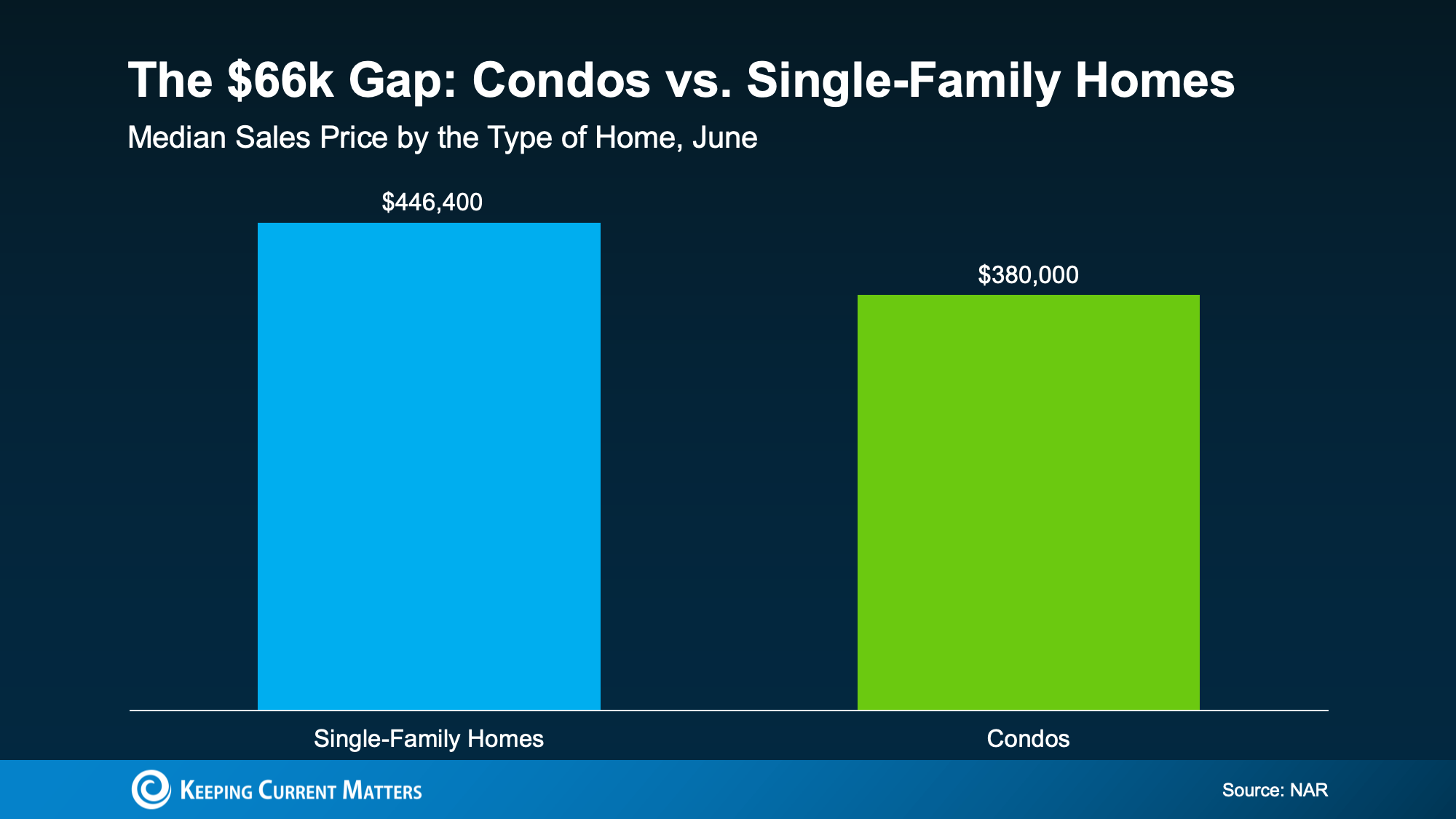
A lower median sales price may make condos a more attainable alternative for buyers priced out of single-family homes. Source: NAR.
Although the terms are sometimes used interchangeably, condos and townhomes aren’t necessarily the same.
Condos
-
Ownership: You own the interior living area of your specific unit. Shared building elements and community spaces are jointly owned by all residents.
-
Amenities: Access to shared amenities like workout rooms, pools, or community spaces.
-
Upkeep: Minimal individual exterior maintenance responsibility. Comes with shared building decisions, shared walls, and regular HOA fees to cover common area upkeep and exterior repairs.
Townhomes
-
Ownership: You own the multi-level building structure and the specific lot beneath it.
-
Layout: Typically multi-story attached structures, sharing at most two side walls.
-
Upkeep: Provides greater autonomy over design and repairs, with exterior maintenance duties usually shared or managed under specific HOA guidelines.
A condominium is technically a form of ownership rather than a particular building style. A condo could be located in a multistory building, resemble a traditional townhome, or even be detached. Likewise, a townhome may be sold with its land or organized legally as a condominium.
Summer Housing Market Guide: More Choices, Better Prices
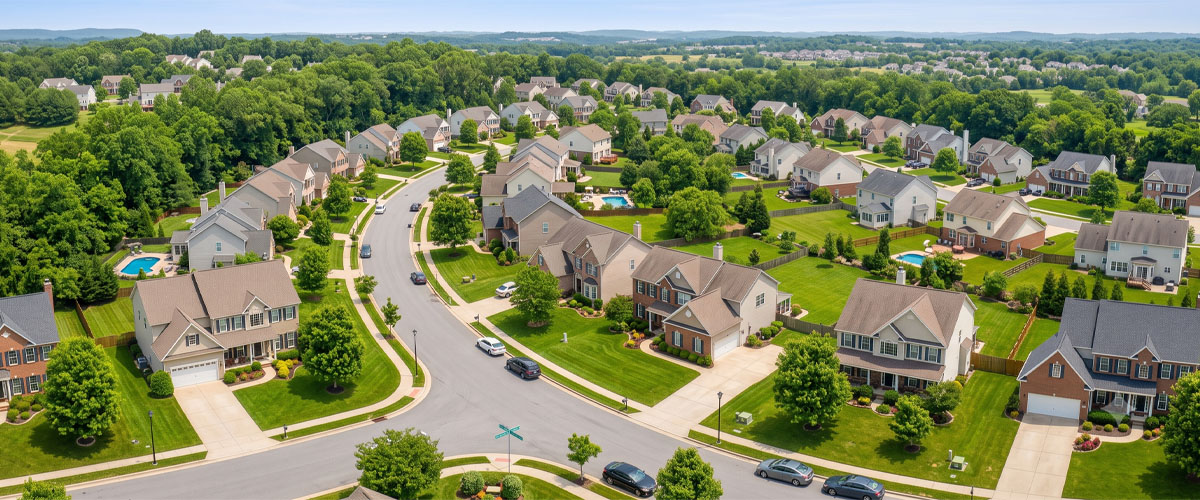
If you paused your home search over the past few years, you likely ran into two major hurdles: asking prices that kept climbing and a frustrating lack of homes for sale.
This summer, both challenges are starting to ease in many markets. Buyers are seeing more homes for sale, while more sellers are reconsidering their asking prices.
Here’s a closer look at current summer real estate market trends and what they mean for your home search.
Sellers Are Pricing Homes to Attract Buyers
Sellers are adjusting their strategy to meet current market reality. According to Realtor.com data, the national median asking price was $430,000 in June, nearly $11,000 lower than last year.
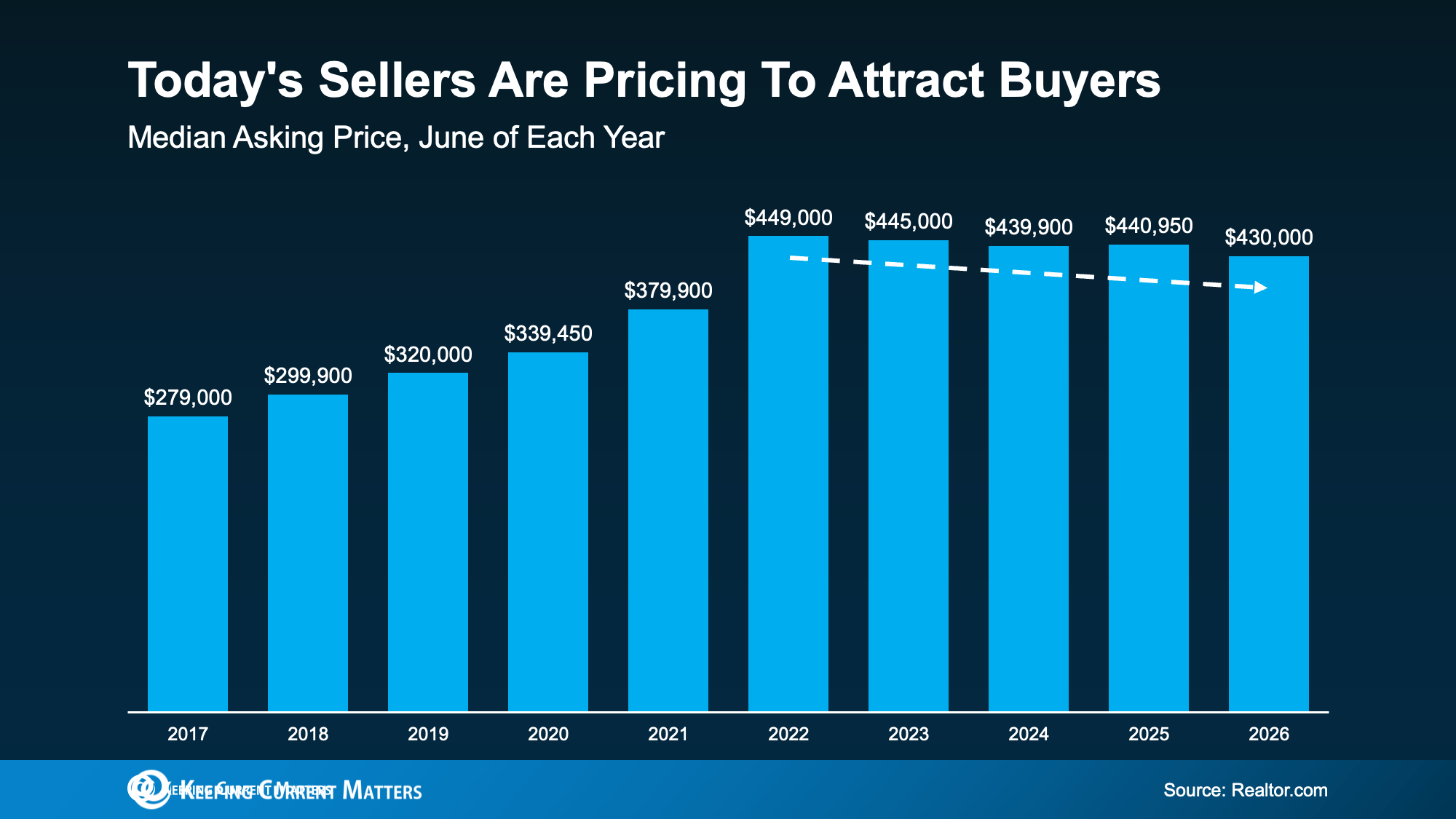
June also marked the eighth consecutive month in which the typical asking price was lower than it had been during the same period one year earlier.
While ongoing price drops might sound concerning at first, it’s not a sign of a market crash. This data tracks asking prices rather than final sold prices, signaling that sellers are setting realistic expectations right from the start.
As Danielle Hale, Chief Economist at Realtor.com, explains:
“Sellers are reading market conditions and are pricing accordingly from the start rather than listing high and cutting later, and buyers are taking note and making bids. This is a welcome sign that we are in a functioning market.”
Asking prices were never going to rise indefinitely. Now that listing prices are settling closer to realistic buyer budgets, the market is moving toward a healthier, more balanced state.
Housing Inventory Is Catching Up
If you spent previous seasons watching properties disappear before you could even schedule a showing, this is welcome news.
Realtor.com reports that the number of homes listed for sale in June reached its highest June level in three years.
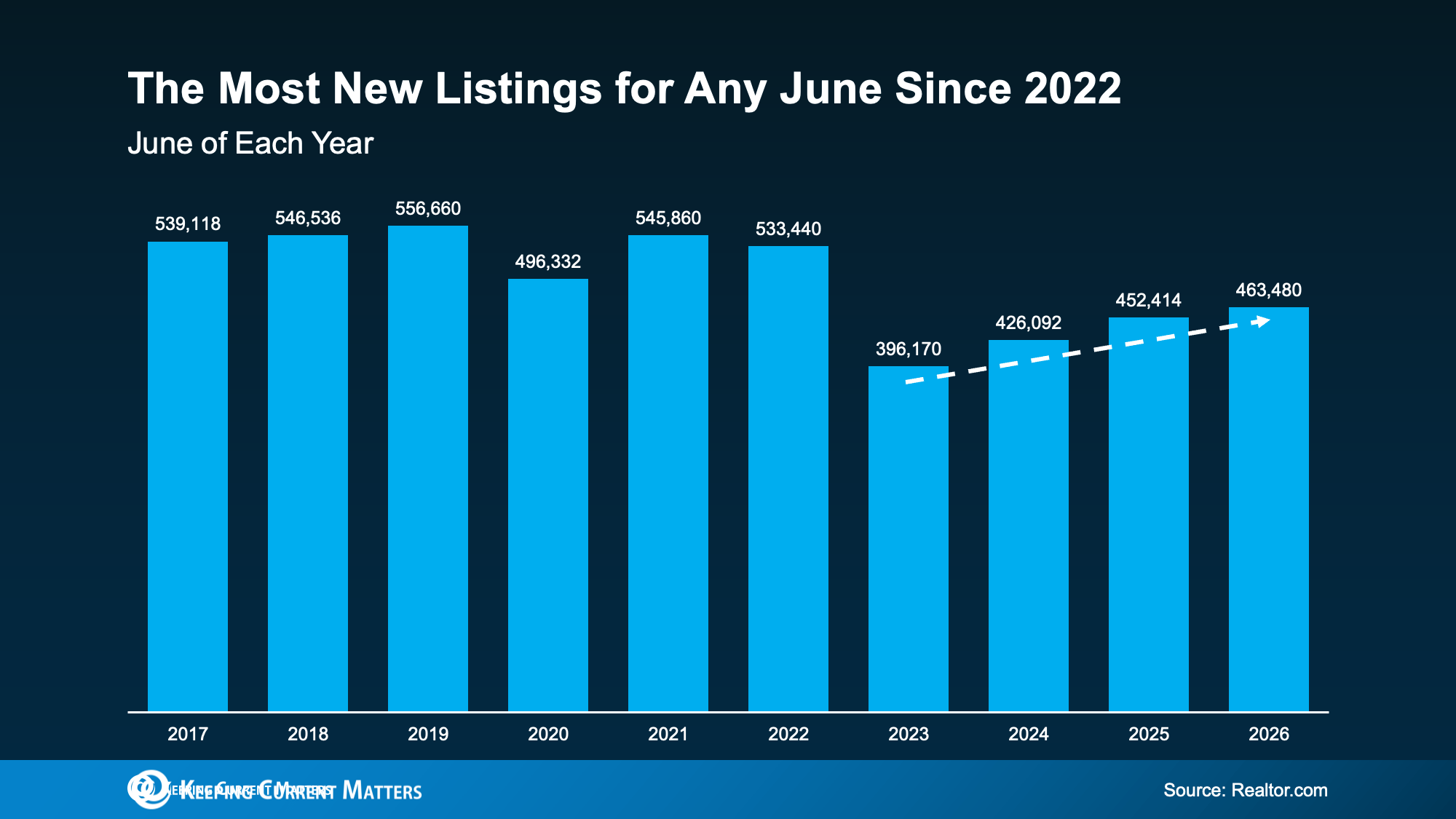
While overall supply has not fully returned to pre-pandemic levels seen between 2017 and 2019, increased listing activity can give buyers:
- More Options: You can evaluate a wider selection of properties rather than settling for what happens to be available.
- Less Urgency: Reduced competition per property means you do not have to rush an offer just to remain in contention.
- Greater Negotiation Leverage: With more inventory on the market, you have more room to negotiate terms and pricing than buyers had a year ago.
Great News for First-Time Home Buyers
These trends are especially encouraging for first-time buyers looking for homes at lower price points.
Mischa Fisher, Chief Economist at Zillow, explains:
“The lowest price tiers are exhibiting some softness in terms of price, they also had the most listing-activity growth, the first time since 2022 that’s been the case.”
In other words, buyers looking for more affordable homes may encounter a little more selection and some additional flexibility on price.
That doesn’t mean every home will be an easy purchase or that competition has disappeared. But it does mean that first-time buyers who paused their home search may be pleasantly surprised by this summer’s market.
Bottom Line
If steep home prices or a lackluster selection caused you to pause your plans, this summer may be a good time to look again.
More homes for sale and lower asking prices could give you additional choices, less pressure, and more room to get a better deal on a house you love.
If you’re ready to restart your search this summer, browse available homes now or contact us today to connect with an expert local agent.
Buying a Home With Student Loans: What You Need to Know

Student loans are back in the news and might be weighing on your mind if you’ve been following the headlines recently. If you’re wondering what your student debt means for your homeownership plans, there’s one important thing to remember:
Having student loans does not automatically mean you can’t buy home.
The Biggest Myth About Student Loans and Mortgages
Many first-time buyers believe they have to completely pay off their student loans before they can qualify for a mortgage.
In most cases, this isn’t true.
According to a Redfin article, student loans are usually evaluated by lenders in the same way as other standard debts, such as car payments or credit cards:
“Yes, you can get a mortgage with student loan debt. Lenders primarily assess your debt-to-income (DTI) ratio, which compares your monthly debt payments, including student loans, to your gross monthly income. Having student debt doesn’t automatically disqualify you if your DTI is within acceptable limits.”
A student loan on your credit report is not an automatic disqualifier. Instead, lenders look at your broader financial profile, including your:
- Income
- Monthly debt payments
- Credit history
- Overall financial situation
Your student loans matter, but they don’t tell a lender the whole story.
Many Homebuyers Have Student Loan Debt
To really put things into perspective, data from the National Association of Realtors (NAR) proves that you can have student debt and still buy a home.
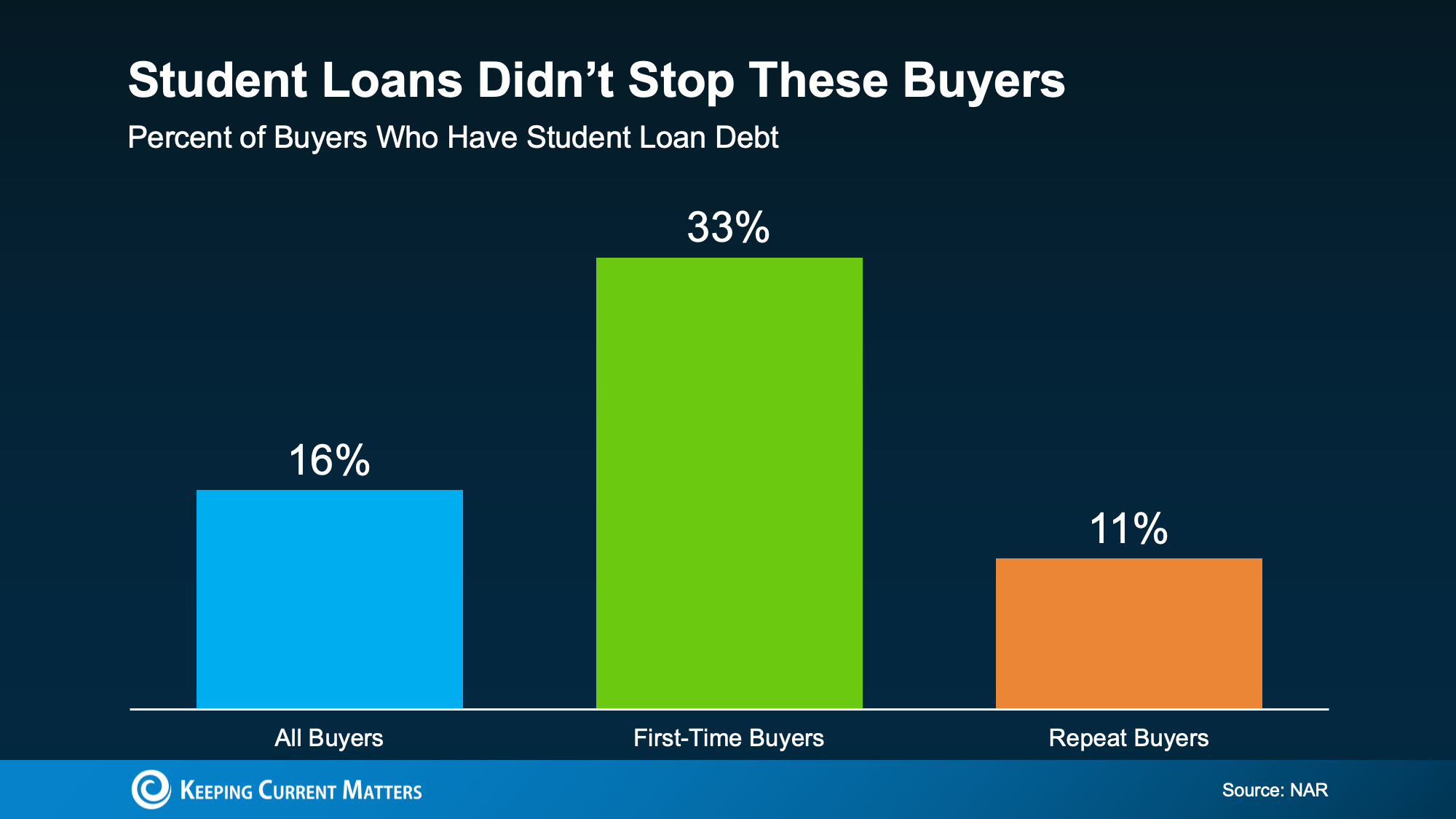
According to NAR’s research:
-
33% of first-time homebuyers still had student loan debt when they purchased their home.
-
That translates to 1 out of every 3 first-time buyers.
-
The median amount of student loan debt they owed was $30,400.
Let this reassure you that people are successfully buying homes with student debt every single day. Carrying student loans may affect how much you can borrow, but it doesn’t mean homeownership is beyond your reach.
Explore Your Mortgage Options First
A lot of potential buyers trip themselves up right at the starting line. They assume the worst regarding their loan eligibility and never check what they could actually qualify for. But your financial situation is unique and deserves some exploration.
If your income is steady and your overall finances are in decent shape, buying a home could be far more realistic than you think. The only way to know is to review the numbers with a qualified mortgage professional. You might discover you’re much closer to buying a house than you thought.
Bottom Line
Student loans don’t have to stop you from owning a home. If you’ve been putting off your homebuying plans because of debt, talk to a lender about your options. It may not be the roadblock you think it is.
Contact our team today to connect with trusted local lenders and start exploring your real estate options.
Down Payments Are at Their Lowest Since 2021

Saving for a down payment is often the biggest obstacle to buying a home. With the challenges of affordability today, it’s easy to wonder how anyone manages to save enough cash right now.
But here’s some good news: some buyers are getting into homes with smaller down payments than they may have expected.
According to Realtor.com, the typical buyer put down about $23,400 in early 2026. That’s about $5,000 less than the year before, a 19% year-over-year drop. It’s also the lowest typical down payment level since 2021.
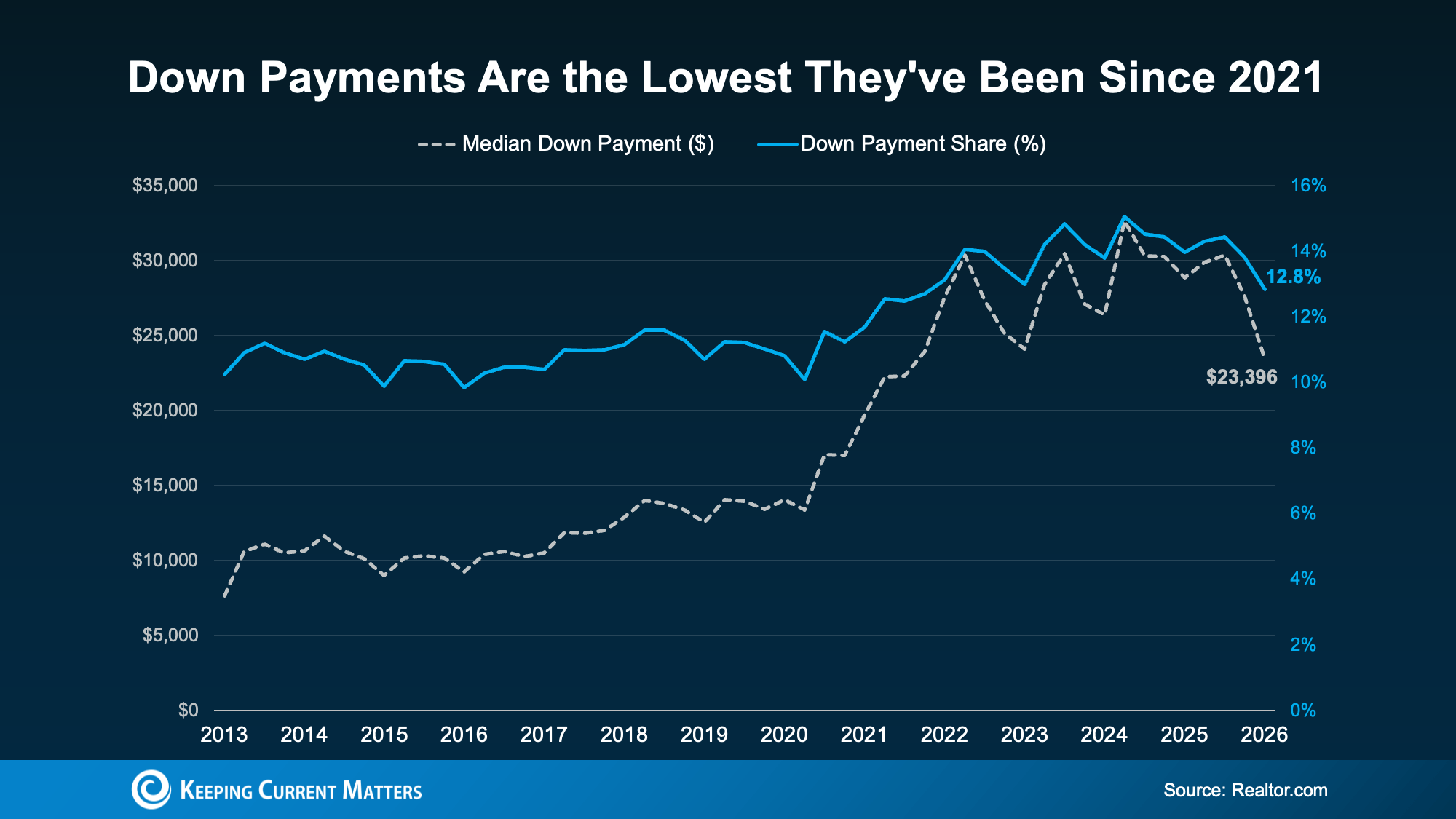
3 Reasons Why Down Payments Are Shrinking
Why are buyers putting less money down today? Three major shifts in the housing market are driving this trend:
-
Less Competition Between Buyers
In the most competitive markets of the past few years, some buyers felt pressure to put more money down to make their offers stand out.
Today, conditions are more balanced in many areas. With less intense competition, buyers are less pressured to offer a huge down payment to make an offer stand out.
-
Home Price Growth Has Moderated
Your down payment is typically based on a percentage of the purchase price. When home price growth slows or levels off, the dollar amount needed for a down payment can shift too.
In many markets, prices have cooled from the rapid pace seen in recent years. Some areas have even seen slight price dips. That can help reduce the upfront amount some buyers need to save.
-
More Buyers Are Using Lower Down Payment Loan Options
More buyers are also turning to loan programs that often require less money upfront. Government-backed loan options, like FHA loans and VA loans, often allow eligible buyers to purchase with a lower down payment or, in some cases, no down payment. According to Mortgage Professional America, FHA loans have made up more than 24% of purchase mortgages for five straight quarters, while VA loans recently reached their highest share in more than a decade.
Of course, not every buyer will qualify for every program, and any down payment is a huge amount of money to save. To make up the difference, buyers are relying on two things: payment assistance programs and family support.
Financial Help You May Not Know You Qualify For
Down payment assistance is one of the most overlooked resources in real estate. A study by the Urban Institute and Down Payment Resource looked at the 10 largest U.S. metros and found that nearly 44% of recent buyers already qualified for a down payment program. Surprisingly, only 10% of those buyers actually used the help when closing on their loan.
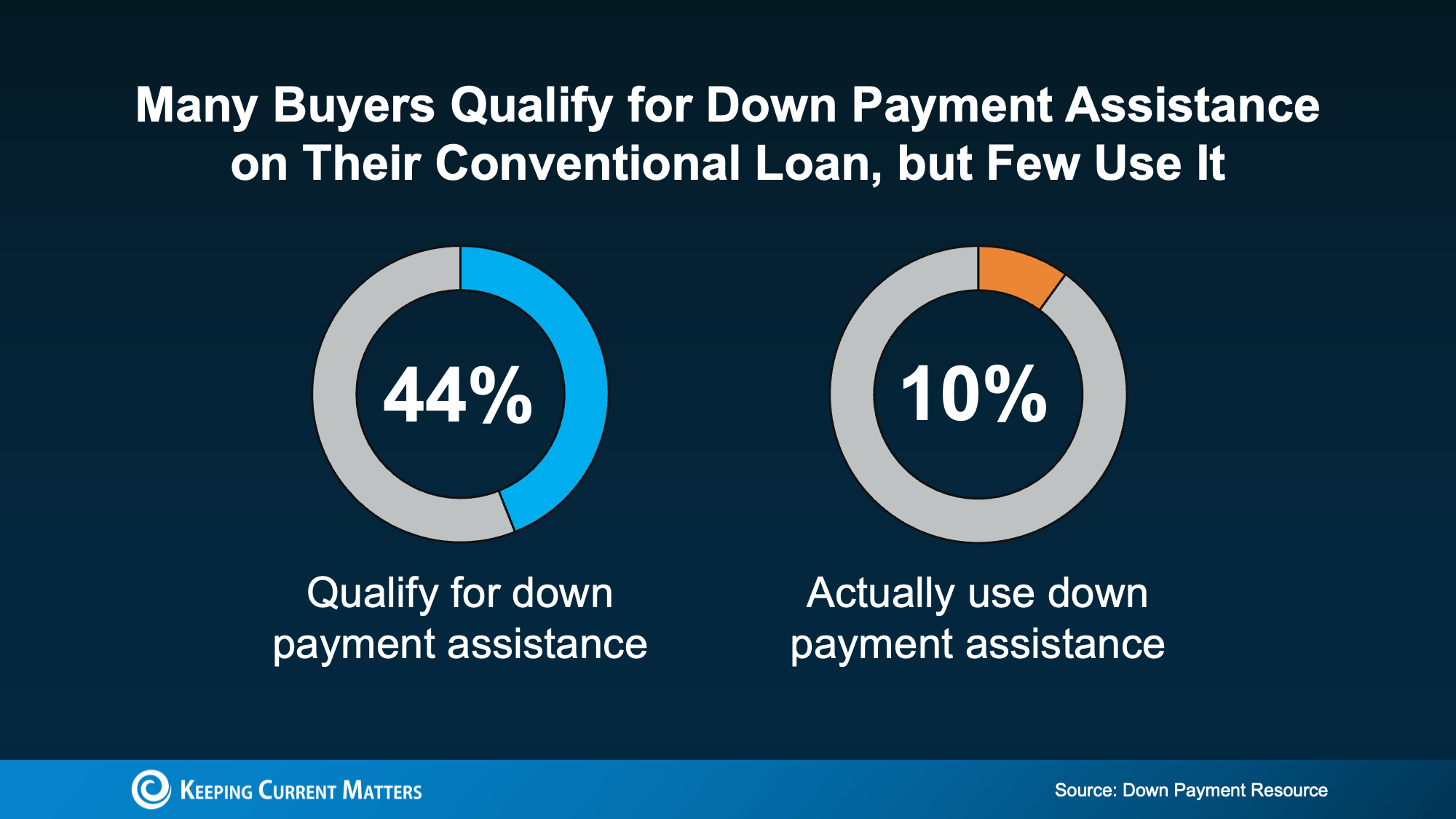
There are more options available than many buyers realize. According to Down Payment Resource:
-
There are more than 2,600 down payment assistance programs available.
-
More than half (62%) are designed specifically to help first-time buyers.
-
38% have no first-time buyer requirement, meaning you may qualify even if you’ve owned a home before.
-
62% are open to buyers earning $100,000 or more.
So, don’t assume you’re priced out of a home or ineligible for help. A lender or knowledgeable real estate professional can help you ask the right questions and explore programs that may fit your situation.
A Helping Hand from Loved Ones
A growing number of buyers are also getting help closer to home. Research from Veterans United shows about 59% of parents have provided or plan to provide financial support to help their child buy a home.
That support usually goes toward the down payment, followed by helping the buyer qualify for a mortgage and covering closing costs.
Chris Birk, VP of Mortgage Insight at Veterans United, explains it this way:
“For many families, helping a child buy a home has become less of an optional gesture and more of a practical response to today’s affordability challenges.”
Not everyone has family or loved ones who are able to help. But for buyers who do, it can speed up how quickly they’re able to buy a home.
Bottom Line
Down payments are smaller than they’ve been in years, opening the door for more buyers to enter the market. Between down payment assistance programs and support from family, you may have more paths to homeownership than you realize.
Always consult with a trusted mortgage professional to review your financial situation. If you’re ready to start exploring neighborhoods and discussing your goals, contact our brokerage today to connect with an experienced local real estate agent.
Two Big Reasons This Summer May Be the Right Time To Move

A lot of hopeful buyers and sellers are asking the same question right now: “Should I move this summer, or wait until later this year?”
Waiting can feel like the safer choice, especially if you’re hoping mortgage rates will drop or market conditions will feel more predictable. But there’s something important to keep in mind: rates aren’t expected to change much, so waiting may not create the advantage you’re hoping for.
Summer has historically been one of the strongest seasons of the year for both buyers and sellers. And if you delay your move until fall or winter, some of the best seasonal opportunities may start to fade.
Here are two big reasons a summer move may be worth considering.
1. Buyers May See More Fresh Inventory in Summer
One of the biggest challenges buyers have faced in recent years is a lack of affordable options.
Maybe this sounds familiar:
- You find a home you like, but it’s outside your budget.
- You find something in your price range, but it doesn’t fit your needs.
- Or nothing new and interesting hits the market for weeks.
The Summer real estate market often helps with this.
Looking at data from the Realtor.com, summer months consistently bring more sellers into the market than later in the year. This gives buyers a real window of opportunity to see fresh listings.
According to the data, any given summer month typically sees about 32% more fresh options than the average month from September through December.
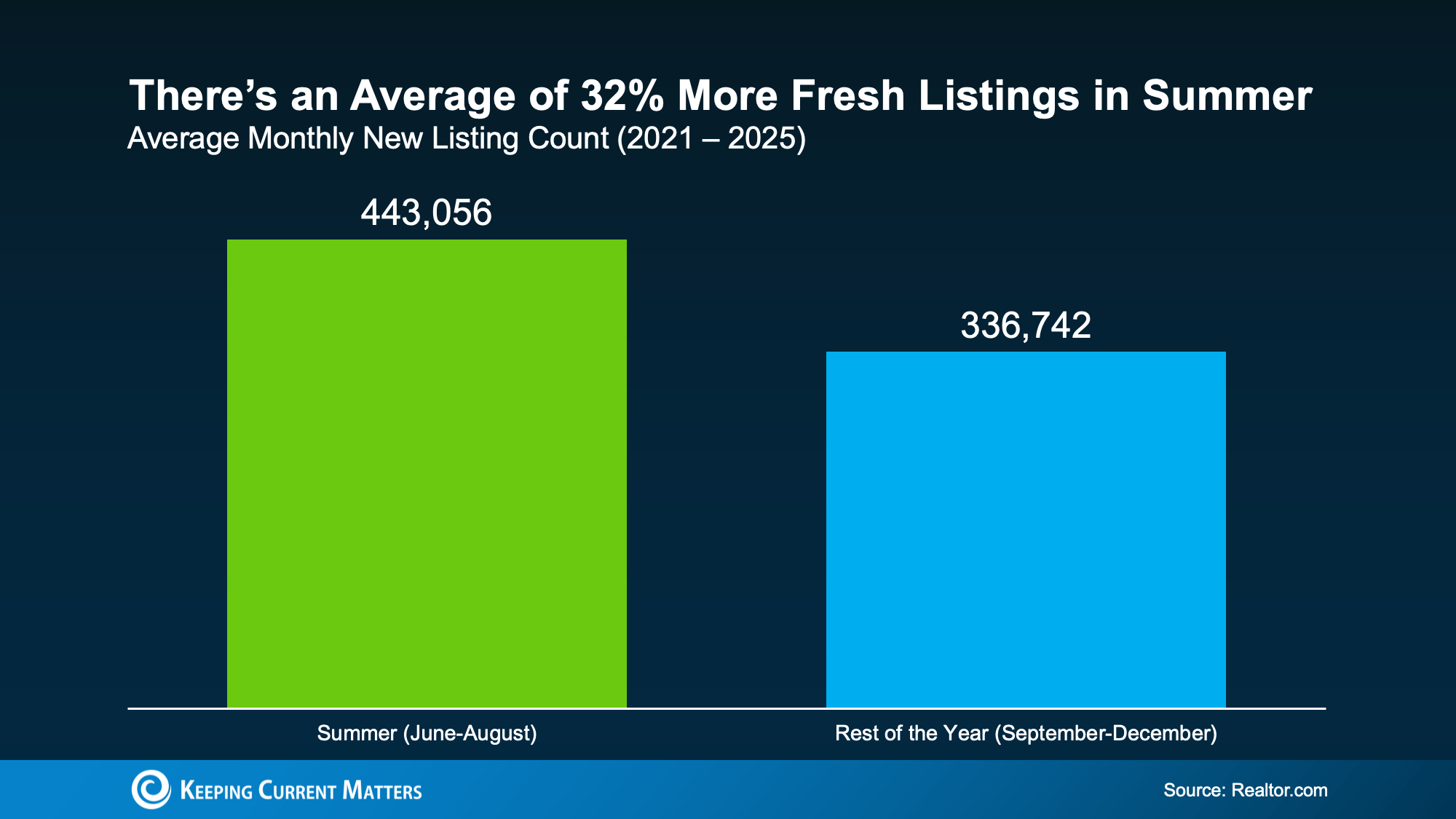
As a buyer, more newly listed homes can increase your chances of finding one that fits both your wish list and your budget. After all, it takes is the one right home hitting the market to change your whole search.
Why Waiting May Limit Your Choices
The summer listing window doesn’t stick around: new inventory tends to slow once summer ends.
By fall, many homeowners who planned to sell have already listed. Some buyers and sellers who were aiming to move before school-year schedules resume may have already made their move or started the process. As a result, new listing activity usually cools heading into fall and winter.
Every year is different, and every local market has its own patterns. But if finding the right home at the right price has been your biggest challenge, waiting until later in the year may not necessarily give you more options.
2. Sellers Often Benefit From Summer Seasonality
If you’re thinking about selling, you may be wondering whether now is the right time. Headlines about lower asking prices, price reductions, and softer market conditions in some areas can make it feel like the moment has passed.
But those headlines don’t tell the full story.
The market is becoming more balanced, and some areas may be experiencing price declines. Still, that does not mean sellers have missed their chance. Seasonality can still work in your favor, depending on your local market and your pricing strategy.
According to the National Association of Realtors (NAR), homes sold during a summer month usually sell for about 4% more than homes sold during the typical month from September through December.
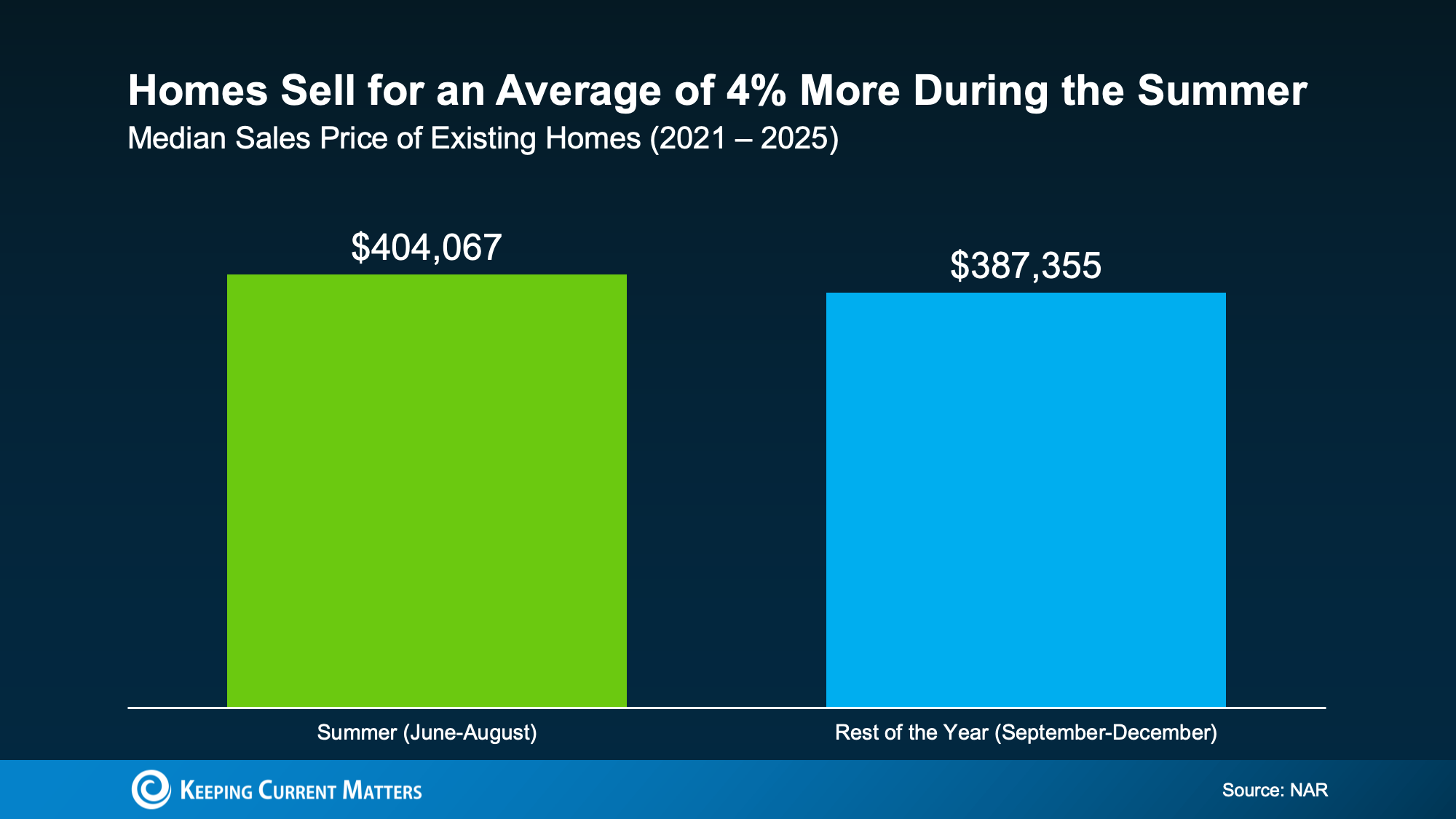
With that said, this doesn’t mean you should price your home 4% higher. In today’s market, overpricing can turn buyers away and cause your home to sit longer than expected.
Instead, consider the timing of your listing. If your goal is to sell for as much as you reasonably can, listing during summer may be a stronger move than waiting until later in the year, when there are typically fewer active buyers.
Why Summer Buyers May Be Motivated
Summer buyers often have a timeline in mind. They may want to move before the next school year, take advantage of warmer weather, or use available time off to tour homes and coordinate a move.
That sense of timing can lead to stronger activity and, in some cases, better offers.
Again, this depends on your local market, your home’s condition, and how well it is priced. But if you were already considering a move in 2026, summer timing deserves a closer look.
Bottom Line
Can you still buy or sell later this year? Of course. But understanding the strengths of the summer market could make a big difference.
For buyers, summer can bring more fresh listings and better odds of finding a home you like. For sellers, summer seasonality may support stronger buyer activity and better pricing opportunities than later in the year.
If you’re planning a move in 2026, connect with a local real estate professional to talk through your goals, timeline, and market conditions. Depending on what matters most to you, summer could be the right time to make your move.
Mid-Year Housing Market Update 2026

If you’re feeling confused by the housing market right now, you’re not alone.
Mortgage rates have risen. Home sales haven’t picked up as quickly as many experts expected. And buyers and sellers are still waiting for affordability to improve and market activity to turn up.
The short answer? A lot changed during the first half of 2026.
At the end of 2025, economists were forecasting a stronger housing market for the year ahead. Many expected mortgage rates to come down, affordability to improve more noticeably, and home sales to rebound.
But lingering inflation, economic uncertainty, and growing geopolitical tensions overseas pushed mortgage rates higher than expected. With rates staying elevated for longer, many buyers have continued to wait on the sidelines.
Unexpected factors like these have forced experts to revise their housing forecasts for the rest of the year.
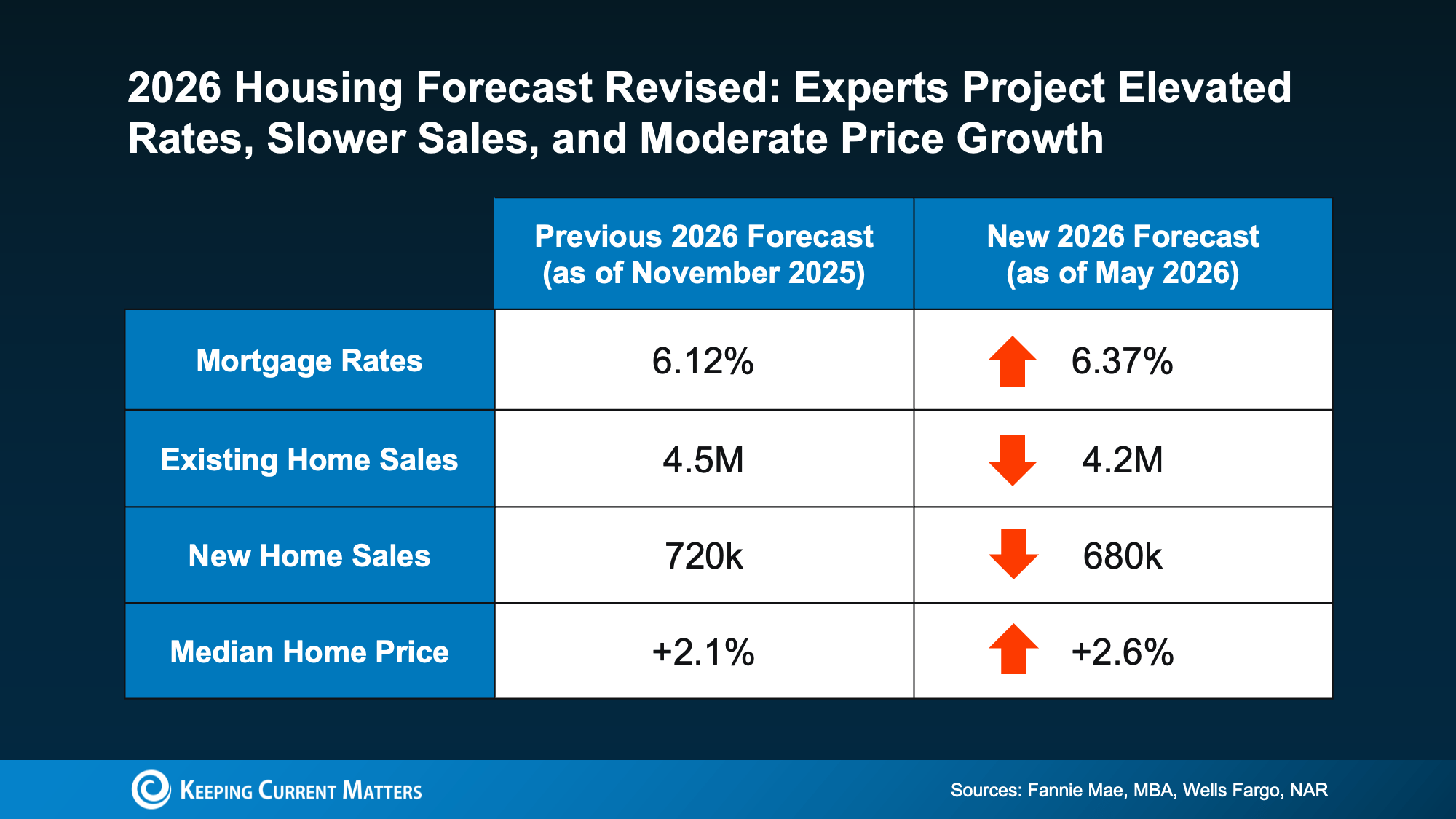
Experts are now projecting elevated mortgage rates (6.37%) and a dip in total home sales. However, home values remain resilient with a projected 2.6% growth in median prices.
So, what does this mid-year housing market update actually mean for you? Let’s break it down.
Mortgage Rates May Stay Elevated Longer Than Expected
Just about everyone would like to see mortgage rates return to the upper 5s or low 6s we saw earlier in the year. But based on current forecasts, experts don’t expect that to happen this year.
Instead, many industry organizations now expect mortgage rates to stay closer to the mid-6% range in 2026. The good news is that this is still lower than rates were a year ago.
Of course, forecasts can change. If inflation cools or overseas conflicts ease, mortgage rates could shift again. But for buyers waiting for a major rate drop, the payoff may not be as big or as immediate as hoped.
For many buyers, the better question may be: Can you comfortably afford a home at today’s rate? If the answer is yes, waiting may not automatically put you in a stronger position.
Existing Home Sales Were Revised Lower
At the end of 2025, experts expected existing home sales to average around 4.5 million in 2026. That forecast has now been revised down to about 4.2 million.
That change tells us something important: affordability is still a challenge, and many buyers remain hesitant.
Higher mortgage rates have made monthly payments harder to manage, especially for first-time buyers. As a result, the market has moved more slowly than originally expected.
But there is still some positive news. Even with the revised forecast, experts still expect more homes to sell this year than last year.
There’s also a pool of buyers who may re-enter the market once rates settle and uncertainty eases. As Lawrence Yun, Chief Economist at NAR, explains:
“There is sizable pent-up demand that could be released into the market.”
Recent improvements in pending home sales also suggest some buyers are starting to move forward again, even with rates still elevated.
For today’s buyers, that’s a big deal. If you can afford a home now, buying before more buyers return could mean less competition than you might face later.
New Home Sales Also Slowed
Builders also expected a stronger year.
Earlier forecasts projected new home sales would top 700,000 in 2026. Now, economists expect new home sales to come in just under that number.
Once again, mortgage rates are a major reason why.
But for buyers, there may be an upside. When new home sales slow, builders may become more motivated to sell available inventory. Depending on the market, that could create opportunities for:
- Builder incentives
- Closing cost assistance
- Price flexibility
- Negotiation on upgrades or finishes
This doesn’t mean every builder will negotiate, and incentives vary by location. But in areas with more new construction, buyers may have more leverage than they would in a a more active market.
Home Prices Are Still Expected To Rise
Here’s one of the biggest takeaways from this mid-year housing market update: even though sales activity has slowed, experts did not revise national home price forecasts downward.
They still expect home prices to rise nationally this year.
Why? Because buyer demand has softened, but the overall number of homes for sale remains relatively limited. That imbalance continues to support prices, even in a slower market.
Local conditions can vary; some markets are cooling more than others, and pricing trends depend heavily on inventory, buyer demand, property condition, and location.
Still, experts are projecting steady price growth rather than a major decline, at least at the national level.
That can be reassuring whether you’re buying or selling. Sellers generally don’t want to see a sharp drop in values. And buyers may feel more confident about a major purchase when prices aren’t expected to fall significantly right away.
What This Means for Buyers
For buyers, the updated 2026 housing market forecast is a reminder to focus on what you can control.
Mortgage rates may not fall as quickly as hoped, but that doesn’t mean buying is off the table. A local real estate agent can help you understand what’s happening in your specific market, including inventory levels, price trends, and negotiation opportunities.
Before making a move, think about reviewing:
- Your current budget
- Estimated monthly payment at today’s rates
- Available homes in your preferred price range
- Local competition from other buyers
- New construction options and possible builder incentives
You should also speak with a trusted mortgage professional to understand loan options, rate scenarios, and affordability based on your situation.
What This Means for Sellers
For sellers, slower sales activity doesn’t point to a stalled market.
Buyers are still active, but many are more selective thanks to tighter affordability. That makes pricing, preparation, and marketing even more important.
A strong selling strategy should include:
- A realistic pricing plan based on current local data
- Thoughtful preparation before listing
- Professional marketing that highlights the home clearly
- Flexibility around buyer questions, timelines, and negotiations
With home prices still expected to rise nationally, many sellers may still be in a strong position. A successful sale will depend on understanding your local market, not relying on broader national headlines.
Bottom Line
The housing market hasn’t rebounded as quickly as experts originally hoped. Still, the market hasn’t totally stalled.
Higher inflation, economic uncertainty, and global tensions caused economists to revise their 2026 housing market forecasts. Mortgage rates are expected to remain higher than originally projected, and home sales forecasts have been adjusted lower.
Even so, more homes are still expected to sell this year than last year, and national home prices are still projected to rise.
The key is to make decisions based on your own local market, budget, and goals.
If you want to understand what this mid-year housing market update means for your next move, connect with our team. We can help you review local trends, explore your options, and decide what makes sense for the rest of 2026.
Smaller Homes, Bigger Value for Today’s Buyers

You might have started your home search with a simple picture in mind: a certain number of bedrooms, a spacious layout, maybe even a home office or dedicated workout room.
Then reality sets in. The homes that fit your budget may be smaller than what you originally imagined.
That’s a common experience for many buyers right now. Affordability is tight, and buyers are taking a closer look at what they truly need in a home. But going smaller doesn’t need to feel like a compromise.
In fact, smaller homes for buyers can offer real advantages in today’s market, especially when considering newer construction, condos, and communities designed with shared amenities.
Why Smaller Homes Are Getting More Attention
Smaller homes are not just a backup plan. They have become a more practical path for many buyers who want to balance comfort, location, and budget.
In fact, newly built homes have been getting smaller for years, and the median square footage of new single-family homes has generally declined since 2014, based on US Census data.
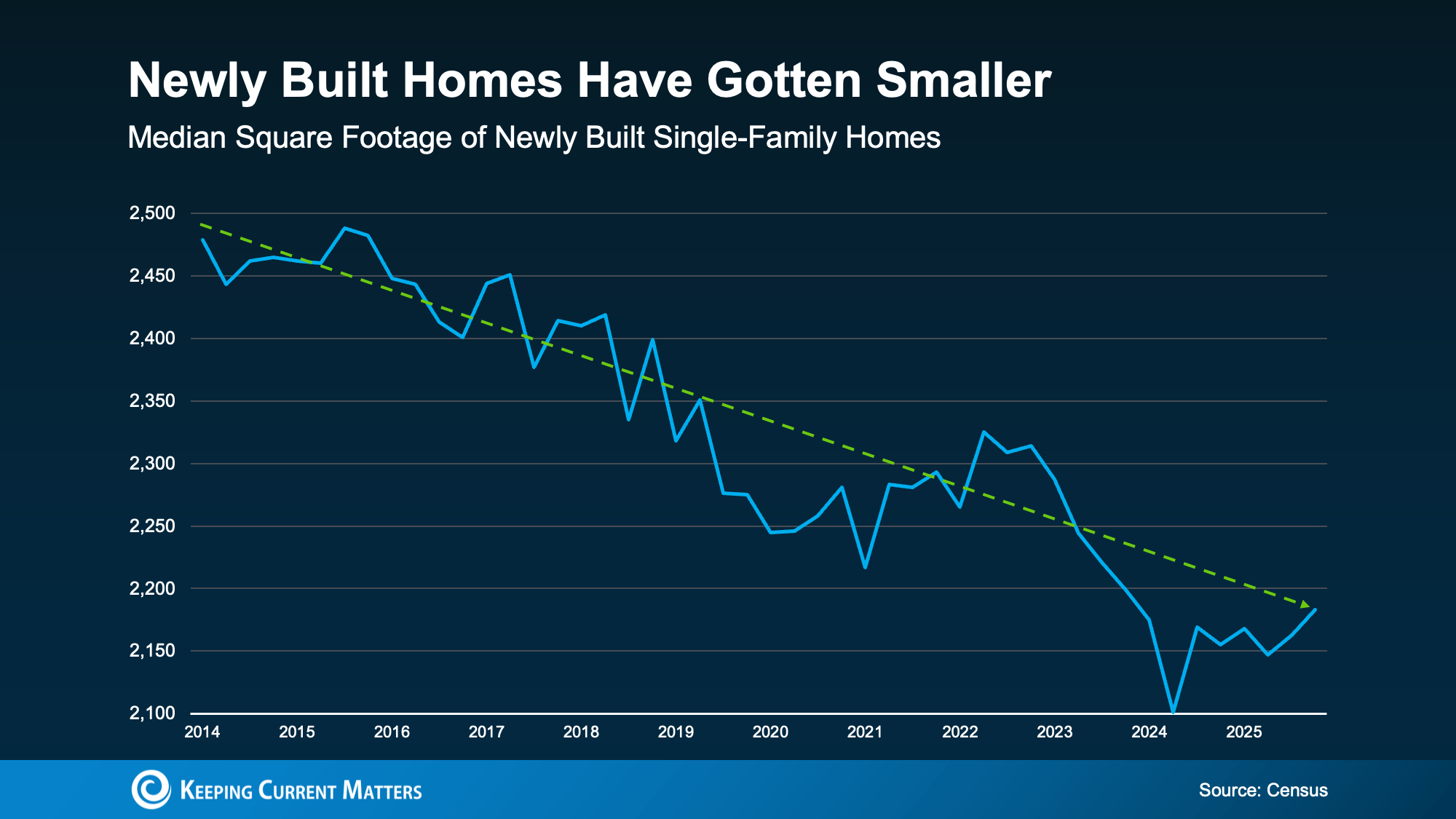
This shift makes sense. Builders pay close attention to what buyers are not only willing, but able to purchase. When affordability becomes a bigger concern, smaller floor plans can help bring new homes within reach for more shoppers.
Smaller New Construction Homes May Be Worth a Look
If the existing homes in your price range aren’t checking enough boxes, it may be time to explore new construction.
Many builders are focusing on smaller homes with modern layouts, updated finishes, and move-in-ready features. Smarter designs can make a smaller footprint feel more functional than an older home with a less efficient floor plan.
A smaller, newer home may offer:
- Modern appliances and finishes
- Open, practical layouts
- Less unused space
- Move-in-ready convenience
- A price point that may better fit your budget
Shifting buyer preferences are a big reason that new home prices have hit a five-year low. If you’ve ruled out new construction in the past, you want to take another look at what builders are offering in your area.
Condos Can Open Another Path to Homeownership
New construction isn’t available everywhere, and in some markets, it may still be outside your budget. That is where condos can be worth considering.
Condos are often smaller than single-family homes, which can help reduce the overall purchase price. According to data from the National Association of Realtors (NAR), the median condo price is lower than the median single-family home price in every region.
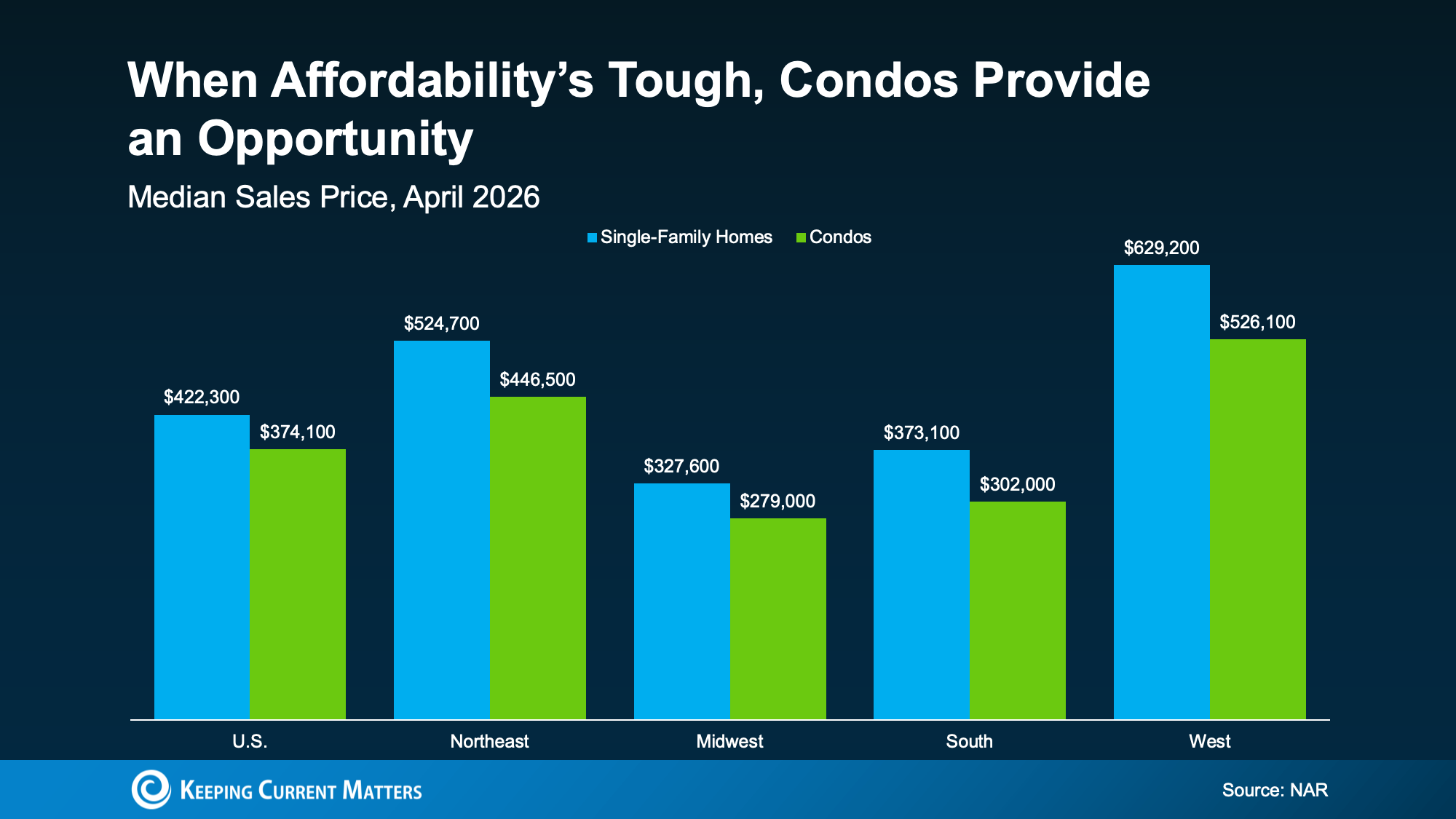
For buyers trying to make the numbers work, this is a considerable difference.
According to NAR, condo sales rose 2.7% last month, and were up year over year. And value is a driving factor. Ali Wolf, Chief Economist for New Home Source, explains:
“In addition to favoring smaller floor plans, more consumers are showing a willingness to live in an attached home. This shift is not driven by a preference for shared walls, but by a pursuit of value.”
For buyers focused on affordability, condos can offer a way to stay active in the market without stretching too far for a detached single-family home.
The Right Community Can Make a Smaller Home Feel Bigger
Square footage is important, but it’s only one part of a home’s blueprint.
A smaller home may still work well if the surrounding community gives you access to amenities that extend how you live day to day. In some condo communities, neighborhoods, and master-planned developments, shared spaces help fill in the gaps.
Depending on the community, amenities may include:
- Walking trails
- Pools
- Fitness centers
- Co-working spaces
- Outdoor gathering areas
Features like these can make a smaller home feel more livable, and functional. For example, if there’s no room for a home office, a nearby co-working space can help. If you don’t have space for a dedicated workout room, a shared fitness center can fill the gap.
Buying a Smaller Home Does Not Mean Giving Up Comfort
A smaller home can still support the way you want to live. Focusing less on total square footage and more on how the space works can offer a different perspective.
As you compare options, consider:
- Layout: Does the floor plan make daily routines easier?
- Storage: Are closets, cabinets, and garage space used efficiently?
- Natural light: Does the home feel open and comfortable?
- Shared amenities: Does the community offer spaces you would actually use?
- Location: Does the home keep you close to the places that matter to you?
A smaller home with the right layout, features, and setting may be a better fit than a larger home that stresses your budget or needs more work.
Bottom Line: Smaller Homes Can Offer Bigger Opportunities
Today’s smaller single-family homes and condos have more to offer than their square footage might suggest. They can give buyers more budget flexibility, access to newer features, and opportunities to live in communities designed with useful amenities.
If your current search feels limited, consider widening your options. A smaller home, new build, or condo may offer opportunities you never knew existed.
Curious about smaller homes, condos, or new construction options in your area? Contact our brokerage to explore what’s available and compare homes that fit your budget and goals.
Housing Affordability Today: What Buyers Should Know

Let’s talk honestly about housing affordability today.
If you’ve been thinking about buying a home, selling your current home, or making a move, you’ve probably seen plenty of headlines about mortgage rates, home prices, inflation, and affordability. Some of those headlines are helpful. Others leave out critical information.
The truth is, affordability is not shaped by one factor alone. Mortgage rates matter, but they’re not the only piece of the puzzle. Wages, home prices, inventory, buyer competition, and your personal financial situation all play a role.
Here’s a clearer look at what’s happening right now: the good, the challenging, and what it could mean for your next move.
Mortgage Rates Have Been Rising
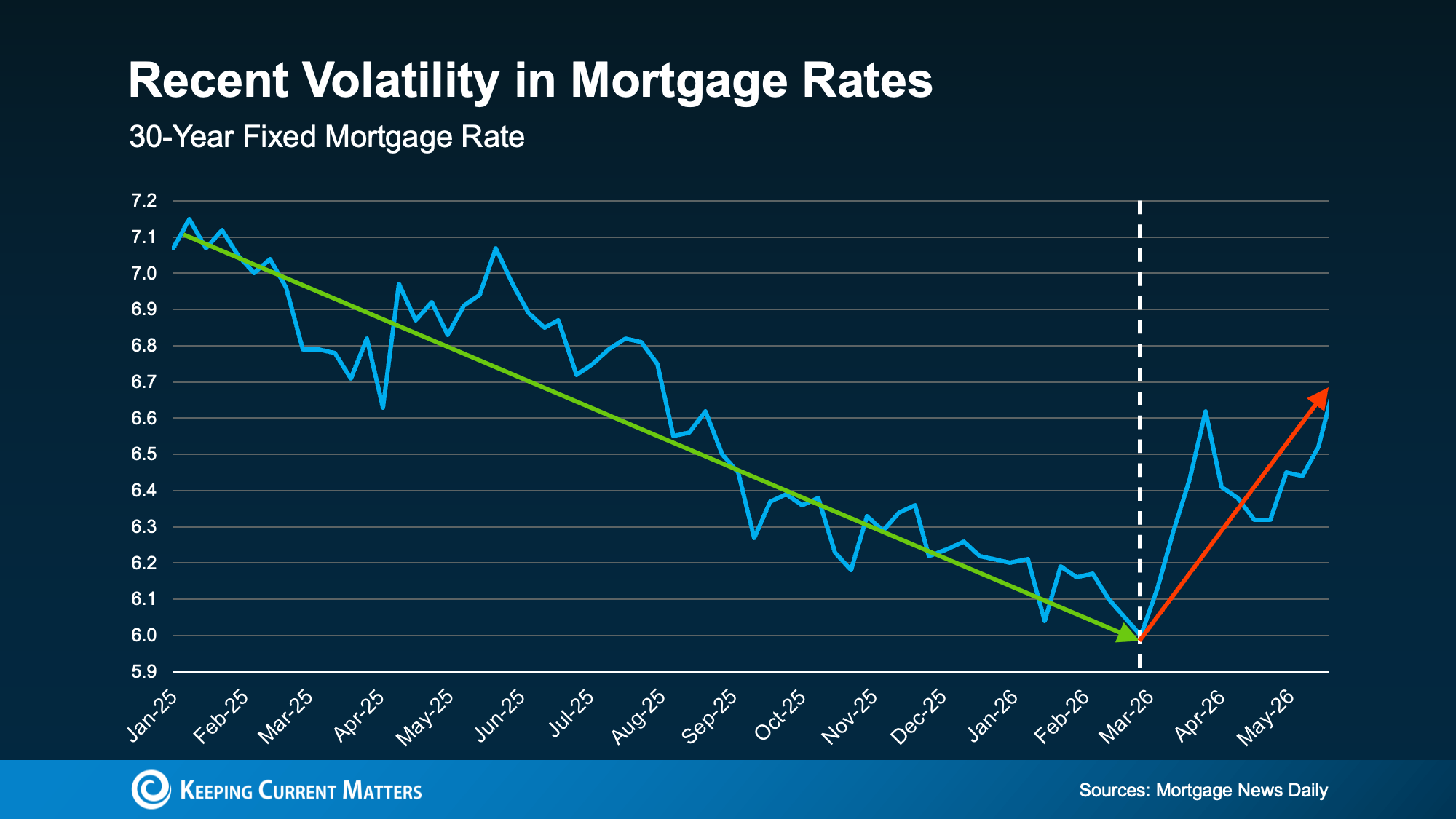
After a year or more of mortgage rates trending down, they’ve started climbing again. And for buyers, that’s incredibly frustrating.
So, why are rates moving higher?
A big reason is uncertainty. Mortgage rates are heavily influenced by broader economic conditions, and uncertainty often puts upward pressure on rates.
Ongoing global uncertainty, continued tensions in the Middle East, and inflation that has not fully cooled off are all having an impact. Colin Robertson, Founder of The Truth About Mortgage, explained it this way:
“You can’t have $100 a barrel oil and not expect inflation to rise, which translates to higher bond yields and mortgage rates.”
That matters because higher bond yields often lead to higher mortgage rates. And when mortgage rates rise, monthly payments can become more difficult for buyers to manage. Recent data from Mortgage News Daily illustrates the effect this has:
Should Buyers Wait for Mortgage Rates To Fall?
With unpredictable rates, it’s natural to wonder if waiting is the safer move.
If rates are higher now, will they come back down once uncertainty eases? Possibly. But there’s no guaranteed timeline.
Rates aren’t likely to drop until inflation cools further and global uncertainty improves. Even then, many experts believe rates may not drop dramatically. They may return to somewhere in the low- to mid-6% range we were seeing earlier this year.
That means waiting for a major rate drop could keep buyers on the sidelines longer than expected.
For many buyers, the question isn’t, “Will rates fall?”, but:
Can I afford the home and monthly payment based on today’s numbers?
If the answer is yes, and you find a home that fits your needs and budget, buying may still be worth considering. No one can predict exactly when rates will fall, how far they’ll fall, or what home prices and competition will look like when they do.
Wages Are Outpacing Home Prices
On the bright side, there’s also some encouraging news that doesn’t always make the headlines.
While inflation has made many parts of everyday life more expensive, recent data from the Federal Reserve Bank of Atlanta and Redfin show wages have been growing faster than home prices.
According to the data:
- Wages have recently been increasing around 4% year-over-year.
- Home price growth has been closer to 2% year-over-year.
That difference matters for home affordability.
When wages rise faster than home prices, buyers may slowly regain some purchasing power. It doesn’t solve the affordability challenge overnight, but it can help make a home purchase more manageable over time.
For buyers, every little bit of financial breathing room helps.
Existing Home Prices Have Held Steady
Another important part of the affordability picture is home prices.
National Association of Realtors data from the past four years show existing home prices have remained relatively steady. There hasn’t been a dramatic runup, but there hasn’t been a crash either. Instead, the market has seen more stability and slower growth.
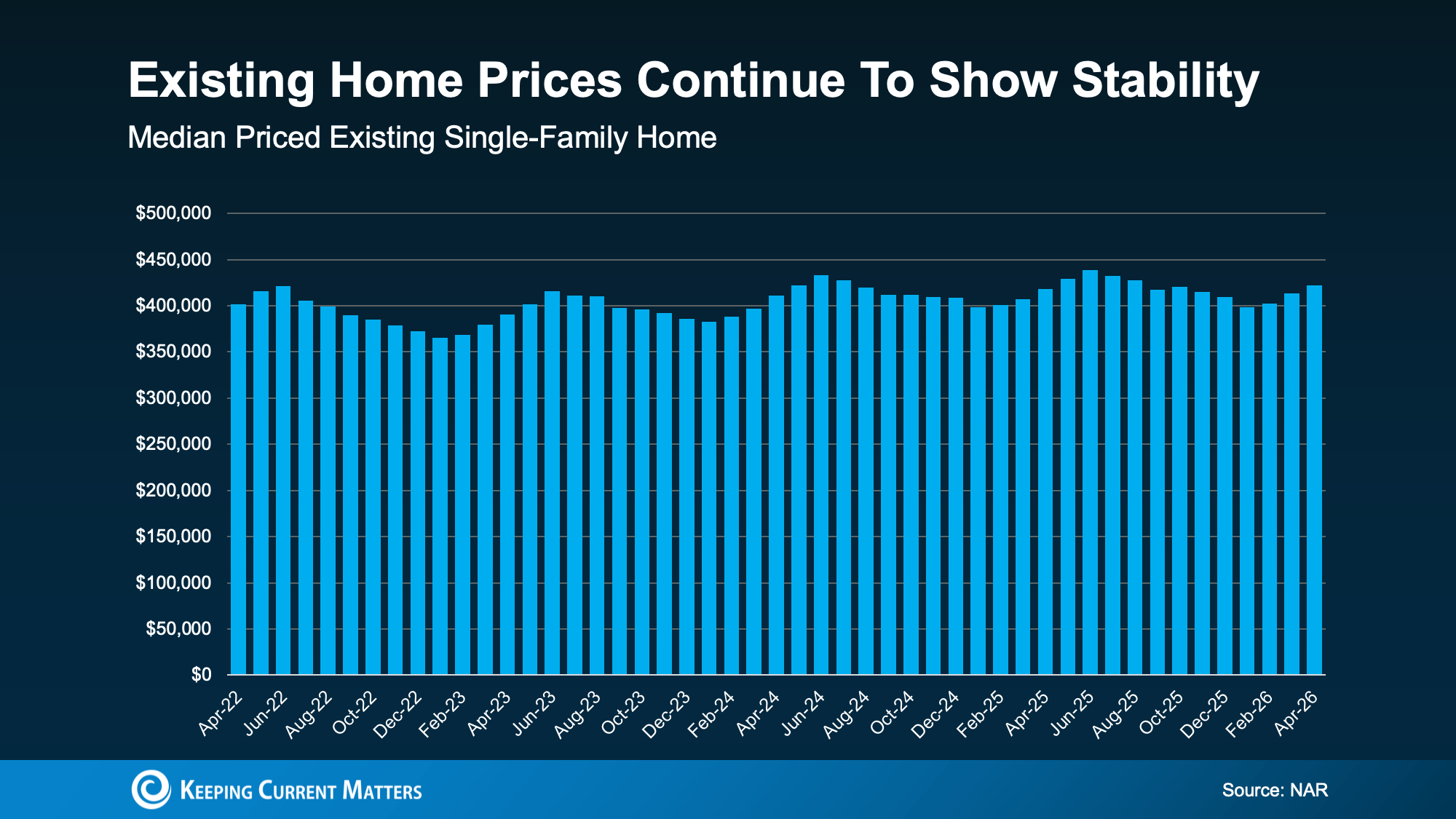
Price stability like this can give buyers a real helping hand.
Part of what’s keeping prices steadier is that buyers now have more choices than they did in the most competitive parts of the market. More inventory can create:
- Less intense competition
- More time to make decisions
- Better opportunities to compare homes
- More room for negotiation in some situations
Of course, this doesn’t mean every market is a buyer’s paradise. Local conditions always matter. But, having more options can help buyers find a home that better fits their lifestyle and budget.
What Housing Affordability Means for Your Move
Today’s housing market is not simple. Mortgage rates are higher than many buyers hoped they would be, and global uncertainty is keeping rates from settling down quickly.
But the full affordability picture is more balanced than the headlines may suggest.
Rates are still a challenge, but wages are growing faster than home prices, and existing home prices have stayed relatively steady. Buyers today might have more options to make stronger decisions than they did when the market was tighter and more competitive.
As always, the right move depends on your budget, goals, timeline, and local market.
Before deciding whether to buy now or wait, it’s worth running the numbers with today’s information. Not with guesses from last year, last month, or national headlines.
Bottom Line
Housing affordability today is about more than just mortgage rates.
Rates are still a major factor, but wages, home prices, inventory, and local market conditions all matter too. If you can afford the monthly payment and find a home that fit your needs, you may not have to wait for the “perfect” option.
Want to figure out the best move for your situation? Connect with a local real estate professional to review current homes, pricing, and your area’s unique market conditions.
Record High Mortgage Debt: What Do Buyers Need To Know?

Mortgage debt in the United States has hit a record high, and at first glance, that looks like a warning sign for the housing market.
It’s an attention-grabbing headline for sure. After all, when people hear “record debt,” most think back to the 2008 housing crash and wonder if today’s market is heading in the same direction.
But headlines leave out the real story.
It’s true that mortgage debt is higher than ever. But, so are home values and homeowner equity. When you add in those missing pieces, the real picture becomes much less alarming than you might think.
Mortgage Debt Is High, But So Is Homeowner Wealth
New data from the Federal Reserve says total U.S. mortgage debt is now around $14.4 trillion, and the Federal Reserve Bank of New York found it was $13.19 trillion at the end of March 2026. Both numbers are record highs, but they’re missing some critical perspective.
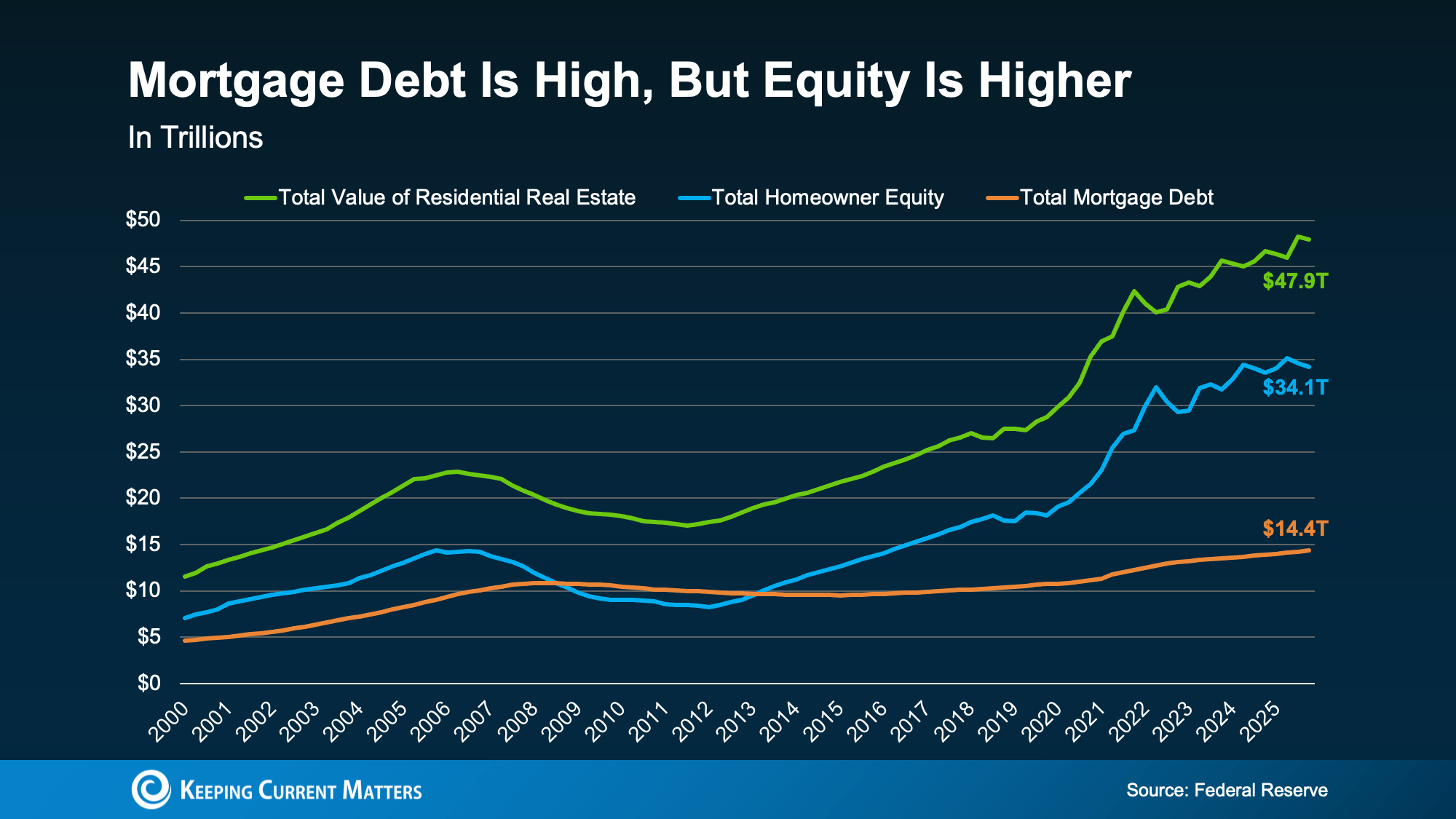
Meanwhile, the total value of U.S. homes is about $47.9 trillion, while homeowners collectively hold roughly $34.1 trillion in equity. In other words, homeowners owe a lot, but they also own a great deal more.
Mortgage debt has peaked, but that alone doesn’t determine the health of the housing market. What matters more is how much equity homeowners have compared to what they owe.
Right now, homeowner equity is more than double the amount of mortgage debt, and near its own historical peak. That’s a very different situation from the years surrounding the 2008 housing crisis.
Why Today’s Housing Market Is Not Like 2008
During the housing crash, many homeowners owed more on their mortgages than their homes were worth. When home prices fell, they had little to no financial cushion. That caused a wave of serious distress, including short sales and foreclosures.
Today’s market looks very different.
Homeowners have significantly more equity than debt, which gives them options. Even if home prices soften in some areas, many owners still have a substantial financial buffer. They can sell, refinance when conditions improve, or use their equity strategically if needed.
That equity cushion is one of the biggest reasons today’s housing market is on much stronger footing than it was during the last crash.
Many Homeowners Have Little or No Mortgage Debt
The strength of today’s market is even clearer when you look at homeowners individually. Recent data from ATTOM and Census illustrate this point.
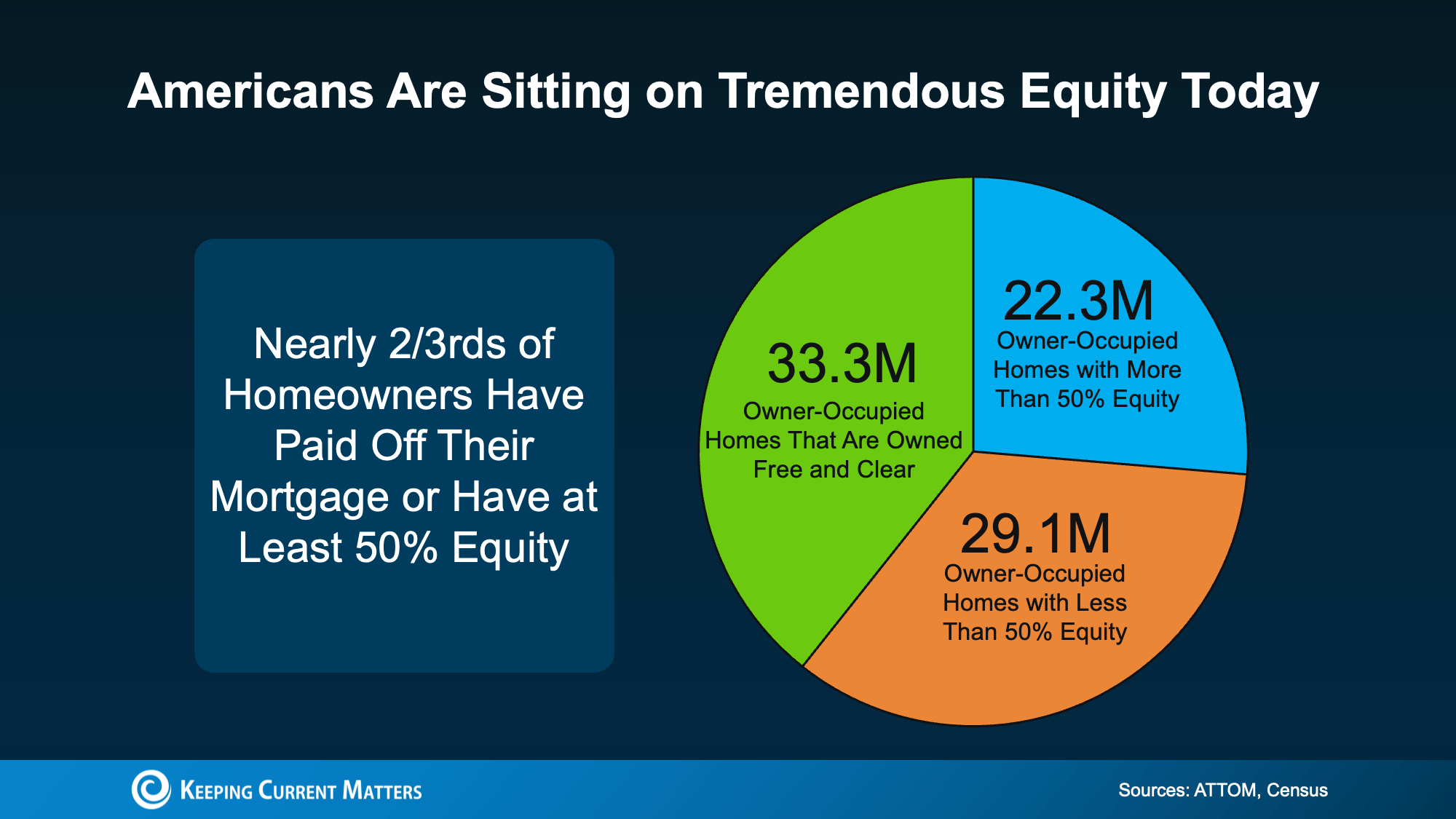
Of all owner-occupied homes in the United States, 33.3 million are owned free and clear, meaning there’s no mortgage on the property at all. On top of that, 22.3 million homeowners have more than 50% equity in their homes.
Put those groups together, and nearly two-thirds of homeowners are in an exceptionally strong financial position. Some owe no mortgage debt, and others owe far less than their homes are worth.
Those are the signs of a strong market, not a fragile one.
What About Homeowners With Less Than 50% Equity?
The remaining group includes homeowners with less than 50% equity. But these homeowners aren’t necessarily in trouble.
Many of these homeowners are simply recent buyers. Since equity builds over time through mortgage payments and home price appreciation, newer buyers naturally tend to have less equity than people who have owned their homes for years.
Low equity doesn’t always signal financial stress or threat of foreclosure. Often, it just means someone is a first-time buyer in early homeownership.
The Real Story Behind Record Mortgage Debt
Mortgage debt is a critical piece of the housing market’s health, but it’s only one piece it.
When you also consider record or near-record home values, strong homeowner equity, and the number of people who own their homes outright, there’s far less cause for alarm.
Homeowners today aren’t severely overleveraged the way they were before the 2008 crash. Many have meaningful equity, and most have no mortgage debt at all.
Bottom Line: Strong Equity Balances High Debt
Dramatic headlines about record mortgage debt can make it seem like the housing market is in trouble, but the actual data tell a more reassuring story.
Home values are high. Homeowner equity is strong. And a large share of homeowners are in a stable financial position.
So while mortgage debt has reached a record level, today’s market has a much stronger foundation than recent headlines would suggest.
No matter if you’re thinking about buying, selling, or simply trying to understand what these numbers mean for your local market, talking with a trusted real estate professional can help you learn the real story.
Are Home Prices Going To Fall? Here’s What Buyers Should Know

One of the biggest questions buyers are asking right now is: Will home prices fall after I buy?
It’s a common concern. Buying a home is a major financial decision, and no one wants to feel like they bought too early, or too late. With headlines pointing to changing prices in some markets, it’s easy to want to play it safe by waiting.
But the short-term noise isn’t the whole story. While some local markets may see temporary dips, the bigger, long-term picture is much different: home prices historically rise over time.
What Housing Market Data Shows
When you look at long-term housing data, one trend becomes clear. Home values have generally moved upward for decades.
Yes, there have been exceptions. The housing crash of 2008 is the most dramatic example. And in some years, certain markets have seen slight declines. But outside of major disruptions, home prices have typically either held steady or increased, and data from Case-Shiller and Biello shows this.
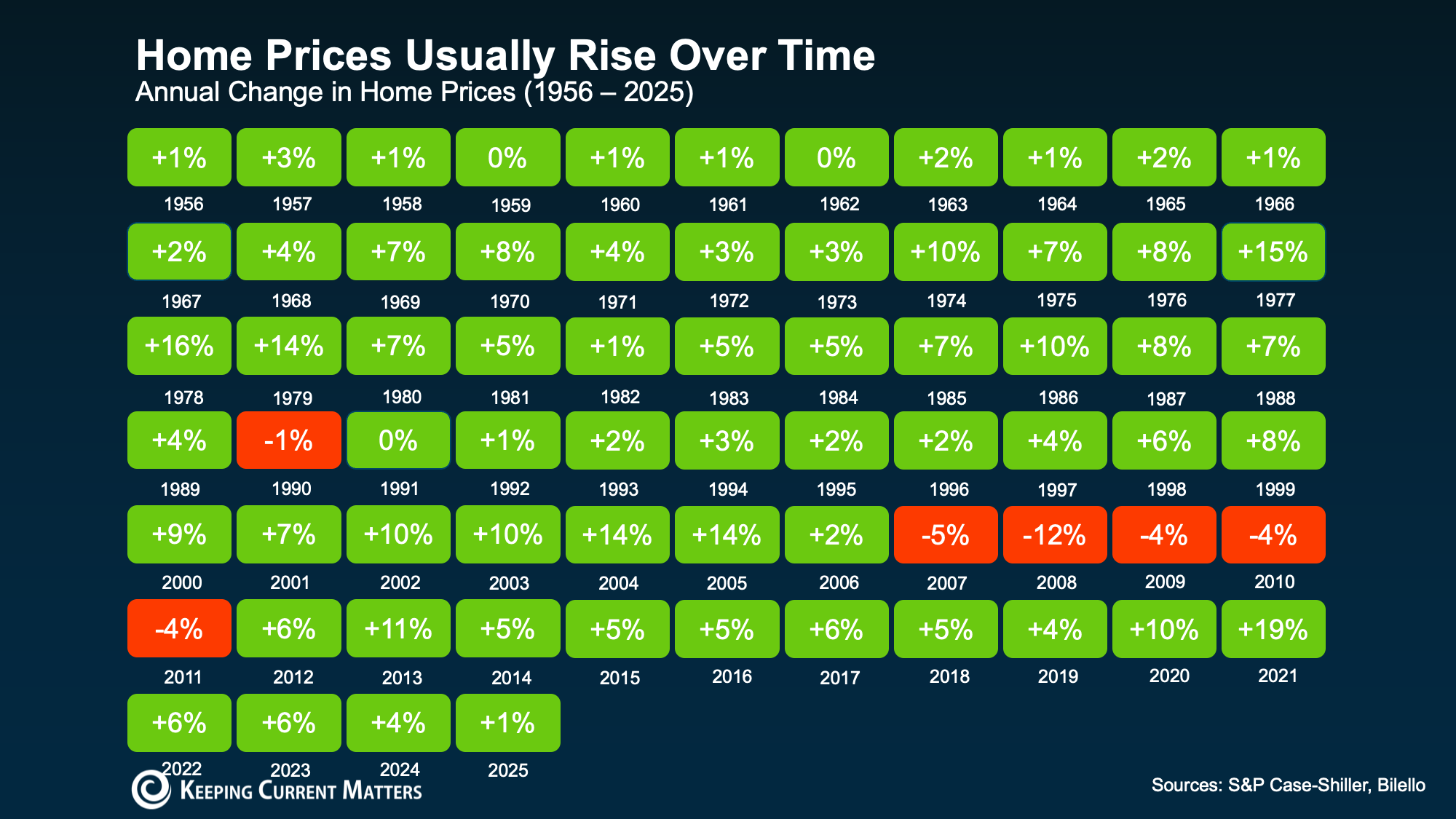
That long-term track record is important for buyers to understand. Real estate is not usually about what happens over the next few weeks or months. It’s about what happens over several years.
Short-term price drops can happen, especially in markets where inventory is rising or buyer demand has cooled. But historically, those dips have proven to be temporary.
Why Home Prices Tend To Rise Over Time
There are several consistent reasons home prices tend to increase in the long run.
People Always Need Homes
Life changes keep the housing market moving. People get married, have children, change jobs, retire, downsize, or relocate to be closer to family. No matter what the market is doing, people always need places to live.
Steady demand like this helps support home values over time.
Housing Supply Is Still Limited
Even though more homes may be available for sale than there were during the tightest years of the market, many areas are still dealing with housing shortages.
When there aren’t enough homes to meet buyer demand, prices tend to stay elevated. Even when demand slows, limited inventory helps prevent dramatic price drops in most markets.
Inflation Plays a Role
Over time, the cost of goods and services tends to rise, and housing is no exception. Land, labor, materials, and construction costs all influence home values.
As the everyday cost of living inflates, home prices naturally move higher too.
What This Means If You’re Thinking About Buying
It’s natural to worry about whether home prices will drop after you buy a home. That concern is especially common among first-time buyers trying to make a smart financial decision.
But what matters most is your own expected timeline.
If you’re planning to buy a home and stay there for several years, short-term market movements matter less. That’s because time gives your home more opportunity to appreciate in value, helping you ride out the kind of ups and downs we’re seeing in some markets.
That’s why many real estate professionals recommend buying only when you expect to stay in the home for at least five years. While there’s no guaranteed timeline, a longer-term approach often gives homeowners a better chance to benefit from rising values.
Real Estate Is Local
Another critical point to remember is that not all housing markets are the same.
Some areas may see home prices soften. Others may continue to rise because demand is strong and inventory remains low. National headlines can give you a general idea of what’s happening, but they don’t always reflect conditions in your specific city, neighborhood, or price range.
That’s why local market insight matters. A trusted real estate agent can help you understand whether prices are rising, flattening, or adjusting in your area.
Don’t Try To Time the Market Perfectly
Trying to buy at the exact bottom of the market is extremely difficult. By the time it’s clear prices have bottomed out, competition may already be increasing again.
Instead of focusing only on timing, focus on whether buying makes sense for your life, your finances, and your long-term goals.
Ask yourself:
- Can I comfortably afford the monthly mortgage payment?
- Do I plan to stay in the home for several years?
- Does buying now support my lifestyle and financial goals?
- Am I prepared for the responsibilities of homeownership?
If the answer is yes, buying may still make sense, even if prices fluctuate in the short term.
Bottom Line: Most Price Drops Are Temporary
So, are home prices going to fall? In some markets, small short-term declines are possible. Historically though, data shows home prices strongly tend to rise over time.
That’s why buying a home is often considered a long-term investment, not a short-term gamble.
You don’t have to buy before you’re ready. But if homeownership fits your goals and you plan to stay put for a while, today’s market headlines shouldn’t scare you away.
For the most reliable picture, talk with a local real estate agent who can explain what home prices are doing in your area and help you decide whether now is the right time to make a move.