Facebook
 X
X
 Pinterest
 Copy Link
3 Things That Aren’t Going To Happen in Today’s Housing Market

There’s no shortage of uncertainty in today’s housing market, and that’s naturally fueling a lot of dramatic headlines. And if you’re trying to buy a home, that kind of noise can make your decision feel a lot more complicated.
In fact, a recent CNBC study asked homebuyers what they’re most concerned about, and the same three topics kept rising to the top:
- Mortgage rates
- The number of homes for sale
- Home prices
The challenge is that much of what people are hearing about these topics is driven by misconceptions, not facts. Let’s separate the headlines from what the data is really showing.
Misconception #1: “I Should Wait Because Mortgage Rates Are Going To Fall Dramatically”
One of the most common ideas circulating on social media is that mortgage rates are about to drop sharply, so waiting to buy is the smarter move.
But is that what experts are expecting?
While mortgage rates have eased a little in recent weeks, forecasts still aren’t predicting any major declines. It’s more likely that rates will stay in the low 6% range this year.
And that’s not a remarkable shift from the rates we’re seeing today:
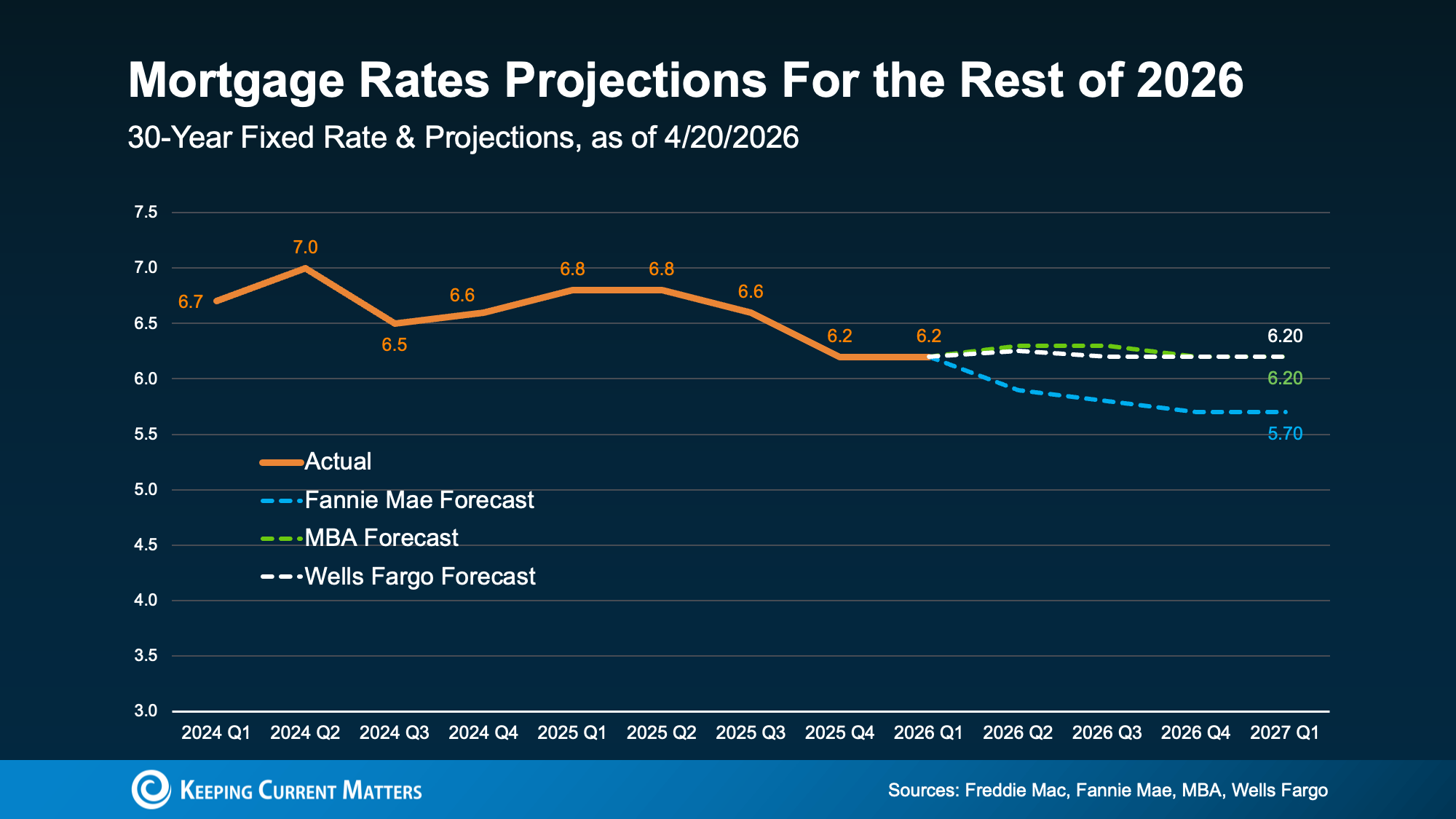
Obviously, a lot depends on inflation and the broader economy. But based on what we know right now, waiting for a big drop in mortgage rates may not play out the way many buyers hope. As U.S. News explains:
“Mortgage rates aren’t expected to change much over the next several quarters . . .”
And even with rates where they are today, buying a home is already more affordable than it was a year ago. Even if rates don’t drop in the near future, home affordability is better now than a year ago.
Misconception #2: “There Are Too Many Homes for Sale”
You may have heard that housing inventory is rising. Nationally, that’s true: the number of homes for sale is 8% higher than it was at this time last year. But that’s not bad news. In lots of markets, it’s easing the pressure on buyers.
The problem is that some headlines make good news sound like bad news. They focus on the fact that inventory is at its highest level since 2019 or highlight how many new homes builders are adding. That can make it sound like supply is growing too much, too fast.
But the bigger picture tells a different story.
According to new Realtor.com data, even though inventory is up over last year, it’s still nearly 14% lower than it was in the last normal housing market from 2017 to 2019:
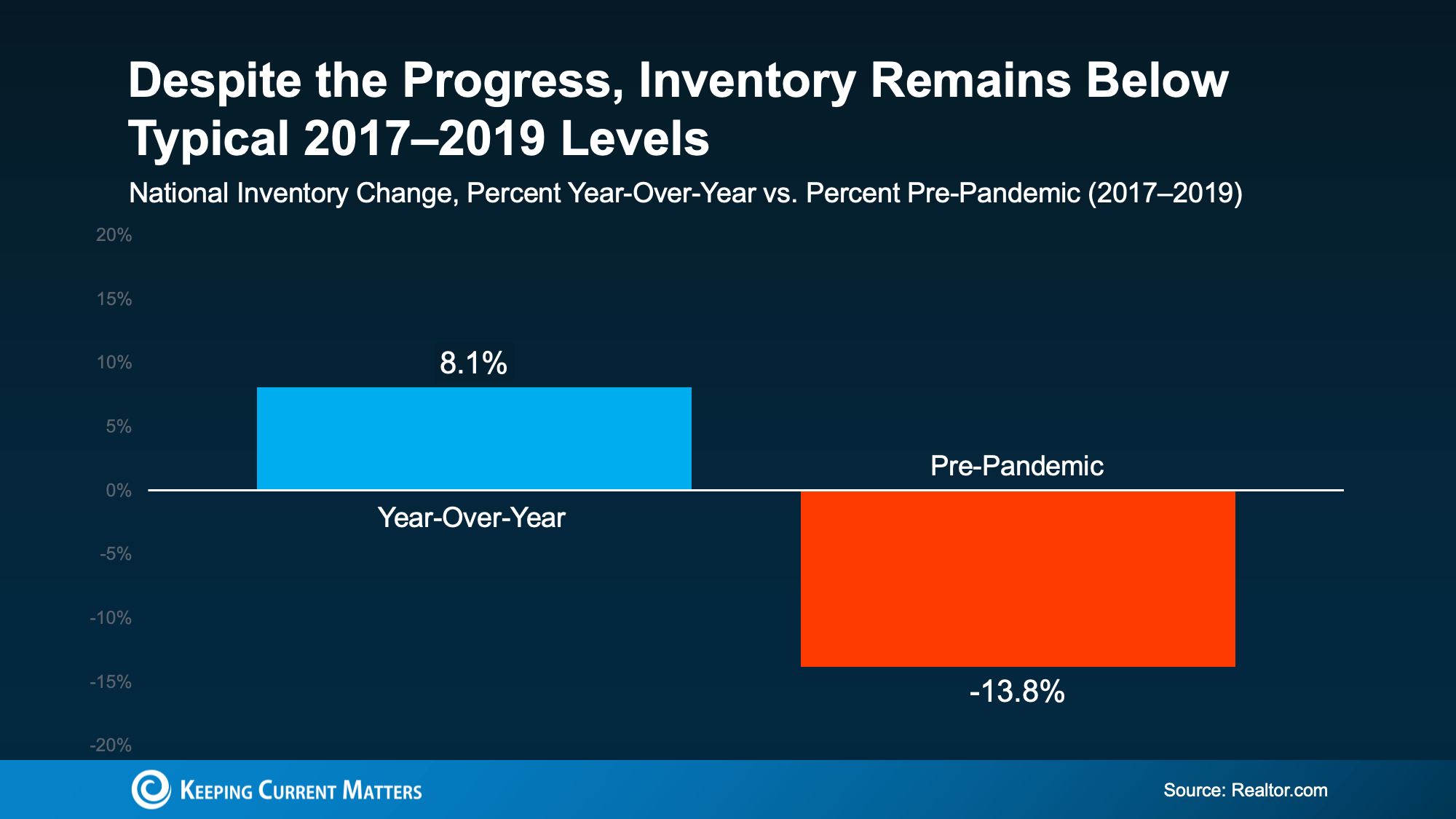
And while local conditions vary, only 9 states have more inventory now than they did before the pandemic. That’s a major reason there aren’t enough homes for sale to trigger anything like the 2008 housing crash.
Misconception #3: “Home Prices Are About To Crash”
This is another common headline you’ve probably seen. This misconception comes from the fact that a few metros are actually seeing small price declines. Influencers are pointing to this to claim home prices are crashing. But this is absolutely not true nationally.
In most markets, home prices are still rising, not falling. Here’s why:
- Many homeowners are choosing not to sell to avoid giving up the low mortgage rate they locked in a few years ago. That continues to limit how much inventory can grow.
- Inventory remains below pre-pandemic norms. There still aren’t enough homes for sale to cause a widespread price crash.
- Even in markets with more listings, some sellers are pulling their homes off the market instead of making major price cuts.
Those are three big reasons home prices are not on track for a crash.
And even in the areas seeing small price declines, those drops are nowhere near enough to erase the huge gains most homeowners have built over the past five years:
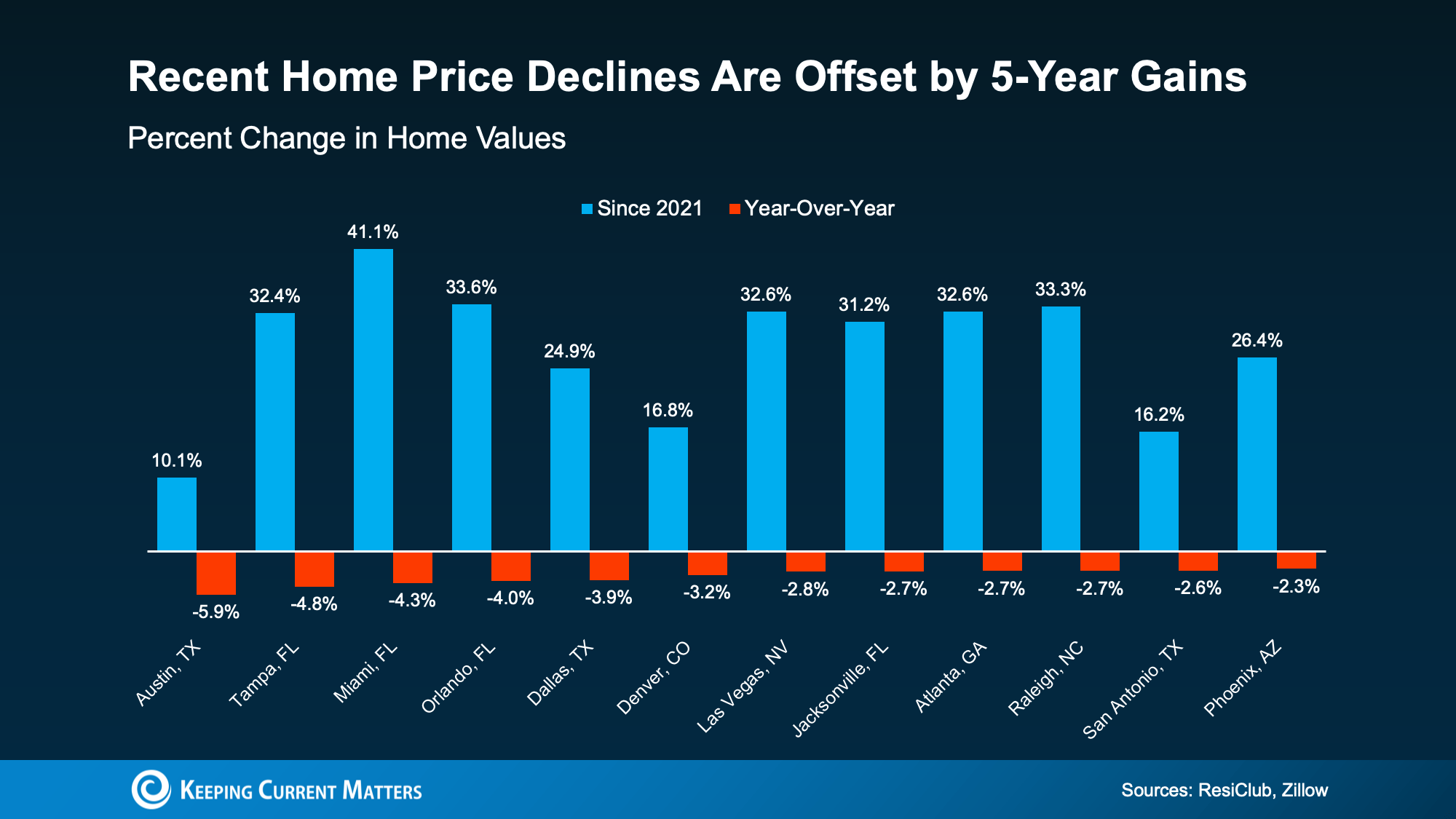
These drops don’t signal a crash. They show the market settling after a few years of record-breaking spikes in prices.
Bottom Line: Get the Facts on Your Market
The discussions we see online can often exaggerate the negative and ignore the positive, especially in housing. If you want a clearer, truer idea of what’s happening with mortgage rates, housing inventory, and home prices in your market, talk to a trusted real estate professional.
Connect with a local real estate agent so you have an expert who can give you the real story on your local housing market.
Top 10 Best Housing Markets for First-Time Home Buyers This Spring

For many hopeful buyers, purchasing a first home has lately felt less like a goal and more like a long shot.
Not because you weren’t financially responsible. Not because you weren’t ready to make a move. But because, every time you checked the numbers, homeownership still didn’t feel realistic.
That’s why so many first-time buyers have put their plans on hold.
Now, after years of watching from the sidelines, this spring may finally bring new opportunities. Especially in certain housing markets where affordability and inventory are starting to improve.
The 10 Best Markets for First-Time Buyers
Zillow recently released its list of the top 50 metro areas for first-time home buyers this spring, and the top 10 housing markets stand out for good reason.
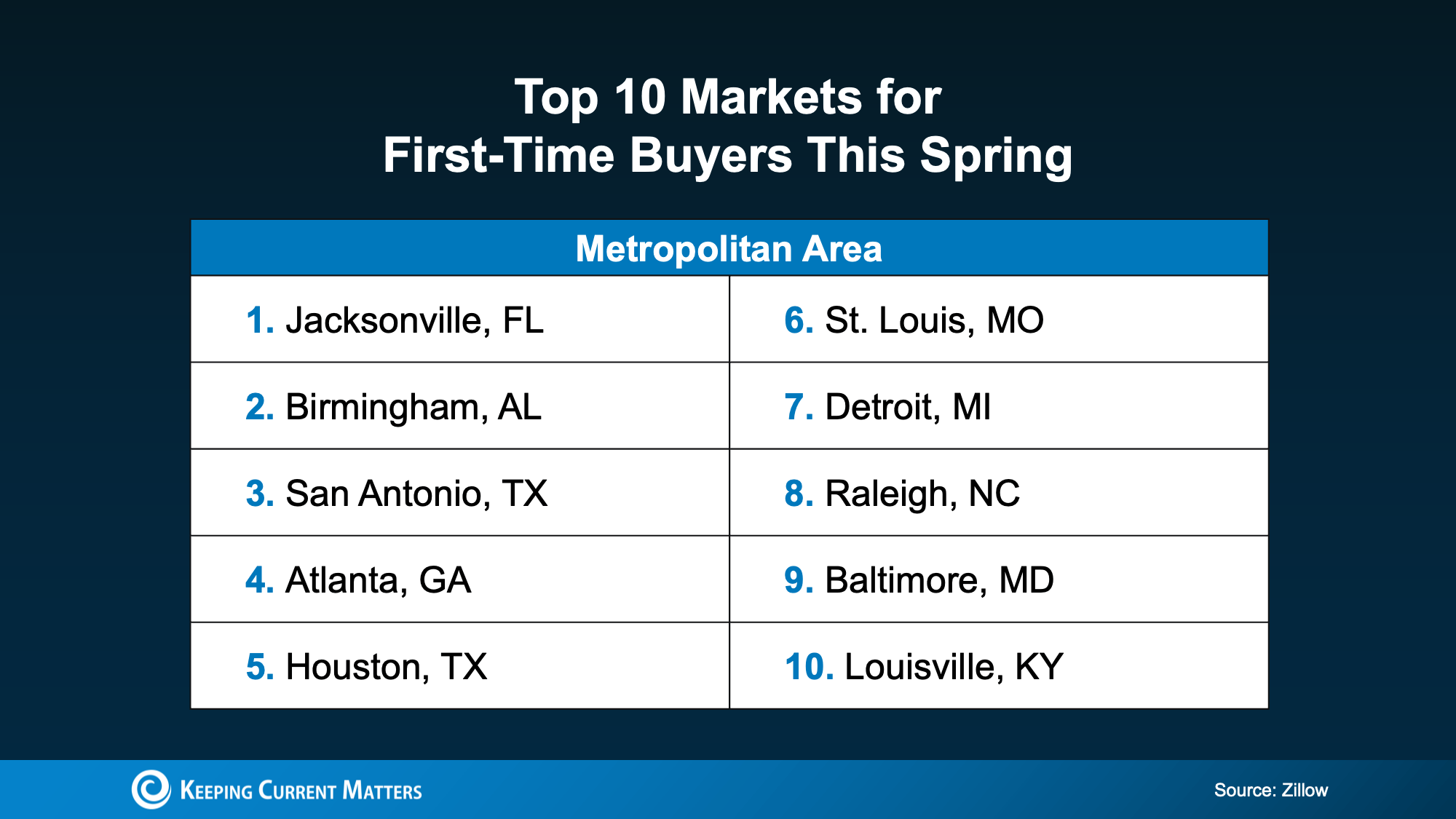
Here are Zillow’s top 10 best markets for new buyers in 2026:
- Jacksonville, FL
- Birmingham, AL
- San Antonio, TX
- Atlanta, GA
- Houston, TX
- St. Louis, MO
- Detroit, MI
- Raleigh, NC
- Baltimore, MD
- Louisville, KY
In these higher-ranked metros, Zillow says median-income households can afford 68% of all homes currently for sale.
This is a major shift, and one that could give buyers real options in some areas.
Not long ago, many buyers felt lucky to find even a few homes within reach. Today, in some markets, there are finally more realistic options for first-time buyers trying to break into the market.
What Makes These Housing Markets Stand Out?
These markets aren’t becoming more favorable for any single reason. Rather, several smaller trends are beginning to work together.
As Orphe Divounguy, Senior Economist at Zillow, explains:
“First-time buyers are finally seeing some light at the end of the tunnel. Affordability is still a challenge, but rising incomes, stabilizing prices and improving inventory are creating real opportunities in parts of the country. In the strongest markets for first-time buyers, they’ll find more choices, less competition and a clearer path to homeownership than they’ve had in years.”
That shift comes down to three key factors:
1. More Homes Are Coming to Market
According to Realtor.com, housing inventory is up 8.1% compared to last year.
More homes for sale means buyers have more choices. It can also reduce the pressure that comes with low-inventory markets, where bidding wars and quick decisions often make it harder for new buyers to compete.
2. Home Price Growth Is Slowing
While affordability is still a challenge in many areas, home prices aren’t rising as quickly as they were in recent years.
Slower price growth can help keep more homes within reach, and in some markets, prices may even be easing enough to bring new neighborhoods back into play.
3. Incomes Are Rising
Wage growth is also helping improve the picture for buyers.
When household income increases, it can offset part of the affordability challenge, even when mortgage rates remain elevated. As Mark Fleming, Chief Economist at First American, explains:
“Income growth has outpaced house price growth for 19 straight months, boosting house-buying power even as mortgage rates remain elevated.”
Taken together, these trends are creating better conditions for new buyers in select markets across the country.
What If Your Market Didn’t Make the List?
If your city did not make Zillow’s top 10, or even the top 50, there’s no reason to worry. You’re not out of options.
Opportunities exist in any market. The key is knowing where to look and having the right guidance along the way.
Even within the same metro area, one buyer’s experience can be very different from another’s. A lot depends on local knowledge and strategy. The right real estate agent can help you identify overlooked opportunities, such as:
- Neighborhoods where prices have not climbed as fast.
- Areas with more available inventory.
- New construction communities offering builder incentives.
These kinds of opportunities may not make national headlines, but they can make a meaningful difference when trying to buy your first home.
Bottom Line: More Options for First-Time Home Buyers
For a long time, first-time home buyers have felt stuck, waiting for the market to shift in their favor.
This spring, that may finally be happening in certain markets.
With more inventory, slower price growth, and rising incomes, buying a first home may feel more realistic than it has in years. And even if your market isn’t on Zillow’s list, there may still be neighborhoods or communities nearby offering a better chance to get started.
If you want to find out where those opportunities exist in your local market, connect with a trusted real estate agent who knows where to look.
Why Did Home Sales Fall in January?

If you saw headlines saying home sales fell sharply in January, it’s understandable to feel uneasy, especially if you’re thinking about selling. But one month of data rarely tells the whole story.
Yes, January home sales declined. In most years, that’s normal. And this particular drop has a lot more to do with seasonality and winter weather than a sudden collapse in buyer demand.
What’s Really Behind the “Home Sales Fell” Headlines
Recent reports from the National Association of Realtors (NAR) show existing home sales dropped about 8.4% month over month. That’s the number making the rounds, and it’s an accurate one.
The key is understanding why it happened:
- January is historically slow for real estate in general
- Fewer people list and tour during the coldest weeks of the year
- Holidays, travel, and weather disruptions often push closings into the next month
So while the percentage sounds dramatic, it doesn’t necessarily signal a weakening market.
Why January Is Often a Slower Month for Home Sales
Seasonality is a consistent pattern in U.S. real estate. In many markets:
- Winter brings fewer new listings
- Buyers move more cautiously due to schedules and weather
- Fewer transactions close, even when demand is still there
Over the past several years, sales have commonly dipped in January and then picked up again in February as the market begins ramping up for spring. In other words, a January slowdown is often a pause, not a trend. You can see this in the graph below, particularly in the green bars showing February sales rebounds:
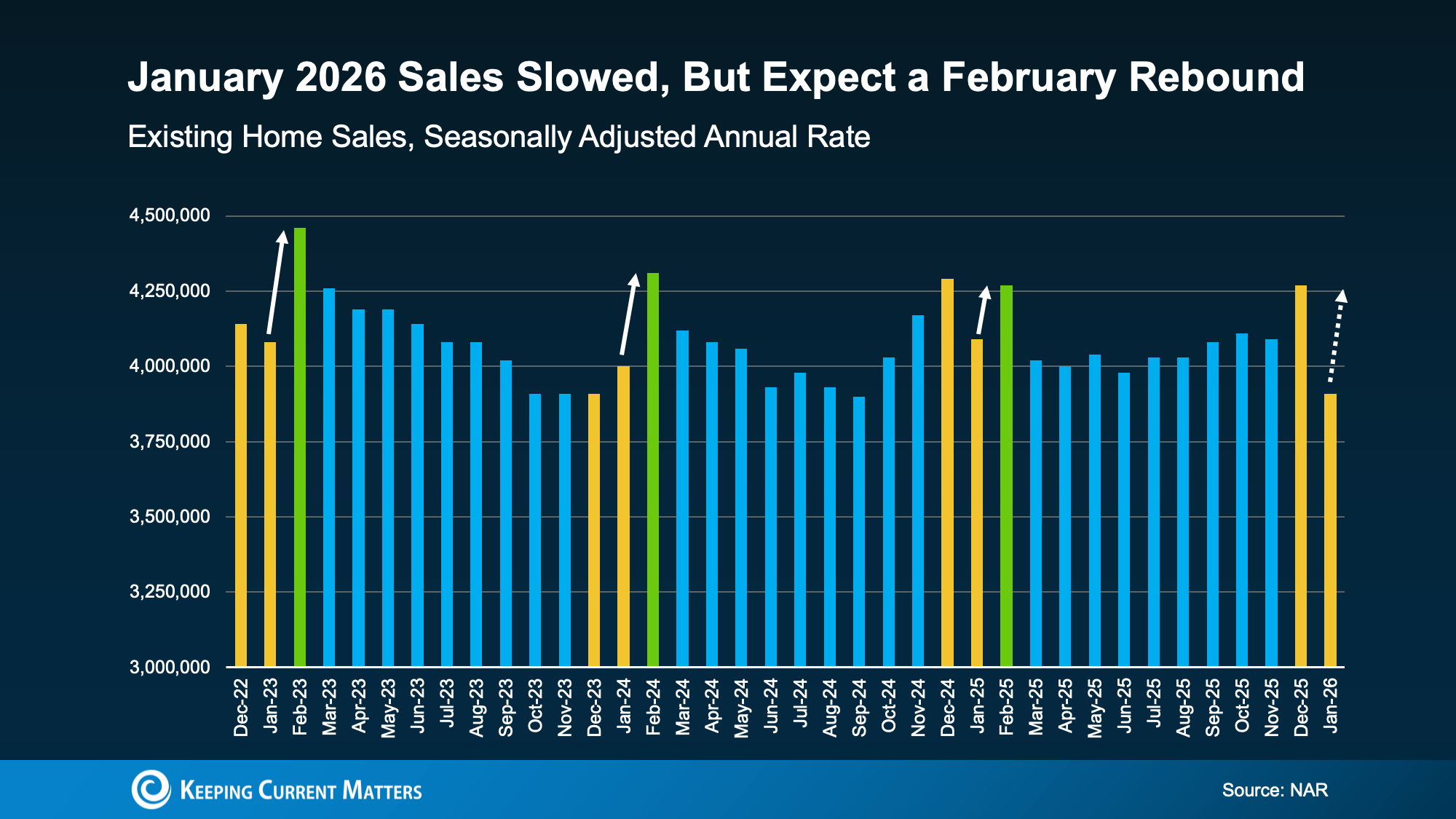
Home sales often slow in January and rebound quickly in February.
The Bigger Drop This Year: Weather, Not Demand
This year’s decline was steeper than the usual January dip, even with lower mortgage rates. But the likely explanation is simple: disruptive winter weather.
As Realtor.com explains:
“Winter storm Fern, which dumped snow and ice across large swaths of the country, likely disrupted some closings, weighing on the data and making it difficult to pick out the housing market momentum trend from the weather noise.”
According to the original post, 40 states experienced widespread winter weather. In real estate, that matters because bad weather can delay the final steps needed to close, including:
- Inspections
- Appraisals
- Final walk-throughs
- Lender or title timelines
Why “Fewer Sales” Can Really Mean “Later Closings”
One important detail most headlines skip: existing home sales track closings, not contracts.
That means a storm doesn’t have to “kill” a deal to show up in the data. If weather slows the process, many transactions simply move from January into February (or later).
So January’s missing sales are more likely postponed, not lost.
Will Home Sales Pick Back Up?
Despite a slower January, the data still point toward the market gaining traction as spring approaches.
Here are two encouraging points to consider:
- Affordability has improved for seven straight months (according to NAR)
- Buyers in many areas are regaining some negotiating power
That combo can support more activity as the weather improves and the traditional spring season begins.
What If You’re Thinking About Selling?
If you’re a homeowner watching the market, here’s the practical takeaway:
- Don’t overreact to one weather-impacted month
- Expect activity to improve as schedules normalize and temperatures rise
- Focus on what’s happening locally, because conditions vary by city and even neighborhood
A strong strategy right now is to talk with a local agent about:
- Pricing based on current comps
- Likely spring demand in your area
- How quickly homes are moving in your price range
Conclusion
Don’t confuse a winter slowdown with a market wide red flag. January’s decline appears tied to seasonality and storm-related delays, not disappearing demand. As affordability improves and spring approaches, activity can thaw quickly.
Housing Inventory Is Improving in 2026: What That Means for Buyers

After a long stretch of buyers competing for too few homes, housing inventory is finally improving. Over the past year, more listings have come to market, and depending on where you live, that shift can open up your options in a meaningful way.
According to Realtor.com, the number of homes available for sale in January 2026 was the highest it’s been since 2020. That matters because getting closer to pre-pandemic levels signals a gradual return to a more typical market, where buyers aren’t forced to make rushed decisions with limited choices.
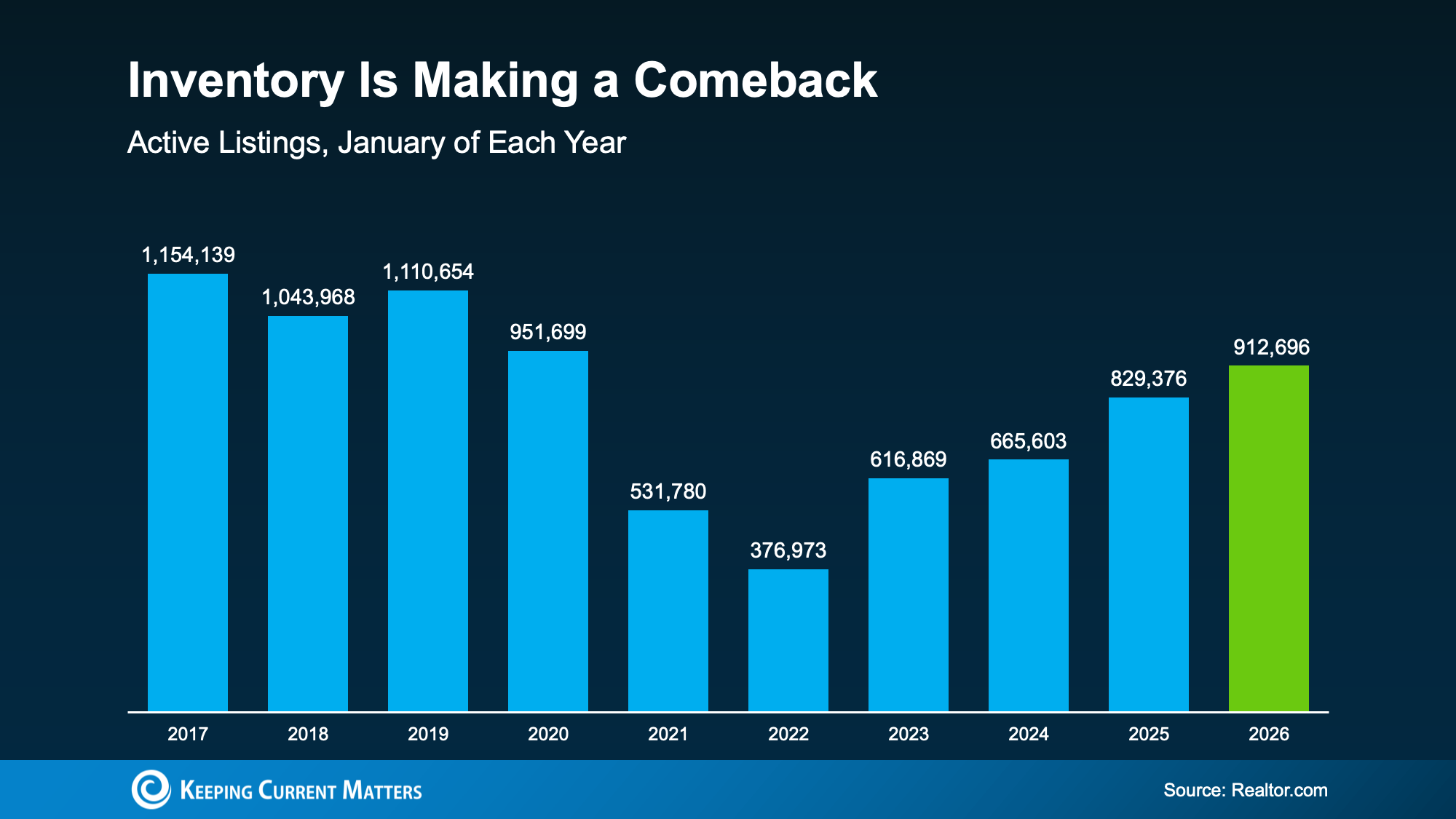
That said, inventory is not back to normal everywhere. And even with growth, more listings alone won’t “fix” affordability or fully rebalance the market overnight. But the changes we’ve seen recently can still have a real impact on how competitive it feels to buy.
When Supply Rises, Buyers Gain Breathing Room
In a low-inventory market, the pressure ramps up fast. Buyers often feel like they have to move immediately, waive protections, or offer well above asking just to stay in the running.
More inventory can reduce that intensity. When there are more homes for sale, buyers typically gain:
- More time to tour homes and think through a decision
- More options across neighborhoods, home styles, and price points
- More leverage to negotiate on price, repairs, closing costs, or timelines
In other words, more listings can shift the experience from stressful to manageable, even if the market still leans competitive in certain areas.
A Growing Share of the Country Is Getting Back to Typical Inventory
Inventory growth is not uniform nationwide. Some markets are seeing a stronger rebound, while others are still tight.
According to Lance Lambert, Co-Founder of ResiClub, in January 2025, just a little over one year ago, only 41 of the 200 largest metros were back to normal inventory-wise.
By around the end of the year, almost half (90) of the largest 200 metro areas were back at or above typical levels. That is a big improvement in roughly a year, and the trend is still moving forward.
Why This Matters for Your Local Home Search
If your area is one of the metros where inventory has returned to typical levels, you may notice:
- More new listings each week
- Fewer “must-bid-now” situations
- More realistic negotiations, especially on homes that sit longer
If your market is still below normal, you may still see multiple offers on well-priced homes. The difference is that, nationally, the direction is improving, and more markets are joining that list over time.
Inventory Is Expected to Keep Growing in 2026
Looking ahead, forecasts suggest the number of homes for sale could rise another 10% this year. If that happens, even more markets should move closer to balanced conditions.
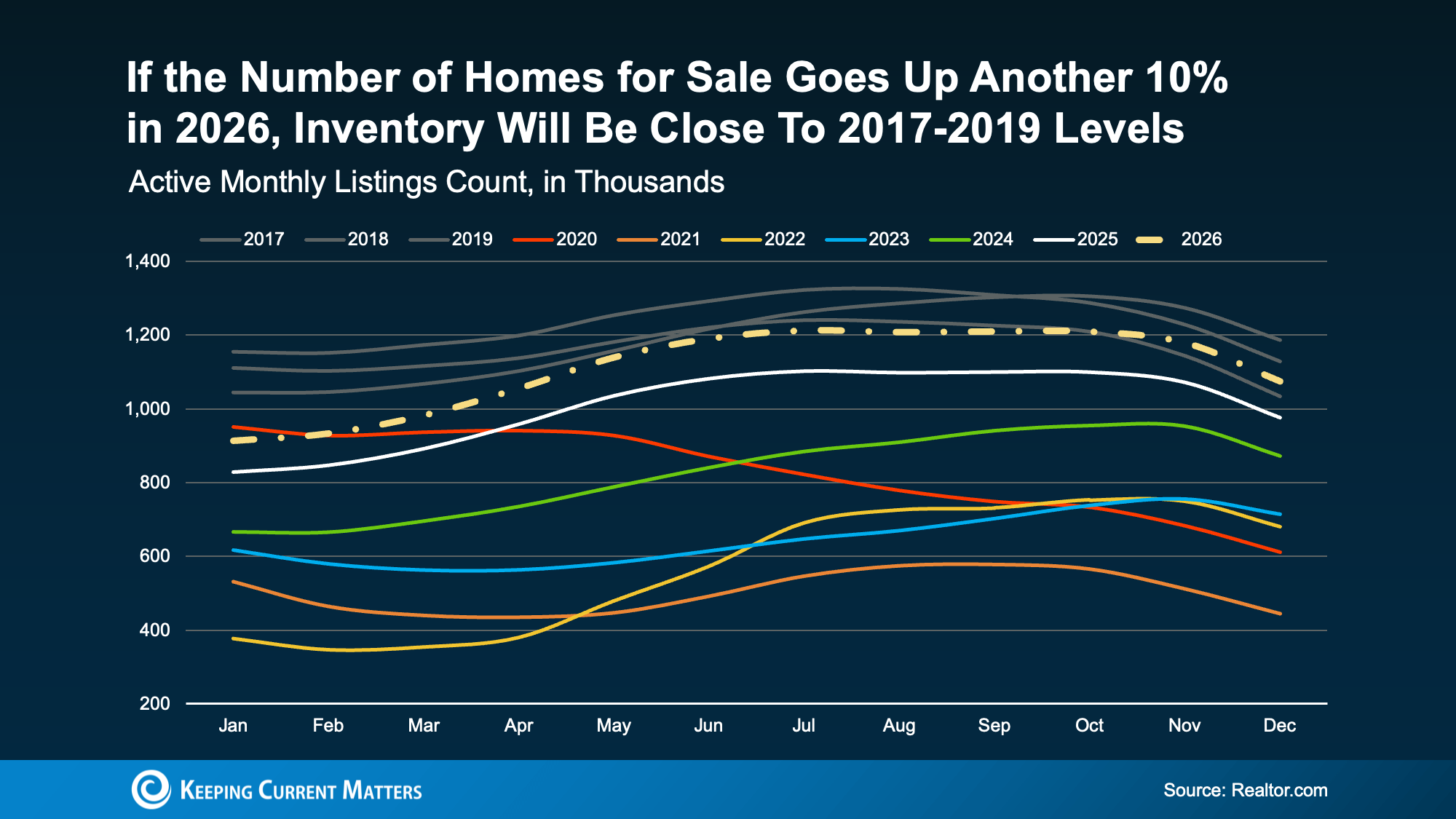
That potential growth could push inventory closer to the levels we saw in 2017–2019 by roughly this fall, which would be a huge milestone for buyers. Of course, reaching something closer to “normal” nationally wouldn’t mean every market feels the same. But, it would increase the odds that more buyers in more markets can find a home without feeling boxed in by a lack of choices.
As Hannah Jones, Senior Economic Research Analyst at Realtor.com, says:
“. . . housing market conditions are gradually rebalancing after several years of extreme seller advantage. Buyers are beginning to see more options and modest negotiating power as inventory improves . . .”
That is the key takeaway: the market is starting to work with buyers again, not against them.
Conclusion
Inventory may not be fully back to normal everywhere, but it’s moving in the right direction. And some markets, it’s already there.
If you have been waiting for a moment when you have more options and a little breathing room, 2026 is shaping up to be the strongest setup buyers have seen in years.
If you want the latest on inventory in your local market, talk to an agent who can break down inventory trends, pricing, and what that means for your next move. And if you’re not sure where to start, you can always reach out to us at CENTURY 21 Affiliated.
Expert Forecasts Point to Home Affordability Improving in 2026

If the last few years have felt like a constant tug-of-war between home prices, mortgage rates, and “Can we actually afford this?”, you’re not alone. Affordability has been the biggest obstacle for buyers (and a major source of hesitation for sellers), but the outlook for 2026 is more encouraging than what we’ve seen in a while.
In fact, affordability improved meaningfully in 2025, and many industry forecasts expect that progress to continue through 2026. The reason comes down to three forces shaping the market: mortgage rates, housing inventory, and home price growth.
1) Mortgage Rates: Lower Than the Peak, Likely Steadier in 2026
Mortgage rates have already eased from recent highs by nearly a full percentage point over the past year in some measures, and that matters more than most people realize. Even small rate shifts can change monthly payments, buying power, and which homes feel like realistic options.
What experts expect
Forecasts suggest rates may hover in the low 6% range through 2026, though the exact path depends on the broader economy, the job market, and Federal Reserve policy decisions. The key takeaway: rates are already lower than they were a year ago, which helps restore some breathing room for people planning a move in 2026.
What this means for buyers
- Lower rates can reduce monthly payments
- Improved buying power can make more listings qualify as “within reach”
- You may have more flexibility to negotiate when combined with rising inventory
What this means for sellers
- The market is adjusting to the idea that “rates in the 6s” may be the new normal
- If you need to move, it may be more feasible than it looks, especially if you’re sitting on substantial equity
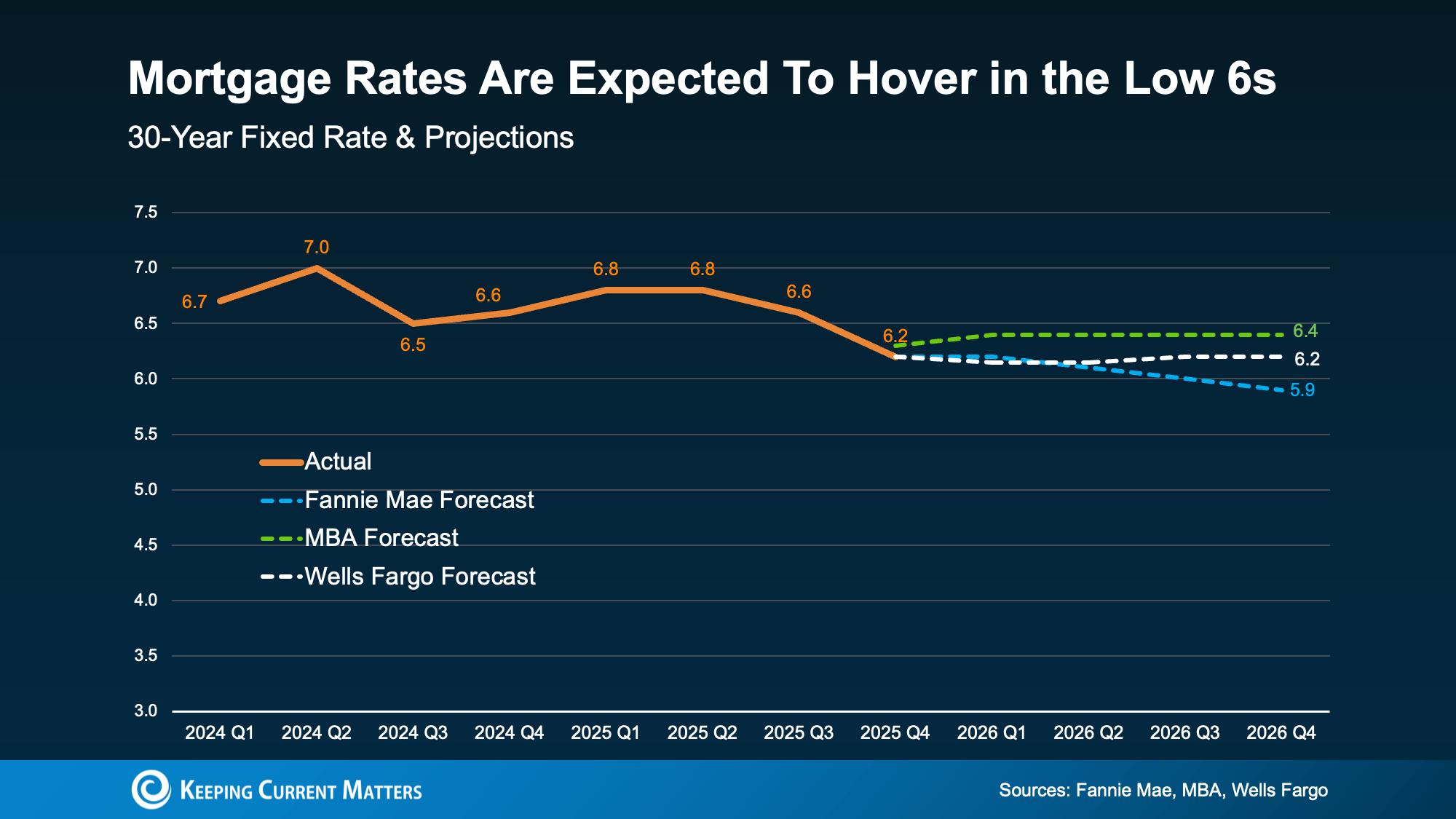
Experts expect mortgage rates to hover in the low 6s or drop even lower as the economy changes in 2026.
2) Housing Inventory: More Homes for Sale, More Leverage for Buyers
One of the biggest changes in 2025 was inventory finally moving in the right direction. With more homes available, buyers got something they haven’t had in years: options—plus more time to compare those options and negotiate.
Inventory is still expected to grow
After a meaningful rise of about 15% in 2025, forecasts call for continued growth in the supply of homes for sale in 2026 (though likely at a slower pace than the last big jump). Realtor.com economists, for example, project additional gains of about 8.9% in active listings this year.
What this means for buyers
- More choices (and fewer “take it or leave it” situations)
- Greater negotiating power—especially on homes that are priced too aggressively or need updates
What this means for sellers
- Pricing strategy becomes critical. In a market with more options, buyers compare everything.
- Strong presentation (clean, staged, repaired) matters more when competition increases
3) Home Prices: Still Rising Nationally, But at a More Sustainable Pace
Here’s what many headlines miss: increasing inventory tends to reduce upward pressure on prices, but it doesn’t automatically mean prices crash. Most national forecasts expect home prices to keep rising in 2026, just more slowly than the rapid spikes of the recent past. On average, experts predict home price growth of about 1.6% in 2026.
Why slower growth can be good news
More moderate appreciation helps buyers plan and budget with fewer surprises, while still supporting overall market stability.
But location is everything. Some areas may outperform the national average, while others could see flat or slightly declining prices depending on local supply, demand, and employment conditions. If you’re serious about a move, a local real estate agent can help you interpret what’s happening in your neighborhood, not just what’s happening nationally.
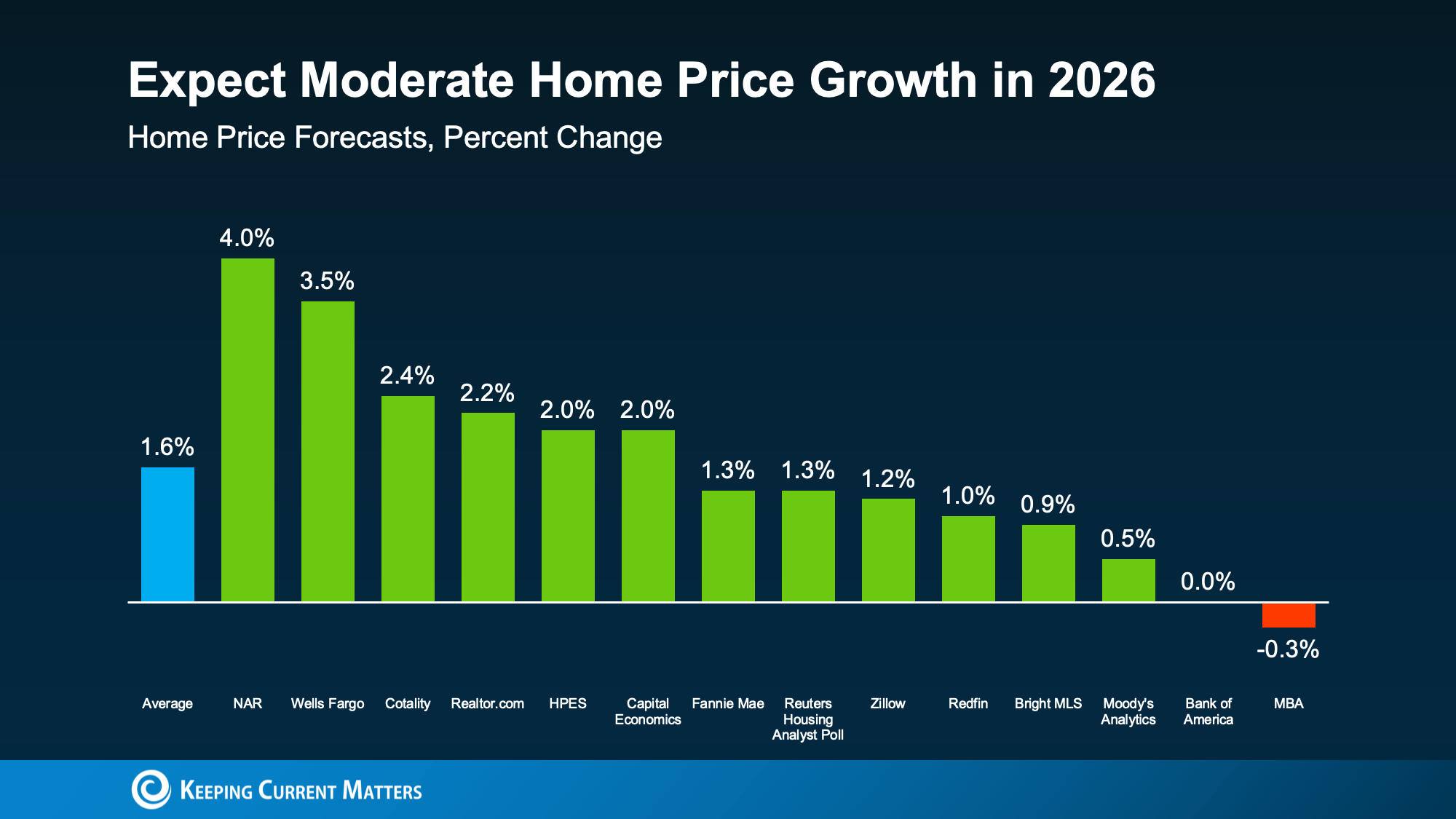
Home prices are expected to continue rising in 2026, though at a more moderate rate.
Will More Homes Sell in 2026?
When rates are lower than recent peaks, inventory is improving, and price growth is calmer, you get a healthier affordability equation. That’s why many experts expect more home sales in 2026, as both buyers and sellers find conditions easier to navigate.
As Zillow’s Chief Economist Mischa Fisher notes:
“Buyers are benefiting from more inventory and improved affordability, while sellers are seeing price stability and more consistent demand. Each group should have a bit more breathing room in 2026.”
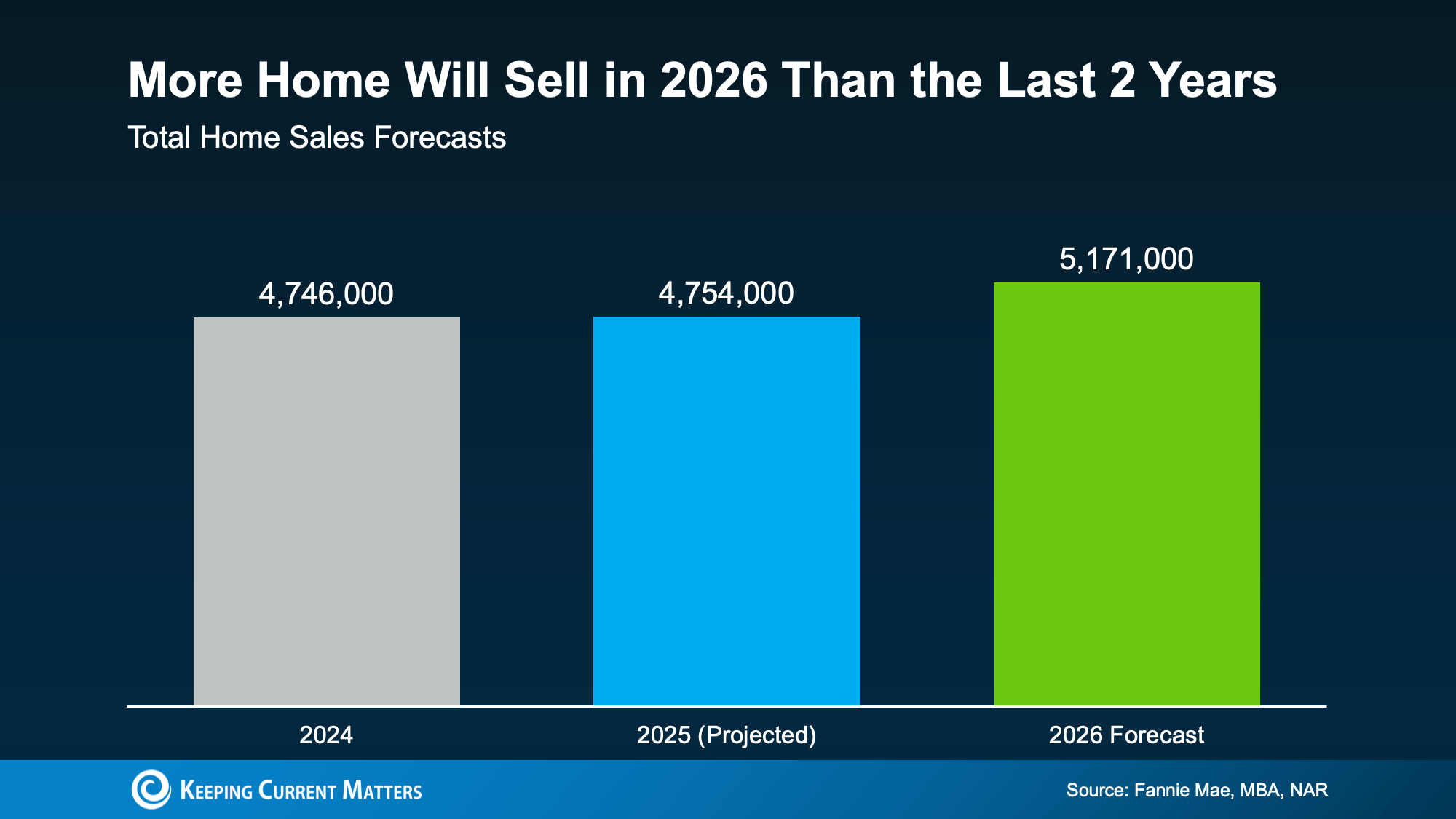
Increased affordability in 2026 has experts predicting higher home sales over the past two years.
2026 Could Feel More Balanced Than You’ve Seen in Years
Affordability won’t change overnight. But if current forecasts hold, 2026 is shaping up to be a year with:
- More balance between buyers and sellers
- More predictability in pricing
- More flexibility in negotiations
- More opportunity for people who’ve been waiting on the sidelines
If you’re thinking about buying or selling in 2026, the smartest next step is to get hyper-local: understand neighborhood pricing trends, inventory levels, and what buyers are actually paying (and negotiating) right now.
Ready to start but aren’t sure how? Reach out to us today to connect with an expert agent for all the latest info on your local market.
How Could a Recession in 2025 Affect the Housing Market?
As talk about economic slowdowns runs wild, worries about a potential recession in 2025 are on the rise. Naturally, many homeowners are wondering what a recession could do to the value of their home, and their buying power.
Using historical data from recessions of decades past, let’s see how a recession might affect the housing market in 2025.
A Recession Won’t Lower Home Prices
It’s a common misconception that a recession will cause home prices to crash, like they did in 2008. In reality, 2008 was the only time the housing market saw such an extreme, dramatic drop in prices. Overflowing home inventory caused that price crash, and conversely, low inventory has prevented a similar crash in the years since.
Even in markets where housing inventory is up, it’s still far below the listing oversupply that caused the 2008 crash. Indeed, according to data from Cotality, home prices actually increased during four of the last six major recessions.
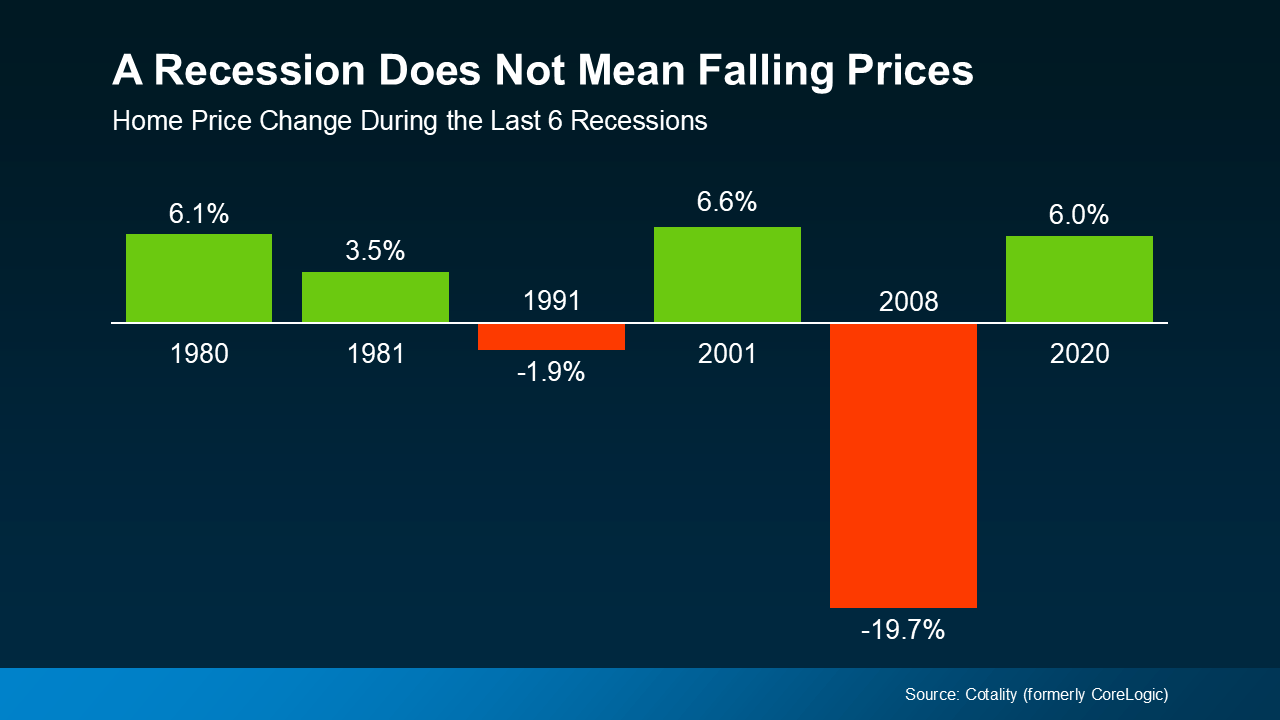
As the graph shows, a recession doesn’t necessarily mean that home prices will crash, or even drop. In reality, historical data shows that home prices usually continue along their current trajectory when a recession hits. And at the moment, home prices are still rising nationally, but at a more normalized rate. So, as the market stands now, a recession in 2025 would most likely drive prices even higher.
Mortgage Rates Typically Decline During Recessions
Home prices may stay their path during economic slowdowns, but mortgage rates actually tend to drop. Looking again at historical data from the last six recessions, this time from Freddie Mac, mortgage rates fell each time.
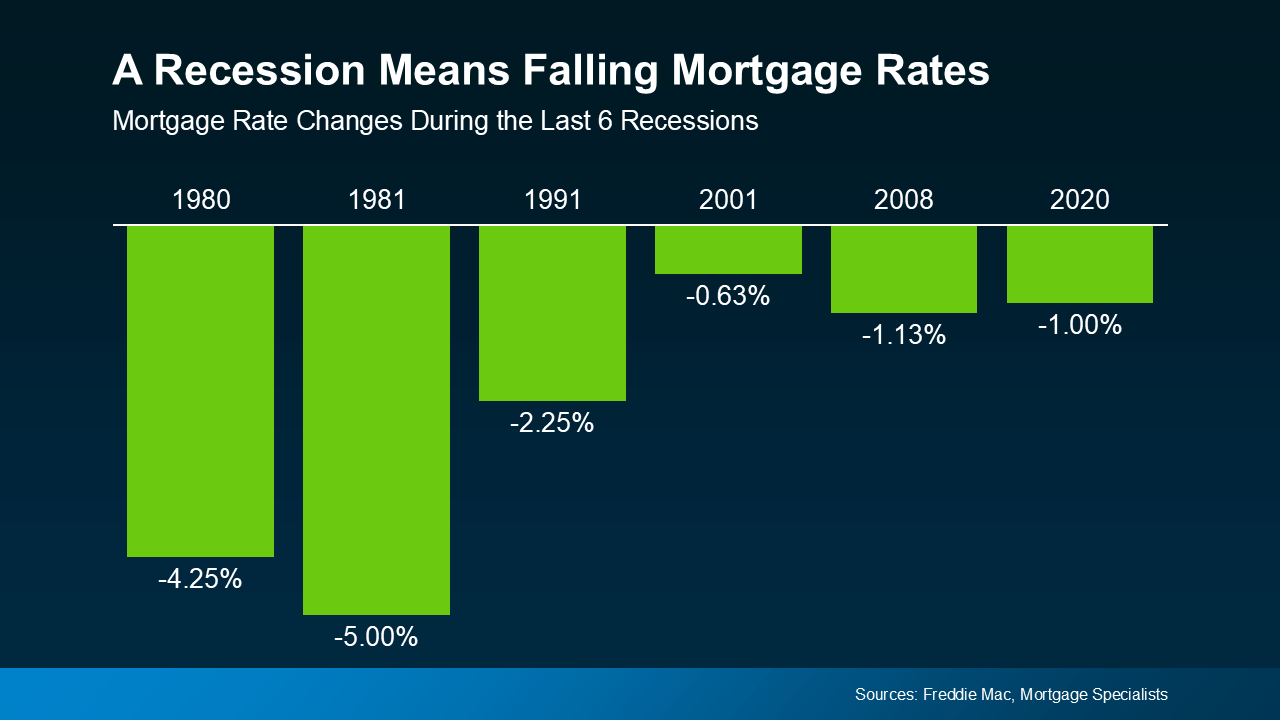
Historically speaking, a recession could mean that mortgage rates may even decline this year. However, the last time a recession dramatically lowered mortgage rates was over three decades ago in 1991. So with that said, even if a recession does happen, don’t expect a game-changing drop in mortgage rates.
Conclusion
Nobody ever truly knows what the economy will do, but the odds of a recession in 2025 have increased. Still, a recession doesn’t mean you need to worry about the housing market or the value of your home. The historical data tells us that a recession may even drive home prices higher and mortgage rates lower.
Wondering how an economic slowdown could impact your local market? Connect with us to get the info you need to plan ahead.
Many Fear a Housing Market Crash in 2025 – Will It Happen?

Between every economic uncertainty underpinning this year so far, Americans are understandably trepid about the future. Amid market lows and rising prices, many are asking if we’re heading for a housing market crash in 2025.
If talk of tariffs and mercurial markets are giving you pause about your plans, you’re not alone. In fact, new data from Clever Real Estate has found that 70% of Americans are worried about a housing crash in 2025. But how likely is this, and what does the latest data say?
Low Inventory Prevents a Crash in Prices
Before you put your plans to buy or a sell a home on hold, let’s look at the facts. The reality is that the trends in the housing market we’re seeing aren’t signs of crashing, only of shifting. As Chief Economist at First American Mark Fleming explains:
“There’s just generally not enough supply. There are more people than housing inventory. It’s Econ 101.”
Consider the basic laws of supply and demand. If the supply of something is low, its prices are bound to go up, and homes are no exception. And even though housing inventory is up in 2025, high demand from buyers is still driving home prices higher.
According to recent data from Realtor.com, the number of homes for sale in 2025 is climbing, but still below normal levels. Even still, home supply is at its highest since pre-pandemic levels, showing a positive trend in the right direction.
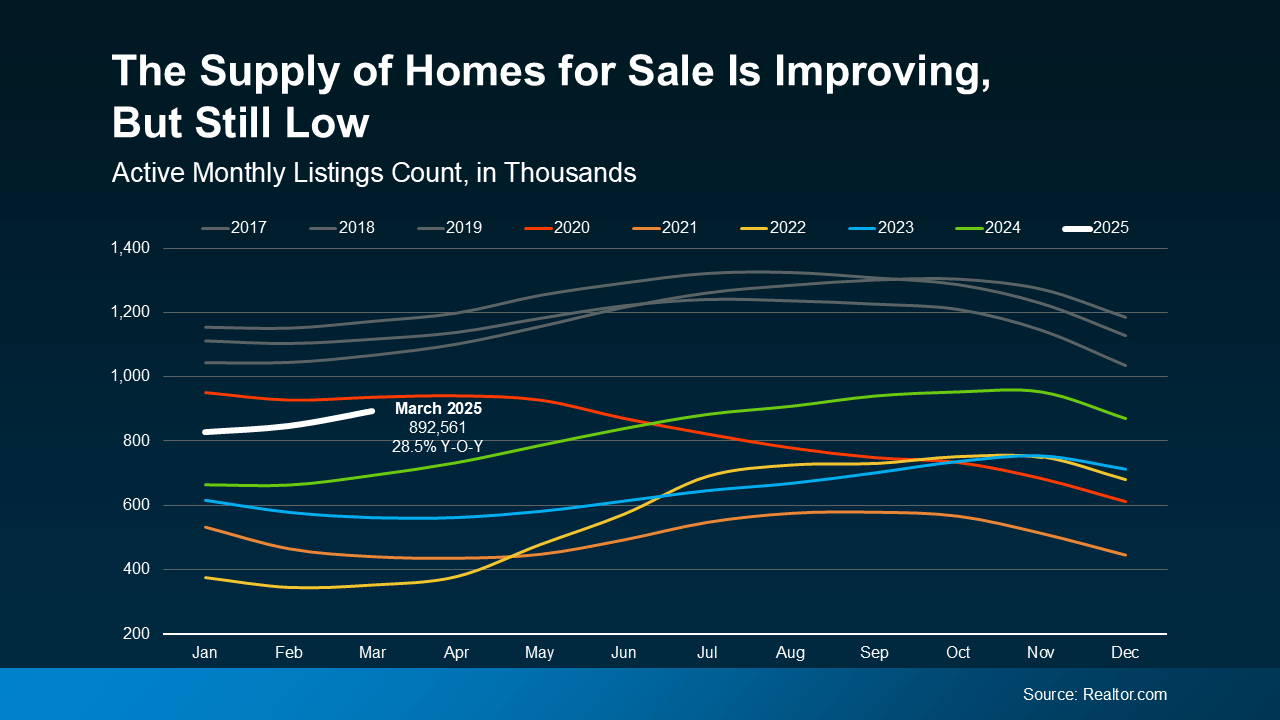
That ongoing low supply is what’s stopping home prices from dropping at the national level. As Lawrence Yun, Chief Economist at the National Association of Realtors (NAR), says:
“… if there’s a shortage, prices simply cannot crash.”
Home Prices Normalize as Inventory Increases
As more homes are listed on the market, upward pressure on home price growth normalizes. Prices may not be falling, but they’re rising at a rate closer to what we’d consider normal for the market.
Even though prices aren’t declining nationally, increased inventory means they’re rising more slowly than they were. The trend we’re currently seeing is what’s considered price moderation.
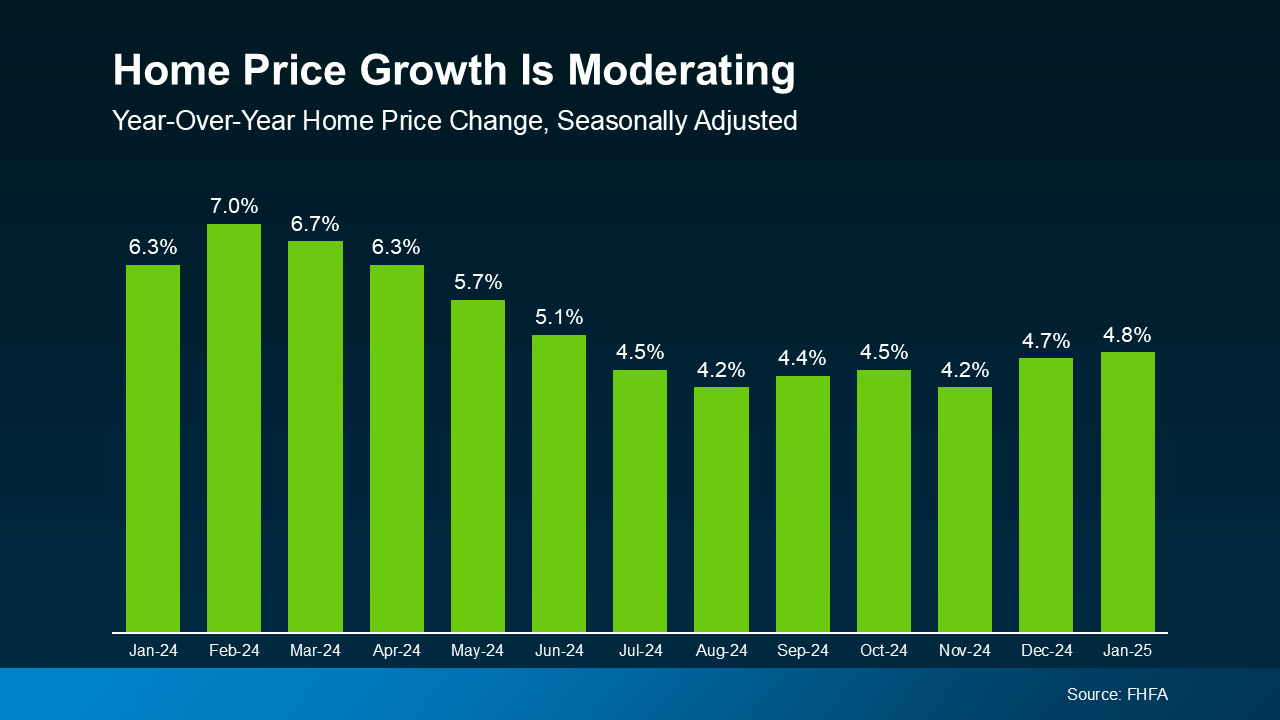
The good news for buyers is that this price moderation is expected to continue throughout the rest of the year, according to a January report from Freddie Mac:
“In 2025, we expect the pace of house price appreciation to moderate from the levels seen in 2024, while still maintaining a positive trajectory.”
This means that home prices will continue rising in most markets, but not as quickly as they did in 2024. This is great news for anyone who’s been priced out of the market thanks to rapid price appreciation these past few years.
These numbers represent national trends, so the true story will vary in individual markets. A local real estate agent can give you the latest details on the market trends in your your own unique area.
Conclusion
Fears of a housing market crash in 2025 abound, but don’t let this worry you. While a little caution is healthy, experts are confident that a housing market crash is unlikely in 2025. As a recent report from Business Insider says:
“. . . economists who study housing market conditions generally do not expect a crash in 2025 or beyond unless the economic outlook changes.”
In reality, this year’s housing market is stabilizing thanks to decreasing price growth and increasing home supply. If you’re curious about the market trends in your local area, contact us today to connect with an agent who can reassure you with the facts.
Selling Your Home? Avoid This Mistake When Setting Your Asking Price

When selling your house, the typical goal is to sell quickly at the best price possible. Naturally, ever since home prices took off around 5 years ago, most sellers have been aiming high. But housing inventory is making a comeback, and some sellers haven’t considered what this shift means for their asking price. As a result, buyers are becoming choosier, and price cuts on overpriced listings are increasing alongside home supply.
According to February 2025 data from Realtor.com, home price cuts this February reached their highest number since 2019. That’s the highest number of price cuts in 6 years, and a real return to pre-pandemic market levels.
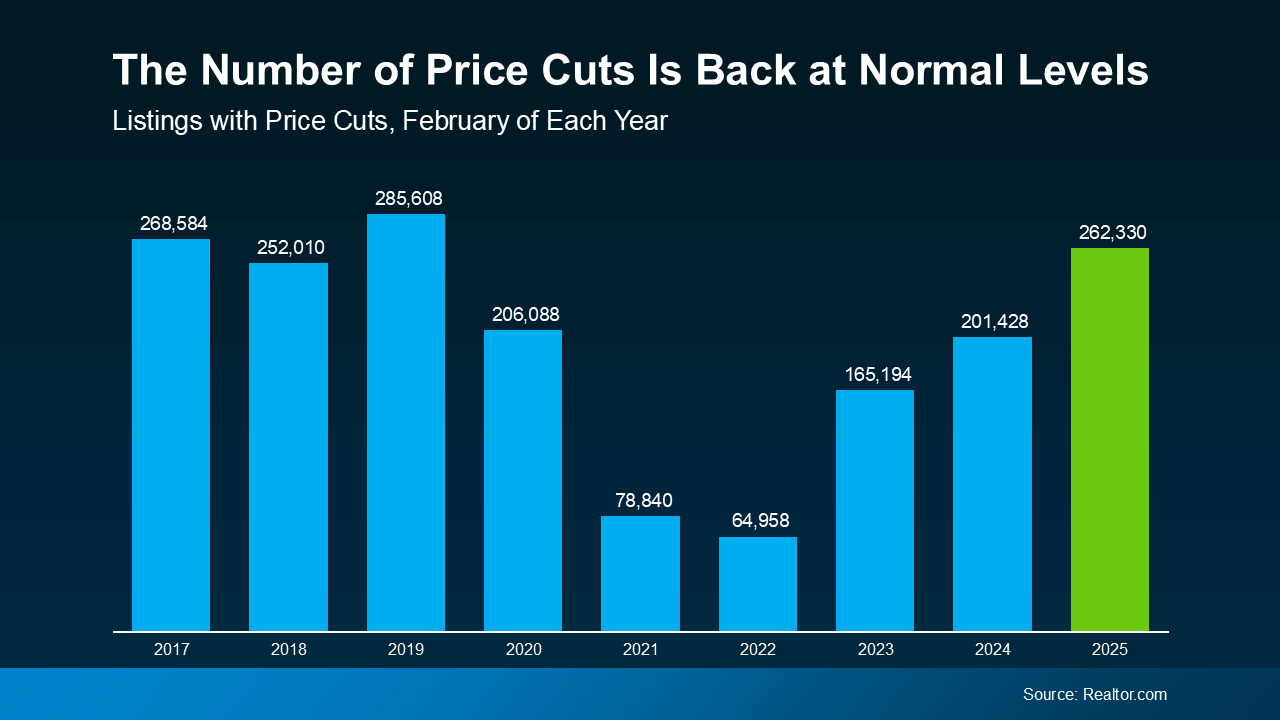
Given that 2019 is considered the housing market’s last normal year, this demonstrates a major, substantial shift. The market is finally starting to normalize, and may quickly break out of the post-pandemic slump it’s been stuck in.
However, this is a distinctly different trend from the hot seller’s market of 2021 and should be treated differently. You may not sell your house for top dollar like you would have at the pandemic’s peak, but that’s okay. By setting a smart asking price and tempering your expectations, you can still sell quickly, and at a great price.
You may be planning to price your listing high and cut it later if necessary, but this has its drawbacks. Pricing too high and lowering later means you may actually end up with lower offers in the end. Pricing right the first time is the best way to avoid this, and a local agent can make the difference.
How a Local Agent Can Find Your Perfect Asking Price
A true expert real estate agent doesn’t set an asking price without good reason. These agents consider real data and trends unique to your market, setting a price specific to your home. This way, you set a realistic price based on your home’s true value to attract as many buyers as possible.
Depending on your local market and your agent’s analysis, they may even recommend strategically pricing slightly below market value. While this may sound counterintuitive, it can be a strategic move to attract more attention to your listing, earning you more competitive offers. Here are a few ways a local agent will determine the best price for your listing:
- Researching recent home sales. What price did homes similar to yours finally sell for? Were these homes initially listed higher before dropping in price to sell?
- Analyzing local market trends. The true value of your home isn’t based on the price you’d like to sell it at. It’s the price that potential buyers are willing to pay. A local agent will have a strong idea of this number based on experience.
- Strategizing to sell. A great agent will price your home to attract attention, creating a sense of urgency among buyers and increasing demand.
How Overpricing Your Home Can Backfire
Unfortunately, some sellers still ignore their agent’s advice and prefer to start high just to see what happens. The hope being maybe they get their full asking price, or they at least have more wiggle room for negotiation. But pricing high usually ends up costing you, and here’s why:
- Buyers may ignore it. The market’s past few years – and the direction it’s headed – have made buyers more budget-conscious than ever. If a home listing looks overpriced, buyers are more likely to ignore it and move on than consider negotiating.
- It could stay on the market too long. The longer your home sits on the market without selling, the more buyers will assume something is wrong with it. This can make it harder and harder to sell as time goes on, and makes a price cut almost inevitable.
- You may sell for less in the end. Price cuts often lower a listing’s final selling price below its best, most realistic market value. Listing at the right price to begin with gives sellers the best chance of selling quickly at a great price.
The graph below demonstrates how these factors play out in the market. Using data from the National Association of Realtors (NAR), it shows how time on the market lowers final selling price.
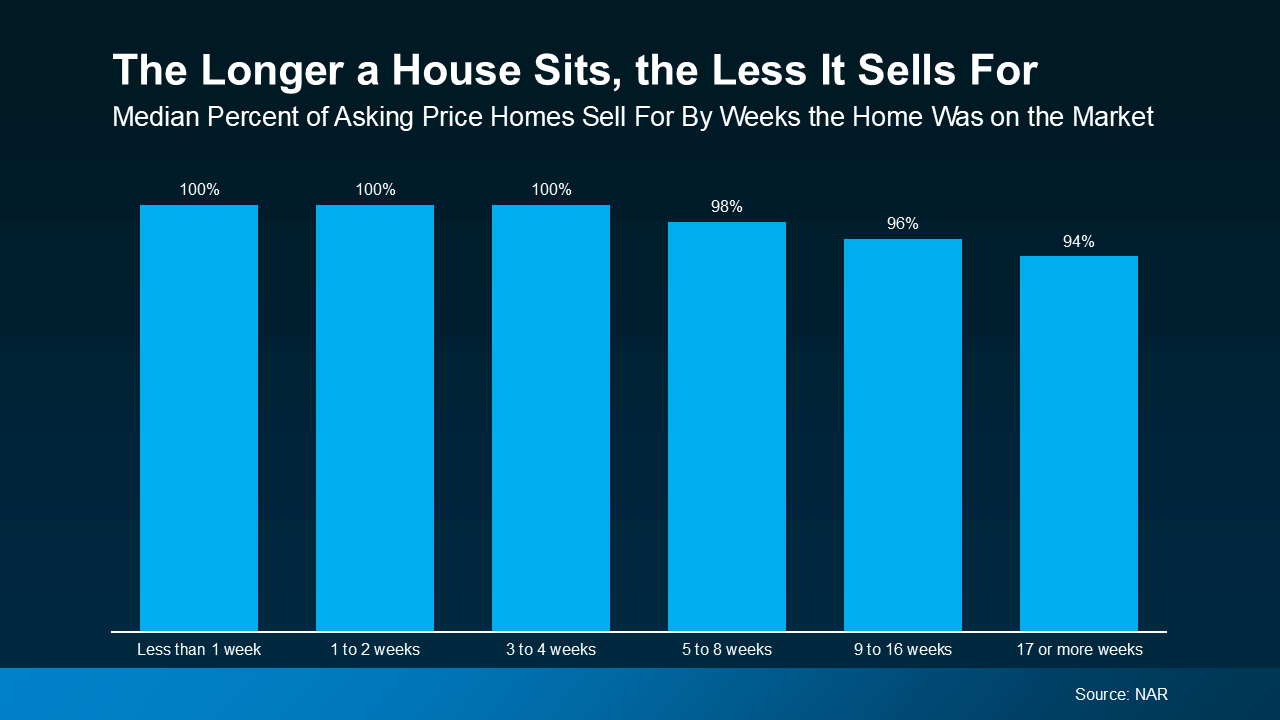
According to the data, if a house sells within its first 4 weeks after listing, it usually sells for full price. Homes that are priced at or just below current market value typically sell quickly in this same window. When a home is priced right, it attracts truly interested buyers who are willing to buy at your asking price. In a hot market, buyers may even compete with other buyers, or even make an offer above your listing price.
On the other hand, a home that’s overpriced will take longer to sell, if it sells at all. As the graph demonstrates, after that first 4 weeks on the market, final selling price starts to drop. And as buyer interest declines over time, the more likely a seller will accept a low offer, or cut their price.
Conclusion
The housing market is normalizing thanks to increasing housing inventory, causing price cuts to rise with increasing buyer power. For sellers, setting the right asking price is more important than ever, and overpricing could make your listing sit on the market. Advice from a local agent can help you avoid this mistake and sell quickly without having to lower your price.
Interested in selling but need help pricing your home for your local market? Get in touch with us today. We can connect you with a local agent who can sell your home at the best price possible.