Facebook
 X
X
 Pinterest
 Copy Link
The Spring 2025 Housing Market: 4 Things To Expect

Spring is in full swing, and the spring 2025 housing market is swinging along with it. Wondering whether now is the right time to finally buy a house or sell your home? Here are four trends you can expect in the market this year, and what they mean for you.
1. More Homes on the Market
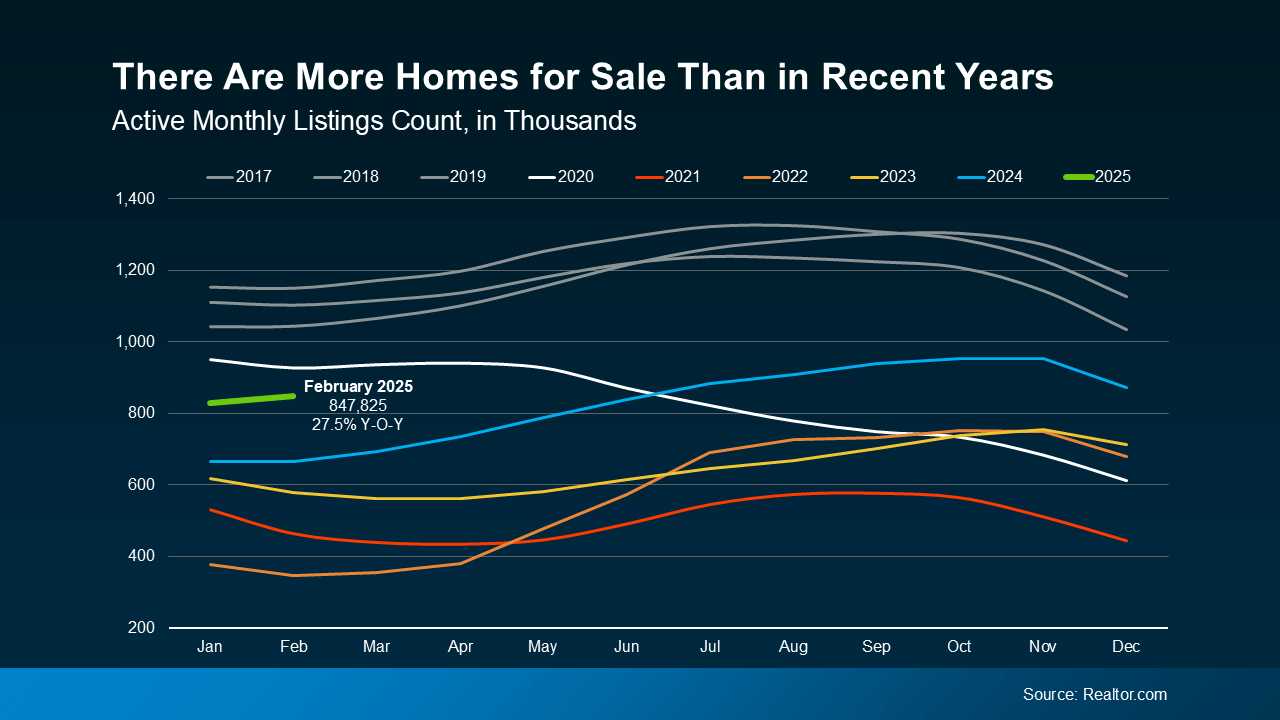
After years of housing shortages nationwide, the number of homes for sale is finally improving. According to recent national data from Realtor.com, active home listings are up 27.5% compared to this time last year. Housing inventory took a tremendous dive in 2020, but at long last, it’s close to reaching pre-pandemic levels this spring.
The graph below shows monthly active listing count for each year dating back to 2017. As you can see, even though inventory levels still haven’t quite returned to pre-pandemic norms, they’ve improved over last year. In fact, they’re almost at 2020 levels, and will likely exceed them this summer if their upward trend continues.
For Buyers: More housing inventory means you have more options and choices. Having options means you can be more selective, and that sellers may be more willing to negotiate with you.
For Sellers: With more homes available, you’re more likely to find the right house to move into. With inventory still below normal levels, your current home will stay in higher demand, at least until home supply normalizes.
2. Home Price Growth Is Slowing
As inventory increases, the rate of home price growth is slowing down as prices respond to buyer demand. This will continue through the spring 2025 housing market and beyond into 2026 if the current trend holds steady. With more homes for sale, eager buyers are less pressured to compete for limited inventory. Price growth will continue to slow as supply rises and buyers enjoy more options, but it will generally remain positive. A recent projection from Freddie Mac says:
“In 2025, we expect the pace of house price appreciation to moderate from the levels seen in 2024, while still maintaining a positive trajectory.”
Every housing market is different, so while home prices are rising nationally, this may not be true everywhere. Some markets are actually seeing stronger price growth, while others are slowing or even seeing home prices decline.
For Buyers: Slower home price growth means prices aren’t rising as quickly as before. Still, any home you buy now is likely to appreciate in value over time, helping you build equity.
For Sellers: Home prices are still rising, but you may need to temper your expectations in terms of pricing your home. Pricing too high in a more competitive market could mean your house takes longer to sell. Listing at a price point competitive with your local market is going to become a key factor as prices normalize.
3. Mortgage Rates Are Falling and Stabilizing
One of the biggest obstacles for buyers – especially new ones – since the pandemic has been higher, less predictable mortgage rates. Fortunately, rates have been slowly stabilizing so far in Q1 of 2025, and have even dropped faster than experts anticipated. These aren’t the 3% rates of 2020, but less volatile rates give buyers more reason to buy with confidence. As Chief Economist at CoreLogic Selma Hepp says:
“With the spring homebuying season upon us, the recent improvements in mortgage rates may help invite homebuyers back into the market.”
For Buyers: When mortgage rates are stable, planning ahead is easier because your future payments are likely to be more predictable. But keep in mind that even though mortgage rates are stabilizing, they’re still far from being completely static. When buying, consult your agent and lender to stay current with rates and how they might affect your plans.
For Sellers: Lower rates starting to stabilize means more buyers are becoming active – especially those who have been patiently waiting. This means increases in housing demand and more potential interested buyers for your house.
4. More Buyers Are Entering the Market
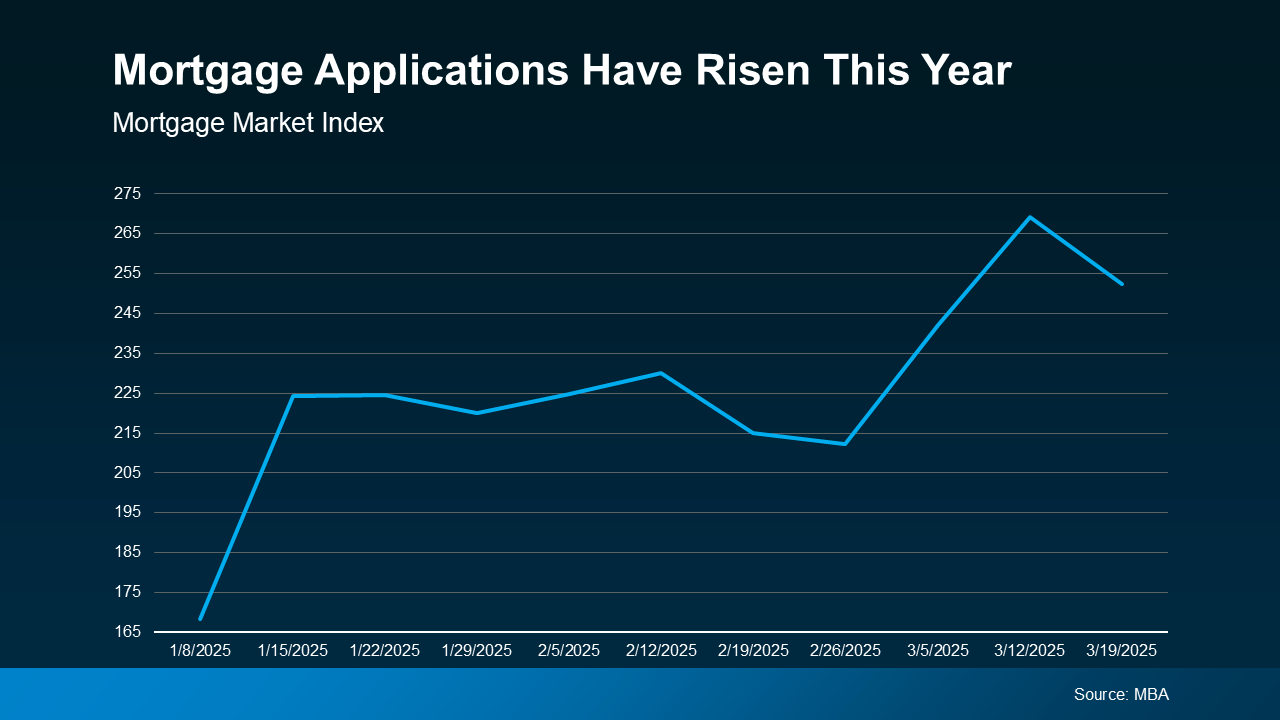
With more inventory, slowing price growth, and stabilizing mortgage rates, buyers are gaining confidence and finally reentering the market. Demand is increasing, and recent data from the Mortgage Bankers Association (MBA) shows an uptick in mortgage applications compared to the start of the year.
For Buyers: The spring 2025 housing market buying season is quickly heating up. Making your move now and getting a leg up on your competition could be a wise strategy this spring.
For Sellers: Eager buyers wanting to buy a home in the spring or summer are entering the market quickly. Naturally, this is great news for you: more buyers means a better chance of selling your home fast.
Conclusion
Between more homes for sale, slowing price growth, and stabilizing mortgage rates, there’s plenty reason to be positive this spring. Buyers can expect higher housing inventory at more reasonable rates, while sellers can count on a busier market with more activated homebuyers. If you’re wondering how this spring’s trends might affect you, contact us today to get started with an expert agent in your area.
What’s Your Real Home Value in the 2025 Market?
If you’ve checked home prices in the past few years, you know too well that they’re always rising. But if you’re a current homeowner, have you considered what this might mean for your own home value? It may be that your home is worth far more than you think in 2025.
While rising prices are expected, the home value increases of the post-Pandemic housing market have been dramatic. And if you’re a seller waiting to list, this could mean a huge payoff when you finally close. If you’re eager to know much your own house could sell for, finding out is easier than you think.
The Post-Pandemic Home Value Launch
Home prices typically rise around 2-5% per year, but in 2021-2022 that number rose to double-digit levels. In the spring of 2022, year-over-year percentage growth finally peaked at over 20% nationally. The sheer number of buyers in the market during this time sent home prices soaring as housing supply lagged. And though price growth has settled since then, the home value accrued by homeowners in that time remains.
The lingering effects of that volatile period have caused difficulties for buyers, but they’ve also produced great opportunities for sellers. There’s a good chance your house has gained tremendous value since then, and that means more wealth for you.
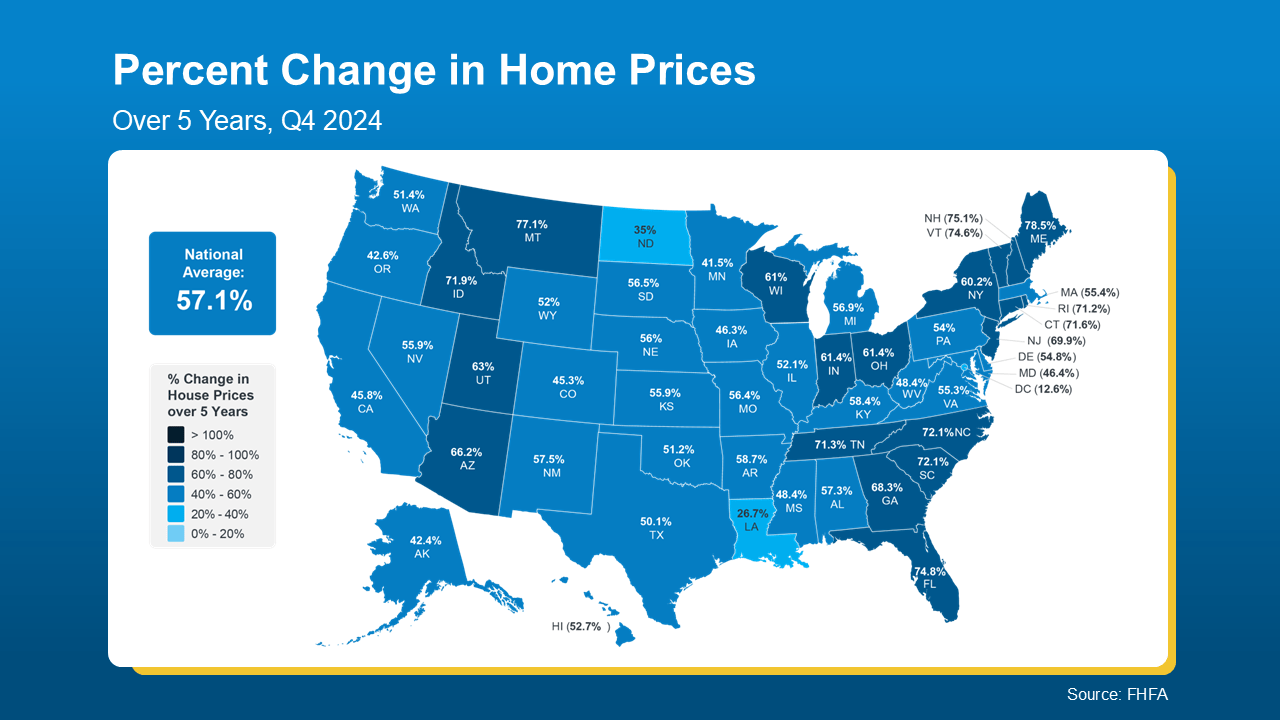
The map below references data from the Federal Housing Finance Agency (FHFA) to illustrate that home prices have risen by nearly 60% in just the past 5 years alone nationally. The most extreme increases have taken place in states marked with a darker blue, like Maine, New Hampshire, and Florida.
If worries about today’s rates and prices have stopped you from selling your home, let these numbers reassure you. Your home’s risen value may be exactly what you need to close the affordability gap and purchase your next house.
Even better, if you’ve owned your home for 10 years or more, your value is likely even higher. You can stack the incredible gains of the past five years on top of five years of healthy appreciation too. And an agent can help you figure out what that really looks like.
How To Find Out What Your House Is Really Worth
Percentages will help you ballpark an estimate, but you need specific numbers to make real, actionable decisions. To help, you can get a free home valuation estimate from us right now using the tool below. You can even sign up for a full valuation report.
Home valuations can be great tools, but only a local real estate agent can give you the best, most accurate look at your house’s real market value. An agent will know the state of your local housing market and the factors driving it. They can provide insights about current housing inventory, pricing of comparable homes, and unique contributors to value like renovations.
By knowing what’s happening where you live, an agent can stack their market knowledge against the unique condition and features of your home and give you an accurate estimate of your home’s current value in your area.
Conclusion
Home values have taken off in just the past few years, and that’s great news for current homeowners. Knowing what your house is worth in today’s real estate market will help you plan your next move. A local agent can give you a great idea of how much your home might realistically sell for.
If you’re a homeowner considering a move, get your free home valuation from us at Century 21 Affiliated now. Ready to sell? Reach out now and we’ll connect you with a local expert real estate agent who can get your house sold.
3 Questions About Selling Your House You May Be Asking

Selling a house is one of the most significant financial and emotional decisions a homeowner can make, and unanswered questions about the market make this decision even harder. Sometimes, sellers’ concerns are based on misconceptions or outdated info, but can be quickly alleviated with a trustworthy agent’s help.
If your own uncertainty about the market is keeping you from selling your house, don’t wait to get the answers you need. Despite rising home prices and stiff demand, the 2025 real estate market is active, and recent reports prove it. If you’re uncertain about selling your house, here are the answers to three you may be asking.
1. Is It a Good Idea To Move Right Now?
If you’re a homeowner itching to make a move, you might be waiting to sell because you don’t to take on a higher mortgage rate on your next house. Between interest rates, inflation, and the job market, it’s both wise and responsible to consider your own finances and the greater state of the economy. The good news is that moving may be a lot more feasible than you think, mainly thanks to how much your house has likely grown in value.
Consider if there’s anyone in your neighborhood who sold their house recently. If so, do you know what it sold for? Considering how much home values have increased since 2021, the final closing price may surprise you. According to Lawrence Yun, Chief Economist at the National Association of Realtors (NAR), the typical homeowner has gained almost $150,000 in housing wealth in the last five years alone.
That’s a significant gain depending on your house’s initial value when you bought. When you decide to sell, the increased value of your home along with the equity you’ve built can make all the difference you need to lock down your new home.
2. Will I Be Able To Find a Home I Like?
If finding the right house is stopping you from selling your house, it’s probably because you remember how hard it’s been to find a home these past few years due to low housing inventory. But thanks to positive inventory trends in today’s market, finding a good home is becoming easier.
According to a January 2025 report from from Realtor.com, home supply has increased nearly 25% since this time last year.
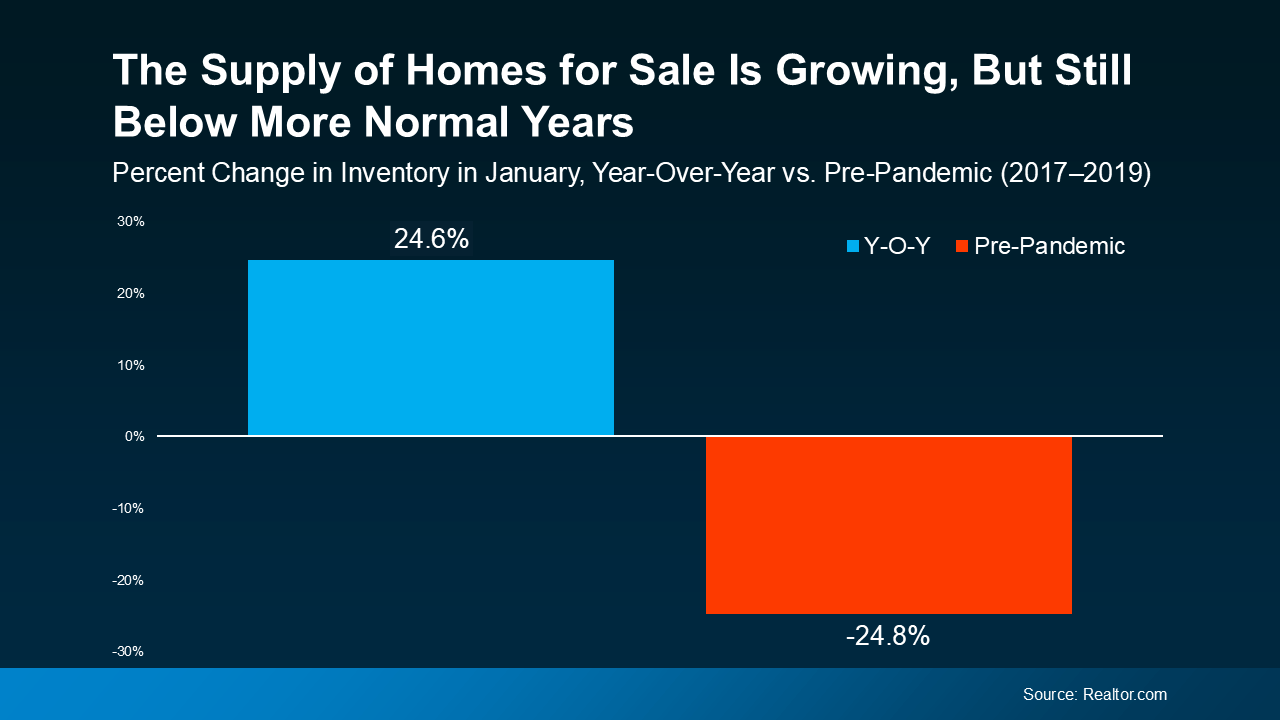
Housing inventory still hasn’t risen to pre-pandemic levels, but it’s improved significantly in the past year since January 2024. Even better, real estate experts say the supply of homes will continue to grow another 10 to 15% in 2025. More houses on the market means more options for you as a buyer, and a better chance of finding the perfect home.
3. Will My House Sell?
Lastly, if you’re worried that buyers aren’t buying thanks to home prices and mortgage rates, here’s some encouraging info. While last year’s home sales were still below normal, about 4.24 million homes sold according to data from the National Association of Realtors (NAR). Experts expect that number to rise in 2025, but here’s how 2024’s break down over time:
- 4.24 million homes ÷ 365 days in a year = 11,616 homes sold each day.
- 11,616 homes ÷ 24 hours in a day = 484 homes sold per hour.
- 484 homes ÷ 60 minutes = 8 homes sold every minute.
To apply some perspective: in the minute it took you to read this paragraph, 8 homes sold last year. And homes are expected to sell even faster in 2025, so rest assured that buyers are still buying. The market may not be back to pre-pandemic levels, but there are thousands of active buyers looking for homes like yours.
Conclusion
Selling your house is a major decision just like buying, but there are plenty of reasons for optimism in 2025. Home inventory is increasing, buyers are becoming more active, and your current home is likely worth more than you think.
Are you thinking of selling but have unanswered questions holding you back? Reach out today and we’ll connect you with an expert local real estate agent who can help.