Facebook
 X
X
 Pinterest
 Copy Link
Is Late May a Good Time To Sell Your House?

If you heard that April 12-18 was the “best week” to list your house, you may be wondering whether you missed your chance to take advantage of the spring market.
Simply put, you didn’t.
While one report from Realtor.com pointed to that specific April week as a strong time for sellers, the truth is there’s rarely just one perfect week to sell your home. Rather, there’s usually a prime selling season, and right now, that window is still very much open.
The Spring Selling Window Is Still Going Strong
Every year, different real estate organizations study the best time to list your house. These reports don’t always point to the exact same week. And that’s not a bad thing.
Why the disconnect? Each study may use different data, market factors, and definitions of what “best” means. Some focus on sale price. Others look at how quickly homes sell, how much buyer demand exists, or how many sellers receive offers above asking.
But even when the exact dates vary, the bigger trend is clear: spring remains one of the strongest seasons for home sellers.
That means if you weren’t quite ready to list earlier in April, you still have time to make a smart move.
Why Late May Can Be a Smart Time To List
According to Zillow, the best time to list your house this year is during the last two weeks of May. That timing matters, especially if your goal is to sell for the strongest possible price.
Zillow’s research shows that homes listed during this late-May window can sell for more. Depending on your local market, price point, and buyer demand, that could mean a noticeably higher sale price.
As Zillow explains:
“Why late spring? Buyer demand typically peaks before Memorial Day. Families want to move during the summer and settle in before the new school year. More buyers shopping at once can spark competition and lift prices.”
That timing makes sense. Many buyers want to be under contract before summer gets too far along, especially if they are trying to move before a new school year starts. When more buyers are actively looking, sellers may benefit from stronger competition.
ATTOM Data found a similar pattern after analyzing nearly 52 million home sales over the past 10 years. Their research shows that May has historically been one of the months when sellers achieve some of the highest returns.
So, while the “best week” may have passed according to one report, the spring window is still open.
What This Means if You’re Thinking About Selling
If you want to sell your house this spring, now is the best time to get serious about preparation.
That doesn’t not mean you need to tackle every home project on your list. When the listing window is short, the goal is to do the right things, not everything at once.
A local real estate agent can help you focus on updates that are most likely to matter to buyers in your area. They can also tell you whether the best time to list your house is slightly different in your specific market.
Here are some quick examples of things you might want to do before you sell, according to Redfin.
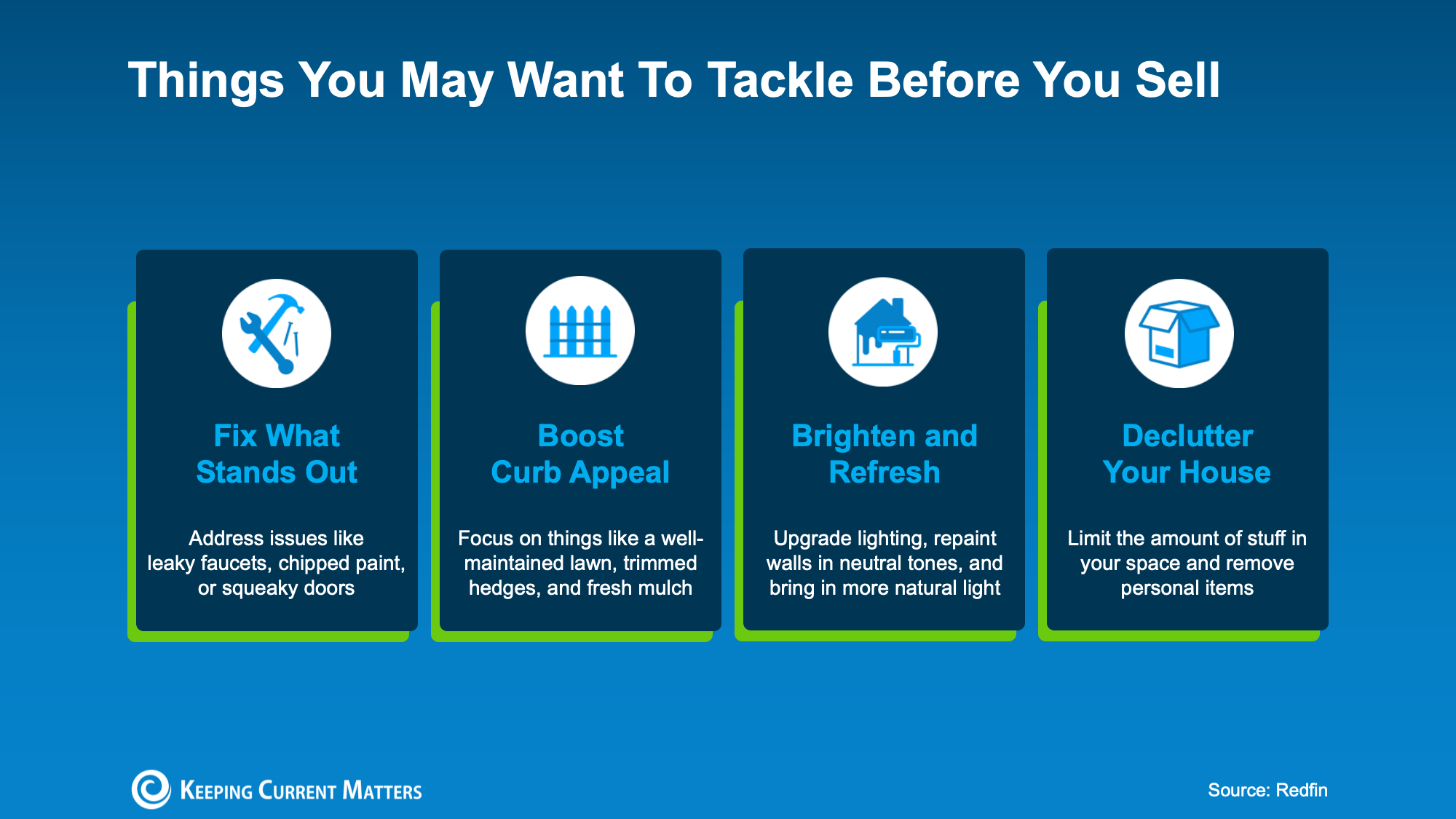
Likewise, your own local real estate agent may recommend:
- Improving curb appeal with fresh landscaping or exterior touch-ups.
- Decluttering and deep cleaning key living areas.
- Making small repairs buyers are likely to notice.
- Refreshing paint in high-impact rooms.
- Staging your home to highlight space and flow.
- Pricing strategically based on current local demand.
These steps can help your home make a stronger first impression without wasting time or money on projects that may not deliver a meaningful return.
The Right Strategy Matters More Than Perfect Timing
Timing can absolutely help when you are selling a home. But it’s only one piece of the equation.
To make the most of a late-May listing, your home still needs to be priced well, marketed effectively, and positioned to stand out from other homes on the market. That’s where local real estate expertise becomes especially valuable.
An experienced agent can help you understand what buyers are looking for right now, how much competition you may face, and what steps will help your home attract serious attention quickly.
Bottom Line: Preparation Is Key
Late May could be one of the best times to list your house, especially if you want to take advantage of strong spring buyer demand.
If you’re still thinking about selling, it’s not too late. The key is to act strategically, prepare your home the right way, and work with a local agent who understands your market.
The Best Time To List Your House Is Almost Here

Spring is usually one of the strongest seasons to sell a home, but according to research from Realtor.com, one specific week tends to stand out year after year. And it’s almost here.
Based on historical housing market trends, the best week to list your house this year is April 12–18.
Here’s why that window can be especially favorable for sellers.
Buyers Are More Active
Realtor.com reports that homes listed during this week typically receive 16.7% more views than the average week. In a market where buyers have more choices, extra visibility can make a real difference.
More attention early on can help generate stronger interest, more showings, and a better overall start to your sale.
Homes Sell Faster
More buyer activity can also lead to a quicker sale. Realtor.com found that homes listed during this week spend 17% less time on the market than usual.
That matters, especially in a market where some homes are taking longer to sell than they did a year ago. A faster sale can mean less stress, fewer disruptions, and more momentum from the start.
Sellers May Get a Better Price
As inventory grows, buyers often feel more comfortable asking for repairs, concessions, or price reductions. But during this early spring window, Realtor.com says about 18.9% fewer homes need a price cut.
That gives sellers a stronger chance of listing confidently and holding closer to their asking price.
More Money in Your Pocket
According to the same study, a well-prepared home listed during this week can sell for about $5,300 more than the average week and about $26,000 more than homes listed at the beginning of the year.
For sellers, that’s a meaningful difference.
More views, less time on the market, and a better shot at top dollar all make this one of the most appealing times to list.
What You Should Do Now To Prepare
If you’re thinking about selling and want to take advantage of this timing, the next step is simple: connect with a local real estate agent.
A trusted local agent can help you decide how to prepare based on what is happening in your market. Real estate trends can vary by city, neighborhood, and even price point, so local insight matters.
Your agent can help you figure out:
- What updates are worth making before you list
- Which repairs should come first
- What buyers in your area care about most
- Which small improvements can have the biggest impact
For some sellers, getting ready may only take a couple of weekends. Fresh paint, basic landscaping, or a deep clean can go a long way.
For others, taking a few extra weeks to make light updates may be the smarter move. And that’s completely fine. While mid-April may offer an advantage, it is not the only good time to sell.
Spring Still Offers a Strong Opportunity
Zillow says May is also one of the best times to list a home. That means sellers still have a strong window of opportunity throughout the spring season.
So while April 12–18 may be a standout week, it’s not your only shot at a successful sale.
Conclusion
Listing your house in mid-April could help you attract more buyers, sell faster, and maximize your sale price. But the bigger opportunity is the spring market as a whole.
The real question is: what do you need to do now to get your home ready to list?
For anyone planning a spring move, now is the time to start preparing. The sooner you connect with a local agent, the sooner you can make a plan that fits your goals and your timeline.
Why Spring Gives Home Sellers an Advantage

Homeowners planning to sell usually want the same three things: more buyer interest, stronger offers, and a faster sale. And it’s no secret that spring is the season that most often delivers on all three.
If selling your home has been on your mind this year, this may be the right time to make your move. Spring consistently brings more energy to the housing market, and that momentum can work in your favor. Here’s why this season is often such a strong opportunity for sellers.
1. More Buyers Are Actively Looking
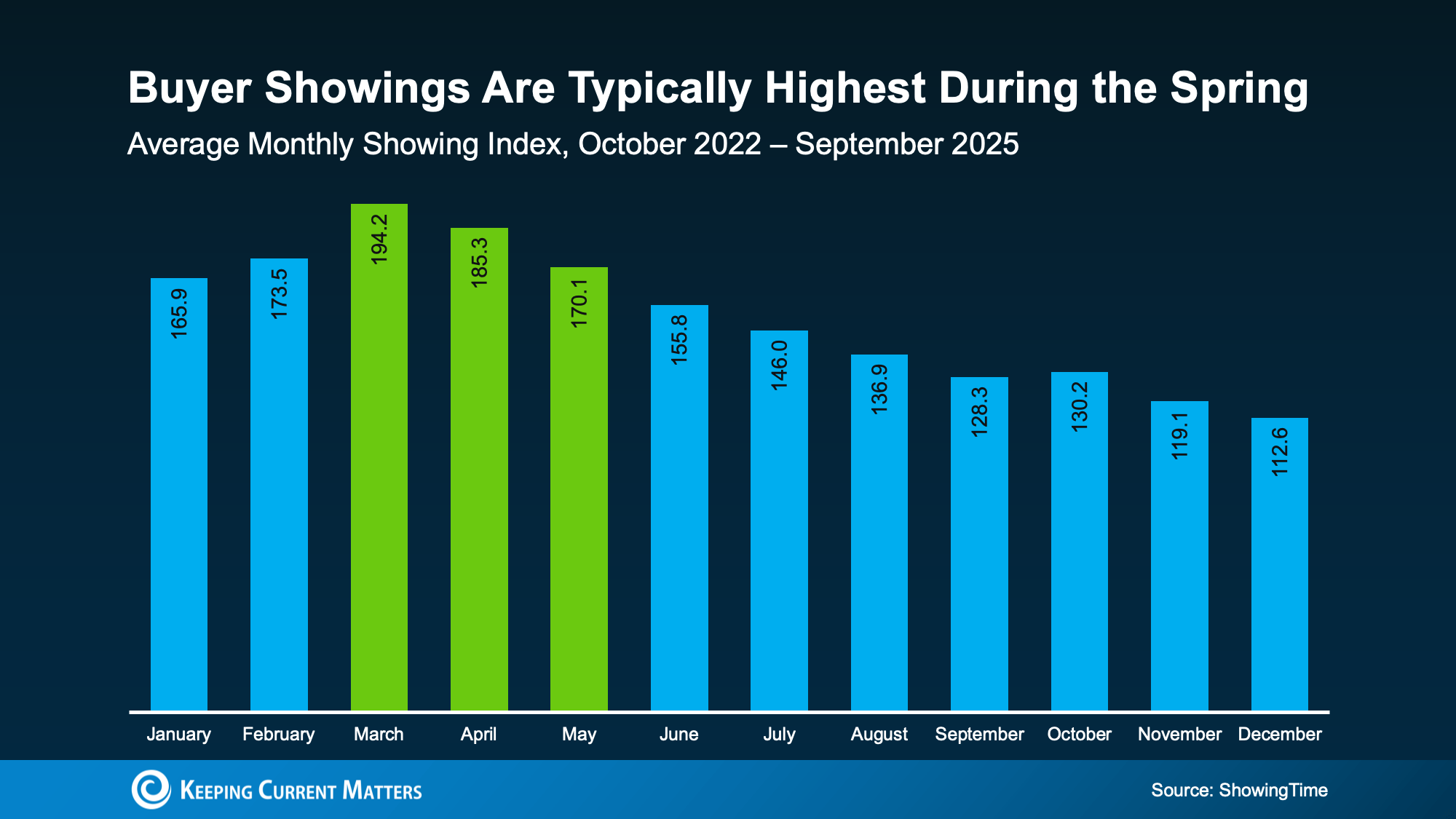
Spring is traditionally one of the busiest times of year for the housing market. Historically, buyer activity tends to rise as the season begins, and data from ShowingTime has consistently shown that buyer traffic peaks during the spring months each year (see graph below).
This year, there’s another factor helping sellers: mortgage rates are hovering near three-year lows. That combination of seasonal demand and improved affordability could be the spark that gets buyers back into the market.
More buyers and better affordability often mean more attention on your home.
That doesn’t mean the market is going back to the kind of buying craze we saw during the pandemic. But it does suggest that more buyers may be ready to make a move. As Redfin says:
“Homebuying demand is improving . . . and mortgage-purchase applications are sitting near their highest level in three years. . .”
For sellers, that creates more opportunity. Listing your house while buyer demand is picking up can help you take full advantage of the seasonal uptick in activity.
2. You Could Receive More Offers
When more buyers are searching, sellers often enjoy increased competition, and in many cases, that leads to more offers.
Data from the National Association of Realtors (NAR) over the past three years shows a clear pattern: sellers tend to receive more offers during the spring months than at other times of the year (see graph below).
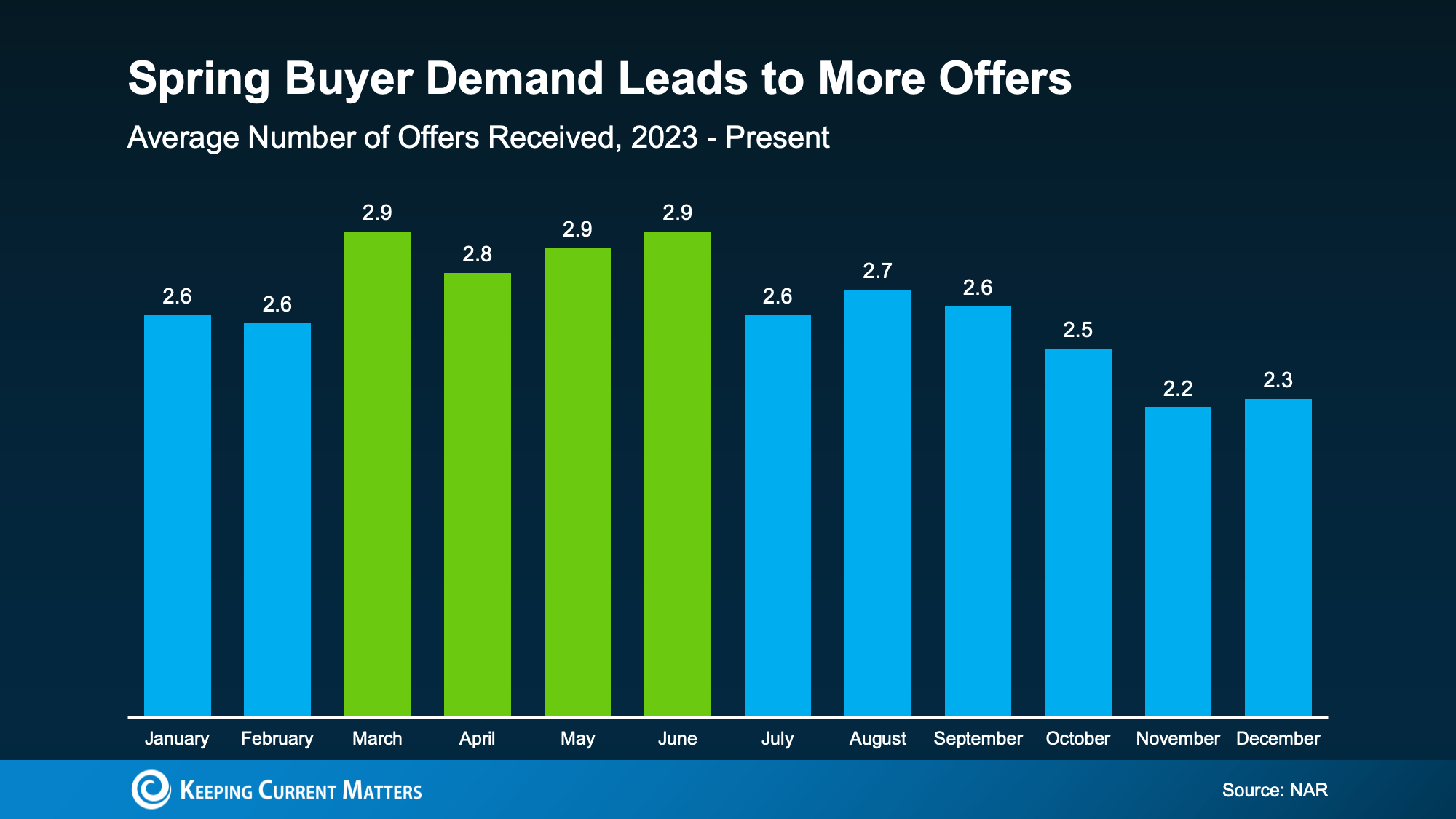
That doesn’t mean every home will spark a bidding war; the market is more balanced now than it was in 2020 and 2021. Even so, seasonality still matters, and spring can offer a more favorable market environment for sellers.
As Realtor.com explains:
“Spring typically brings out more buyers who are ready to make a move before summer. Listings see more views, showings, and offers during this season.”
More views and more showings can lead to stronger offer activity, which may put you in a better position when it comes time to negotiate.
3. Homes Often Sell Faster in Spring
Another trend that shows up year after year is speed. Homes generally sell faster in the spring.
According to research from Realtor.com, homes sell about 20 days faster in spring than they do in winter on average (see graph below). That’s nearly three weeks less time on the market.
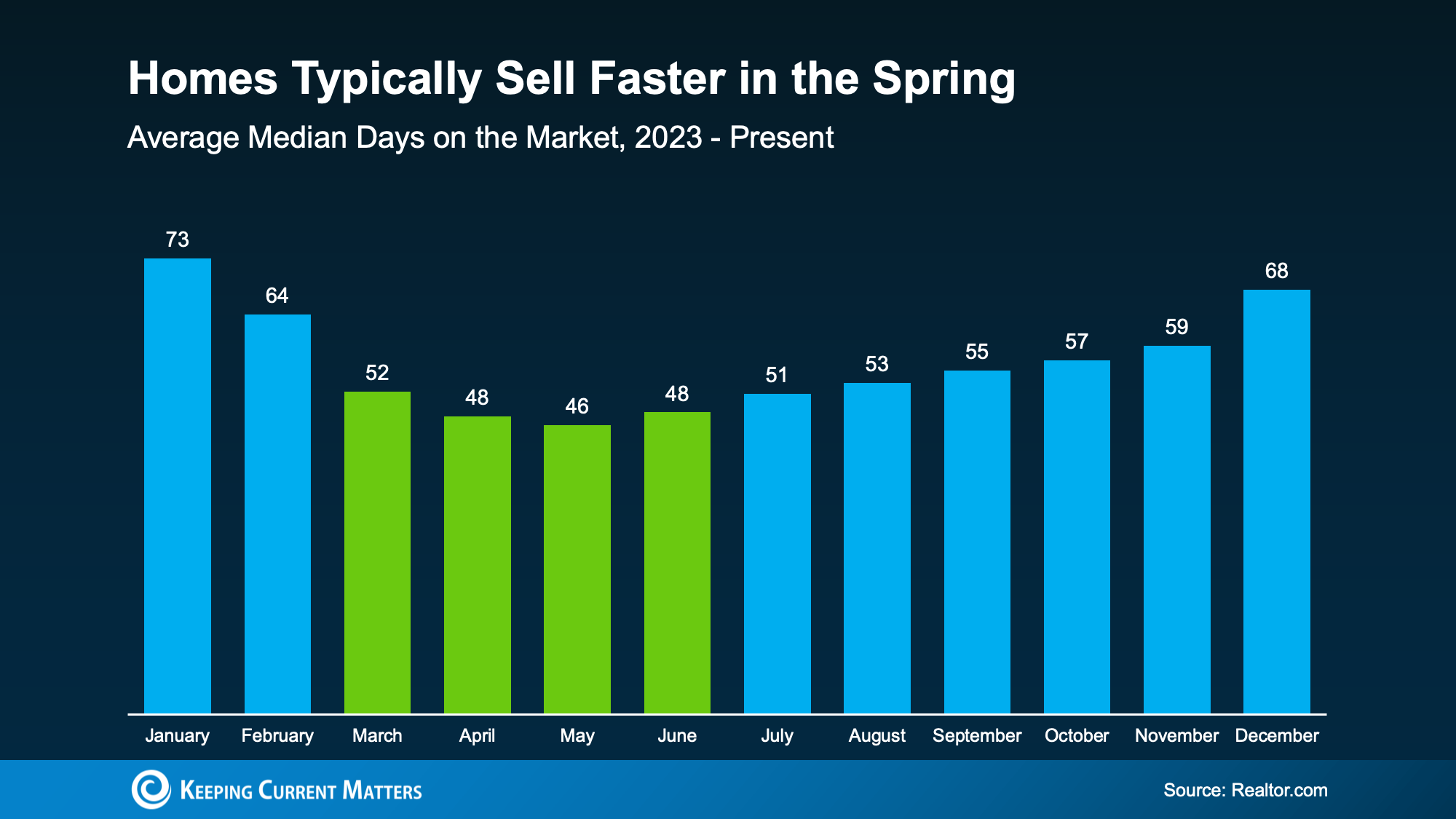
For many sellers, that matters just as much as price. A faster sale can reduce the stress of the process, limit disruptions to your daily life, and help you move on to your next home or next chapter sooner.
And since homes have been taking a little longer to sell in recent months, listing during one of the most active parts of the year may help improve your timeline. If your goal is to sell efficiently, the spring market can give you a critical edge.
Why Timing Still Matters
Spring doesn’t automatically guarantee a fast or profitable sale. Pricing, presentation, marketing, and local market conditions still play a major role. But this season does tend to create stronger momentum than other times of year.
When you combine that momentum with more active buyers and better affordability, the spring market can offer a real advantage.
If you need more space, want to downsize, or are simply ready for a change, this spring season may be your best chance to make a decisive move.
Conclusion
Spring can give sellers something incredibly valuable: opportunity.
More buyers. More activity. More potential offers. And often, a faster sale.
If you’re already thinking about selling this year, it makes sense to consider listing when market conditions are typically most favorable. Talk with a local real estate agent about what this spring could mean for your home, your timing, and your next move.
Are Home Prices Dropping? What the Latest Data Show

You’ve probably seen headlines or social posts claiming that home prices are falling. It’s an attention-grabbing message, and it naturally leads to two big questions:
- Is this the start of a crash?
- What does it mean for my home’s value?
Here’s the reality: a few markets are seeing small, normal pullbacks, but this is not a nationwide crash. In most areas, prices are still rising or holding steady, just not at the breakneck pace we saw a few years ago.
Home Prices Are Still Rising Nationally
A lot of online chatter focuses on isolated price drops without mentioning the broader data. Nationally, prices have continued to trend upward, but at a slower rate than usual.
According to a new report from the National Association of Realtors (NAR):
“Home prices continued to rise in the fourth quarter of 2025. National median prices rose 1.2% year over year to $414,900.”
That’s modest growth compared to the peak “boom” years, but it’s still growth. And regionally, the story varies.
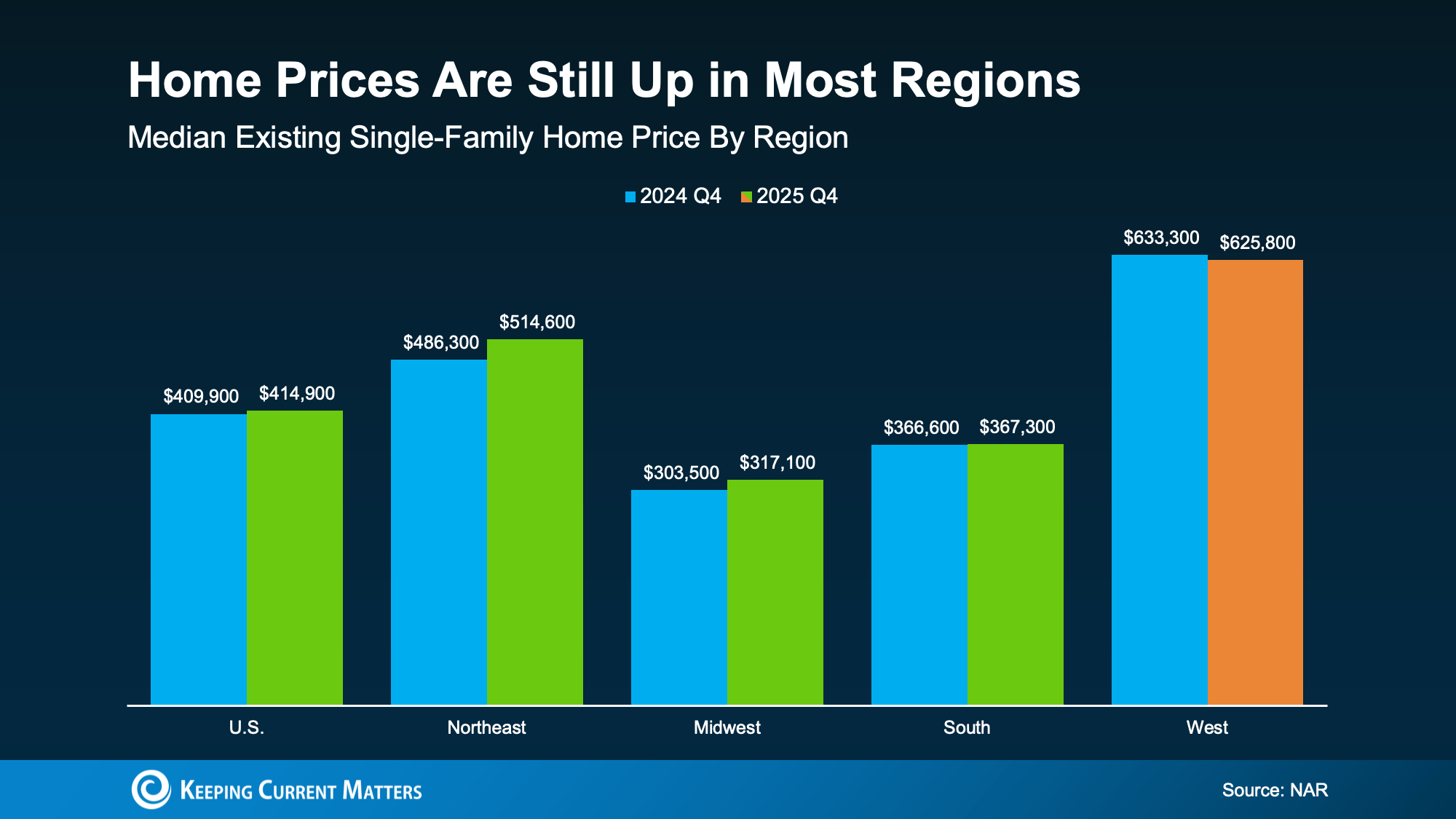
At a glance, the numbers show:
- Northeast, Midwest, and South: prices generally up or steady.
- West: more mixed, with some markets seeing mild price declines.
In other words, the market is cooling and normalizing, not crashing.
Why You’re Hearing So Much About Price Drops
Price declines make for clickable headlines. But a few factors can make a local shift look like a national trend:
- High-profile metros go viral. A dip in one major market can dominate the conversation.
- Seasonality is real. Some months are softer than others, even in healthy markets.
- Affordability has cooled demand. Higher payments can reduce competition and push prices to level off.
Those are signs of a market adjusting, not collapsing.
Some Markets Have Softened, But Context Matters
In the places where prices have dipped, it helps to look at the big picture. Many of those markets saw especially strong appreciation over the last several years. When you compare today’s values to where they were five years ago, homeowners in many “down” markets are still up significantly overall.
According to data from ResiClub and Zillow, price dips in the short-term aren’t always the cause for concern they seem to be. The long-term trends tell a clearer story, and they remain strong for many homeowners.
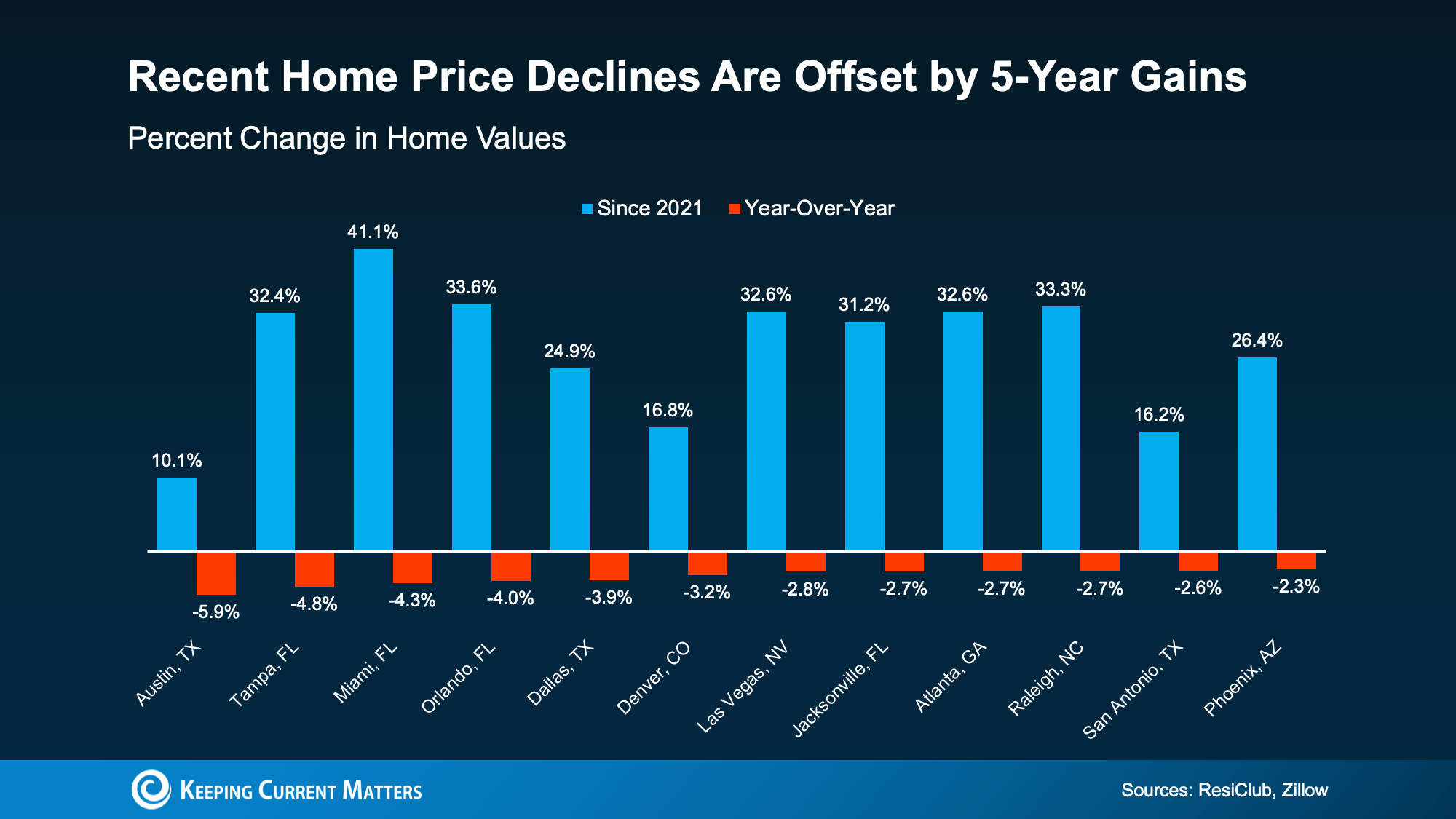
The key point: a pullback after rapid growth is not the same thing as a crash. It’s often a correction toward something more sustainable.
What This Means for Homeowners and Buyers
If you’re a homeowner:
In most markets, you’re not watching value evaporate overnight. Instead:
- You likely still have meaningful equity compared to pre-2020 values.
- Pricing strategy matters more now that buyers aren’t automatically overbidding.
- The best indicator is recent comparable sales in your neighborhood.
If you’re a buyer:
A cooler market can create more breathing room:
- You may see more negotiability in certain areas.
- You may have more time to decide than during the peak frenzy.
- But waiting for a big “crash” could mean missing the right home if your local market is stable.
Real estate is local. The best move depends on your budget, timeline, and the neighborhood you want.
How to Know What’s Happening Where You Live
National headlines can’t tell you what’s happening on your street. To get a clear picture, look at:
- Recent sold prices (comps) for similar homes.
- Days on market and list-to-sale price ratios.
- Inventory levels and new listings.
- Price reductions on comparable listings.
A local real estate agent can help make sense of your market’s unique trends. That way, you know you’re relying on sound information for any decision you make.
Conclusion
Home prices are rising or holding steady in most parts of the country, and a handful of small declines does not equal a nationwide downturn. If you want to know what your home is worth today, review your local numbers with a trusted real estate professional.
Why Did Home Sales Fall in January?

If you saw headlines saying home sales fell sharply in January, it’s understandable to feel uneasy, especially if you’re thinking about selling. But one month of data rarely tells the whole story.
Yes, January home sales declined. In most years, that’s normal. And this particular drop has a lot more to do with seasonality and winter weather than a sudden collapse in buyer demand.
What’s Really Behind the “Home Sales Fell” Headlines
Recent reports from the National Association of Realtors (NAR) show existing home sales dropped about 8.4% month over month. That’s the number making the rounds, and it’s an accurate one.
The key is understanding why it happened:
- January is historically slow for real estate in general
- Fewer people list and tour during the coldest weeks of the year
- Holidays, travel, and weather disruptions often push closings into the next month
So while the percentage sounds dramatic, it doesn’t necessarily signal a weakening market.
Why January Is Often a Slower Month for Home Sales
Seasonality is a consistent pattern in U.S. real estate. In many markets:
- Winter brings fewer new listings
- Buyers move more cautiously due to schedules and weather
- Fewer transactions close, even when demand is still there
Over the past several years, sales have commonly dipped in January and then picked up again in February as the market begins ramping up for spring. In other words, a January slowdown is often a pause, not a trend. You can see this in the graph below, particularly in the green bars showing February sales rebounds:
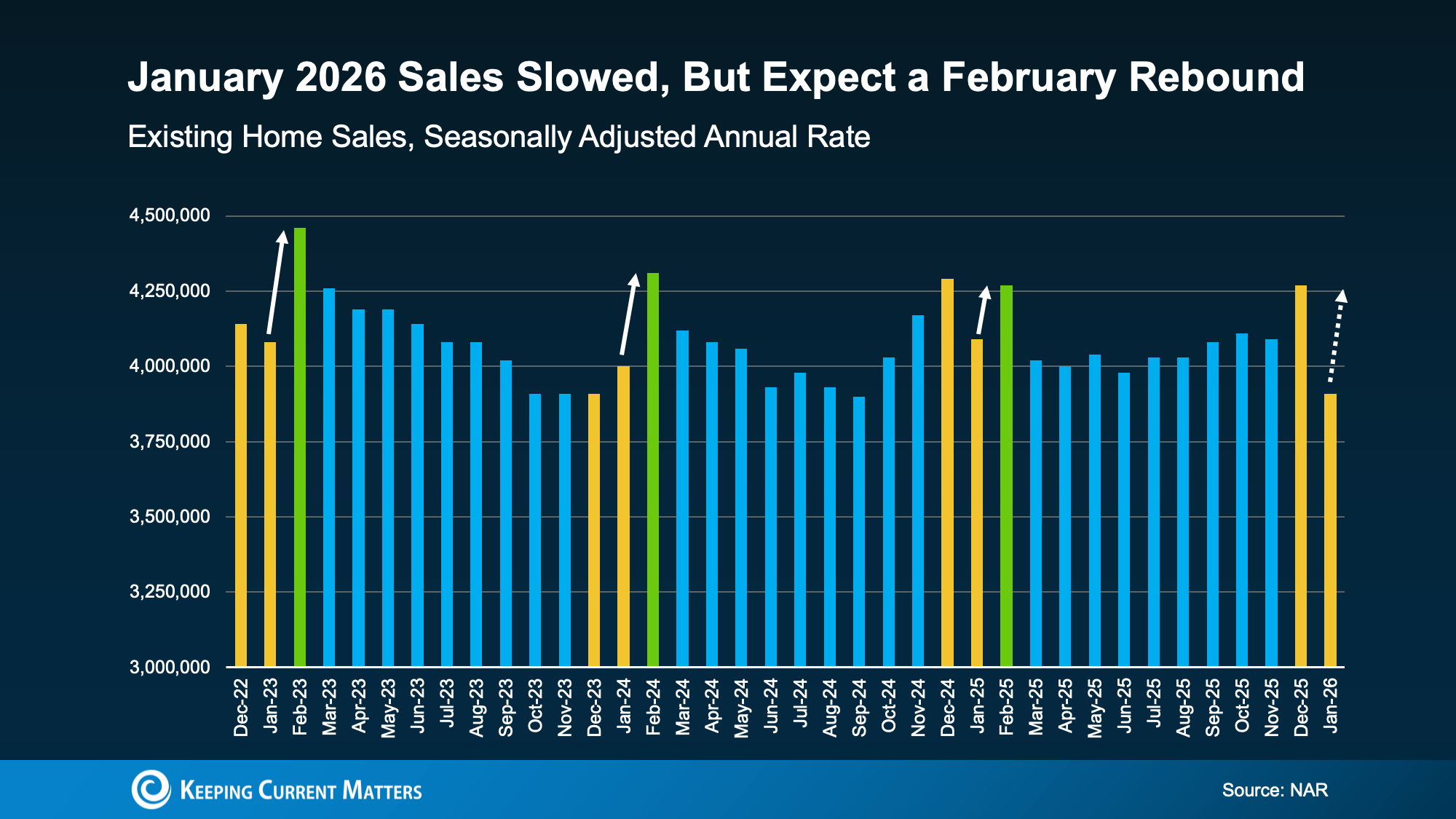
Home sales often slow in January and rebound quickly in February.
The Bigger Drop This Year: Weather, Not Demand
This year’s decline was steeper than the usual January dip, even with lower mortgage rates. But the likely explanation is simple: disruptive winter weather.
As Realtor.com explains:
“Winter storm Fern, which dumped snow and ice across large swaths of the country, likely disrupted some closings, weighing on the data and making it difficult to pick out the housing market momentum trend from the weather noise.”
According to the original post, 40 states experienced widespread winter weather. In real estate, that matters because bad weather can delay the final steps needed to close, including:
- Inspections
- Appraisals
- Final walk-throughs
- Lender or title timelines
Why “Fewer Sales” Can Really Mean “Later Closings”
One important detail most headlines skip: existing home sales track closings, not contracts.
That means a storm doesn’t have to “kill” a deal to show up in the data. If weather slows the process, many transactions simply move from January into February (or later).
So January’s missing sales are more likely postponed, not lost.
Will Home Sales Pick Back Up?
Despite a slower January, the data still point toward the market gaining traction as spring approaches.
Here are two encouraging points to consider:
- Affordability has improved for seven straight months (according to NAR)
- Buyers in many areas are regaining some negotiating power
That combo can support more activity as the weather improves and the traditional spring season begins.
What If You’re Thinking About Selling?
If you’re a homeowner watching the market, here’s the practical takeaway:
- Don’t overreact to one weather-impacted month
- Expect activity to improve as schedules normalize and temperatures rise
- Focus on what’s happening locally, because conditions vary by city and even neighborhood
A strong strategy right now is to talk with a local agent about:
- Pricing based on current comps
- Likely spring demand in your area
- How quickly homes are moving in your price range
Conclusion
Don’t confuse a winter slowdown with a market wide red flag. January’s decline appears tied to seasonality and storm-related delays, not disappearing demand. As affordability improves and spring approaches, activity can thaw quickly.
The Top Ten 2026 Housing Markets for Buyers and Sellers

Whether you’re buying or selling this year and need to know the top housing markets, you’re in luck. Here are two lists for the 2026 housing market, one for sellers and one for buyers. But before you scroll to the lists, keep this in mind:
If you’re planning a move for 2026, the most important takeaway is this: there are many housing markets to look at this year.
Experts agree 2026 is shaping up to be one of the most geographically split housing markets in years. Some areas are leaning toward sellers, while others are finally opening real doors for buyers. Who has the advantage depends almost entirely on where you live. Selma Hepp, Chief Economist at Cotality, explains it this way:
“Looking ahead to 2026, regional differences will remain pronounced, with demand favoring areas that offer both economic opportunity and relative affordability.”
To show just how divided the landscape is, here’s a look at where sellers may have the upper hand and where first-time buyers may find their opening.
Where Sellers Stand To Win Big in 2026
Zillow identified the following metros as some of the strongest seller markets for 2026, based on buyer demand, pricing momentum, and how quickly homes are expected to sell:
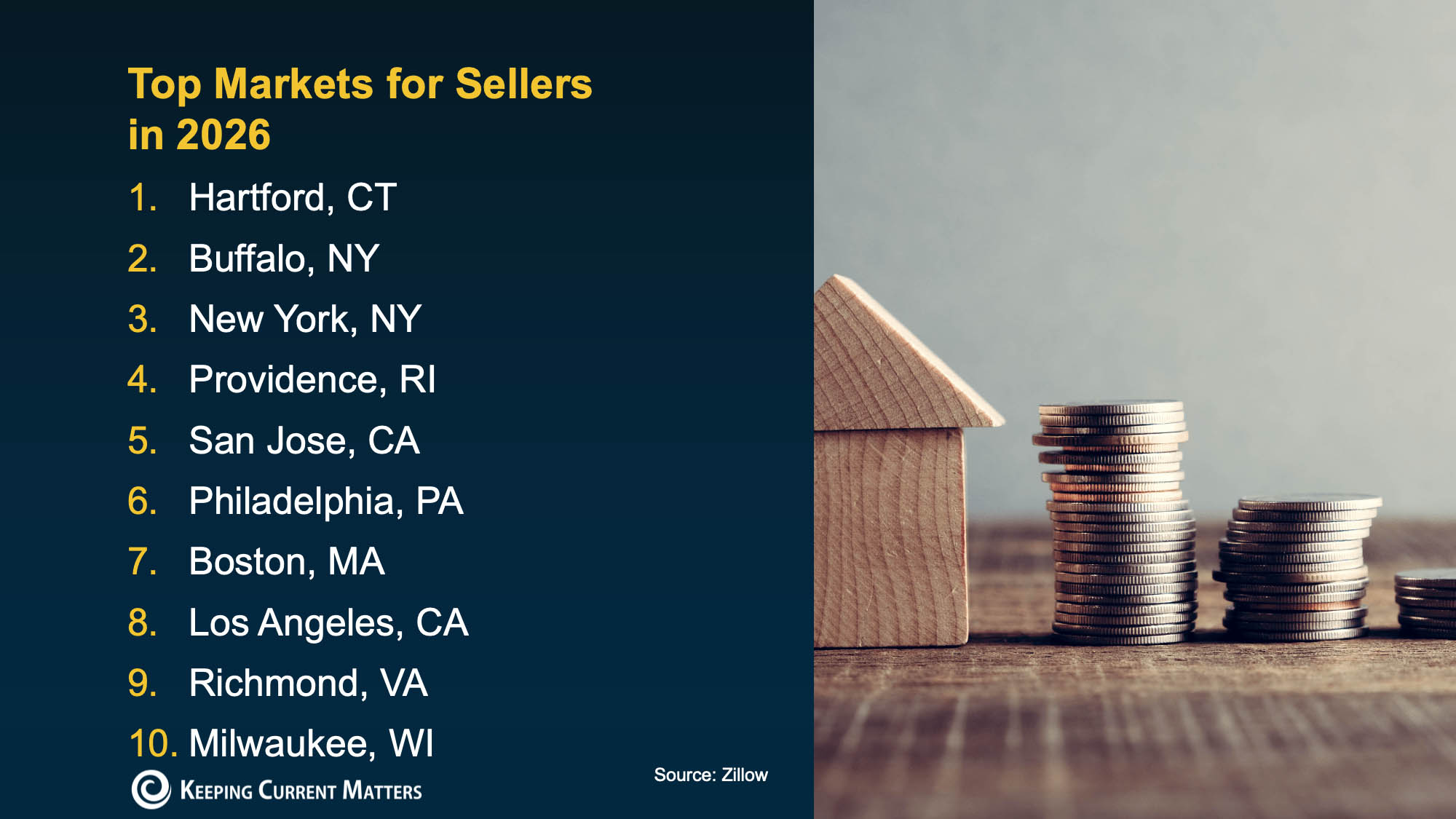
- Hartford, CT
- Buffalo, NY
- New York, NY
- Providence, RI
- San Jose, CA
- Philadelphia, PA
- Boston, MA
- Los Angeles, CA
- Richmond, VA
- Milwaukee, WI
In markets like these, buyers are likely to compete for limited inventory, which can give sellers more leverage.
What sellers can expect in these markets
If you’re a homeowner in a seller-friendly metro, you may see:
- Stronger buyer interest
- Shorter time on market
- Better odds of selling close to (or above) asking price
That doesn’t mean every listing is guaranteed to fly off the shelf. But it does mean sellers who price strategically, prep their home well, and follow a good agent’s guidance can be in a strong position in 2026.
Markets Where There’s More Opportunity for First-Time Buyers
On the other hand, some metros are giving buyers more breathing room, especially first-time buyers who have had the toughest time getting in lately. Realtor.com points to 10 top metros where first-time buyers are expected to enjoy advantages in 2026:

- Rochester, NY
- Harrisburg, PA
- Granite City, IL
- Birmingham, AL
- North Little Rock, AR
- Syracuse, NY
- Baltimore, MD
- St. Louis Park, MN
- Pittsburgh, PA
- Garfield Heights, OH
These housing markets are top contenders thanks to a mix of:
- More affordable home prices
- Better housing availability
- Strong local amenities and economic health
For first-time buyers, that combination matters. It’s often the difference between wishful thinking and a real path to homeownership.
What buyers can expect in these markets
In more buyer-friendly areas, first-time buyers may find:
- Less intense competition
- More room to negotiate
- A clearer path to getting an offer accepted
What Matters More Than Any Top 10 List
Not seeing your city on either list? Don’t worry. This is a snapshot at the national level, not a definitive statement on your local market. These lists simply show how different conditions can be from one metro area to the next.
And remember: you can buy or sell no matter which side your local market favors. All you need is the right strategy for your market’s unique conditions.
Here’s what that can look like:
- Sellers in a more buyer-friendly metro may need to price competitively and focus on strong prep (repairs, staging, and marketing).
- Buyers in a seller-leaning area may still need to come prepared with a clean, compelling offer and a smart plan for competing.
To find out where your market falls and what you should expect, a local expert can help you interpret the trends and build a game plan.
Conclusion
The housing market in 2026 isn’t one-size-fits-all. Local conditions matter more than ever, and knowing whether you’re in a buyer-friendly or seller-friendly area can shape everything from pricing to negotiations.
Whether you’re buying, selling, or just exploring your options, the right strategy (and the right agent) can put you in a strong position this year. If you’re a buyer or seller ready for the next step, search the top housing markets now, or reach out to us for help today.
Top 12 Home Improvement Projects That Add the Most Value

Home improvement projects can be productive, fulfilling ways to spend your spare time. But, they can also be costly ventures that end up being more trouble than they’re worth. Your invested time, money, and energy matter, and some upgrades don’t offer the return on investment you expect. U.S. News Real Estate explains it this way:
“. . . not every home renovation project will increase the resale value of a home. Before you invest in a swimming pool or new addition, you should consider whether the project will pay itself off by getting prospective buyers in the door when it’s time to sell.“
Like most projects, home improvement is best tackled when you’ve done all the planning beforehand. That’s why it pays to know the cost of your project, and how much it might increase your home value. Whether you have plans to move or not, strategizing to find the best project will pay off in the long run.
How Preparation Pays Off
If you’re planning to move soon, starting early can make a valuable difference. And if you’re not, you’ll still be glad you planned ahead when life’s surprises get in the way. If your moving timeline changes, you won’t want to shell out extra for rushed projects on short notice.
By doing home updates now, you can work at your own pace, saving yourself headaches and money later on. You’ll also have time to enjoy the updates you make to your home before you decide to move. And when you do move, you’ll rest easier knowing there’s no laundry list of work left before you list.
What Buyers Really Want
Your first step is choosing a project that will increase your home’s appeal to buyers at selling time. So if you’re not sure what projects are worth your time and money, new industry data can help. A recent study from the National Association of Realtors (NAR) shows the top upgrades offering the best return on investment (ROI).
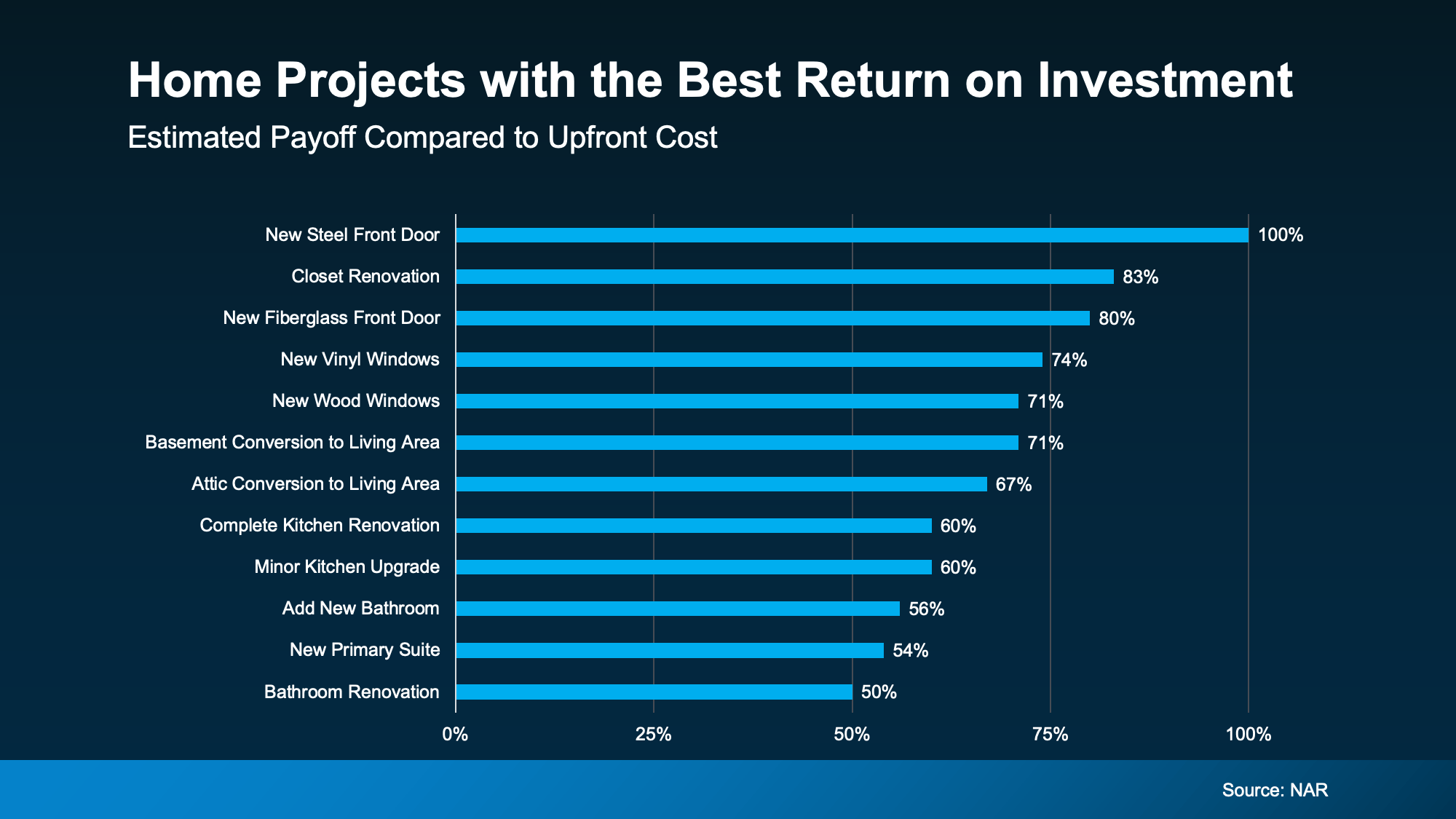
As the graph above shows, the top home improvement projects that add the highest (estimated) value are as follows:
- New Steel Front Door – 100% return on investment.
- Closet Renovation – 83% return on investment.
- New Fiberglass Front Door – 80% return on investment.
- New Vinyl Windows – 74% return on investment.
- New Wood Windows – 71% return on investment.
- Basement Conversion to Living Area – 71% return on investment.
- Attic Conversion to Living Area – 67% return on investment.
- Complete Kitchen Renovation – 60% return on investment..
- Minor Kitchen Upgrades – 60% return on investment.
- Bathroom Addition – 56% return on investment.
- New Primary Suite – 54% return on investment.
- Bathroom Renovation – 50% return on investment.
If you’ve already been thinking about a high-ROI project on this list, that’s great news. There’s a good chance it’ll improve your living quality now and increase your home’s value in the long term.
But remember that this list is based on national data using averages from listings sold nationwide. The most in-demand improvements that buyers will pay for depends largely on your local real estate market. That’s where talking to a local agent can help, as an article from Ramsey Solutions explains:
“The best way to gauge what you can expect in terms of resale value on home improvements—especially if you’re planning to sell soon—is to talk to a real estate agent who is an expert in your market. They’re sure to know the local trends, and they can show you how other homes with the features you want to add are selling. That way, you can make an educated decision before you start ordering lumber and knocking down walls.”
At the same time, be careful not to overdo it on home improvements. An excess of upgrades can raise your home’s price right out of the local market. And while that may sound ideal, it can make your listing unattractive to the buyers in your area. This is another area where a local agent can help you choose the best projects for your specific market.
Conclusion
Whether you have moving plans on the horizon or not, making thoughtful, deliberate home improvements can be valuable. Even if you have no intention to move, updates give you more reasons to love and enjoy your house. And, of course, the home value increases that high-ROI projects offer are bound to pay off in the future.
Have you been considering a particular home upgrade but aren’t sure if it’s worth it? Contact us today to connect with an agent who can give you the best advice for your unique area.
Here’s the Next Best Time To Sell Your Home This Spring

Back in March, Realtor.com reported that the best time to list your house in 2025 was April 13–19. With that week now behind us, you may be wondering if you missed your chance this year. Fortunately, you still have plenty of time, if another source’s prediction holds true this spring.
Realtor.com may be one of the biggest property search sites, but others have their own data, studies, and methodologies. This means that they sometimes receive different results and reach different conclusions. This means that they sometimes receive different results and reach different conclusions, which may be good news for you. Because according to Zillow, the ideal spring house selling window hasn’t passed yet.
Reports on the Best Spring Selling Period
New research from Zillow has found that sellers who list their homes in late May tend to see higher sale prices. Based on home sales from 2024, homes listed in May had the highest sale premium of about $5,600. According to Zillow‘s study:
“Search activity typically peaks before Memorial Day, as shoppers get serious about house hunting before their summer vacation and the new school year in the fall. By targeting late spring, sellers can get their home listed when the most shoppers are looking. When more buyers are competing for homes, sellers can command a higher price.”
But Zillow isn’t the only one declaring May as the best time for home sellers to list. Using data from 59 million home sales over the past 13 years, ATTOM Data completed a similar study. In this case, it was found that sellers who list in May net an 11.1% higher closing price on average.
“Freshly compiled sales statistics from ATTOM demonstrate that home sellers continue to reap significant benefits from listing their properties during the month of May. Examination of home sales trends spanning thirteen years reveals that, on average, sellers are commanding 11.1 percent premium above the estimated market value.”
Meanwhile, a report from Bankrate states that listing at any time in April or May is ideal. In fact, it found that homes listed in May on average sell for about 13.1% above market value:
“Some patterns and trends usually do hold true throughout the year, and one is that spring continues to be the best time to sell. Sellers can net thousands of dollars more if they sell during the peak months of April and May. . .”
If these reports are accurate, then there’s still time to list during peak home selling season. Closing your home sale in May could get you a sizable increase in your final sale price.
Of course, the best week to list your house ultimately depends on your own local real estate market. Prices are driven by buyer demand and home supply, and these can vary wildly from market to market. This is why working with an experienced local agent can be so helpful, especially in uncertain markets.
Conclusion
Even though Realtor.com‘s recommended spring selling window has passed, other sources say there’s still plenty of time this year. Spring is always a busy time in real estate, and you can take advantage without listing during a specific week.
The true best time to sell your house will be determined by your own unique local market this spring. Working with an agent can help remove some of the guesswork, and get you the best closing price possible.
Selling Your Home? Avoid This Mistake When Setting Your Asking Price

When selling your house, the typical goal is to sell quickly at the best price possible. Naturally, ever since home prices took off around 5 years ago, most sellers have been aiming high. But housing inventory is making a comeback, and some sellers haven’t considered what this shift means for their asking price. As a result, buyers are becoming choosier, and price cuts on overpriced listings are increasing alongside home supply.
According to February 2025 data from Realtor.com, home price cuts this February reached their highest number since 2019. That’s the highest number of price cuts in 6 years, and a real return to pre-pandemic market levels.
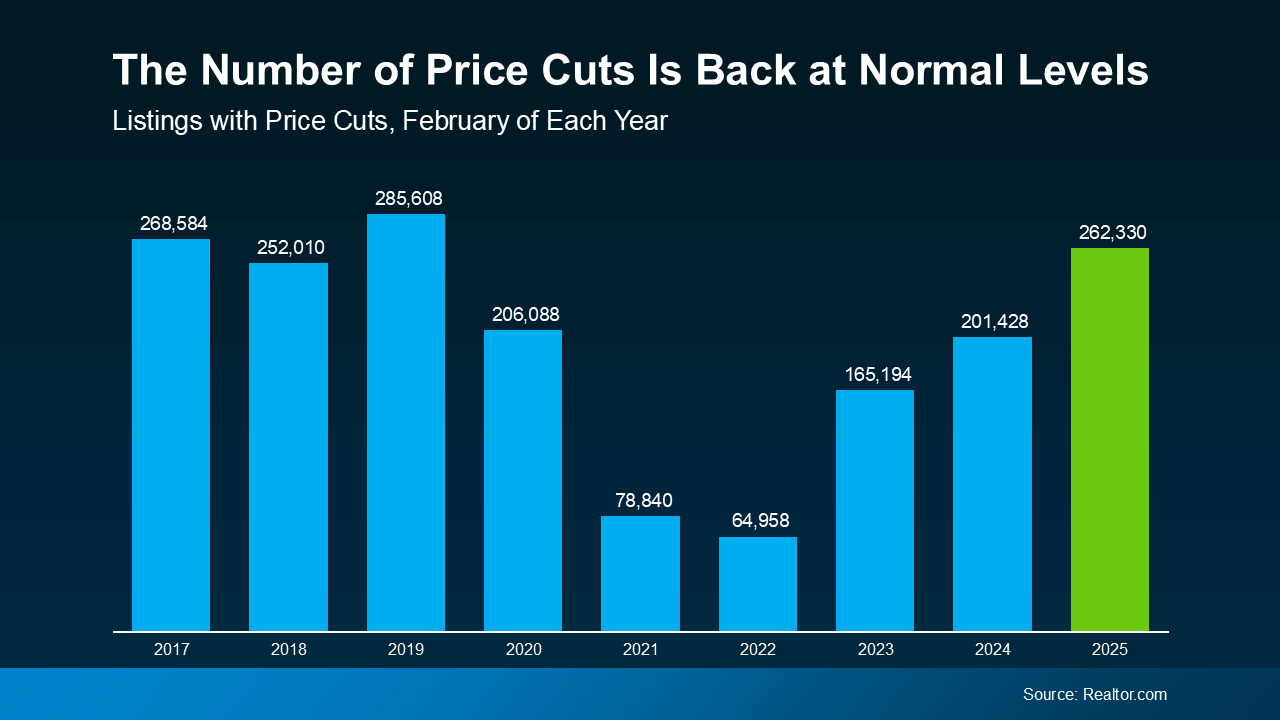
Given that 2019 is considered the housing market’s last normal year, this demonstrates a major, substantial shift. The market is finally starting to normalize, and may quickly break out of the post-pandemic slump it’s been stuck in.
However, this is a distinctly different trend from the hot seller’s market of 2021 and should be treated differently. You may not sell your house for top dollar like you would have at the pandemic’s peak, but that’s okay. By setting a smart asking price and tempering your expectations, you can still sell quickly, and at a great price.
You may be planning to price your listing high and cut it later if necessary, but this has its drawbacks. Pricing too high and lowering later means you may actually end up with lower offers in the end. Pricing right the first time is the best way to avoid this, and a local agent can make the difference.
How a Local Agent Can Find Your Perfect Asking Price
A true expert real estate agent doesn’t set an asking price without good reason. These agents consider real data and trends unique to your market, setting a price specific to your home. This way, you set a realistic price based on your home’s true value to attract as many buyers as possible.
Depending on your local market and your agent’s analysis, they may even recommend strategically pricing slightly below market value. While this may sound counterintuitive, it can be a strategic move to attract more attention to your listing, earning you more competitive offers. Here are a few ways a local agent will determine the best price for your listing:
- Researching recent home sales. What price did homes similar to yours finally sell for? Were these homes initially listed higher before dropping in price to sell?
- Analyzing local market trends. The true value of your home isn’t based on the price you’d like to sell it at. It’s the price that potential buyers are willing to pay. A local agent will have a strong idea of this number based on experience.
- Strategizing to sell. A great agent will price your home to attract attention, creating a sense of urgency among buyers and increasing demand.
How Overpricing Your Home Can Backfire
Unfortunately, some sellers still ignore their agent’s advice and prefer to start high just to see what happens. The hope being maybe they get their full asking price, or they at least have more wiggle room for negotiation. But pricing high usually ends up costing you, and here’s why:
- Buyers may ignore it. The market’s past few years – and the direction it’s headed – have made buyers more budget-conscious than ever. If a home listing looks overpriced, buyers are more likely to ignore it and move on than consider negotiating.
- It could stay on the market too long. The longer your home sits on the market without selling, the more buyers will assume something is wrong with it. This can make it harder and harder to sell as time goes on, and makes a price cut almost inevitable.
- You may sell for less in the end. Price cuts often lower a listing’s final selling price below its best, most realistic market value. Listing at the right price to begin with gives sellers the best chance of selling quickly at a great price.
The graph below demonstrates how these factors play out in the market. Using data from the National Association of Realtors (NAR), it shows how time on the market lowers final selling price.
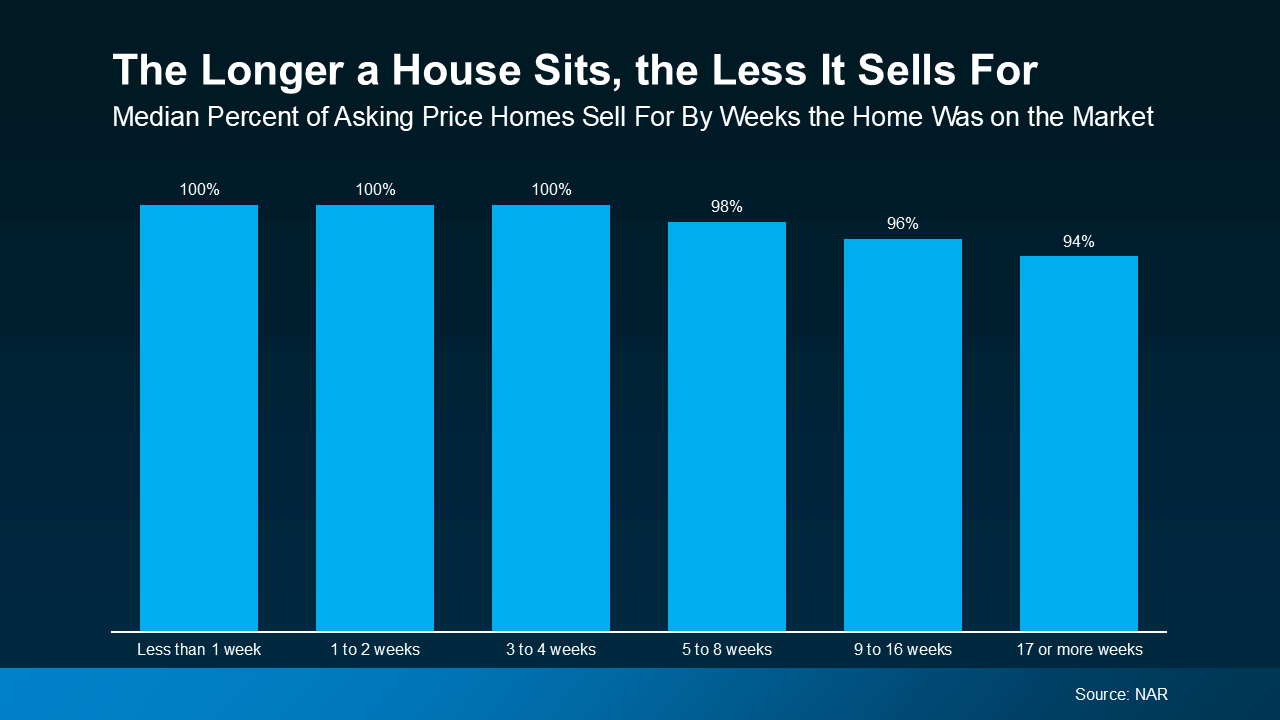
According to the data, if a house sells within its first 4 weeks after listing, it usually sells for full price. Homes that are priced at or just below current market value typically sell quickly in this same window. When a home is priced right, it attracts truly interested buyers who are willing to buy at your asking price. In a hot market, buyers may even compete with other buyers, or even make an offer above your listing price.
On the other hand, a home that’s overpriced will take longer to sell, if it sells at all. As the graph demonstrates, after that first 4 weeks on the market, final selling price starts to drop. And as buyer interest declines over time, the more likely a seller will accept a low offer, or cut their price.
Conclusion
The housing market is normalizing thanks to increasing housing inventory, causing price cuts to rise with increasing buyer power. For sellers, setting the right asking price is more important than ever, and overpricing could make your listing sit on the market. Advice from a local agent can help you avoid this mistake and sell quickly without having to lower your price.
Interested in selling but need help pricing your home for your local market? Get in touch with us today. We can connect you with a local agent who can sell your home at the best price possible.
Get Ready: The Best Time to List Your House This Year Is Coming Soon
If you’re waiting for the best time to list your house this year, then wait no longer. Experts have looked at the data, and the best week to list your house in 2025 is almost here.
A recent study from Realtor.com analyzed years of housing market trends and found that April 13–19 is expected to be the best week this year to list your house:
“. . . we’ve identified April 13-19 as the best week to list for sellers . . . a seller listing a well-priced, move-in ready home is likely to find success. Because spring is generally the high season for real estate activity and buyers are more plentiful earlier rather than later in the year, listing earlier in the spring raises a seller’s odds of a successful sale.”
Why Is This the Best Time?
Spring is typically a strong season for sellers and when the housing starts to really take off every year. But according to Realtor.com, this window could be particularly advantageous in 2025 thanks to a few key factors. Here are the biggest influences that make April 13-19 the ideal week for new listings:
- More potential buyers are looking at your home since demand is usually highest in the spring and summer every year.
- A faster, easier sale since many serious, committed buyers are eager to move before summer.
- Higher chances of getting the best offer. According to Realtor.com, you could get $4,800 more on average this week, and $27,000 more than earlier in the year.
Want Your House Listed at the Best Time? Start Now
Only a couple weeks are left before the year’s prime listing week, but you can still make the deadline. If you’ve been planning to list for a while, a smart plan and quick action can make it happen. This is where working with a great local real estate agent can make all the difference between selling and not. An expert agent can help you:
- Figure out exactly what you need to do to get your home ready to list and, eventually, sold.
- Prioritize the tasks to make the biggest impact on your listing and chances of selling in the shortest time.
- Identify any quick fixes or easy upgrades to help you attract as many potential buyers as possible.
If your house is already in good repair and condition, your focus should be on quick, value-adding updates. The idea is to eliminate any potential dealbreakers for interested buyers, as Investopedia says:
“You won’t have time for any major renovations, so focus on quick repairs to address things that could deter potential buyers.”
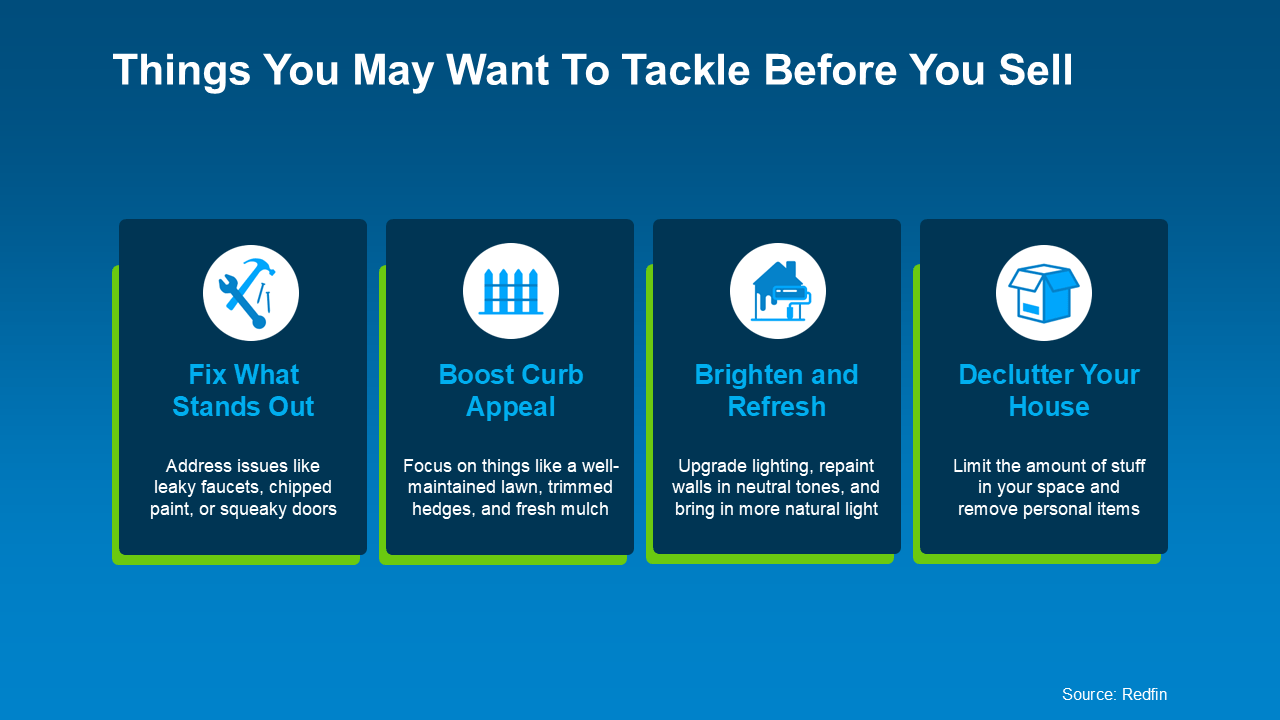
With the April 13-19 window fast approaching, the quicker you can finish these projects, the better. Here are some small projects recommended by Redfin you can do that can make a big difference to interested buyers:
What if You’re Not Ready to List?
If you don’t think you’ll be ready to list before this windows passes, then don’t worry. Even though Realtor.com expects April 13–19 to be the best time to list, it’s not the only good time to sell. What’s most important is getting your home ready to maximize its attractiveness to buyers when you do decide to list. Even if you list a bit late, there’s still plenty of opportunity before prime homebuying season is over.
Conclusion
If you’ve been waiting for just the right moment to sell, April 13-19 could be the perfect time. Realtor.com projects this as the best time to list your house this year, but there’s a bit more to consider. Making sure your home is fully prepped and priced competitively for your local market can make the difference.
Ready to list but need a real estate agent’s advice and expertise first? Reach out today and we’ll connect you with a local expert who can help you list and sell your home fast.