Facebook
 X
X
 Pinterest
 Copy Link
Should You Still Buy a Home Right Now? What Buyers Need To Know

Between nonstop economic headlines, global uncertainty, and ongoing concerns about affordability, it’s understandable to wonder whether now is still a smart time to buy a home.
The good news is this: current events may be influencing the housing market, but they have not taken homeownership off the table. For many buyers, the opportunity is still there. It just may require a more thoughtful strategy than it did a few months ago.
Mortgage Rates Have Risen Slightly. Here’s What’s Behind It
After trending downward for much of 2025, mortgage rates have climbed again over the past month. Experts point to a mix of global events and broader economic pressures as key reasons why.
As Mark Fleming, Chief Economist at First American explains:
“Mortgage rates have recently moved higher, driven by geopolitical uncertainty and rising energy costs that are contributing to inflation concerns.”
So what does that mean if you’re thinking about buying a home? Should you wait for conditions to settle before making a move?
Not necessarily.
Your Opportunity To Buy Hasn’t Disappeared
There’s no denying that buying felt a bit more affordable when mortgage rates were closer to 6%. Now that rates are hovering in the mid-6% range, monthly payments are naturally a little higher.
But it helps to take a step back and look at the bigger picture.
For example, if you’re financing a $500,000 home, a rate in the mid-6s could still mean a monthly payment that is roughly $300 lower than what buyers were facing early last year.
That means today’s higher rates have not erased all the progress we’ve seen. In fact, buying a home can still be more affordable than it was just a year ago.

Yes, your payment may have been lower a few weeks ago. But trying to perfectly time the market rarely works in your favor. Conditions can shift quickly, and hindsight always makes past decisions look easier.
Instead of waiting for the “perfect” moment, focus on making the best decision based on your goals, finances, and today’s market conditions.
Expect Mortgage Rate Volatility
One thing buyers should be prepared for is continued movement in mortgage rates.
Rates may keep rising or falling in the weeks and months ahead as new economic reports are released and world events continue to unfold. That kind of uncertainty can feel frustrating, but it’s also part of today’s market.
The truth is, you can’t control what happens with inflation, global events, or mortgage rates next week. What you can control is how prepared you are when the right opportunity comes along.
That preparation can make all the difference.
If You Need To Move, You Still Have Options
For many buyers, the decision to move is not just about market timing. Life keeps moving, even when the market feels unpredictable.
Maybe your family is growing. Maybe you’re relocating for work. Maybe your current home no longer fits your lifestyle or needs. Those reasons still matter, and they may be more important than waiting for rates to change.
Buyers who are moving forward right now are often doing so because their personal situation makes it the right time.
And the good news is there are still strategies that can help make a purchase more manageable.
For example, some buyers are exploring adjustable-rate mortgages (ARMs) to secure a lower initial rate. That approach is not right for everyone, but it’s one example of how flexibility and planning can create opportunities in today’s market.
A Smart Plan Starts With the Right Experts
In a market like this, having a plan matters more than ever.
Working with a trusted real estate agent and lender can help you:
- Understand what you can realistically afford at today’s rates
- Review financing options, including ARMs and buyer assistance programs
- Stay informed as market conditions shift
- Make confident decisions based on your goals, not just the headlines
The right professionals can help you look beyond the noise and focus on what makes sense for your specific situation.
Conclusion
Uncertainty in the market does not mean you’re out of options.
If you need or want to move, buying a home may still be the right decision. The key is to go in with a solid plan, the right support, and a clear understanding of your financing options.
Homeownership is still possible. You just need the right strategy for today’s market.
Mortgage Rate Volatility: What You Can Control as a Buyer

Mortgage rates have been moving up and down lately, and that can make buying a home feel harder to plan for. When rates are unpredictable, many buyers wonder whether they should wait, move forward, or try to time the market.
Here’s the good news: while you can’t control where mortgage rates go next, you can control several factors that may help you secure a better rate. The first step is understanding what’s driving today’s market and knowing where to focus your time and effort.
Mortgage Rate Volatility Is Normal
Recent data from Freddie Mac show that mortgage rates have been fluctuating. After trending downward for well over a year, rates ticked up again this month.
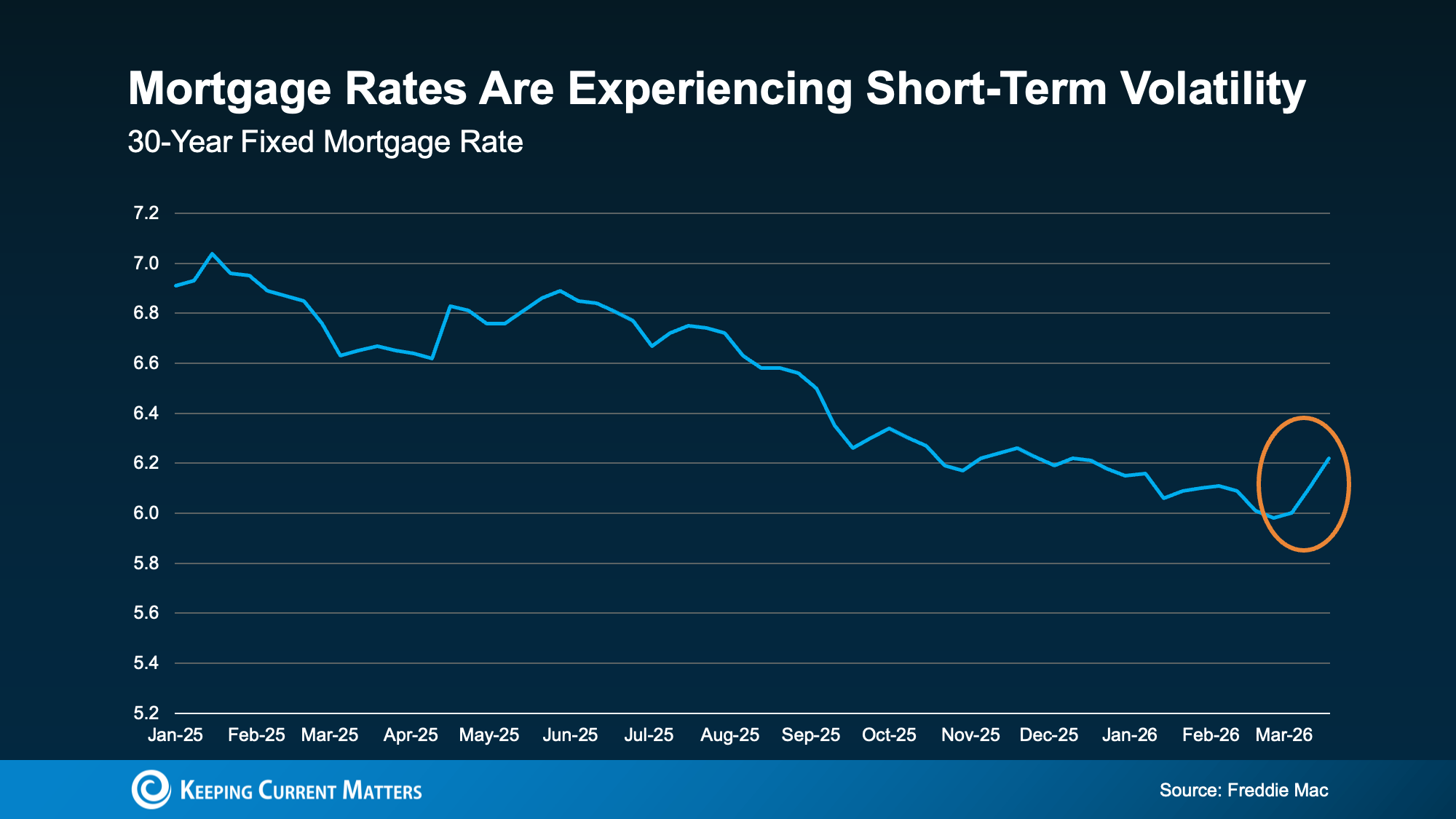
That kind of movement can feel frustrating, especially when you’re doing your best to budget for a home purchase. But occasional increases and decreases are a normal part of the mortgage market. Even over the past year, there have been periods when rates jumped before settling back down.
This is another one of those moments, and it helps to keep that in mind.
When there’s economic uncertainty or major global events unfolding, mortgage rates often respond quickly. As Investopedia explains:
“Mortgage rates don’t move in isolation. When global events inject uncertainty into financial markets . . . that can ripple through to borrowing . . . mortgage costs can respond quickly to geopolitical developments. As long as uncertainty remains elevated, rate swings may continue.”
That’s exactly why trying to predict the perfect time to buy usually doesn’t pay off. Rates can change fast, and waiting for the market to cooperate may not give you the outcome you want.
Focus on What You Can Control
You may not be able to influence the market, but you can take steps put yourself in a better position as a buyer. If your goal is to get the best mortgage rate possible, these are the areas that matter most.
Your Credit Score
Your credit score is one of the biggest factors that affects the rate you qualify for. In many cases, even a modest improvement in your score can lead to better loan terms and a lower monthly payment.
As Bankrate explains:
“Your credit score is one of the most important factors lenders consider when you apply for a mortgage. Not just to qualify for the loan itself, but for the conditions: Typically, the higher your score, the lower the interest rates and better terms you’ll qualify for.”
That’s why it’s worth taking steps to strengthen your credit before applying for a mortgage. Paying bills on time, reducing outstanding debt, and avoiding new credit inquiries can all help. If you’re not sure where your score stands or what improvements would make the biggest difference, a trusted loan officer can help you create a plan.
Your Loan Type
The type of mortgage you choose also affects your rate. There are many different types of loans, and each comes with different eligibility requirements, benefits, and pricing.
The Consumer Financial Protection Bureau (CFPB) explains:
“There are several broad categories of mortgage loans, such as conventional, FHA, USDA, and VA loans. Lenders decide which products to offer, and loan types have different eligibility requirements. Rates can be significantly different depending on what loan type you choose.”
This is why exploring your mortgage options is so important. A conventional loan may be the right fit for one buyer, while an FHA, USDA, or VA loan may offer better advantages for another. Comparing programs and speaking with more than one lender can help you understand which path makes the most sense for your financial situation.
Your Loan Term
The length of your loan term matters, too. Most lenders offer 15-year, 20-year, and 30-year mortgage options, and the term you choose can affect both your interest rate and your monthly payment.
Freddie Mac explains it this way:
“When choosing the right home loan for you, it’s important to consider the loan term, which is the length of time it will take you to repay your loan before you fully own your home. Your loan term will affect your interest rate, monthly payment, and the total amount of interest you will pay over the life of the loan.”
A shorter loan term may come with a lower interest rate, but the monthly payment is often higher. A longer term may give you more flexibility in your monthly budget, even if you pay more interest over time. The right choice depends on your goals, your budget, and how long you plan to stay in the home.
Conclusion
If you’re in the market for a home right now, the best strategy is not to focus on trying to predict where mortgage rates will go next.
Instead, focus on what you can control. Improve your credit score, explore different loan types, and choose a loan term that fits your needs. Most importantly, work with a trusted lender who can guide you through your options. If you need help connecting with trustworthy lender, reach out to us today.
Mortgage rates may be out of your hands, but the steps you take to prepare are not. And when you focus on what you can change, you give yourself a much better chance to move forward with confidence.
3 Key Steps for First-Time Home Buyers

Buying your first home is exciting, but it can feel a bit overwhelming. When you’ve never gone through the buying process before, it’s easy to wonder where to start and what to do first.
The good news is that you don’t need to figure out everything out on your own, or all at once. The best approach is to take it all step by step.
If you’re getting ready to buy your first home, here are the three most important steps to focus on first.
1. Build Your Team: Don’t Do It Alone
Buying a home is not a solo project. Having the right professionals on your side can make the entire experience smoother, less stressful, and more successful.
Here are two key people every first-time home buyer should have in place early:
A local real estate agent
A knowledgeable local agent will guide you from your first showing all the way to closing day. They can help you understand the market, explain each step of the process, and make sure you feel confident in the decisions you make.
A trusted lender
A lender will help you explore your mortgage options, estimate your monthly payment, and understand what price range makes sense for your budget. Having that info early helps you shop smarter and avoid unwanted surprises later.
When you have the right team in place, you can find your new home with more clarity and confidence.
2. Prep Your Finances: Build a Strong Foundation
It goes without saying that your finances play a major role in the homebuying process. They affect what you can afford, how competitive your offer may be, and how comfortable you’ll feel once you own the home.
Here are the main financial steps first-time home buyers should take:
Check your credit score
Your credit score can affect the loan programs available to you and the mortgage rate you receive. Checking it early gives you time to improve it if needed.
Save for your down payment and closing costs
Many buyers focus only on the down payment, but closing costs are also an important part of the equation. Saving for both can help reduce last-minute stress.
Research first-time buyer assistance programs
There are programs designed to help first-time home buyers with upfront costs. Depending on where you live and your financial situation, you may qualify for assistance that helps you buy sooner than expected.
Talk to a lender about your mortgage options
Fixed-rate, adjustable-rate, FHA, VA, and conventional loans all work differently. Understanding the pros and cons of each option can help you choose the loan that best fits your needs.
Get pre-approved
A mortgage pre-approval gives you a clearer picture of how much a lender may be willing to lend you. It also helps you set a realistic price range and shows sellers you’re serious when it’s time to make an offer.
Set a realistic monthly budget
Your mortgage payment is only part of the cost of homeownership. You also need to account for utilities, home insurance, maintenance, and everyday living expenses. Setting a realistic budget helps ensure your home feels affordable, not overwhelming.
Being confident in your finances before you start house hunting can help you feel more prepared and better positioned in a competitive market.
3. Gather Your Documents: Save Time and Reduce Stress
Once you’re ready to move forward, your lender will need to verify your income, assets, and financial history. Gathering your documents ahead of time can help speed up the loan process and avoid unnecessary back-and-forth.
Here are some of the most common documents lenders may ask for:
W-2s and tax returns from the past two years
These help verify your income history and show consistency over time.
Recent pay stubs, usually from the last one to two months
These confirm your current income and employment.
Bank statements from the past two to three months
These show your available funds, spending patterns, and where your down payment money is coming from.
Investment account statements from the past two to three months
If investments are part of your financial picture, your lender may want to review them as well.
A copy of your driver’s license
This is used to verify your identity during the loan process.
Your residential history for the past two years
Lenders may request this to confirm your housing background and stability.
Statements for outstanding debts from the past two months
This may include student loans, car loans, and credit cards. These debts help lenders calculate your debt-to-income ratio.
Proof of supplemental income
If you receive bonuses, commissions, freelance income, or child support, you may need documentation to show that income can be counted.
Keep in mind that document requirements and timelines can vary by lender. Still, having these items ready is a smart way to stay organized and avoid potential hiccups.
Conclusion
Buying your first home doesn’t mean you need to have every detail figured out from day one. It just means starting your journey with a plan.
When you gather the right people, prepare your finances, and organize your documentation early, you give yourself a much better chance to buy with confidence.
If you want help understanding any part of the process or are ready to take the first step to homeownership, connect with a trusted real estate agent.
Home Affordability Improved in All 50 States: What Buyers Need To Know

For the past few years, affordability has been one of the biggest reasons buyers have put their home search on hold. Maybe you did the same.
At some point, you may have looked at the numbers, saw what a monthly mortgage payment would be, and decided to wait for the market to become more manageable. But there’s encouraging news you may have missed.
Over the past year, housing affordability has improved in all 50 states. Yes, every single one.
That’s according to new research from First American. And while buying a home is still more expensive than what’s historically normal, the affordability pressure many buyers have felt over the last several years is finally starting to ease.
Some Markets Are Seeing Bigger Improvements
One of the most important things to understand is this isn’t limited to one part of the country or just a few select markets. Affordability is improving almost all over the country.
Of course, real estate is always local. Conditions can vary a lot from one state, city, or neighborhood to the next. But overall, the market is becoming more favorable for buyers. In fact, affordability has improved in 48 of the top 50 metros over the past year.
That same research also highlights the top 10 cities seeing the biggest gains in affordability:
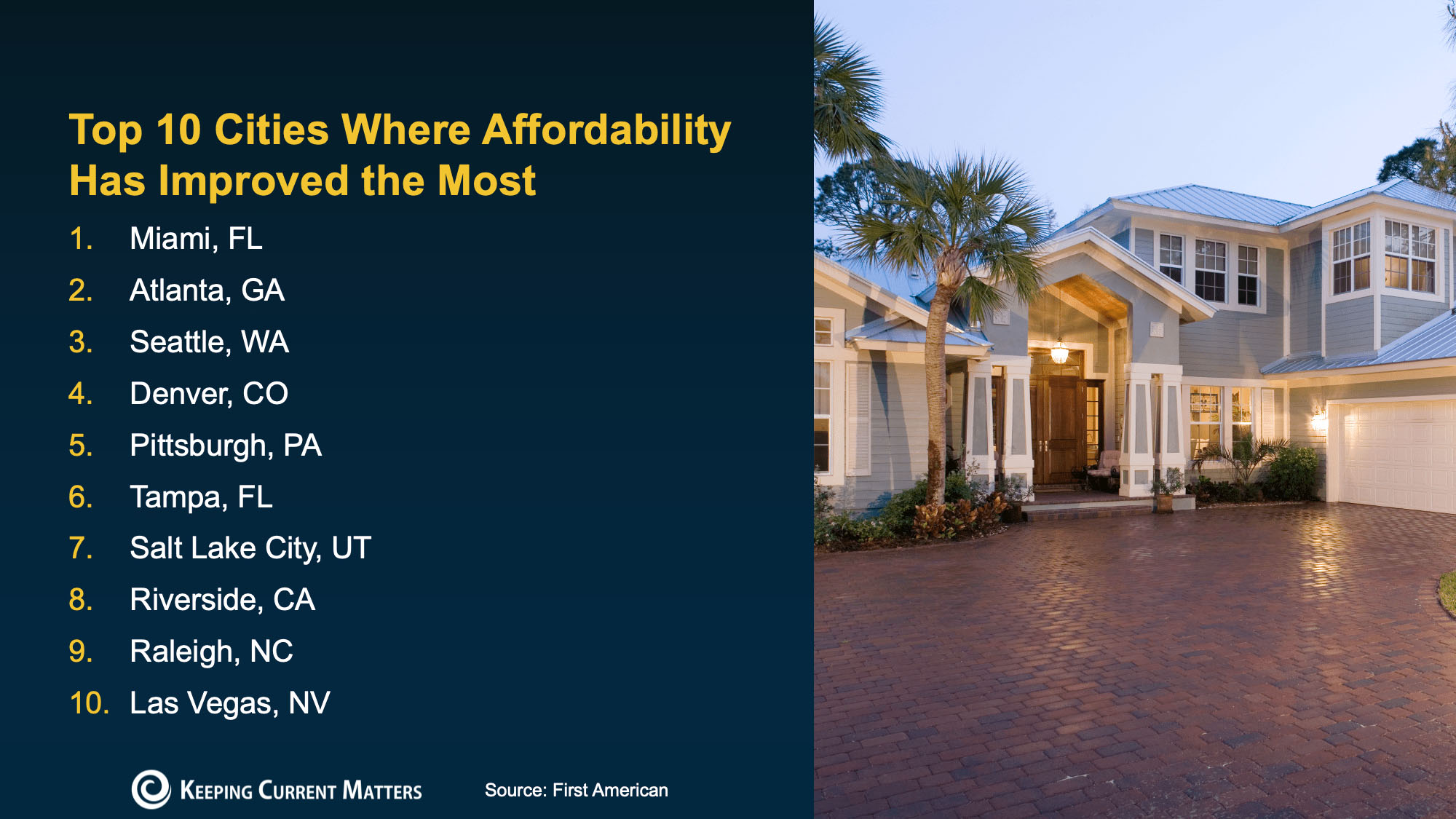
Top 10 Cities Where Home Affordability Has Improved the Most
- Miami, FL
- Atlanta, GA
- Seattle, WA
- Denver, CO
- Pittsburgh, PA
- Tampa, FL
- Salt Lake City, UT
- Riverside, CA
- Raleigh, NC
- Las Vegas, NV
If you’re wondering why some markets are improving faster than others, a lot of it comes down to home inventory.
When there are more homes for sale, the market becomes more balanced. This can help improve affordability by giving buyers more negotiating power. With more options available, buyers may have a better chance of finding a home that fits their budget, and they may also be in a stronger position to ask for seller concessions, price reductions, or closing cost assistance.
That can make a bigger difference than many people expect.
What Does This Mean for Buyers?
Home affordability challenges haven’t disappeared altogether, obviously. Buying a home is still a major financial decision, and housing prices remain high in many markets. But the overall nationwide trend is moving in a direction that gives buyers more opportunity than they’ve had in recent years.
As Chen Zhao, Head of Economic Research at Redfin, explains:
“The housing affordability crisis is showing signs of easing. . . opening the door for more Americans to make the jump to homeownership.”
Conclusion
If you’ve been waiting on the sidelines for affordability to improve, this may be the sign you’ve been hoping for. To find out what’s happening in your local market and how much buying power you may have today, connect with a trusted local real estate agent.
Are Home Prices Dropping? What the Latest Data Show

You’ve probably seen headlines or social posts claiming that home prices are falling. It’s an attention-grabbing message, and it naturally leads to two big questions:
- Is this the start of a crash?
- What does it mean for my home’s value?
Here’s the reality: a few markets are seeing small, normal pullbacks, but this is not a nationwide crash. In most areas, prices are still rising or holding steady, just not at the breakneck pace we saw a few years ago.
Home Prices Are Still Rising Nationally
A lot of online chatter focuses on isolated price drops without mentioning the broader data. Nationally, prices have continued to trend upward, but at a slower rate than usual.
According to a new report from the National Association of Realtors (NAR):
“Home prices continued to rise in the fourth quarter of 2025. National median prices rose 1.2% year over year to $414,900.”
That’s modest growth compared to the peak “boom” years, but it’s still growth. And regionally, the story varies.
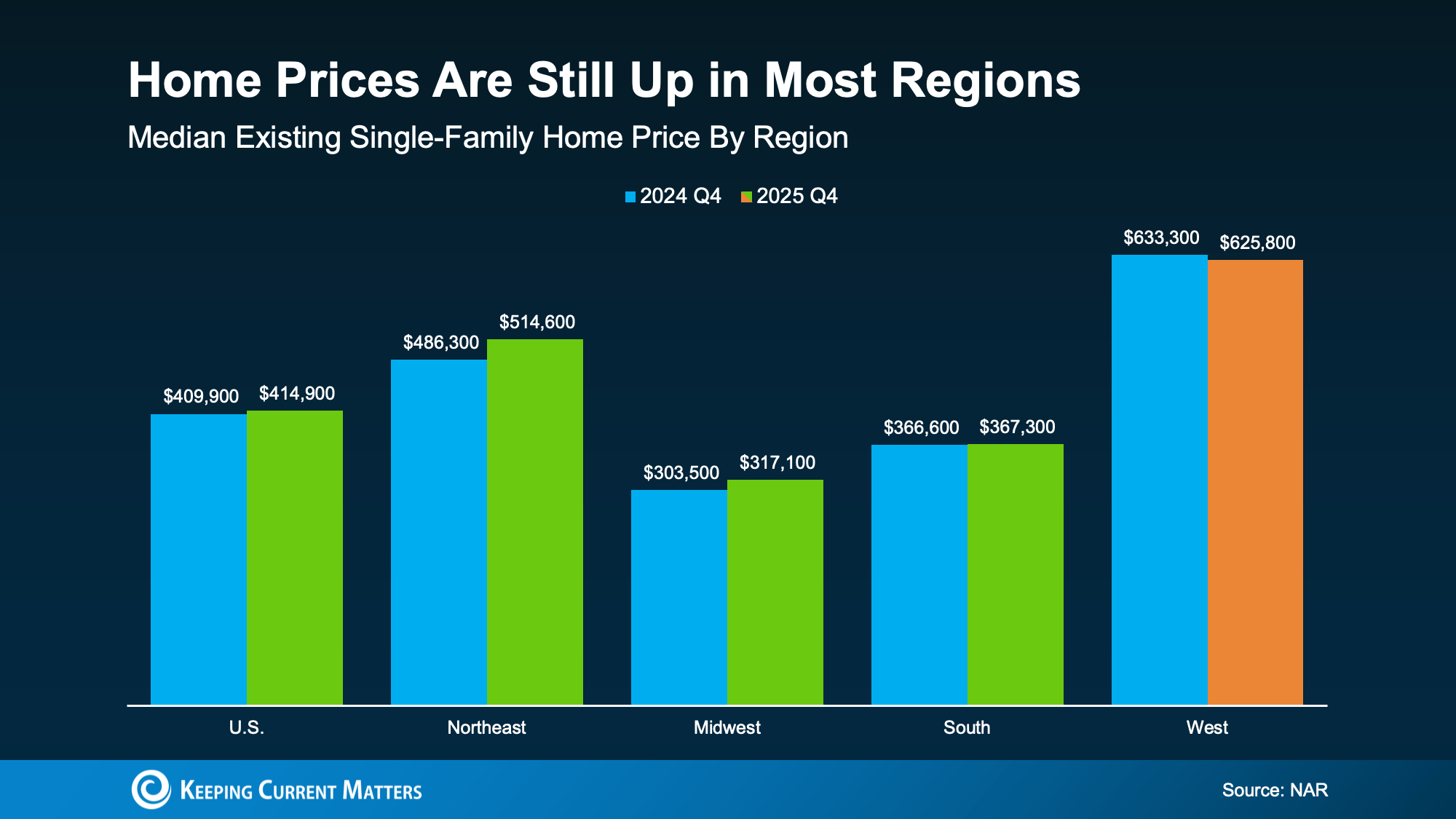
At a glance, the numbers show:
- Northeast, Midwest, and South: prices generally up or steady.
- West: more mixed, with some markets seeing mild price declines.
In other words, the market is cooling and normalizing, not crashing.
Why You’re Hearing So Much About Price Drops
Price declines make for clickable headlines. But a few factors can make a local shift look like a national trend:
- High-profile metros go viral. A dip in one major market can dominate the conversation.
- Seasonality is real. Some months are softer than others, even in healthy markets.
- Affordability has cooled demand. Higher payments can reduce competition and push prices to level off.
Those are signs of a market adjusting, not collapsing.
Some Markets Have Softened, But Context Matters
In the places where prices have dipped, it helps to look at the big picture. Many of those markets saw especially strong appreciation over the last several years. When you compare today’s values to where they were five years ago, homeowners in many “down” markets are still up significantly overall.
According to data from ResiClub and Zillow, price dips in the short-term aren’t always the cause for concern they seem to be. The long-term trends tell a clearer story, and they remain strong for many homeowners.
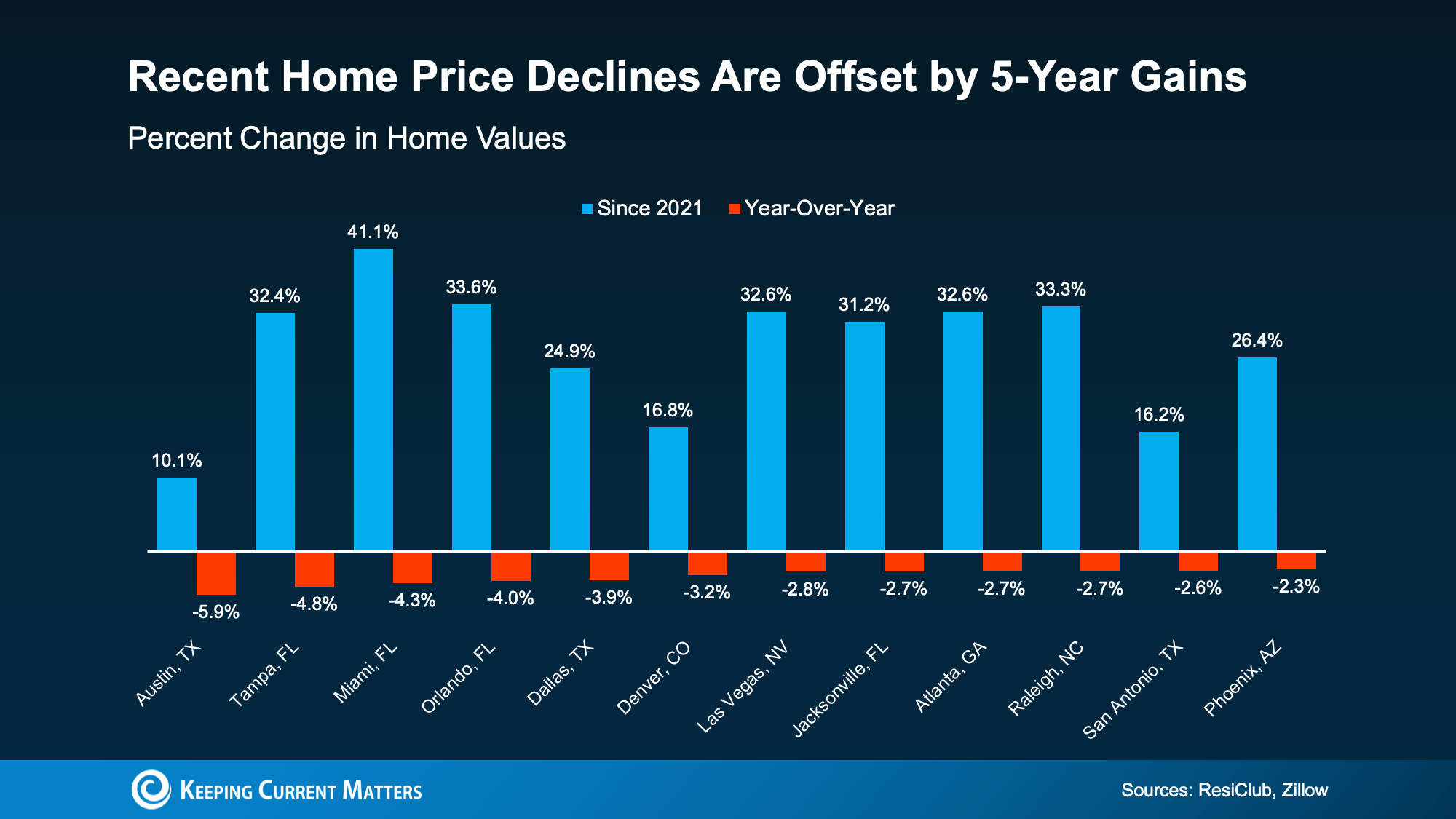
The key point: a pullback after rapid growth is not the same thing as a crash. It’s often a correction toward something more sustainable.
What This Means for Homeowners and Buyers
If you’re a homeowner:
In most markets, you’re not watching value evaporate overnight. Instead:
- You likely still have meaningful equity compared to pre-2020 values.
- Pricing strategy matters more now that buyers aren’t automatically overbidding.
- The best indicator is recent comparable sales in your neighborhood.
If you’re a buyer:
A cooler market can create more breathing room:
- You may see more negotiability in certain areas.
- You may have more time to decide than during the peak frenzy.
- But waiting for a big “crash” could mean missing the right home if your local market is stable.
Real estate is local. The best move depends on your budget, timeline, and the neighborhood you want.
How to Know What’s Happening Where You Live
National headlines can’t tell you what’s happening on your street. To get a clear picture, look at:
- Recent sold prices (comps) for similar homes.
- Days on market and list-to-sale price ratios.
- Inventory levels and new listings.
- Price reductions on comparable listings.
A local real estate agent can help make sense of your market’s unique trends. That way, you know you’re relying on sound information for any decision you make.
Conclusion
Home prices are rising or holding steady in most parts of the country, and a handful of small declines does not equal a nationwide downturn. If you want to know what your home is worth today, review your local numbers with a trusted real estate professional.
Renting vs. Buying: What The Numbers Say

Renting often feels like the simpler move these days. There’s no down payment to save up for, no surprise repair bills, and no long-term commitment if life changes.
But then your lease renews and the rent jumps. Then it happens again. Eventually, what felt flexible suddenly starts to feel expensive, especially when you realize every monthly payment is going to your landlord, not building wealth for you.
A big reason this stings is because there’s been so much talk about how homeownership is “out of reach.” And in some markets, it absolutely can be. But here’s the part that doesn’t get said enough: when you compare the numbers side by side, buying can cost less per month than renting in more places than most people expect.
Buying Can Be More Affordable Than Renting in Many Areas
In a lot of markets today, owning a home may actually have a lower monthly cost than renting a 3-bedroom home. New data from ATTOM suggest this is true in nearly 58% of counties across the United States.
And this comparison isn’t just a mortgage payment versus rent. It also takes into account common ownership costs like insurance and regular maintenance.
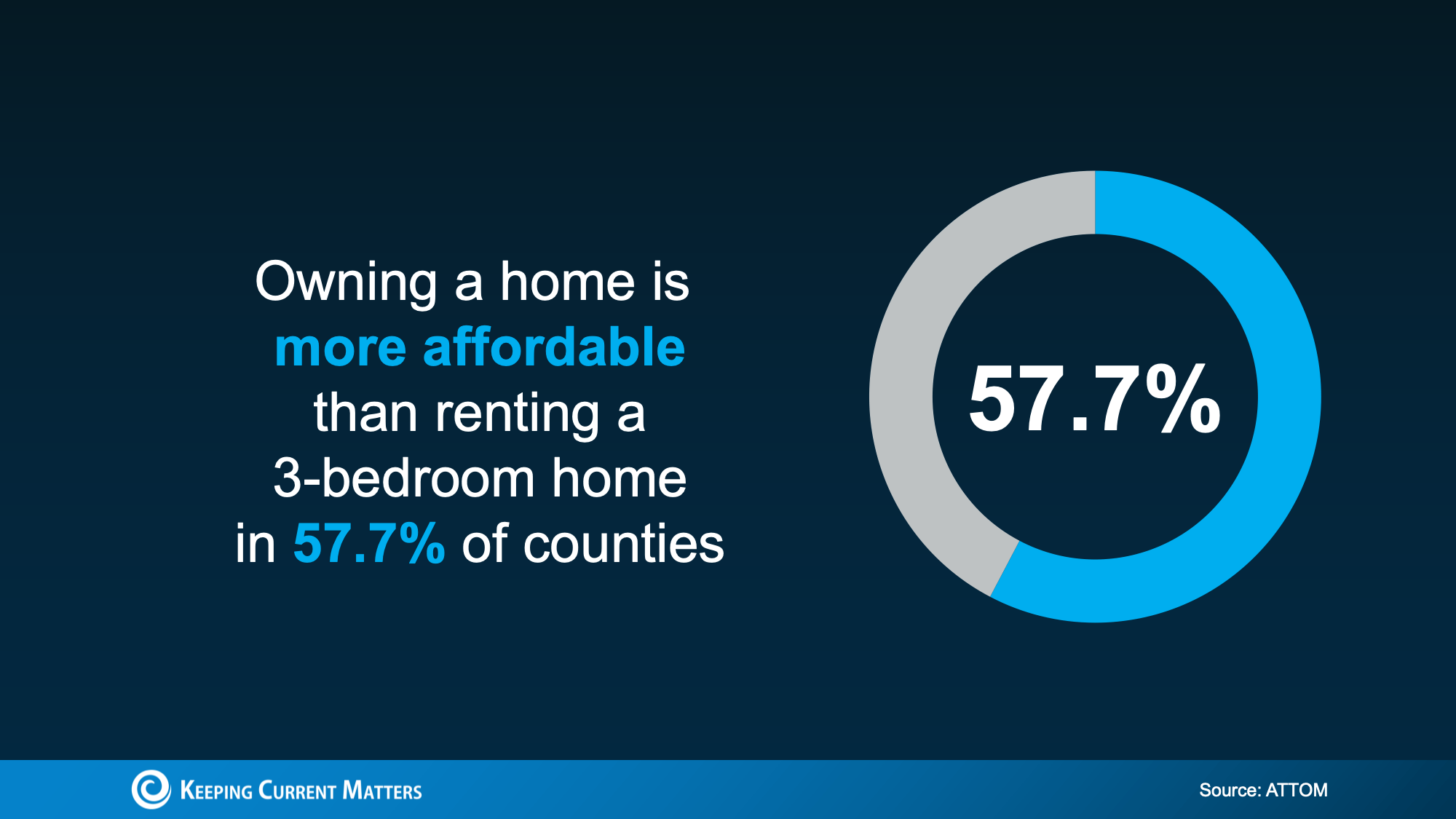
So if you’ve assumed buying automatically means a higher monthly bill, it may be worth a second look. Recent changes in home price growth, housing inventory, and mortgage rates have been shaking certain markets. Depending on where you live, buying might be finally in your favor.
Affordability Depends on Where You Live
Even though the national picture has shifted, it doesn’t mean buying is cheaper everywhere, or that every renter will have the same experience.
That “nearly 58%” figure looks very different depending on the region. The biggest improvement is happening in the Midwest and South, while the West can still feel tight for many households.
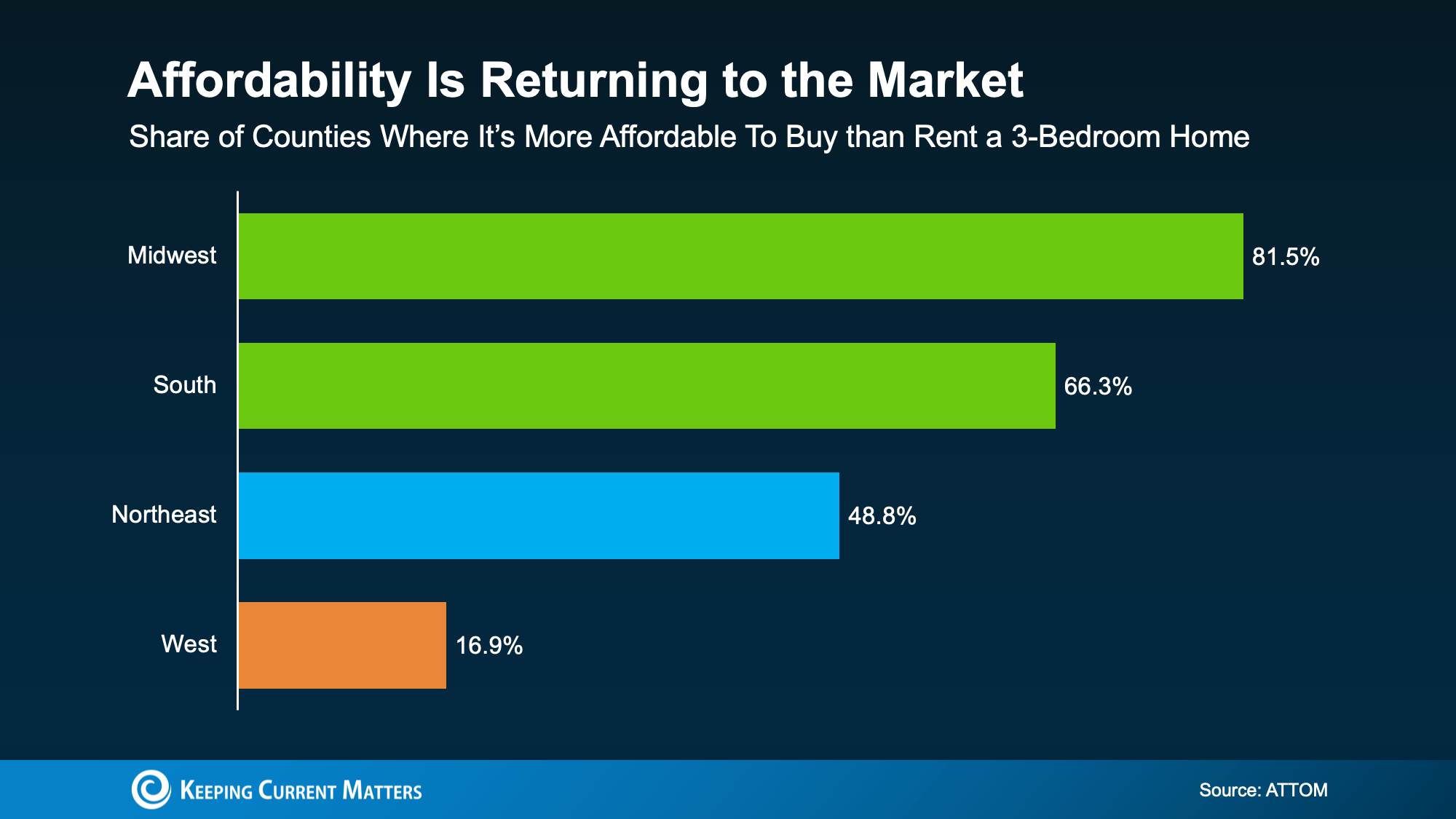
The key takeaway is simple: real estate is local. A national headline can’t tell you what the rent-versus-buy equation looks like in your zip code. The only way to know is to run the numbers based on your local prices, rents, taxes, and insurance.
What’s Still Holding Buyers Back?
If you’re thinking, “Even if the monthly payment works, I can’t afford the upfront costs,” you’re not alone.
For many renters, the biggest hurdle isn’t the monthly payment. It’s the down payment (and often closing costs) that feels like a wall.
Here’s the good news: there are thousands of down payment assistance programs across the country, and many buyers qualify without realizing it. The average benefit is around $18,000, which can help cover part of your down payment or closing costs.
Support like this can make buying feel a lot more realistic, because it reduces how much cash you need to get in the door.
How to Figure Out What’s Right for You
If you want clarity instead of guesswork, focus on a simple comparison:
- Your current rent (and how often it’s rising).
- An estimated monthly ownership cost (mortgage, taxes, insurance, HOA if applicable).
- A realistic maintenance cushion.
- Upfront costs (and any down payment assistance you may qualify for).
When you combine potential assistance with monthly costs that may be closer than expected, the gap between renting and buying can shrink quickly, or even flip in favor of buying.
Conclusion
The bottom line isn’t that everyone should buy a home as soon as possible.
The idea is that renting isn’t always the cheaper option people assume it is, and buying may be more realistic than it feels once you look at the full picture.
If you’re renting and feel stuck saying “someday”, consider a quick conversation with a local real estate agent or lender. Not a commitment, just a way to see what’s possible and whether it makes sense for you.
Why Did Home Sales Fall in January?

If you saw headlines saying home sales fell sharply in January, it’s understandable to feel uneasy, especially if you’re thinking about selling. But one month of data rarely tells the whole story.
Yes, January home sales declined. In most years, that’s normal. And this particular drop has a lot more to do with seasonality and winter weather than a sudden collapse in buyer demand.
What’s Really Behind the “Home Sales Fell” Headlines
Recent reports from the National Association of Realtors (NAR) show existing home sales dropped about 8.4% month over month. That’s the number making the rounds, and it’s an accurate one.
The key is understanding why it happened:
- January is historically slow for real estate in general
- Fewer people list and tour during the coldest weeks of the year
- Holidays, travel, and weather disruptions often push closings into the next month
So while the percentage sounds dramatic, it doesn’t necessarily signal a weakening market.
Why January Is Often a Slower Month for Home Sales
Seasonality is a consistent pattern in U.S. real estate. In many markets:
- Winter brings fewer new listings
- Buyers move more cautiously due to schedules and weather
- Fewer transactions close, even when demand is still there
Over the past several years, sales have commonly dipped in January and then picked up again in February as the market begins ramping up for spring. In other words, a January slowdown is often a pause, not a trend. You can see this in the graph below, particularly in the green bars showing February sales rebounds:
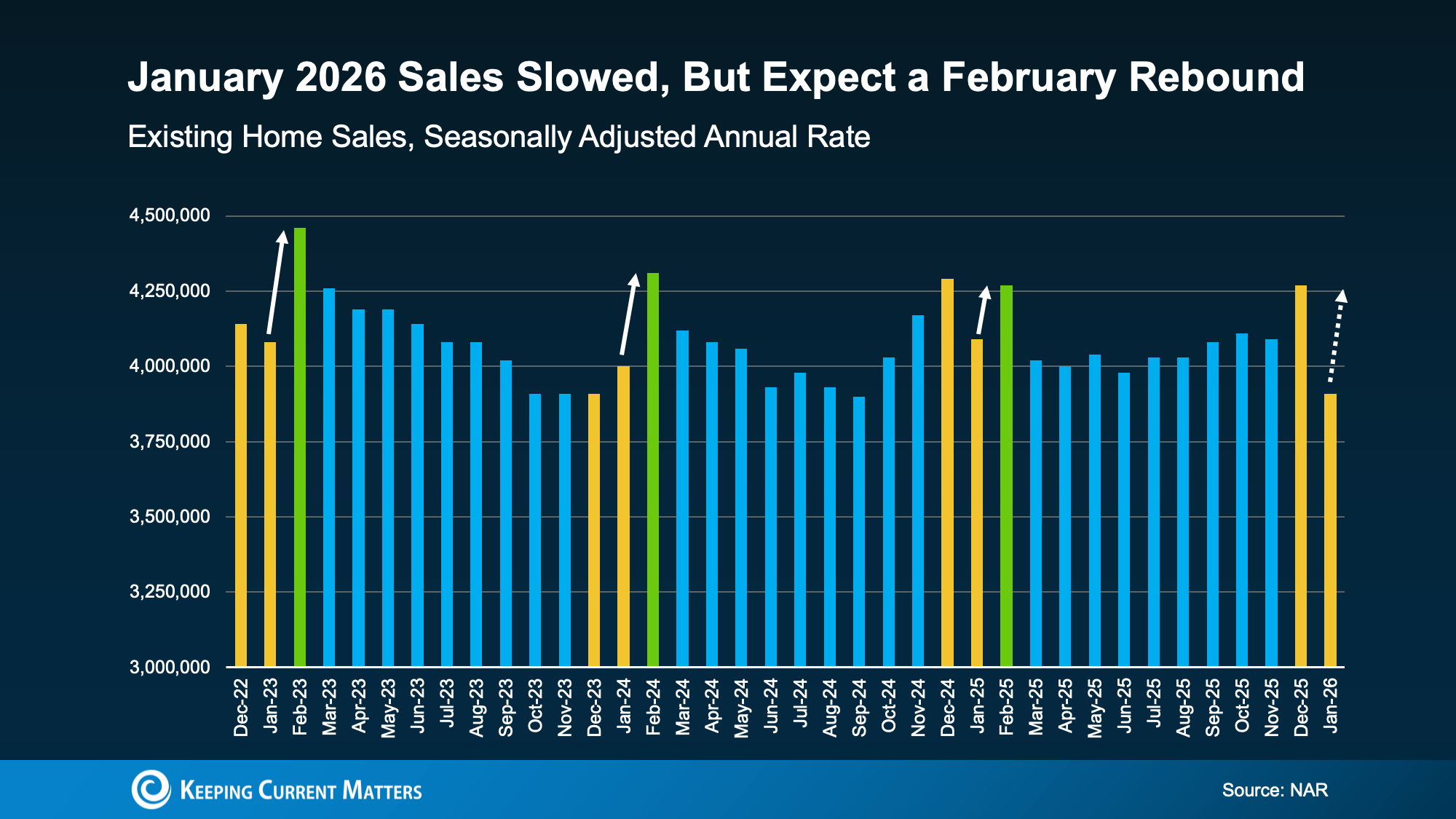
Home sales often slow in January and rebound quickly in February.
The Bigger Drop This Year: Weather, Not Demand
This year’s decline was steeper than the usual January dip, even with lower mortgage rates. But the likely explanation is simple: disruptive winter weather.
As Realtor.com explains:
“Winter storm Fern, which dumped snow and ice across large swaths of the country, likely disrupted some closings, weighing on the data and making it difficult to pick out the housing market momentum trend from the weather noise.”
According to the original post, 40 states experienced widespread winter weather. In real estate, that matters because bad weather can delay the final steps needed to close, including:
- Inspections
- Appraisals
- Final walk-throughs
- Lender or title timelines
Why “Fewer Sales” Can Really Mean “Later Closings”
One important detail most headlines skip: existing home sales track closings, not contracts.
That means a storm doesn’t have to “kill” a deal to show up in the data. If weather slows the process, many transactions simply move from January into February (or later).
So January’s missing sales are more likely postponed, not lost.
Will Home Sales Pick Back Up?
Despite a slower January, the data still point toward the market gaining traction as spring approaches.
Here are two encouraging points to consider:
- Affordability has improved for seven straight months (according to NAR)
- Buyers in many areas are regaining some negotiating power
That combo can support more activity as the weather improves and the traditional spring season begins.
What If You’re Thinking About Selling?
If you’re a homeowner watching the market, here’s the practical takeaway:
- Don’t overreact to one weather-impacted month
- Expect activity to improve as schedules normalize and temperatures rise
- Focus on what’s happening locally, because conditions vary by city and even neighborhood
A strong strategy right now is to talk with a local agent about:
- Pricing based on current comps
- Likely spring demand in your area
- How quickly homes are moving in your price range
Conclusion
Don’t confuse a winter slowdown with a market wide red flag. January’s decline appears tied to seasonality and storm-related delays, not disappearing demand. As affordability improves and spring approaches, activity can thaw quickly.
Housing Inventory Is Improving in 2026: What That Means for Buyers

After a long stretch of buyers competing for too few homes, housing inventory is finally improving. Over the past year, more listings have come to market, and depending on where you live, that shift can open up your options in a meaningful way.
According to Realtor.com, the number of homes available for sale in January 2026 was the highest it’s been since 2020. That matters because getting closer to pre-pandemic levels signals a gradual return to a more typical market, where buyers aren’t forced to make rushed decisions with limited choices.
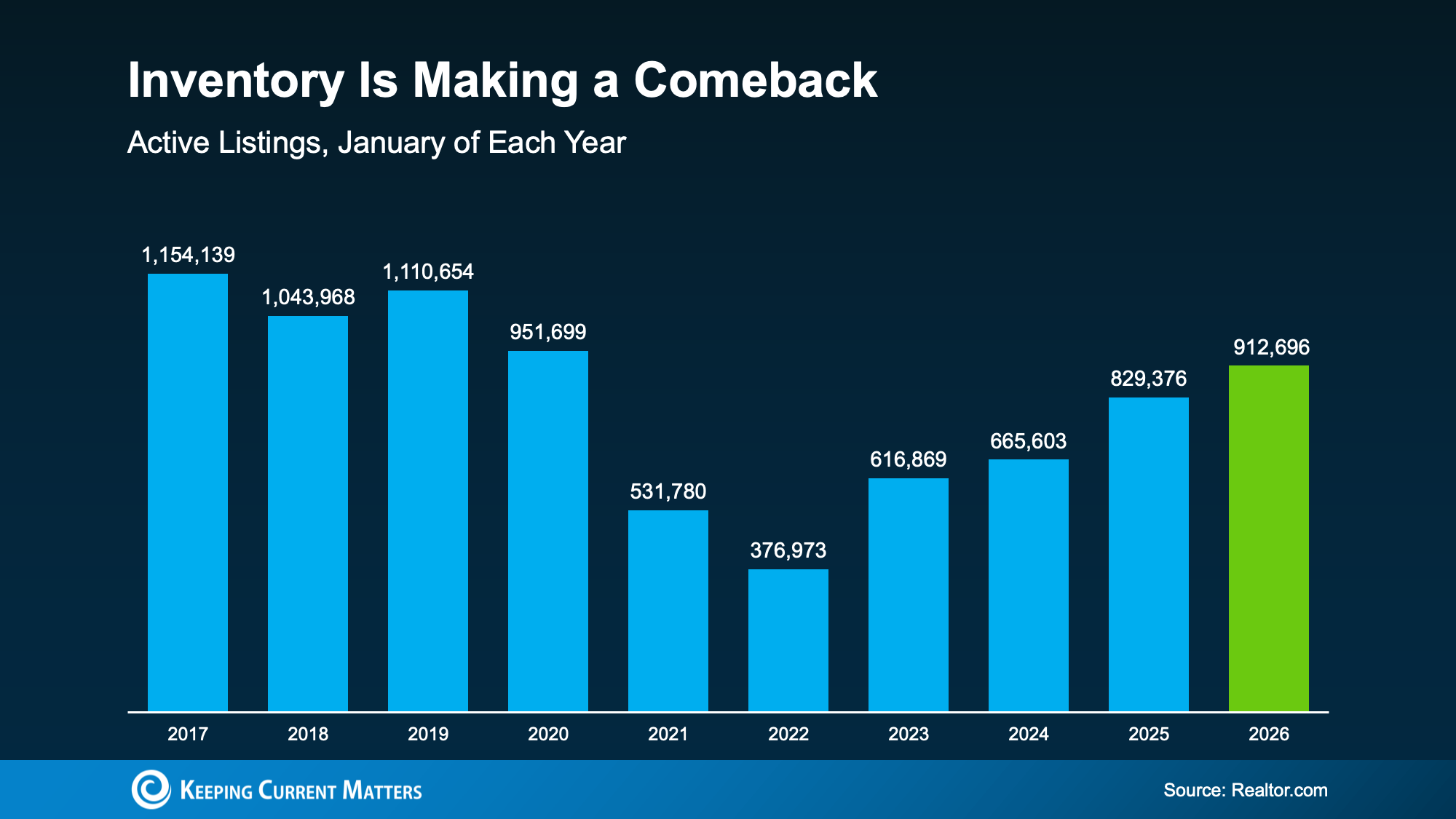
That said, inventory is not back to normal everywhere. And even with growth, more listings alone won’t “fix” affordability or fully rebalance the market overnight. But the changes we’ve seen recently can still have a real impact on how competitive it feels to buy.
When Supply Rises, Buyers Gain Breathing Room
In a low-inventory market, the pressure ramps up fast. Buyers often feel like they have to move immediately, waive protections, or offer well above asking just to stay in the running.
More inventory can reduce that intensity. When there are more homes for sale, buyers typically gain:
- More time to tour homes and think through a decision
- More options across neighborhoods, home styles, and price points
- More leverage to negotiate on price, repairs, closing costs, or timelines
In other words, more listings can shift the experience from stressful to manageable, even if the market still leans competitive in certain areas.
A Growing Share of the Country Is Getting Back to Typical Inventory
Inventory growth is not uniform nationwide. Some markets are seeing a stronger rebound, while others are still tight.
According to Lance Lambert, Co-Founder of ResiClub, in January 2025, just a little over one year ago, only 41 of the 200 largest metros were back to normal inventory-wise.
By around the end of the year, almost half (90) of the largest 200 metro areas were back at or above typical levels. That is a big improvement in roughly a year, and the trend is still moving forward.
Why This Matters for Your Local Home Search
If your area is one of the metros where inventory has returned to typical levels, you may notice:
- More new listings each week
- Fewer “must-bid-now” situations
- More realistic negotiations, especially on homes that sit longer
If your market is still below normal, you may still see multiple offers on well-priced homes. The difference is that, nationally, the direction is improving, and more markets are joining that list over time.
Inventory Is Expected to Keep Growing in 2026
Looking ahead, forecasts suggest the number of homes for sale could rise another 10% this year. If that happens, even more markets should move closer to balanced conditions.
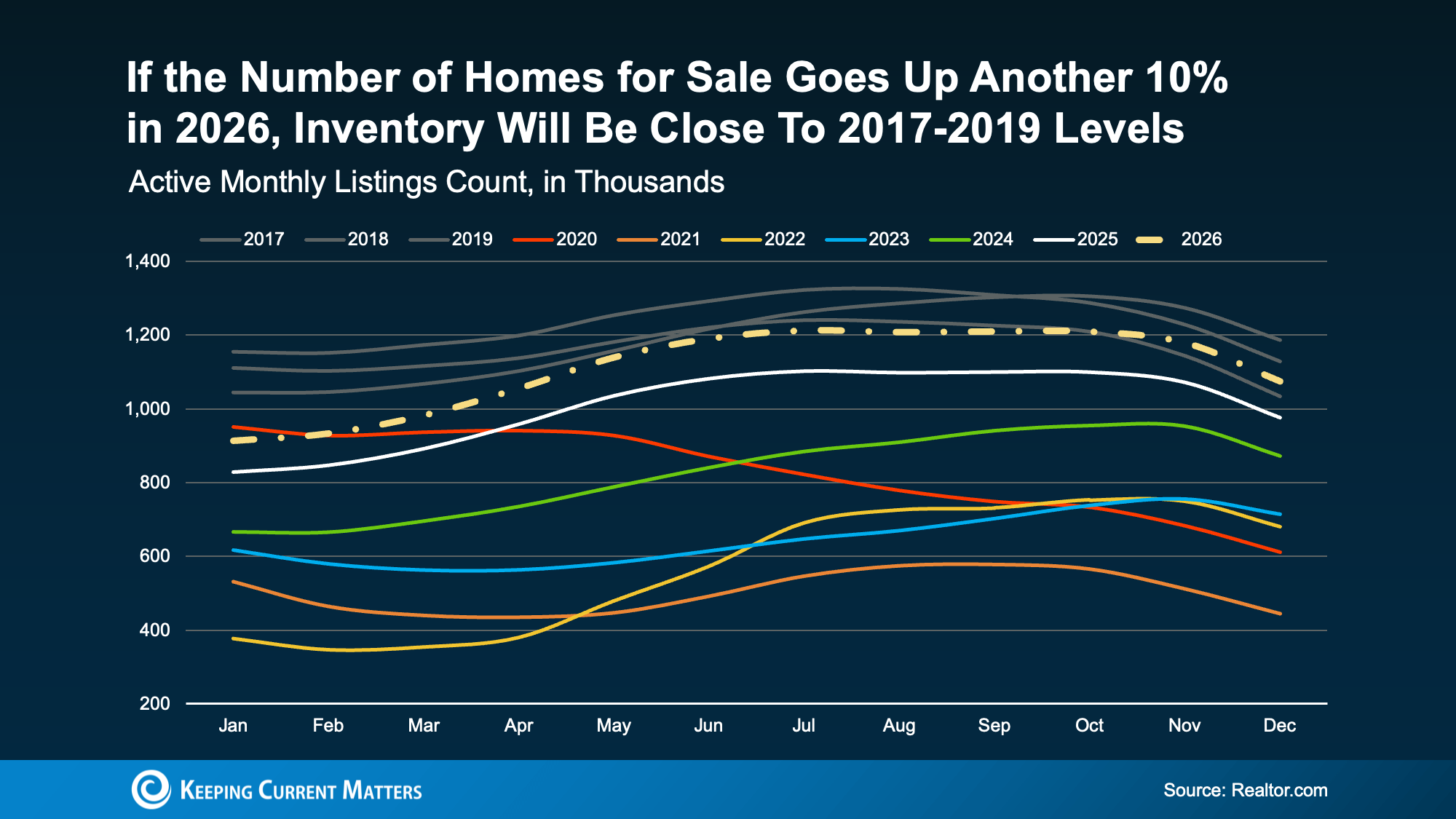
That potential growth could push inventory closer to the levels we saw in 2017–2019 by roughly this fall, which would be a huge milestone for buyers. Of course, reaching something closer to “normal” nationally wouldn’t mean every market feels the same. But, it would increase the odds that more buyers in more markets can find a home without feeling boxed in by a lack of choices.
As Hannah Jones, Senior Economic Research Analyst at Realtor.com, says:
“. . . housing market conditions are gradually rebalancing after several years of extreme seller advantage. Buyers are beginning to see more options and modest negotiating power as inventory improves . . .”
That is the key takeaway: the market is starting to work with buyers again, not against them.
Conclusion
Inventory may not be fully back to normal everywhere, but it’s moving in the right direction. And some markets, it’s already there.
If you have been waiting for a moment when you have more options and a little breathing room, 2026 is shaping up to be the strongest setup buyers have seen in years.
If you want the latest on inventory in your local market, talk to an agent who can break down inventory trends, pricing, and what that means for your next move. And if you’re not sure where to start, you can always reach out to us at CENTURY 21 Affiliated.
The Top Ten 2026 Housing Markets for Buyers and Sellers

Whether you’re buying or selling this year and need to know the top housing markets, you’re in luck. Here are two lists for the 2026 housing market, one for sellers and one for buyers. But before you scroll to the lists, keep this in mind:
If you’re planning a move for 2026, the most important takeaway is this: there are many housing markets to look at this year.
Experts agree 2026 is shaping up to be one of the most geographically split housing markets in years. Some areas are leaning toward sellers, while others are finally opening real doors for buyers. Who has the advantage depends almost entirely on where you live. Selma Hepp, Chief Economist at Cotality, explains it this way:
“Looking ahead to 2026, regional differences will remain pronounced, with demand favoring areas that offer both economic opportunity and relative affordability.”
To show just how divided the landscape is, here’s a look at where sellers may have the upper hand and where first-time buyers may find their opening.
Where Sellers Stand To Win Big in 2026
Zillow identified the following metros as some of the strongest seller markets for 2026, based on buyer demand, pricing momentum, and how quickly homes are expected to sell:
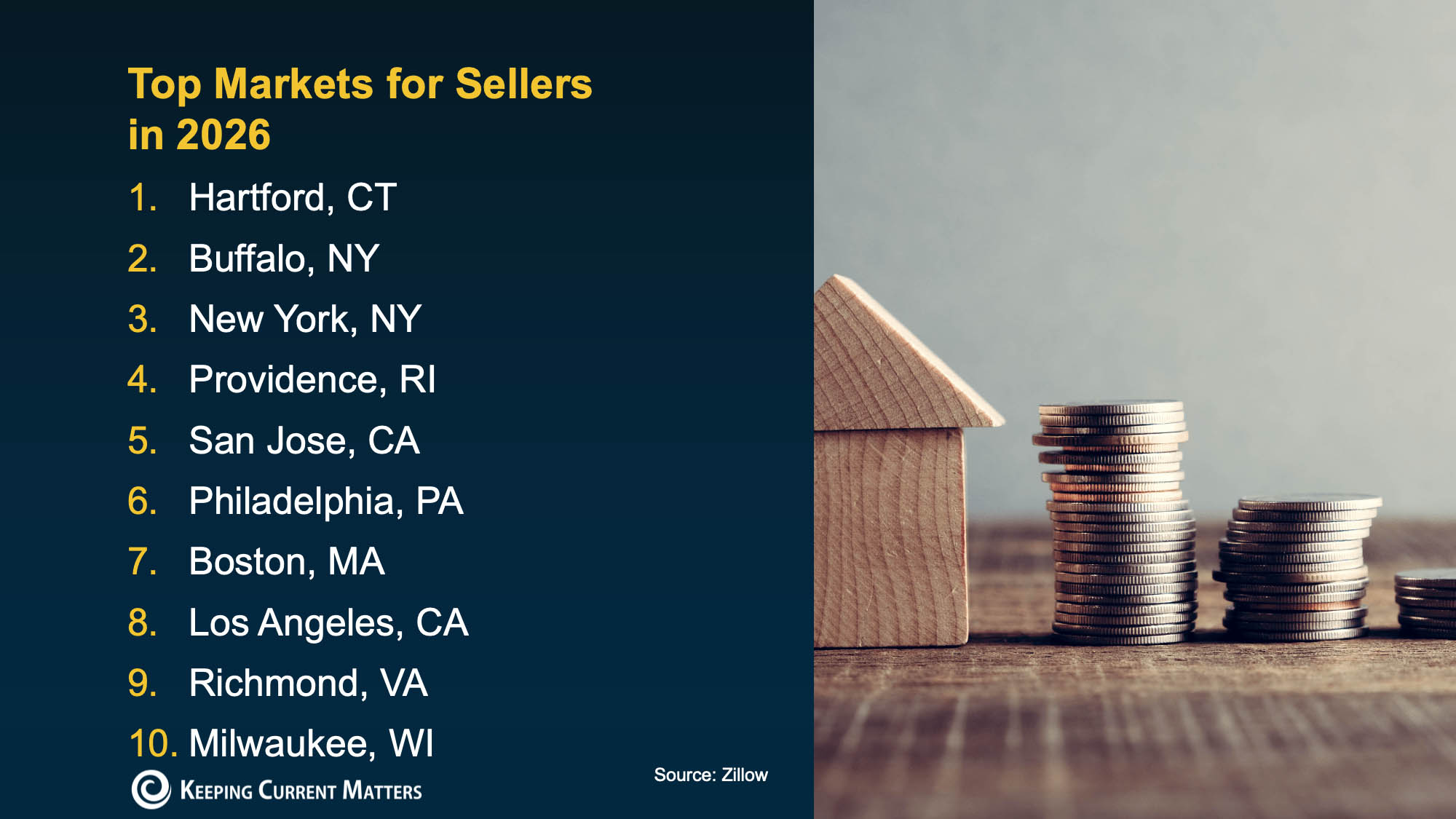
- Hartford, CT
- Buffalo, NY
- New York, NY
- Providence, RI
- San Jose, CA
- Philadelphia, PA
- Boston, MA
- Los Angeles, CA
- Richmond, VA
- Milwaukee, WI
In markets like these, buyers are likely to compete for limited inventory, which can give sellers more leverage.
What sellers can expect in these markets
If you’re a homeowner in a seller-friendly metro, you may see:
- Stronger buyer interest
- Shorter time on market
- Better odds of selling close to (or above) asking price
That doesn’t mean every listing is guaranteed to fly off the shelf. But it does mean sellers who price strategically, prep their home well, and follow a good agent’s guidance can be in a strong position in 2026.
Markets Where There’s More Opportunity for First-Time Buyers
On the other hand, some metros are giving buyers more breathing room, especially first-time buyers who have had the toughest time getting in lately. Realtor.com points to 10 top metros where first-time buyers are expected to enjoy advantages in 2026:

- Rochester, NY
- Harrisburg, PA
- Granite City, IL
- Birmingham, AL
- North Little Rock, AR
- Syracuse, NY
- Baltimore, MD
- St. Louis Park, MN
- Pittsburgh, PA
- Garfield Heights, OH
These housing markets are top contenders thanks to a mix of:
- More affordable home prices
- Better housing availability
- Strong local amenities and economic health
For first-time buyers, that combination matters. It’s often the difference between wishful thinking and a real path to homeownership.
What buyers can expect in these markets
In more buyer-friendly areas, first-time buyers may find:
- Less intense competition
- More room to negotiate
- A clearer path to getting an offer accepted
What Matters More Than Any Top 10 List
Not seeing your city on either list? Don’t worry. This is a snapshot at the national level, not a definitive statement on your local market. These lists simply show how different conditions can be from one metro area to the next.
And remember: you can buy or sell no matter which side your local market favors. All you need is the right strategy for your market’s unique conditions.
Here’s what that can look like:
- Sellers in a more buyer-friendly metro may need to price competitively and focus on strong prep (repairs, staging, and marketing).
- Buyers in a seller-leaning area may still need to come prepared with a clean, compelling offer and a smart plan for competing.
To find out where your market falls and what you should expect, a local expert can help you interpret the trends and build a game plan.
Conclusion
The housing market in 2026 isn’t one-size-fits-all. Local conditions matter more than ever, and knowing whether you’re in a buyer-friendly or seller-friendly area can shape everything from pricing to negotiations.
Whether you’re buying, selling, or just exploring your options, the right strategy (and the right agent) can put you in a strong position this year. If you’re a buyer or seller ready for the next step, search the top housing markets now, or reach out to us for help today.
Good News for Buyers: Home Affordability Improving in 2026

If you’ve felt priced out of the market or stuck waiting on the sidelines, there’s finally some encouraging news:
Buying a home is finally becoming more affordable.
Monthly payments have started to come down thanks lower interest rates, and buyers are starting to feel pricing pressures ease. That doesn’t mean homeownership is suddenly easy for everyone, but after a tough stretch, small improvements are meaningful.
Home Affordability Is Finally Improving
One of the clearest ways to track this change is to look at how much of a household’s income goes toward owning a home.
According to Zillow, housing is typically considered affordable when total housing costs take 30% or less of your monthly income. That includes your mortgage payment, property taxes, insurance, and basic maintenance.
For the past few years, many buyers were well above that mark, which pushed homeownership out of reach for a lot of households. But that’s starting to shift. Zillow research shows it’s taking less of a typical household’s income to buy a home than it did just a few years ago (see graph below):
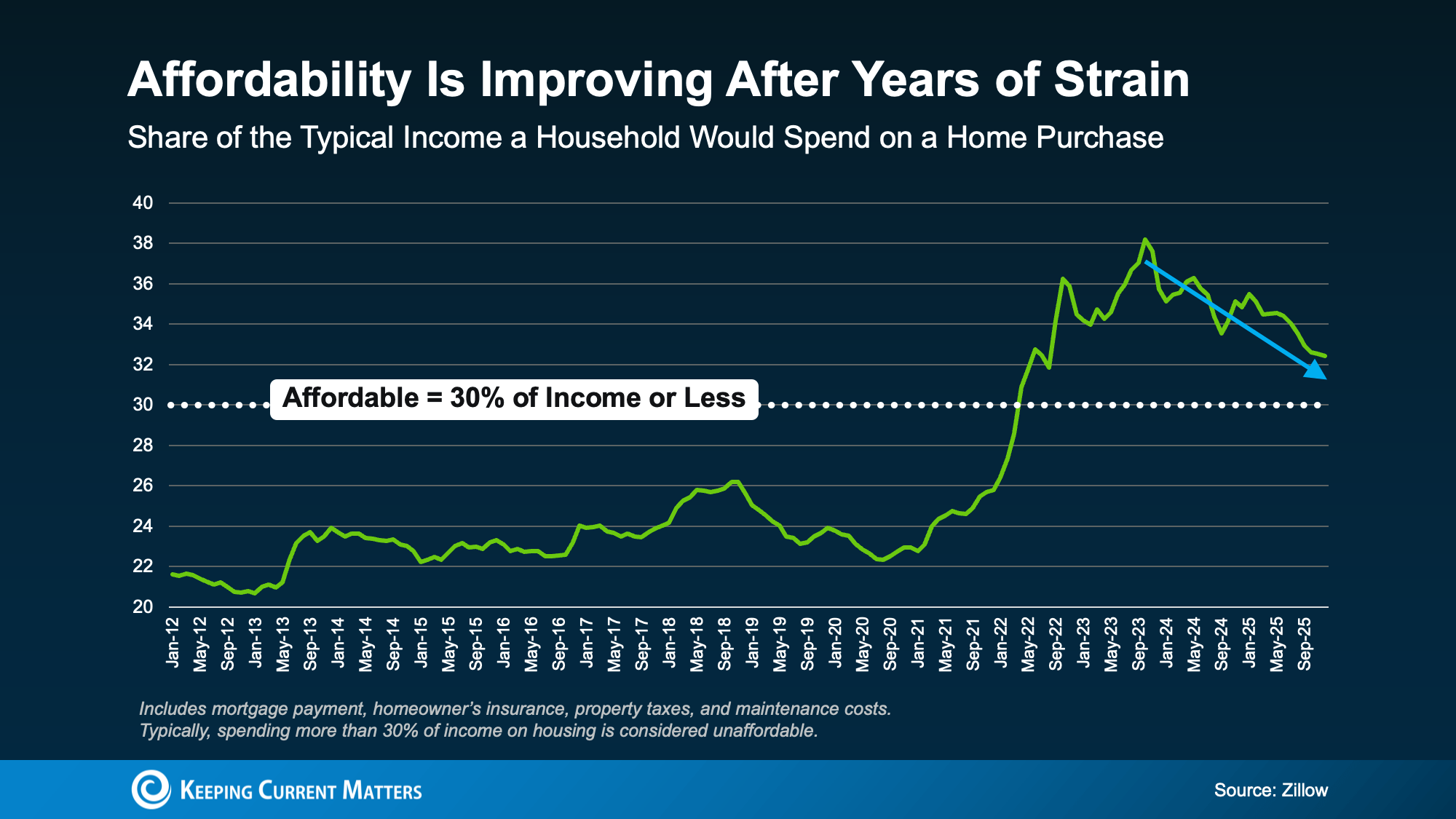
We’re not all the way back to Zillow’s 30% threshold yet, so affordability is still tight in many markets. But the trend is improving, and that’s a big change from what buyers have been up against.
Why Homebuying Is Becoming More Affordable
Mortgage rates get most of the attention, and yes, rate movement plays a major role in monthly payment size. But it’s not the only reason affordability is improving. Three key trends are working in buyers’ favor right now:
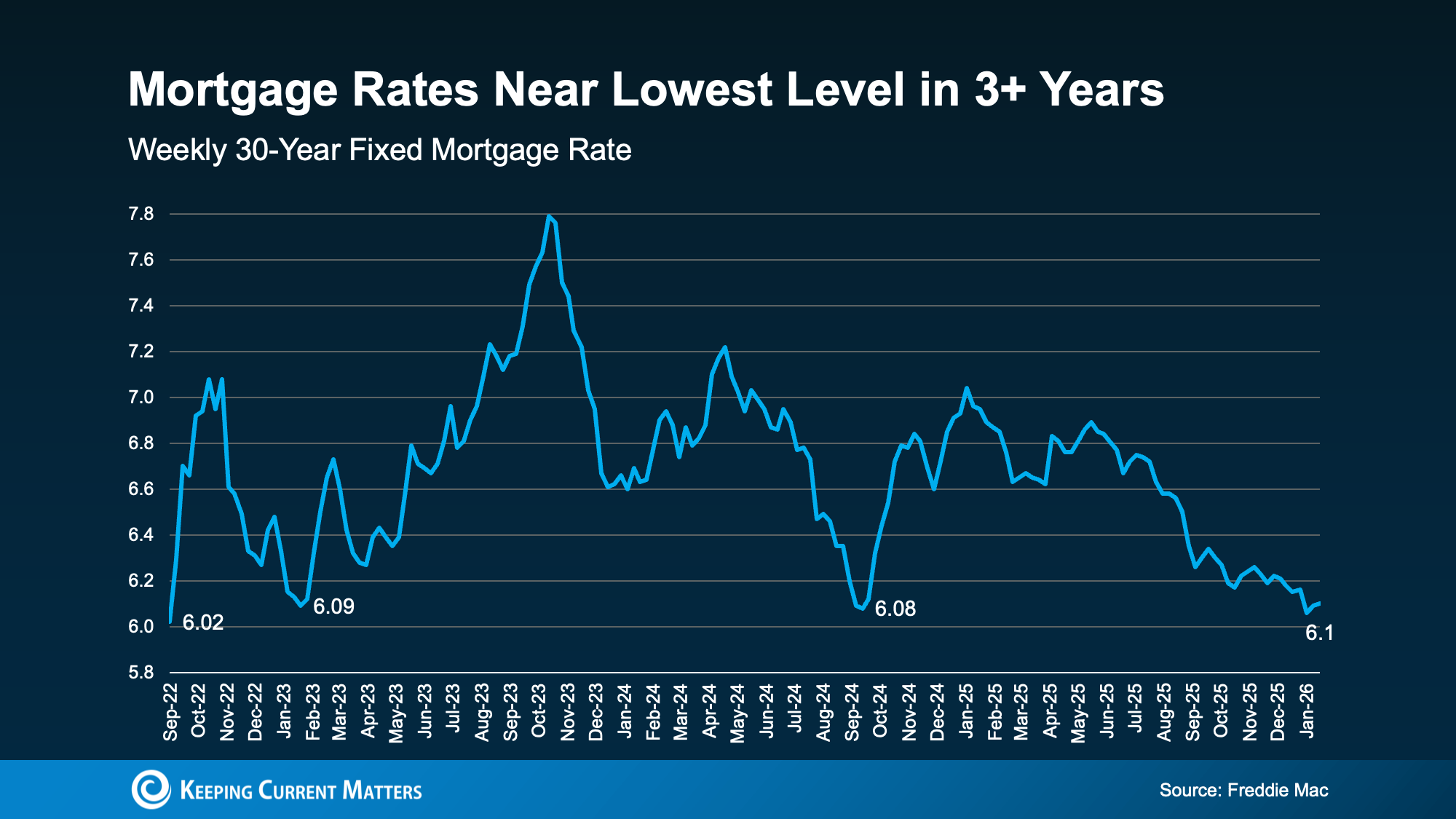
1) Mortgage rates have eased
Rates are near their lowest level in more than three years, which can reduce monthly payments and expand buying power (see graph below):
2) Home price growth has cooled
Home prices aren’t falling nationally, but they’re rising more slowly than they were a few years ago. That matters because slower price growth helps keep purchase prices from jumping as sharply, which can make payments feel more manageable and the overall buying process more predictable.
3) Wages are growing faster than home prices
This is a major factor that often gets overlooked. When incomes rise faster than home prices, buyers can start catching up. Mark Fleming, Chief Economist at First American, explains:
“When income growth exceeds house price growth, house-buying power improves—even if mortgage rates don’t decline meaningfully.”
None of this makes homes “cheap,” but it does help explain why the math is starting to work a bit better than it did even a year ago. In short, some of the forces that curbed affordability are finally easing. As Fleming again explains:
“Affordability remains challenging, but for the first time in several years, the underlying forces are finally aligned toward gradual improvement. Mortgage rates may drift down only slowly, but income growth exceeding house price appreciation will provide a boost to house-buying power — even in a higher-rate world. Affordability won’t snap back overnight, but like a ship finally catching a steady tailwind, it’s now sailing in the right direction.”
Because of these combined shifts, many economists expect affordability to continue improving in 2026.
Where Are Homes Becoming Affordable First?
So how much will affordability improve, and where will it show up first? In some places, the difference could be noticeable. Zillow says some markets are expected to fall back under their affordability threshold (30% of income or less) by the end of the year (see graph below):
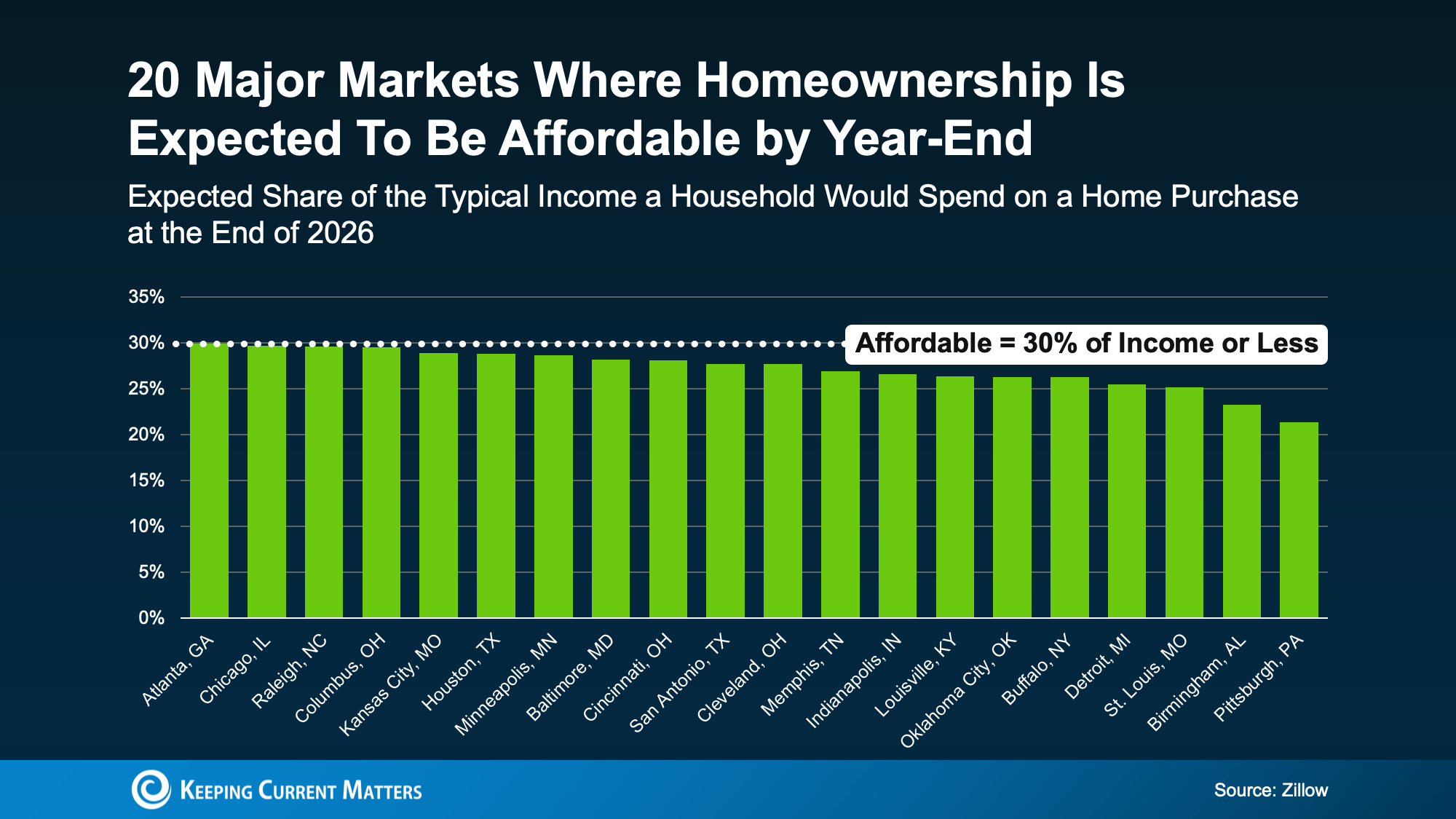
But you don’t have to live in one of those specific markets, and you may not have to wait until year-end to see improvement. Many areas are already trending in a better direction.
That’s why your next best step is local: talk to a real estate agent who understands what’s happening in your market. The national headlines don’t always reflect what’s going on neighborhood by neighborhood, and you might be closer to buying than you think.
Conclusion
For the first time in a while, home affordability is easing, and that’s an important shift for buyers.
And because the pace of improvement varies by location, understanding what’s changing locally can make all the difference. If you want to see how these trends are playing out where you live, connect with a local real estate agent to talk through your options.