Facebook
 X
X
 Pinterest
 Copy Link
Mortgage Rates Drop to the Lowest Point in 2025 So Far

If you’ve been holding off on buying a home for a lower mortgage rate, take another look at the market. Mortgage rates are trending downward, and they just hit their lowest point of the year so far.
According to a report from Freddie Mac, mortgage rates have been falling for seven straight weeks. The average weekly rate for a 30-year-fixed mortgage is now at the lowest level its been in 2025.
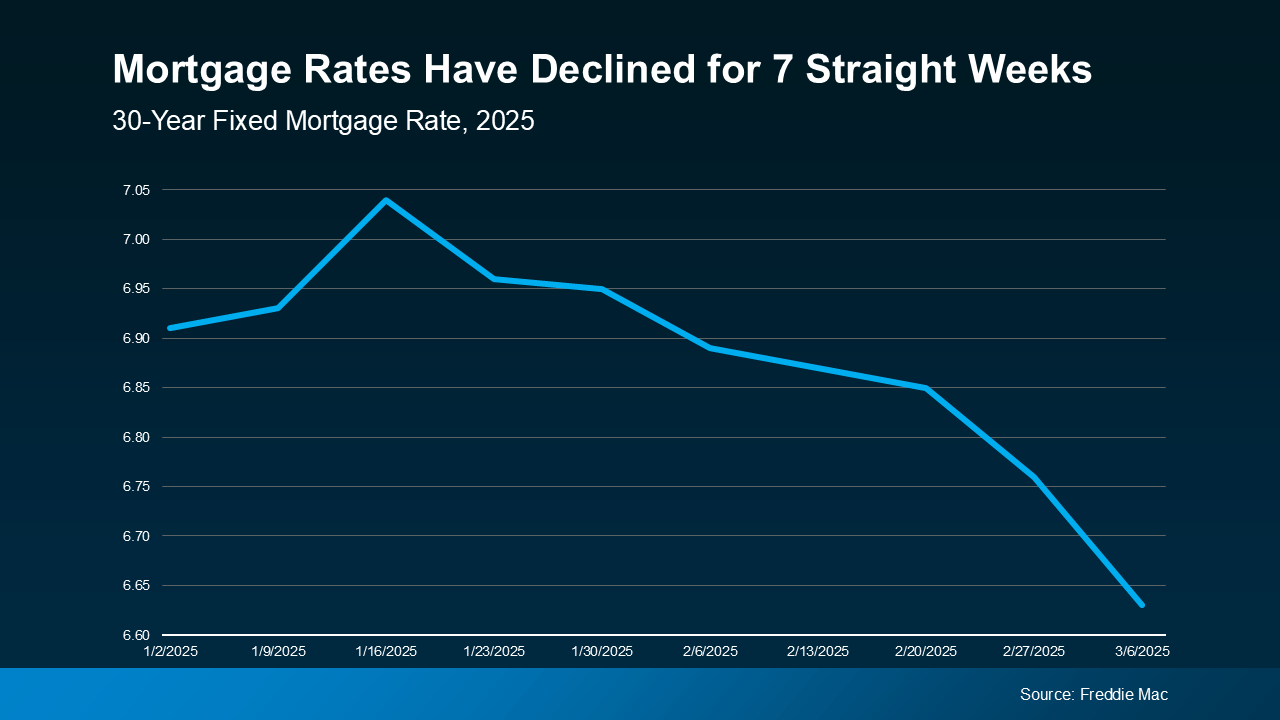
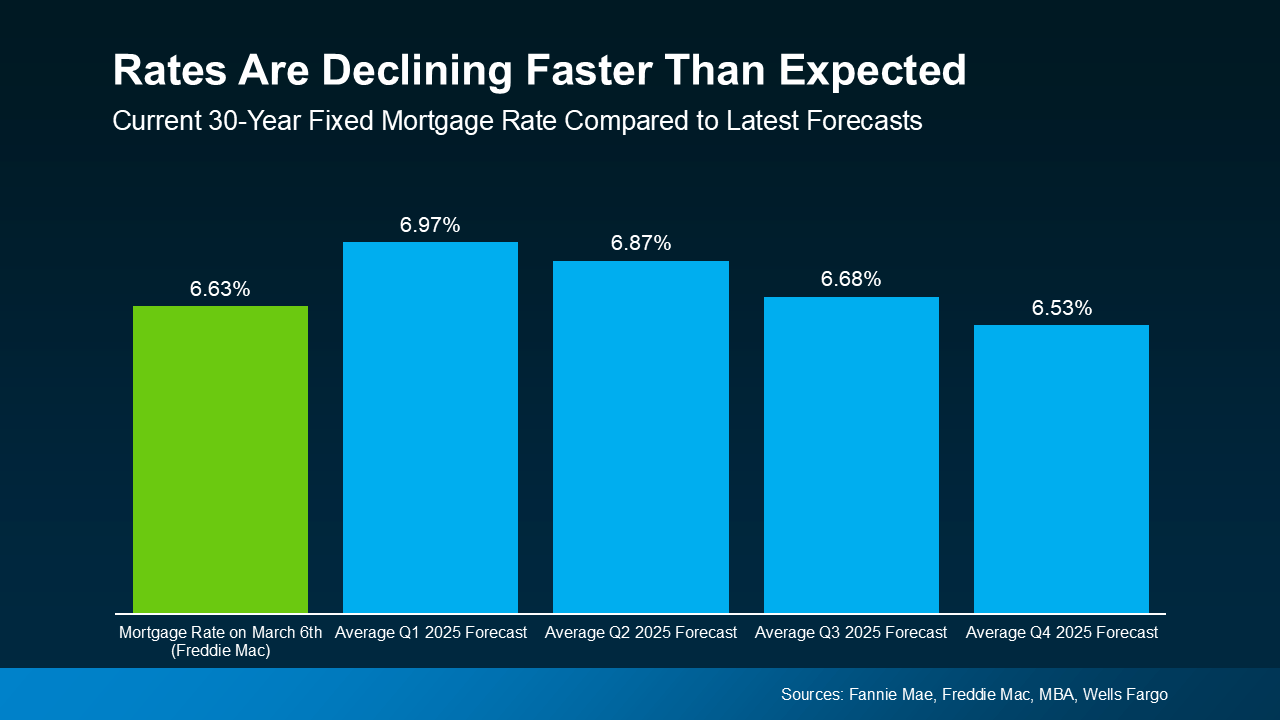
This may not sound significant on its own, but it outlines a remarkable trend. A drop in rates from over 7% to the mid-6’s can make all the difference when buying a home. What’s most significant is that experts previously predicted that rates wouldn’t fall this low until Q3 of this year.
Why Are Mortgage Rates Dropping?
According to Joel Kan, VP and Deputy Chief Economist at the Mortgage Bankers Association (MBA), ongoing economic uncertainty is a driving force in pushing rates lower:
“Mortgage rates declined last week on souring consumer sentiment regarding the economy and increasing uncertainty over the impact of new tariffs levied on imported goods into the U.S. Those factors resulted in the largest weekly decline in the 30-year fixed rate since November 2024.”
The timing of this rate drop is great for buyers moving into the Spring 2025 market. But remember that mortgage rates can change quickly, and always expect some volatility in markets driven by uncertainty. With that said, this small window of rates dropping into prime buying season might be exactly wait you’ve waited for.
What Falling Mortgage Rates Mean for Your Buying Power
Even a small reduction in your mortgage rate can make a huge difference in your monthly housing payment. The chart below shows what a monthly payment (principal and interest) would look like on a $400K home loan if you purchased a house when rates were 7.04% back in mid-January (this year’s mortgage rate high). The right side shows what it could look like if you buy a home now at current rates.
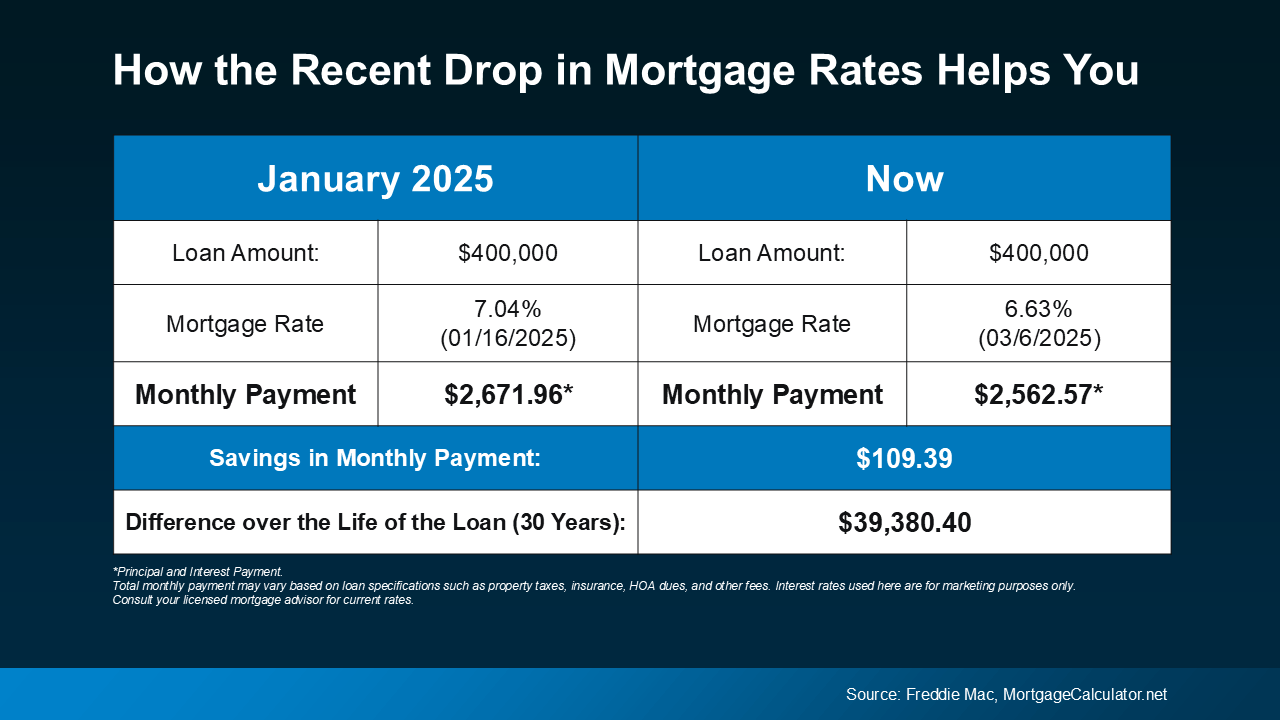
In just the past few weeks, the expected payment on a $400K loan has come down by over $100 per month. That’s a significant savings that can make a world of difference when deciding to buy a house.
Recent economic shifts have driven rates down faster than expected, and that’s great news. But remember that this could change at any time in the coming days and months for better or worse. So if you’re waiting for rates to fall further before you buy, think hard about the current window of opportunity before making a decision.
Conclusion
Mortgage rates have dipped to their lowest point in 2025 so far. This grants buyers a great position moving into the spring buying season, especially for those who have been waiting. The unpredictability of the market and larger economy mean volatility, so get expert advice and consider before making a decision.
Can You Buy a Home in 2025 Without Waiting for Lower Rates?

Like many homebuyers, you may be waiting for rates to drop before you finally buy a home this year. The latest expert reports predict that rates will continue to fall, but not as low as many hope. While this may be discouraging, the good news is that there are still ways you can buy a home in 2025 without waiting for lower rates.
Will Rates Keep Dropping?
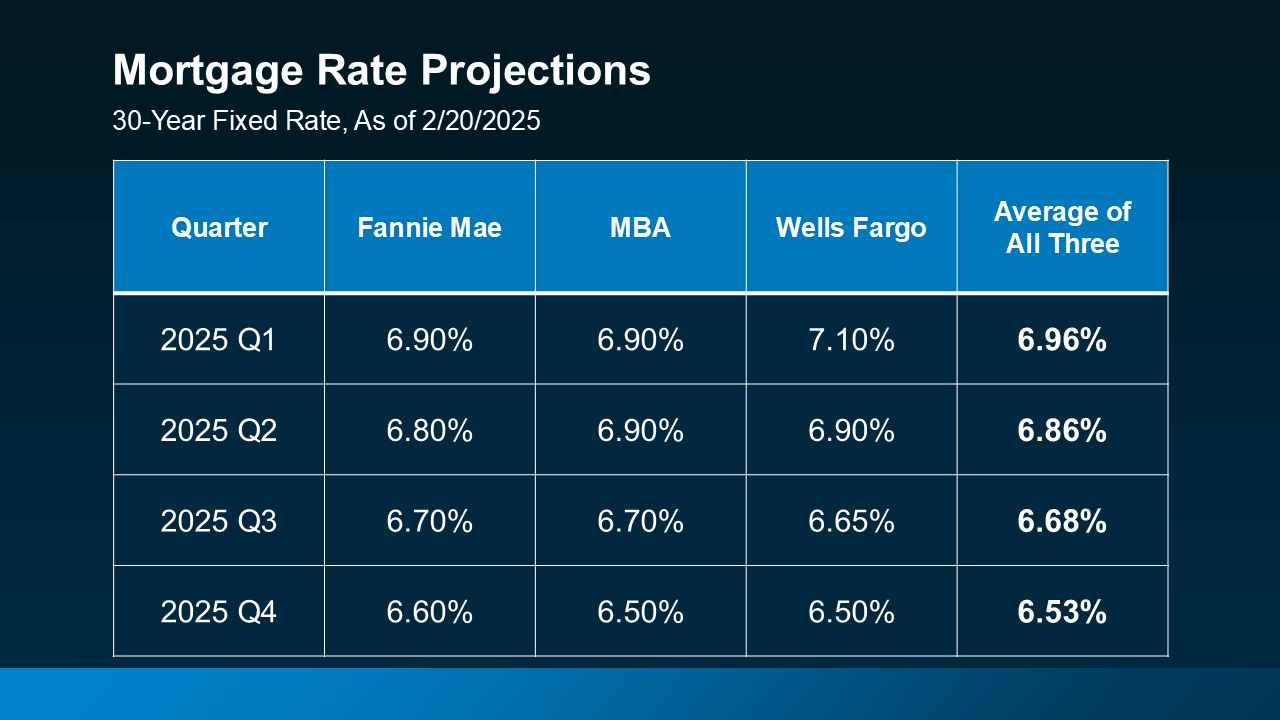
Near the end of 2024, experts were predicting that mortgage rates could dip below 6% by the end of 2025. More recent projections are suggesting that rates will continue to fall but hover somewhere above 6%.
Recent projections from Fannie Mae, the Mortgage Bankers Association (MBA), and Wells Fargo now predict that mortgage rates will stabilize around 6.5% by the end of the year.
If you’re holding out for mortgage rates to drop below 6% before buying, you may need to keep waiting into next year at least. But what if you’re a buyer who can’t wait to move because of a major life event, like a new job, a new baby, or a marriage? Don’t panic—you’ll still be able to move this year, but you may need to take advantage of some alternative financing options.
How to Finance a Home in Today’s Market
With rates predicted to hold more stubbornly than expected this year, it’s worth researching different financing options, especially if your move is a non-negotiable one. Here are three unique financing strategies that may be helpful to you depending on your situation. If you’ve already chosen a lender, discuss each of these options with them to decide if any are a good fit. It may make all the difference you need to buy a house in 2025.
1. Mortgage Buydowns
A mortgage buydown allows you to pay an upfront fee—sometimes called “discount points”— to lower your mortgage rate temporarily or sometimes permanently. This can be an especially helpful option if you want or need a lower monthly mortgage payment early on. Of course, the obvious downside is a higher upfront cost.
A recent survey by HomeLight found that 27% of real estate agents day first-time homebuyers are increasingly requesting mortgage buydowns from sellers. This is a new program called RateReduce Sell that allows sellers to pay an upfront cost to lock in a lower mortgage rate for buyers. However, a real estate agent can help negotiate this with a seller, so be sure to mention it if you’re actively looking to buy a house.
2. Adjustable-Rate Mortgages
Adjustable-rate mortgages (ARMs) are loans that combine a fixed-rate period with an adjustable-rate period. ARMs typically start with a lower rate than a traditional 30-year fixed mortgage then fluctuate with the market once the fixed-rate period ends. This can make them an attractive option if you expect rates to drop in the future, or plan to refinance your home later.
If you remember the 2008 housing crash, it may be reassuring to know that today’s ARMs aren’t like the volatile loans from back then. Lance Lambert, Co-Founder of ResiClub, describes modern ARMs this way:
“. . . ARM products today are different from many of the products issued in the mid-2000s. Before 2008, lenders often approved ARMs based on borrowers ability to pay the initial lower interest rates. And sometimes they didn’t even check that (remember Ninja loans). Today, adjustable-rate borrowers qualify based on their ability to cover a higher monthly payment, not just the initial lower payment.”
Before 2008, banks used to give loans without checking to see if buyers could realistically afford them. These days, lenders verify income, assets, and employment, reducing the risks previously associated with loans like ARMs.
3. Assumable Mortgages
An assumable mortgage allows you to take over a seller’s existing loan, usually including its lower mortgage rate, repayment period, and remaining balance. This can be a great option if the seller was locked into a low mortgage rate, but few are willing to offer it by default. According to U.S. News, more than 11 million homes qualify for an assumable mortgage, so it’s always worth bringing up with your agent or seller.
Conclusion
With mortgage rates looking unlikely to fall below 6% in this year, waiting for a drop may not work out if you’re eager to buy a house in 2025. Consider options like mortgage buydowns, ARMs, or assumable mortgages depending on what makes the most sense for you. Connect with a local lender or expert agent today to explore your options and get the help you need.
3 Questions About Selling Your House You May Be Asking

Selling a house is one of the most significant financial and emotional decisions a homeowner can make, and unanswered questions about the market make this decision even harder. Sometimes, sellers’ concerns are based on misconceptions or outdated info, but can be quickly alleviated with a trustworthy agent’s help.
If your own uncertainty about the market is keeping you from selling your house, don’t wait to get the answers you need. Despite rising home prices and stiff demand, the 2025 real estate market is active, and recent reports prove it. If you’re uncertain about selling your house, here are the answers to three you may be asking.
1. Is It a Good Idea To Move Right Now?
If you’re a homeowner itching to make a move, you might be waiting to sell because you don’t to take on a higher mortgage rate on your next house. Between interest rates, inflation, and the job market, it’s both wise and responsible to consider your own finances and the greater state of the economy. The good news is that moving may be a lot more feasible than you think, mainly thanks to how much your house has likely grown in value.
Consider if there’s anyone in your neighborhood who sold their house recently. If so, do you know what it sold for? Considering how much home values have increased since 2021, the final closing price may surprise you. According to Lawrence Yun, Chief Economist at the National Association of Realtors (NAR), the typical homeowner has gained almost $150,000 in housing wealth in the last five years alone.
That’s a significant gain depending on your house’s initial value when you bought. When you decide to sell, the increased value of your home along with the equity you’ve built can make all the difference you need to lock down your new home.
2. Will I Be Able To Find a Home I Like?
If finding the right house is stopping you from selling your house, it’s probably because you remember how hard it’s been to find a home these past few years due to low housing inventory. But thanks to positive inventory trends in today’s market, finding a good home is becoming easier.
According to a January 2025 report from from Realtor.com, home supply has increased nearly 25% since this time last year.
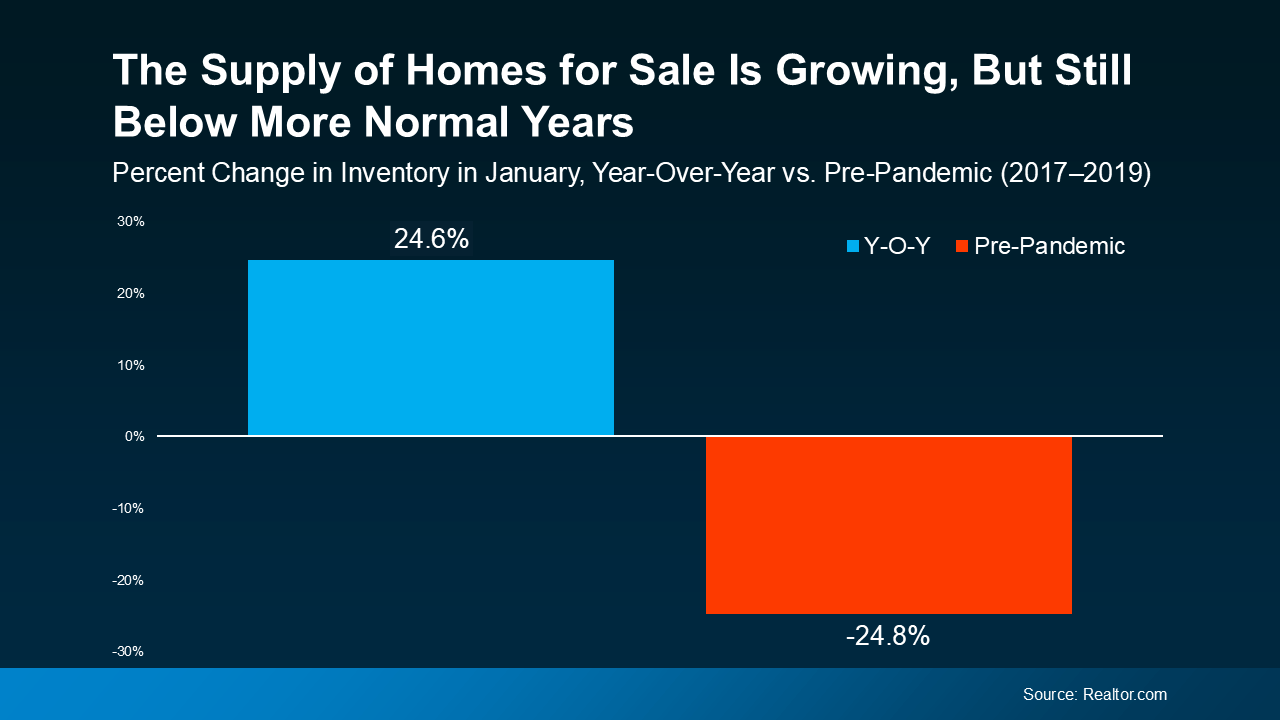
Housing inventory still hasn’t risen to pre-pandemic levels, but it’s improved significantly in the past year since January 2024. Even better, real estate experts say the supply of homes will continue to grow another 10 to 15% in 2025. More houses on the market means more options for you as a buyer, and a better chance of finding the perfect home.
3. Will My House Sell?
Lastly, if you’re worried that buyers aren’t buying thanks to home prices and mortgage rates, here’s some encouraging info. While last year’s home sales were still below normal, about 4.24 million homes sold according to data from the National Association of Realtors (NAR). Experts expect that number to rise in 2025, but here’s how 2024’s break down over time:
- 4.24 million homes ÷ 365 days in a year = 11,616 homes sold each day.
- 11,616 homes ÷ 24 hours in a day = 484 homes sold per hour.
- 484 homes ÷ 60 minutes = 8 homes sold every minute.
To apply some perspective: in the minute it took you to read this paragraph, 8 homes sold last year. And homes are expected to sell even faster in 2025, so rest assured that buyers are still buying. The market may not be back to pre-pandemic levels, but there are thousands of active buyers looking for homes like yours.
Conclusion
Selling your house is a major decision just like buying, but there are plenty of reasons for optimism in 2025. Home inventory is increasing, buyers are becoming more active, and your current home is likely worth more than you think.
Are you thinking of selling but have unanswered questions holding you back? Reach out today and we’ll connect you with an expert local real estate agent who can help.
Top 10 Best Real Estate Markets for First-Time Buyers in 2025
If you’re like many aspiring homebuyers, the rising cost of living might feel like a major roadblock. From groceries to gas, and yes, especially home prices, everything seems to be getting more expensive.
But even in today’s market, there are still ways to make your homeownership dreams a reality. The key is knowing the current best real estate markets and how to approach your first home purchase strategically.
Think of Your First Home as a Stepping Stone
One of the biggest misconceptions among buyers is that their first home has to be their dream home. The truth is, your very first home doesn’t need to check every box on your wish list. Instead, think of your first home as a stepping stone to your final destination.
Owning a home allows you to start building equity, which grows over time as home prices increase. That equity can be a powerful tool when you’re ready to upgrade to a bigger home or move to a more desirable location in the future.
Rather than waiting until you can afford your dream home in your ideal neighborhood, consider starting with something that fits your current needs and budget. This approach gets you into the market sooner and may cost you in the short-term, but it sets you up for long-term financial growth. Best of all, it’s a real start to eventually buying your dream home at some point in the future.
Explore the Best Real Estate Markets in 2025
If the price of homes in your preferred area are holding you back, it might be worth broadening your search. With some flexibility in location, you can find more affordable options without sacrificing the amenities most important to you. Many first-time buyers find homebuying success by exploring surrounding areas or even considering a move to a different state.
According to a report from Realtor.com, these are the 10 best real estate markets for first-time homebuyers in 2025:
- Rochester, NY with a Median List Price of $129,900.
- Lansing, MI with a Median List Price of $135,000.
- Harrisburg, PA with a Median List Price of $140,000.
- Lauderdale Lakes, FL with a Median List Price of $154,850.
- North Little Rock, AR with a Median List Price of $160,000.
- Baltimore, MD with a Median List Price of $210,000.
- Wilmington, DE with a Median List Price of $222,000.
- Altamonte Springs, FL with a Median List Price of $229,400.
- Tonawanda, NY with a Median List Price of $229,000.
- Villas, FL with a Median List Price of $236.950.
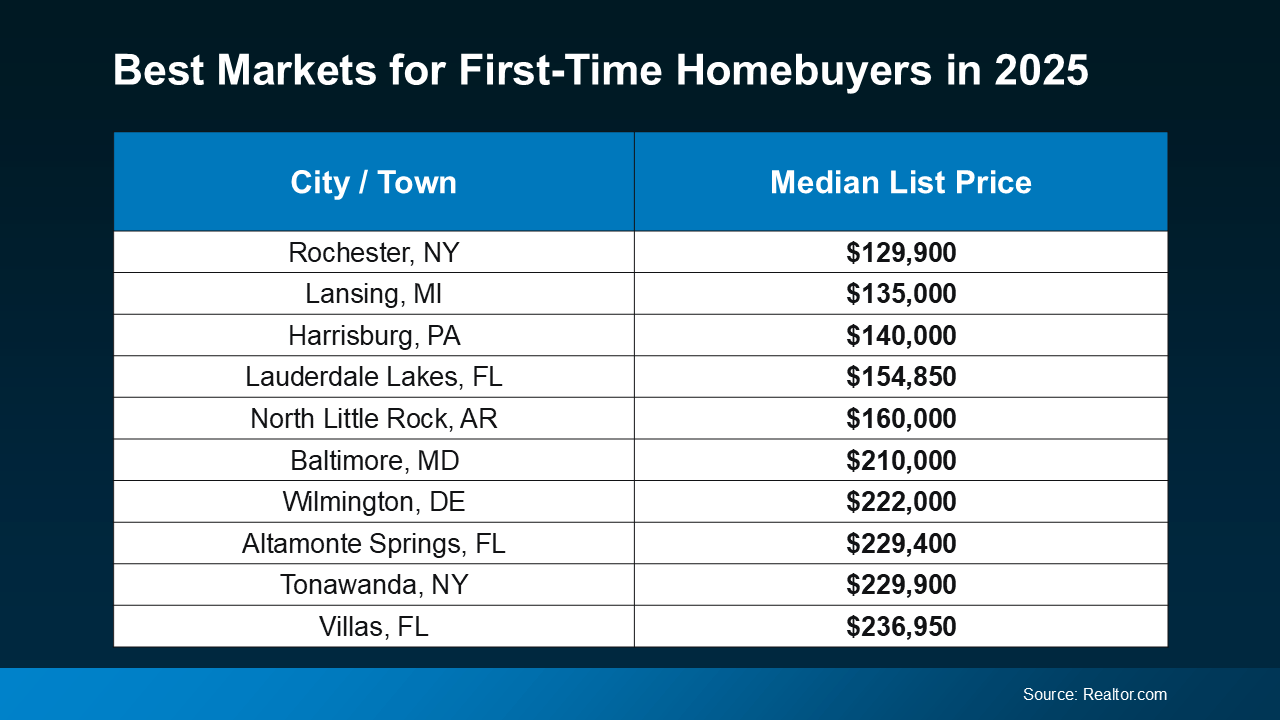
Realtor weighted their market rankings by several factors including median price, location score, number of home listings, average commute time, and others specified in the full report. If one of these cities is in or near your target home location, it’s worth looking to see what properties are available. Even if you don’t find your dream home, you might find the perfect starter home on the path to it.
Stay Local and Look Just Outside Your Preferred Area
If moving to a different state isn’t an option, you can still find affordable homes by expanding your search locally. Sometimes, looking even just 10 to 20 minutes outside your ideal neighborhood can make a significant difference in price. Nearby areas can often offer similar amenities, like access to restaurants, shops, and activities, but at a lower cost.
And the best way to see what’s available is to work with a real estate agent who understands the local market and can help you identify hidden gems nearby. An agent can point you to communities you may not have considered that have lower price tags now and are steadily gaining value and appeal. That way you can buy your first home and be set up to gain equity through the years.
Conclusion
Today’s cost of living is a challenge for many homebuyers, but by exploring 2025’s best real estate markets and working with a knowledgeable agent, you can take that first step toward owning a home this year, and building equity for your future.
How far outside your area would you be willing to look to make your homeownership dreams a reality? Connect with us to discuss your options and find the perfect market for your first home.
Home Price Growth Is Slowing in 2025 – What Does That Mean for You?
Over the past few years, home prices have skyrocketed as demand has increased and supply has stiffened. It’s been a frustrating market for buyers, leaving many to doubt their chances of ever owning their own home. But the early weeks of 2025 have brought welcome news: the pace of home price growth is finally slowing down, and that’s a positive shift for anyone looking to buy a home.
Home Price Growth Drops to a Healthy Pace
At the national level, home prices are still rising, but at a much more normal, manageable rate compared to the double-digit spikes we saw in 2021 and 2022. Recent data from Case-Shiller show that in November 2024, the year-over-year increase in home prices was just 3.8% nationally, a clear drop from Pandemic rates:
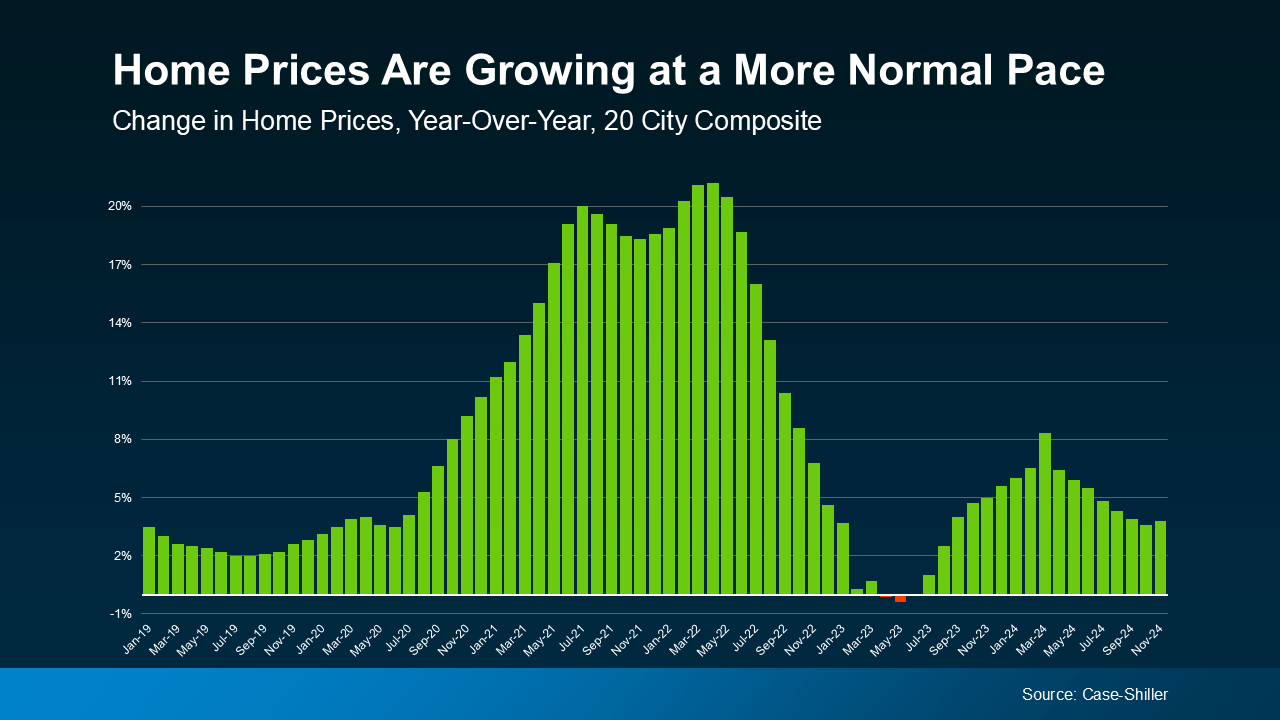
What does this mean for you? For one thing, you’re less likely to experience the sticker shock that was common just a few years ago. The days of rapid price jumps that made it difficult to plan or pursue your purchase are behind us, and projected drops in mortgage rates this year paint an even more positive picture. More stable price growth also means that the home you buy today is still likely to appreciate in value over time, helping you build equity and secure your financial future.
Real Estate Is Local: Prices Vary by Market
While the national trend is pointing to more moderate price growth, keep in mind that all real estate is local. Some markets are still experiencing strong demand and upward price pressures, while others are cooling off or even seeing declines. For example, smaller, more affordable metro areas are still seeing significant demand and price increases. As CoreLogic Chief Economist Selma Hepp explains:
“Regionally, variations persist, as some affordable areas – including smaller metros in the Midwest — remain in high demand and continue to see upward home price pressures.”
Meanwhile, other regions, particularly those in southern markets, experienced slight month-over-month declines in November, according to Federal Housing Finance Agency (FHFA) data:
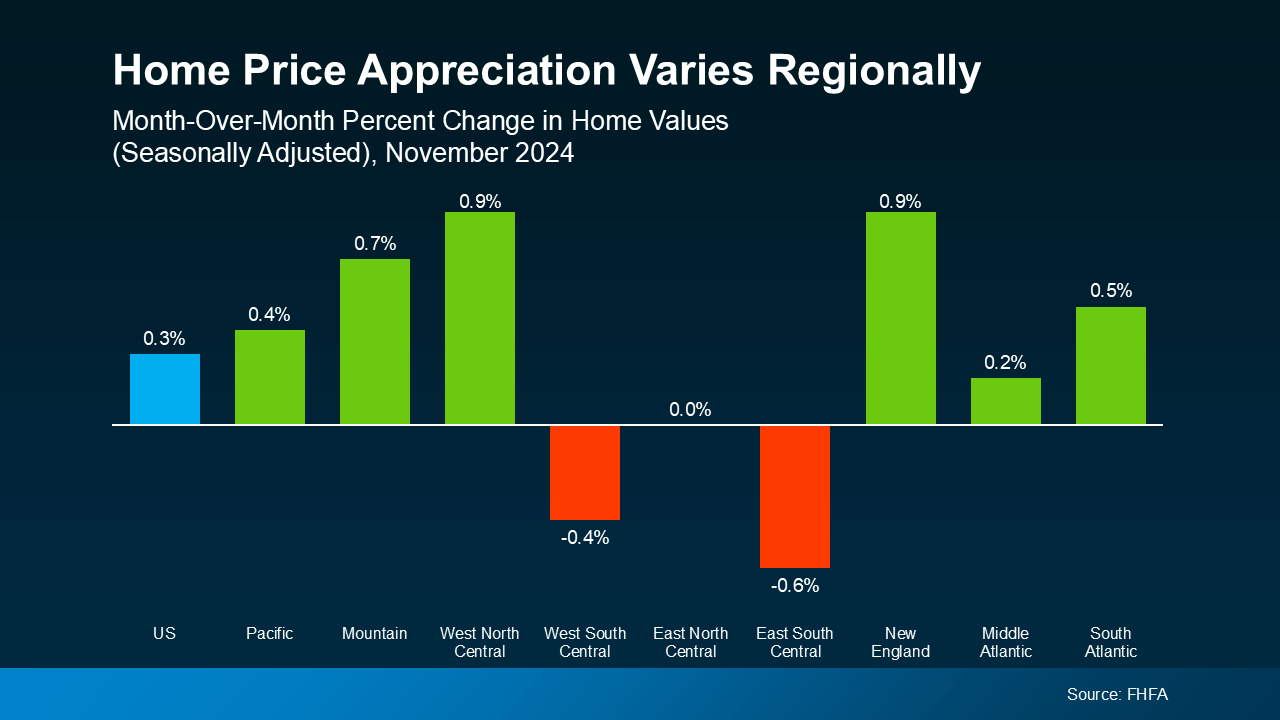
Differences like these highlight the importance of understanding what’s happening in your specific market. National averages can provide a general idea, but they rarely give you the whole picture. That’s where the knowledge and expertise of a local real estate agent can really help. They can help you understand local trends, identify opportunities, and create a buying strategy tailored to your needs and budget. Whether you’re buying in a high-demand market or one that’s cooling off, having a local expert on your side ensures you’re making more informed and confident decisions.
Conclusion
Home prices in early 2025 are growing at a more manageable pace, giving you the opportunity to plan your purchase without fearing the rapid price hikes of recent years. Connecting with a local real estate agent can help you navigate your area’s local home market, and make the best decision possible.
If you’re thinking about buying a home, 2025 is shaping up to be a great time to explore your options. Reach out to us today to connect with a local expert who can help you buy with confidence and find the perfect home for you.
2025 Housing Market Predictions: What Do the Experts Say?
Wondering how the housing market is expected to change in 2025? And more specifically, what it all means for you if you plan to buy or sell a home? As always, the best way to get that information is to consult the pros.
Experts are constantly refining their predictions in response to changes in the market and overall economy. Here’s the latest information on two key factors sure to influence the housing market in 2025: mortgage rates and home prices.
Will Mortgage Rates Come Down?
Mortgage rates remain one of the strongest factors influencing the market, and everyone is waiting for them to come down. The real question is: will they drop, and how quickly?
The good news is that mortgage rates are indeed projected to ease a bit in 2025, falling into the mid-6% range on average. But experts say not to expect a return to 3-4% mortgage rates, at least not this year. As Lawrence Yun, Chief Economist at the National Association of Realtors (NAR), says:
“Are we going to go back to 4%? Per my forecast, unfortunately, we will not. It’s more likely that we’ll go back to 6%.”
Other experts agree with Yun’s 6% prediction. They’re forecasting rates could settle in the mid-to-low 6% range by the end of 2025 (see chart below):
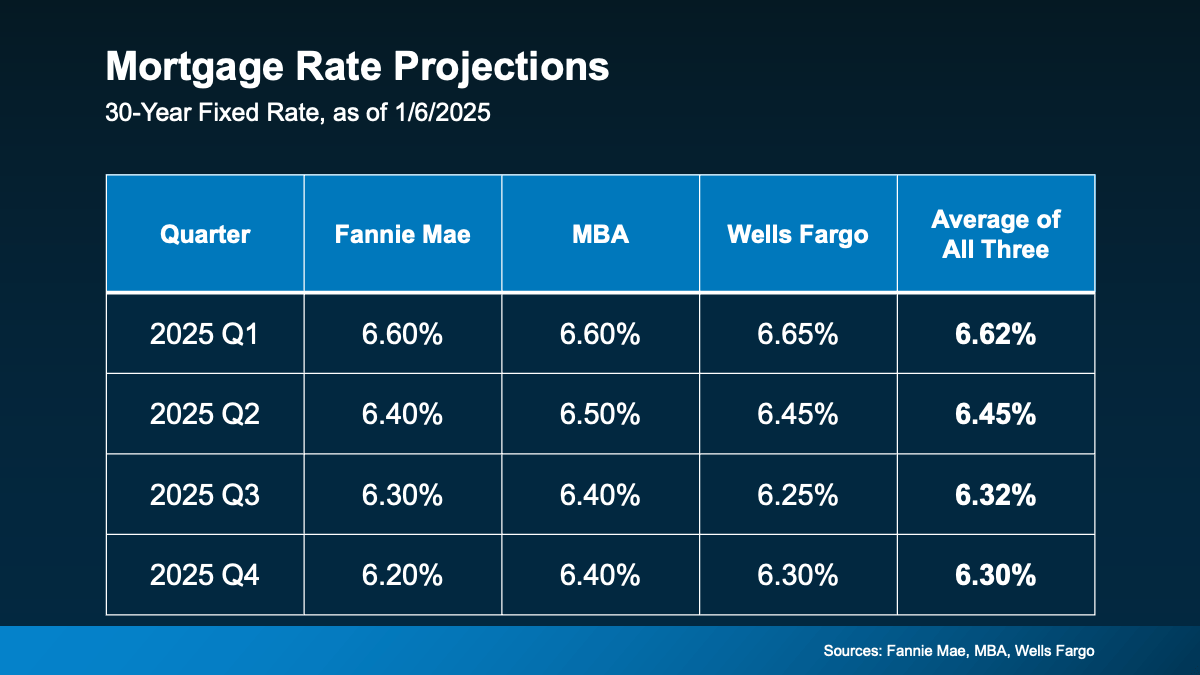
But remember that the market can change quickly, and experts will revise their predictions as the new year continues. Market forecasts are based on what experts know right now. And since everything from inflation to economic drivers have an impact on where rates go from here, some ups and downs are still very likely. So, don’t get caught up in the most exact numbers and try to time the market. Instead, focus on the overall industry trend and on what you can actually control.
A trusted lender and a local agent partner will make sure you’ve always got the latest data and the context on what it really means for you and your financial goals. With their help, you’ll see that even a small decline in mortgage rates can help bring down your future mortgage payment when you decide to buy.
Will Home Prices Fall?
The short answer? Not likely. While mortgage rates are expected to ease, home prices are projected to keep climbing in most areas – but at a slower, more normal pace. If you average the expert forecasts together, you’ll see prices are expected to go up roughly 3% next year, with most of them hitting somewhere in the 3 to 4% range. But this is a much more typical and sustainable rise in prices compared to (see graph below):
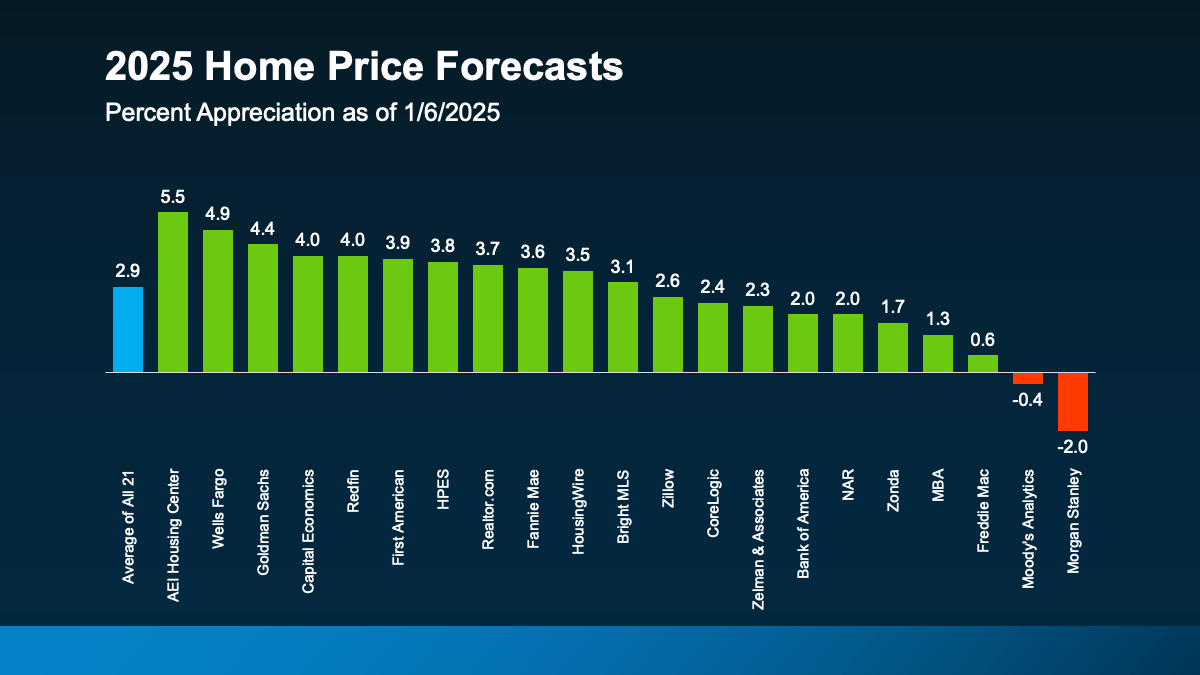
If you’re thinking of buying in 2025, don’t expect a sudden drop to score you a big deal. That may sound disappointing if you’re hoping for home prices to come down, but this means you won’t have to deal with the steep increases we saw in recent years. You’ll also likely see any home you do buy go up in value after you get the keys in hand, and this can turn into a great investment over time.
Like many buyers, you might be wondering how it’s even possible that home prices are still rising. The answer all comes down to supply and demand. Even though there are more homes for sale now than there were in 2024, it’s still not enough to keep up with all the active home buyers on the market. As Redfin explains:
“Prices will rise at a pace similar to that of the second half of 2024 because we don’t expect there to be enough new inventory to meet demand.”
Keep in mind that the housing market is hyper-local, so this will vary by area. Some markets will see even higher prices, and some may see prices level off or even dip if inventory is up in that area. In most places though, prices will continue to rise as they usually do.
If you want to find out what’s happening in your local housing market, it always helps to lean on an agent who can explain the latest trends and what they mean for your homeownership plans.
Conclusion
The housing market is always changing, and 2025 will be no different. With mortgage rates likely to ease down to the 6% range and prices rising at a slower, more sustainable pace, it could be a great time to finally buy or sell. As always, it’s all about staying informed and making a plan that works for you.
If you’re in the market to buy or sell a home in 2025, let’s connect you with a local agent who can give expert advice on what’s happening in your area and make sure your next move is a smart one.
Modular Homes vs. Regular Homes: How Do They Compare?
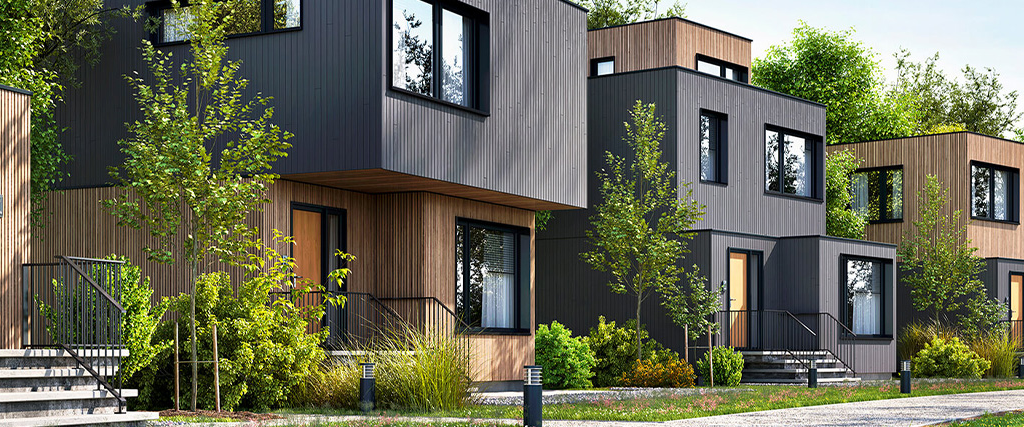
Between the woes of rising home prices and a lack of new inventory, many eager home buyers are exploring newer, more accessible options for achieving home ownership. One increasingly popular choice among new homeowners is the modular home, a type of prefabricated housing designed to offer increased affordability, customizability, and even construction quality over conventional site-built homes. But what exactly is a modular home, and how does it compare to a traditional single-family home? Keep reading for all the information you need to answer these questions and decide if a modular home is right for you.
What is a Modular Home?
Modular homes are a type of prefabricated housing built in individual sections or modules in a factory and then transported to the site for assembly. Unlike other prefab units, modular homes are placed onto a permanent foundation during assembly, and are built to the same building codes and regulations as traditional homes. Because modular homes are composed of different modules or “pieces”, the buyer has much more freedom and control over the design, layout, and style of the final product.
The main difference between modular homes and other prefabricated housing is the construction process. Modular homes begin as individual modules built in a controlled factory environment, which allows for increased efficiency and quality control. Once the modules are completed in the factory, they are transported to the site and assembled to create the finished home. This assembly process typically takes a shorter amount of time compared to traditional home construction, as the modules are already built and only need to be connected together. The result is a quickly-built and affordable new home, custom-tailored to fit the buyer’s preferences and needs.
Despite these differences from traditional site-built homes, modular homes are subject to the same building codes and meet the same standards of quality and safety. However, like any manufactured product, quality of service and construction can vary between sellers, so it’s advisable to buy from a trusted builder.
Quality Construction
One major advantage of modular homes is the quality construction that scaled factory production provides. In addition to following the same building codes as regular homes, the controlled factory environment ensures that modular homes are consistently produced at a set quality standard. Reputable manufacturers also produce home modules using the same materials that regular home builders do, making sure that a completed modular home meets or exceeds the quality of a traditional one. Of course, this may vary between manufacturers, so it’s always a good idea to research and confirm a builder’s practices before choosing one.
Customizable Options
As their nature implies, modular homes offer customization and creative freedom far beyond a traditional home. The ability to choose and combine different modules provides a considerable number of potential floorplans, allowing homeowners to personalize their new living space. Modular homes also offer the flexibility of adding additional modules in the future, providing the option to expand and adapt your home over time. Meanwhile, regular homes often have limited options for expansion, especially in planned communities or developments. This is even truer of starter homes, which can be costly to expand with added square footage thanks to construction costs. Naturally, this leads us to the last and perhaps most attractive strength of modular construction: cost-effectiveness.
Affordability
Modular homes and their owners enjoy considerable advantages in cost and affordability over regular homes. According to SoFi, modular homes tend to be 10% to 20% cheaper than traditional homes. The simplicity and efficiency of large-scale factory production means modular homes can be constructed and assembled at much lower costs than traditional homes. In addition, housing modules made with high quality materials are often more energy-efficient thanks to more effective insulation, which results in savings on utility bills during summer or winter. The combination of these lower costs provides a home that’s not only more affordable to buy, but more affordable to live in as well. In contrast, regular homes can have higher construction costs due to the increased labor required. The potential for weather delays can also extend a new house’s required construction time, driving up the final cost even further.
Is a Modular Home Right for Me?
Modular homes can be a great option for new home buyers who want the option to expand in the future, but there are downsides to consider as well. You’ll need to work with a contractor to purchase a parcel of land for your modular home, and finding suitable land can be difficult. Purchasing a modular home might require a construction loan rather than a mortgage, and some lenders may not finance a modular home due to unfamiliarity and inexperience. Reselling a modular home can also be challenging due to their customization as well as public misconceptions about their quality and desirability.
If you’re considering a modular home but have reservations, it’s always a great idea to consult a real estate professional or financial advisor. Modular homes certainly aren’t for everyone, but they can be the perfect alternative to the costs and long-term commitments of a regular home.