Facebook
 X
 Pinterest
 Copy Link

At dinner, someone mentions that the neighbors dropped their asking price. By the time the potatoes make it around the table, one listing has sparked three housing market questions: Are prices about to fall everywhere? Are rising foreclosures taking us back to 2008? And would a recession make it easier to buy?
If you’re considering a move in 2027, those questions can follow you home. The national forecasts point to modest price growth, foreclosure filings are up from a low base, and past recessions have had surprisingly different outcomes for homeowners. Here’s what that means for whatever housing decision is in front of you.
1. “Are home prices going to crash in 2027?”
Simply put, a nationwide crash isn’t what expert forecasters in the industry expect. Surveys from six industry experts all projected a rise in U.S. home prices for 2027. Their estimates ranged from 0.5% to 2.2% and averaged about 1.4%. That’s much slower growth than the jumps of a few years ago, but it also leaves room for prices to fall in some places.
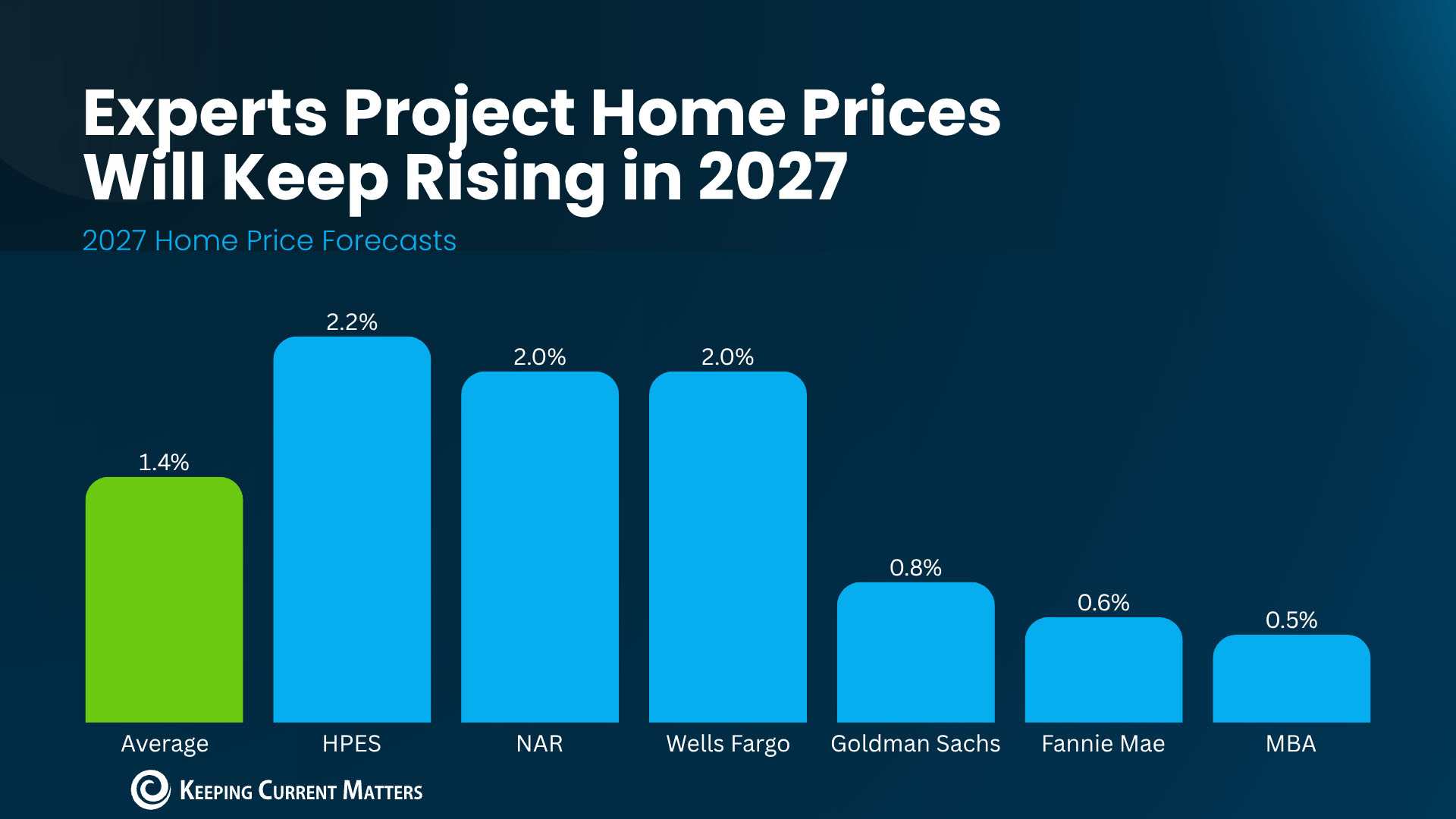
2027 projections: Home Price Expectations Survey, +2.2%; National Association of REALTORS®, +2.0%; Wells Fargo, +2.0%; Goldman Sachs, +0.8%; Fannie Mae, +0.6%; Mortgage Bankers Association, +0.5%.
In its third-quarter report, the National Association of REALTORS® found that some markets with a lot of new construction had already seen prices slip. Lawrence Yun, NAR’s chief economist, put those declines in context:
“Price declines are occurring mainly in southern states, where there has been robust new home construction in recent years. Given the region’s faster job growth, these price drops should be viewed as temporary and as a second-chance opportunity for those previously priced out of the market.”
That’s Yun’s outlook for those markets. For the house down the street, there’s a better test: compare its new asking price with what buyers recently paid for similar homes nearby. If it was priced well above those sales to begin with, the cut may say more about that seller’s starting point than about local home price trends.
2. “Do rising foreclosures mean another 2008?”
Foreclosure filings have risen, but the starting point matters. ATTOM counted 227,548 U.S. properties with a foreclosure filing in the first half of 2026, up 21% from a year earlier. In the same six months of 2019, before the pandemic, the count was 296,458. A filing can be a default notice, a scheduled auction or a bank repossession. Only the last of those means the lender took the property back.
The run-up to 2008 also looked different. Logan Mohtashami, lead analyst at HousingWire, traced the foreclosure wave to the lending boom that came before it:
“. . . we have had many recessions post-WWII but only one foreclosure crisis. That foreclosure crisis started with a massive credit boom from 2002-2005, and then a credit bust. . . none of that is happening now . . .”
One difference today is how much equity many owners have. Equity is what a home is worth minus the debt secured by it. In the second quarter of 2026, Cotality put the national average at $310,000 per homeowner with a mortgage. Every state with a reported figure averaged more than $100,000; Vermont had no estimate.
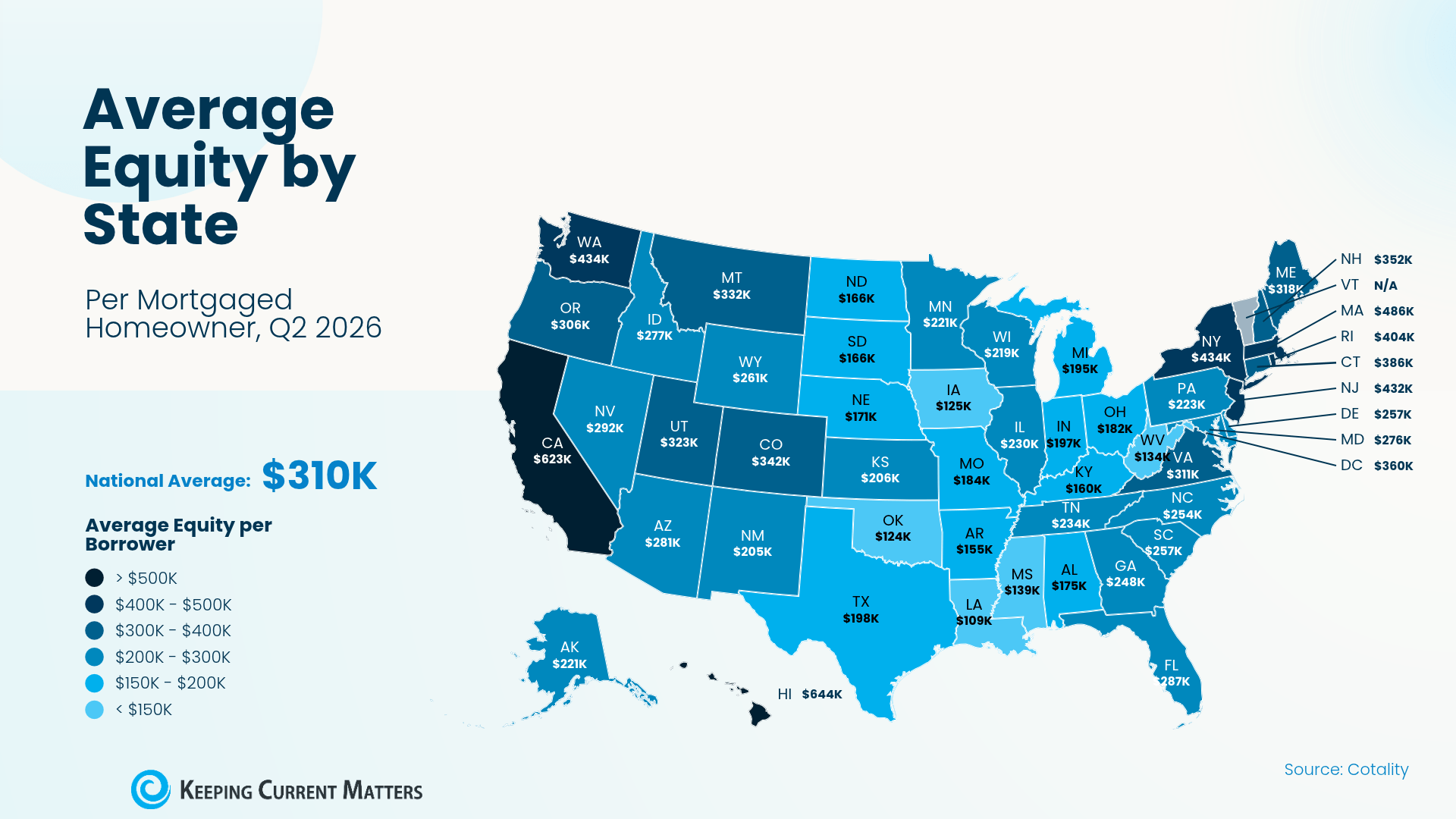
State averages ranged from $109,000 in Louisiana to $644,000 in Hawaii; Vermont had no estimate. Source: Cotality, Q2 2026.
An average can’t tell you what one household owes. But when a home is worth enough to cover the mortgage and selling costs, an owner who can no longer manage the payments may have the option to sell before foreclosure.
3. “Are we headed for a recession, and would home prices fall?”
In October 2026, economists surveyed by The Wall Street Journal put the average chance of a U.S. recession in the next 12 months at 24%. Think of it as roughly a one-in-four chance. A downturn was a possibility, but it wasn’t the outcome the group saw as most likely.
Even if a recession hits, it doesn’t tell you which way home prices will go. The federal house price index rose nationally in five of the last six U.S. recessions. The exception was the Great Recession of 2007–09, when the housing bust helped set the downturn in motion and the index fell 8.9%.
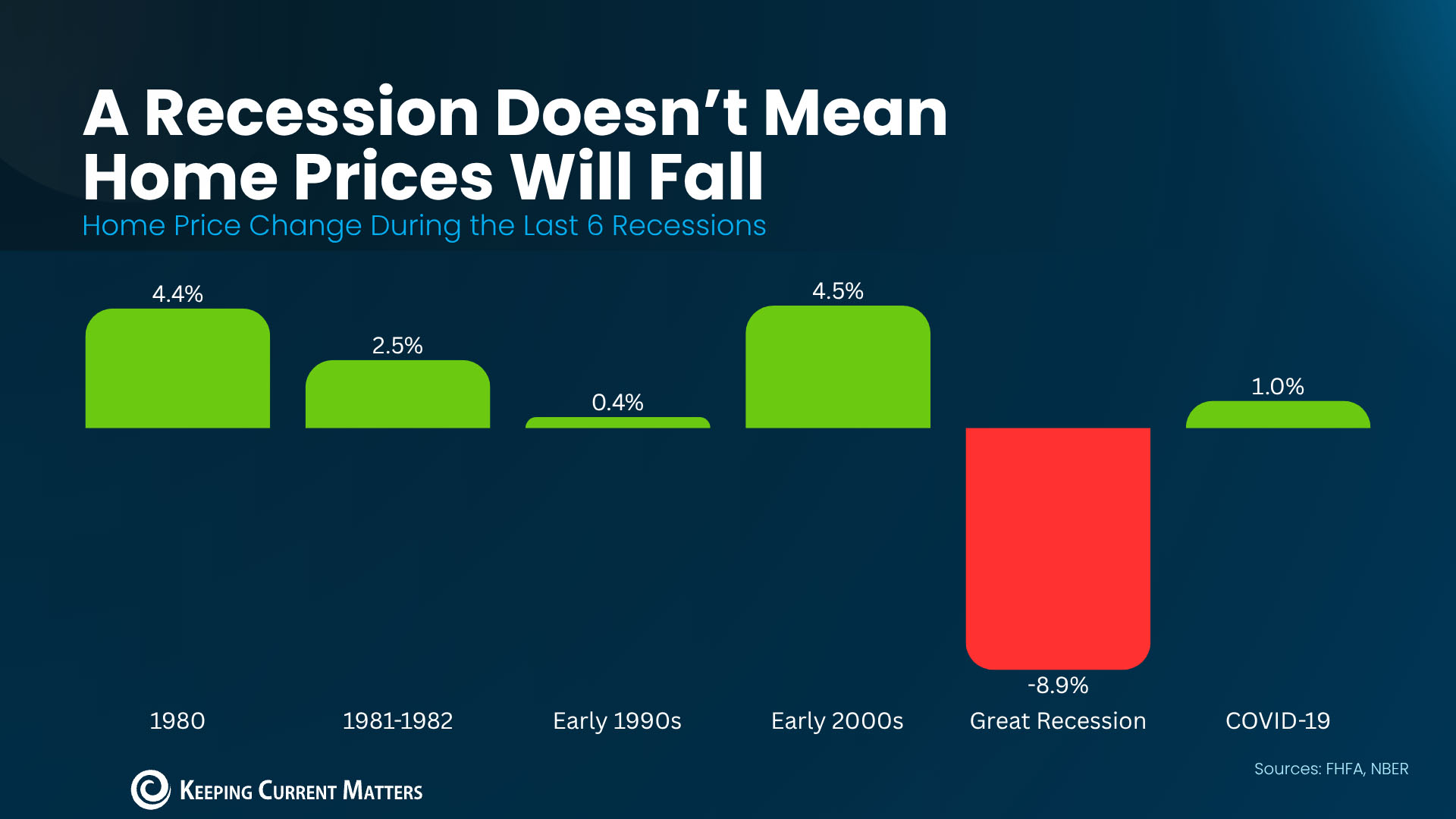
U.S. home price change: 1980, +4.4%; 1981–82, +2.5%; 1990–91, +0.4%; 2001, +4.5%; 2007–09, −8.9%; 2020, +1.0%. Source: FHFA and NBER.
Take your housing market questions closer to home
If you’re planning a move in 2027, bring your housing market questions to a local CENTURY 21 Affiliated agent to show you recent sales and competing listings in your price range. If you’re buying, you’ll see how a particular asking price compares. If you’re selling, you’ll see the alternatives a buyer might choose instead of your home.