Facebook
 X
X
 Pinterest
 Copy Link
You may be setting money aside every month and still wondering when you’ll have enough to buy a home. Between rent and everyday expenses, building a savings account takes time. If buying your first home feels years away, two choices are worth a closer look: the price of the home you’re considering and the down payment you’re saving toward.
A starter home and a loan that allows less than 20% down could bring your savings goal within reach sooner. The key is finding a combination that also leaves you comfortable with the monthly costs.
Consider a Starter Home at a Lower Price
A home with less space or fewer upgrades may still check all your boxes at a lower price point. Depending on your market, that could mean a condo, townhome, or smaller or older single-family home. Zillow describes a starter home as one in the lowest third of local home values.
A lower purchase price reduces the dollars needed for the same down payment percentage. It can also change how long it takes for buying to make financial sense compared to renting.
Zillow’s August 2026 analysis illustrates the difference. Using July market conditions, it modeled a household saving 10% of the area’s median income toward a 20% down payment:
- Typical single-family home: 8.5 years to save, plus 6.2 years after buying to break even against renting, for a combined 14.7 years.
- Starter home: 4.6 years to save, plus 2.6 years to break even, for a combined 7.2 years, roughly half as long.
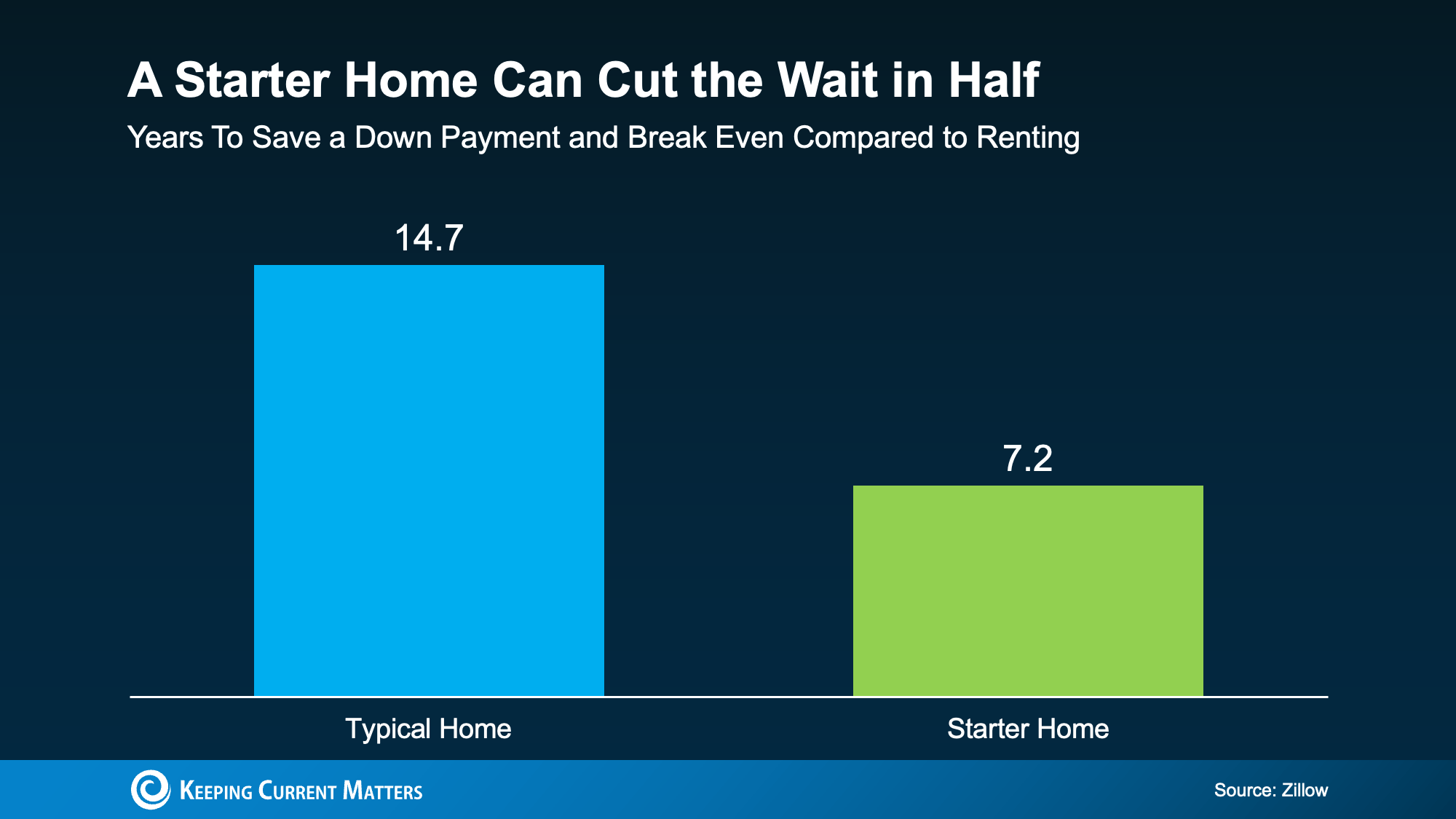
Zillow’s July 2026 model combines saving for a 20% down payment with the time after purchase to break even against renting. Source: Zillow.
Breaking even is the estimated point when the overall financial results of owning and renting are about equal. Beyond it, owning can come out ahead under the model’s assumptions.
The comparisons also use different rentals: a typical single-family rental for the typical home and a multifamily rental for the starter home. Remember that local prices, rents, and your existing savings can change the timeline considerably.
As Zillow senior economist Kara Ng explains:
“Buyers should think about not just when they can afford to buy, but how long they’d need to stay before owning makes more financial sense than renting.”
Explore a Smaller Down Payment
If you’ve been treating 20% down as a requirement, a conversation with a lender may change your savings target. NAR’s 2025 Profile of Home Buyers and Sellers reports a median down payment of 10% among first-time buyers, compared with 19% among all buyers.
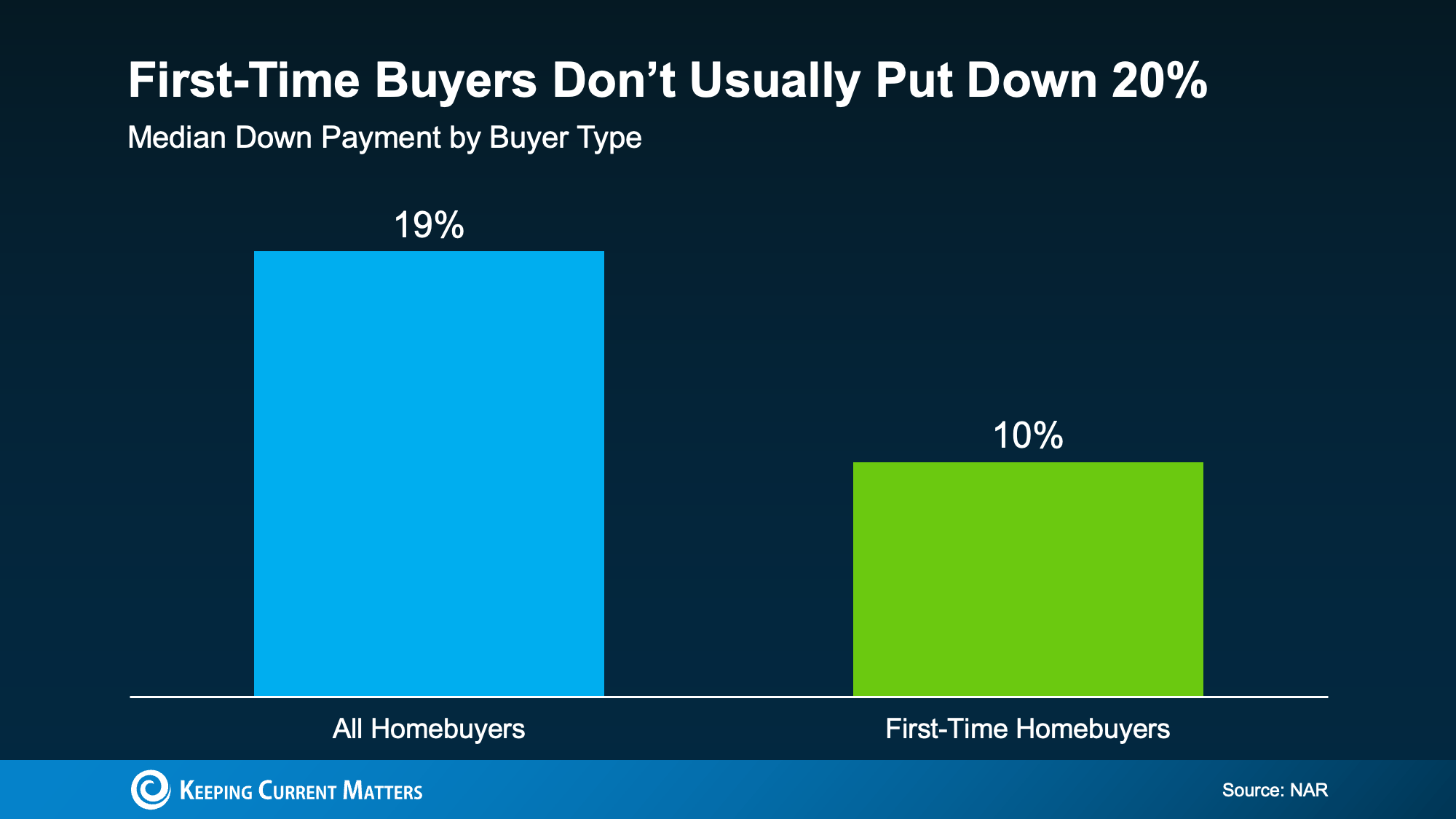
Median down payments were 19% for all buyers and 10% for first-time buyers in NAR’s 2025 Profile of Home Buyers and Sellers, covering transactions from July 2024 through June 2025. Source: NAR.
Some loan options allow less for qualified borrowers:
- Conventional loans may allow as little as 3% down.
- FHA loans may allow as little as 3.5% down.
- VA loans for eligible military borrowers and USDA loans for eligible rural properties may offer no down payment, subject to borrower, property, and lender requirements.
A smaller down payment can shorten the savings stage, but borrowing more can raise your payment and total loan costs. Mortgage insurance or program fees can also apply, driving your total cost further.
Ask About Down Payment Assistance
Assistance may help with the upfront costs, too. Down Payment Resource counted 2,746 homeownership programs available nationwide in its Q2 2026 report. Funding and eligibility vary, and some programs can be combined. As the organization explains:
“Some homebuyers can layer multiple sources of assistance to reduce their upfront costs. Layering means combining more than one eligible source of funding as part of your home purchase.”
Ask a mortgage professional which programs fit your situation, whether they can be combined, and when repayment might be required. Include closing costs and emergency savings in your plan.
Make a Plan for Buying Your First Home
Start with a price range and monthly budget you can can realistically handle. Compare the full cost of each property, including taxes, insurance, association fees, maintenance, and possible repairs. Then ask a qualified lender to show how different down payments would affect your cash needed at closing and ongoing ownership costs.
A local CENTURY 21 Affiliated agent can help you explore starter homes that fit your budget. With a clearer picture of the homes and financing available, you can decide whether buying sooner makes sense for you.