Facebook
 X
X
 Pinterest
 Copy Link

You might have heard that home prices are cooling off. Nationally, that’s true. But when you look at individual markets, the picture can be very different depending on where you are.
Some regions are seeing solid price growth, while others have flattened out or even dipped slightly negative. So what’s causing these huge variation in the real estate market?
The answer comes down to one major factor: housing inventory.
How Housing Market Inventory Drives Prices
The relationship between housing supply and home prices is straightforward:
- When there are more homes for sale, buyers have more options.
- More options usually mean less competition.
- Less competition can make it harder for sellers to push prices higher.
The opposite is also true. When inventory is tight, buyers are competing for a smaller pool of homes. That competition can help push prices up.
This supply and demand dynamic is currently playing out across the country right now.
Markets where inventory has climbed back to, or above, normal pre-pandemic levels are seeing prices flatten or fall slightly. Markets where inventory is still well below 2019 benchmarks are generally still seeing prices rise.
As Lance Lambert, CEO of ResiClub, explains:
“Home prices are still climbing a little year-over-year in many regions where active inventory remains well below pre-pandemic 2019 levels, such as pockets of the Northeast and Midwest.
In contrast, some pockets in states like Texas, Florida, and Colorado — where active inventory exceeds pre-pandemic 2019 levels by a solid clip — are seeing modest home price pullbacks or flat pricing.”
A Tale of Two Real Estate Markets
To understand current price shifts, we have to look back at normal, pre-pandemic inventory levels from 2019.
In most places, inventory is still below where it was before the pandemic. That is one reason prices are still climbing moderately in the majority of states.
But the markets getting the most attention are the ones where prices are softening. And in many of those areas, inventory has made a much bigger comeback.
According to Realtor.com, 15 states and Washington, D.C. are now above pre-pandemic inventory levels, with some areas well above those benchmarks.
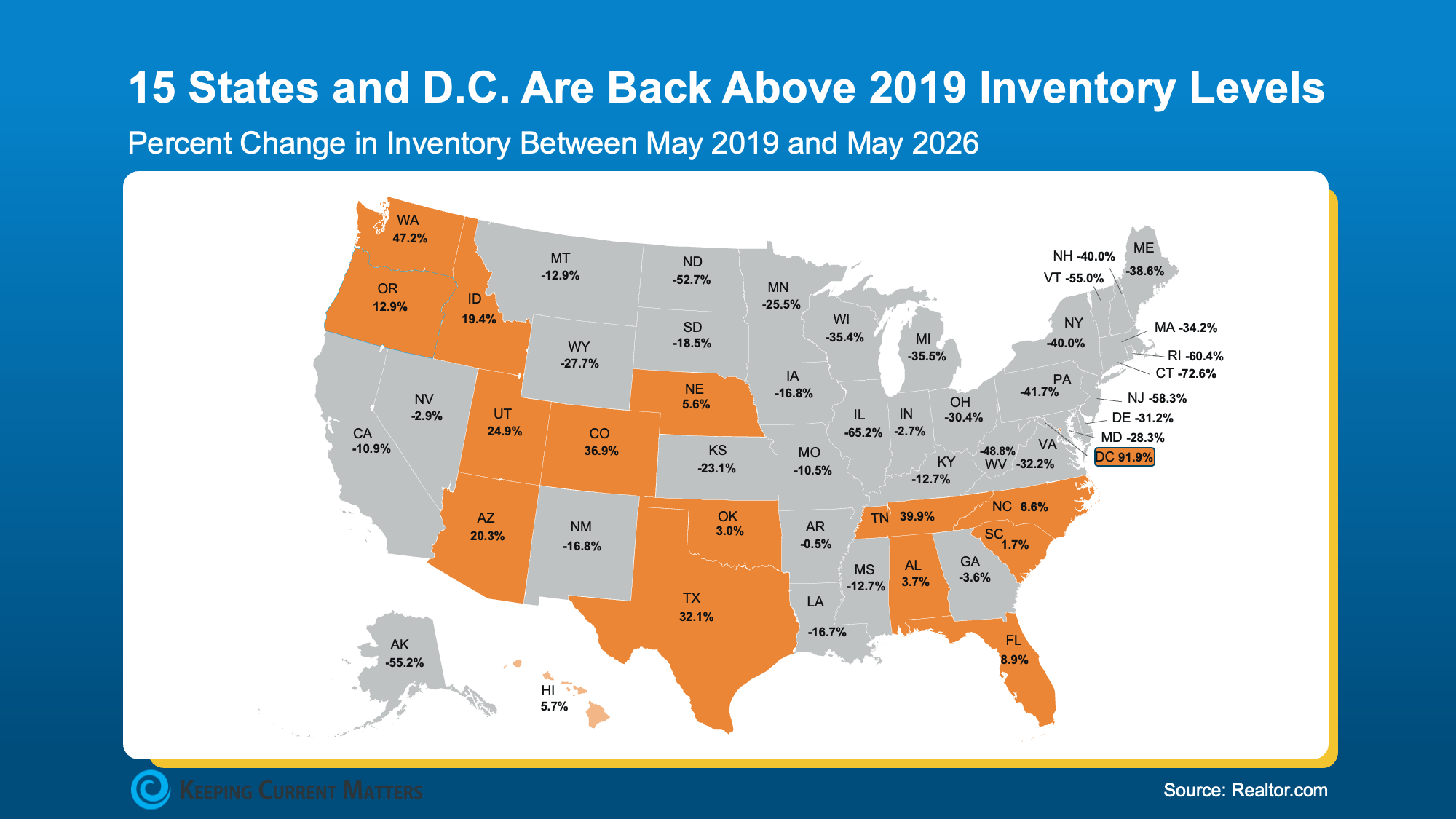
When you compare those inventory trends with the latest Federal Housing Finance Agency (FHFA) data on home prices, the connection becomes much clearer.
The areas with more homes for sale are often the same places seeing prices flatten or dip slightly.
This overlap isn’t a coincidence: it’s direct cause and effect.
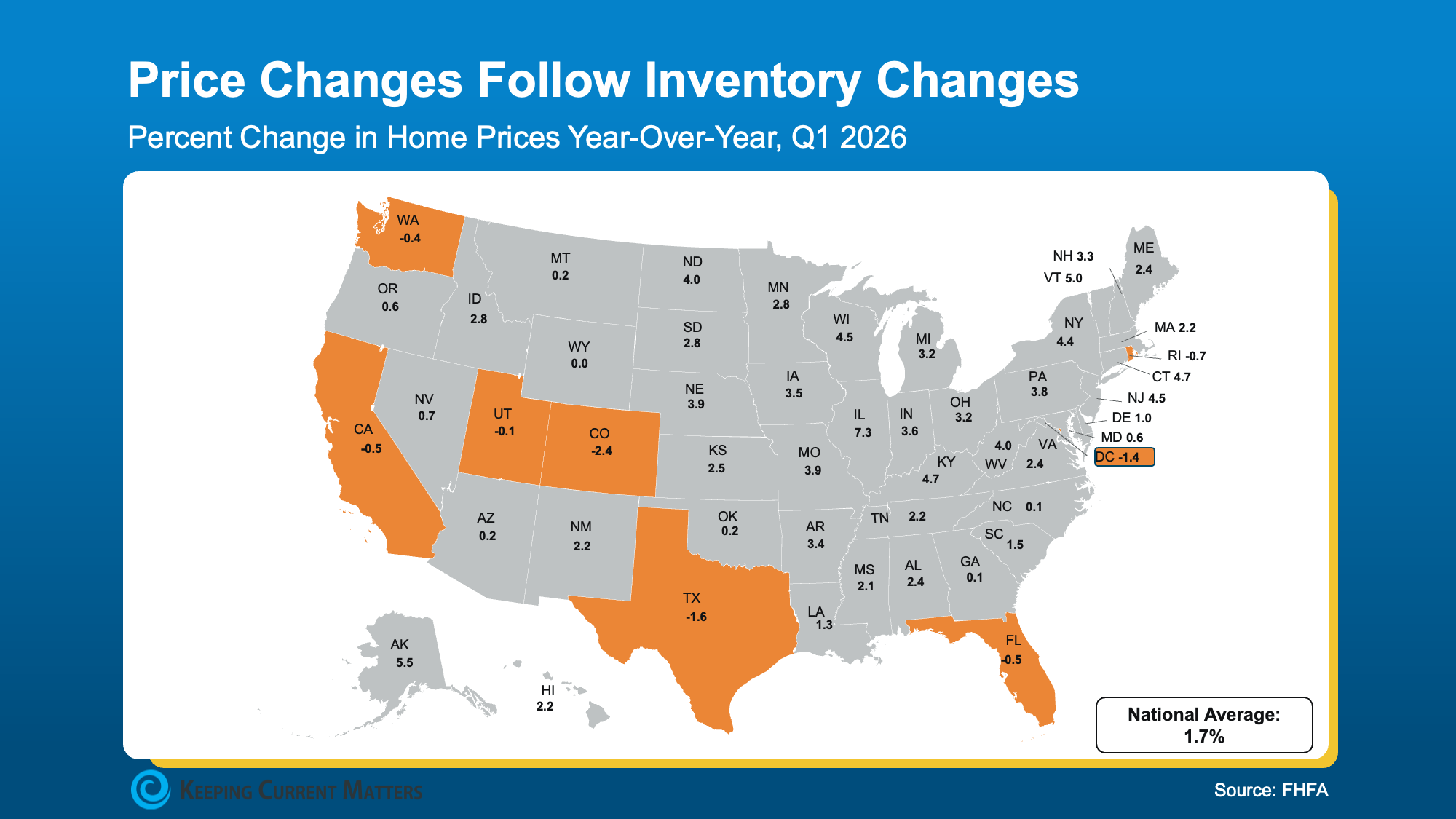
The national average of 1.7% price growth is accurate, but it’s a blend of two very different stories. A few areas are experiencing mild price declines, while the overwhelming majority of markets are still seeing prices rise.
What This Means for Home Buyers and Sellers
For both buyers and sellers, local conditions matter more than the national average. The best strategy will depend on your local housing market inventory.
If You’re a Home Buyer:
- In higher-inventory states like Texas, Colorado, or Florida, you may have genuine negotiating power.
- In these areas, you will likely find more choices, face less competition, and encounter sellers who are motivated to make a deal.
- If you’re shopping in tighter markets, like much of the Northeast, you should prepare to face steeper competition.
If You’re a Home Seller:
- Your pricing strategy is everything.
- In markets where inventory has risen, overpricing your home is the fastest way to sit on the market and eventually sell for less than you would have with the right initial price.
- If you live in a market where inventory is still low, you’re in a stronger position.
- Pricing your home correctly from day one still matters if you want to attract serious buyers quickly.
Bottom Line
When it comes to home prices, your location matters more than ever.
Inventory is the key factor shaping today’s market. Areas with more homes for sale are seeing prices flatten or dip slightly, while areas with limited inventory are generally still seeing prices rise.
Whether you’re buying or selling, partnering with an experienced real estate agent is the best way to understand what’s happening in your market.
Ready to make sense of your local market and make a move? Contact our brokerage today to connect with a local agent who can help you compare inventory, pricing, and next steps.