Facebook
 X
X
 Pinterest
 Copy Link
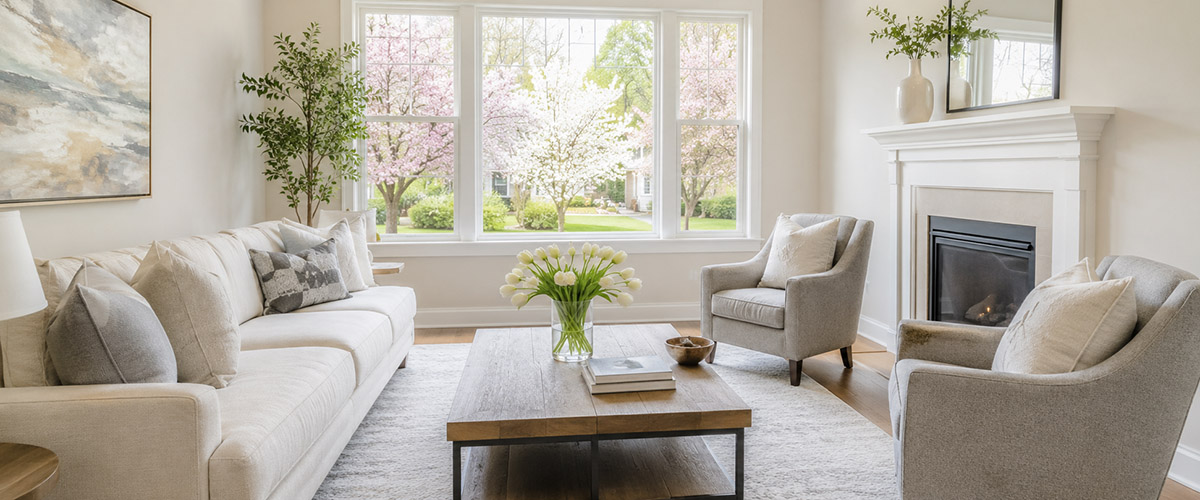
Selling your house this spring? Before your listing goes live, there’s one step that could make a meaningful difference in how buyers see your home: staging.
Home staging is more than making a house look pretty for photos. It helps buyers picture themselves living in the space, which can lead to more interest, stronger offers, and a faster sale. And in a market where buyers have more options to choose from, first impressions matter more than ever.
As Nadia Evangelou, Principal Economist at the National Association of Realtors (NAR), explains:
“Staging matters. Preparing the home to be ‘buyer-ready’ attracts more buyers, especially now that inventory has increased.”
Here’s why staging your house could pay off this spring, plus a few options to fit different budgets.
What Is Home Staging?
Home staging is the process of preparing your home so it appeals to the widest pool of potential buyers. The idea is to make each space feel clean, open, functional, and inviting.
That may include:
- Decluttering countertops, closets, and storage areas
- Deep cleaning every room
- Rearranging furniture to improve flow
- Removing overly personal items
- Adding simple décor, lighting, or fresh linens
- Highlighting key features like natural light, fireplaces, or outdoor spaces
Staging helps buyers focus on the home itself instead of distractions. When a home feels spacious and well cared for, buyers are more likely to connect emotionally with the property, and more likely to make an offer.
Why Staging Your House Is Worth It
A well-staged home can help your listing stand out both online and in person. And since most buyers start their search by scrolling through photos, your home needs to make a strong first impression.
Staging can help:
1. Your Home Look Better in Listing Photos
Professional photos are one of the most important tools in your marketing plan. Staged rooms tend to look brighter, cleaner, and more balanced, which can encourage more buyers to schedule a showing.
2. Buyers Understand the Space
Empty rooms can sometimes feel smaller than they really are. On the other hand, crowded or poorly arranged rooms can make a home feel cramped. Staging shows buyers how each area can be used, from a cozy living room to a flexible home office.
3. Your House Sell Faster
Staged homes have been shown to sell significantly faster than unstaged homes. Redfin reports that staged homes sell up to 73% faster and often close in under a month. Meanwhile, vacant homes might sit on the market from two to three months, and that’s if they sell.
4. You See a Stronger Return
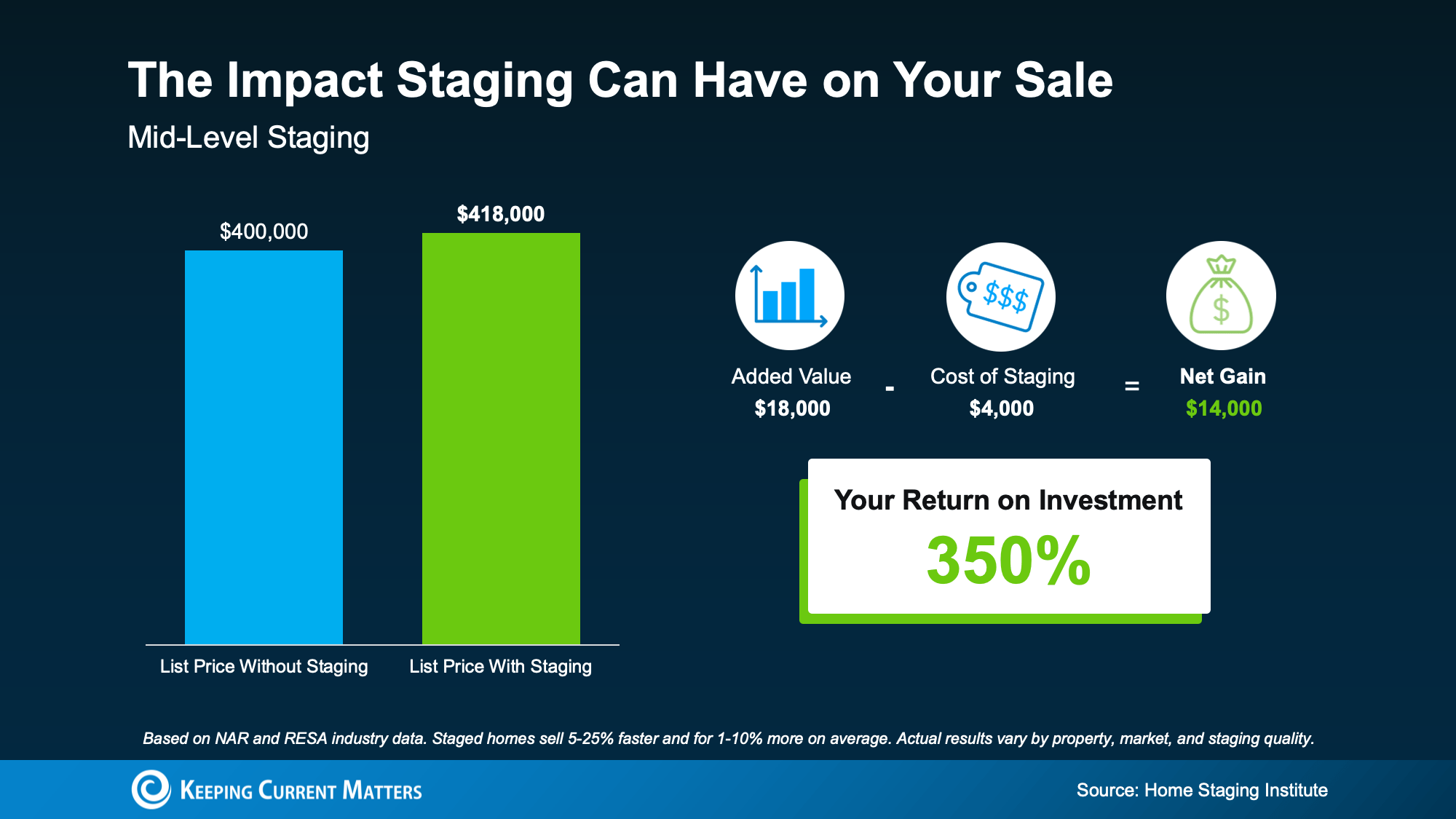
Staging does require an investment, but it may pay off. The Home Staging Institute claims mid-level staging can deliver roughly a 350% return on investment, especially when it helps a home sell for more or reduces time on market.
Home Staging Options for Different Budgets
Staging your house doesn’t need to mean hiring a full-service staging company or renting furniture for every room. There are several ways to approach it based on your timeline, budget, and the condition of your home.
Most Expensive: Professional Staging
A professional stager can handle the full process, including furniture layout, décor, and design details. This option can be especially helpful if your home is vacant, outdated, or otherwise difficult for buyers to visualize.
Professional staging often costs more, but it can create a polished look that photographs well and attracts more buyers.
Less Expensive: Virtual Staging
Virtual staging uses digital furniture and décor in listing photos. This can be a cost-effective option for vacant homes, especially when you want buyers to see the potential of each room.
Keep in mind that buyers should still understand what the home looks like in person, so your agent can help you decide when virtual staging makes sense.
Least Expensive: DIY Staging
If your home is already in good condition, DIY staging may be enough. Simple updates like decluttering, cleaning, rearranging furniture, and adding fresh towels or neutral bedding can make a noticeable difference.
This is often the most budget-friendly option and will still help your home feel more move-in ready.
Ask Your Real Estate Agent What Buyers Expect
Before you spend money on staging, talk with your real estate agent. Agents see how buyers respond during showings and open houses, so they can recommend which updates are worth your time and which ones may not be necessary.
For example, your agent may suggest focusing on the living room, kitchen, primary bedroom, and entryway first. These are often the spaces that create the strongest first impression. An expert agent will know how to best use staging to leverage your home’s own unique strengths and personality.
Bottom Line: Consider Staging For Your Selling Strategy
Staging your house can help it look its best, attract more buyers, and potentially sell faster this spring. Whether you choose professional staging, virtual staging, or a simple DIY approach, the right preparation can make your home more appealing in a competitive market.
Before you list, connect with a local real estate agent to decide which level of staging makes the most sense for your home, budget, and local market.