Facebook
 X
X
 Pinterest
 Copy Link
Smaller Homes, Bigger Value for Today’s Buyers
You might have started your home search with a simple picture in mind: a certain number of bedrooms, a spacious layout, maybe even a home office or dedicated workout room.
Then reality sets in. The homes that fit your budget may be smaller than what you originally imagined.
That’s a common experience for many buyers right now. Affordability is tight, and buyers are taking a closer look at what they truly need in a home. But going smaller doesn’t need to feel like a compromise.
In fact, smaller homes for buyers can offer real advantages in today’s market, especially when considering newer construction, condos, and communities designed with shared amenities.
Why Smaller Homes Are Getting More Attention
Smaller homes are not just a backup plan. They have become a more practical path for many buyers who want to balance comfort, location, and budget.
In fact, newly built homes have been getting smaller for years, and the median square footage of new single-family homes has generally declined since 2014, based on US Census data.
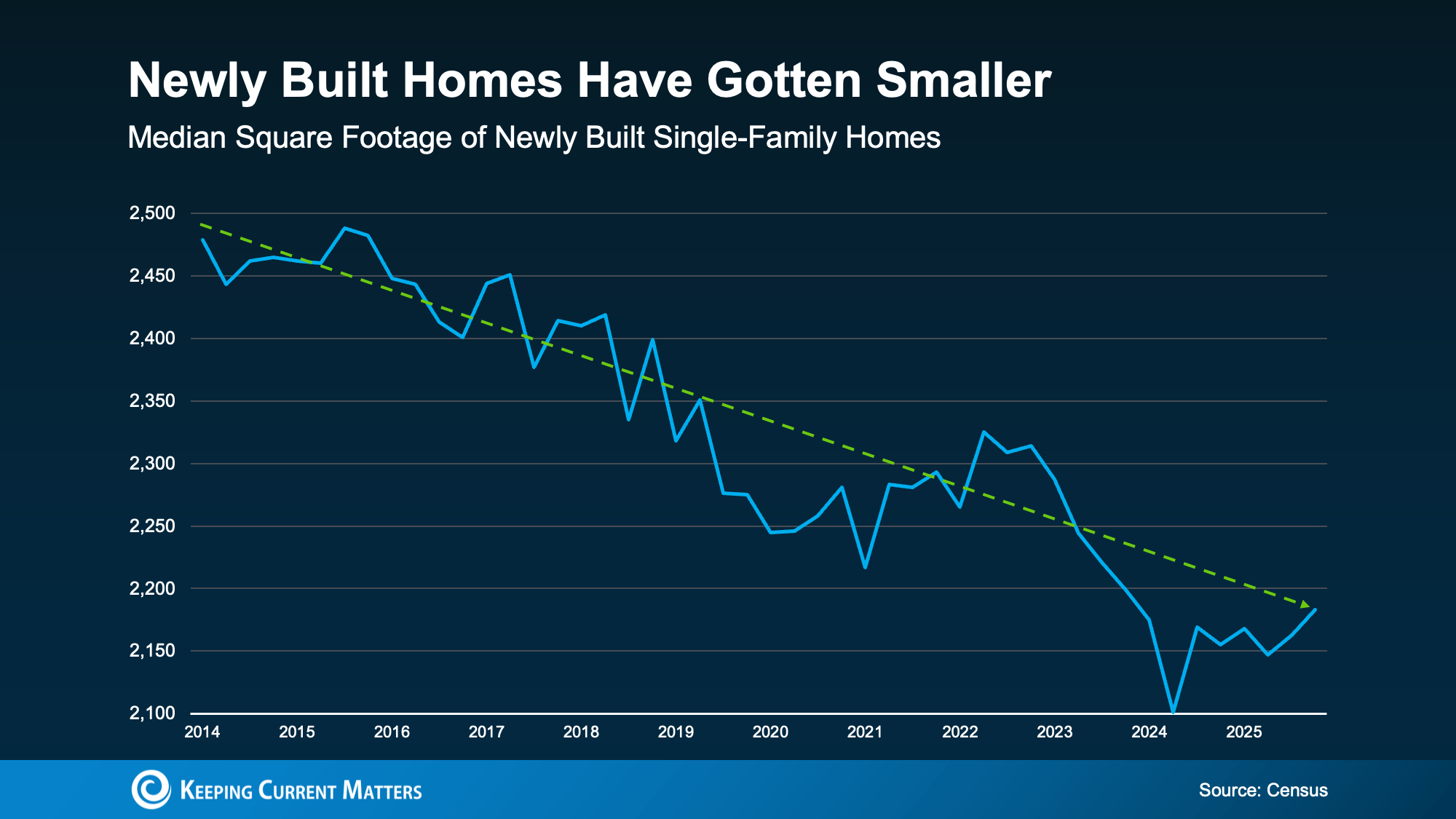
This shift makes sense. Builders pay close attention to what buyers are not only willing, but able to purchase. When affordability becomes a bigger concern, smaller floor plans can help bring new homes within reach for more shoppers.
Smaller New Construction Homes May Be Worth a Look
If the existing homes in your price range aren’t checking enough boxes, it may be time to explore new construction.
Many builders are focusing on smaller homes with modern layouts, updated finishes, and move-in-ready features. Smarter designs can make a smaller footprint feel more functional than an older home with a less efficient floor plan.
A smaller, newer home may offer:
- Modern appliances and finishes
- Open, practical layouts
- Less unused space
- Move-in-ready convenience
- A price point that may better fit your budget
Shifting buyer preferences are a big reason that new home prices have hit a five-year low. If you’ve ruled out new construction in the past, you want to take another look at what builders are offering in your area.
Condos Can Open Another Path to Homeownership
New construction isn’t available everywhere, and in some markets, it may still be outside your budget. That is where condos can be worth considering.
Condos are often smaller than single-family homes, which can help reduce the overall purchase price. According to data from the National Association of Realtors (NAR), the median condo price is lower than the median single-family home price in every region.
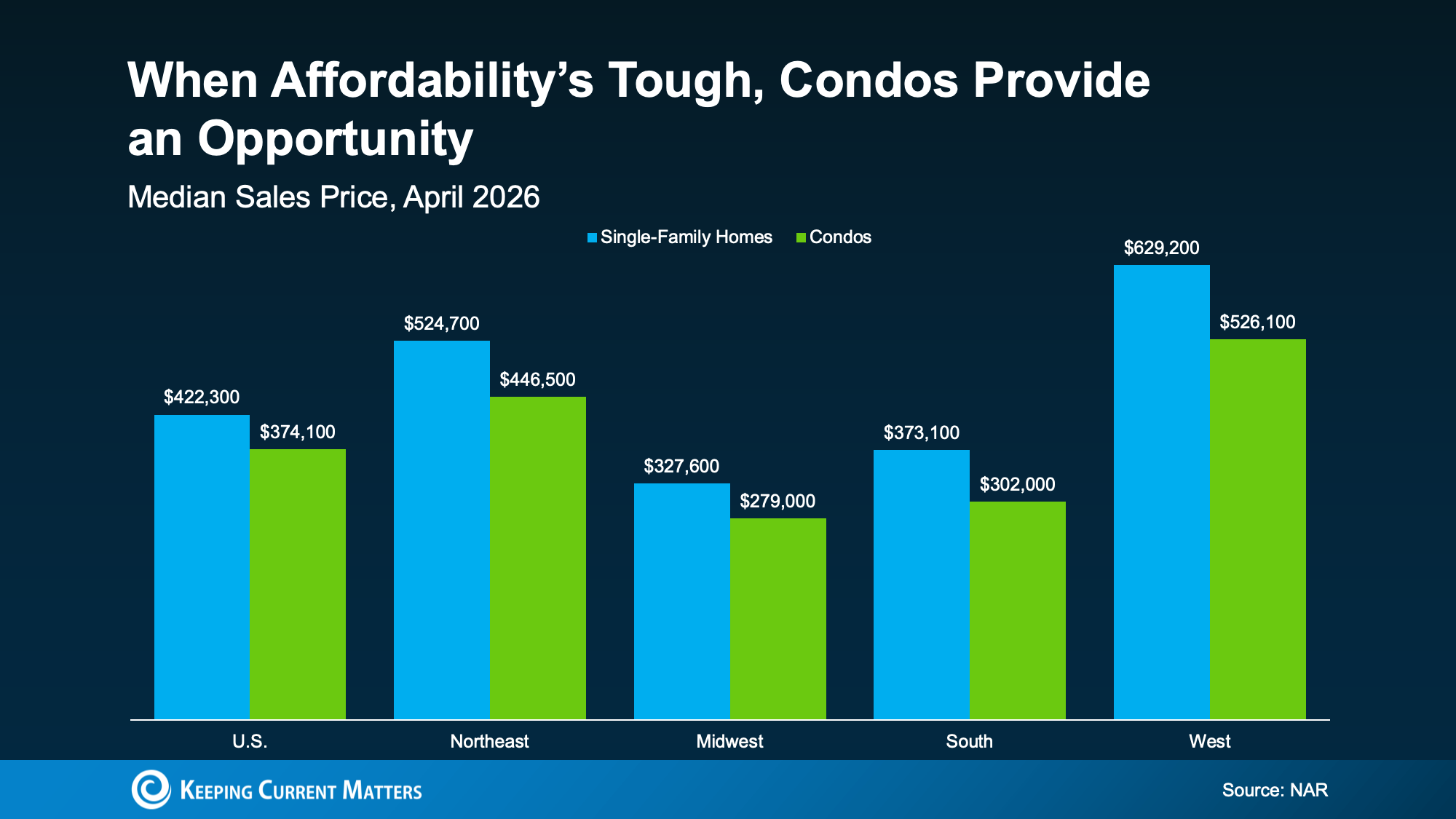
For buyers trying to make the numbers work, this is a considerable difference.
According to NAR, condo sales rose 2.7% last month, and were up year over year. And value is a driving factor. Ali Wolf, Chief Economist for New Home Source, explains:
“In addition to favoring smaller floor plans, more consumers are showing a willingness to live in an attached home. This shift is not driven by a preference for shared walls, but by a pursuit of value.”
For buyers focused on affordability, condos can offer a way to stay active in the market without stretching too far for a detached single-family home.
The Right Community Can Make a Smaller Home Feel Bigger
Square footage is important, but it’s only one part of a home’s blueprint.
A smaller home may still work well if the surrounding community gives you access to amenities that extend how you live day to day. In some condo communities, neighborhoods, and master-planned developments, shared spaces help fill in the gaps.
Depending on the community, amenities may include:
- Walking trails
- Pools
- Fitness centers
- Co-working spaces
- Outdoor gathering areas
Features like these can make a smaller home feel more livable, and functional. For example, if there’s no room for a home office, a nearby co-working space can help. If you don’t have space for a dedicated workout room, a shared fitness center can fill the gap.
Buying a Smaller Home Does Not Mean Giving Up Comfort
A smaller home can still support the way you want to live. Focusing less on total square footage and more on how the space works can offer a different perspective.
As you compare options, consider:
- Layout: Does the floor plan make daily routines easier?
- Storage: Are closets, cabinets, and garage space used efficiently?
- Natural light: Does the home feel open and comfortable?
- Shared amenities: Does the community offer spaces you would actually use?
- Location: Does the home keep you close to the places that matter to you?
A smaller home with the right layout, features, and setting may be a better fit than a larger home that stresses your budget or needs more work.
Bottom Line: Smaller Homes Can Offer Bigger Opportunities
Today’s smaller single-family homes and condos have more to offer than their square footage might suggest. They can give buyers more budget flexibility, access to newer features, and opportunities to live in communities designed with useful amenities.
If your current search feels limited, consider widening your options. A smaller home, new build, or condo may offer opportunities you never knew existed.
Curious about smaller homes, condos, or new construction options in your area? Contact our brokerage to explore what’s available and compare homes that fit your budget and goals.
New Home Prices Hit a 5-Year Low
If you’ve assumed a newly built home is out of reach, it may be time to take another look.
The median sale price of a newly built home has dropped to its lowest level since 2021, according to the latest United States Census Bureau data. At the same time, many builders are still offering incentives to help attract buyers.
New Home Prices Have Come Down
After climbing sharply during the pandemic years, new home prices have eased. The median sale price of a newly built home is now around $390,000, which is the lowest level in nearly five years.
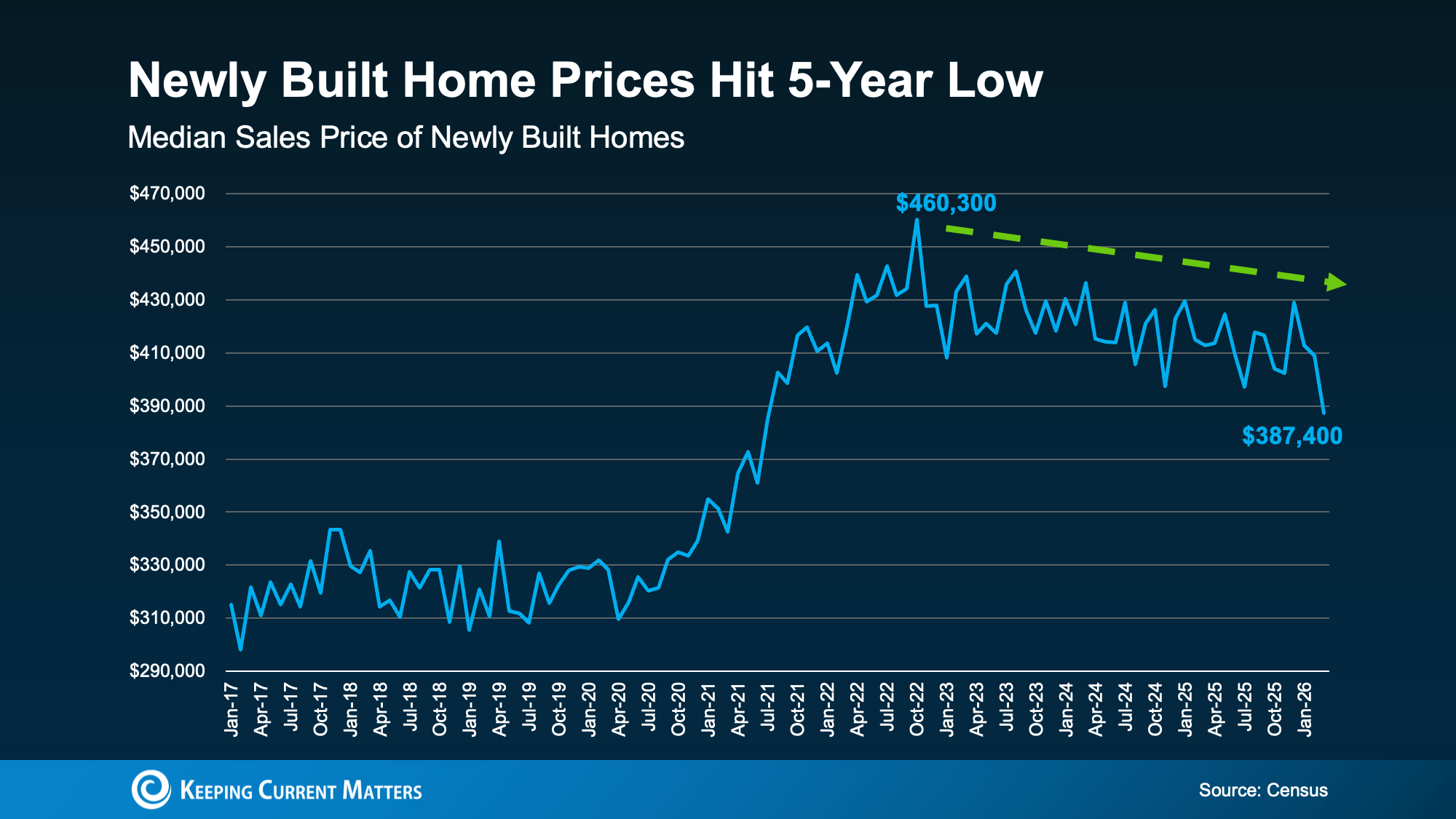
Local markets can vary, but the national trend may work in buyers’ favor, especially in the entry-level price range. According to Zonda, prices in the entry-level new construction segment have dropped about 2.7% over the past 12 months, which is more than any other price tier.
This doesn’t mean every newly built home is suddenly affordable now. But, it does mean that buyers may be seeing some of the best new construction pricing since 2021.
Why Lower New Home Prices Do Not Mean a 2008 Repeat
Lower prices can make some buyers wonder whether the new home market is in trouble. But today’s conditions are very different from 2008.
Builders are being more intentional about how much inventory they bring to market. Instead of letting homes pile up, many are using pricing adjustments and incentives to keep inventory moving.
It’s also important to keep perspective. Even with recent price improvements, new home prices are still higher than pre-pandemic norms. This isn’t a market crash. It’s a builder strategy designed to match today’s buyer demand.
Builders Are Still Offering Buyer Incentives
Lower prices aren’t the only potential advantage for buyers. According to the National Association of Home Builders (NAHB), 60% of builders are currently offering some form of incentive to attract buyers.
Common builder incentives include:
- Closing cost assistance: Some builders may help cover upfront costs, which can reduce the cash buyers need at closing.
- Upgrade packages: Builders might include premium finishes, appliance packages, or design features at no additional cost.
- Mortgage rate buydowns: Some builders might pay to reduce a buyer’s mortgage rate, which can lower the monthly payment.
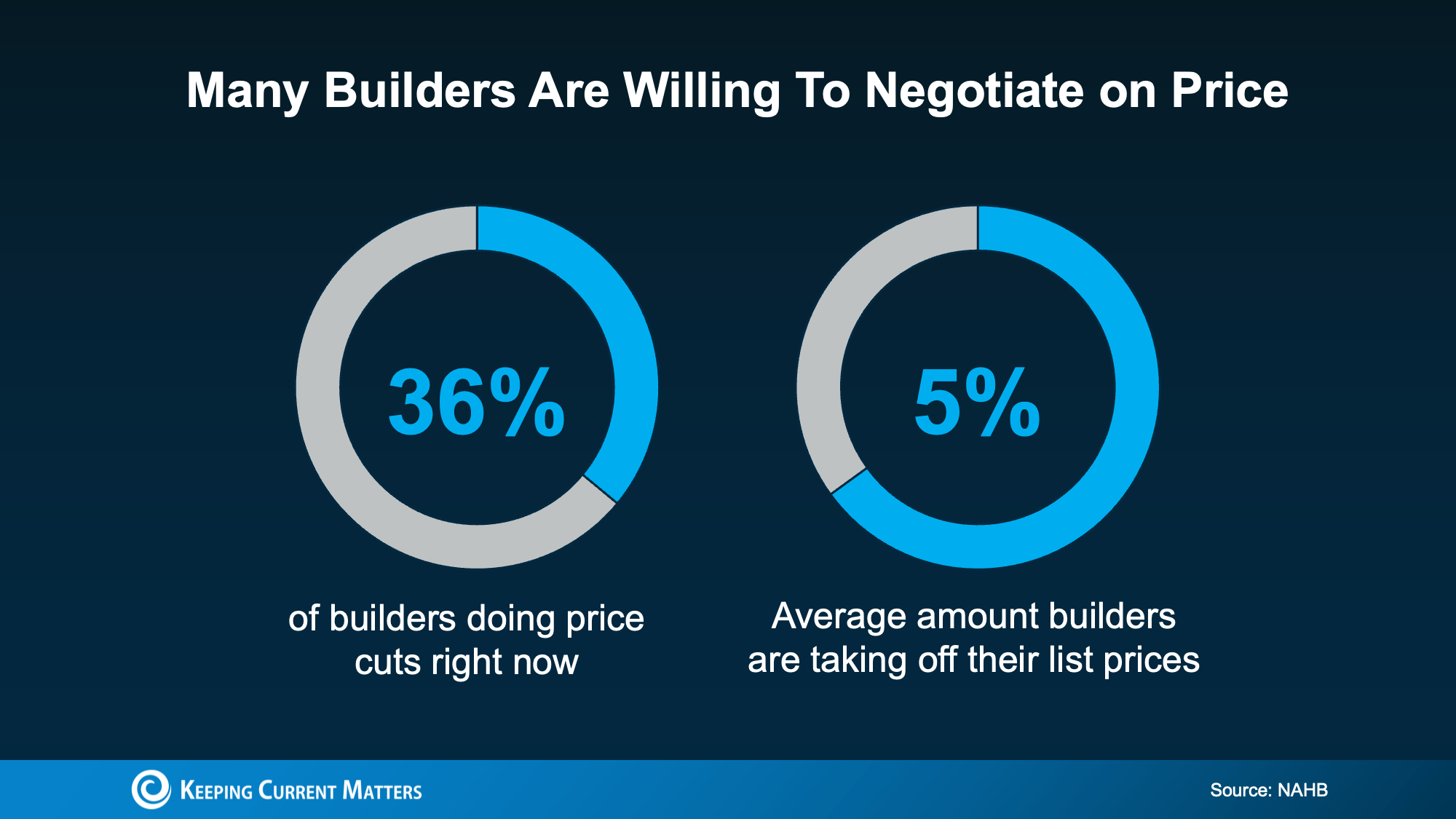
- Price cuts: More than one in three builders, or 36%, are cutting prices right now, with reductions averaging around 5% off list price.
Why Builders May Be More Flexible Than Sellers
Many buyers assume builders won’t negotiate on price. But builders often have different motivations than individual homeowners.
A homeowner may decide to take a listing off the market rather than accept a lower price. Meanwhile, builders usually need to sell the homes they’ve already built so they can keep projects moving.
As Joel Berner, Senior Economist at Realtor.com, explains:
“. . . many existing-home sellers resort to taking down their listing instead of taking less than their desired price, but builders are more motivated to sell their inventory than owner-occupants . . .”
That doesn’t mean every builder will negotiate the same way. But it does mean buyers should ask about current pricing, incentives, rate buydowns, and available inventory before assuming a new build is outside their budget.
What This Means for Home Buyers
If you’re shopping for a home, newly built homes may deserve a closer look. Between lower new home prices and ongoing builder incentives, some buyers may find opportunities they did not expect.
Before you make a decision, look at the whole picture:
- The purchase price
- Builder incentives
- Closing cost assistance
- Mortgage rate buydown options
- Included upgrades
- Monthly payment estimates
- Location, commute, and long-term housing needs
A local real estate agent can help you compare new construction homes with existing homes in your market, review builder incentives, and understand what questions to ask before you make a move.
Bottom Line
New home prices have eased, and many builders are still offering incentives to attract buyers. That could give today’s home shoppers more room to explore newly built homes than they’ve had in recent years.
If you’re curious about new construction homes in your area, connect with a local real estate professional to see what’s available and what builder incentives might be offered in your market.