Facebook
 X
X
 Pinterest
 Copy Link
Top Mistakes Homeowners Are Making in 2026 and How To Avoid Them

Let’s start with some good news: selling your house is still very possible in today’s market. According to the National Association of Realtors (NAR), about 11,000 homes are selling every day across the country.
The homeowners making successful moves right now have one thing in common: they’re adjusting their strategy to fit today’s market. Inventory has increased, buyers have become more selective, and expectations are higher than they were just a few years ago.
The sellers running into trouble are often using outdated assumptions. Here are three of the biggest mistakes homeowners are making in 2026, and what to do instead.
1. Pricing Their House Based on Old Market Conditions
Setting the right asking price is one of the most important parts of selling a home. It’s also one of the easiest places to go wrong. Realtor.com data shows that nearly 1 in 5 sellers in 2025 had to reduce their price.
Why does that happen? In many cases, sellers are basing their price on what a neighbor got during a very different market, or on headlines from a few years ago, instead of current conditions.
Buyers in today’s market have more options and more leverage. When a home is priced too high, buyers tend to move on quickly. That can lead to:
- Fewer showings
- Lower offers
- More time on the market
None of those outcomes help your sale.
What To Do Instead
Price your home for today’s market, not yesterday’s. A local real estate agent can help you evaluate recent comparable sales, current neighborhood competition, and buyer behavior in your area. The goal is to find the pricing sweet spot that creates interest and encourages strong offers as soon as you list.
2. Skipping Repairs Buyers Now Expect
A few years ago, many sellers could list a home as-is and still attract multiple offers above asking price. In many markets, this is no longer the case. NAR reports that two-thirds of sellers are making at least some repairs before listing.
The reason is simple: buyers are comparing homes more carefully. When inventory rises, homes that look dated, poorly maintained, or unfinished can lose attention fast, even if the issues seem minor.
A dripping faucet, worn paint, outdated lighting, or neglected landscaping may not feel like a big deal to a seller, but to a buyer, those details can signal future work and extra cost.
What To Do Instead
Focus on updates that make the biggest impact without creating unnecessary stress. Ask your agent which repairs or improvements are most likely to matter to buyers in your market. That may include basic repairs, light staging, fresh paint, or simple curb appeal improvements.
You don’t need to make your house perfect. You just want buyers to picture themselves moving in without a long to-do list to tackle first.
3. Refusing To Negotiate With Buyers
Negotiation is becoming part of the process again, and that’s something many sellers need to be prepared for in 2026.
With affordability still top of mind, buyers are being more cautious about their spending. That means they may ask for repairs, closing cost assistance, credits, or a small price adjustment after the inspection.
If a seller takes a hard line on every request, the deal can easily fall apart. A Redfin report showed that inspection and repair issues were among the major reasons that pending sales fell through in 2025. In many of those cases, a little flexibility may have made the difference.
What To Do Instead
Go into the transaction with a clear understanding of what matters most to buyers in your local market. Price your home appropriately, make sure it shows well, and stay open to reasonable negotiation requests that can keep the deal moving forward.
Being flexible doesn’t have to mean giving everything away. It means knowing when a practical compromise can help you get to the closing table.
Conclusion
The homeowners succeeding in today’s market aren’t doing anything dramatic. They’re pricing their homes correctly, making smart updates, relying on local expert guidance, and responding to buyers based on current market conditions.
Those small shifts can have a major impact on how quickly your home sells and how smoothly your transaction goes.
If you want a strategy built around your home, your goals, and your neighborhood, connect with a trusted local real estate agent.
Should You Buy a Home This Spring or Wait for Lower Prices?

You’re probably familiar with the saying “The best time to plant a tree was yesterday, but the next best time is today.” It’s a valuable lesson about future planning and investment that, surprisingly, applies to the decision to buy a home too.
Even though buying a home is a major financial expense, it’s also a major investment that grows over time. As the price of your home increases over time, the value of the equity you’ve built grows with it. And while waiting for prices to drop may be an attractive option, trying to time the market rarely works.
But here’s something to consider: the longer you wait to buy a home, the more your patience could cost you. Let’s explain why.
Home Prices Are Expected To Continue Climbing
Each quarter, over 100 housing market experts respond to Fannie Mae‘s Home Price Expectations Survey (HPES). Consistently, the survey results show experts agreeing that home prices will continue to rise through 2029 or even longer.
Sharp price increases may be behind us, but experts predict steadier, healthier increases of 3-4% per year moving forward. This rate of increase will vary by market from year to year, but it’s much closer to normal. Reliable growth is a promising sign for hopeful buyers, and the housing market at large, as the graph below demonstrates.
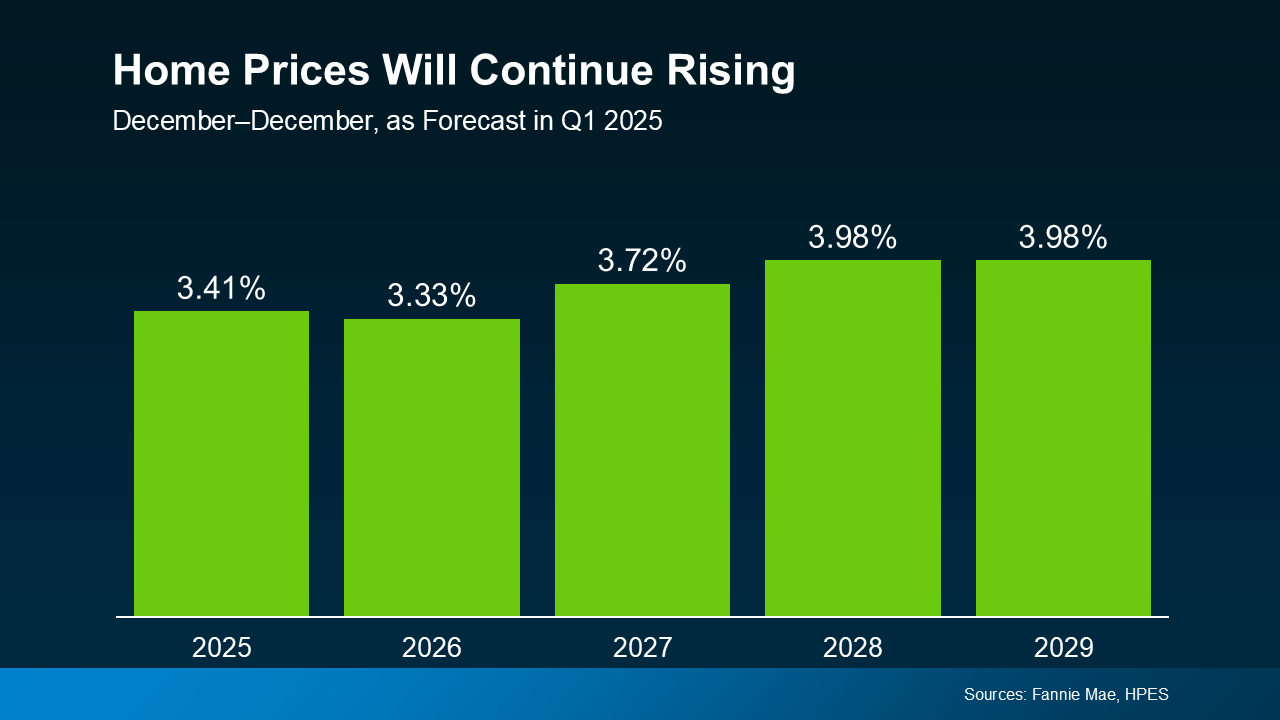
Even in markets experiencing slower price growth or short-term decreases, the steady gains of homeownership eventually win in time. After all, a growing, long-term financial investment will always beat a one-time discount.
Here are the main points to remember:
- Home prices will be higher next year. Experts don’t expect home prices to fall any time soon, at least at the national level.
- Waiting for a perfect mortgage rate or price drops is a gamble. With only slight dips in mortgage rates expected in the near future, price increase could outpace any potential mortgage savings. Unless home price growth is slow or mortgage rates are low in your area, waiting will likely be more expensive.
- Buying early means building more equity. When you invest in homeownership early, your equity and appreciating home value reward you in the long run.
The Costs of Waiting To Buy
To demonstrate how these theories play out in real-world numbers, here’s a typical example. If you were to buy a $400,000 house in 2025, it could gain almost $80,000 in value by 2030. The graph below demonstrates how this value appreciates year by year based on the expert data we mentioned earlier.
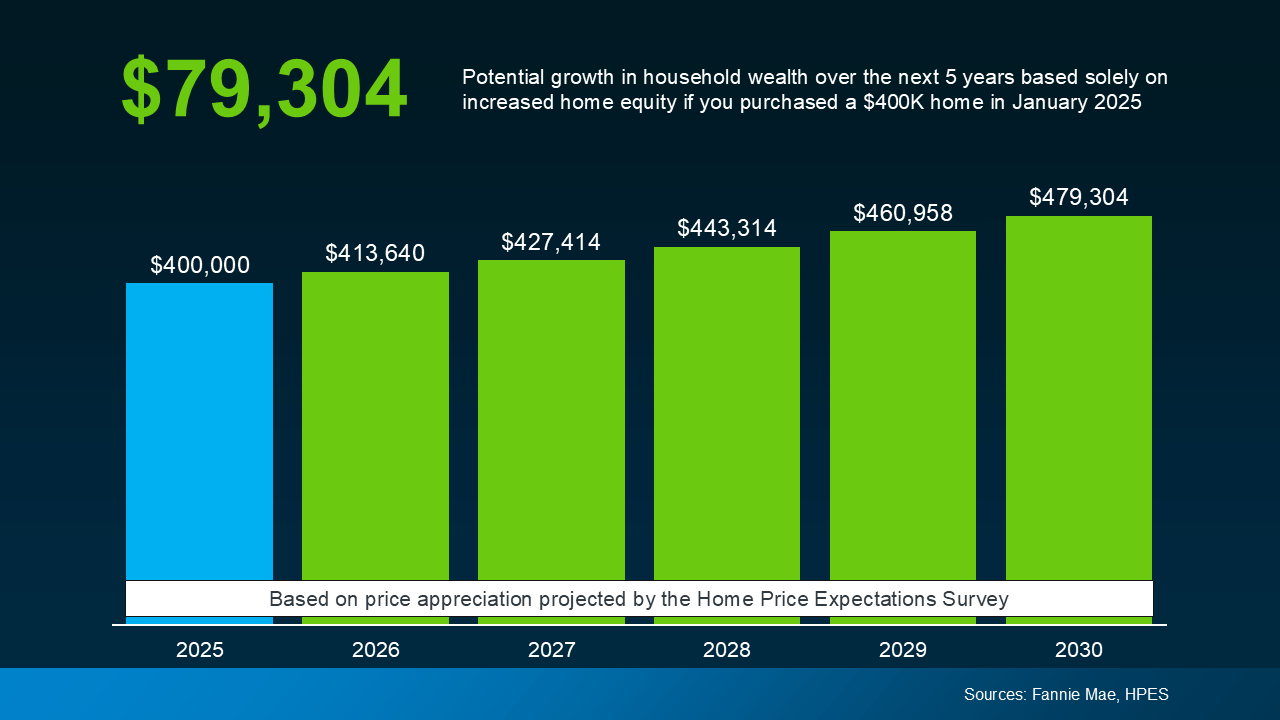
This can be a considerable difference in your future wealth and why buyers who invest early are often glad they did. When it comes to building wealth through long-term investment, time in the market matters.
The question to consider isn’t “Should I wait to buy?” It’s really “Can I afford to buy now?” Just like planting a tree, making short-term sacrifices to buy a home will eventually pay off in the long-term.
Between rising prices and stubborn mortgage rates, today’s housing market is challenging, but achieving homeownership is far from impossible. Exploring different neighborhoods, seeking alternative financing options, or applying for down payment assistance programs can all make a critical difference.
What’s most important is acting decisively when you’re able to, instead of waiting for a perfect opportunity that never comes.
Conclusion
If you’re interested in buying but still undecided, take the time you need to make the right choice. But, remember that realizing an investment takes time, and the sooner you make one, the sooner you’ll be rewarded.
If you’re curious about what’s happening with prices in our local area, then reach out to us. Even if you’re not ready to buy, an expert local agent can fill you in with the info you need.