Facebook
 X
X
 Pinterest
 Copy Link

In real estate, it’s usually always true that buyers want more room to negotiate and sellers want a strong price. In today’s housing market, both can happen at the same time thanks to sharp differences between markets.
Some markets favor buyers, others still favor sellers, and many sit in the middle. Knowing which type of market you’re in can shape how you price a home, write an offer, negotiate, and set expectations.
What Is a Buyer’s Market vs. Seller’s Market?
One of the clearest signals is the months’ supply of homes for sale. Home inventory estimates how long it would take to sell the current supply at the present sales pace if no new listings came to market.
As a general rule of thumb:
- Fewer than 4 months: Sellers usually have the advantage.
- 4 to 6 months: Buyers and sellers are on more equal footing.
- More than 6 months: Buyers can usually negotiate from a stronger position.
Months of supply a is useful indicator, but it’s not the only factor. The same national number can hide big differences by metro area, neighborhood, price range, and property type.
Is the U.S. Housing Market Balanced in 2026?
In July 2026, the National Association of Realtors reported 1.54 million existing homes for sale, equal to a 4.6-month supply. That range places the current national existing-home market in balanced territory, historically.
It’s a meaningful shift after years of limited inventory giving sellers a stronger advantage. In certain markets, it can create more negotiating room for some buyers while still allowing well-positioned sellers to attract demand. Of course, remember that a national average can’t tell you who holds the leverage on any particular listing.
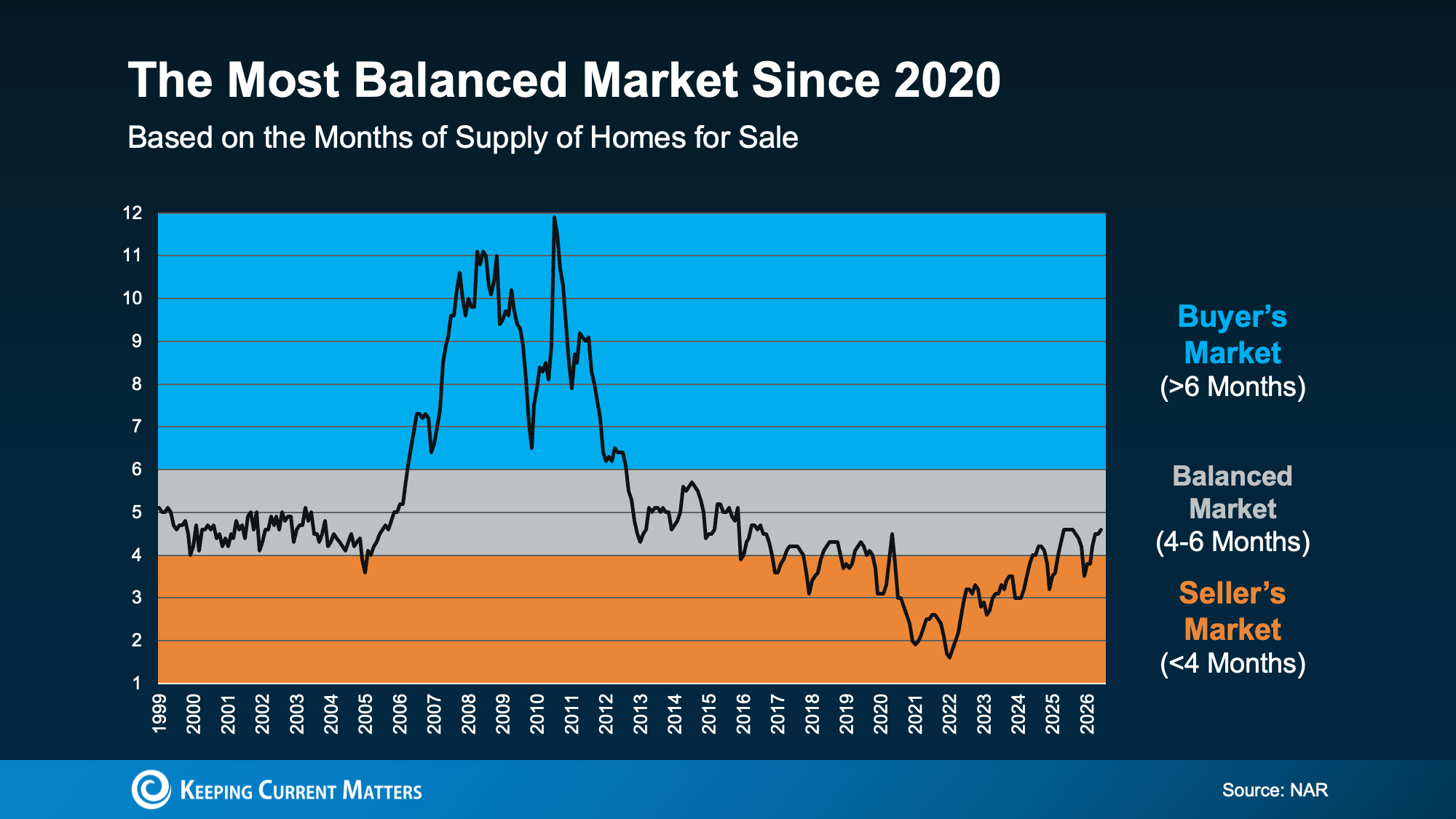
A 4.6-month national supply falls within the 4-to-6-month balanced range shown in the source chart. Source: NAR.
Why a Balanced Housing Market Doesn’t Feel Balanced Everywhere
Redfin’s June 2026 analysis found 48.5% more sellers than buyers nationwide, yet conditions varied dramatically among major metro areas. The supplied chart stretches from buyer-leaning Miami to seller-leaning Nassau County, New York.
Together, the national supply and metro data point to the most buyer-friendly market in nearly six years. Still, more buyer-friendly does not mean buyers have the upper hand everywhere.
In some cities, buyers have more choices and may receive thousands of dollars in seller concessions, while homeowners may need to adjust their price or terms. Elsewhere, buyers may need to make a strong offer or risk losing the home to another buyer, while sellers continue to see solid demand and gradual price growth.
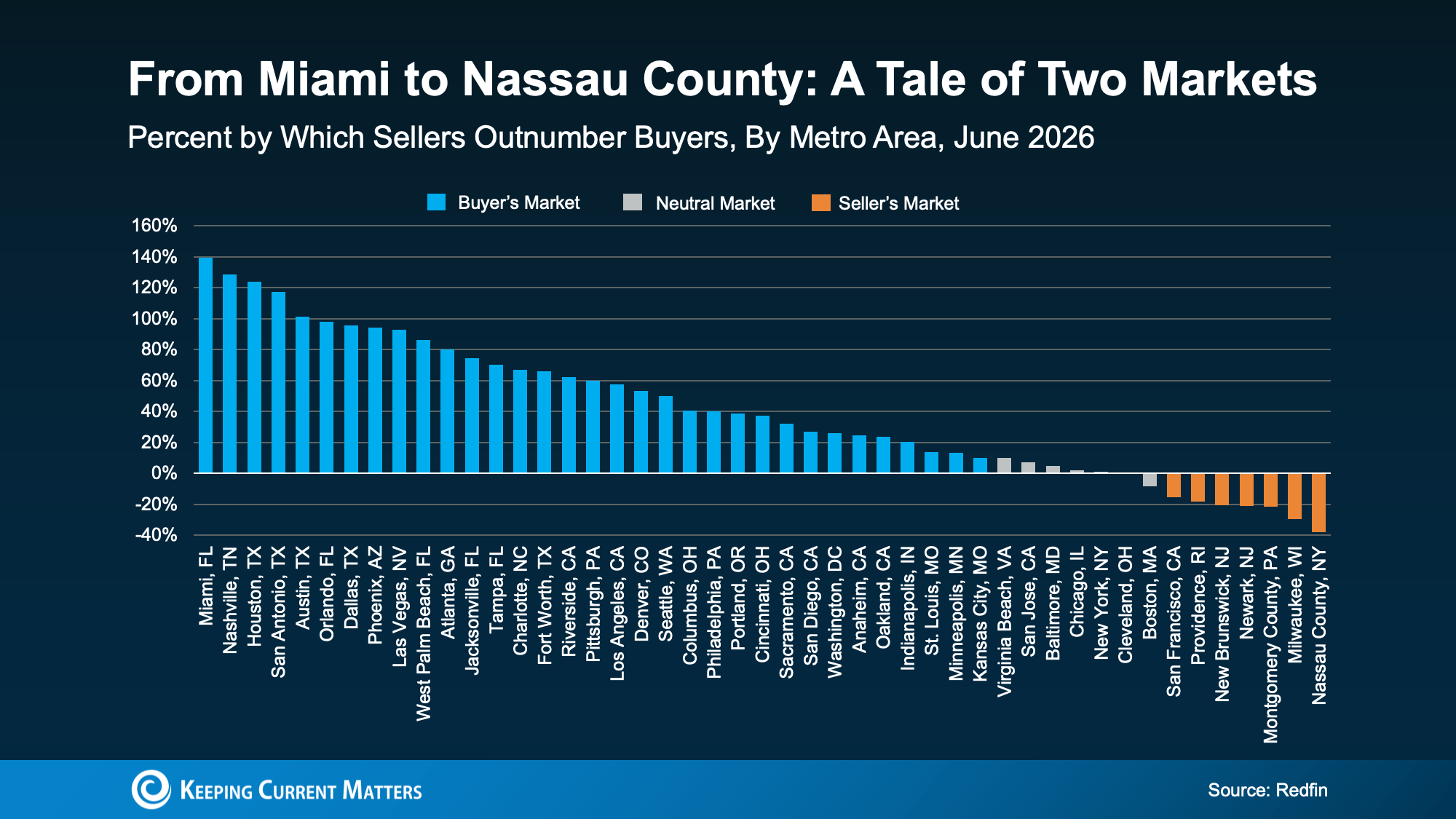
June 2026 metro conditions ranged from strongly buyer-leaning to seller-leaning. Source: Redfin.
What Market Leverage Means for Buyers and Sellers
If Local Conditions Lean Toward Buyers
- Buyers may have more room to negotiate price, repairs, or concessions, depending on the property and competing interest.
- Sellers may need to price carefully, prepare the home well, and respond to market feedback.
If Local Conditions Lean Toward Sellers
- Buyers may need to move quickly and make their strongest supportable offer.
- Sellers may see stronger demand, but overpricing or overlooking property condition can still narrow the buyer pool.
In a balanced market, both sides may have negotiating points, making property-specific data especially important.
How To Tell Who Has the Upper Hand in Your Local Market
Ask a local real estate agent to review current MLS data for your neighborhood and price range. Useful signals include months of supply, recent comparable sales, time on market, price changes, and seller concessions.
For buyers, that information can guide offer price, contingencies, repair requests, and timing. For sellers, it can inform list price, preparation, and how to respond to an offer. Check out CENTURY 21 Affiliated’s home buying advice or home selling advice for additional planning guidance.
Bottom Line
The housing market is never one-size-fits-all. National data suggests more balance and broader buyer leverage than in recent years, but local conditions should drive your strategy.
Connect with a local CENTURY 21 Affiliated real estate agent to see who has leverage in your own local market and build a buying or selling plan around current MLS data.