Facebook
 X
X
 Pinterest
 Copy Link

When you’re planning a move, news of another Federal Reserve (the Fed) rate hike can make your budget feel less certain. The connection between the Fed and mortgage rates matters, but a hike doesn’t automatically change the rate your lender offers. Understanding that relationship can help you decide whether buying or selling now fits your plans.
How the Fed and Mortgage Rates Are Connected
The Federal Reserve sets a target for the federal funds rate, a short-term interest rate. It influences mortgage rates without setting them directly. As NerdWallet explains:
“The Federal Reserve influences mortgage rates, but doesn’t set them. . . Mortgage rates are influenced by many elements, including the inflation rate, the pace of job creation, and whether the economy is growing or shrinking. The Federal Reserve’s monetary policy is a factor, too . . .”
Fixed mortgage rates tend to move with the 10-year Treasury yield, the return investors require on that government debt. The yield reflects expectations about inflation, economic growth, and future interest rates. Mortgage lending costs and investor demand matter, too.
Markets can react before a Fed announcement. If investors already expected a hike, mortgage rates may barely change or even fall afterward. A hike alone cannot tell you what your next loan quote will look like.
Why Inflation Can Keep Mortgage Rates Elevated
Inflation reduces purchasing power and can raise construction costs. The Fed raises its short-term rate to restrain spending and help slow inflation. It raised its target range on September 16, 2026, citing elevated inflation.
The Iran conflict has also disrupted oil supplies and pushed up energy costs. EIA’s (U.S. Energy Information Administration) October 2026 outlook describes continued oil-price volatility. A resolution could ease some inflation pressure and help mortgage rates, but the timing and market response are still uncertain.
Higher borrowing costs often create short-term pressure. If inflation eases and investors gain confidence, longer-term yields and mortgage rates may fall, improving buyers’ purchasing power. This is the long-term goal of the Fed’s rate hikes, but it isn’t always a guarantee.
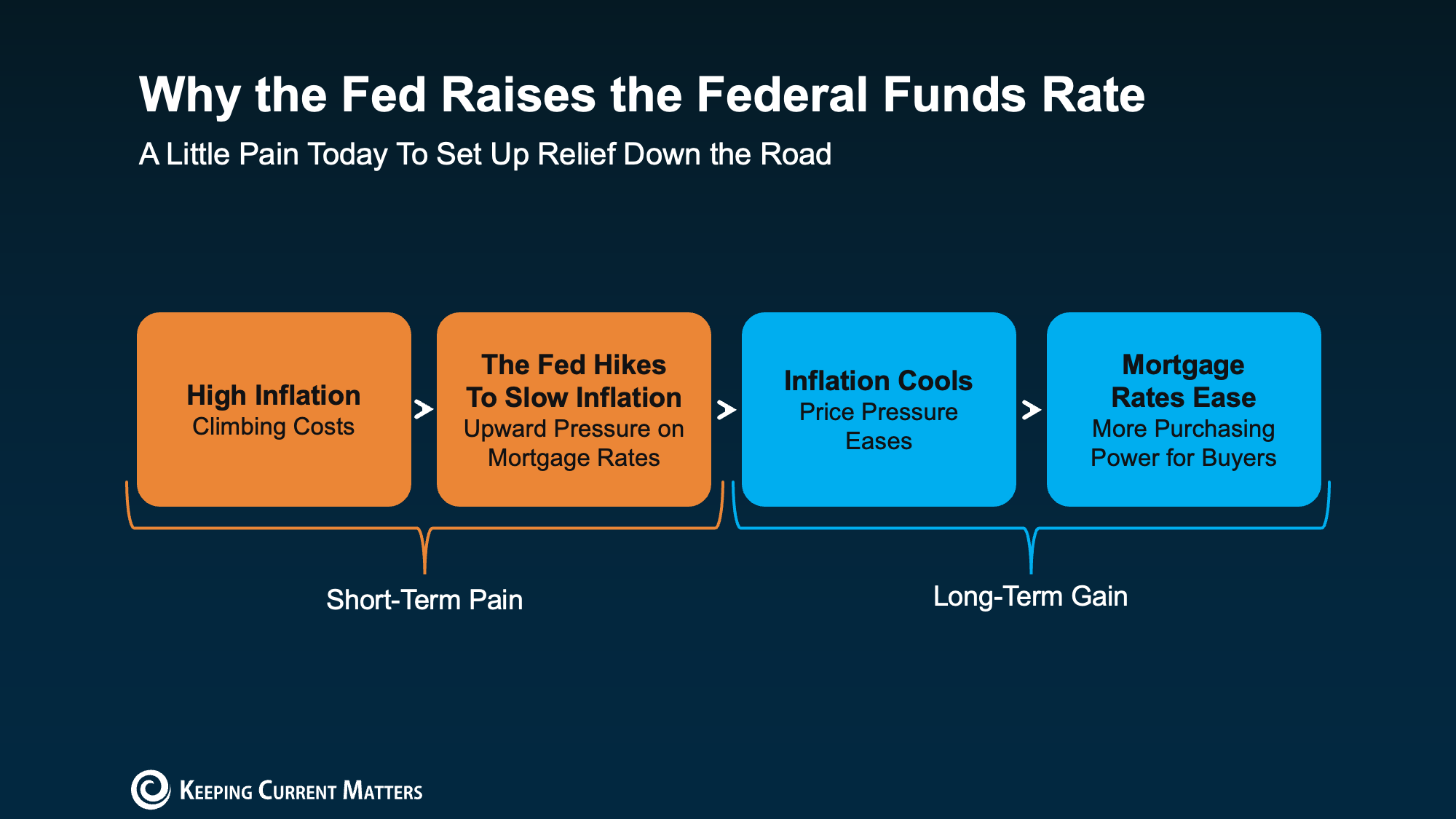
One possible path to lower rates, but not a forecast. Fed hikes don’t guarantee that inflation or mortgage rates will fall.
Sam Williamson, senior economist at First American, described that condition in Real Estate News:
“Over time, firmer Fed action could help steady the bond market and open the door to lower mortgage rates, but only if investors become more confident that inflation is coming under control.”
What the 2026 Rate Outlook Means
The October 2, 2026 snapshot below, using data from CME FedWatch, shows more than an 80% chance of at least one additional Fed hike by year-end. FedWatch estimates reflect futures-market pricing and can change as new information arrives and market conditions change.
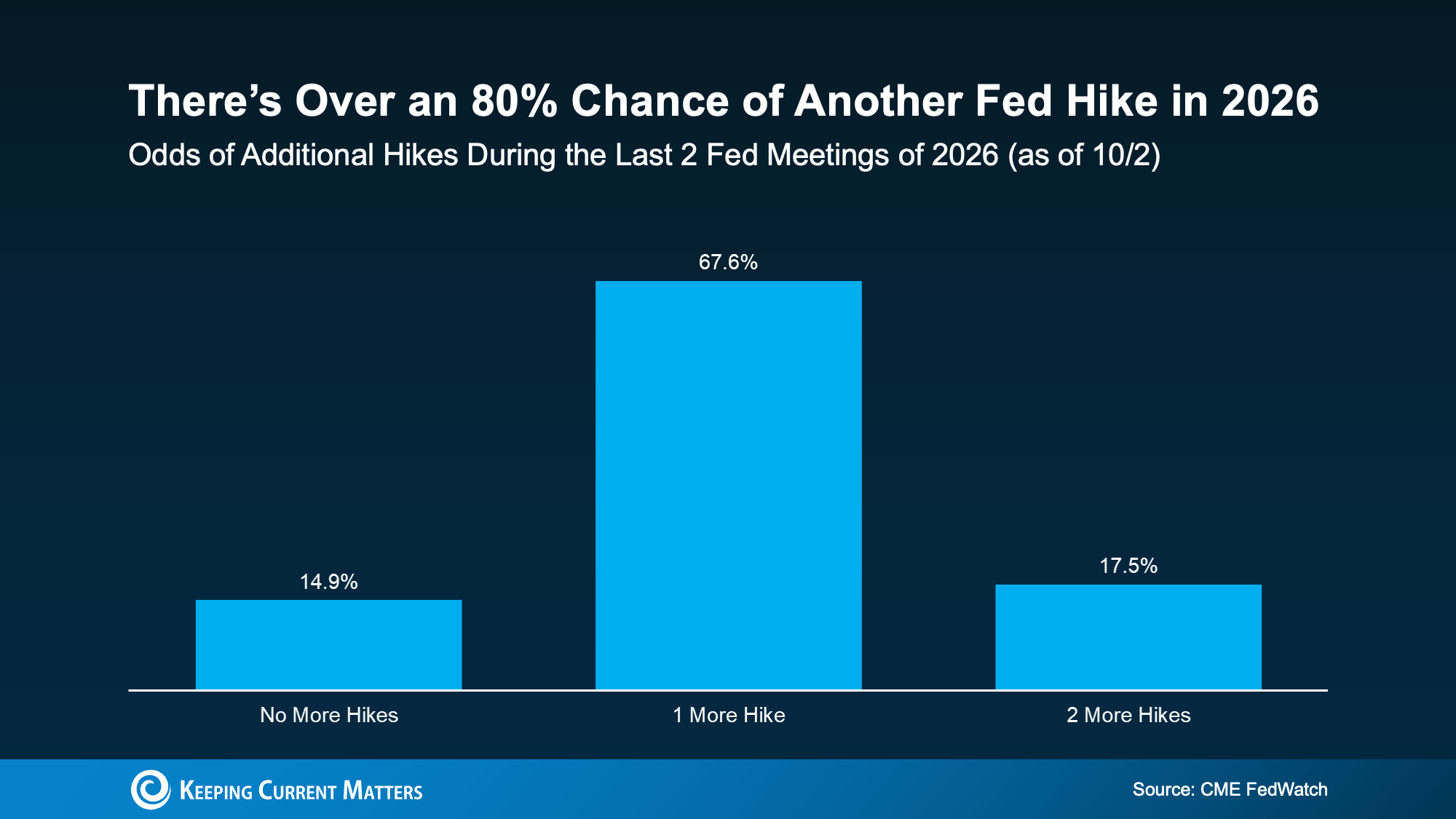
Snapshot as of October 2, 2026: no more hikes 14.9%, one more 67.6%, two more 17.5%. Source: CME FedWatch.
August’s inflation report illustrates why those expectations shift. BEA reported year-over-year personal consumption expenditures (PCE) inflation of 3.4% and core PCE inflation, which excludes food and energy, of 3.0%. July’s initially reported figures were 3.7% and 3.3%, respectively. However, BEA revised July to 3.4% and 3.0%, leaving both annual inflation readings unchanged in August.
The August report was softer than expected, and October hike odds fell after its release. Inflation nevertheless remained above the Fed’s 2% longer-run PCE target, as it had for more than five years. Core PCE helps policymakers assess underlying trends. Lower mortgage rates could still take time.
Plan a Move Around the Payment You Can Afford
For buyers, preapproval can help establish a borrowing range, but it is conditional and does not set your personal spending limit. Ask a lender to compare loan options and costs. Once under contract, discuss a rate lock, including its deadline, fees, and conditions. It generally protects the quoted rate during the lock period if your application stays unchanged.
For sellers, discuss your priorities with your agent, including timing and net proceeds. Higher rates can narrow buyers’ budgets, so price against current local competition. A permitted buydown or closing-cost credit may sometimes help a buyer’s budget more than a price cut. Have the lender compare the options and program limits. Temporary buydowns reduce early payments; buyers must plan for the full payment afterward.
Waiting for the next Fed meeting may not guarantee a better outcome. Connect with a local CENTURY 21 Affiliated agent to compare your options using current lender quotes, local market conditions, and a timeline that works for you.