Facebook
 X
X
 Pinterest
 Copy Link

Few moments feel more unsettling than thinking your home sale could fall apart just before closing. After weeks or even months of work, starting all over can can feel like a huge setback.
Fortunately, there’s good news if you’re selling or getting ready to list your home. Redfin recently reported that only 14% of U.S. home-sale agreements fell through in July 2026 on a seasonally adjusted basis. Put another way, that means about 86% of pending sales are closing successfully in today’s market.
Many buyers shopping at today’s prices and mortgage rates have strong reasons to move. Still, no amount of motivation can eliminate inspection, financing, or contingency risks. If you’re worried about your own home sale falling through, it’s worth minimizing your own risk with early preparation and careful offer review.
Why Home Sales Fall Through Before Closing
In September 2025, Redfin surveyed 443 agents who had handled cancellations in the previous three months. Inspection or repair issues were identified most often. Note that the percentages show how many surveyed agents named each factor, not the share of all U.S. cancellations caused by it.
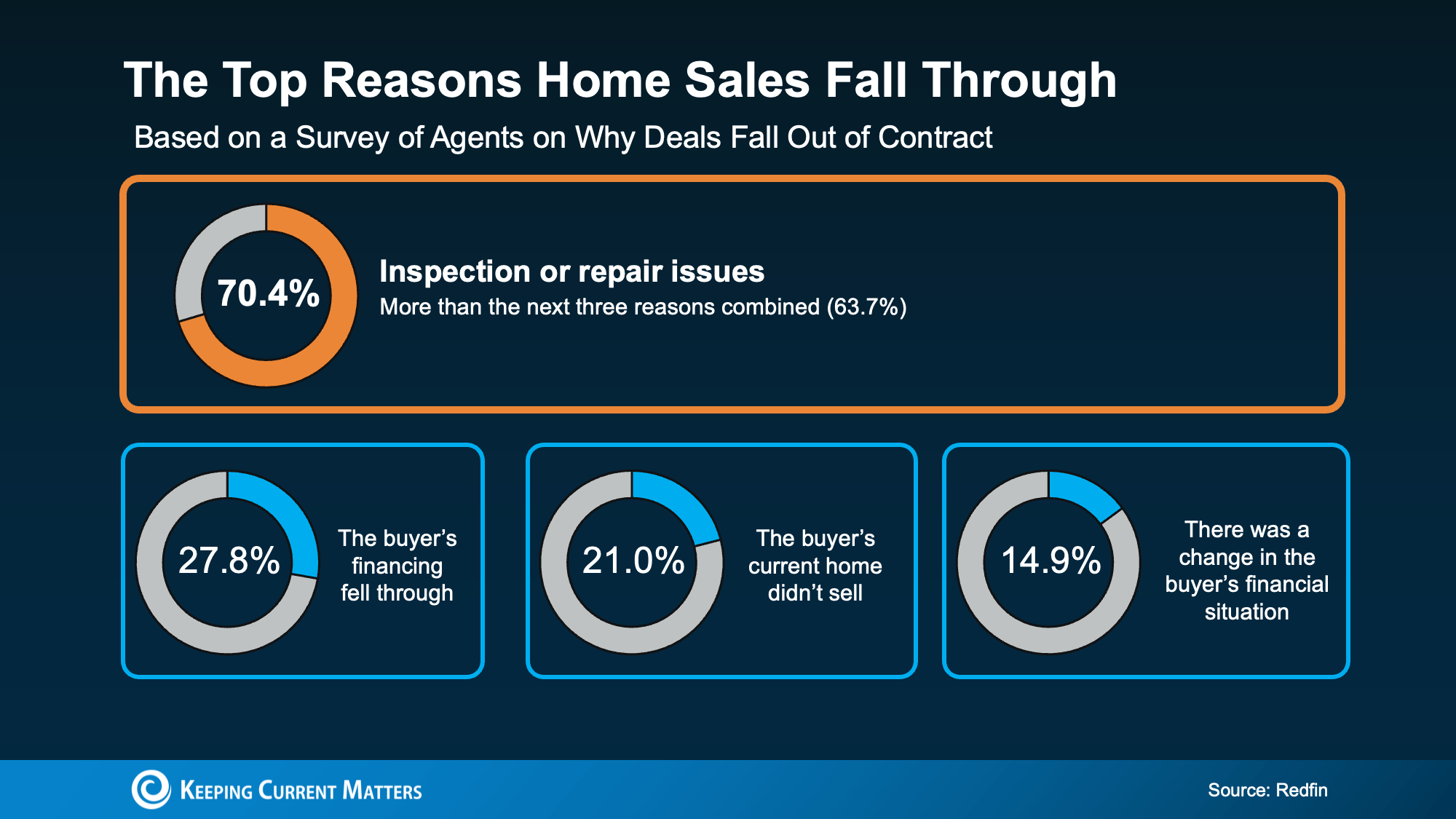
Among 443 Redfin agents who had handled recent cancellations, 70.4% identified inspection or repair issues. Source: Redfin.
- Inspection or repair issues (70.4%). A buyer’s inspector may find a concern involving the roof, plumbing, foundation, or another part of the property. The buyer may request repairs, ask for a credit, seek a price change, or decide not to proceed if the parties cannot agree.
- Buyer financing fell through (27.8%). A pre-approval is not the same as final loan approval. If the lender cannot approve the mortgage in time for closing, the transaction may not move forward.
- The buyer’s current home did not sell (21.0%). When an offer depends on another property selling first, a delay or cancellation in that transaction can affect your timeline and closing.
- The buyer’s financial situation changed (14.9%). A new job, a large purchase, or additional debt can change what a buyer qualifies to borrow, even after pre-approval.
How To Reduce the Risk of a Home Sale Falling Through
You can’t control every lender decision or change in a buyer’s circumstances. But you can prepare for property-condition questions and completely evaluate an offer before accepting it.
1. Consider a Pre-Listing Inspection
A pre-listing inspection takes place before a buyer orders an inspection. It may uncover significant issues early, giving you time to discuss whether to repair them, obtain estimates, account for them in your pricing, or make required disclosures instead of scrambling after you are under contract.
The upfront cost may be worthwhile if it helps you address a potential deal-breaker sooner, but a pre-listing inspection is not right for every property or market. It also does not prevent a buyer from ordering another inspection or raising new concerns. Ask your agent and qualified local professionals how inspection findings and disclosure requirements may affect your situation.
2. Evaluate the Full Offer, Not Only the Price
The highest price, while appealing, is only one part of an offer. Review the buyer’s financing, proposed closing date, inspection and appraisal terms, deadlines, and any home-sale contingency. When the buyer must sell a current home first, your closing depends partly on a second transaction you can’t see.
A slightly lower offer with fewer conditions may provide more certainty and security than a higher offer with several contingencies, but no offer is risk-free. Your agent can help compare the terms and choose an option that fits your goals and timeline.
Where a Local Real Estate Agent Can Help
A local real estate agent can help evaluate preparation, review offer strength beyond price, track deadlines, and keep communication moving. The agent can also explain current buyer priorities in your area.
Review CENTURY 21 Affiliated’s home selling advice as you prepare. An agent can’t guarantee that a buyer’s loan will close or that a transaction will stay together. For inspection, repair, disclosure, legal, lending, tax, or insurance questions, involve the licensed professionals most appropriate.
Bottom Line
Most home sales still close. The goal is not to eliminate every possible risk; it is to address the property issues you can reasonably anticipate and understand the full offer before you commit. A thoughtful plan can help keep your sale moving toward the closing table.
Connect with a local CENTURY 21 Affiliated real estate agent to review your home, local buyer priorities, and the offer terms that may affect your closing the most.