Real Estate Trends July 23, 2026

Condos vs. Townhomes: Affordable Buying Options in 2026

High home prices have made many prospective buyers, especially first-time buyers, question if homeownership still fits their budget.

But if your search has focused exclusively on detached single-family homes, you may be overlooking a more affordable option. Condos and townhomes can provide many of the benefits of homeownership, often with a lower purchase price and fewer maintenance responsibilities.

With more attached homes available in today’s market, now may be a good time to expand your search.

More Condos and Townhomes Are Available

Buyers currently have more attached-home options than they’ve had in years.

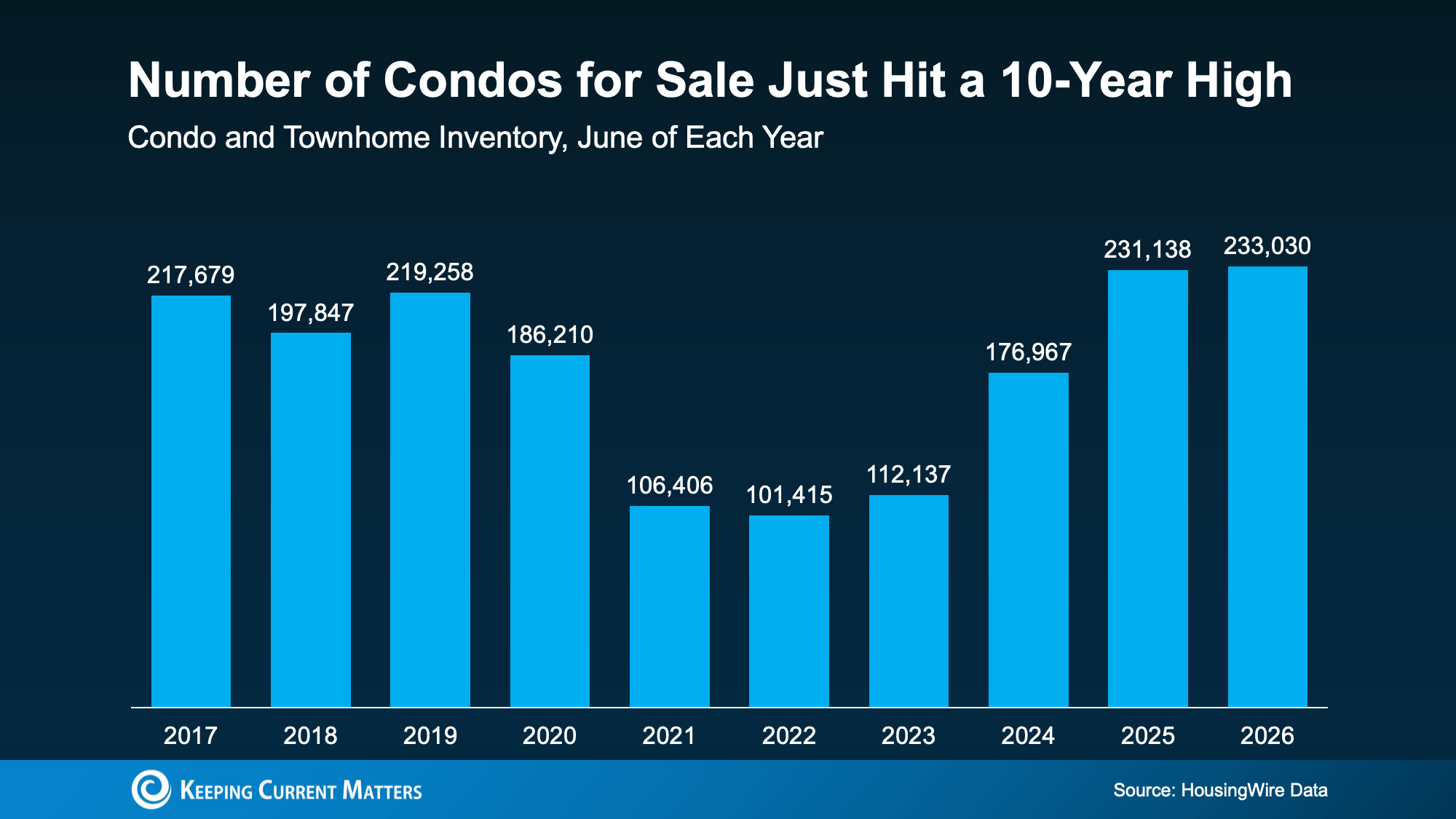
According to HousingWire data, approximately 233,030 condos and townhomes were listed for sale nationwide in June 2026. That was the highest June inventory recorded in at least a decade, and more than twice the number available in June 2022.

Bar chart showing June condo and townhome inventory from 2017–2026, reaching a 10-year high of 233,030 listings in 2026.

The number of condos and townhomes for sale reached 233,030 in June 2026, giving buyers the most inventory shown in a decade. Source: HousingWire.
As always, inventory varies considerably by location. Still, a wider selection can give buyers more opportunities to compare properties, evaluate different communities, and negotiate a better deal.

Condos May Offer a Lower Price

Affordability is another reason to consider an attached home.

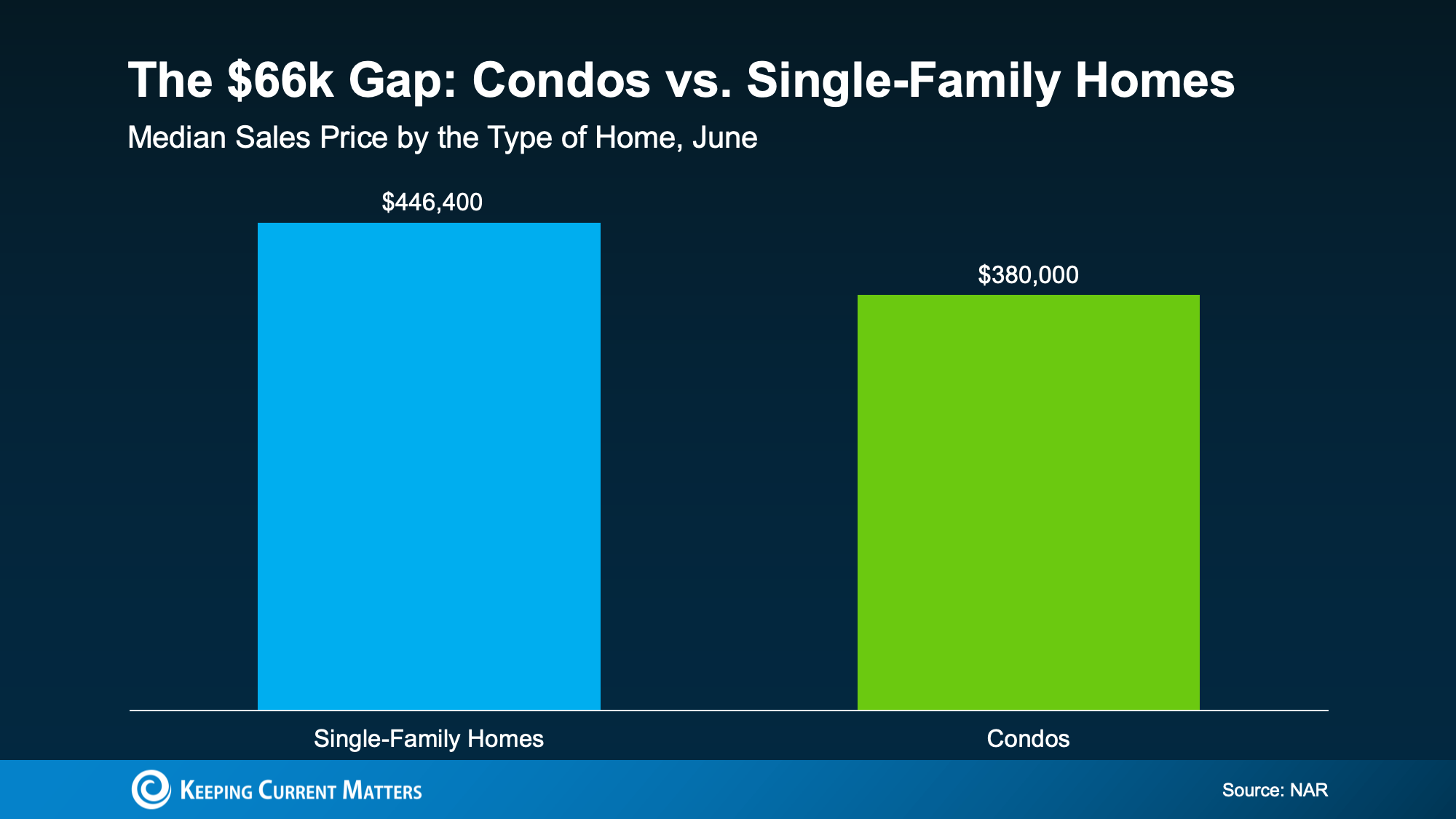
In June 2026, the national median price of an existing condo or co-op was $380,000. The median price of an existing single-family home was $446,400, a difference of $66,400, according to the National Association of REALTORS®.

ar chart comparing June median prices: $446,400 for single-family homes and $380,000 for condos, a difference of about $66,000.

A lower median sales price may make condos a more attainable alternative for buyers priced out of single-family homes. Source: NAR.

These national medians don’t compare identical properties, and prices depend on location, size, condition, and amenities. Nevertheless, the difference illustrates how expanding your search to include condos may open the door to homes at a lower price point.

That could mean a smaller down payment, a more manageable mortgage, or the ability to buy in a market normally outside your budget.

Condos vs. Townhomes: What’s the Difference?

Although the terms are sometimes used interchangeably, condos and townhomes aren’t necessarily the same.

Condos

  • Ownership: You own the interior living area of your specific unit. Shared building elements and community spaces are jointly owned by all residents.

  • Amenities: Access to shared amenities like workout rooms, pools, or community spaces.

  • Upkeep: Minimal individual exterior maintenance responsibility. Comes with shared building decisions, shared walls, and regular HOA fees to cover common area upkeep and exterior repairs.

Townhomes

  • Ownership: You own the multi-level building structure and the specific lot beneath it.

  • Layout: Typically multi-story attached structures, sharing at most two side walls.

  • Upkeep: Provides greater autonomy over design and repairs, with exterior maintenance duties usually shared or managed under specific HOA guidelines.

A condominium is technically a form of ownership rather than a particular building style. A condo could be located in a multistory building, resemble a traditional townhome, or even be detached. Likewise, a townhome may be sold with its land or organized legally as a condominium.


Always review the property’s title, association documents, and maintenance responsibilities before committing to a purchase.

Look Beyond the Listing Price

A lower purchase price does not automatically mean a lower total housing payment. Condos and many townhome communities charge homeowners association fees, which should be included when evaluating affordability.

Before making an offer, find out:

  • How much are the monthly association dues?
  • What maintenance, utilities or amenities do the dues cover?
  • Are any special assessments pending?
  • Does the association have adequate reserves for future repairs?
  • Are there restrictions involving pets, parking, rentals or renovations?
  • Which exterior and interior repairs are the homeowner’s responsibility?
  • Does the community meet your lender’s financing requirements?

Fannie Mae’s condo-buyer guidance specifically recommends reviewing special assessments, association bylaws, and reserve funds. These details can affect both your monthly budget and the property’s long-term value.

Is an Attached Home Right for You?

A condo or townhome may be worth considering if you:

  • Want to purchase your first home at a potentially lower price point
  • Prefer a convenient location over a large yard
  • Want fewer exterior maintenance responsibilities
  • Are downsizing but still want to own your home
  • Value community amenities such as a pool, fitness center or shared outdoor space

The best choice depends on your finances, lifestyle, and local housing market, not just the type of property.

Expand Your Home Search

If traditional single-family home prices feel out of reach, homeownership may still be possible. Adding condos and townhomes to your search could reveal more listings, different locations, and options that better fit your budget.

A local CENTURY 21 Affiliated agent can help you compare available properties, understand association fees and documents, and evaluate the complete cost of ownership.

Ready to explore your options? Search condos and townhomes for sale or connect with a CENTURY 21 Affiliated agent today.