Facebook
 X
X
 Pinterest
 Copy Link
If you saw headlines saying home sales fell sharply in January, it’s understandable to feel uneasy, especially if you’re thinking about selling. But one month of data rarely tells the whole story.
Yes, January home sales declined. In most years, that’s normal. And this particular drop has a lot more to do with seasonality and winter weather than a sudden collapse in buyer demand.
What’s Really Behind the “Home Sales Fell” Headlines
Recent reports from the National Association of Realtors (NAR) show existing home sales dropped about 8.4% month over month. That’s the number making the rounds, and it’s an accurate one.
The key is understanding why it happened:
- January is historically slow for real estate in general
- Fewer people list and tour during the coldest weeks of the year
- Holidays, travel, and weather disruptions often push closings into the next month
So while the percentage sounds dramatic, it doesn’t necessarily signal a weakening market.
Why January Is Often a Slower Month for Home Sales
Seasonality is a consistent pattern in U.S. real estate. In many markets:
- Winter brings fewer new listings
- Buyers move more cautiously due to schedules and weather
- Fewer transactions close, even when demand is still there
Over the past several years, sales have commonly dipped in January and then picked up again in February as the market begins ramping up for spring. In other words, a January slowdown is often a pause, not a trend. You can see this in the graph below, particularly in the green bars showing February sales rebounds:
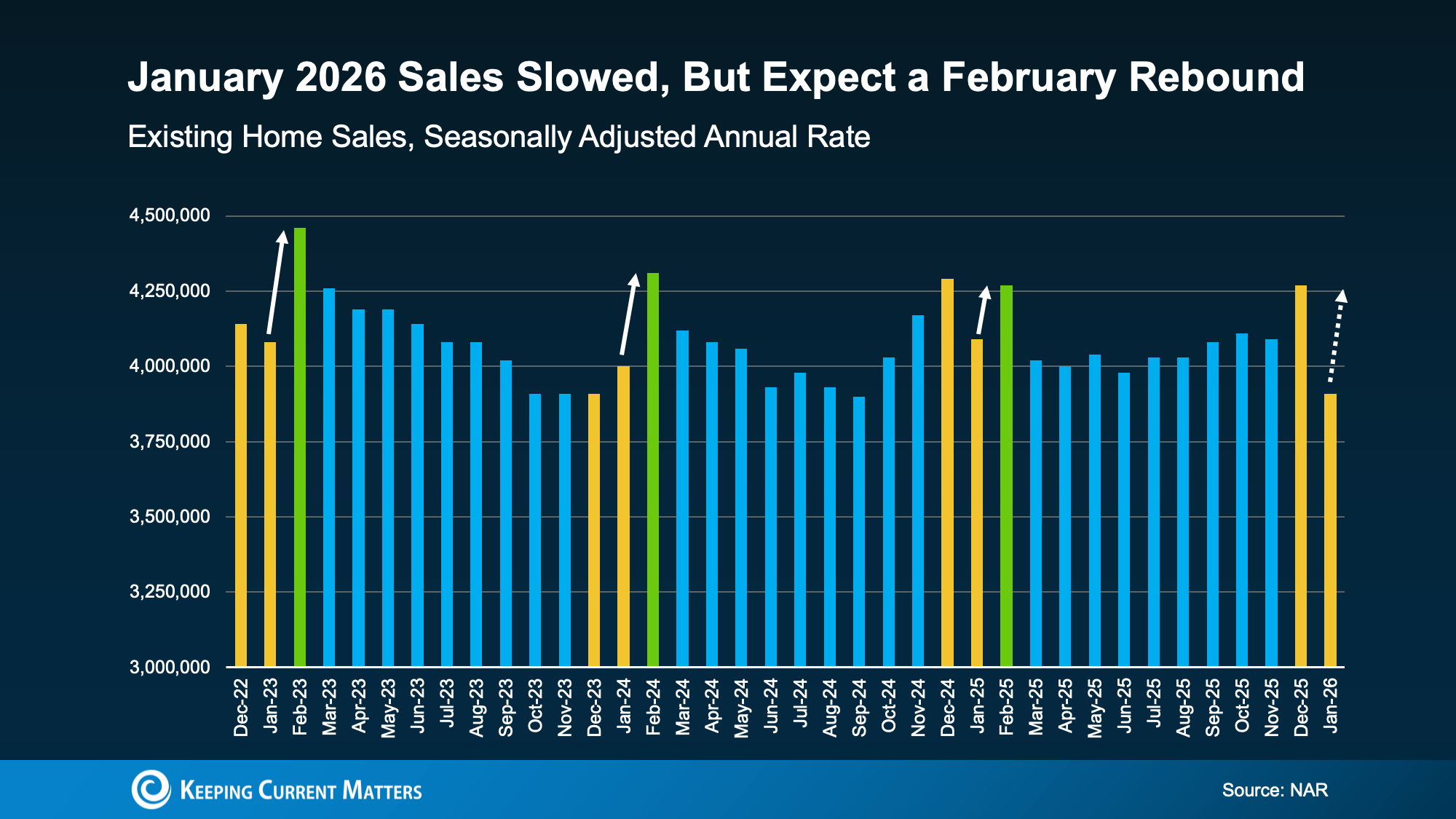
Home sales often slow in January and rebound quickly in February.
The Bigger Drop This Year: Weather, Not Demand
This year’s decline was steeper than the usual January dip, even with lower mortgage rates. But the likely explanation is simple: disruptive winter weather.
As Realtor.com explains:
“Winter storm Fern, which dumped snow and ice across large swaths of the country, likely disrupted some closings, weighing on the data and making it difficult to pick out the housing market momentum trend from the weather noise.”
According to the original post, 40 states experienced widespread winter weather. In real estate, that matters because bad weather can delay the final steps needed to close, including:
- Inspections
- Appraisals
- Final walk-throughs
- Lender or title timelines
Why “Fewer Sales” Can Really Mean “Later Closings”
One important detail most headlines skip: existing home sales track closings, not contracts.
That means a storm doesn’t have to “kill” a deal to show up in the data. If weather slows the process, many transactions simply move from January into February (or later).
So January’s missing sales are more likely postponed, not lost.
Will Home Sales Pick Back Up?
Despite a slower January, the data still point toward the market gaining traction as spring approaches.
Here are two encouraging points to consider:
- Affordability has improved for seven straight months (according to NAR)
- Buyers in many areas are regaining some negotiating power
That combo can support more activity as the weather improves and the traditional spring season begins.
What If You’re Thinking About Selling?
If you’re a homeowner watching the market, here’s the practical takeaway:
- Don’t overreact to one weather-impacted month
- Expect activity to improve as schedules normalize and temperatures rise
- Focus on what’s happening locally, because conditions vary by city and even neighborhood
A strong strategy right now is to talk with a local agent about:
- Pricing based on current comps
- Likely spring demand in your area
- How quickly homes are moving in your price range
Conclusion
Don’t confuse a winter slowdown with a market wide red flag. January’s decline appears tied to seasonality and storm-related delays, not disappearing demand. As affordability improves and spring approaches, activity can thaw quickly.