Facebook
 X
X
 Pinterest
 Copy Link
2026 Housing Market Forecast: Second-Half Outlook
If the first half of 2026 left you feeling a bit stuck in your moving plans, you’re definitely not alone. Affordability remained tight, mortgage rates crept higher, and global uncertainty added more pressure to an already cautious market. For many people, that created one big question:
Will the housing market improve in the second half of 2026?
No one can predict the market perfectly, but there are a few signs that the market could start moving in a better direction. Here’s what buyers, sellers, and homeowners should watch in the second half of 2026.
Will Mortgage Rates Finally Drop?
Mortgage rates have been one of the biggest reasons the market has felt stuck, and inflation has been keeping them high. A combination of higher energy prices and global uncertainty has kept inflation higher than ideal. However, there is some encouraging news on the horizon regarding oil prices.
Oil prices have begun to ease a bit, and while that might not seem directly related to buying a home, mortgage rates and oil prices historically tend to move in the same direction. For instance, both oil prices and mortgage rates increased in February when the conflicts overseas started. Despite the recent volatility, experts at the U.S. Energy Information Administration (EIA) predict oil prices will come down. With oil prices trending down, it’s possible that mortgage rates will do the same.
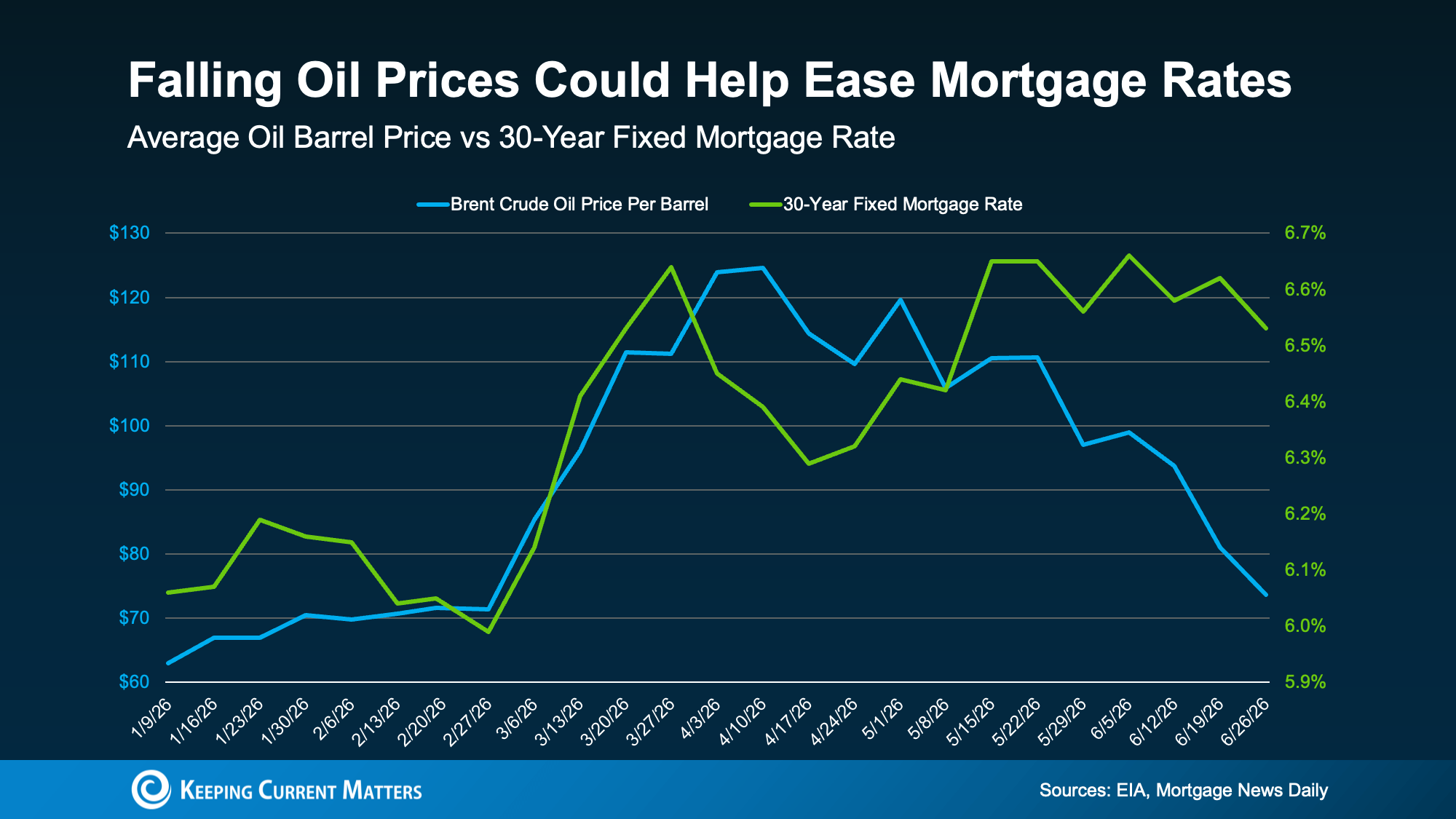
This is by no means a guarantee. But, if energy prices decrease, inflation cools, and overseas tensions ease, we could see mortgage rates come down in the second half of the year. For buyers, even a modest rate improvement could help with affordability. For sellers, lower rates could bring more buyers back into the market.
Home Prices Are Projected to Rise
Many buyers are hoping home prices will fall. In some local markets, prices may soften or dip slightly. But nationally, most forecasts still point to positive price growth for 2026. On average, experts are projecting an average price increase of 2.3% in 2026.
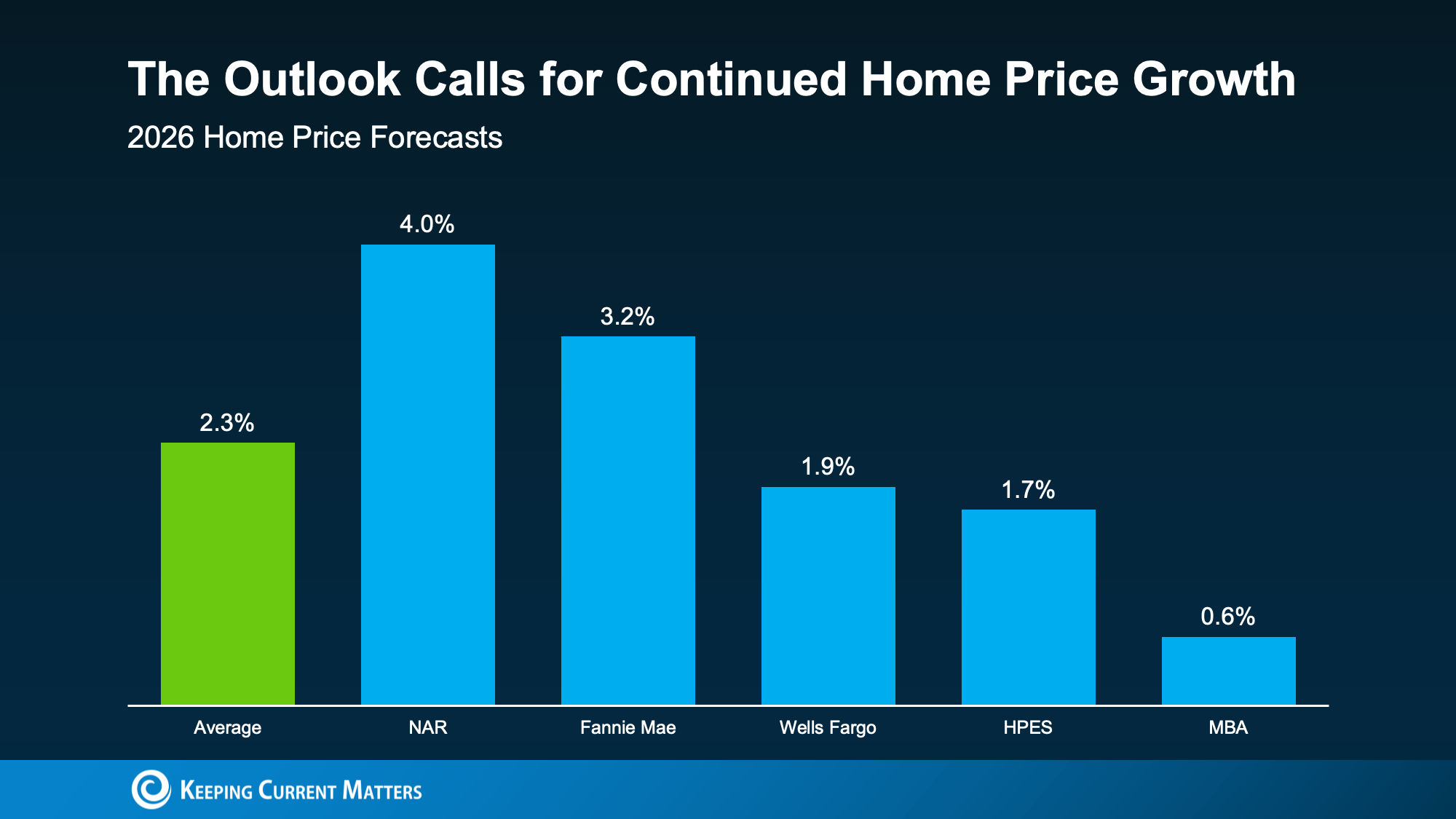
According to data from the Federal Housing Finance Agency (FHFA), prices are currently up about 1.7% nationally year-over-year. To reach the projected 2.3% average for the entire year, home price growth will need to pick up slightly during the second half of 2026.
Why might prices continue to rise?
-
Inventory Shifts: The number of homes for sale has grown, but the pace of that growth may be starting to slow down.
-
Returning Buyers: If mortgage rates improve, more buyers are likely to jump back into the market.
-
Increased Competition: More competing buyers could put modest upward pressure on home prices, especially if housing inventory is not growing as quickly as demand.
For buyers, this means that waiting for a lower price later is not a guaranteed strategy. For sellers who have been worried about retaining their home’s equity, these projections are welcome news.
Expect Stronger Home Sales Volume
If the housing market has felt quieter than expected this year, it’s not your imagination. Home sales have been slower than many people hoped. But that doesn’t mean people have given up on moving.
Many hopeful buyers and sellers have simply been waiting for firmer market certainty, better affordability, or a clearer understanding of where real estate is headed. If mortgage rates ease and confidence improves, more people may decide it is time to move forward.
Odeta Kushi, Deputy Chief Economist at First American, explains the current market sentiment:
“Overall, we expect pent-up demand to continue emerging gradually. But the pace of recovery will vary significantly across markets and will depend on the path of rates, labor market conditions and inventory growth.”
To hit the forecasted 4.9 million home sales expected for 2026, the second half of the year will need to significantly outperform sales in the first half.
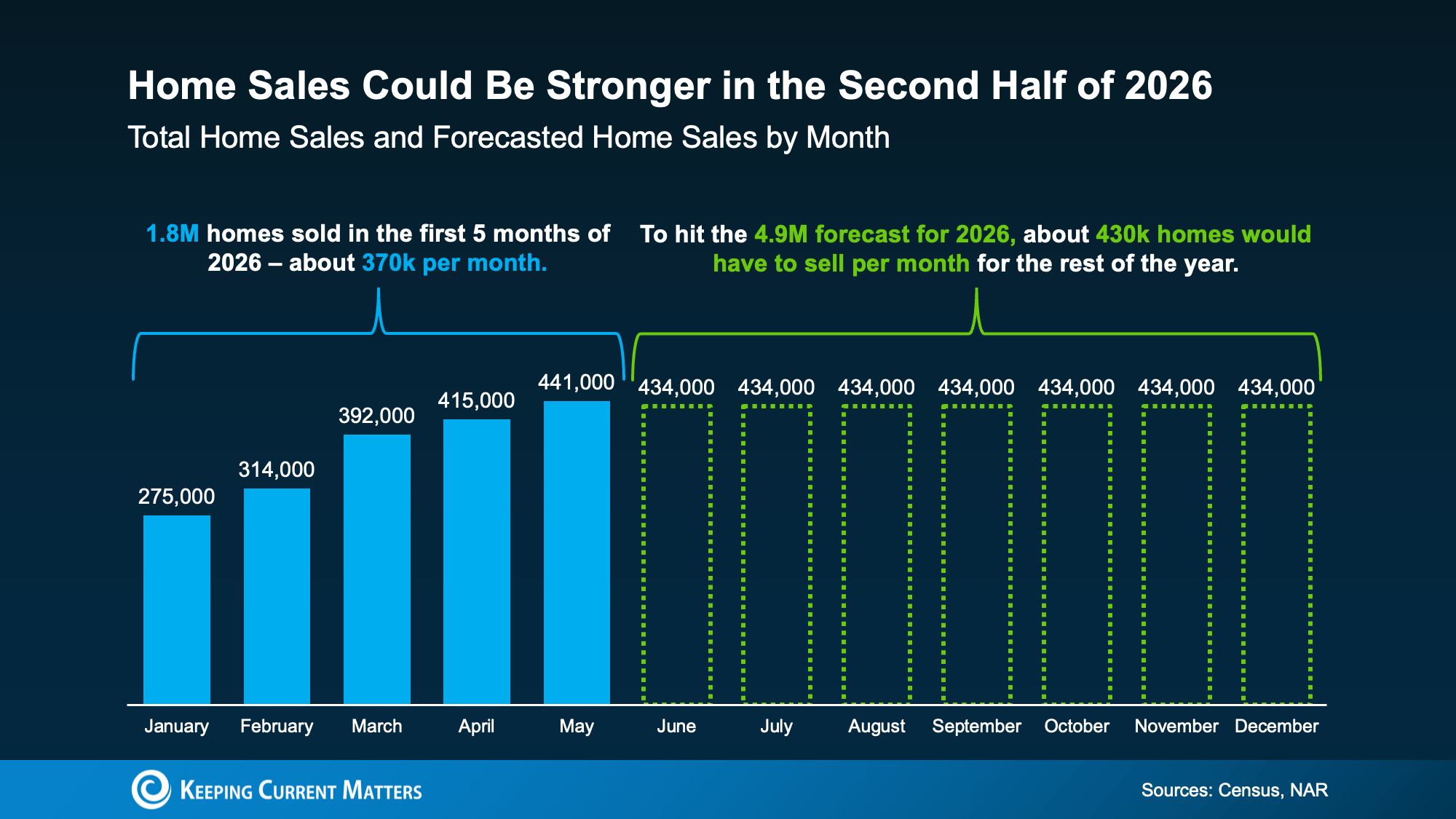
Essentially, every month for the rest of 2026 would need to match the momentum of May, which was the strongest month in the first half of the year. This indicates that experts anticipate much more market activity heading into the fall and winter.
The Bottom Line
The second half of 2026 might not be ideal, but conditions are pointing toward improvement. Mortgage rates may ease, home sales could accelerate, and property values are expected to continue rising at a steady, sustainable pace.
If you’re thinking about buying, selling, or relocating this year, connect with our brokerage team. We can help you understand local inventory, pricing, buyer demand, and what these 2026 housing market trends may mean for your plans.
Here’s the Number One Factor Impacting Home Prices Today

You might have heard that home prices are cooling off. Nationally, that’s true. But when you look at individual markets, the picture can be very different depending on where you are.
Some regions are seeing solid price growth, while others have flattened out or even dipped slightly negative. So what’s causing these huge variation in the real estate market?
The answer comes down to one major factor: housing inventory.
How Housing Market Inventory Drives Prices
The relationship between housing supply and home prices is straightforward:
- When there are more homes for sale, buyers have more options.
- More options usually mean less competition.
- Less competition can make it harder for sellers to push prices higher.
The opposite is also true. When inventory is tight, buyers are competing for a smaller pool of homes. That competition can help push prices up.
This supply and demand dynamic is currently playing out across the country right now.
Markets where inventory has climbed back to, or above, normal pre-pandemic levels are seeing prices flatten or fall slightly. Markets where inventory is still well below 2019 benchmarks are generally still seeing prices rise.
As Lance Lambert, CEO of ResiClub, explains:
“Home prices are still climbing a little year-over-year in many regions where active inventory remains well below pre-pandemic 2019 levels, such as pockets of the Northeast and Midwest.
In contrast, some pockets in states like Texas, Florida, and Colorado — where active inventory exceeds pre-pandemic 2019 levels by a solid clip — are seeing modest home price pullbacks or flat pricing.”
A Tale of Two Real Estate Markets
To understand current price shifts, we have to look back at normal, pre-pandemic inventory levels from 2019.
In most places, inventory is still below where it was before the pandemic. That is one reason prices are still climbing moderately in the majority of states.
But the markets getting the most attention are the ones where prices are softening. And in many of those areas, inventory has made a much bigger comeback.
According to Realtor.com, 15 states and Washington, D.C. are now above pre-pandemic inventory levels, with some areas well above those benchmarks.
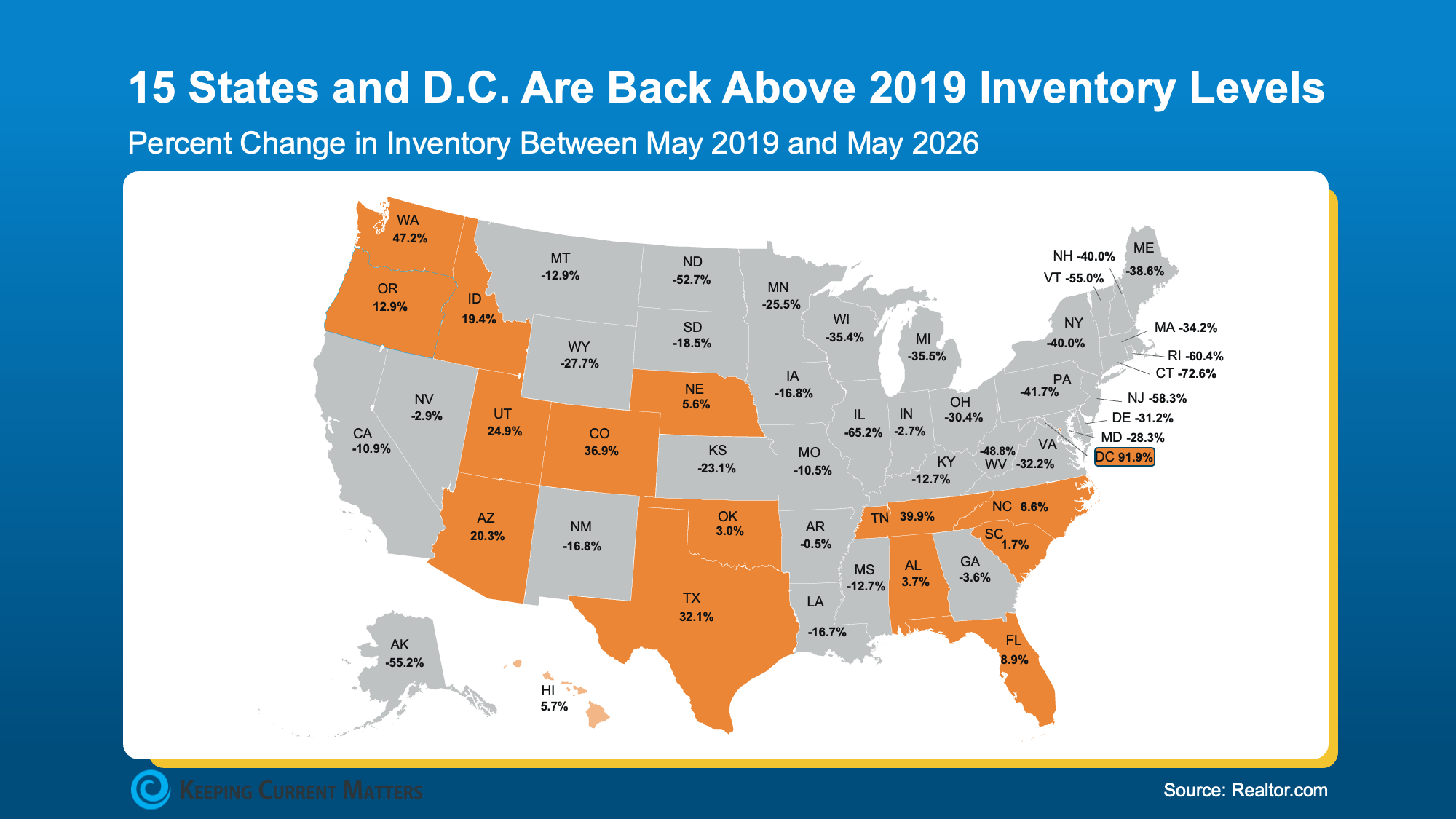
When you compare those inventory trends with the latest Federal Housing Finance Agency (FHFA) data on home prices, the connection becomes much clearer.
The areas with more homes for sale are often the same places seeing prices flatten or dip slightly.
This overlap isn’t a coincidence: it’s direct cause and effect.
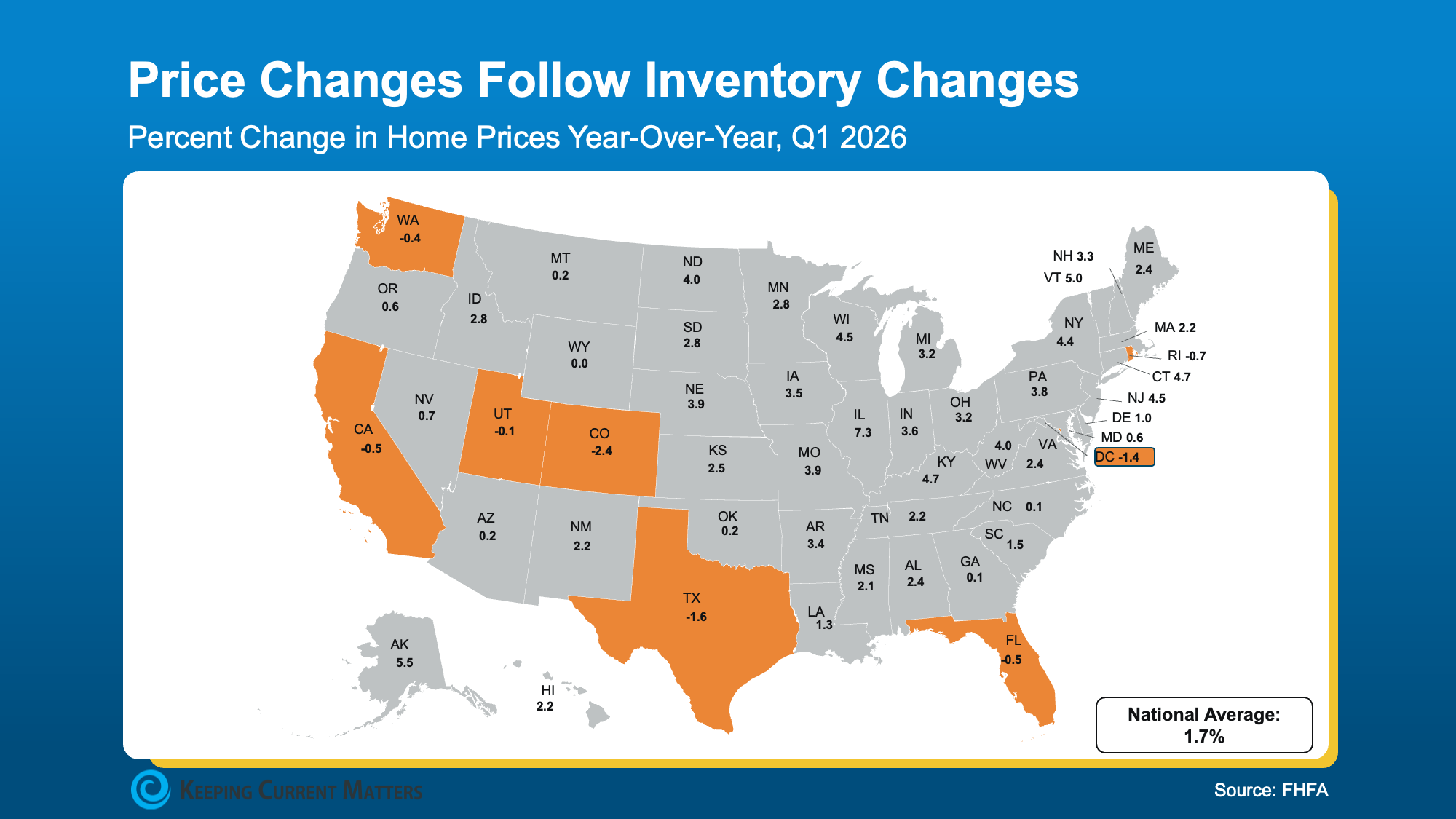
The national average of 1.7% price growth is accurate, but it’s a blend of two very different stories. A few areas are experiencing mild price declines, while the overwhelming majority of markets are still seeing prices rise.
What This Means for Home Buyers and Sellers
For both buyers and sellers, local conditions matter more than the national average. The best strategy will depend on your local housing market inventory.
If You’re a Home Buyer:
- In higher-inventory states like Texas, Colorado, or Florida, you may have genuine negotiating power.
- In these areas, you will likely find more choices, face less competition, and encounter sellers who are motivated to make a deal.
- If you’re shopping in tighter markets, like much of the Northeast, you should prepare to face steeper competition.
If You’re a Home Seller:
- Your pricing strategy is everything.
- In markets where inventory has risen, overpricing your home is the fastest way to sit on the market and eventually sell for less than you would have with the right initial price.
- If you live in a market where inventory is still low, you’re in a stronger position.
- Pricing your home correctly from day one still matters if you want to attract serious buyers quickly.
Bottom Line
When it comes to home prices, your location matters more than ever.
Inventory is the key factor shaping today’s market. Areas with more homes for sale are seeing prices flatten or dip slightly, while areas with limited inventory are generally still seeing prices rise.
Whether you’re buying or selling, partnering with an experienced real estate agent is the best way to understand what’s happening in your market.
Ready to make sense of your local market and make a move? Contact our brokerage today to connect with a local agent who can help you compare inventory, pricing, and next steps.
Two Big Reasons This Summer May Be the Right Time To Move

A lot of hopeful buyers and sellers are asking the same question right now: “Should I move this summer, or wait until later this year?”
Waiting can feel like the safer choice, especially if you’re hoping mortgage rates will drop or market conditions will feel more predictable. But there’s something important to keep in mind: rates aren’t expected to change much, so waiting may not create the advantage you’re hoping for.
Summer has historically been one of the strongest seasons of the year for both buyers and sellers. And if you delay your move until fall or winter, some of the best seasonal opportunities may start to fade.
Here are two big reasons a summer move may be worth considering.
1. Buyers May See More Fresh Inventory in Summer
One of the biggest challenges buyers have faced in recent years is a lack of affordable options.
Maybe this sounds familiar:
- You find a home you like, but it’s outside your budget.
- You find something in your price range, but it doesn’t fit your needs.
- Or nothing new and interesting hits the market for weeks.
The Summer real estate market often helps with this.
Looking at data from the Realtor.com, summer months consistently bring more sellers into the market than later in the year. This gives buyers a real window of opportunity to see fresh listings.
According to the data, any given summer month typically sees about 32% more fresh options than the average month from September through December.
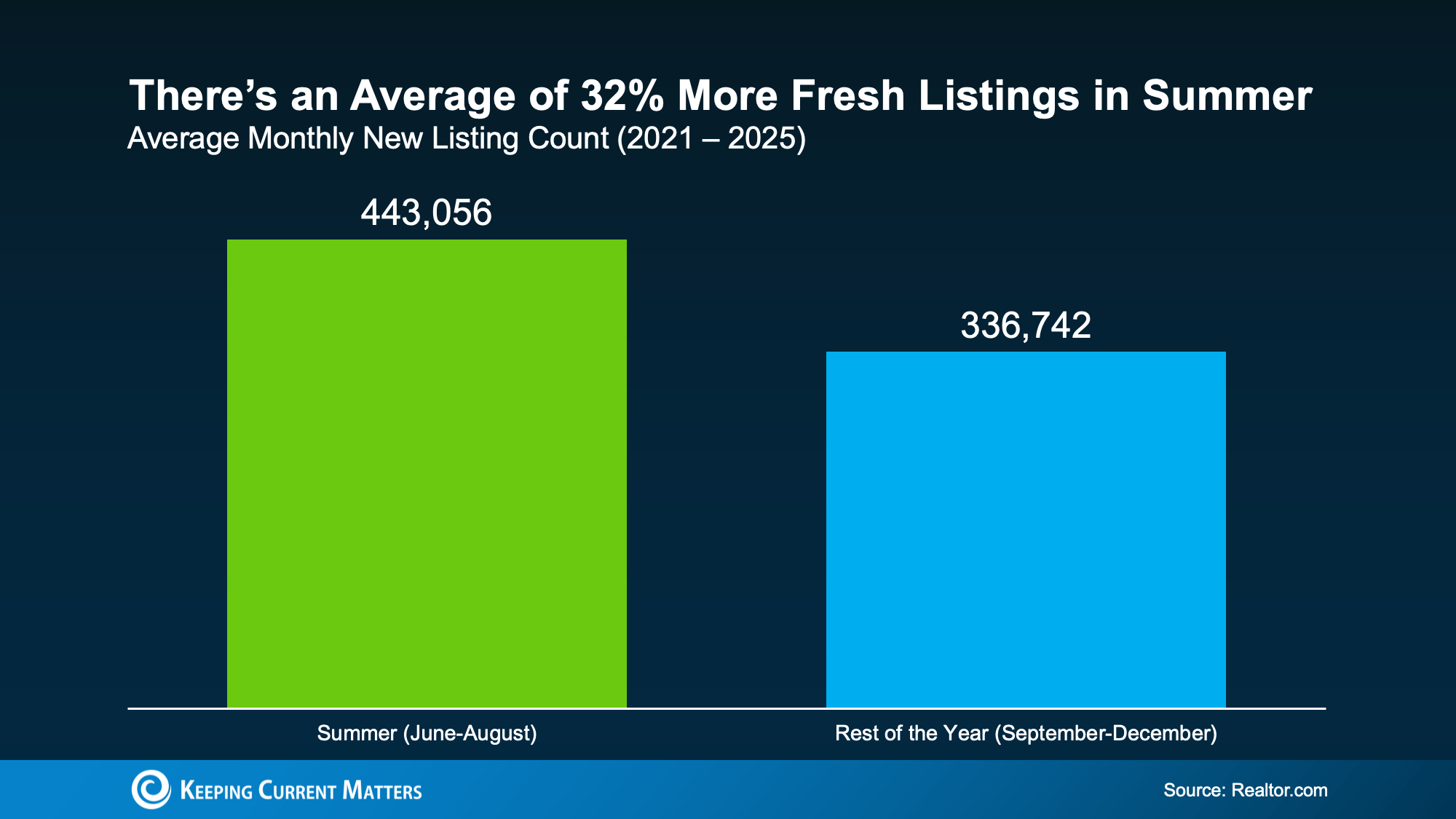
As a buyer, more newly listed homes can increase your chances of finding one that fits both your wish list and your budget. After all, it takes is the one right home hitting the market to change your whole search.
Why Waiting May Limit Your Choices
The summer listing window doesn’t stick around: new inventory tends to slow once summer ends.
By fall, many homeowners who planned to sell have already listed. Some buyers and sellers who were aiming to move before school-year schedules resume may have already made their move or started the process. As a result, new listing activity usually cools heading into fall and winter.
Every year is different, and every local market has its own patterns. But if finding the right home at the right price has been your biggest challenge, waiting until later in the year may not necessarily give you more options.
2. Sellers Often Benefit From Summer Seasonality
If you’re thinking about selling, you may be wondering whether now is the right time. Headlines about lower asking prices, price reductions, and softer market conditions in some areas can make it feel like the moment has passed.
But those headlines don’t tell the full story.
The market is becoming more balanced, and some areas may be experiencing price declines. Still, that does not mean sellers have missed their chance. Seasonality can still work in your favor, depending on your local market and your pricing strategy.
According to the National Association of Realtors (NAR), homes sold during a summer month usually sell for about 4% more than homes sold during the typical month from September through December.
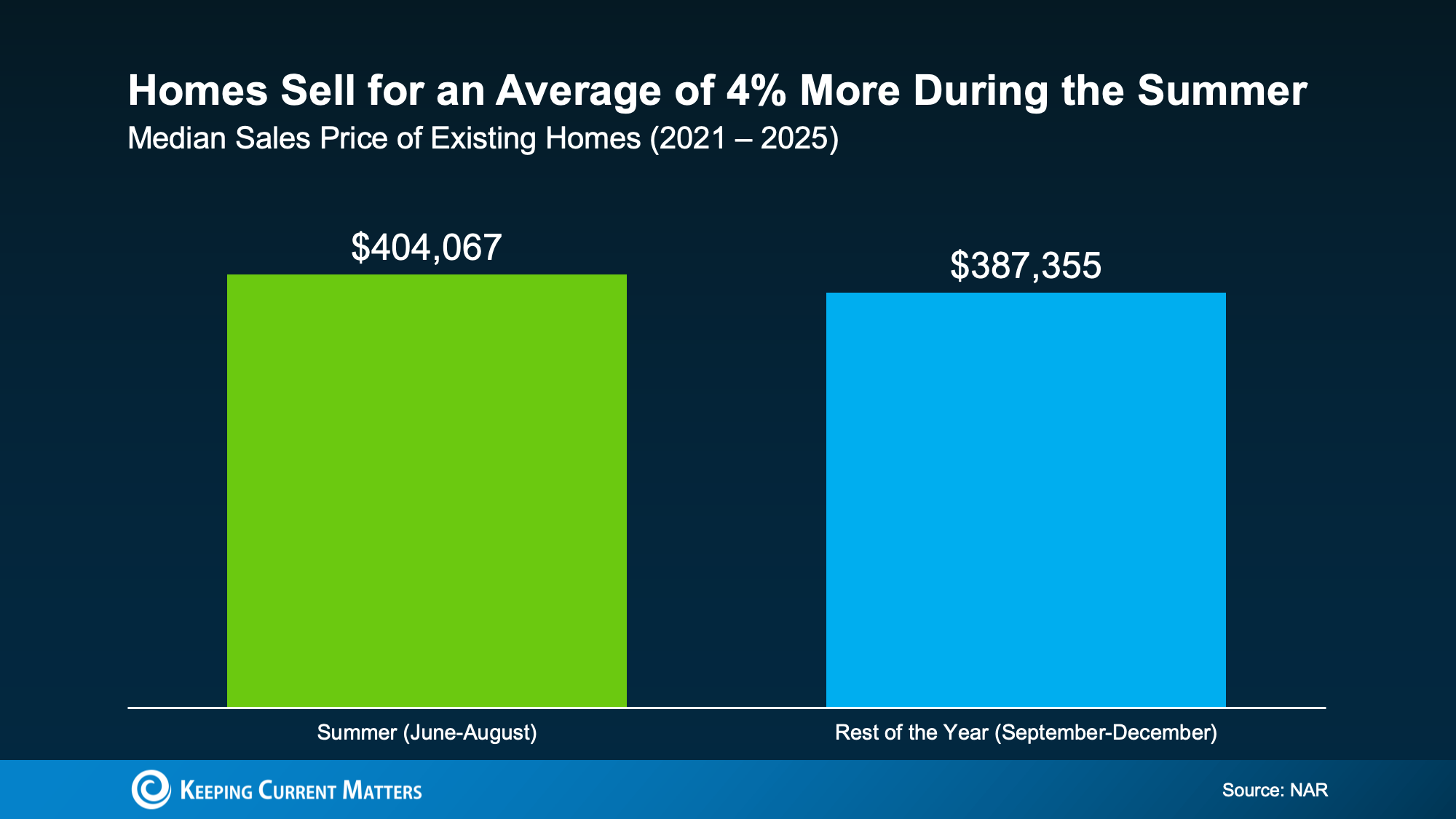
With that said, this doesn’t mean you should price your home 4% higher. In today’s market, overpricing can turn buyers away and cause your home to sit longer than expected.
Instead, consider the timing of your listing. If your goal is to sell for as much as you reasonably can, listing during summer may be a stronger move than waiting until later in the year, when there are typically fewer active buyers.
Why Summer Buyers May Be Motivated
Summer buyers often have a timeline in mind. They may want to move before the next school year, take advantage of warmer weather, or use available time off to tour homes and coordinate a move.
That sense of timing can lead to stronger activity and, in some cases, better offers.
Again, this depends on your local market, your home’s condition, and how well it is priced. But if you were already considering a move in 2026, summer timing deserves a closer look.
Bottom Line
Can you still buy or sell later this year? Of course. But understanding the strengths of the summer market could make a big difference.
For buyers, summer can bring more fresh listings and better odds of finding a home you like. For sellers, summer seasonality may support stronger buyer activity and better pricing opportunities than later in the year.
If you’re planning a move in 2026, connect with a local real estate professional to talk through your goals, timeline, and market conditions. Depending on what matters most to you, summer could be the right time to make your move.
Navigating the Housing Market: What Rising Inflation Means for Your Move

Inflation is moving in the wrong direction again, and that can feel frustrating if you’re thinking about buying or selling a home.
But before the headlines send you into panic mode, it helps to understand what’s actually happening, how it connects to the housing market, and what it may mean for your next move. Simply put: inflation matters, and mortgage rates may stay elevated longer than many people hoped, but that does not mean your plans are off the table.
Inflation Went Up. Here’s What That Means
To understand where the economy is headed, we have to look at how the government tracks inflation. One measure that gets a lot of attention is the Personal Consumption Expenditures Price Index, often called PCE.
PCE measures how much more, or less, people are paying for goods and services compared to a year ago. And based on everyday expenses like groceries, gas, utilities, and household costs, you can probably guess why people are paying close attention.
The overall PCE number has moved higher since February. One major reason is the ongoing conflict in the Middle East, which has pushed gas and energy prices significantly higher.
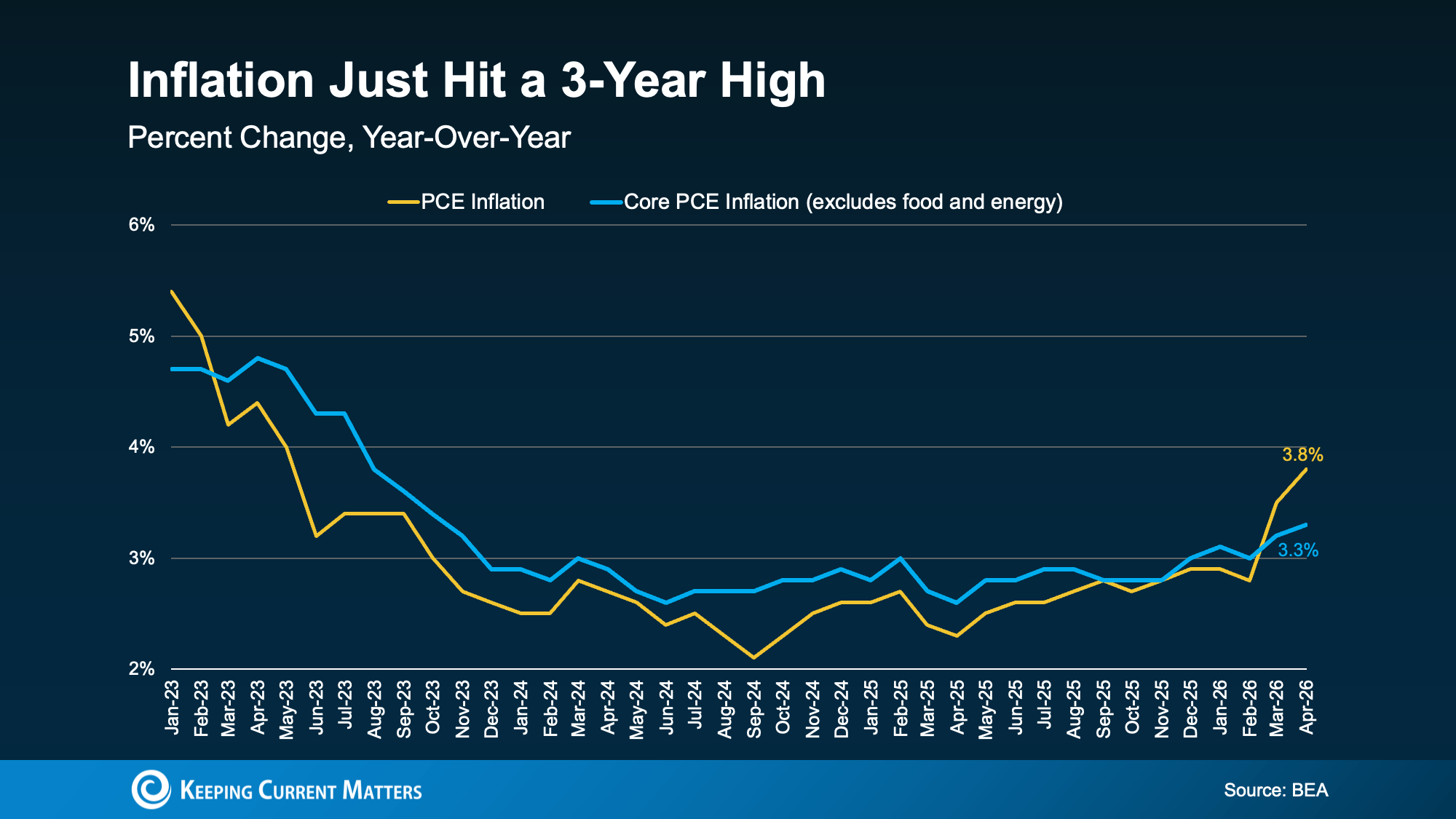
There’s also another version of this measurement called core PCE. Core PCE strips out gas and energy prices because those costs can swing quickly and sometimes make inflation look more volatile than it really is. The Federal Reserve, often called the Fed, watches this number closely.
Here’s the somewhat encouraging part: core PCE is rising, but not as quickly as the overall inflation number. That suggests part of the recent inflation spike may be tied to overseas events and energy prices. If those pressures ease, inflation could settle down somewhat, too.
Why Inflation Matters for Mortgage Rates
Inflation and mortgage rates are connected because inflation influences how the Fed thinks about interest rates.
When inflation is high, the Fed may keep the Federal Funds Rate elevated, or even raise it, to help slow spending and bring inflation back down. Mortgage rates do not move in perfect lockstep with the Federal Funds Rate, but the Fed’s decisions can still influence the broader rate environment buyers face.
According to recent data from CME FedWatch, there’s roughly a 50/50 chance that the Fed raises the Federal Funds Rate before the end of 2026.
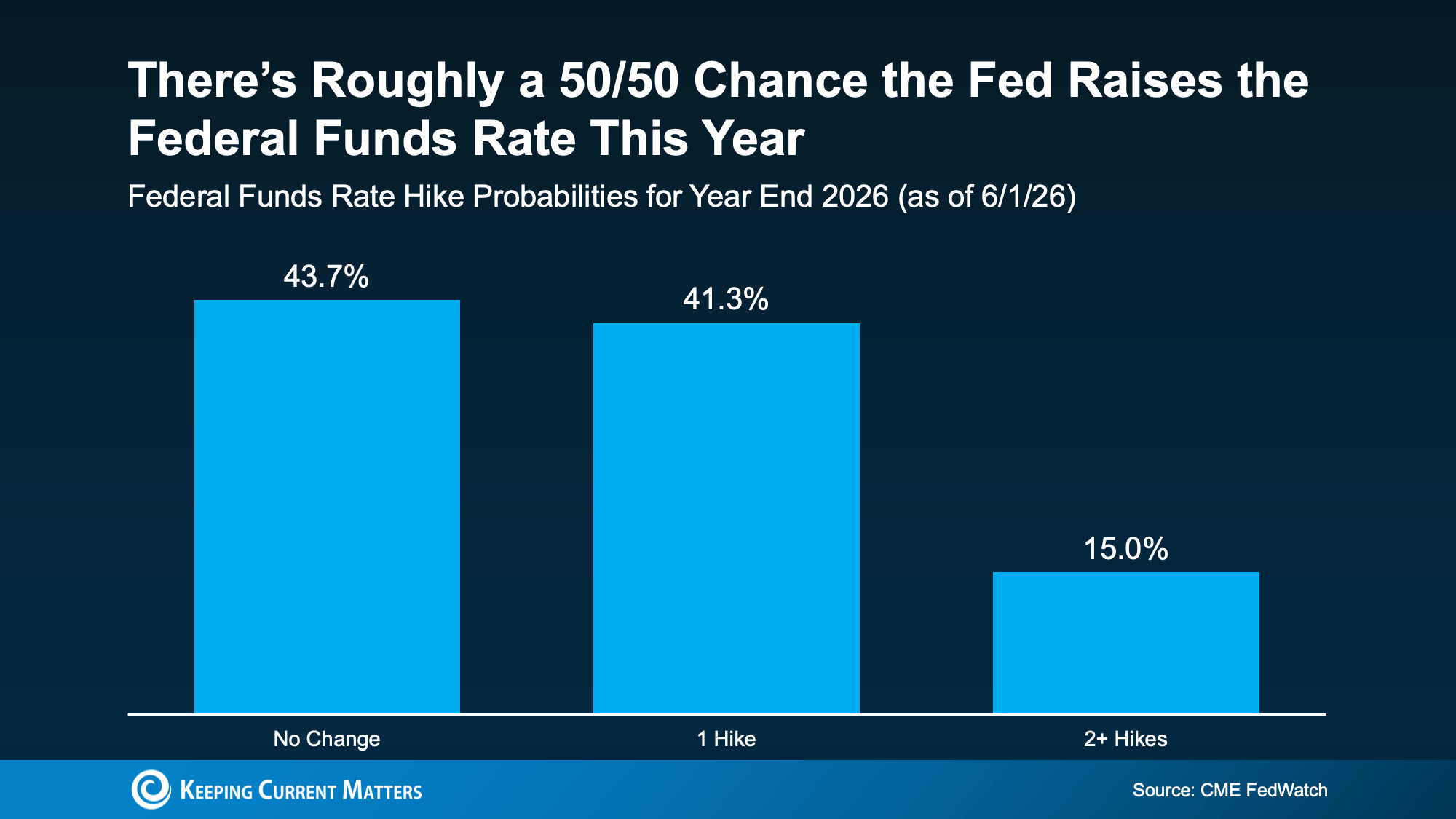
This “higher for longer” reality means mortgage rates are probably not coming down as soon as most people were hoping.
As Bankrate explains:
“Oil prices and bond yields have dropped a bit . . . but they’re still way up compared to the start of spring. Until there’s a resolution to the war, look for both inflation and mortgage rates to stay high.”
This is a disappointing shift for buyers waiting for lower rates, and it means buying strategy matters more than ever.
Why This is Not 2008
A tougher economy does not automatically mean a housing crash.
Today’s housing market is very different from the conditions that led to the 2008 collapse. Here are a few key reasons why:
-
Inventory is still relatively low. Meaning there’s no major flood of homes hitting the market.
-
Many homeowners have strong equity. That gives sellers more options than homeowners had during the 2008 crisis.
-
Lending standards are stricter. Mortgage qualification rules are much tighter than they were before the last housing crash.
- The main challenge is affordability. Today’s pressure is not being driven by a wave of distressed, underwater sellers.
The market may feel uncomfortable right now, but uncomfortable and unhealthy are not the same thing. A challenging market is very different from a crashing one.
What Buyers Can Do Right Now
Higher mortgage rates don’t mean homeownership is out of reach; it just means the path looks a little different.
Here are a few options worth discussing with a trusted lender:
-
Explore Alternative Loans: Ask your lender about Adjustable-rate mortgages (ARMs) or rate buydowns to help lower your monthly payment in the short term.
-
Seek Financial Assistance: Explore first-time buyer programs, down payment assistance, or seller concessions that could help offset costs.
-
Stay Prepared: Keep in close touch with a trusted agent and lender so you are ready to move fast when rates eventually shift.
A lender can explain which options apply to your situation. Mortgage terms, assistance programs, and qualification requirements vary, so it’s worth getting personalized guidance before making decisions.
The Bottom Line
Inflation is still above where the Fed wants it to be, and that means mortgage rates may stay elevated for a while. But if you need to move, strategy matters more than trying to perfectly time the market.
The right agent and lender can help you understand your options, compare scenarios, and make a move that fits your goals.
Wondering what rising inflation and mortgage rates mean for your next move? Connect with a local real estate professional or lender to talk through your options.
Mid-Year Housing Market Update 2026

If you’re feeling confused by the housing market right now, you’re not alone.
Mortgage rates have risen. Home sales haven’t picked up as quickly as many experts expected. And buyers and sellers are still waiting for affordability to improve and market activity to turn up.
The short answer? A lot changed during the first half of 2026.
At the end of 2025, economists were forecasting a stronger housing market for the year ahead. Many expected mortgage rates to come down, affordability to improve more noticeably, and home sales to rebound.
But lingering inflation, economic uncertainty, and growing geopolitical tensions overseas pushed mortgage rates higher than expected. With rates staying elevated for longer, many buyers have continued to wait on the sidelines.
Unexpected factors like these have forced experts to revise their housing forecasts for the rest of the year.
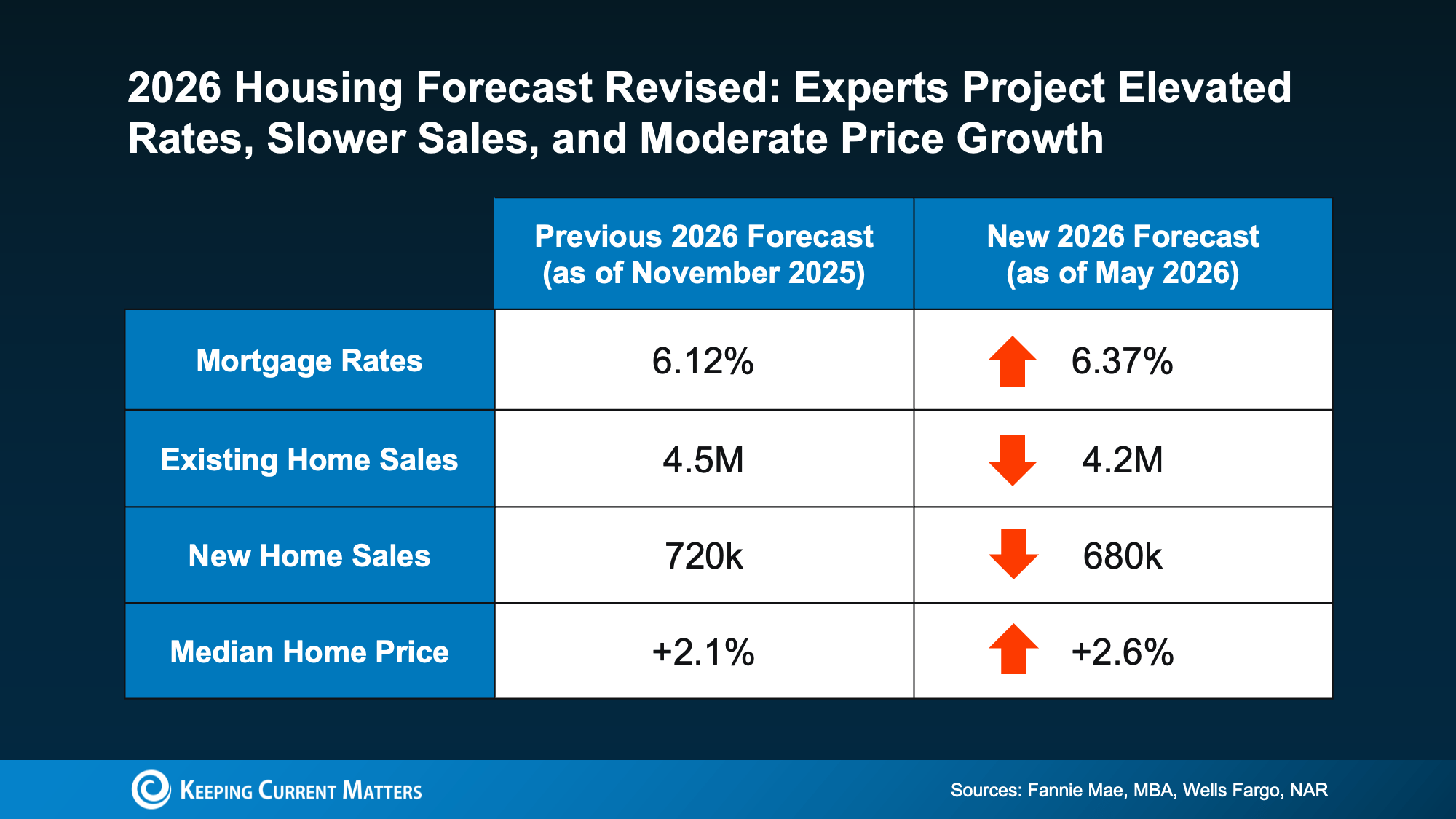
Experts are now projecting elevated mortgage rates (6.37%) and a dip in total home sales. However, home values remain resilient with a projected 2.6% growth in median prices.
So, what does this mid-year housing market update actually mean for you? Let’s break it down.
Mortgage Rates May Stay Elevated Longer Than Expected
Just about everyone would like to see mortgage rates return to the upper 5s or low 6s we saw earlier in the year. But based on current forecasts, experts don’t expect that to happen this year.
Instead, many industry organizations now expect mortgage rates to stay closer to the mid-6% range in 2026. The good news is that this is still lower than rates were a year ago.
Of course, forecasts can change. If inflation cools or overseas conflicts ease, mortgage rates could shift again. But for buyers waiting for a major rate drop, the payoff may not be as big or as immediate as hoped.
For many buyers, the better question may be: Can you comfortably afford a home at today’s rate? If the answer is yes, waiting may not automatically put you in a stronger position.
Existing Home Sales Were Revised Lower
At the end of 2025, experts expected existing home sales to average around 4.5 million in 2026. That forecast has now been revised down to about 4.2 million.
That change tells us something important: affordability is still a challenge, and many buyers remain hesitant.
Higher mortgage rates have made monthly payments harder to manage, especially for first-time buyers. As a result, the market has moved more slowly than originally expected.
But there is still some positive news. Even with the revised forecast, experts still expect more homes to sell this year than last year.
There’s also a pool of buyers who may re-enter the market once rates settle and uncertainty eases. As Lawrence Yun, Chief Economist at NAR, explains:
“There is sizable pent-up demand that could be released into the market.”
Recent improvements in pending home sales also suggest some buyers are starting to move forward again, even with rates still elevated.
For today’s buyers, that’s a big deal. If you can afford a home now, buying before more buyers return could mean less competition than you might face later.
New Home Sales Also Slowed
Builders also expected a stronger year.
Earlier forecasts projected new home sales would top 700,000 in 2026. Now, economists expect new home sales to come in just under that number.
Once again, mortgage rates are a major reason why.
But for buyers, there may be an upside. When new home sales slow, builders may become more motivated to sell available inventory. Depending on the market, that could create opportunities for:
- Builder incentives
- Closing cost assistance
- Price flexibility
- Negotiation on upgrades or finishes
This doesn’t mean every builder will negotiate, and incentives vary by location. But in areas with more new construction, buyers may have more leverage than they would in a a more active market.
Home Prices Are Still Expected To Rise
Here’s one of the biggest takeaways from this mid-year housing market update: even though sales activity has slowed, experts did not revise national home price forecasts downward.
They still expect home prices to rise nationally this year.
Why? Because buyer demand has softened, but the overall number of homes for sale remains relatively limited. That imbalance continues to support prices, even in a slower market.
Local conditions can vary; some markets are cooling more than others, and pricing trends depend heavily on inventory, buyer demand, property condition, and location.
Still, experts are projecting steady price growth rather than a major decline, at least at the national level.
That can be reassuring whether you’re buying or selling. Sellers generally don’t want to see a sharp drop in values. And buyers may feel more confident about a major purchase when prices aren’t expected to fall significantly right away.
What This Means for Buyers
For buyers, the updated 2026 housing market forecast is a reminder to focus on what you can control.
Mortgage rates may not fall as quickly as hoped, but that doesn’t mean buying is off the table. A local real estate agent can help you understand what’s happening in your specific market, including inventory levels, price trends, and negotiation opportunities.
Before making a move, think about reviewing:
- Your current budget
- Estimated monthly payment at today’s rates
- Available homes in your preferred price range
- Local competition from other buyers
- New construction options and possible builder incentives
You should also speak with a trusted mortgage professional to understand loan options, rate scenarios, and affordability based on your situation.
What This Means for Sellers
For sellers, slower sales activity doesn’t point to a stalled market.
Buyers are still active, but many are more selective thanks to tighter affordability. That makes pricing, preparation, and marketing even more important.
A strong selling strategy should include:
- A realistic pricing plan based on current local data
- Thoughtful preparation before listing
- Professional marketing that highlights the home clearly
- Flexibility around buyer questions, timelines, and negotiations
With home prices still expected to rise nationally, many sellers may still be in a strong position. A successful sale will depend on understanding your local market, not relying on broader national headlines.
Bottom Line
The housing market hasn’t rebounded as quickly as experts originally hoped. Still, the market hasn’t totally stalled.
Higher inflation, economic uncertainty, and global tensions caused economists to revise their 2026 housing market forecasts. Mortgage rates are expected to remain higher than originally projected, and home sales forecasts have been adjusted lower.
Even so, more homes are still expected to sell this year than last year, and national home prices are still projected to rise.
The key is to make decisions based on your own local market, budget, and goals.
If you want to understand what this mid-year housing market update means for your next move, connect with our team. We can help you review local trends, explore your options, and decide what makes sense for the rest of 2026.
Why Staging Your House Could Help It Sell Faster This Spring

Selling your house this spring? Before your listing goes live, there’s one step that could make a meaningful difference in how buyers see your home: staging.
Home staging is more than making a house look pretty for photos. It helps buyers picture themselves living in the space, which can lead to more interest, stronger offers, and a faster sale. And in a market where buyers have more options to choose from, first impressions matter more than ever.
As Nadia Evangelou, Principal Economist at the National Association of Realtors (NAR), explains:
“Staging matters. Preparing the home to be ‘buyer-ready’ attracts more buyers, especially now that inventory has increased.”
Here’s why staging your house could pay off this spring, plus a few options to fit different budgets.
What Is Home Staging?
Home staging is the process of preparing your home so it appeals to the widest pool of potential buyers. The idea is to make each space feel clean, open, functional, and inviting.
That may include:
- Decluttering countertops, closets, and storage areas
- Deep cleaning every room
- Rearranging furniture to improve flow
- Removing overly personal items
- Adding simple décor, lighting, or fresh linens
- Highlighting key features like natural light, fireplaces, or outdoor spaces
Staging helps buyers focus on the home itself instead of distractions. When a home feels spacious and well cared for, buyers are more likely to connect emotionally with the property, and more likely to make an offer.
Why Staging Your House Is Worth It
A well-staged home can help your listing stand out both online and in person. And since most buyers start their search by scrolling through photos, your home needs to make a strong first impression.
Staging can help:
1. Your Home Look Better in Listing Photos
Professional photos are one of the most important tools in your marketing plan. Staged rooms tend to look brighter, cleaner, and more balanced, which can encourage more buyers to schedule a showing.
2. Buyers Understand the Space
Empty rooms can sometimes feel smaller than they really are. On the other hand, crowded or poorly arranged rooms can make a home feel cramped. Staging shows buyers how each area can be used, from a cozy living room to a flexible home office.
3. Your House Sell Faster
Staged homes have been shown to sell significantly faster than unstaged homes. Redfin reports that staged homes sell up to 73% faster and often close in under a month. Meanwhile, vacant homes might sit on the market from two to three months, and that’s if they sell.
4. You See a Stronger Return
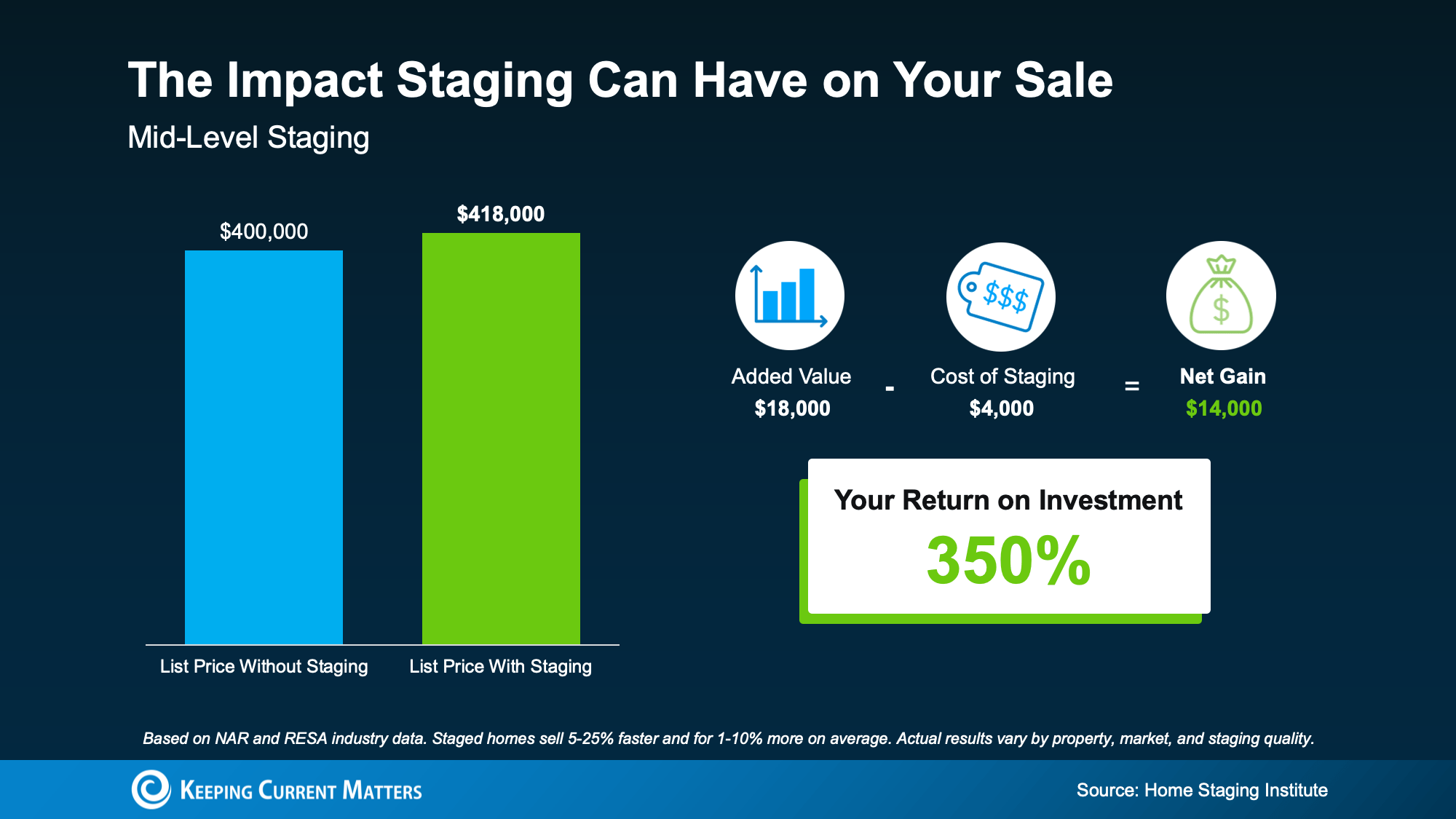
Staging does require an investment, but it may pay off. The Home Staging Institute claims mid-level staging can deliver roughly a 350% return on investment, especially when it helps a home sell for more or reduces time on market.
Home Staging Options for Different Budgets
Staging your house doesn’t need to mean hiring a full-service staging company or renting furniture for every room. There are several ways to approach it based on your timeline, budget, and the condition of your home.
Most Expensive: Professional Staging
A professional stager can handle the full process, including furniture layout, décor, and design details. This option can be especially helpful if your home is vacant, outdated, or otherwise difficult for buyers to visualize.
Professional staging often costs more, but it can create a polished look that photographs well and attracts more buyers.
Less Expensive: Virtual Staging
Virtual staging uses digital furniture and décor in listing photos. This can be a cost-effective option for vacant homes, especially when you want buyers to see the potential of each room.
Keep in mind that buyers should still understand what the home looks like in person, so your agent can help you decide when virtual staging makes sense.
Least Expensive: DIY Staging
If your home is already in good condition, DIY staging may be enough. Simple updates like decluttering, cleaning, rearranging furniture, and adding fresh towels or neutral bedding can make a noticeable difference.
This is often the most budget-friendly option and will still help your home feel more move-in ready.
Ask Your Real Estate Agent What Buyers Expect
Before you spend money on staging, talk with your real estate agent. Agents see how buyers respond during showings and open houses, so they can recommend which updates are worth your time and which ones may not be necessary.
For example, your agent may suggest focusing on the living room, kitchen, primary bedroom, and entryway first. These are often the spaces that create the strongest first impression. An expert agent will know how to best use staging to leverage your home’s own unique strengths and personality.
Bottom Line: Consider Staging For Your Selling Strategy
Staging your house can help it look its best, attract more buyers, and potentially sell faster this spring. Whether you choose professional staging, virtual staging, or a simple DIY approach, the right preparation can make your home more appealing in a competitive market.
Before you list, connect with a local real estate agent to decide which level of staging makes the most sense for your home, budget, and local market.
How To Sell Your Home Fast in Any Market
When you list your house, you probably have two goals: sell for a strong price and sell your home fast. But in today’s housing market, homes are taking a little longer to move than they did during the ultra-competitive years.
But in every market, there’s one clear trend standing out:
Well-priced, well-presented homes are still attracting attention and going under contract quickly. The key is making sure your home stands out for the right reasons from the moment it hits the market.
How Long Does It Take To Sell a Home Today?
According to Realtor.com data, homes are selling in about 52 days from listing to closing. That may feel slow if you remember the days when homes seemed to sell almost overnight, but historically, that timeline is much closer to a normal market.
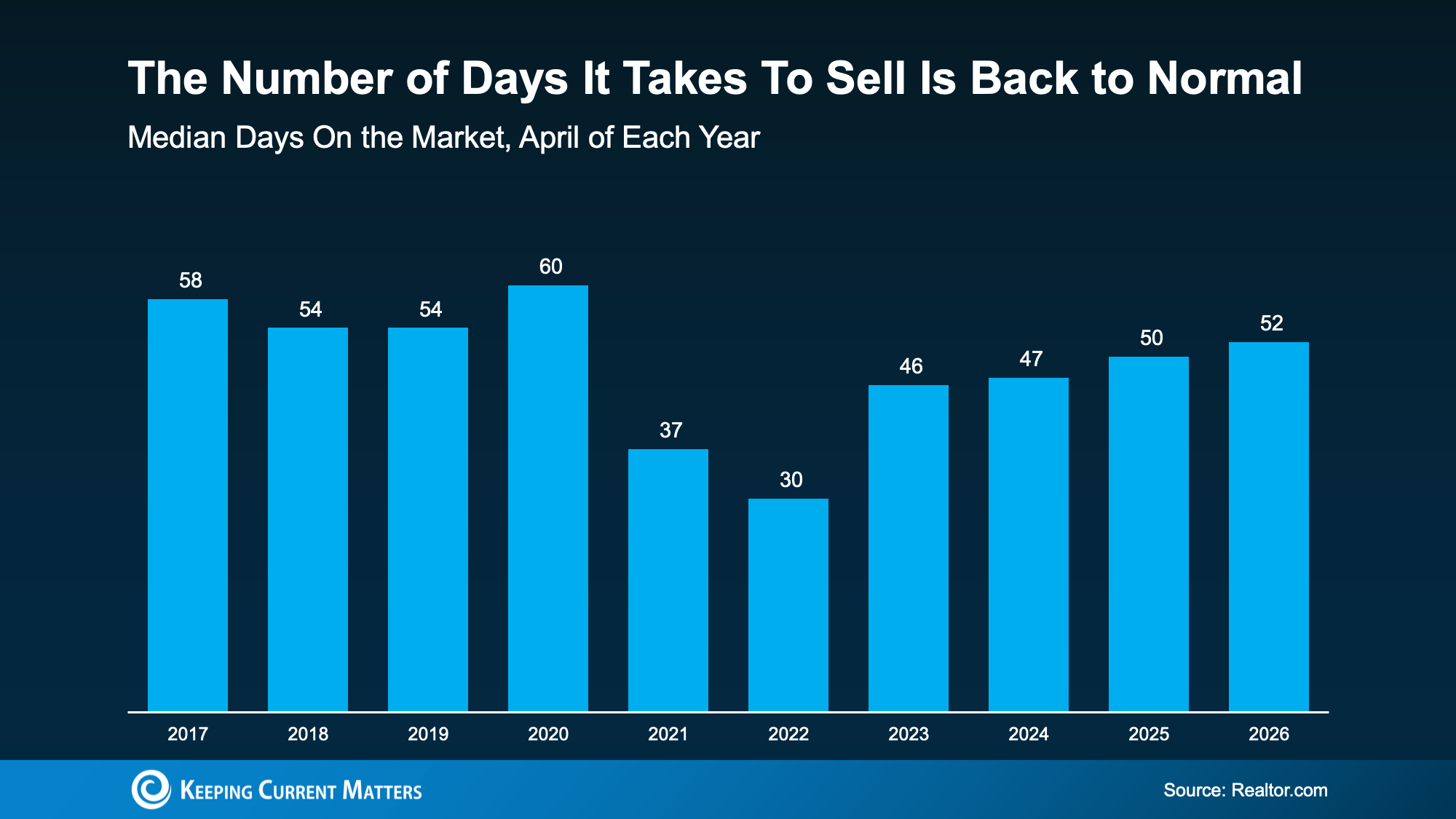
The important thing to understand is this: the market is normalizing, not stopping.
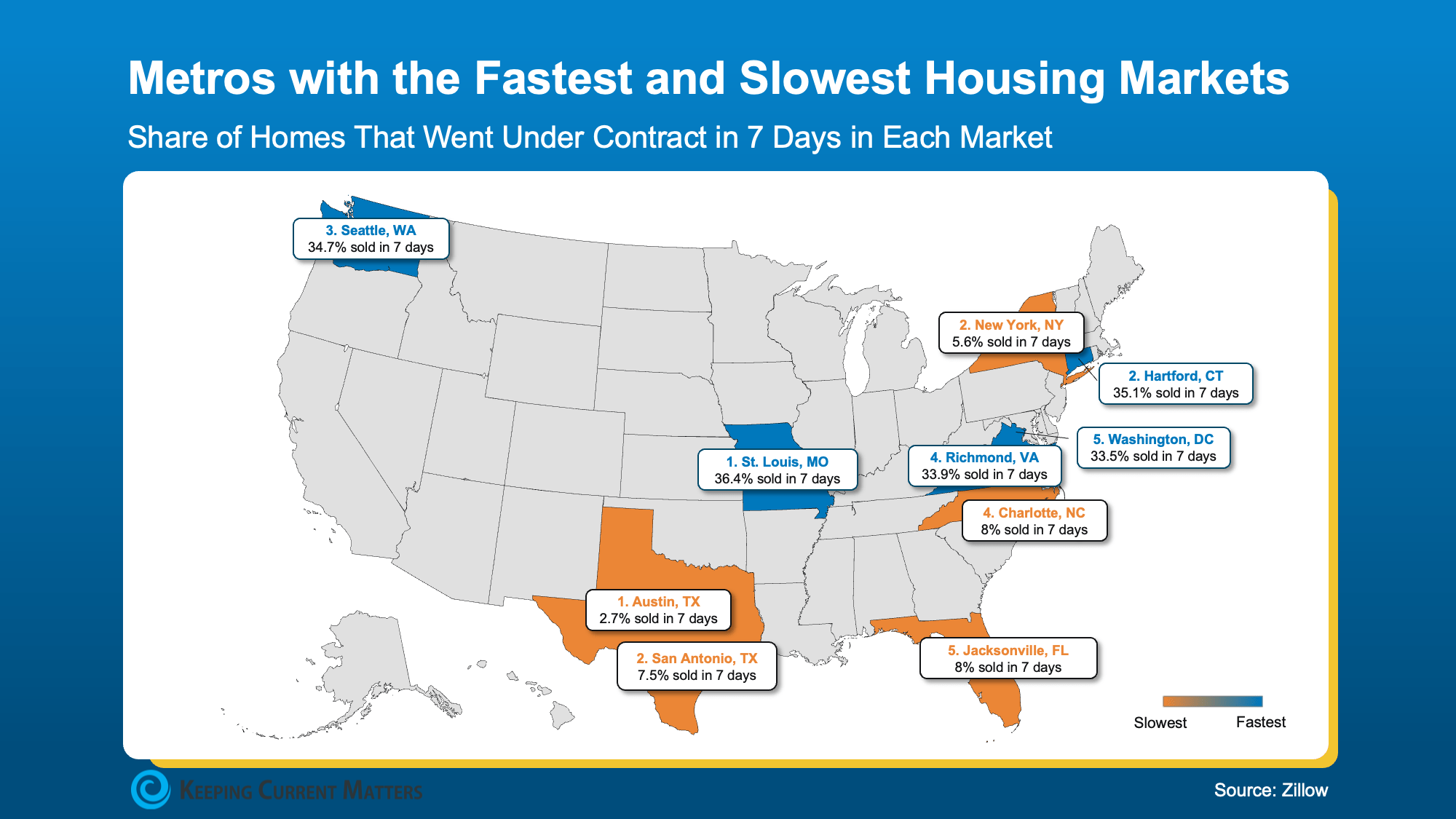
You may still receive an accepted offer much sooner than the full 52-day timeline. In fact, Zillow data says the typical home goes pending or under contract in about 19 days, and some homes move in as little as 7 days.
Why Some Homes Still Sell Quickly
If you want to sell your home fast, location can help, but it’s not the only factor. Even in slower-moving markets, some homes continue to get strong buyer interest because they are positioned correctly.
As Orphe Divounguy, Senior Economist at Zillow, says:
“The cream of the crop is still selling fast, even in markets that have slowed considerably. . .”
That’s the real takeaway. Buyers are still out there, but they’re more selective than ever. Buyers today are comparing homes carefully, looking at price, condition, photos, updates, layout, location, and overall value.
Homes that feel move-in ready and priced appropriately are the ones that tend to rise to the top, and sell the quickest.
The Biggest Reasons Some Homes Sit on the Market
In any market, homes are more likely to sit when they miss the mark on critical buyer expectations. Here are some of the most common issues buyers find:
- The home is priced too high for current market conditions.
- The property needs more work than buyers are willing to take on.
- Listing photos do not make the home look appealing.
- The home is not staged or prepared well.
- The marketing does not highlight the home’s best features.
The Wall Street Journal (WSJ) explains it this way:
“. . . some homes are still flying off the shelves. These houses are often in the Midwest or Northeast, where the lack of new construction keeps a lid on supply. Certain homes in other markets are selling quickly, too, often when a home is move-in ready.”
Move-in-ready homes often have an advantage because many buyers are already dealing with higher costs and tighter budgets. A home that feels clean, functional, and well cared is much more attractive.
How To Sell Your Home Fast
The best way to improve your odds of selling quickly is to focus on the things you can control before your home goes live.
1. Price It Strategically
Pricing too high can cause your home to sit, which can lead buyers to wonder what’s wrong with it. A local real estate agent can help you compare your home to similar listings and recent sales so you list at a price that attracts serious buyers.
2. Make a Strong First Impression
Buyers often decide whether they are interested before they ever schedule a showing. Professional photos, curb appeal, decluttering, and simple updates can make a big difference.
3. Highlight What Buyers Care About Most
Your listing should clearly show what makes your home valuable, whether it’s an updated kitchen, a flexible floor plan, a great location, outdoor space, or recent renovations made.
4. Work With a Local Market Expert
A local agent can help you understand what buyers in your area expect, how quickly homes are moving, and what changes might be needed if the market shifts after listing.
Bottom Line: Stand Out Strategically
Today’s real estate market still rewards sellers who use the right strategy. If your goal is to sell your home fast, focus on pricing realistically, preparing your home well, and working with an expert agent who understands your local market.
The homes that stand out are still selling, and sometimes even faster than sellers expect.
Is Late May a Good Time To Sell Your House?

If you heard that April 12-18 was the “best week” to list your house, you may be wondering whether you missed your chance to take advantage of the spring market.
Simply put, you didn’t.
While one report from Realtor.com pointed to that specific April week as a strong time for sellers, the truth is there’s rarely just one perfect week to sell your home. Rather, there’s usually a prime selling season, and right now, that window is still very much open.
The Spring Selling Window Is Still Going Strong
Every year, different real estate organizations study the best time to list your house. These reports don’t always point to the exact same week. And that’s not a bad thing.
Why the disconnect? Each study may use different data, market factors, and definitions of what “best” means. Some focus on sale price. Others look at how quickly homes sell, how much buyer demand exists, or how many sellers receive offers above asking.
But even when the exact dates vary, the bigger trend is clear: spring remains one of the strongest seasons for home sellers.
That means if you weren’t quite ready to list earlier in April, you still have time to make a smart move.
Why Late May Can Be a Smart Time To List
According to Zillow, the best time to list your house this year is during the last two weeks of May. That timing matters, especially if your goal is to sell for the strongest possible price.
Zillow’s research shows that homes listed during this late-May window can sell for more. Depending on your local market, price point, and buyer demand, that could mean a noticeably higher sale price.
As Zillow explains:
“Why late spring? Buyer demand typically peaks before Memorial Day. Families want to move during the summer and settle in before the new school year. More buyers shopping at once can spark competition and lift prices.”
That timing makes sense. Many buyers want to be under contract before summer gets too far along, especially if they are trying to move before a new school year starts. When more buyers are actively looking, sellers may benefit from stronger competition.
ATTOM Data found a similar pattern after analyzing nearly 52 million home sales over the past 10 years. Their research shows that May has historically been one of the months when sellers achieve some of the highest returns.
So, while the “best week” may have passed according to one report, the spring window is still open.
What This Means if You’re Thinking About Selling
If you want to sell your house this spring, now is the best time to get serious about preparation.
That doesn’t not mean you need to tackle every home project on your list. When the listing window is short, the goal is to do the right things, not everything at once.
A local real estate agent can help you focus on updates that are most likely to matter to buyers in your area. They can also tell you whether the best time to list your house is slightly different in your specific market.
Here are some quick examples of things you might want to do before you sell, according to Redfin.
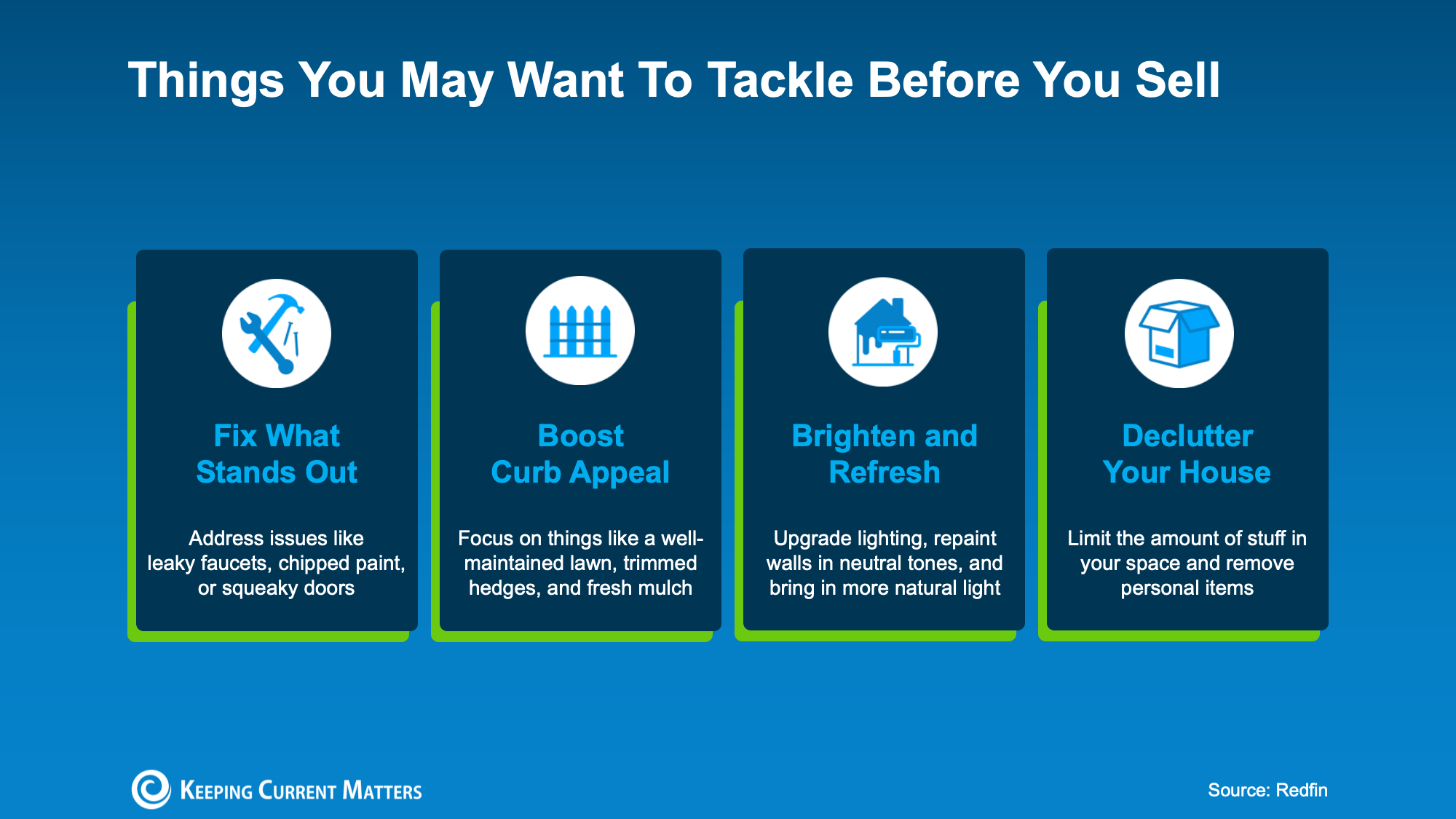
Likewise, your own local real estate agent may recommend:
- Improving curb appeal with fresh landscaping or exterior touch-ups.
- Decluttering and deep cleaning key living areas.
- Making small repairs buyers are likely to notice.
- Refreshing paint in high-impact rooms.
- Staging your home to highlight space and flow.
- Pricing strategically based on current local demand.
These steps can help your home make a stronger first impression without wasting time or money on projects that may not deliver a meaningful return.
The Right Strategy Matters More Than Perfect Timing
Timing can absolutely help when you are selling a home. But it’s only one piece of the equation.
To make the most of a late-May listing, your home still needs to be priced well, marketed effectively, and positioned to stand out from other homes on the market. That’s where local real estate expertise becomes especially valuable.
An experienced agent can help you understand what buyers are looking for right now, how much competition you may face, and what steps will help your home attract serious attention quickly.
Bottom Line: Preparation Is Key
Late May could be one of the best times to list your house, especially if you want to take advantage of strong spring buyer demand.
If you’re still thinking about selling, it’s not too late. The key is to act strategically, prepare your home the right way, and work with a local agent who understands your market.
The Best Time To List Your House Is Almost Here

Spring is usually one of the strongest seasons to sell a home, but according to research from Realtor.com, one specific week tends to stand out year after year. And it’s almost here.
Based on historical housing market trends, the best week to list your house this year is April 12–18.
Here’s why that window can be especially favorable for sellers.
Buyers Are More Active
Realtor.com reports that homes listed during this week typically receive 16.7% more views than the average week. In a market where buyers have more choices, extra visibility can make a real difference.
More attention early on can help generate stronger interest, more showings, and a better overall start to your sale.
Homes Sell Faster
More buyer activity can also lead to a quicker sale. Realtor.com found that homes listed during this week spend 17% less time on the market than usual.
That matters, especially in a market where some homes are taking longer to sell than they did a year ago. A faster sale can mean less stress, fewer disruptions, and more momentum from the start.
Sellers May Get a Better Price
As inventory grows, buyers often feel more comfortable asking for repairs, concessions, or price reductions. But during this early spring window, Realtor.com says about 18.9% fewer homes need a price cut.
That gives sellers a stronger chance of listing confidently and holding closer to their asking price.
More Money in Your Pocket
According to the same study, a well-prepared home listed during this week can sell for about $5,300 more than the average week and about $26,000 more than homes listed at the beginning of the year.
For sellers, that’s a meaningful difference.
More views, less time on the market, and a better shot at top dollar all make this one of the most appealing times to list.
What You Should Do Now To Prepare
If you’re thinking about selling and want to take advantage of this timing, the next step is simple: connect with a local real estate agent.
A trusted local agent can help you decide how to prepare based on what is happening in your market. Real estate trends can vary by city, neighborhood, and even price point, so local insight matters.
Your agent can help you figure out:
- What updates are worth making before you list
- Which repairs should come first
- What buyers in your area care about most
- Which small improvements can have the biggest impact
For some sellers, getting ready may only take a couple of weekends. Fresh paint, basic landscaping, or a deep clean can go a long way.
For others, taking a few extra weeks to make light updates may be the smarter move. And that’s completely fine. While mid-April may offer an advantage, it is not the only good time to sell.
Spring Still Offers a Strong Opportunity
Zillow says May is also one of the best times to list a home. That means sellers still have a strong window of opportunity throughout the spring season.
So while April 12–18 may be a standout week, it’s not your only shot at a successful sale.
Conclusion
Listing your house in mid-April could help you attract more buyers, sell faster, and maximize your sale price. But the bigger opportunity is the spring market as a whole.
The real question is: what do you need to do now to get your home ready to list?
For anyone planning a spring move, now is the time to start preparing. The sooner you connect with a local agent, the sooner you can make a plan that fits your goals and your timeline.
Why Spring Gives Home Sellers an Advantage

Homeowners planning to sell usually want the same three things: more buyer interest, stronger offers, and a faster sale. And it’s no secret that spring is the season that most often delivers on all three.
If selling your home has been on your mind this year, this may be the right time to make your move. Spring consistently brings more energy to the housing market, and that momentum can work in your favor. Here’s why this season is often such a strong opportunity for sellers.
1. More Buyers Are Actively Looking
Spring is traditionally one of the busiest times of year for the housing market. Historically, buyer activity tends to rise as the season begins, and data from ShowingTime has consistently shown that buyer traffic peaks during the spring months each year (see graph below).
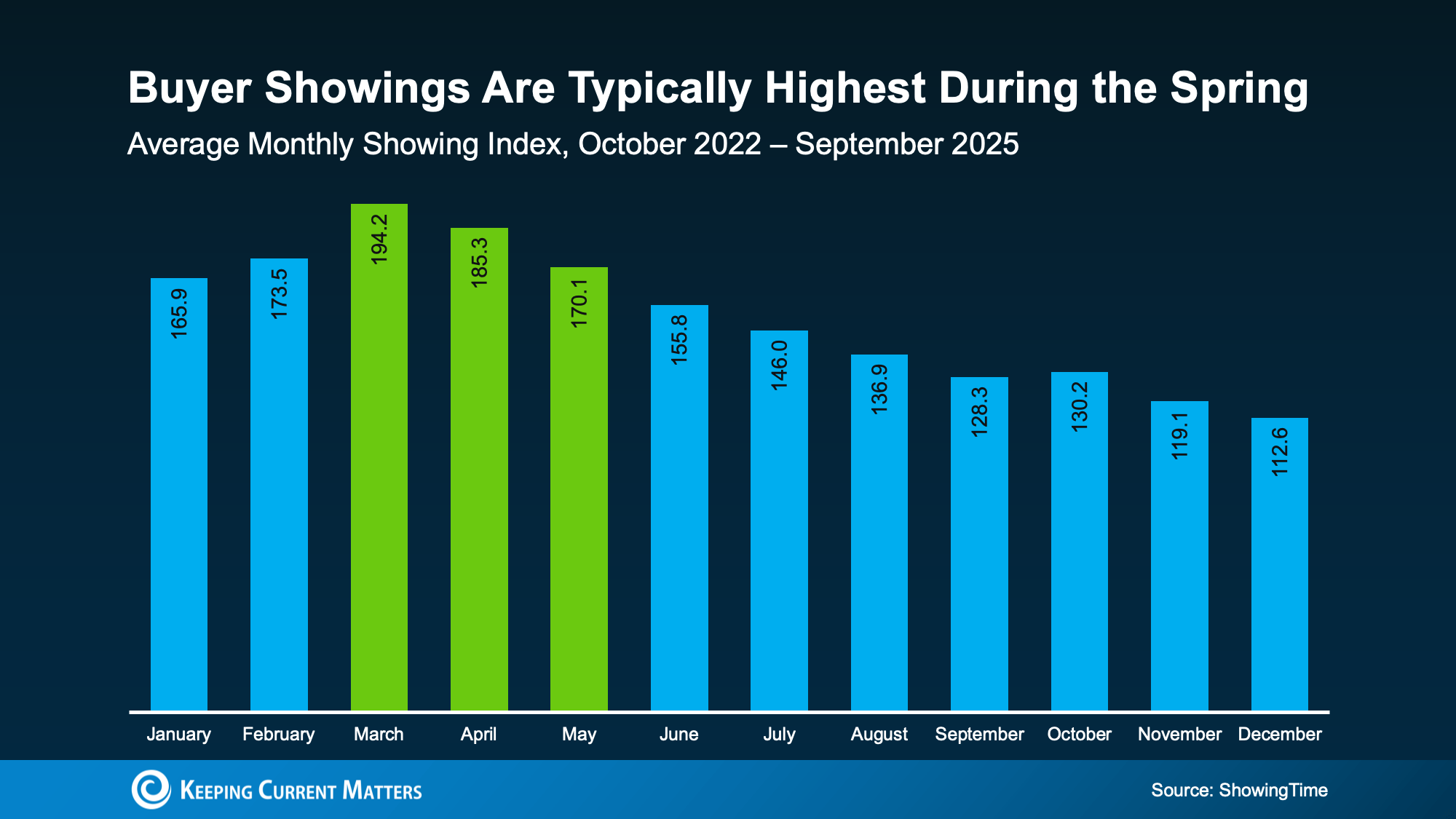
This year, there’s another factor helping sellers: mortgage rates are hovering near three-year lows. That combination of seasonal demand and improved affordability could be the spark that gets buyers back into the market.
More buyers and better affordability often mean more attention on your home.
That doesn’t mean the market is going back to the kind of buying craze we saw during the pandemic. But it does suggest that more buyers may be ready to make a move. As Redfin says:
“Homebuying demand is improving . . . and mortgage-purchase applications are sitting near their highest level in three years. . .”
For sellers, that creates more opportunity. Listing your house while buyer demand is picking up can help you take full advantage of the seasonal uptick in activity.
2. You Could Receive More Offers
When more buyers are searching, sellers often enjoy increased competition, and in many cases, that leads to more offers.
Data from the National Association of Realtors (NAR) over the past three years shows a clear pattern: sellers tend to receive more offers during the spring months than at other times of the year (see graph below).
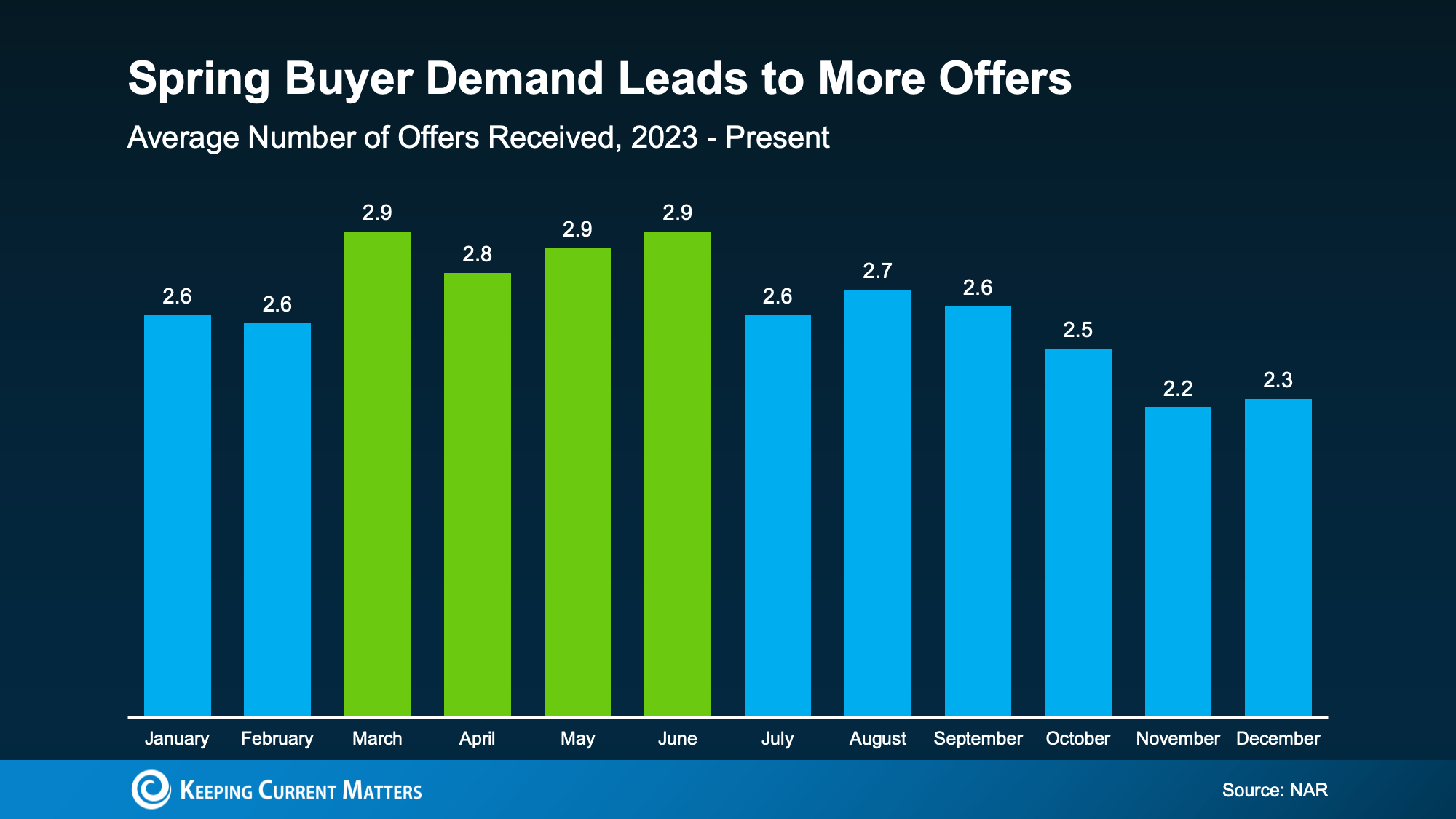
That doesn’t mean every home will spark a bidding war; the market is more balanced now than it was in 2020 and 2021. Even so, seasonality still matters, and spring can offer a more favorable market environment for sellers.
As Realtor.com explains:
“Spring typically brings out more buyers who are ready to make a move before summer. Listings see more views, showings, and offers during this season.”
More views and more showings can lead to stronger offer activity, which may put you in a better position when it comes time to negotiate.
3. Homes Often Sell Faster in Spring
Another trend that shows up year after year is speed. Homes generally sell faster in the spring.
According to research from Realtor.com, homes sell about 20 days faster in spring than they do in winter on average (see graph below). That’s nearly three weeks less time on the market.
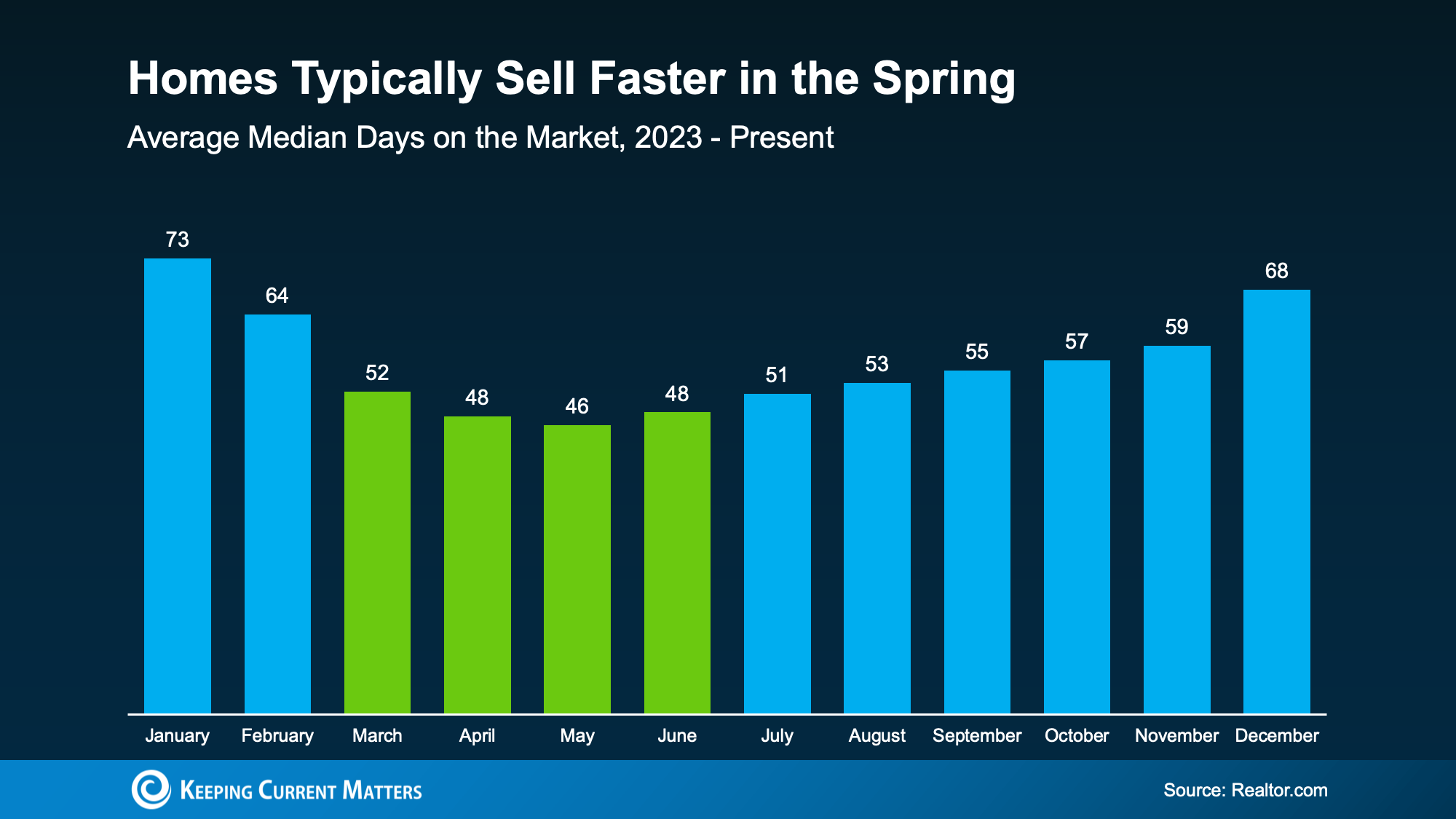
For many sellers, that matters just as much as price. A faster sale can reduce the stress of the process, limit disruptions to your daily life, and help you move on to your next home or next chapter sooner.
And since homes have been taking a little longer to sell in recent months, listing during one of the most active parts of the year may help improve your timeline. If your goal is to sell efficiently, the spring market can give you a critical edge.
Why Timing Still Matters
Spring doesn’t automatically guarantee a fast or profitable sale. Pricing, presentation, marketing, and local market conditions still play a major role. But this season does tend to create stronger momentum than other times of year.
When you combine that momentum with more active buyers and better affordability, the spring market can offer a real advantage.
If you need more space, want to downsize, or are simply ready for a change, this spring season may be your best chance to make a decisive move.
Conclusion
Spring can give sellers something incredibly valuable: opportunity.
More buyers. More activity. More potential offers. And often, a faster sale.
If you’re already thinking about selling this year, it makes sense to consider listing when market conditions are typically most favorable. Talk with a local real estate agent about what this spring could mean for your home, your timing, and your next move.