Facebook
 X
X
 Pinterest
 Copy Link
Stronger Together: Local Real Estate Teams Unite Under CENTURY 21 Affiliated

NILES, Ml – [June 24, 2025] – A new chapter in Niles real estate begins as Integrity Real Estate Professionals officially join the CENTURY 21 Affiliated family. This exciting change follows Horizon Realty Group’s affiliation earlier this year.
As part of this transition, Brian Floor will be stepping away from his leadership role and resuming his position as a full-time Realtor®, continuing to serve clients with the same care and dedication he’s known for. Kyle Zelmer will lead the office moving forward as Managing Broker, bringing together the teams from Horizon Realty Group, Integrity Real Estate Professionals, and CENTURY 21 Affiliated.
“This change represents the best of what each team brings to the table,” said Kyle Zelmer. “We’re combining experience, strong community ties, and a shared commitment to putting our clients, agents, and community first. We’re all working together to ensure a smooth and seamless transition.”
Clients can expect continued excellence, familiar faces, and improved tools and resources to make their real estate experience even better. All three teams are committed to supporting one another and the broader Niles community as this new venture moves forward.
“I’m excited to return my full focus to serving clients,” said Brian Floor. “This new structure allows me to do what I love—helping people buy and sell homes—while knowing the leadership is in great hands with Kyle.”
About CENTURY 21 Affiliated
CENTURY 21 Affiliated is a member of multiple listings services in California, Illinois, Michigan, Minnesota, and Wisconsin, with over 1,400+ sales professionals and 60+ offices. CENTURY 21 Affiliated also specializes in worldwide relocation. At CENTURY 21 Affiliated, the customer comes first. The complete commitment to this philosophy has made CENTURY 21 Affiliated such a powerful force in the real estate industry. CENTURY 21 Affiliated has been ranked the No. 1 CENTURY 21® franchise worldwide for eleven years in a row. Visit C2Affiliated.com to learn more.
###
CENTURY 21 Affiliated Named Among Top 100 Real Estate Firms in RISMedia’s 2025 Power Broker Report

CENTURY 21 Affiliated, the #1 Century 21 franchise in the world, proudly announces its ranking in RISMedia’s 2025 Power Broker Report, which recognizes the nation’s top-performing real estate firms based on transactions.
CENTURY 21 Affiliated has been ranked #40 based on transactions, and #57 based on sales volume, reinforcing its standing as a dominant force in the real estate industry.
Published annually, RISMedia’s Power Broker Report is based on responses to its Power Broker Survey, distributed each January. The report celebrates the remarkable achievements of real estate leaders and brokerage firms that continue to drive the industry forward.
See Dan Kruse’s Feature in the 2025 Power Broker Report Here.
“Our real estate professionals consistently deliver exceptional service in an evolving market,” said Dan Kruse, CEO & Owner of CENTURY 21 Affiliated. “We’re honored to be recognized among the top brokerages in the country, a testament to our agents’ dedication and commitment to excellence.”
With 1,400 sales associates and 70+ offices spanning California, Illinois, Michigan, Minnesota, and Wisconsin, CENTURY 21 Affiliated remains a leading full-service real estate brokerage. Since joining the CENTURY 21® system in 1978, the company has upheld a legacy of innovation and customer-focused service.
View the Full 2025 Power Broker Report Here.
About CENTURY 21 Affiliated Real Estate LLC
CENTURY 21 Affiliated is a member of multiple listings services in California, Illinois, Michigan, Minnesota, and Wisconsin with over 1,400 sales professionals and 70+ offices.
CENTURY 21 Affiliated also specializes in worldwide relocation. At CENTURY 21 Affiliated, the customer comes first. The complete commitment to this philosophy is what has made CENTURY 21 Affiliated such a powerful force in the real estate industry. CENTURY 21 Affiliated has been ranked the number one CENTURY 21® franchise in the world for eleven years in a row. Visit C21Affiliated.com to learn more.
©2025 CENTURY 21 All Rights Reserved. CENTURY 21® and the CENTURY 21 Logo are registered service marks owned by Century 21 Real Estate LLC. Each office is independently owned and operated.
###
The Top 5 Neighborhoods in Janesville, WI
Updated July 2026
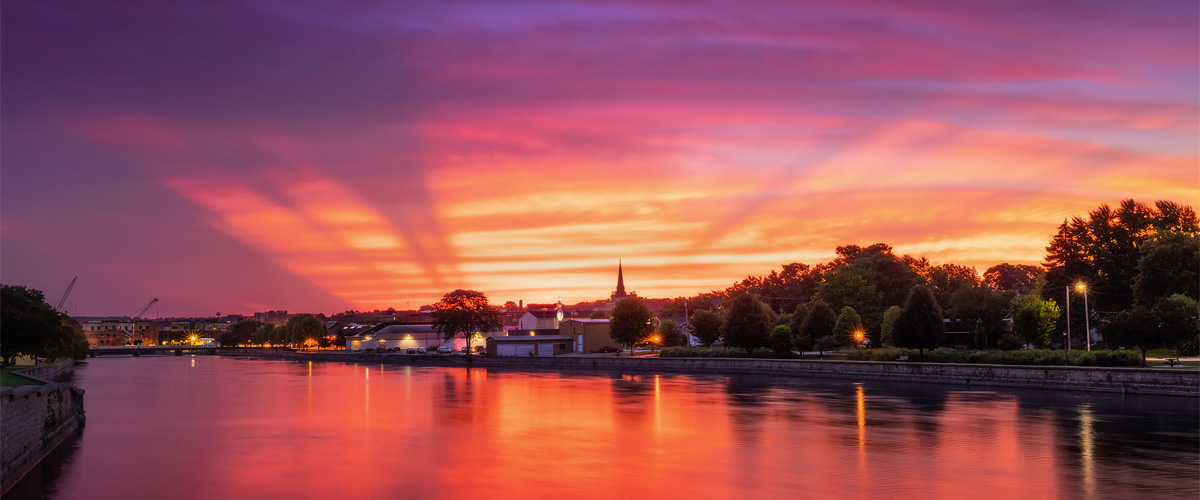
Janesville, Wisconsin, serves as a hub for South Central Wisconsin, offering a strong mix of housing options, local history, and abundant green space. Known as “Wisconsin’s Park Place,” the city boasts over 2,500 acres of parkland and 64 improved parks, making it a highly desirable location in the Wisconsin housing market.
Whether you’re looking for historic urban charm, a suburban setting with larger yards, or quick access to local parks and shopping, Janesville’s housing market has a variety of living destinations to offer. Here are five of the most popular neighborhoods to consider when looking for a home in Janesville, WI.
1. Courthouse Hill
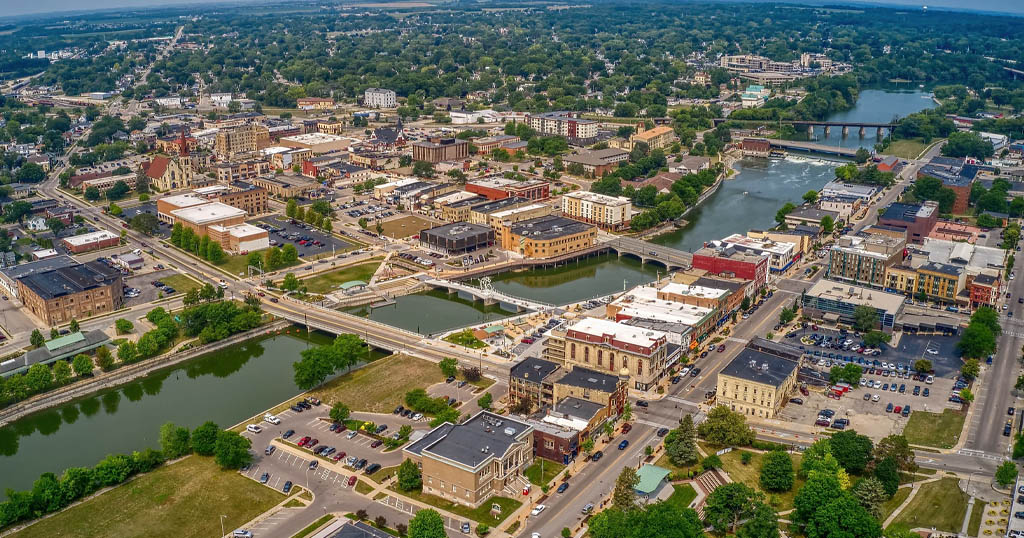
Located east of the Rock River near downtown, Courthouse Hill is one of Janesville’s most recognizable historic residential districts.
The Courthouse Hill Historic District was added to the National Register of Historic Places on January 17, 1986. Properties in the district represent multiple periods and architectural styles, with surviving homes dating to the mid-1800s and later. Examples include Greek Revival, Italianate, Queen Anne, and early 20th-century revival-style homes.
Courthouse Hill’s location provides access to downtown businesses, the Rock River, cultural attractions, and Lower Courthouse Park. The Marvin Roth Community Pavilion in the park continues to host seasonal programming. In 2026, the city scheduled the free Music at the Marv concert series there on Tuesday evenings from June through August.
-
Key Amenities: Close proximity to downtown shopping, local restaurants, and the Rock County Historical Society.
-
Housing Style: Grand, historic properties with unique 19th-century architecture.
-
Parks & Recreation: Home to Courthouse Park, a 3-acre public space that hosts live music in the summer and community events year-round.
2. Old Fourth Ward
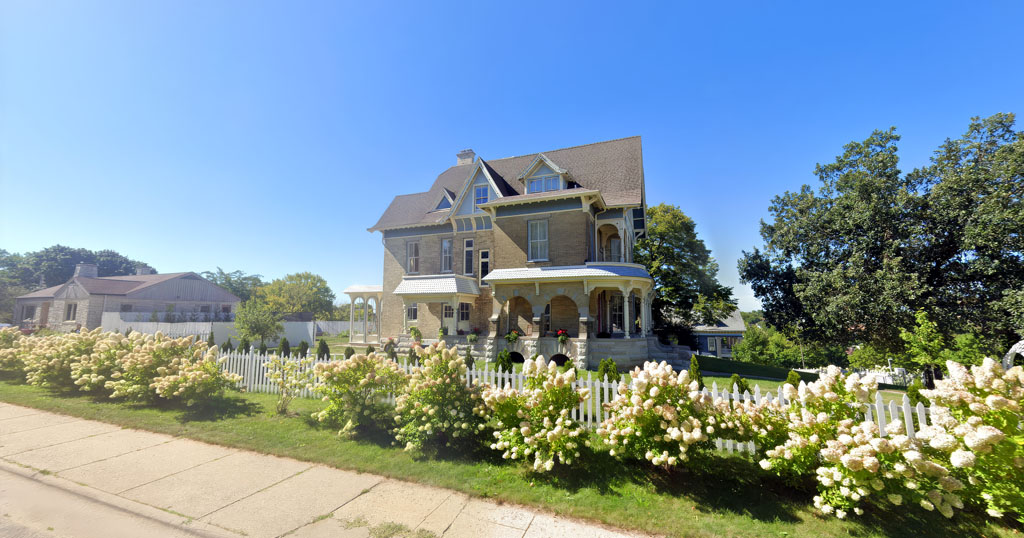
Located just across the Rock River from Courthouse Hill is the Old Fourth Ward. One of Janesville’s oldest residential areas, it includes portions of the early Rockport and Monterey settlements.
The Old Fourth Ward Historic District was added to the National Register of Historic Places on May 30, 1990. The Wisconsin Historical Society describes it as a relatively dense residential district containing more than 1,000 buildings, many of which are small- to medium-sized examples of vernacular architecture constructed as the area developed between the 1850s and 1890s.
- Key Amenities: Easy access to local schools, daily conveniences, and community transit.
- Housing Style: A high concentration of smaller, affordable historic homes, alongside properties undergoing rehabilitation and new construction.
- Parks & Recreation: Residents are just steps away from Fourth Ward Park, which offers open green space and recreational facilities.
3. East Side Janesville
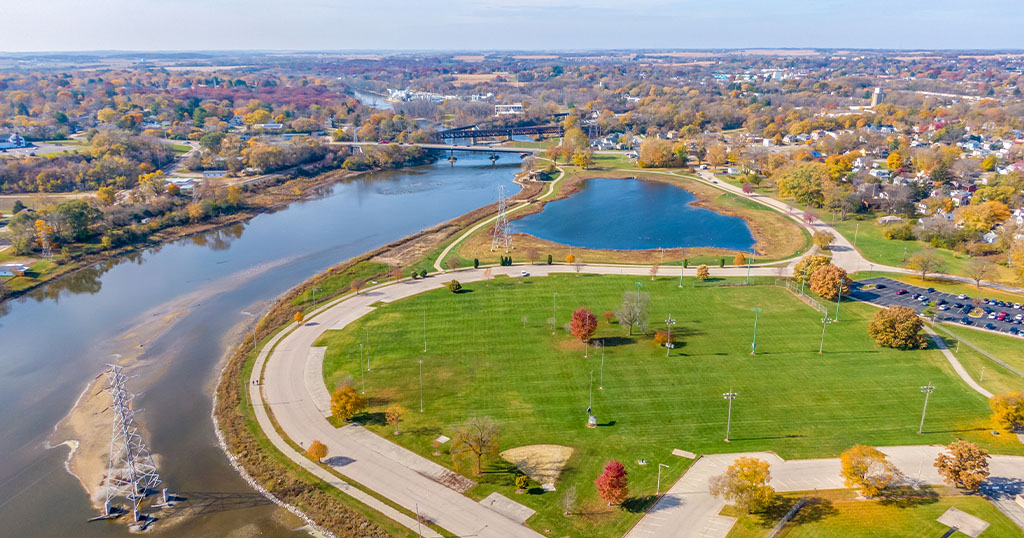
Rather than a single formal neighborhood, Janesville’s “East Side” generally refers to the residential areas east of the Rock River. As such, its housing options can widely vary depending on a property’s exact location.
Areas closer to central Janesville include established homes and traditional street patterns, while locations farther east include growing subdivisions and newer housing. The city’s adopted comprehensive plan continues to guide land use, housing, transportation, and future development of the east side and beyond.
Despite being a growing and more generally defined area, the East Side offers several attractions and amenities. For the nature-inclined, the Rotary Botanical Gardens occupies 20 acres and features 26 distinct garden styles with approximately 4,000 plant species. For families, the Janesville Youth Sports Complex is a 90-acre facility with baseball and softball fields, football fields, soccer fields, parking, restrooms, and concession areas.
- Key Amenities: Quick access to the commercial corridors off Interstate 90, making shopping, dining, and commuting highly convenient.
- Housing Style: A wide selection of newer construction homes, offering varying sizes, larger lots, and modern floor plans.
- Parks & Recreation: Close to the Janesville Youth Sports Complex and several neighborhood pocket parks.
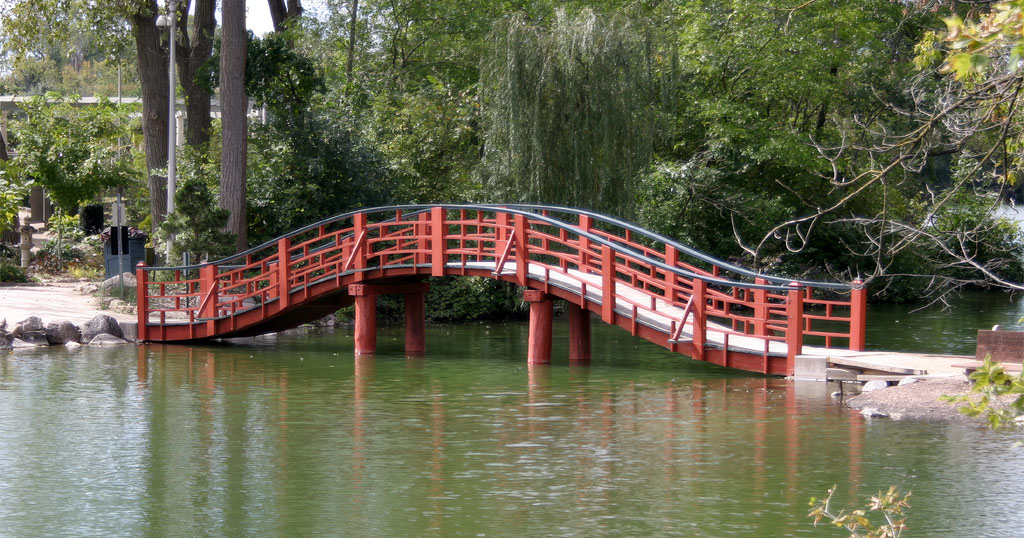
4. Look West
Located on a bluff along the west bank of the Rock River, the Look West Historic District offers a distinct combination of residential history and easy urban access. This neighborhood formed within Janesville’s original First Ward, and its development reflects the city’s early ties to the river, rail transportation, manufacturing, and commerce. Today, it contains 15 blocks of historic properties and is recognized as one of Janesville’s historic residential districts.
State historical records identify contributing Look West properties within a National Register boundary increase listed in December 1993. Surviving architecture includes Queen Anne, Italianate, Greek Revival, and simpler homes originally constructed for local workers and tradespeople.
Look West is close to the Lincoln-Tallman House, downtown Janesville, the Rock River, and community events held in the central city. Local walking tours continue to explore the neighborhood’s architecture and its connection to the Tallman family and Janesville history.
- Key Amenities: Separated from the primary business district by Highway 51, providing swift access to downtown amenities and regional transit routes.
- Housing Style: A diverse mix of 19th-century architecture, offering excellent opportunities for buyers looking for historic character.
- Parks & Recreation: Proximity to the Rock River and the scenic paths winding along its banks.
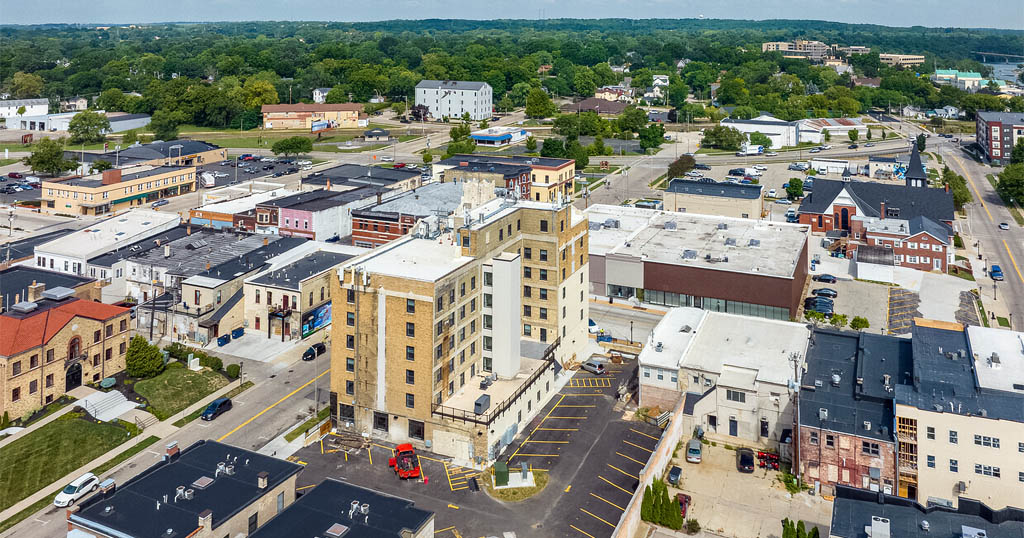
5. Northeast Janesville
Like the East Side, Northeast Janesville is more of a general geographic area than a formal neighborhood. It includes established postwar residential areas as well as newer subdivisions and commercial development near Milton Avenue, Wright Road, Highway 14, and Interstate 39/90. The Northeast area has seen steady growth, attracting buyers interested in modern amenities and low-maintenance living.
One of the area’s major outdoor amenities is Sheiffer Park, an 87-acre property formerly known as Northeast Regional Park. For shopping, the area includes Uptown Janesville Mall, formerly known as Janesville Mall, on Milton Avenue. In 2025, the mall welcomed the opening of the Woodman’s Sports & Convention Center, a connected 140,000-square-foot facility including an ice rink, multipurpose arena, courts, and conference space.
- Key Amenities: Peaceful, residential streets featuring enhanced landscaping and attached garages.
- Housing Style: Known for recent developments, including spacious ranch-style homes, modern subdivisions, and zero-entry condominiums.
- Parks & Recreation: Excellent access to local green spaces, including portions of the Ice Age Trail and nearby community parks.
Why Consider Living in Janesville?
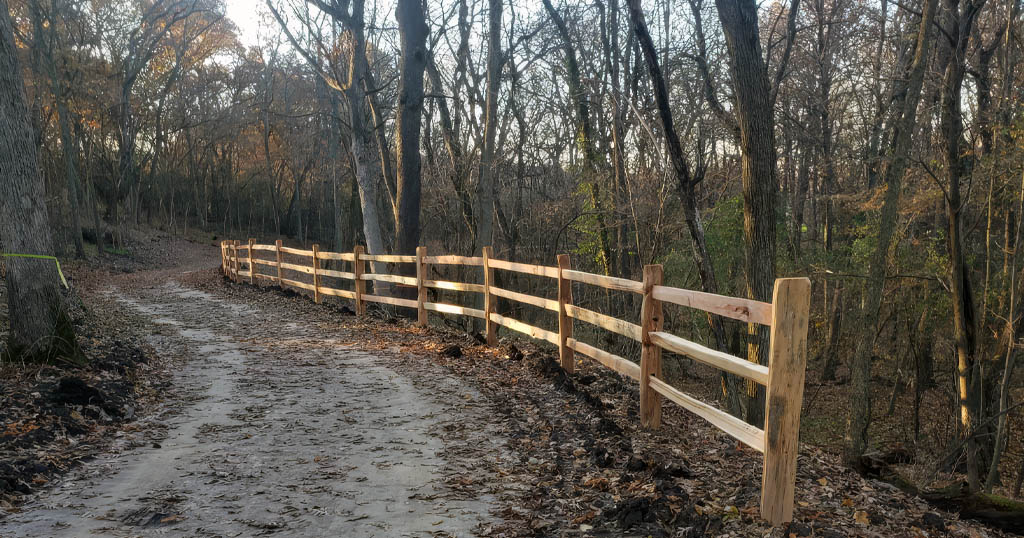
Janesville’s nickname, “Wisconsin’s Park Place,” speaks to a dedicated park system that nurtures neighborhood parks, regional recreation areas, greenbelts, open spaces, and trails. The Janesville Area Convention and Visitors Bureau identifies 13 historic districts and more than 50 pieces of public art throughout the community. And while this guide lists five popular neighborhoods, it’s in no way exhaustive of the many housing options the city offers.
But Janesville isn’t just a place to buy a house; it’s a growing community where you can plant roots. The city is known for its extensive parks system, plentiful recreational opportunities, and a thriving arts scene. Janesville’s neighborhoods reflect the city’s dedication to providing a high-quality life for its residents, and there’s plenty more to discover and love about Wisconsin’s Park Place.
Current Janesville Housing Market Snapshot
Over the three months ending in May 2026, the median Janesville home sale price reported by Redfin was approximately $288,000, up 6.8% from the corresponding period one year earlier. Homes averaged 47 days on the market. These are citywide figures and don’t describe every neighborhood or predict the value, competition, or selling timeline of an individual property.
Prices and market activity can differ by location, property type, condition, lot size, updates, and available inventory. Buyers and sellers should review current MLS data with a local real estate professional rather than relying on citywide averages alone.
Explore Homes for Sale in Janesville, WI
Ready to start your Janesville home search? Browse current homes for sale or contact CENTURY 21 Affiliated for help comparing properties throughout Courthouse Hill, Old Fourth Ward, Look West, the East Side, Northeast Janesville, and other parts of the city.
The Top 5 Fastest-Growing Cities in Wisconsin
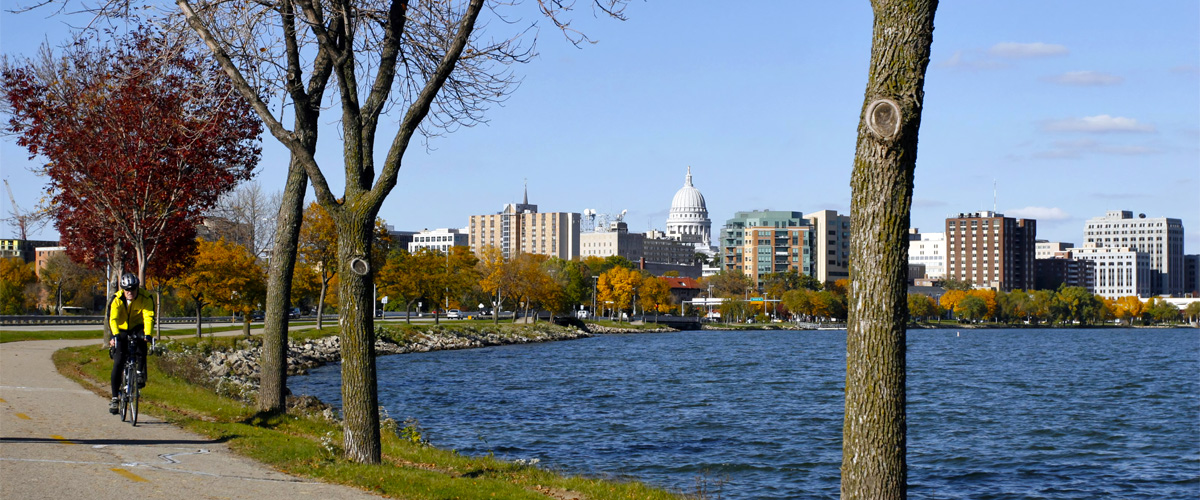
Like many areas throughout the country, Wisconsin has seen varied population growth across its cities in recent years following the COVID-19 pandemic. This growth is often driven by homebuyers seeking affordable homes or stronger local economies, and there are several areas enjoying particularly strong influxes of new residents. In this post, we’ll explore the five fastest-growing cities in the state of Wisconsin, based on recent data and trends.
1. Madison
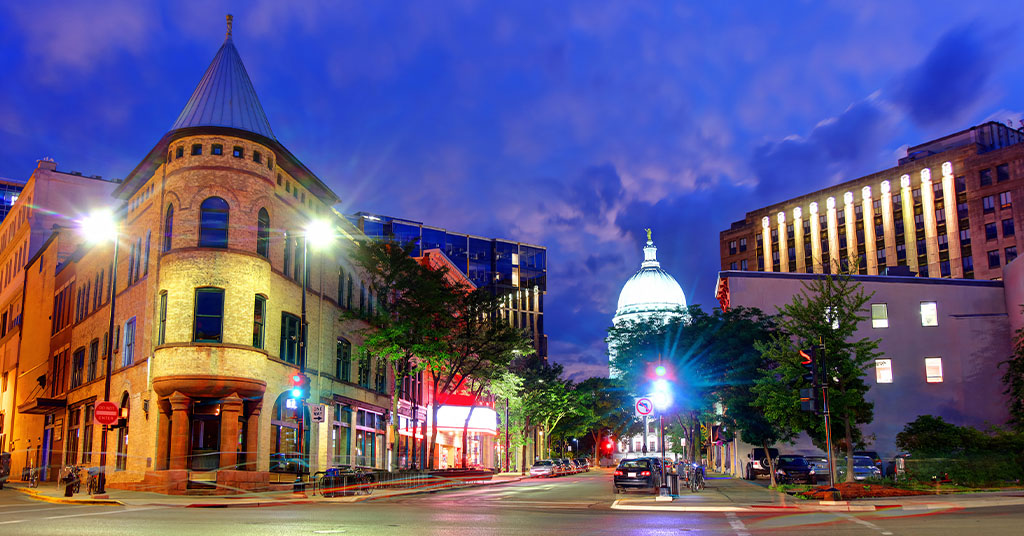
Madison, the ever-popular capital city of Wisconsin, has experienced significant population growth in recent years. Between 2020 and 2023, Madison’s population increased by 4.4%, from 274,686 to 286,785 residents. This growth continues a trend observed over the past decade, where the city saw a 17.7% increase in population from 2010 to 2020. Madison’s robust growth can be attributed to its strong economy, education opportunities, and consistently high livability and quality of life rankings.
2. Fitchburg
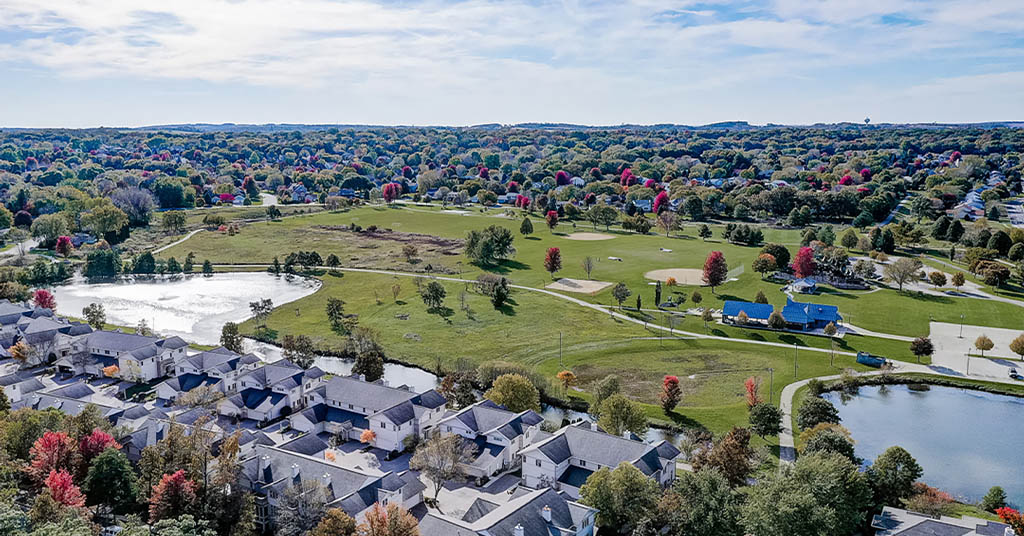
Fitchburg, a suburb south of Madison and part of the Madison metropolitan area, has also seen substantial post-pandemic growth. From 2020 to 2023, the city’s population grew by 9.74%, from 30,999 to 34,019 residents. Fitchburg’s recent growth rate is one of the highest in the state, reflecting the town’s appeal as a suburban community with convenient access to the nearby amenities of Madison.
3. Sun Prairie
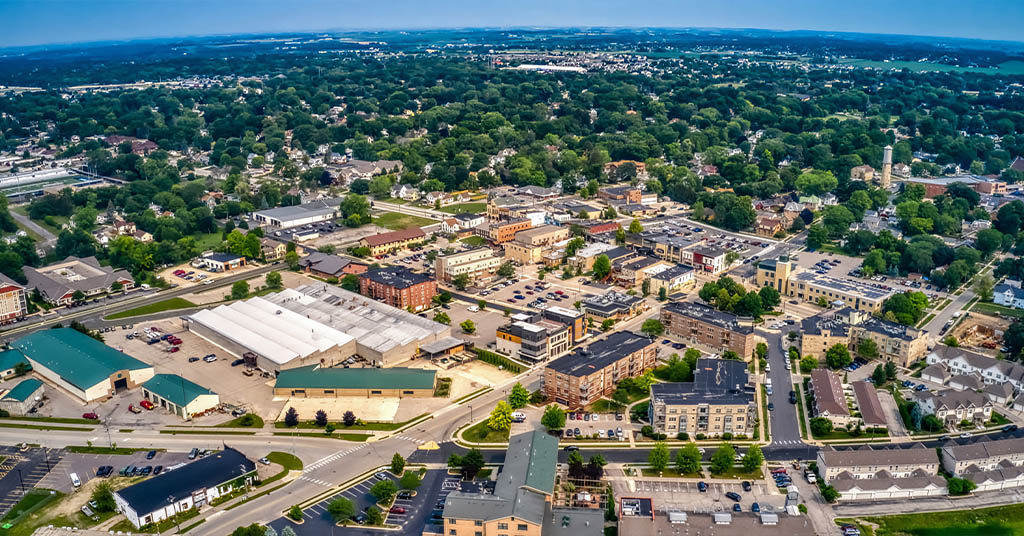
Sun Prairie, yet another city in Dane County, has experienced a 6.73% population increase from 2020 to 2023, growing from 35,967 to 38,387 residents. Over the past decade, Sun Prairie’s population has surged by 29.3%, making it one of the fastest-growing cities in Wisconsin. Sun Prairie’s growth is strongly driven by its proximity to Madison, family-friendly suburban environment, and considerably strong economic development.
4. Oak Creek
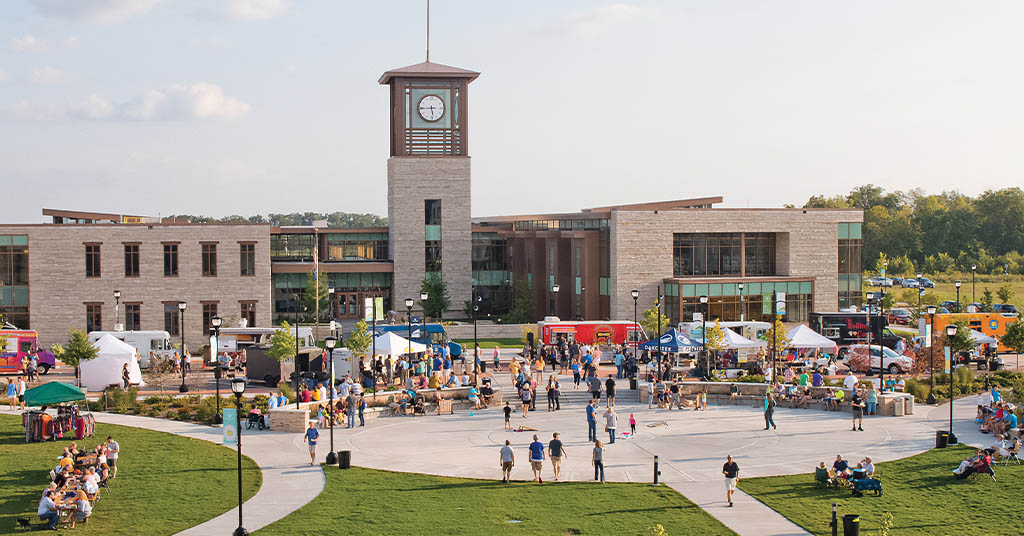
Oak Creek, located on the southwestern shores of Lake Michigan in Milwaukee County, saw a 4.59% increase in population from 2020 to 2023, growing from 36,497 to 38,174 residents. This growth is significant given the overall population decline in Milwaukee County during that same period. Oak Creek’s rising population and development is supported by its strategic location between Milwaukee and Chicago and expanding residential and commercial sectors.
5. Eau Claire
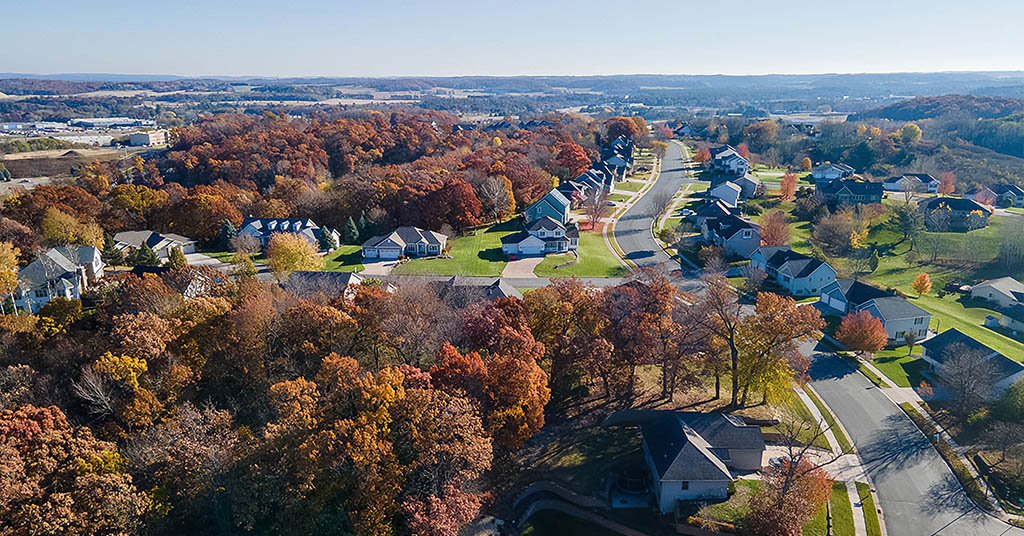
On the opposite side of the state, the city of Eau Claire has enjoyed a 2.71% population increase from 2020 to 2023, growing from 69,421 to 71,304 residents. This growth has positioned Eau Claire as the seventh-largest city in Wisconsin, surpassing Waukesha since the last U.S. census in 2020. Eau Claire has long stood as an attractive destination thanks to its reputation as a cultural hub and close proximity to Minnesota’s Twin Cities. Other notable attractions driving Eau Claire’s growth include its vivacious arts scene and ongoing municipal investments such as the expansion of its downtown area.
The cities of Madison, Fitchburg, Sun Prairie, Oak Creek, and Eau Claire are leading the way in population growth in Wisconsin. These destinations offer a compelling combination of economic opportunities, quality of life, and strategic locations that are driving new residents into their welcoming arms. If you’re interested in making a move to one of Wisconsin’s most popular cities, start a search for a new home today or contact us to get in touch with a local real estate expert.