Facebook
 X
X
 Pinterest
 Copy Link

Selling and buying a home at the same time means juggling two linked transactions. The timing of one affects the financing, offer terms, and moving plan for the other. Most homeowners ask: Should I sell my current house first, or buy my next home first?
The truth is there’s no universal answer. The right move depends on your cash, current home equity, ability to carry overlapping payments, local real estate market, and move date. For many homeowners, selling first offers financial confidence and can simplify your offer. A local real estate agent and lender can help you compare both paths and choose the best option.
Should You Sell Before You Buy?
In many markets, buyers have more homes to choose from, while some listings are taking longer to sell. Buying first can be riskier if you need your current home to sell quickly. Market conditions vary by neighborhood and price range, so be sure to review recent sales, average market time, and inventory in both the area you’re leaving and where you hope to buy.
Three Potential Benefits of Selling First
1. Reduce the Risk of Carrying Two Homes
Buying before selling may leave you responsible for two mortgage payments, plus utilities, insurance, maintenance, and possible repairs on two properties. If your current home takes longer to sell than expected, that overlap can strain your budget. Selling first removes much of that timing uncertainty.
As Ramsey Solutions puts it:
“It’s best to sell your old home before buying a new one to avoid unnecessary risks and possible headaches.”
2. Know How Much Equity and Cash You Can Use
Home equity is your home’s current market value minus the balance you owe on the property. Selling first also reveals your actual net proceeds after the mortgage payoff, closing costs, taxes, repairs, and negotiated concessions. You might use those proceeds for your next down payment or home purchase.
Realtor.com reports that median home equity rises from about $180,000 within the first 5 years of ownership to more than $340,000 in years 6 through 10. Your own result will vary, so ask your agent for a comparative market analysis and estimated seller net sheet before setting a budget. The more equity you have, the easier selling and buying a home at the same time will be.
3. Make a Cleaner Offer on Your Next Home
Once your current home is sold, your next offer may not need a home-sale contingency. Fewer conditions can reduce uncertainty for the seller and may improve your position, especially when another buyer is competing for the same home. It does not guarantee acceptance or concessions; price, financing, appraisal, inspection, closing date, and local demand still matter.
What Are the Tradeoffs of Selling First?
The main tradeoffs are temporary housing, storage, a possible second move, and a gap between closings. A rent-back agreement may let you remain in your home for a defined period after closing, while flexible closing or occupancy dates can also narrow the gap. These terms depend on buyer cooperation, local law, insurance, and lender requirements, so put the agreement in writing and review it with the appropriate professionals.
Selling First at a Glance
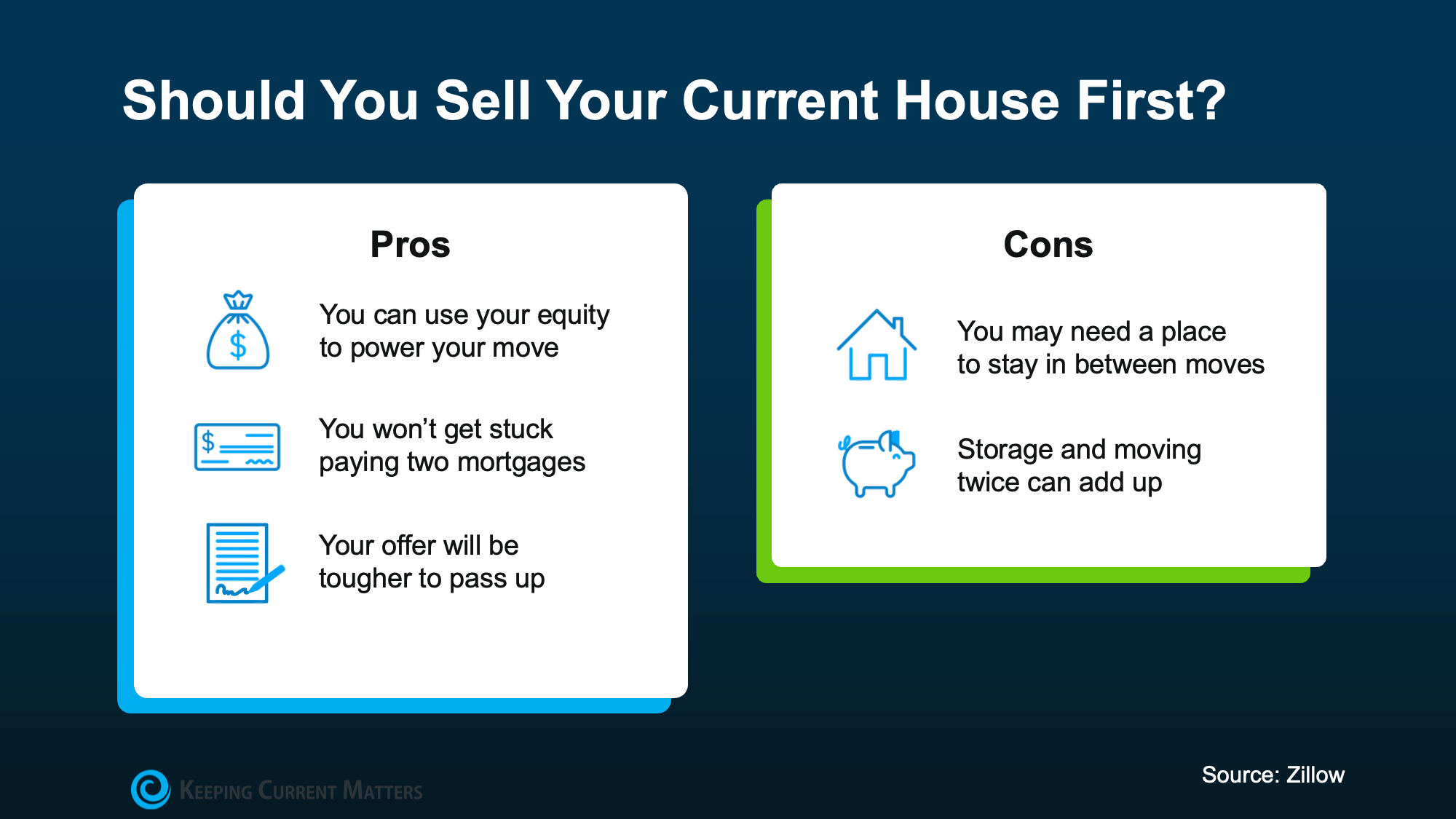
Selling first may improve your financial clarity and the strength of your offer, but temporary housing and a second move can add cost. Source: Zillow.
When Buying First May Make Sense
Buying first may fit your situation when one or more of the following conditions is true:
- You can comfortably carry both homes if the sale takes longer than expected.
- Your purchase funds and loan approval don’t depend on selling your current home.
- You find a property that rarely becomes available or have a firm relocation deadline.
- Moving only once is a high priority and the added financial exposure is manageable.
Before choosing this route, ask a lender to estimate the full carrying costs and savings you’ll need. For added peace of mind, don’t assume your current home will sell quickly. Leave yourself some wiggle room in case your local market is slower than expected.
How to Plan a Sale and Purchase Together
- Start with the local market. Meet with a local agent before you list or begin serious home tours. Compare recent sales, inventory, market time, and possible price ranges in both locations.
- Compare the financing scenarios. Ask a lender to calculate your buying power under both a sell-first and buy-first scenario, including the effect of two housing payments and your expected down payment.
- Set practical guardrails. Decide the maximum payment overlap you can accept, minimum net proceeds you need, target move date, and backup housing plan.
- Coordinate the contract terms. Work with your agent and other professionals on the timing. Depending on the transaction, that may include a home-sale contingency, extended closing, rent-back, or another occupancy agreement.
For more preparation tips, review our home selling advice and home buying advice, and search current listings once you’re confident in your timing and budget.
Bottom Line
There’s no one-size-fits-all path for selling and buying a home at the same time. Selling first can lessen your financial pressure, establish your budget, and allow for a stronger offer when you buy. Buying first may create a smoother move when your budget and the market support it. Plan according to your own numbers, timeline, and local market conditions.
Connect with a local CENTURY 21 Affiliated real estate agent to review your home’s likely sale timeline, estimate your net proceeds, and build the best buying strategy for your budget.